We arrived at our apartment and the lifts (like the traffic) were quirky and unhurried. A theme seems to be developing here, but I sense it is bigger than Portugal.
We took a moment for a shower and staggered out to get some sun.
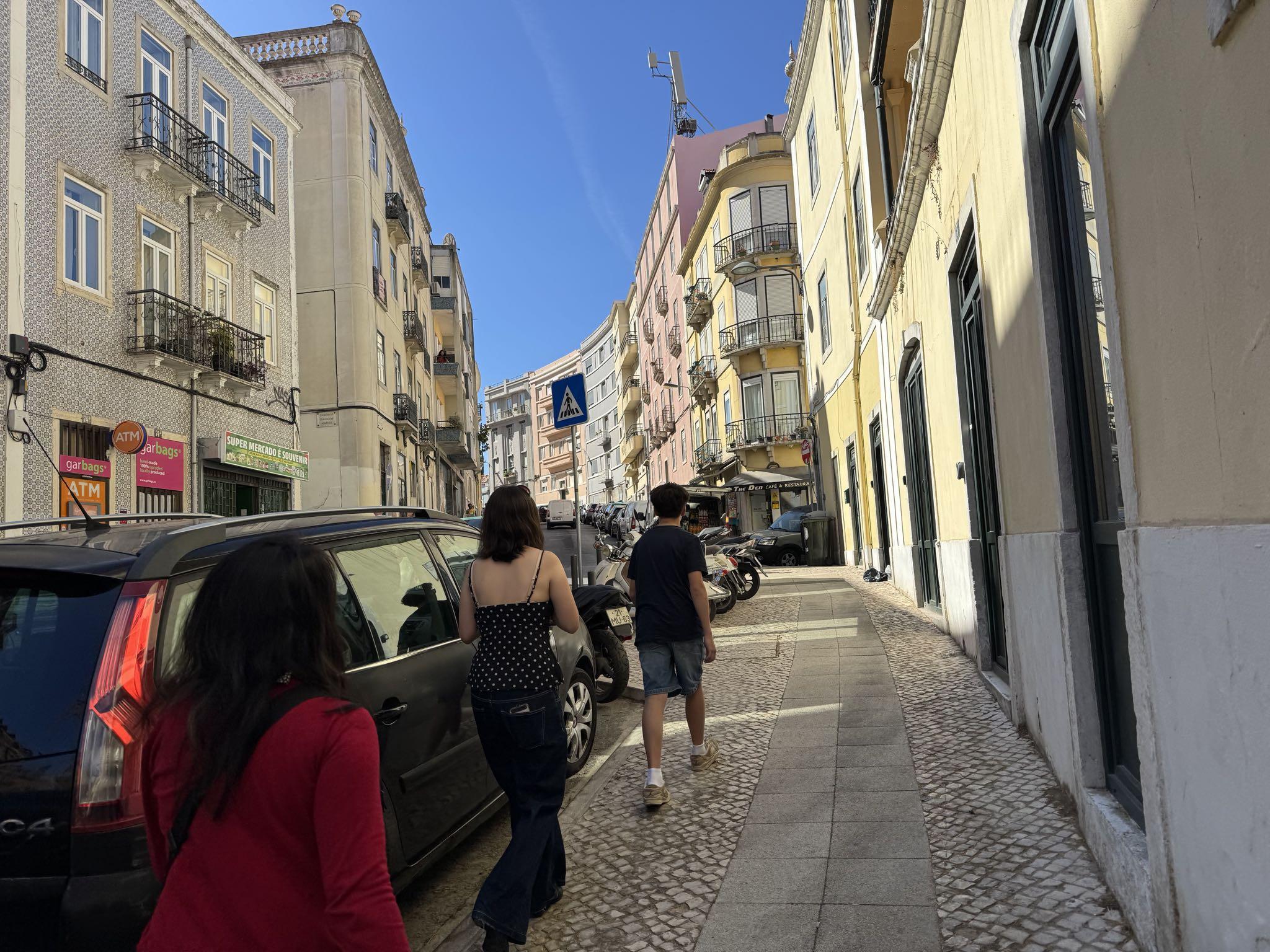
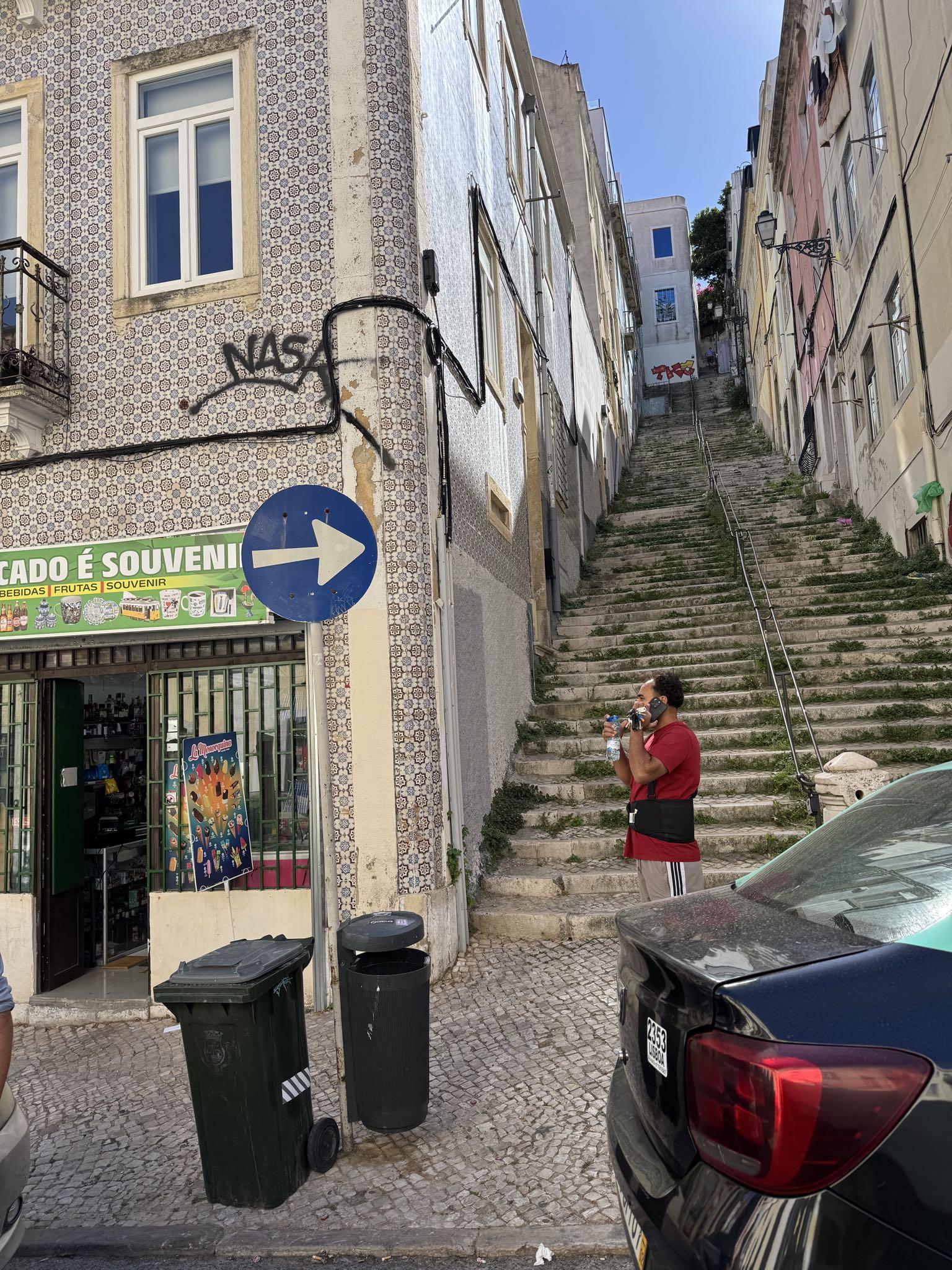
We walked up stairs to a lookout, outside a hilltop Chapel.
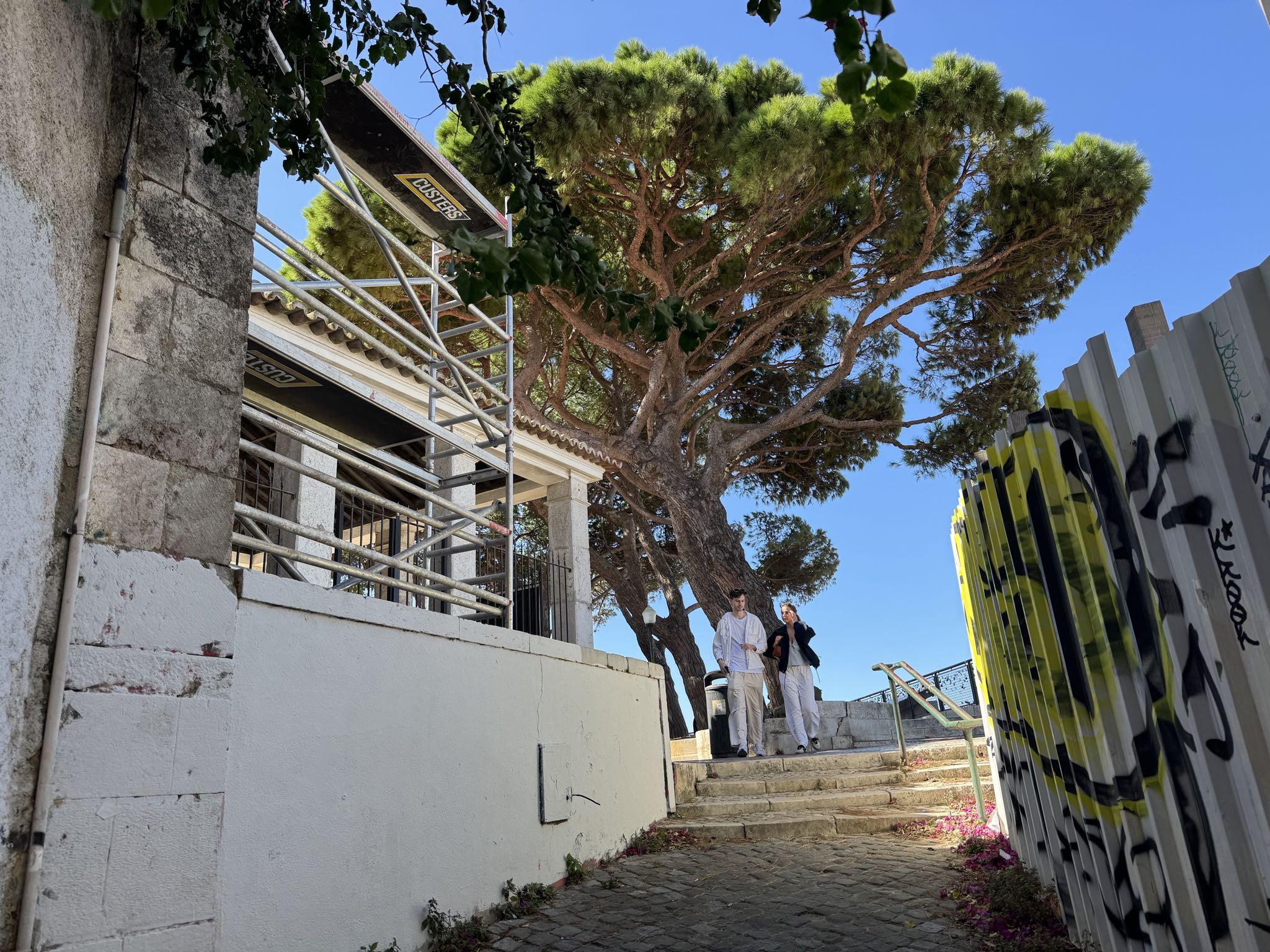
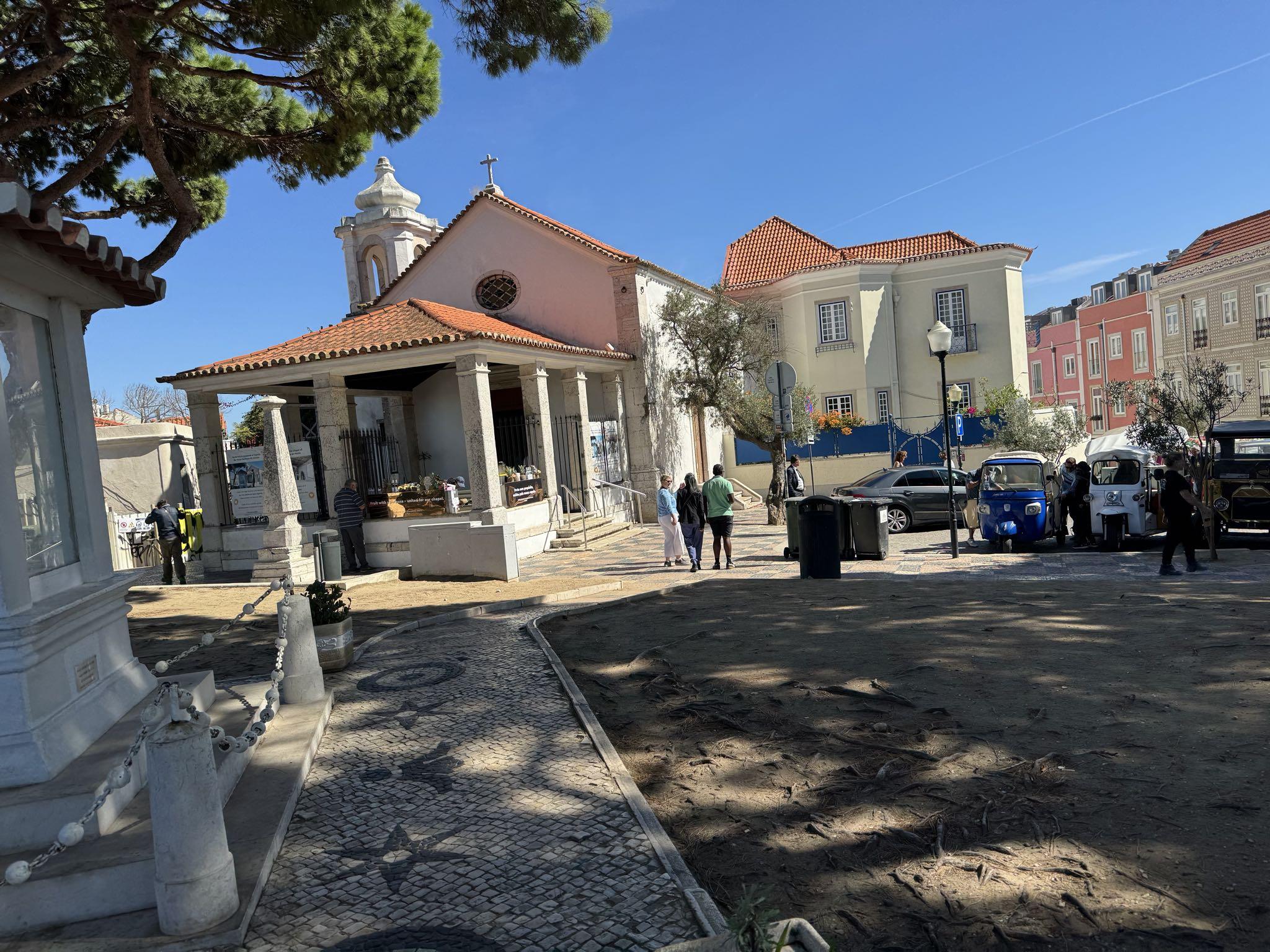
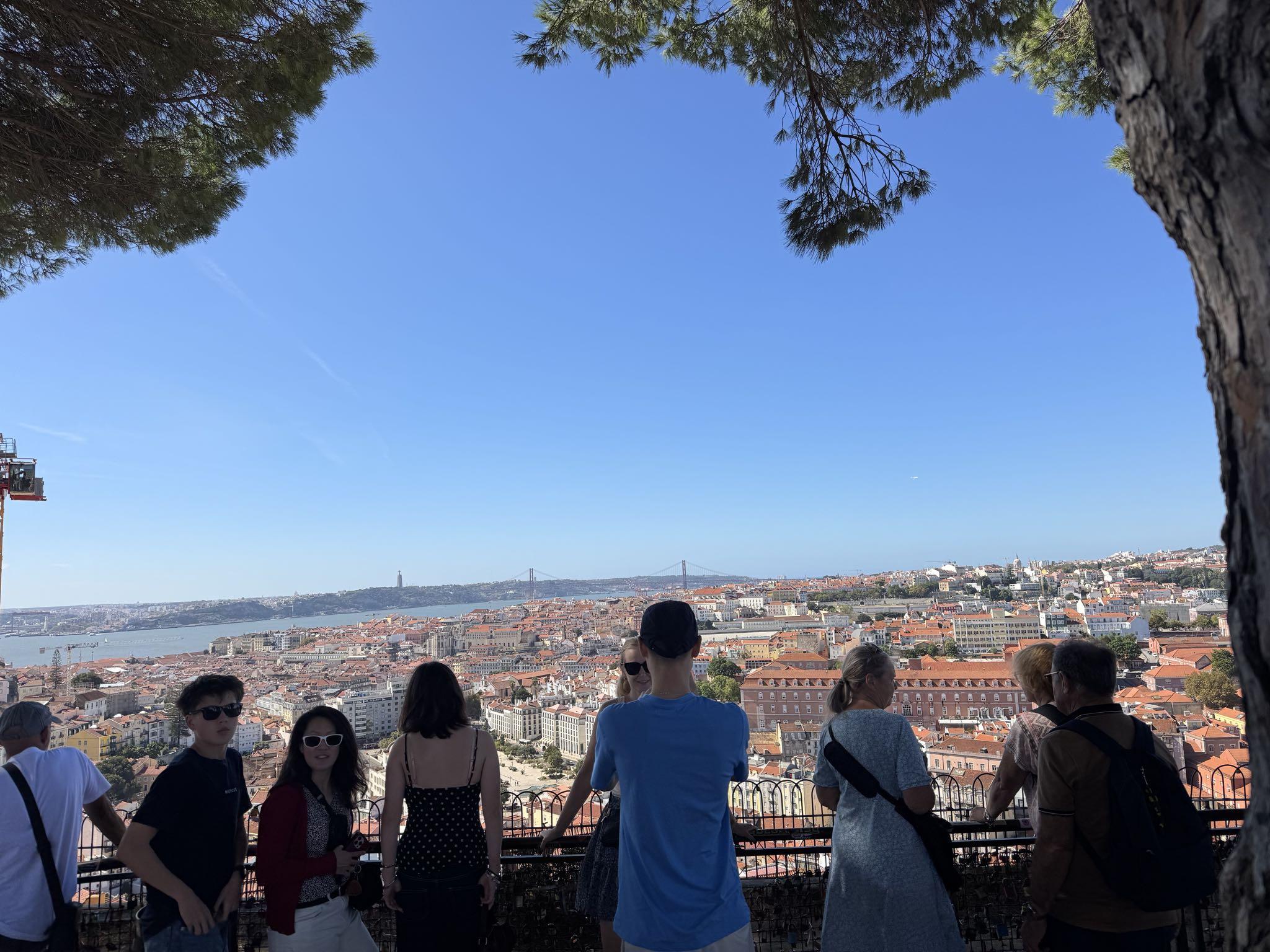
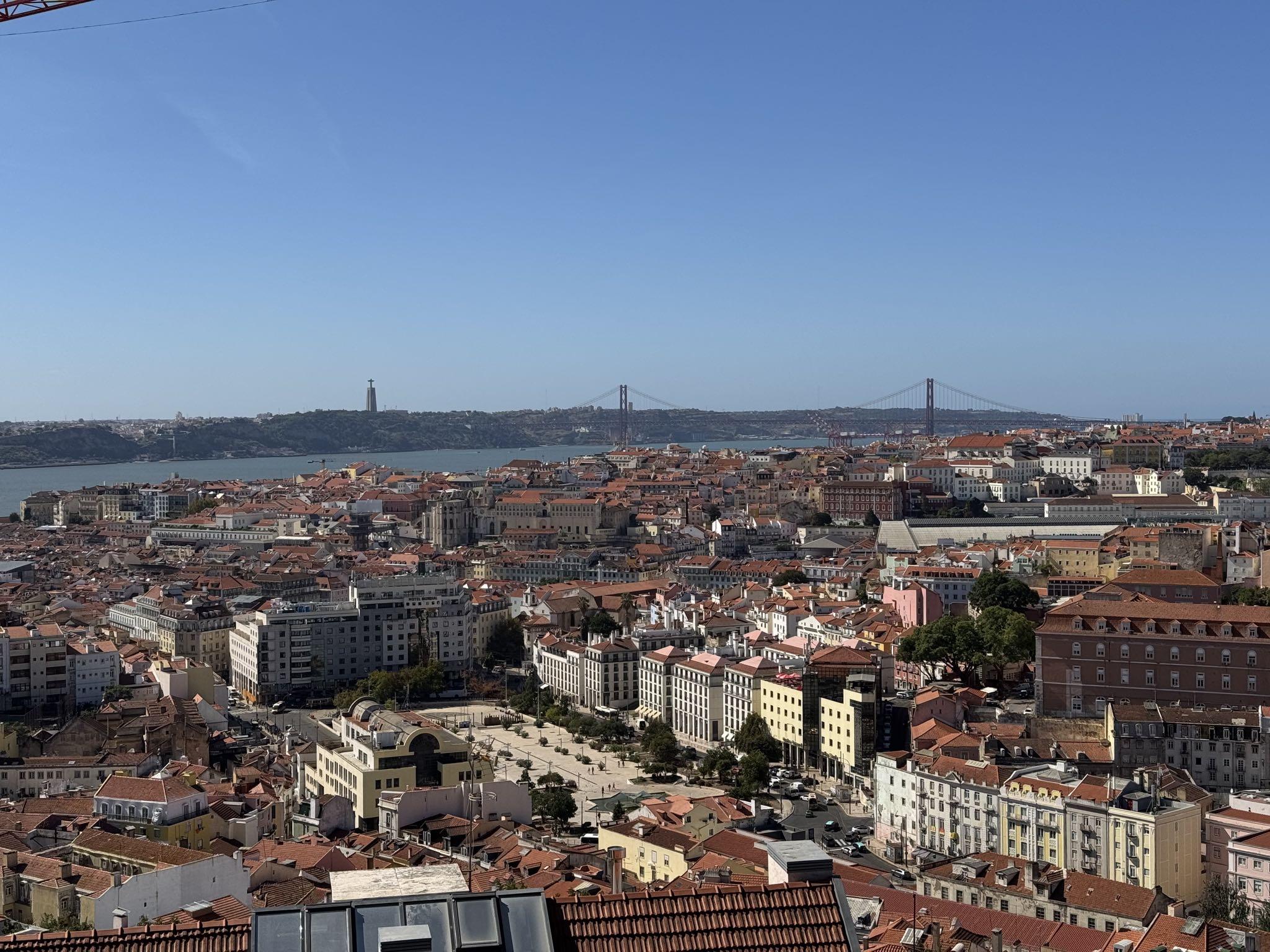
We can see a view over Lisbon city to the harbour and the bridge. There are echos in this view of Sydney and San Francisco. I imagine this view has similarities across Europe. You can imagine how people coming from Europe over the last 300 years wanted to make the New World and their new homes more like the places they had grown up in.
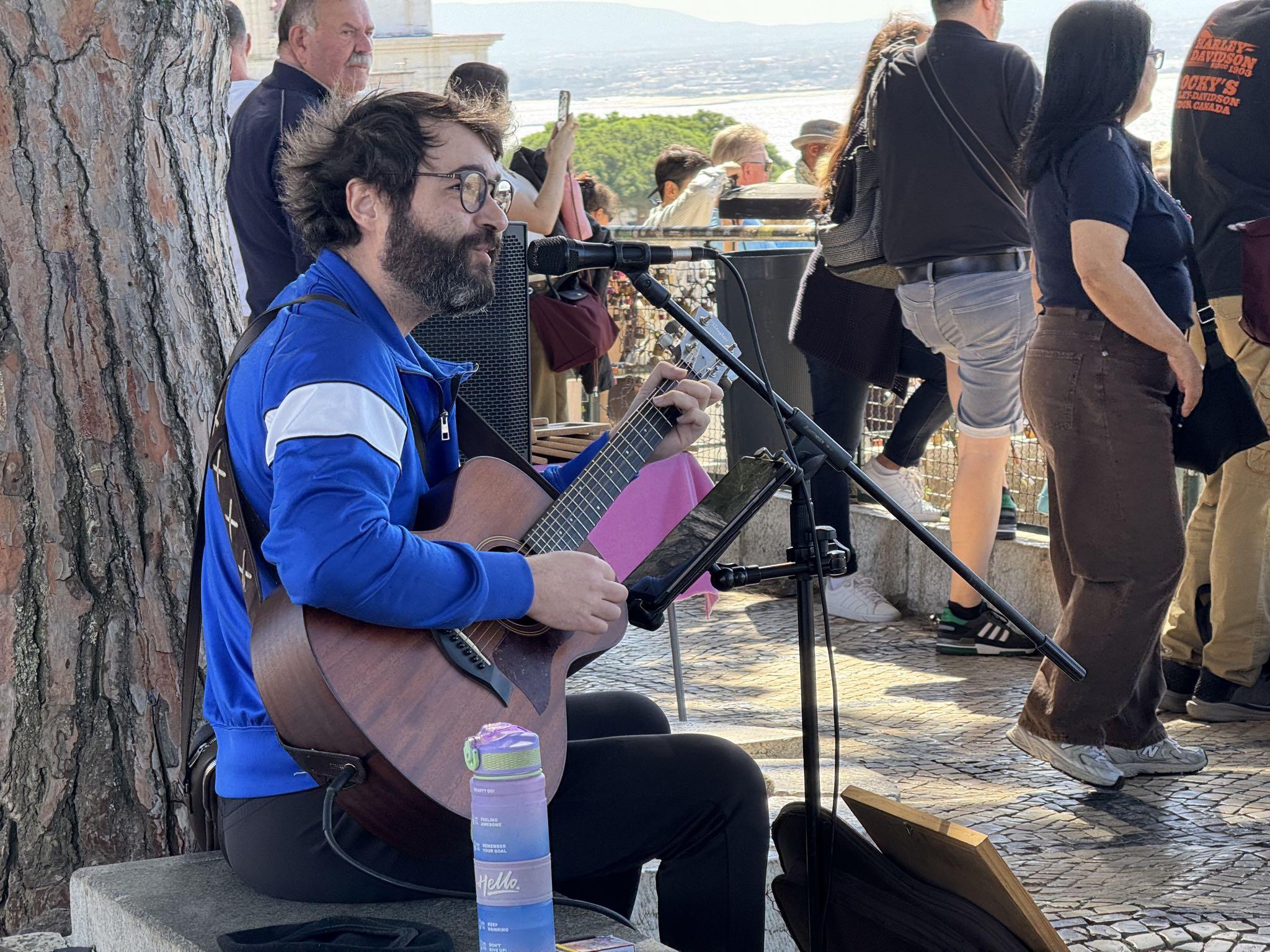
Nearby, a busker sings Cat Steven’s in Portuguese.
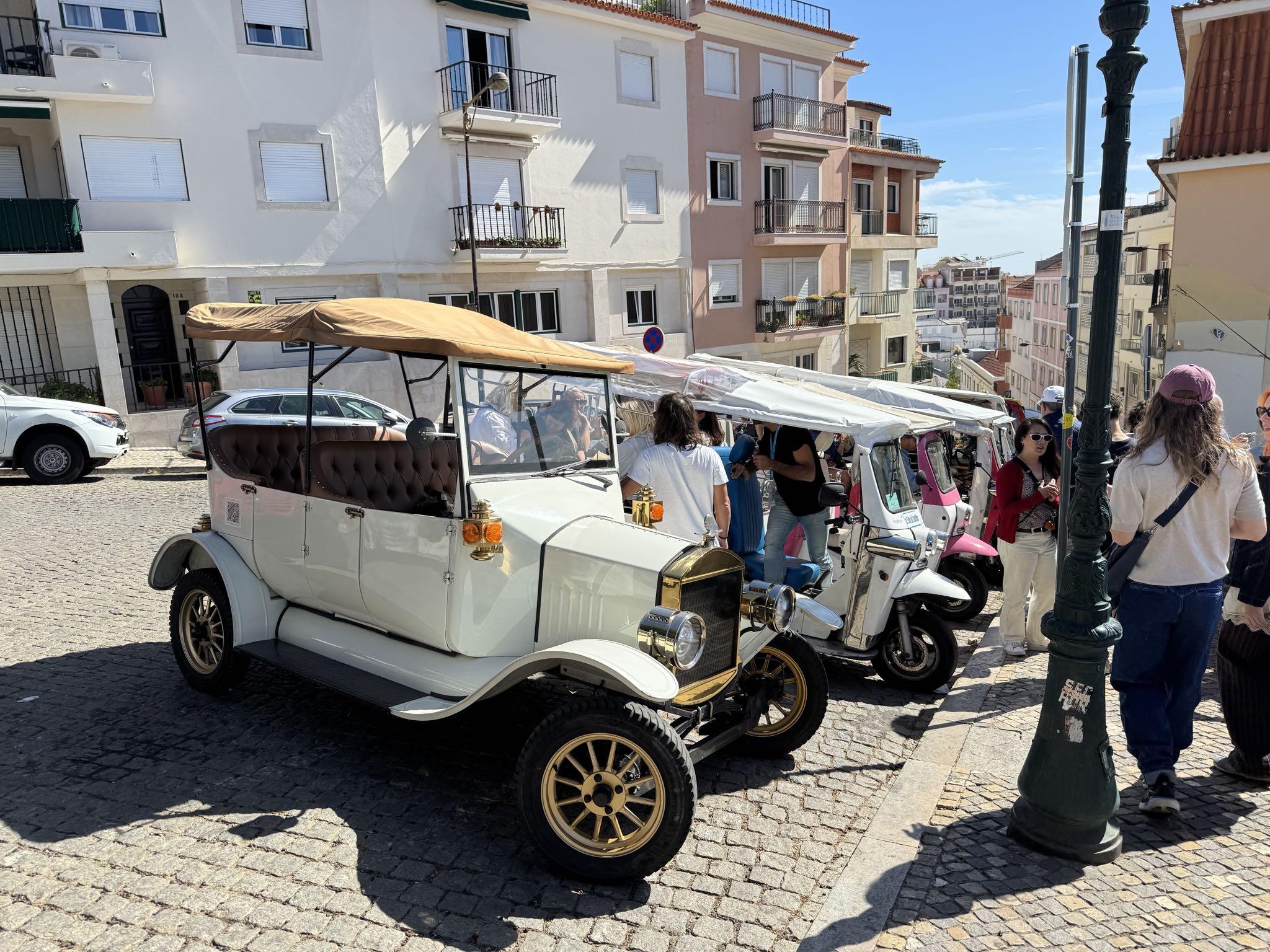
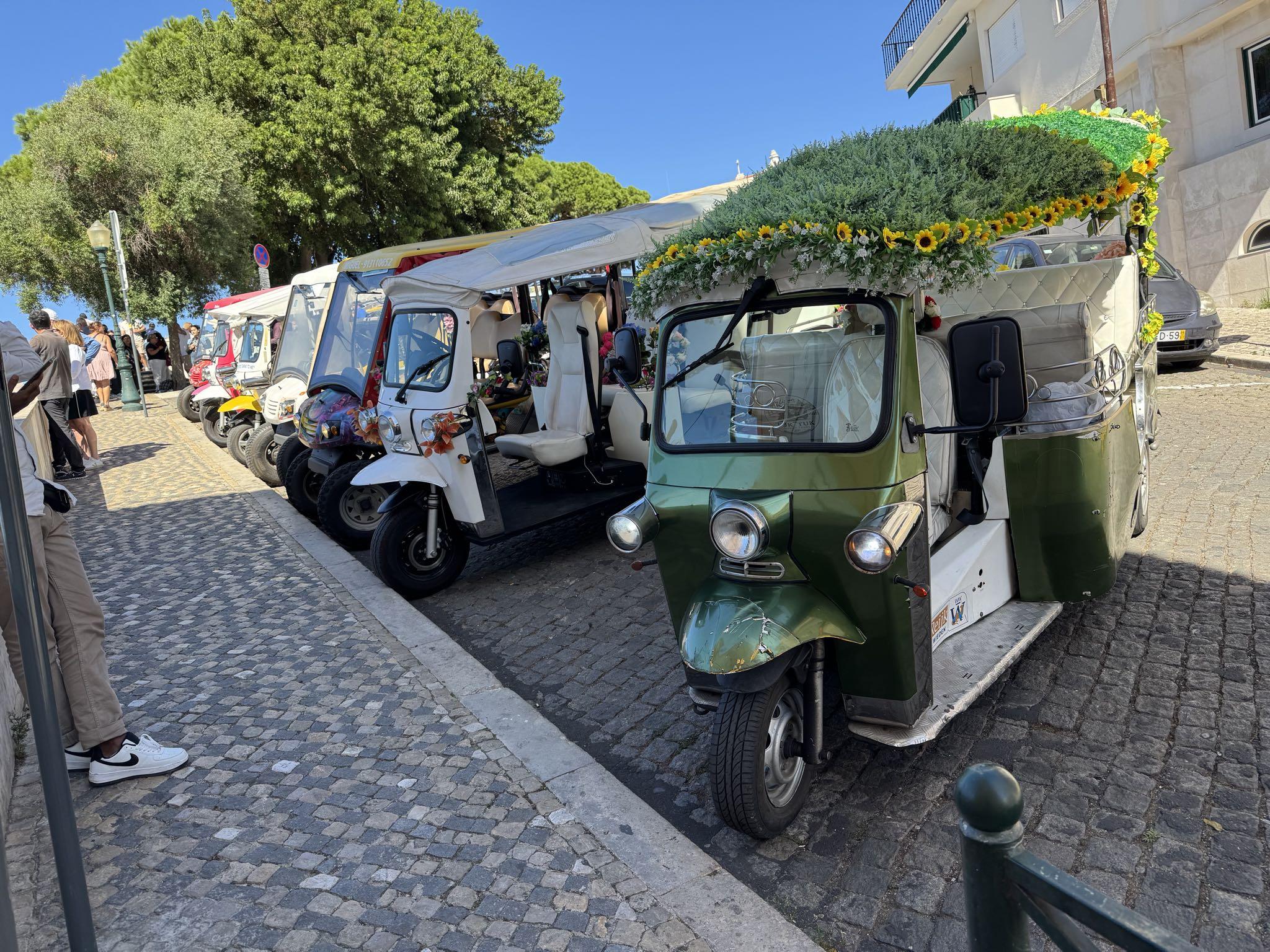
As we walk down the hillside, thai taxi-trikes (Tuk Tuks) offer a solution to Lisbon’s hills. Not for us today, the journey is the destination.
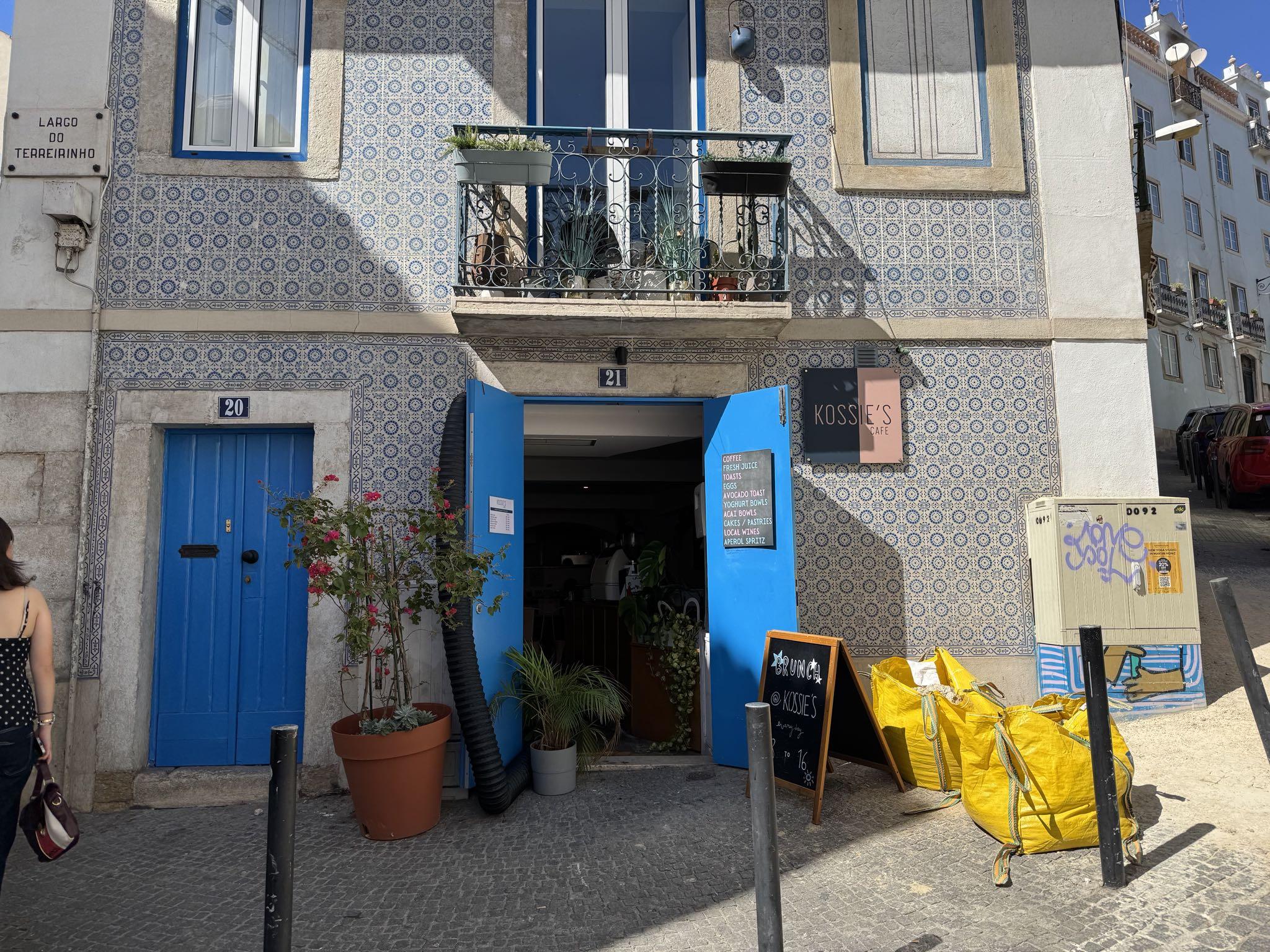
Our executive planning function dissolved entirely under the quiet tyranny of empty stomachs. We ducked into a random corner café, where the familiar twang of home greeted us behind the espresso bar—a full Aussie crew, thousands of miles from Sydney. A spirited debate unfolded—pitting the fastidious, high-concept precision of third-wave Australian coffee against the robust, understated traditions of Spanish palates.
We stop at a McDonalds in Lisbon to compare differences. Box of carrots; soup; smoky veggie burgers; Veggie nuggets. Curious but not compelling.
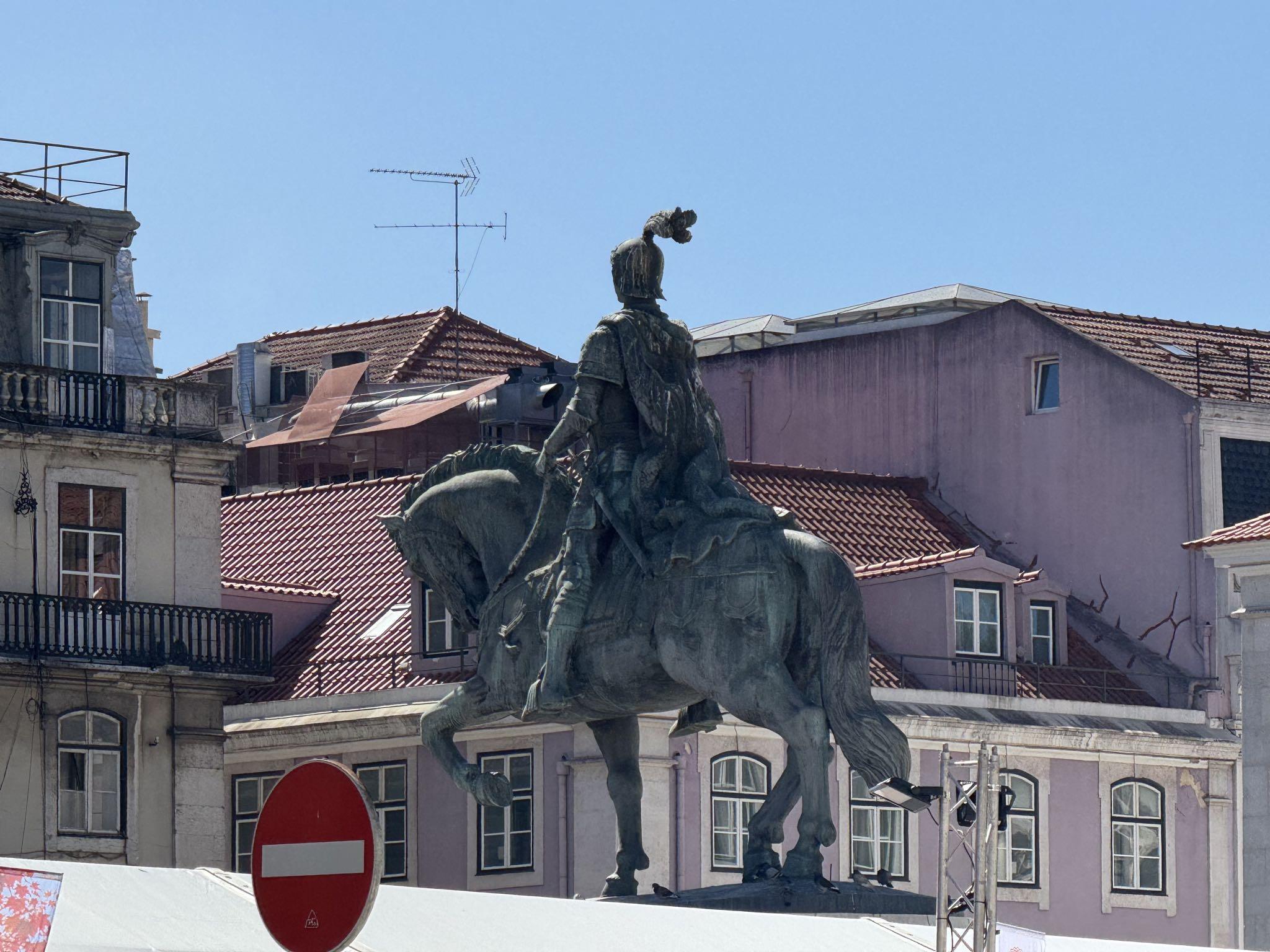
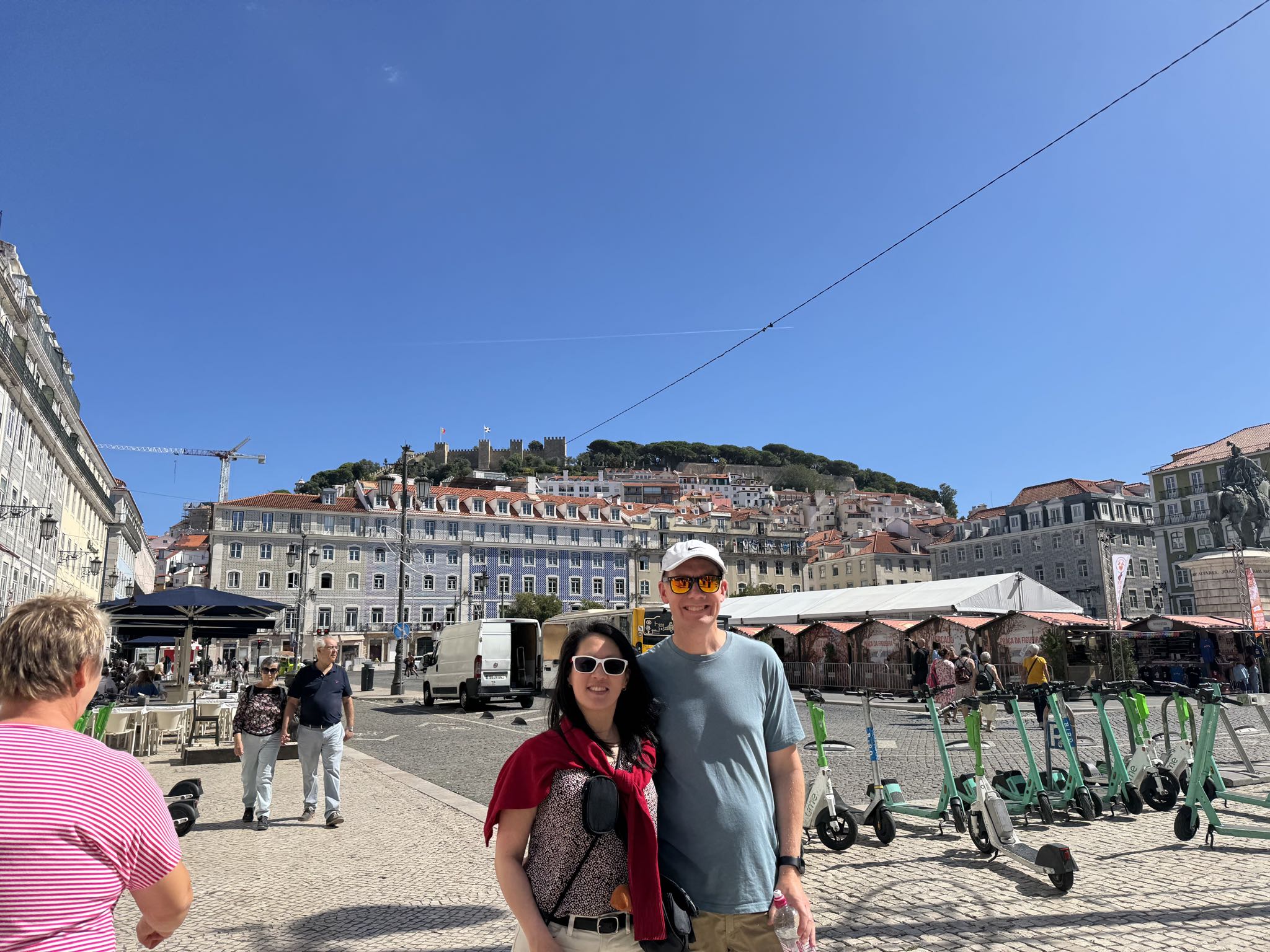
A statue of King John I – D. João I, 1357–1433 – whom I shall refer to as King Jono. (I’m still sorting out the history in my mind as it relates to various art and statues.) This was roughly 200 years after the Moors had been kicked out of Lisbon by the first King Alfonso Henriques. He is remembered for defending Portugese independence from Castille (not yet Spain, but a sort of pre-emptive Brexit from the coming Spanish Union). He is linked to the Portugese age of discovery (getting around the Cape of Good Hope, travel route to India – travel route to Brazil.) To me even then it was too small an economy, more as we shall see later.
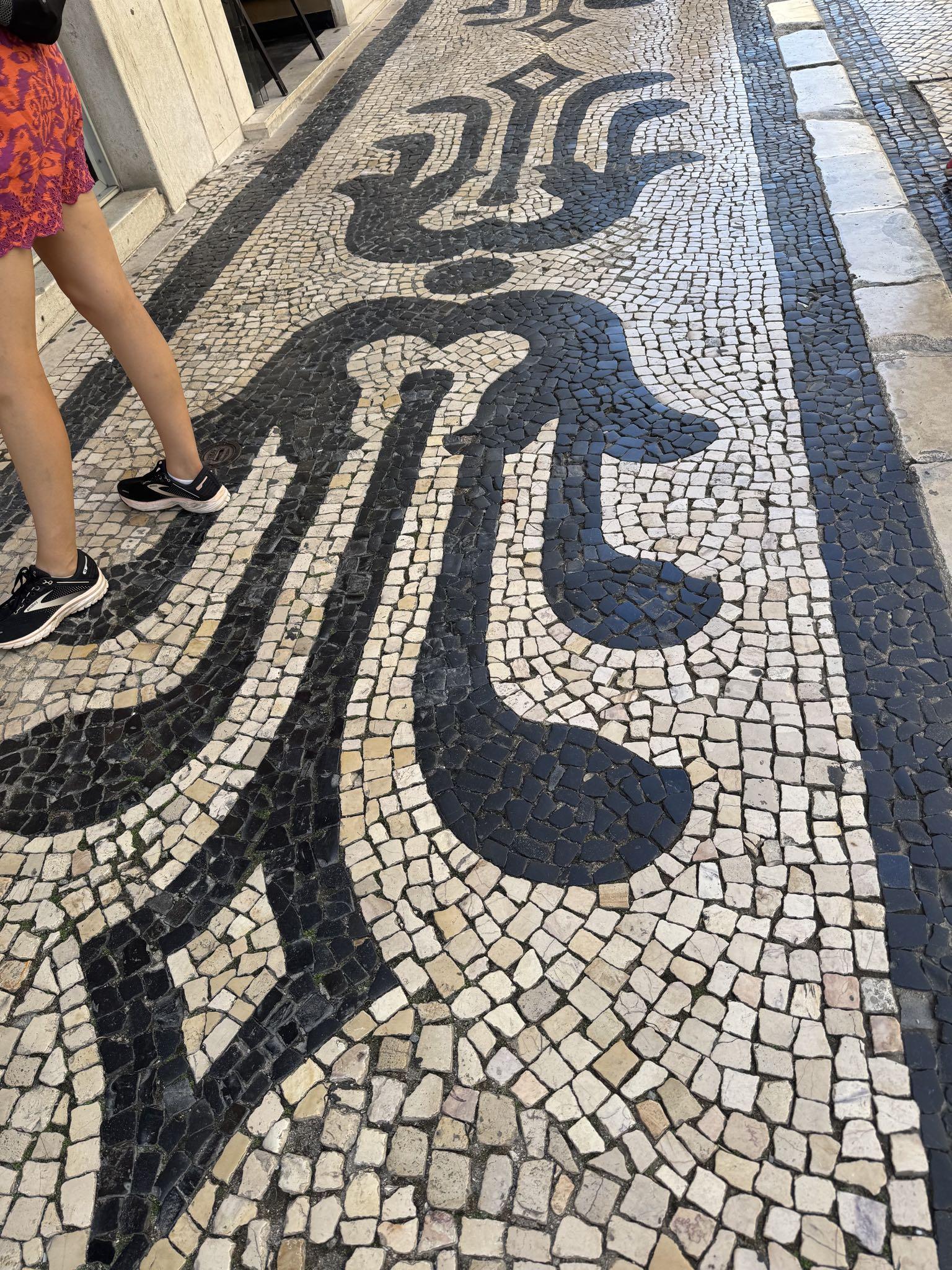
Lisbon has incredible streets tiled rough brick tiled in patterns. They are part of a broader theme of tiles that I’ll cover tomorrow.
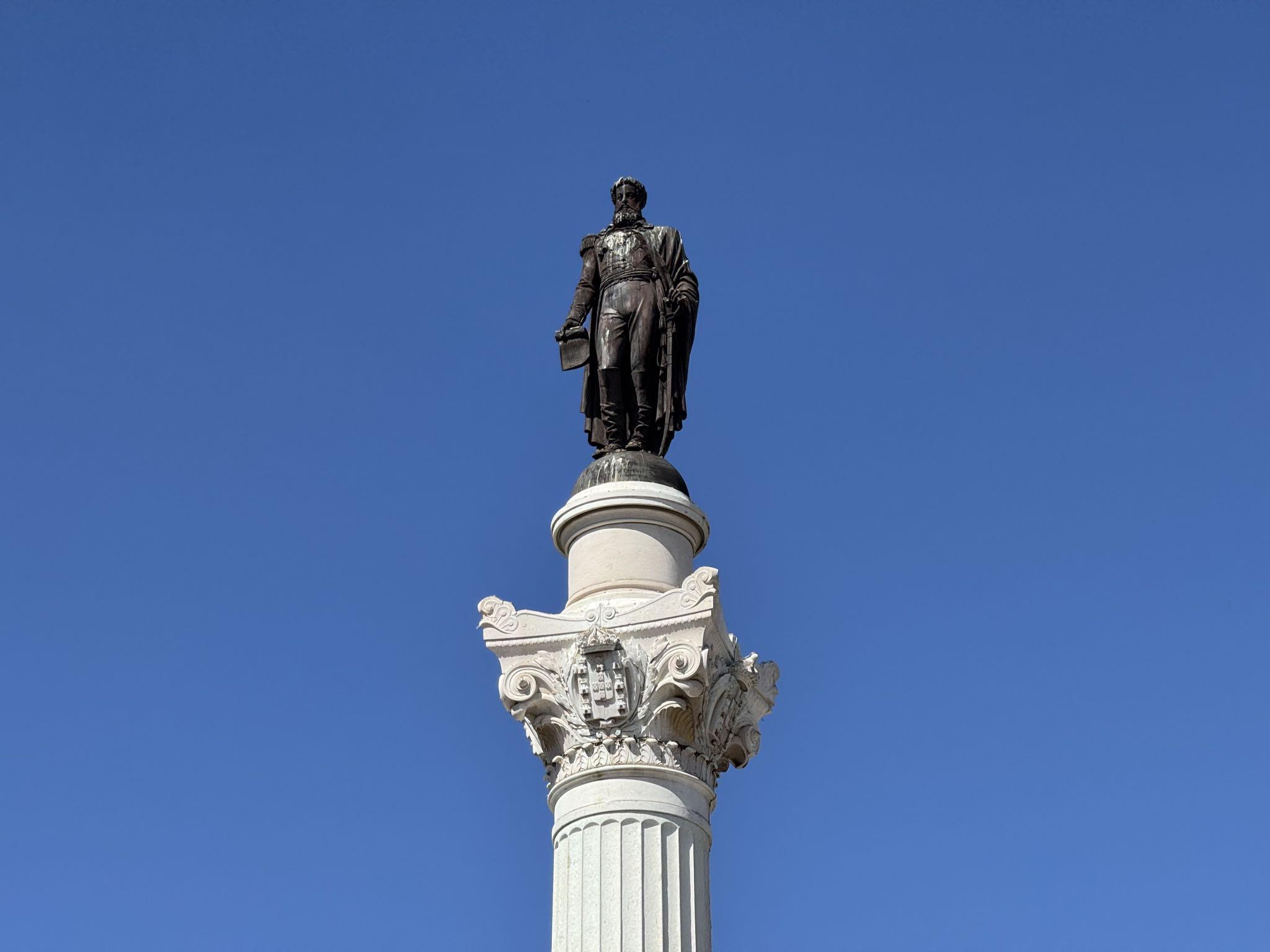
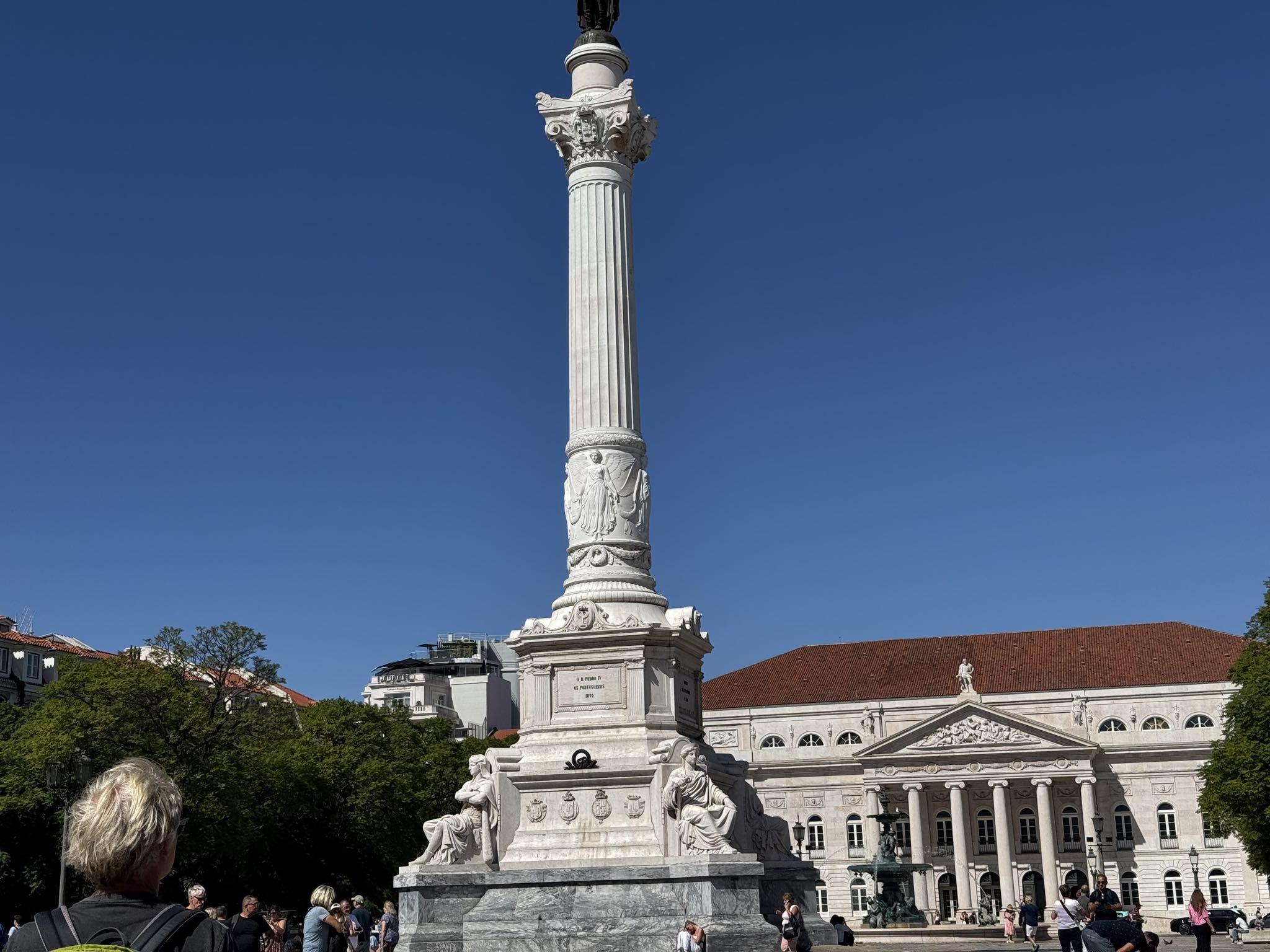
Europe is big on statues on pedestals in a way that Australia is not. (That itself is a chicken-and-egg problem for another day.) This is King Pedro IV in Rosso Square. He declared a Constitution, his brother seized power and kicked him out, and Pedro came back with some European friends, kicked his brother out and put his daughter on the throne and put the Constitution back. This has the dubious distinction of being Portugals longest running Constitution, implying they gave up on it for a while, and now have a new one. (More on the theme of Portugal being too small for their own stability. Perhaps even bigger cultural and legal themes about South American government stability.) The statues at the bottom of the pedestal represent Justice, Prudence, Fortitude, and Moderation – a kind of “for the people” “anti-corruption” vibe.
Next we have a fountain imported from France – with themes of fertility and fortune from water from the gods. Seems a bit off-brand for Portugal – which has a mixture of Christian and can-do humanism about it.
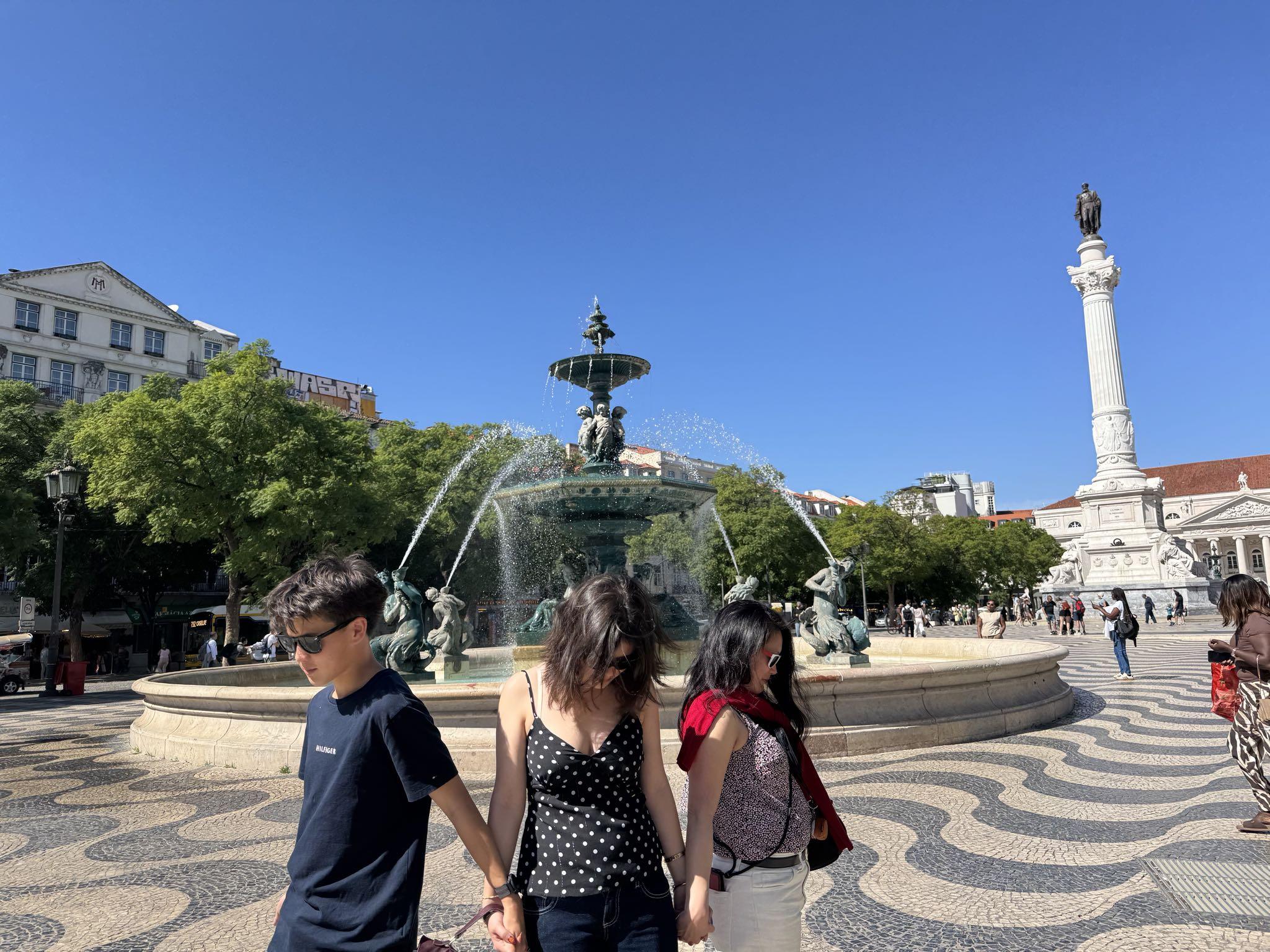
Walking around in the square we see some interesting priorities in Portuguese cafes – churros, beer and steak. Nobody in my group is disagreeing with that.
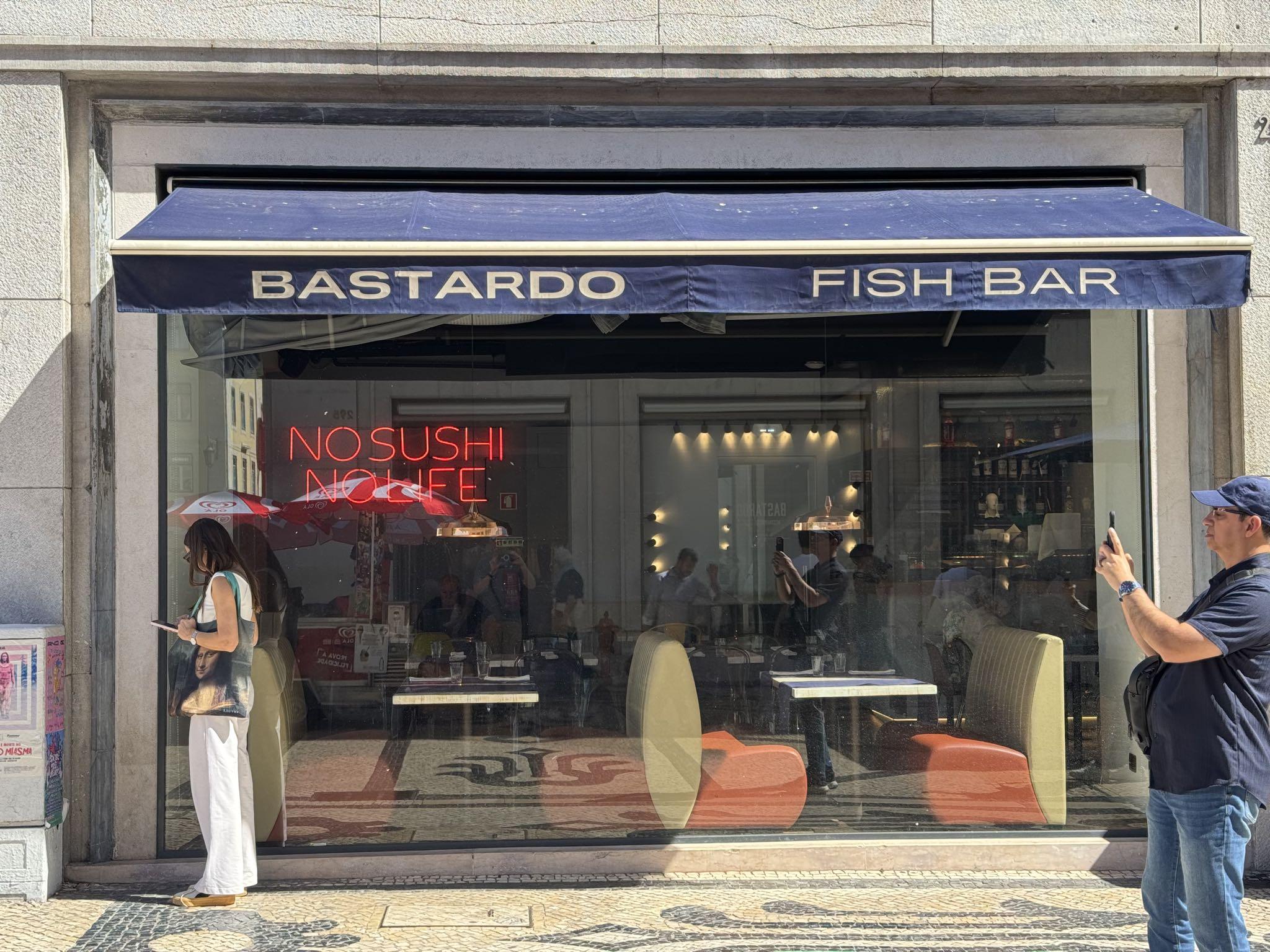
We come across a Portuguese fusion sushi bar. (The bastard child of different cultures).
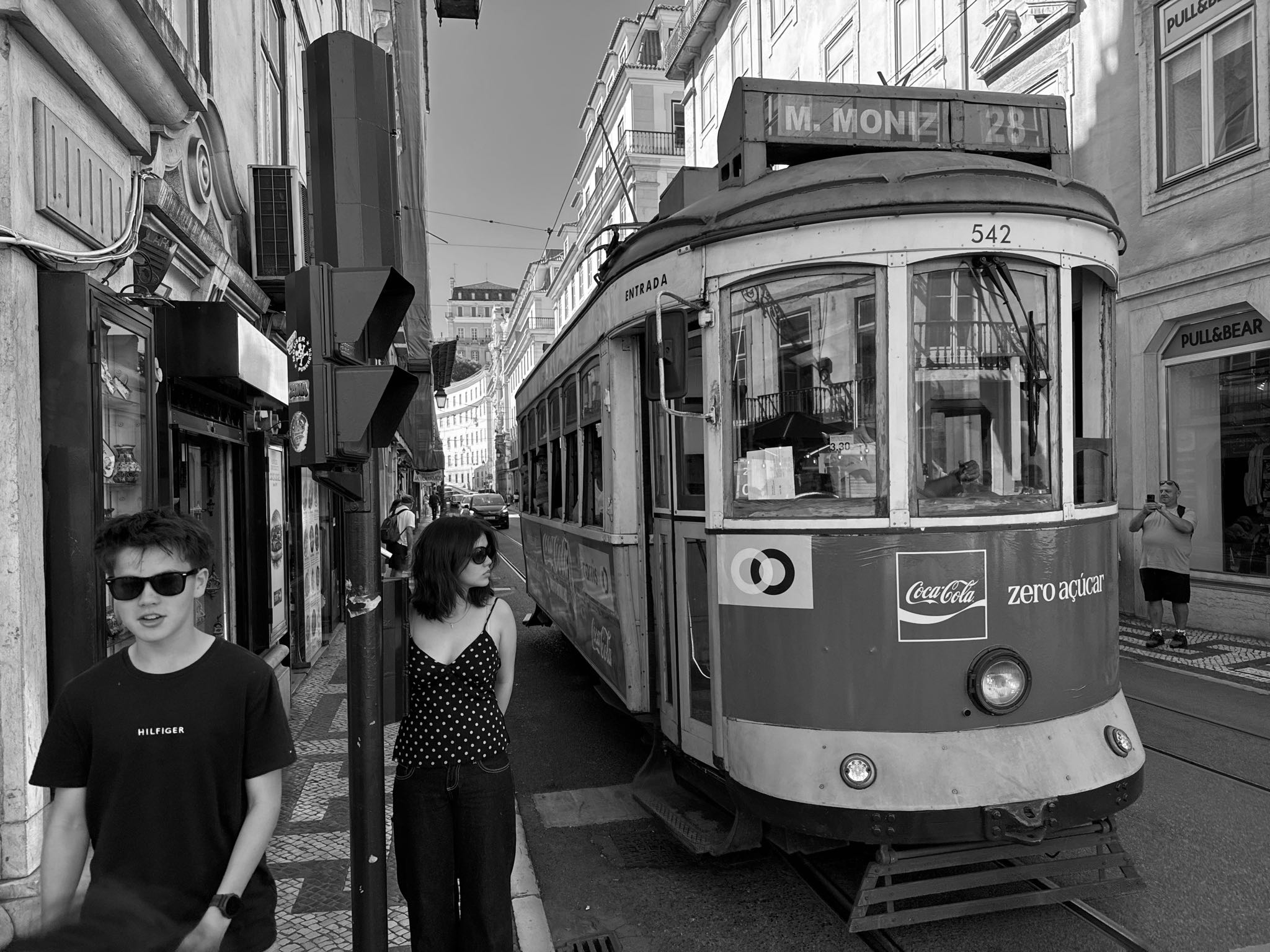
We walk along and a moment of European artistic moodiness overtakes Trinity.
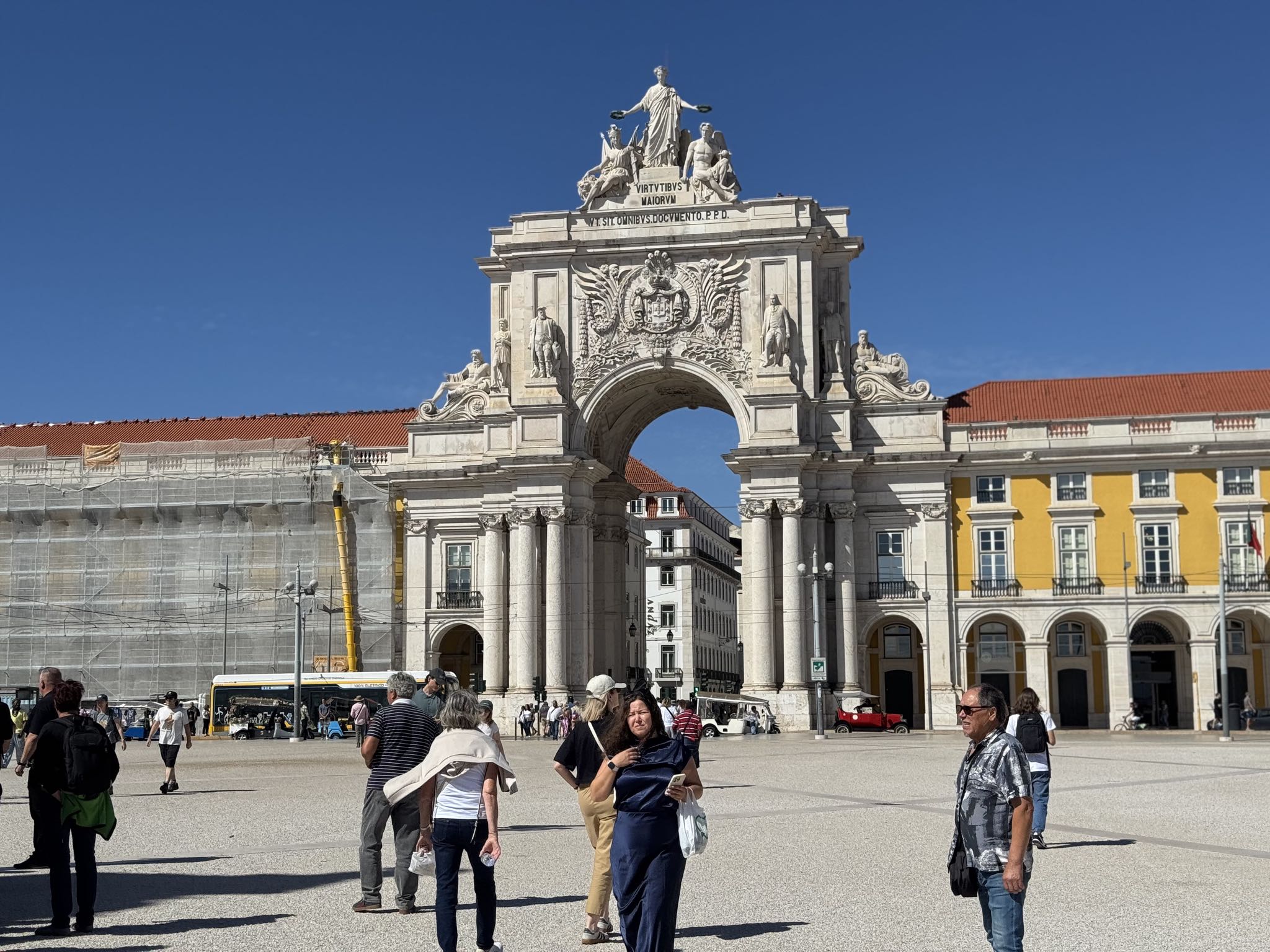
We climbed the steps to an arch to celebrate Lisbon surviving the 1855 earthquake. This Earthquake ultimately devastated the Empire, although at the time of building this it was not clear. It makes sense at the time of economic downturns to do building projects, and the theme of this arch is that Lisbon is the little engine that could. It looks out at the water and say “Yes! We can do it again.” But it has all the substantive weight of a 90s motivational poster of a kitten hanging onto a rope saying “Hang in there baby!” Portugal and Lisbon is ultimately a lightweight that turned inward.
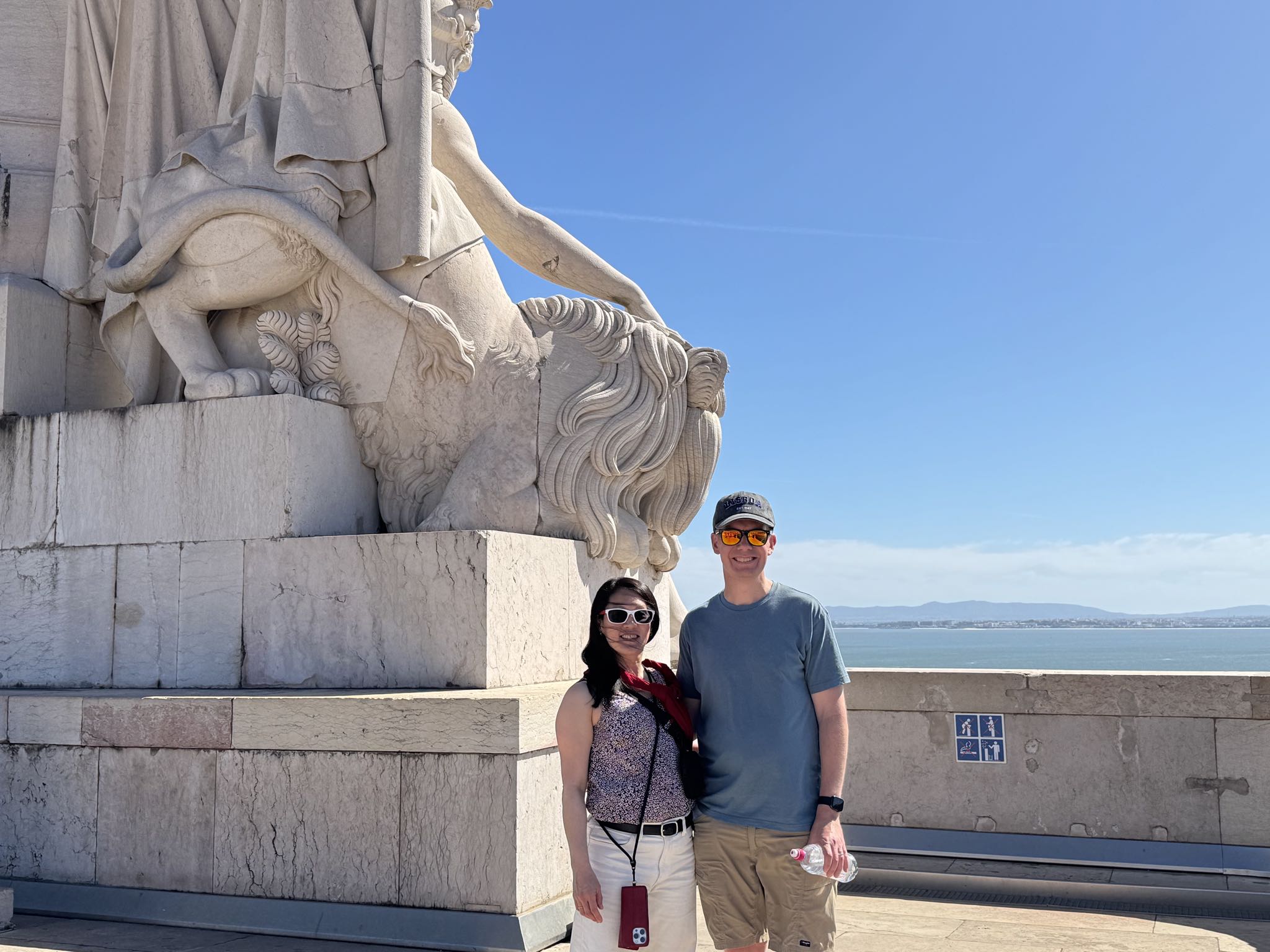
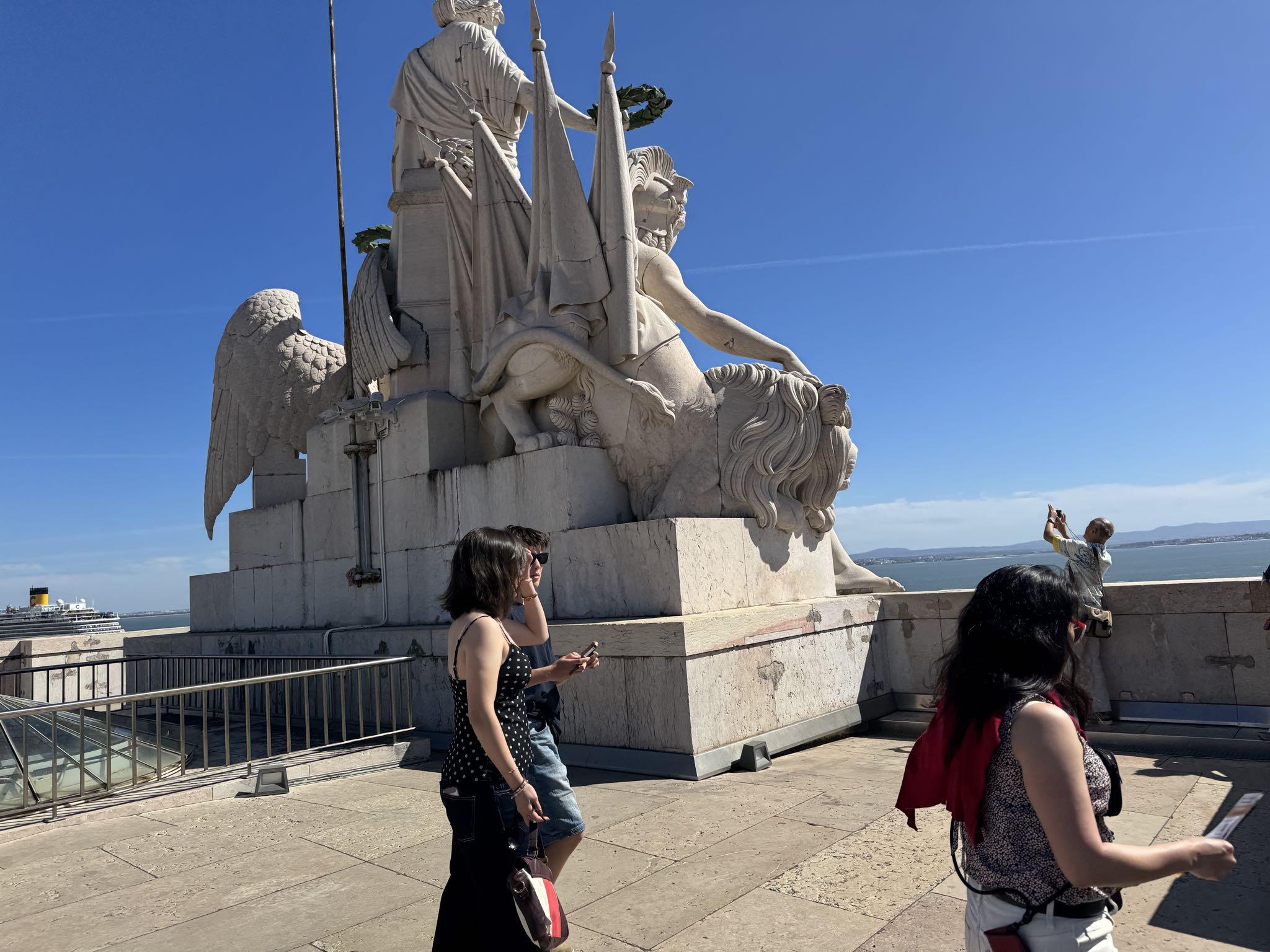
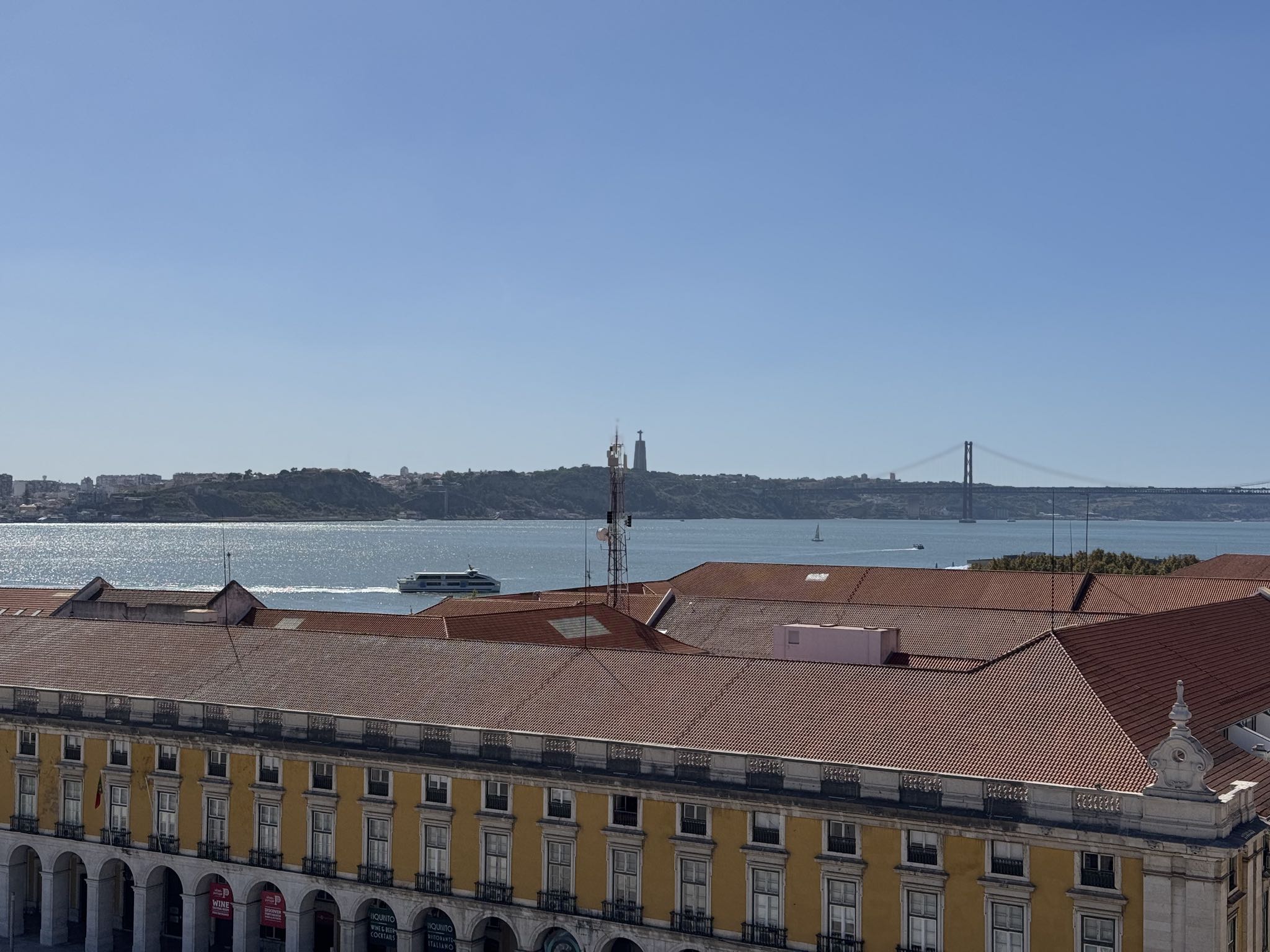
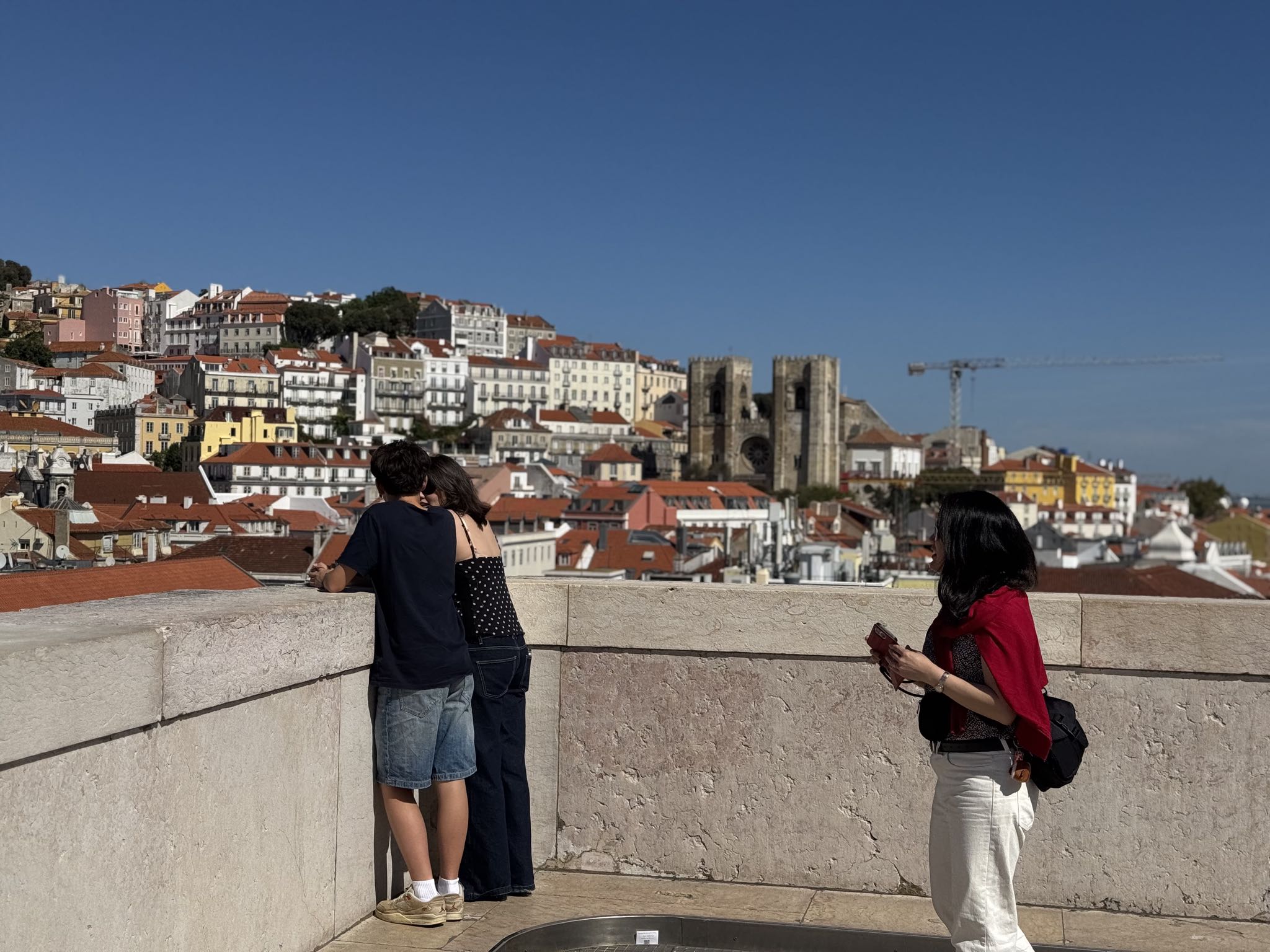
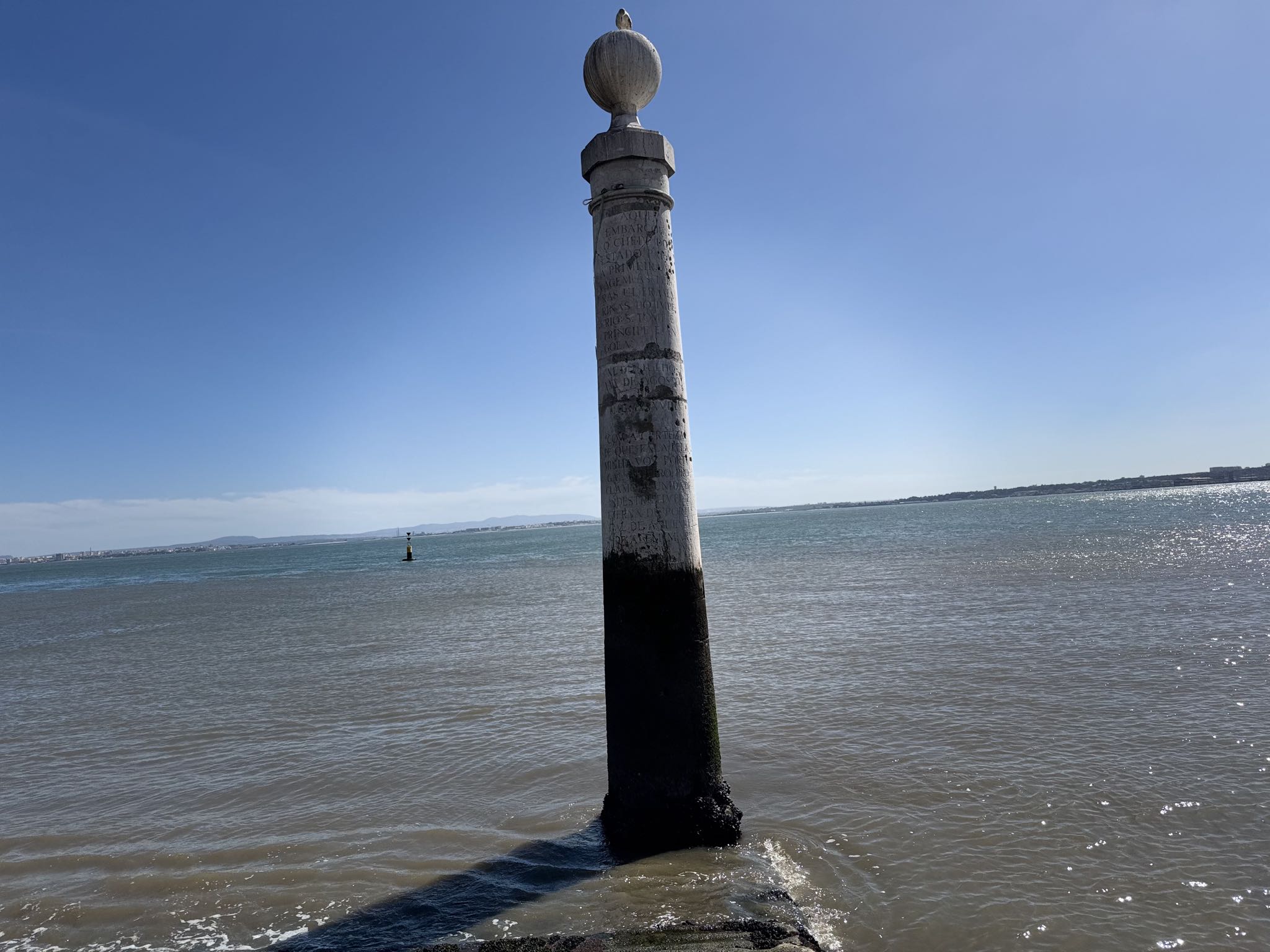
We walk further down the square to a symbolic dock at the Harbour. You might for a moment stare at in hope you have found the place where all the magic happened. That you are standing in the footsteps of those grand voyages. A quick google search dashes your hopes. The discoverers left from upriver in Belem, and Portugal was too poor at the time to fund Christopher Columbus. This dock is pure motivational-kitten-poster stuff. I want to stomp off in disgust. Perhaps I’ll find a custard tart.
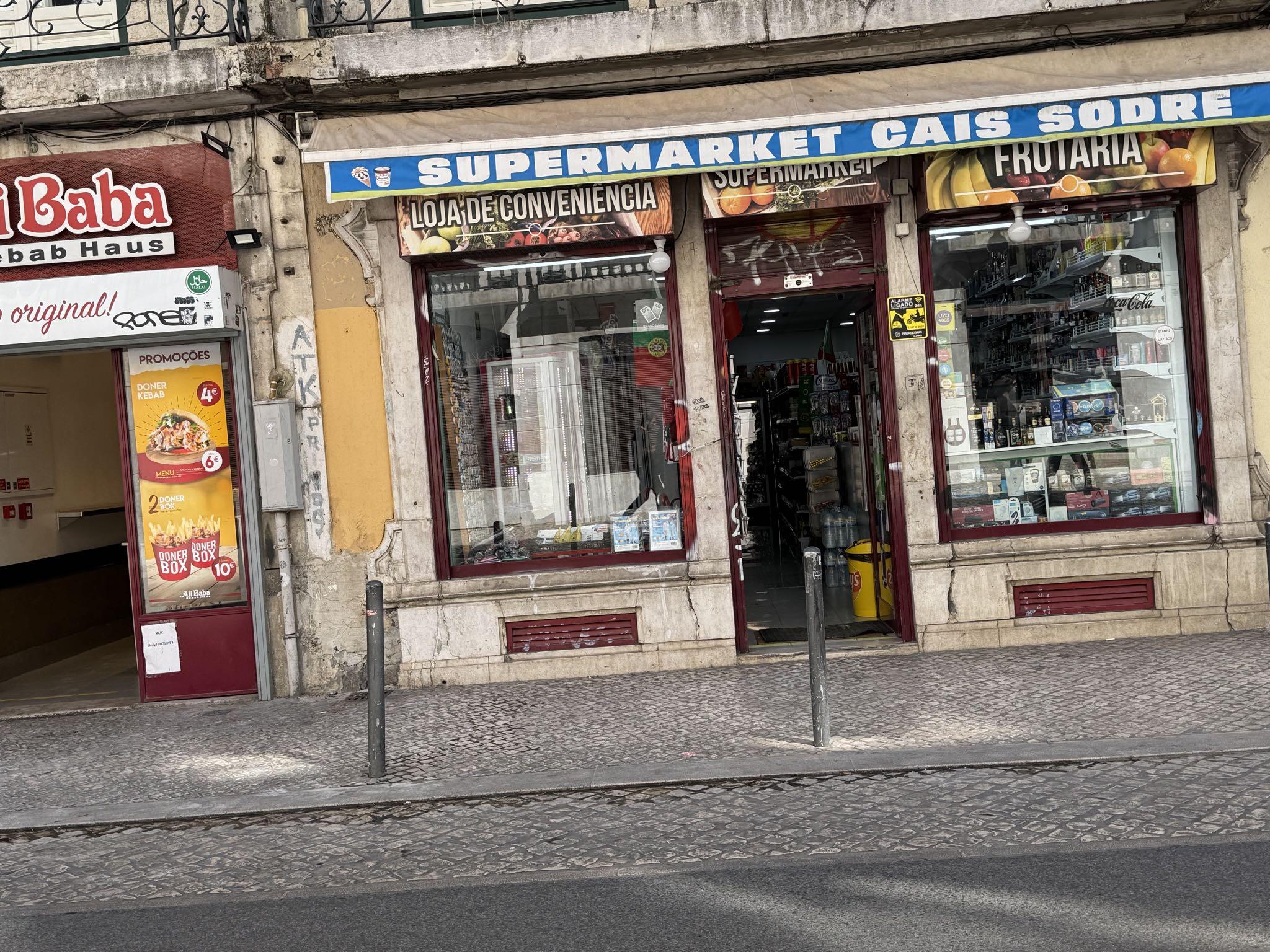
This is the vibe of the small convenience stores in the city. (Loja de convienca – lodge of convenience – Convenience Store.) I feel that in a decade or two they will all become a chain of a European brand like Liddl. In speaking to locals they talk of how Lisbon has become culturally homogenised since European Union. I look at what is taking place in the EU (enabling single Corporations to span the whole EU instead of being state-based), and say “You ain’t seen nothing yet.”
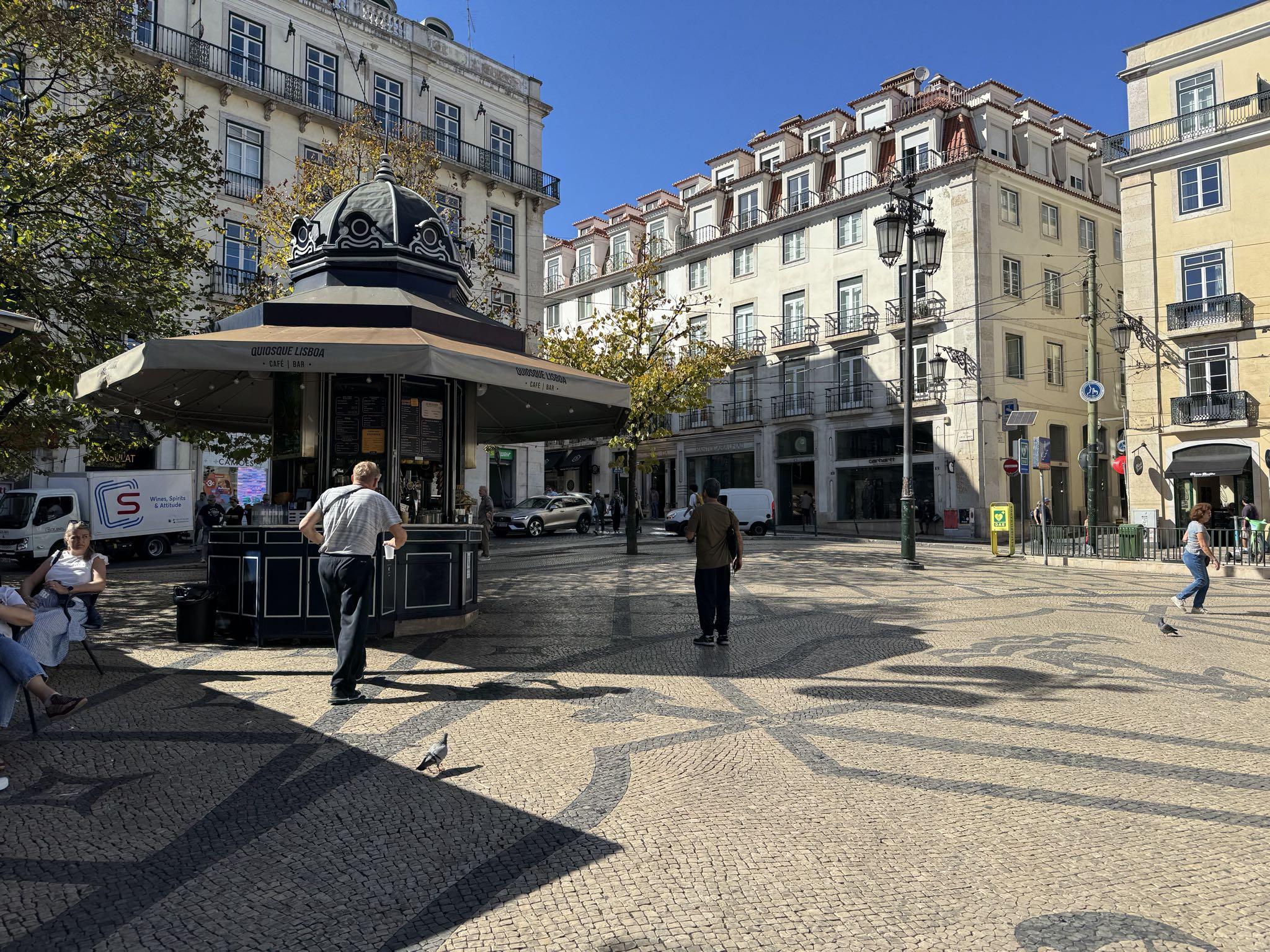
Portugal wants to be both European and its own. You might say this is form over substance. A thoughtful reflection might suggest it is soft-power influencing.
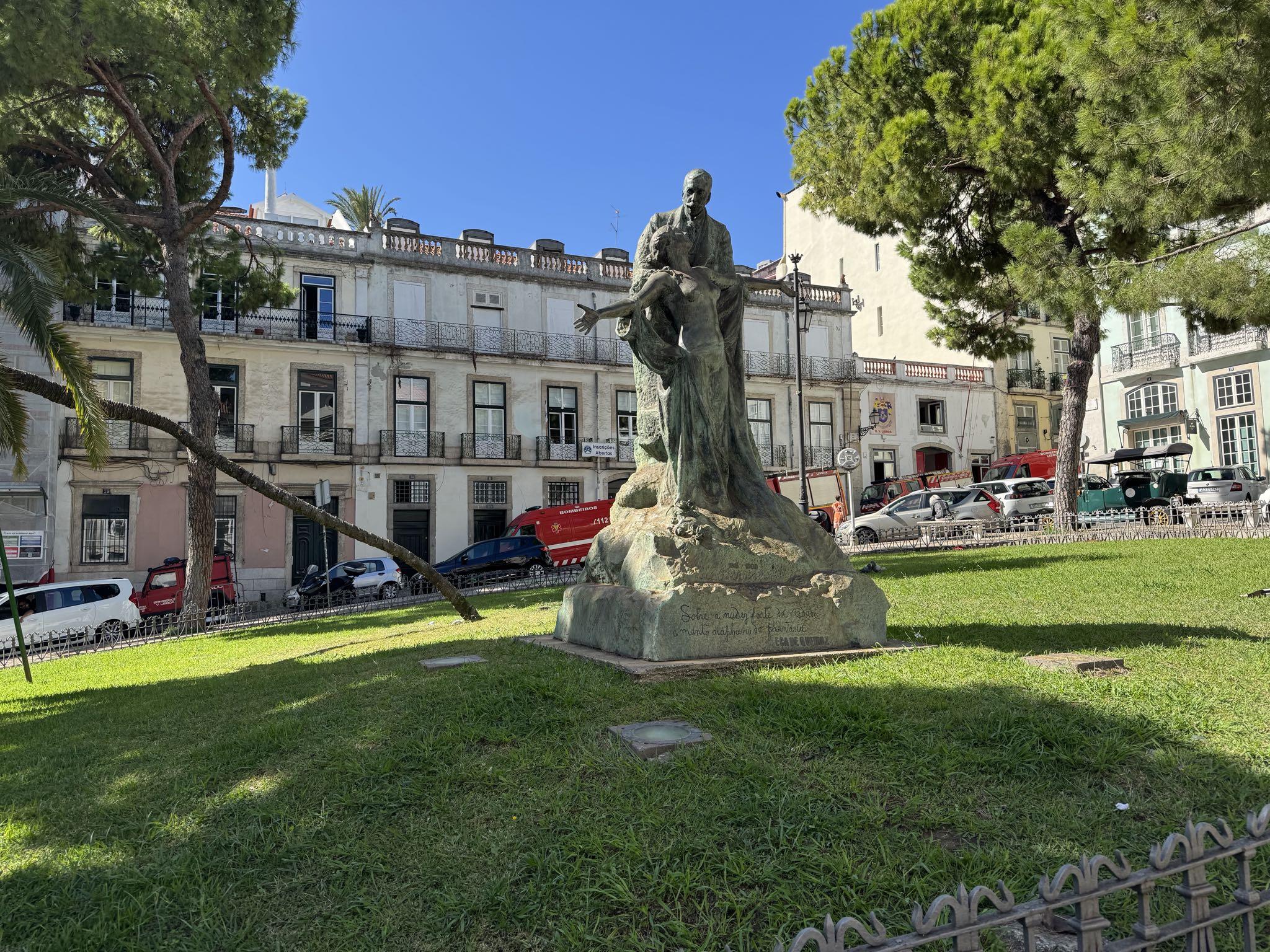
This is the Portuguese Charles Dickens. The Inscription reads “Over the stark nakedness of Truth, the diaphanous cloak of Fantasy”. He is celebrated for being a diplomat, novelist and sharp social critic. He lampooned the hypocrisy, bourgeois superficiality, religious corruption, and political stagnation of late 19th-century Lisbon. The statue depicts Truth draping herself in this transparent cloak—symbolizing how a novelist uses imagination and storytelling not to hide reality, but to render raw truth human and accessible.
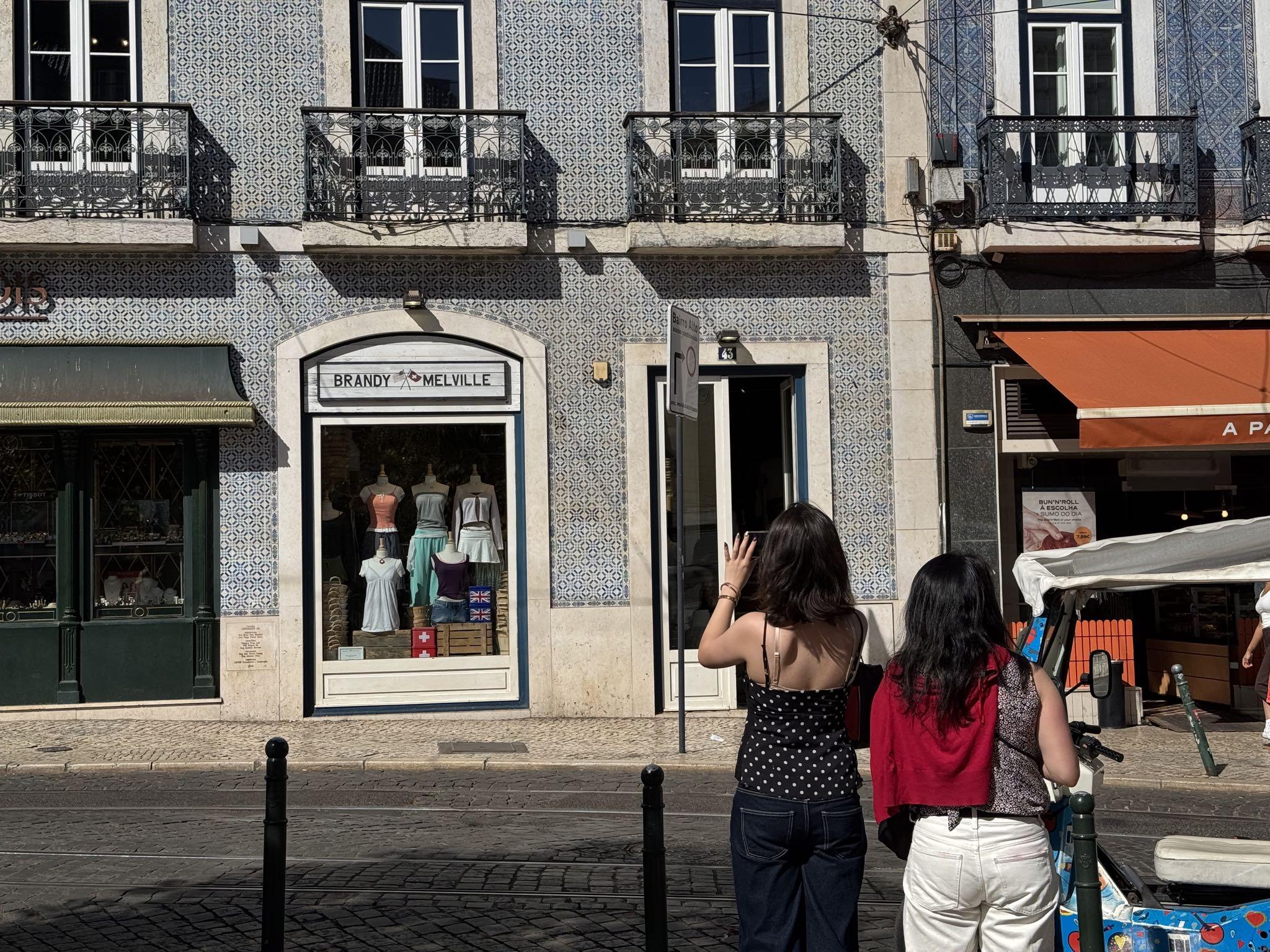
Trinity found one of her “destination sites” for visiting European Cities.
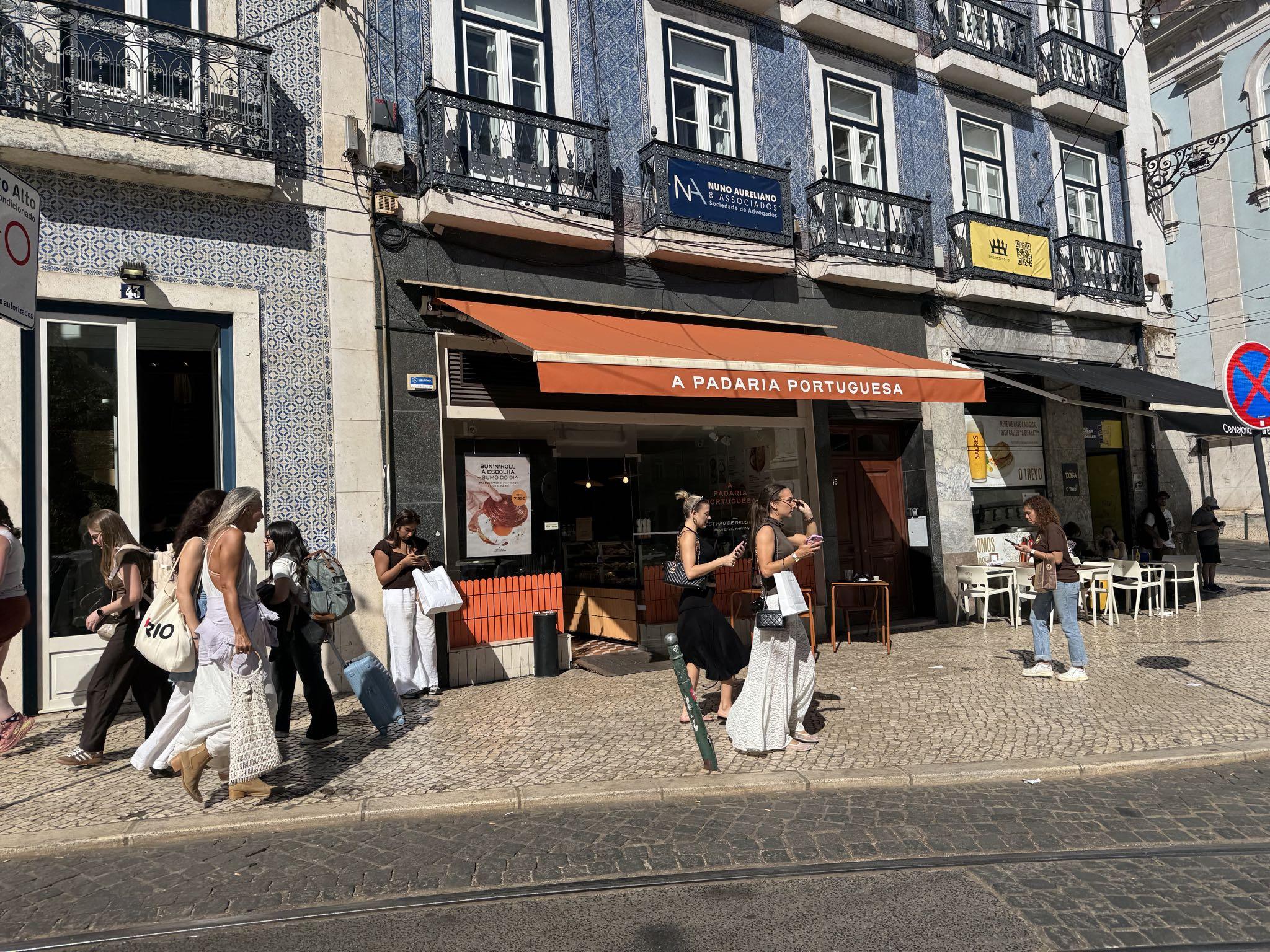
We decided on afternoon tea respite next door sitting in a cafe eating Portuguese custard tarts. It was a warm afternoon and we were running out of steam.
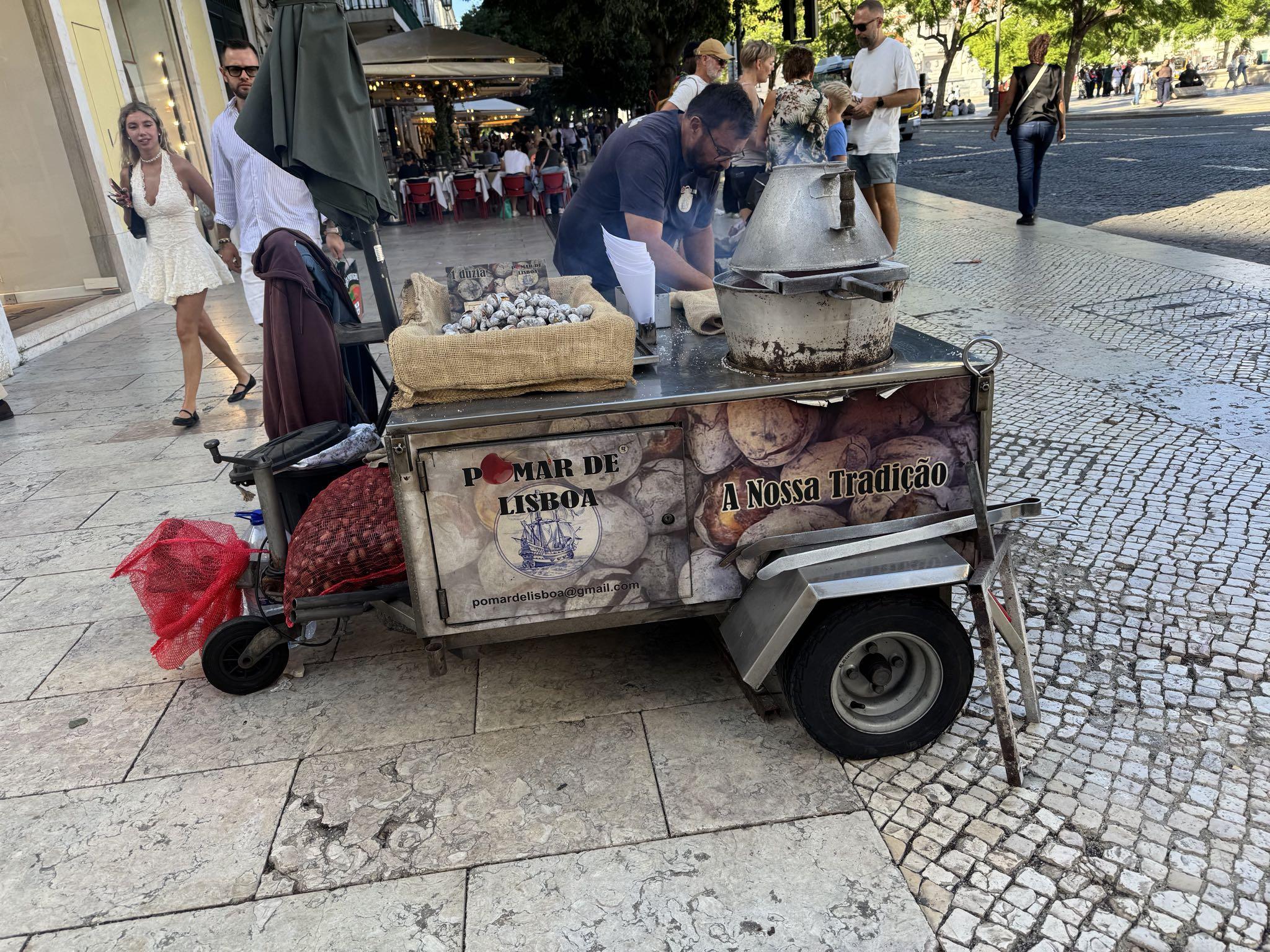
Walking back we saw a man smoking chestnuts. My limited experience is that these don’t actually taste very good, but are a strong link to an 18th century world. (More on this theme later.)
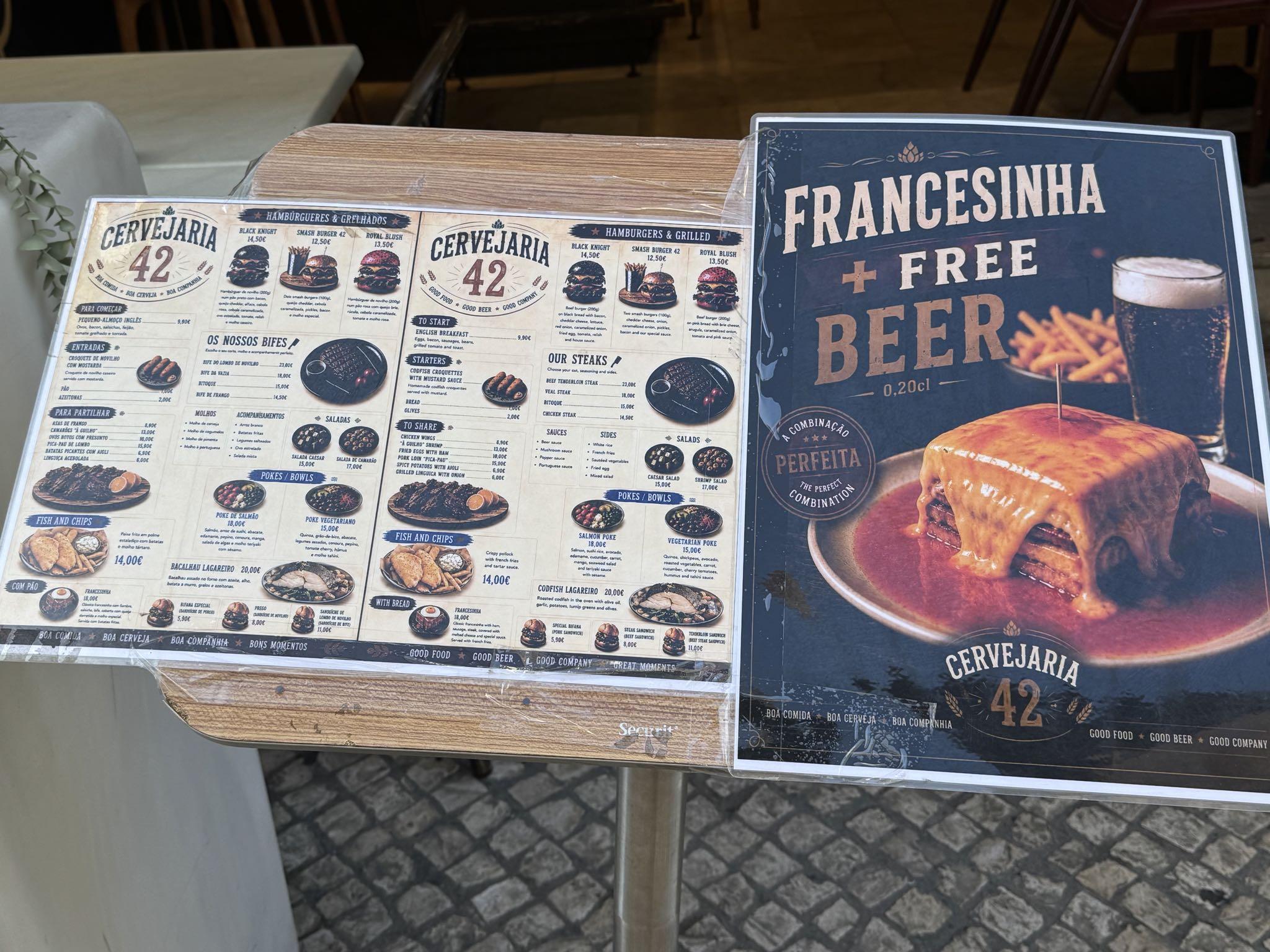
Dinner was at a local corner restaurant, sampling various ways to cook a Cod meal. (Which Lisbon is really into.) This and various ways to do cheese sandwiches (Francesina) are Portuguese staples. (This photo is not where we went but is an indicator of what what kind of meals are on offer.)