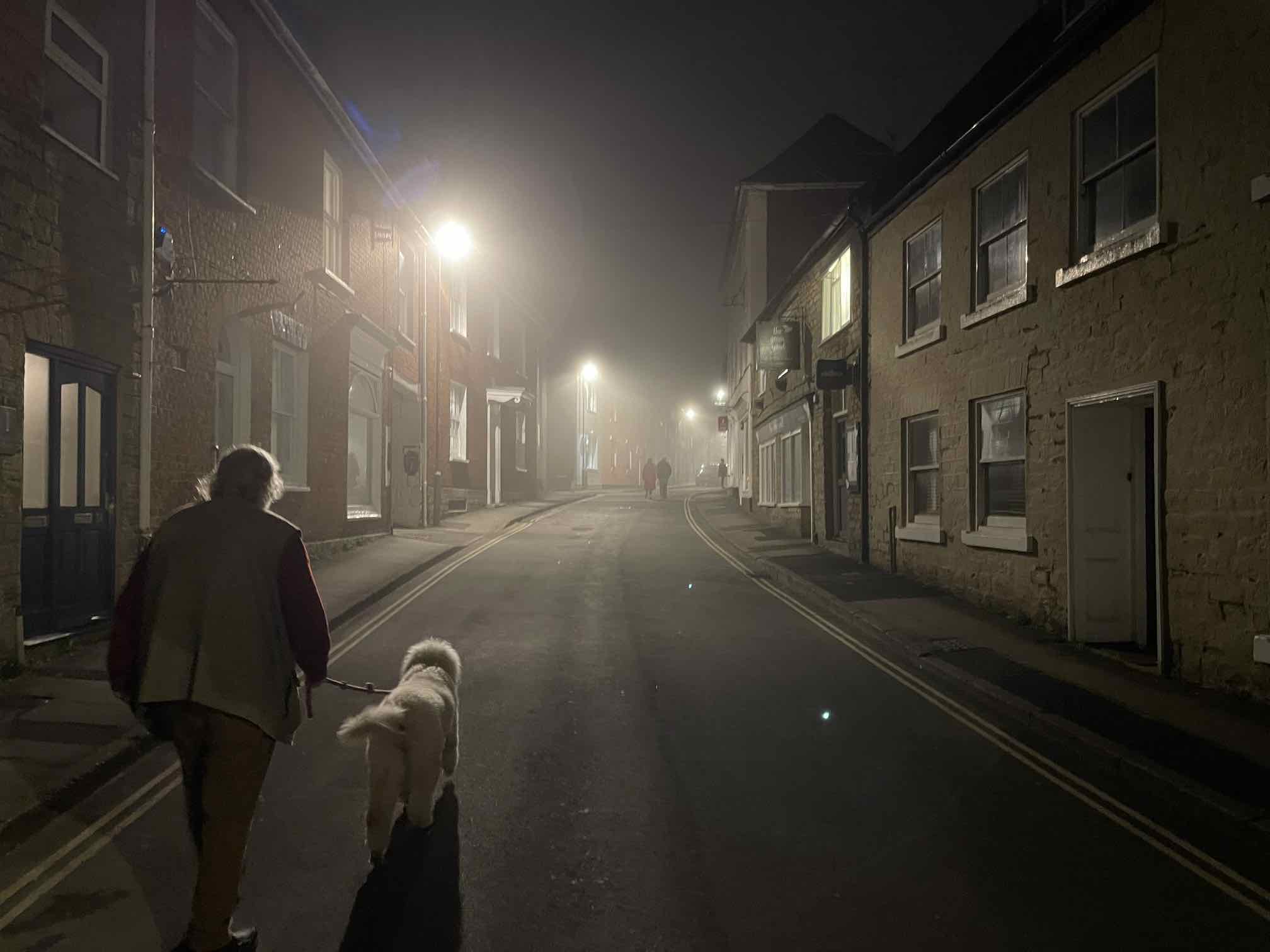
The morning dog walk proceeds without a care in the world. There is no reason to rush here as we wander lanes and avenues. Birdsong and the cry of land-seagulls provide a backdrop. We say hello to other dog-walkers and stroll back along the main street.
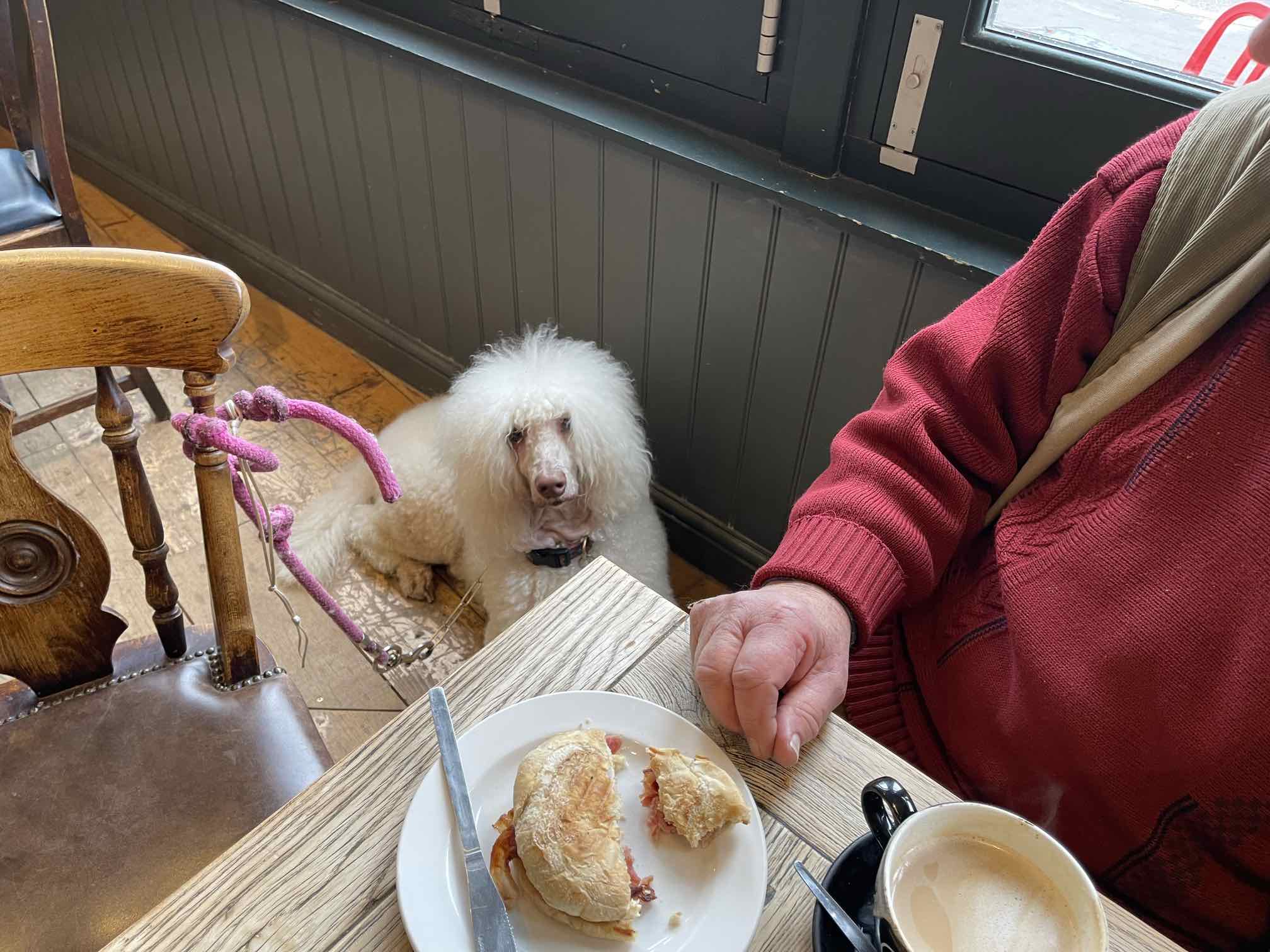
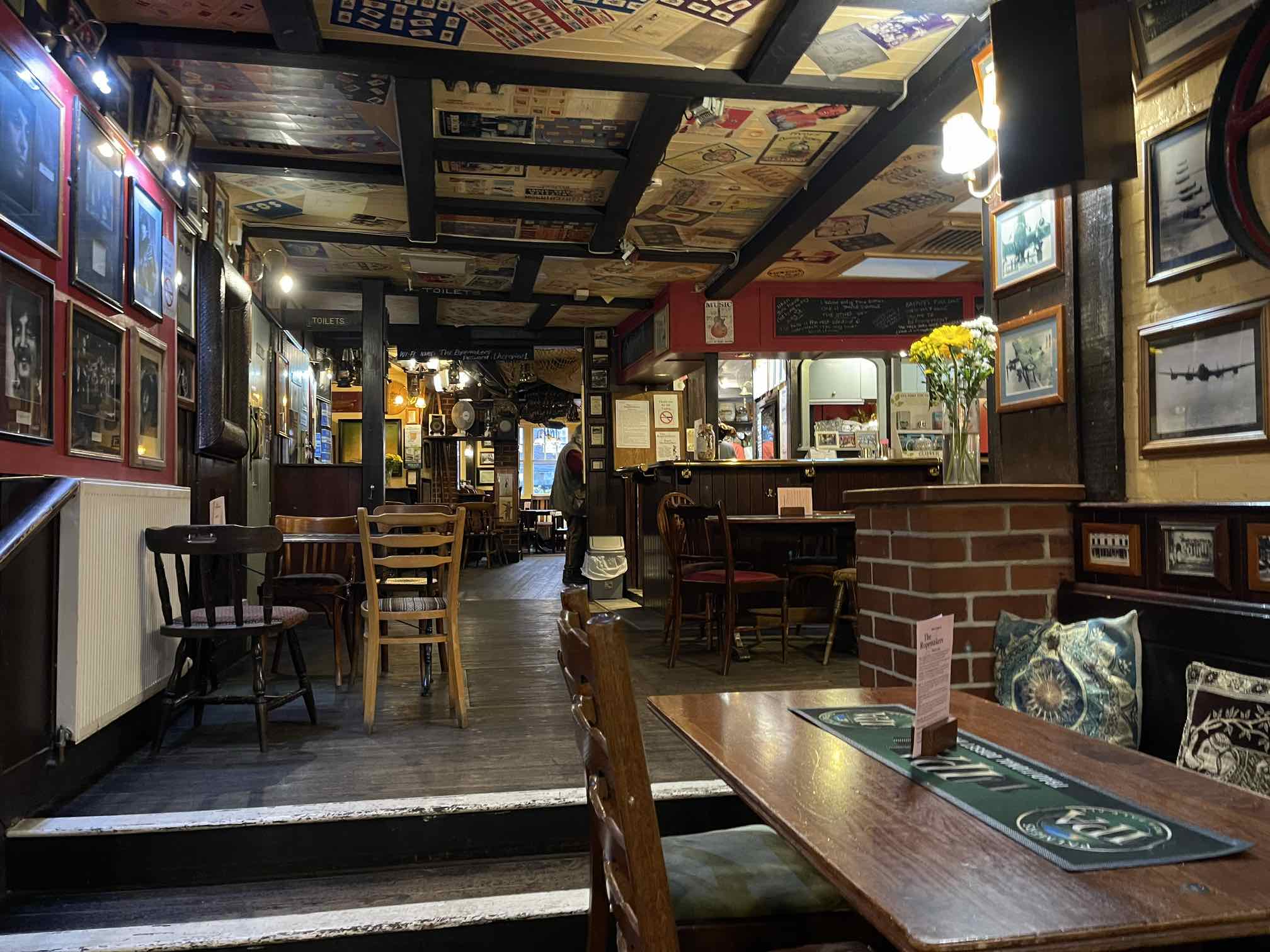
Breakfast bacon rolls. The place originally banned dogs, but was in danger of going out of business. The community considered it mean- spirited, and came back when they changed the policy.
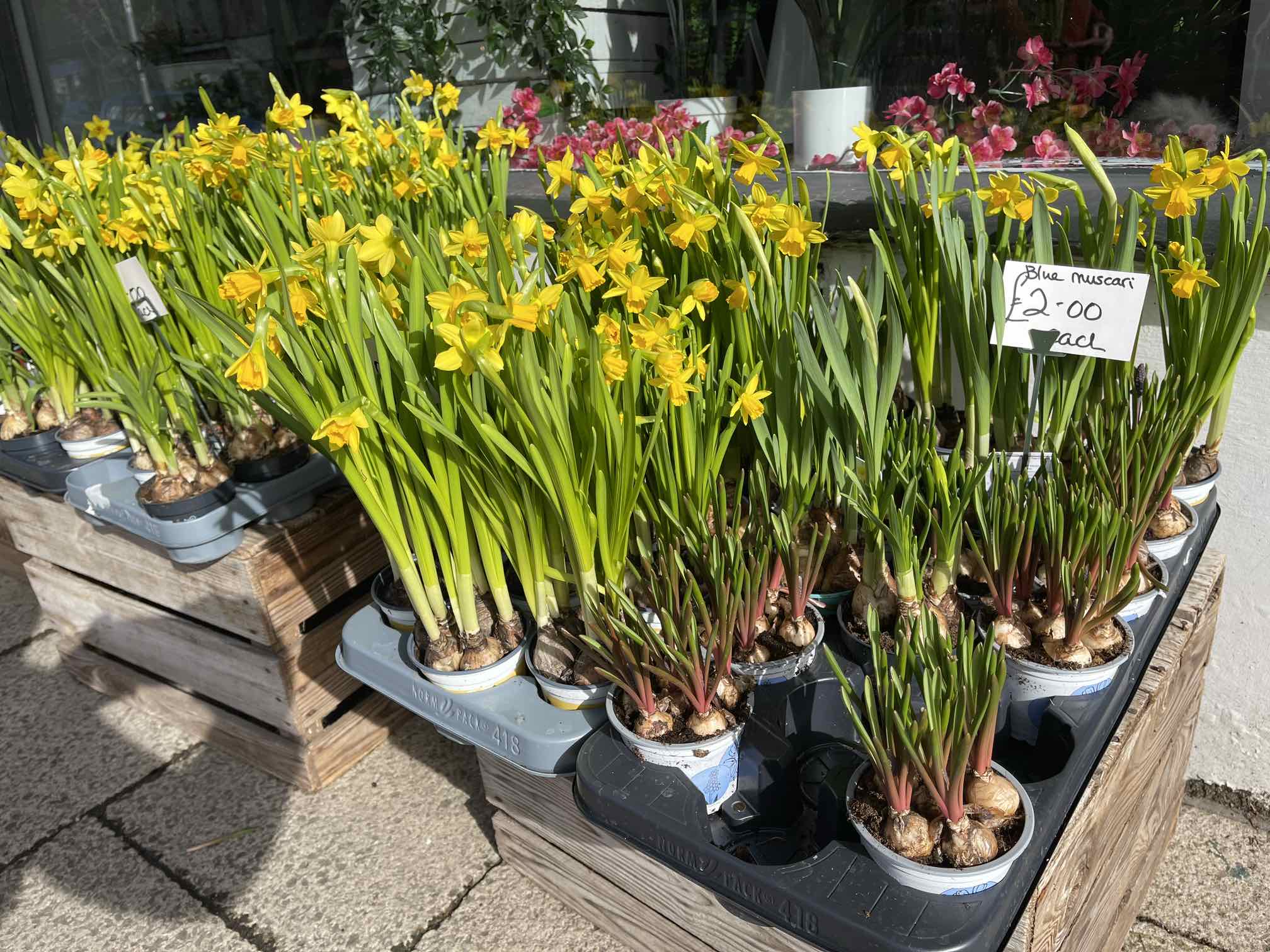
Walk back – I see sales of window-daffodil-bulbs for Mother’s Day. Whilst this would be amazing at home, it seems strange here, where daffodils grow wild like daisies.
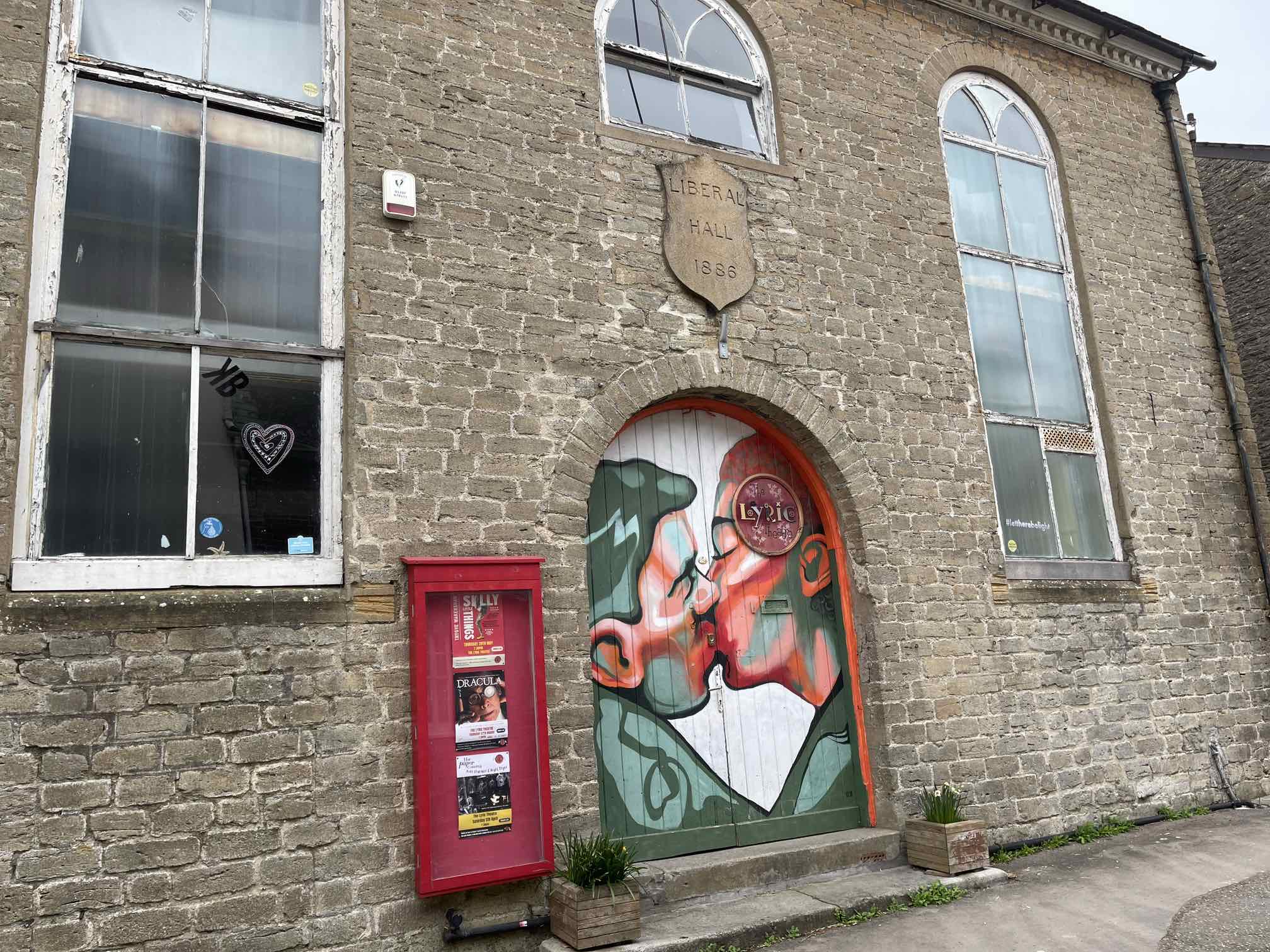
We pass a community theatre down the road from Dad’s place. It looks like there is lots on.
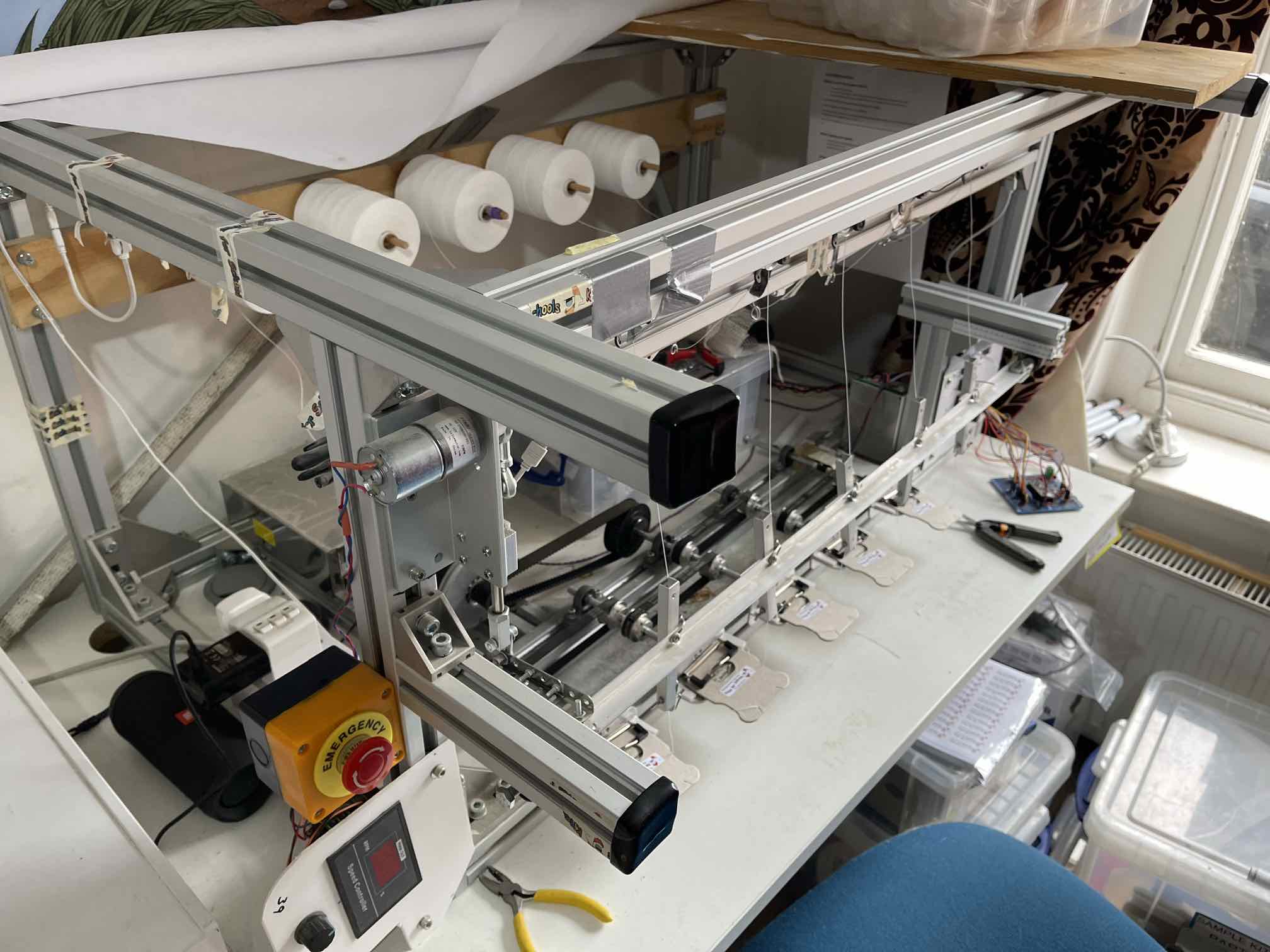
We pass the time talking about home projects, and Dad describes mechanism he has built to wind kite handles for his kids kits business.
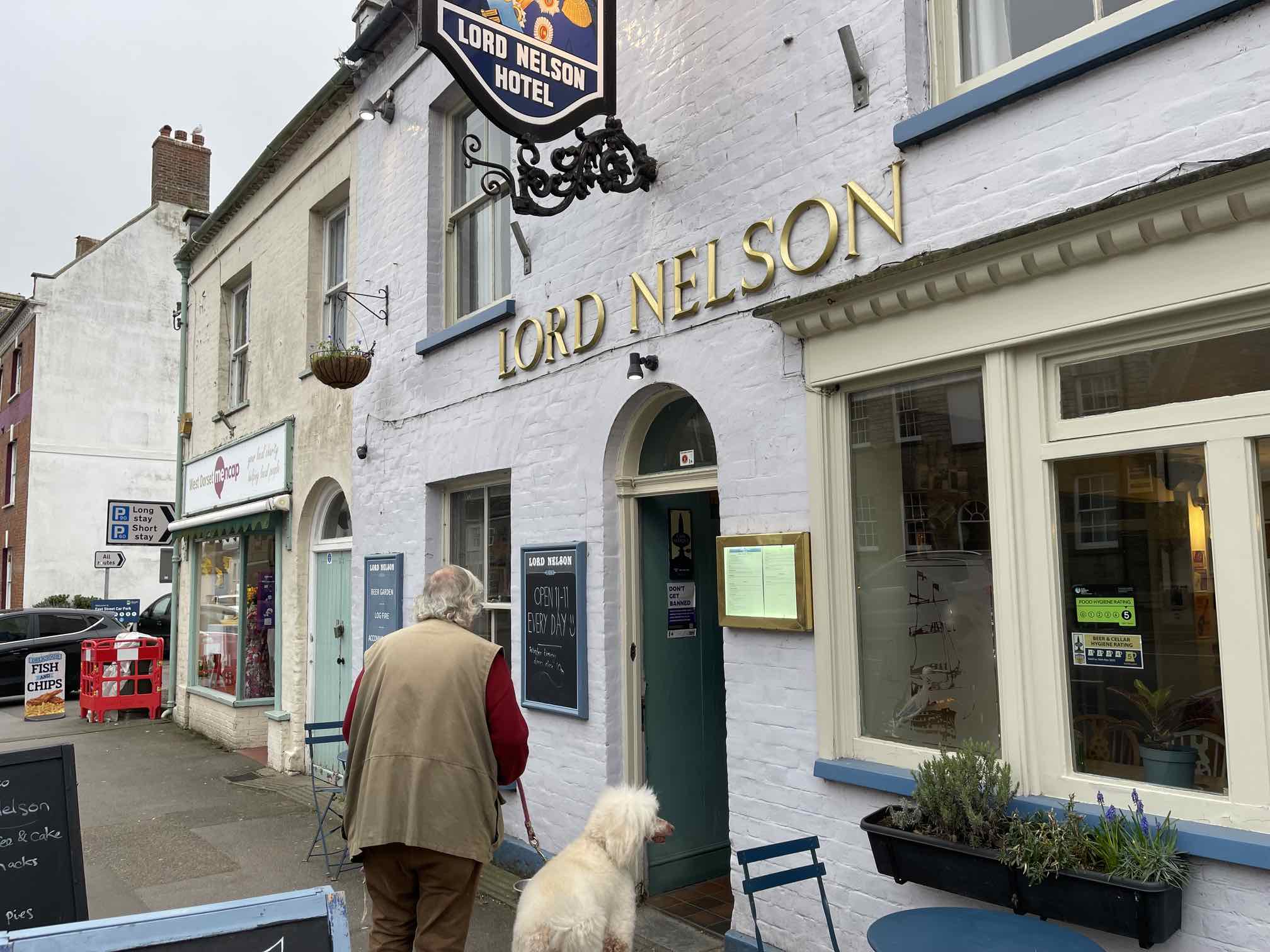
As we walk to lunch people ask about the dog. It is the key to relationship here.
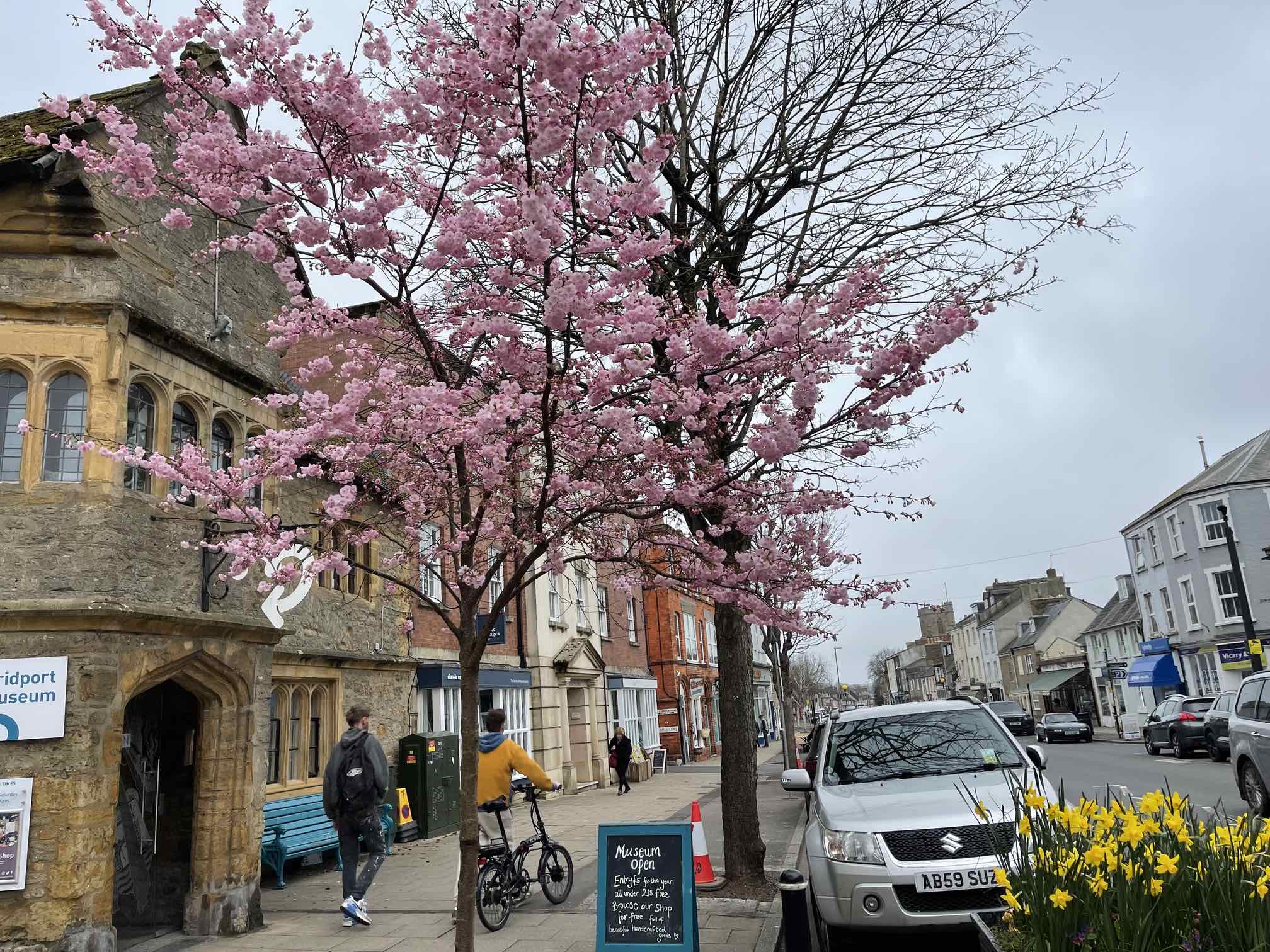
A Blooming Cherry tree celebrates the spring.
In the afternoon we Dad about another community project Dad is part of – organising a hat festival. It seems that everyone does their bit here to build a sense of community.
I stroll through second hand book shops.
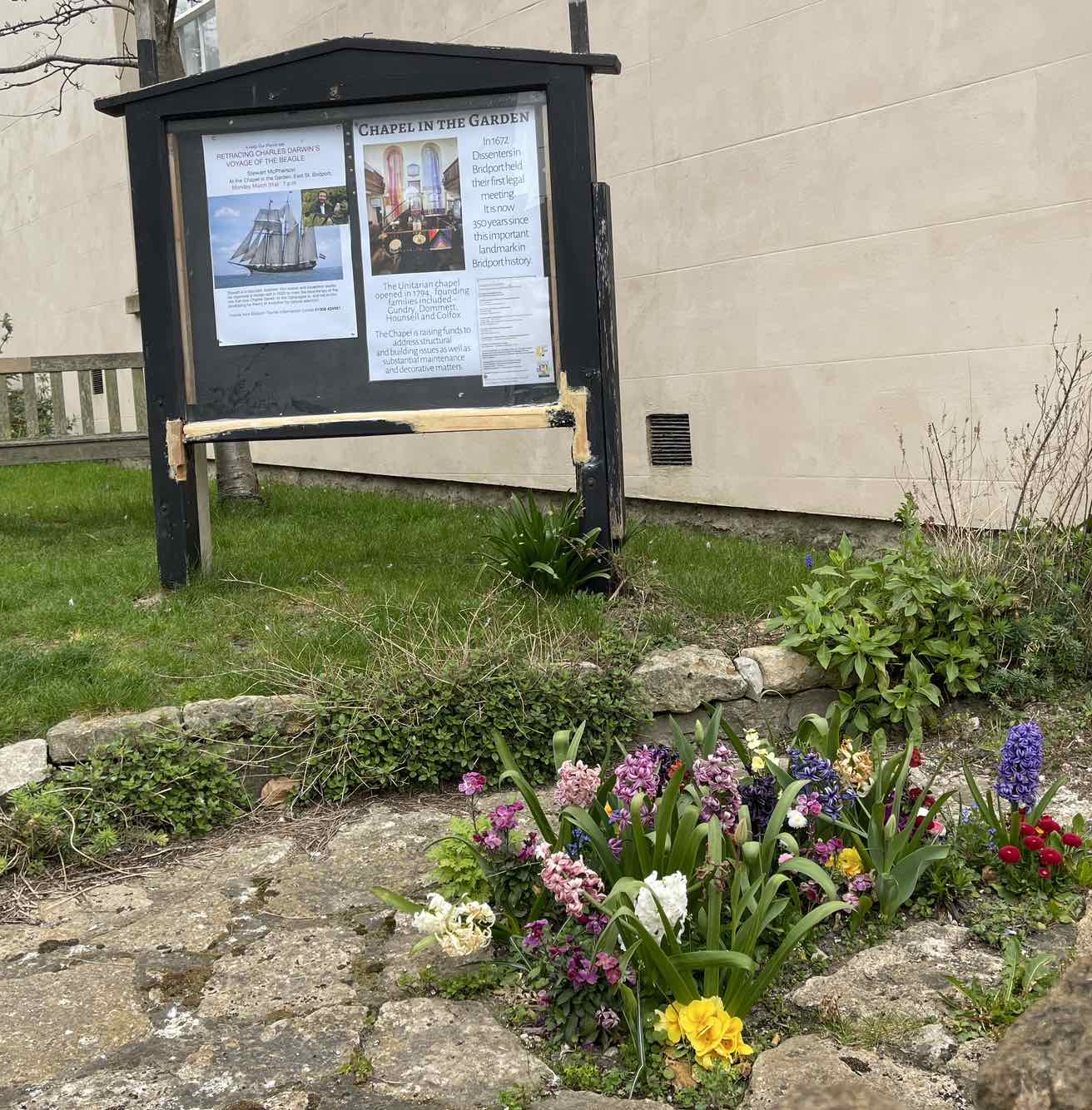
Hyacinths mark the entrance to a Garden Chapel.
Dinner with more friends from the street. We talk about Cricket and Rugby and Dogs.
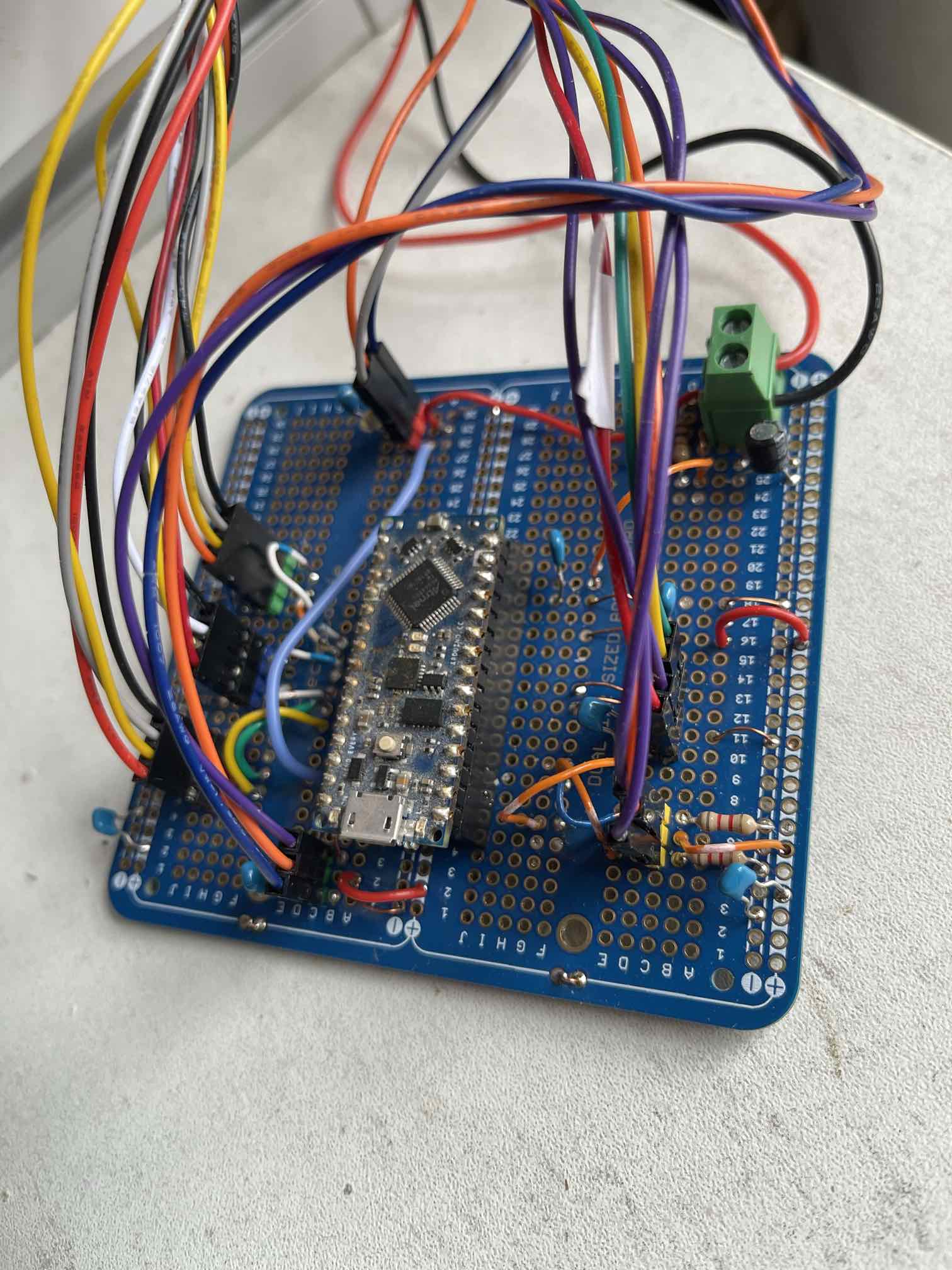
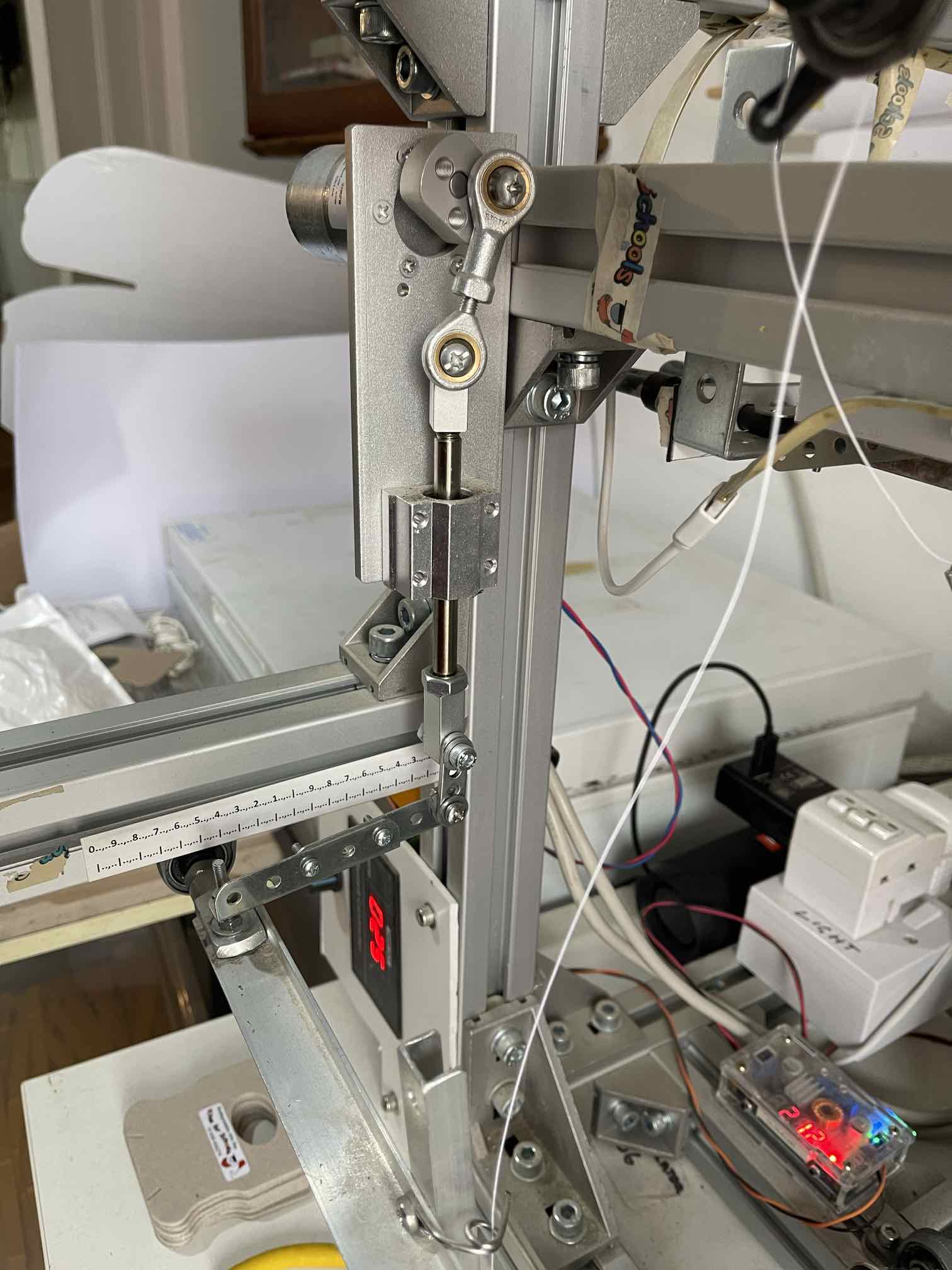
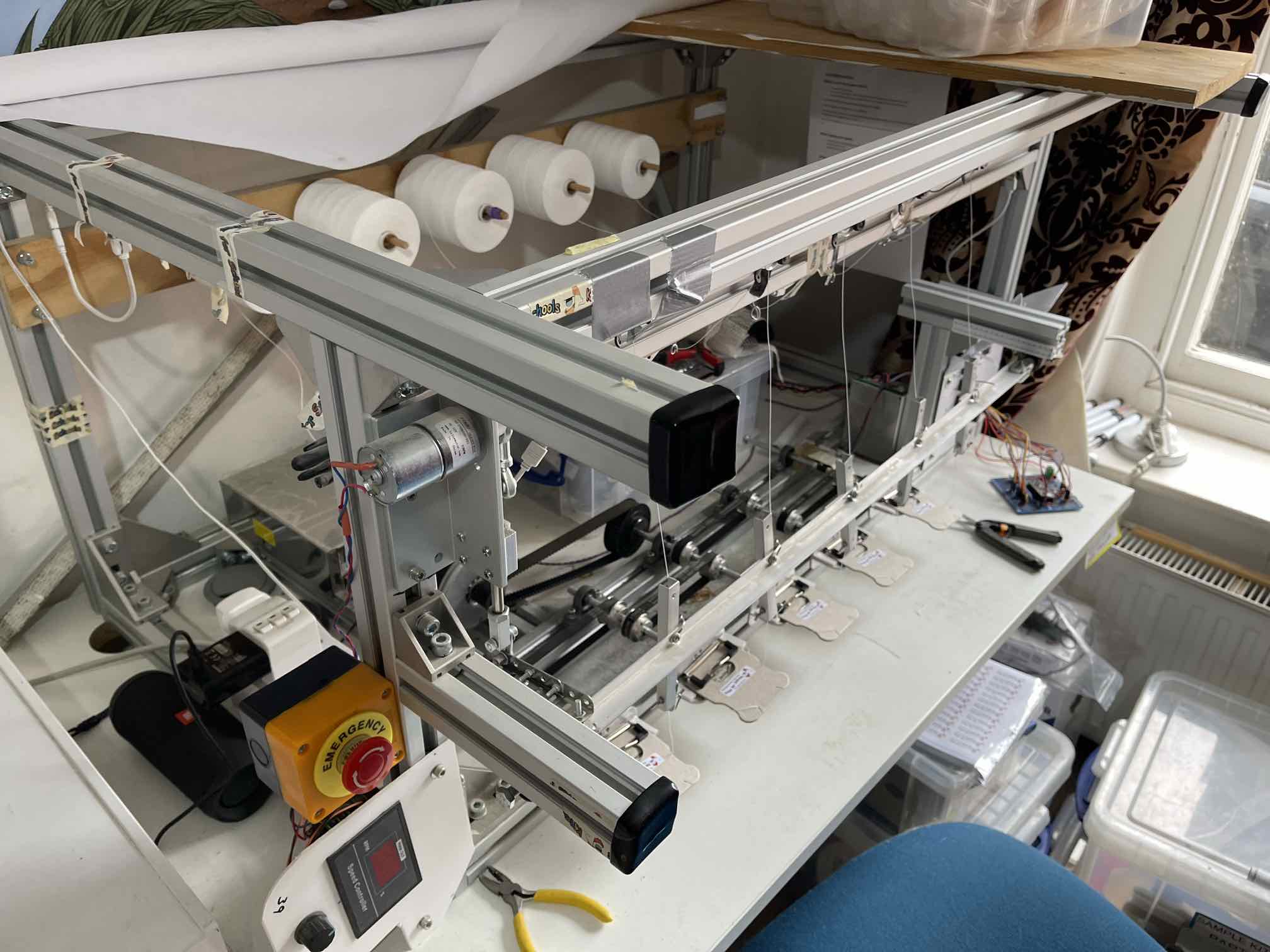
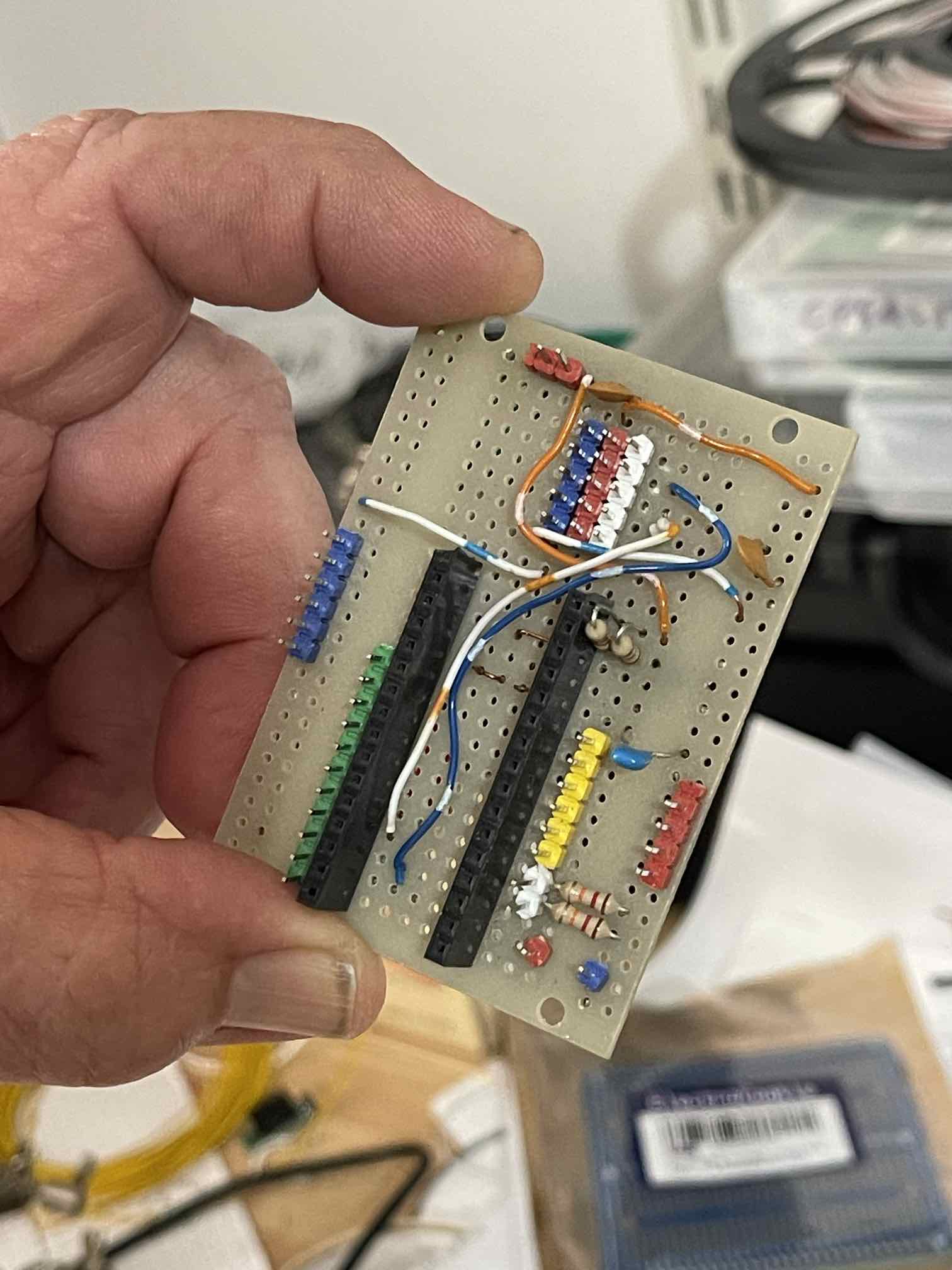
On a visit to my Dad he showed me his custom rig for winding kite handles at scale for craft kits – driven by Arduino. (Arduino Every). The connection to the display counter board is I2C wire protocol.
A potentiometer is used to control speed. This is on the power line to the motor – not connected digitally.
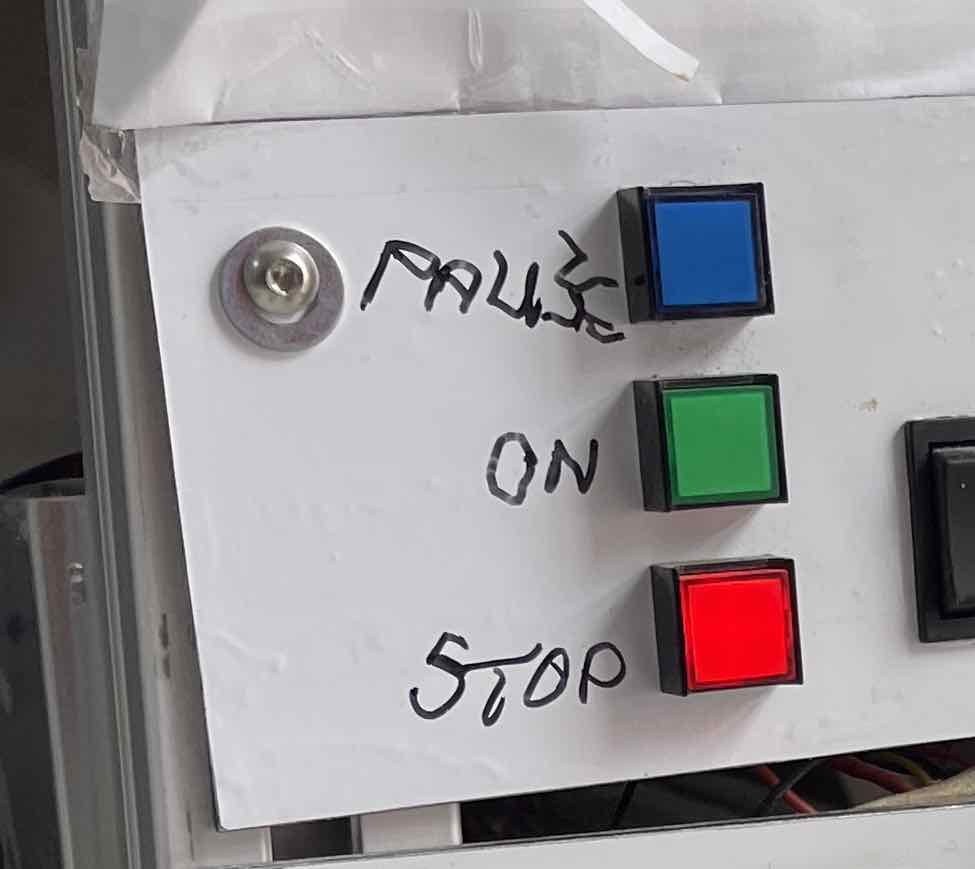
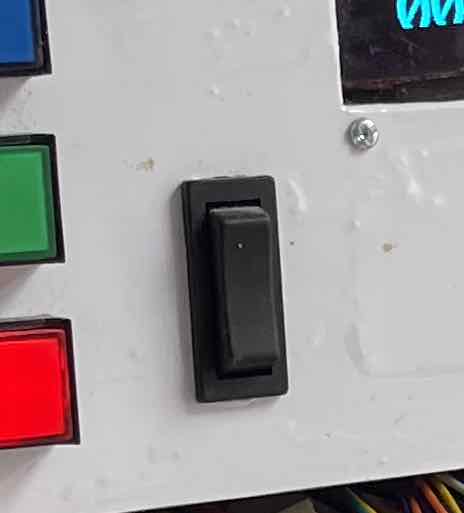
The logic board reads a button to start and stop the device. This is connected on the I/O pins to the arduino.
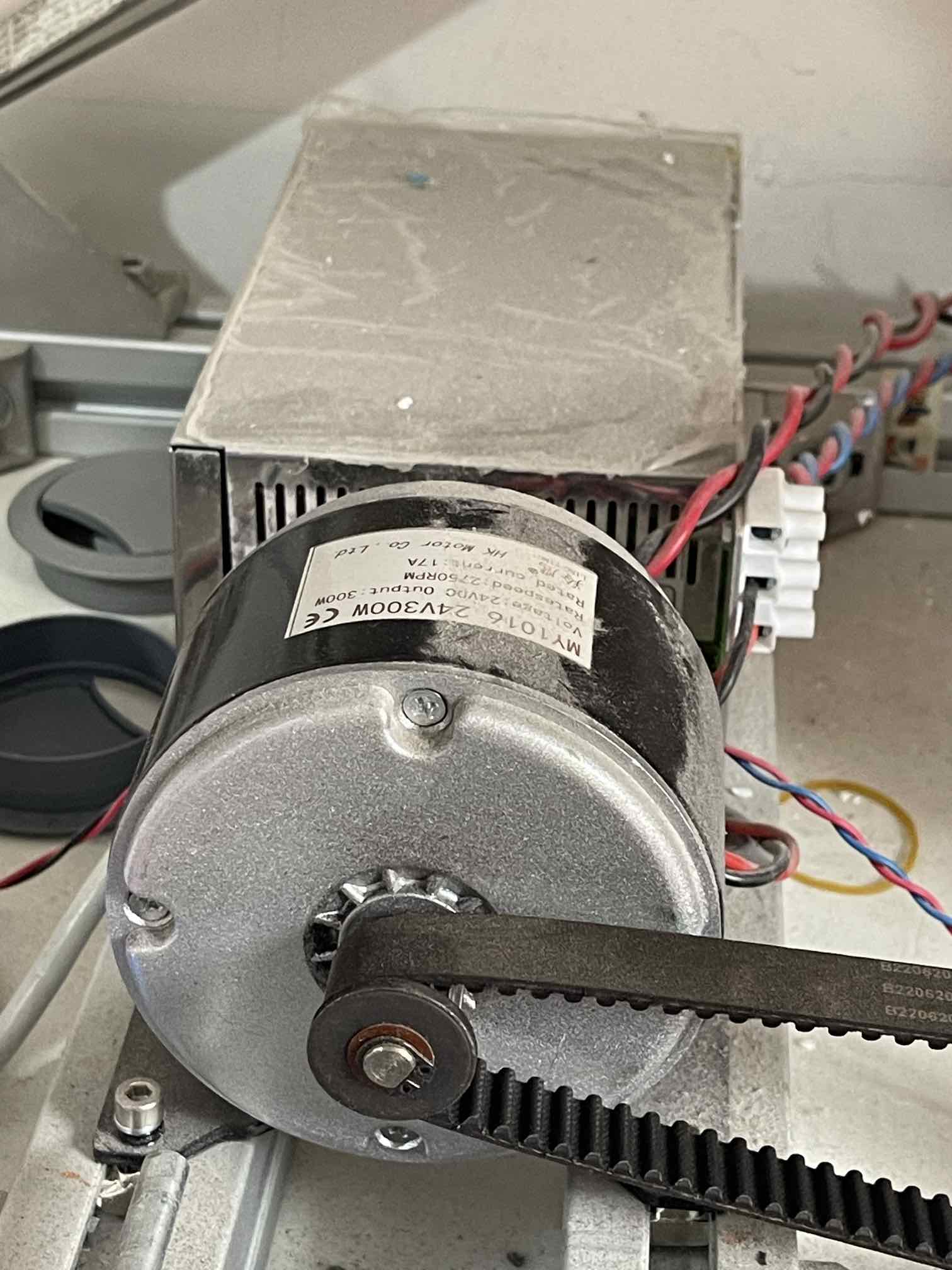
The arduino logic board triggers a scooter motor which drives the toothed belts connected to the axles.
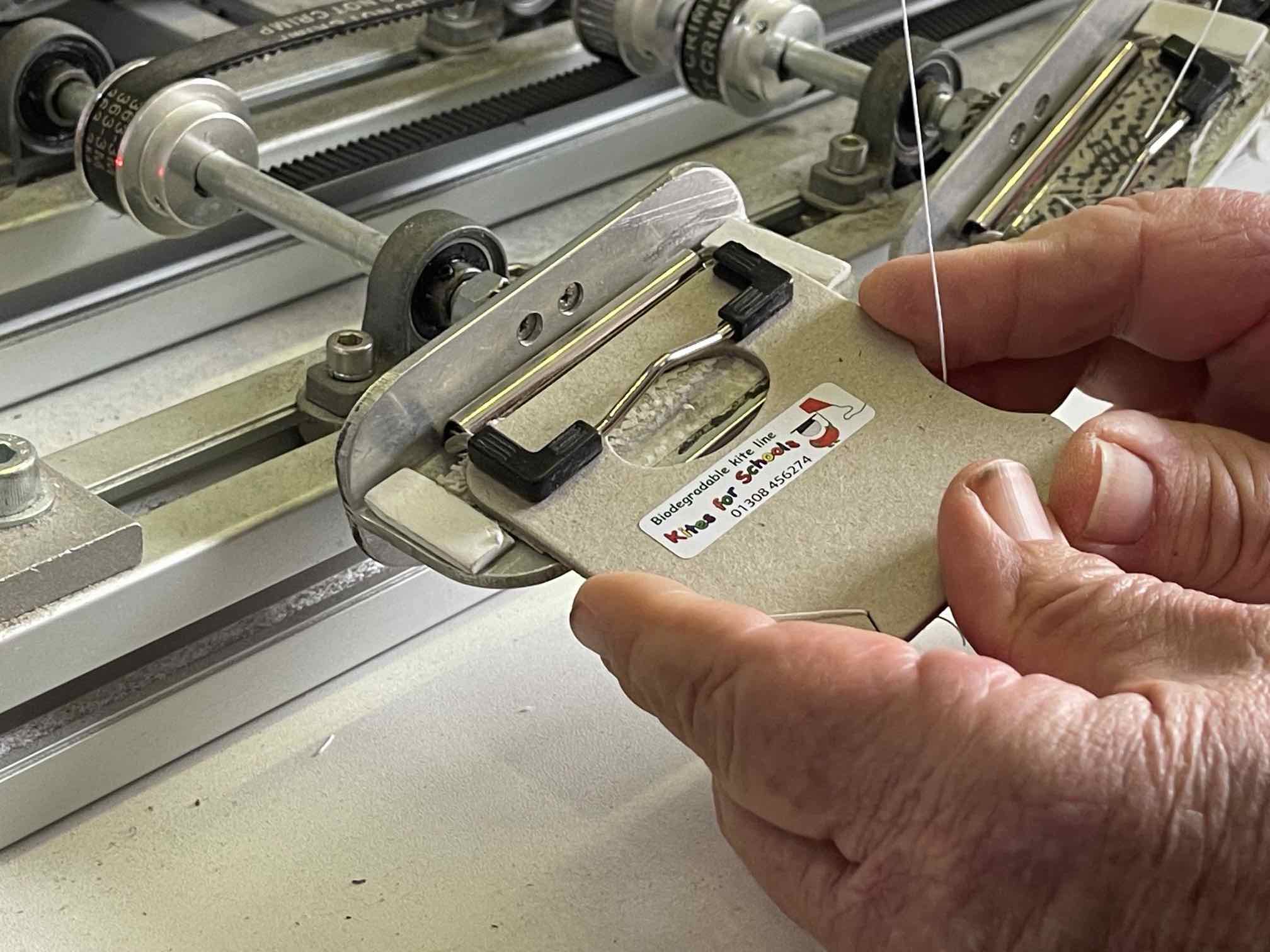
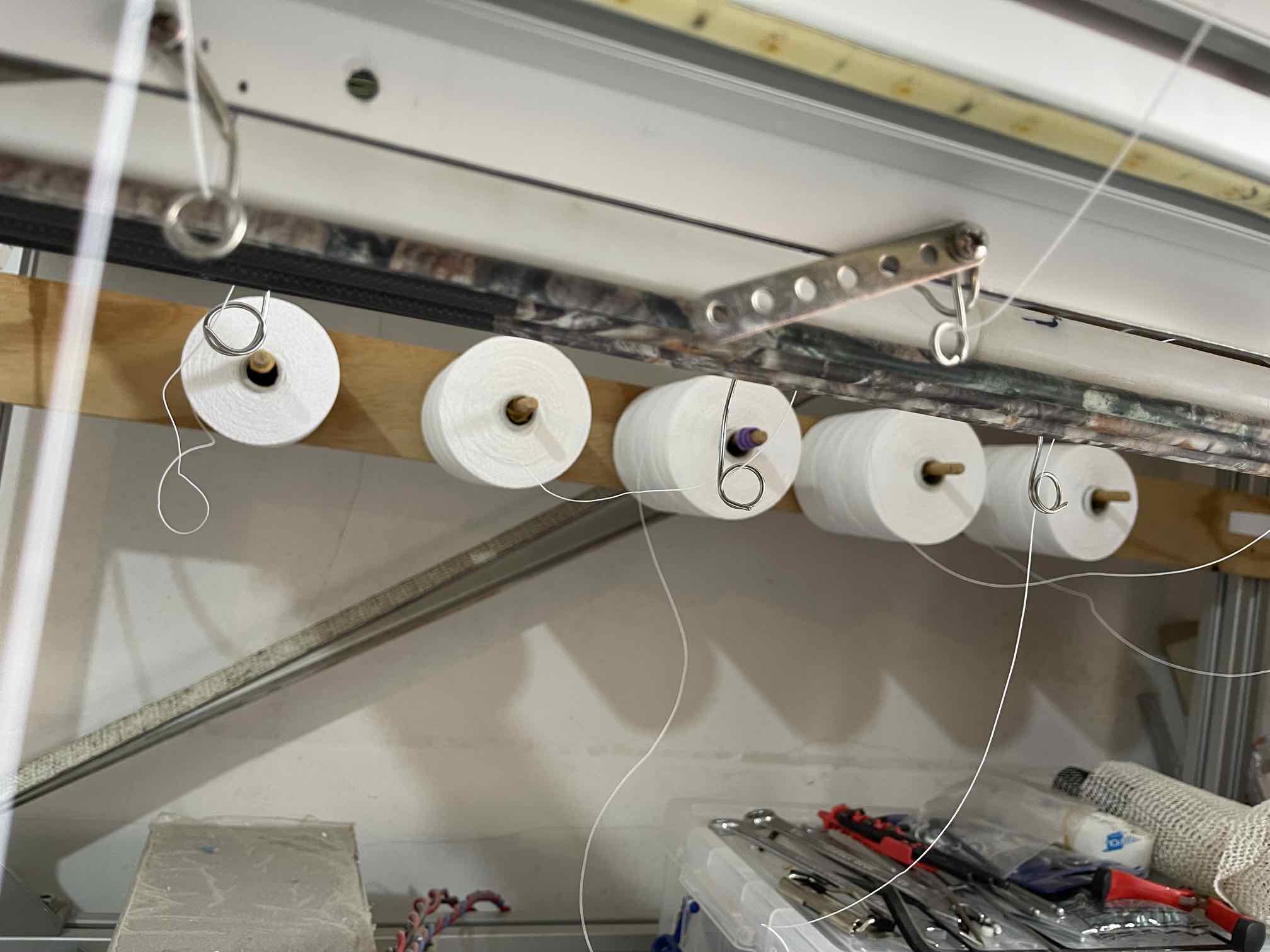
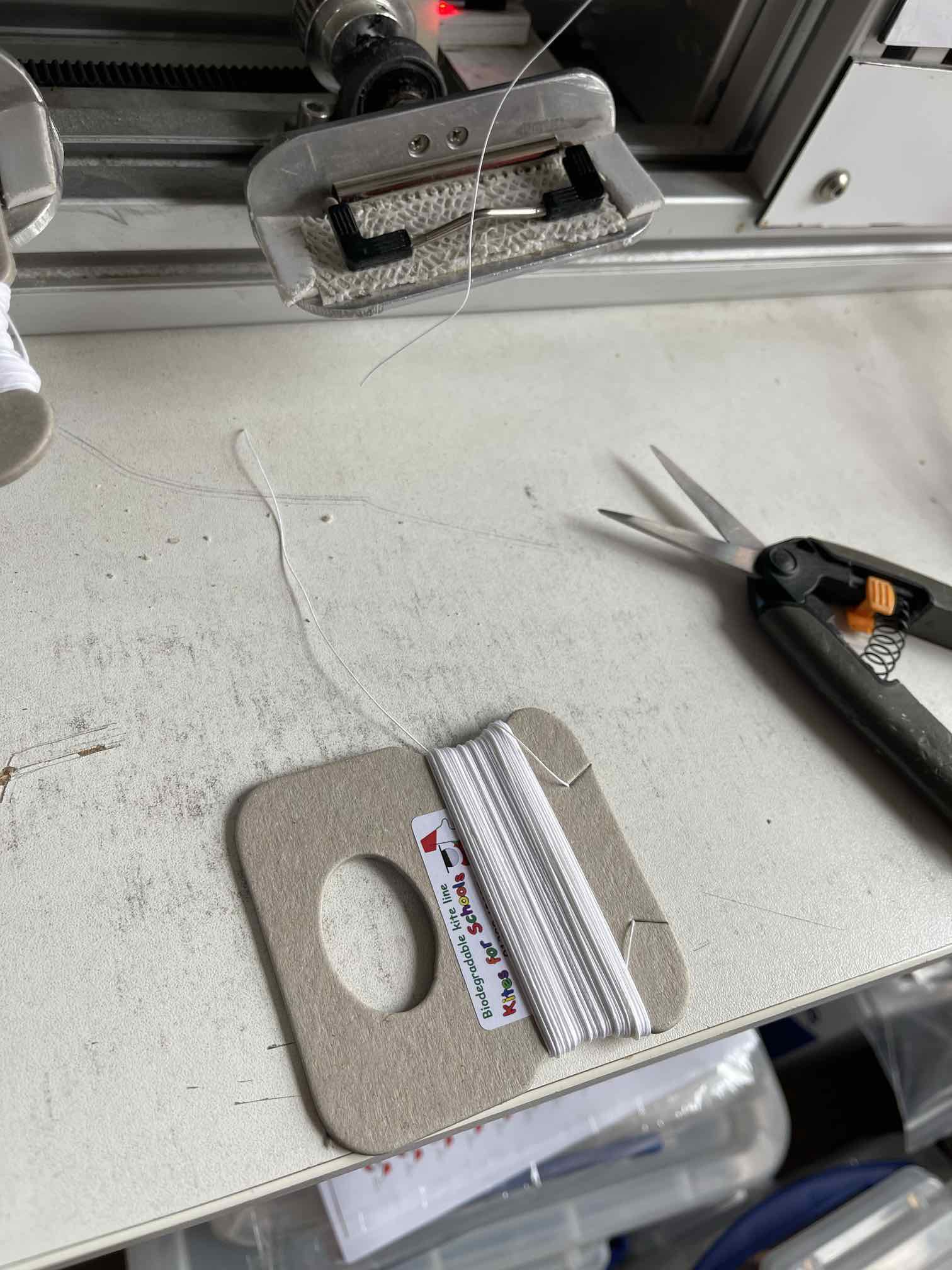
The axles hold cardboard kite handles held in with pad folder clips.
There is a second mechanism to oscillate the string guides to spread the string evenly across the handle. This stops bunching and slipping of the string off the handle.
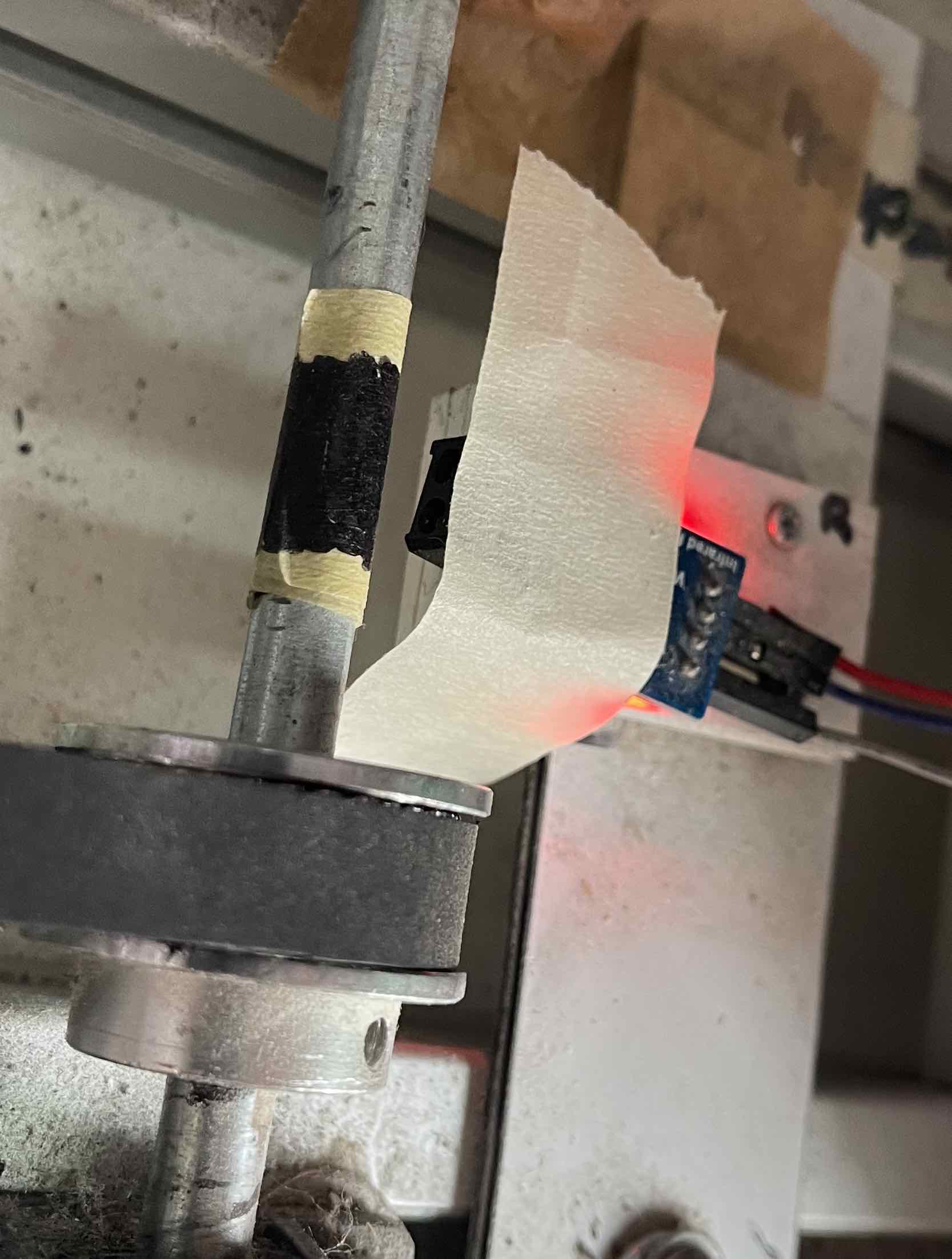
There is an axle tab with an optical detector board with source LED and detector that looks at the reflection off the shaft. The tab is covered with black from a texta.
There is an input button for setting the desired number of meters.
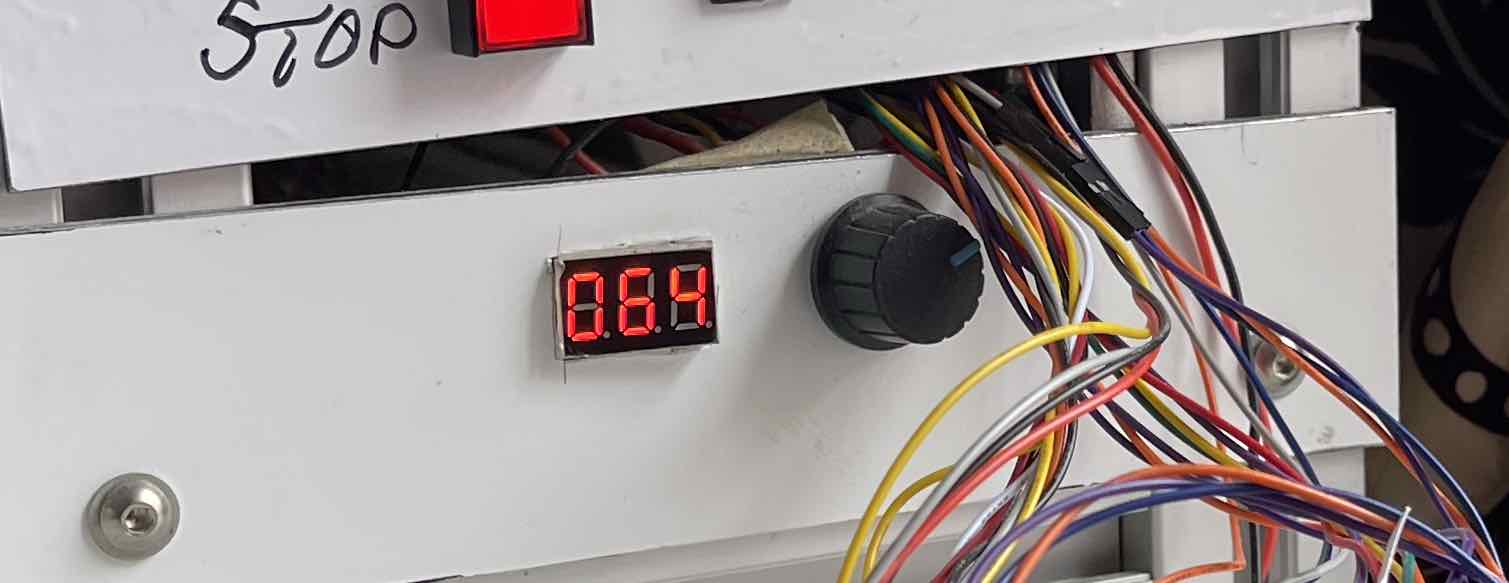
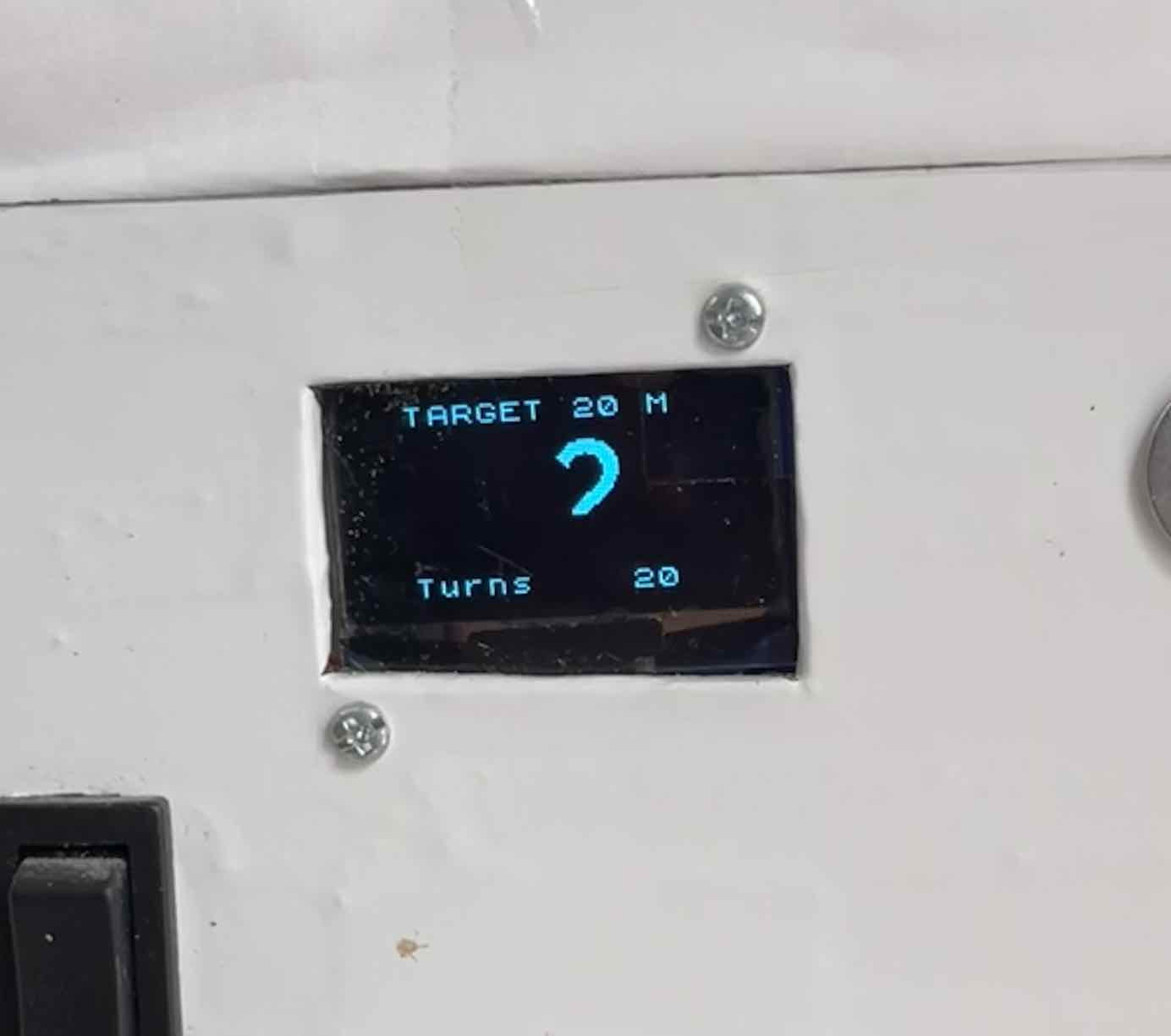
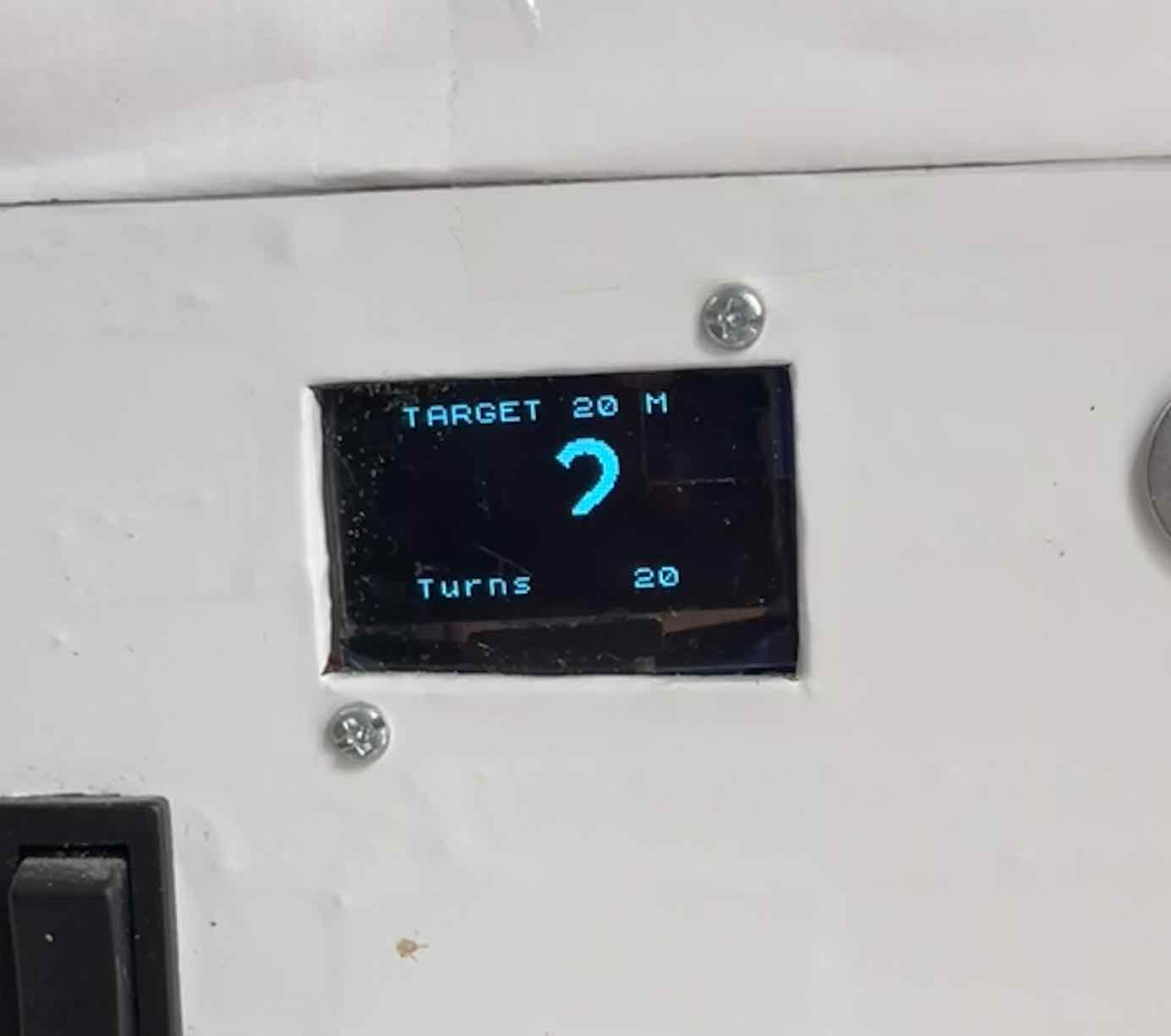
The Ardiuno system outputs the desired number of meters on the display.
After the start button is pressed, the Ardiuno system counts the number of rotations from the optical sensor, does a ratio calculation to meters wound, and stops after the desired number of metres.
The output display shows winding progress. (The strobing/refresh of the display has caught the larger meter count in mid-refresh.)
After completion the handle is removed from the clip and is nearly ready for shipping.
This is the overall System.
This is the system running.
Scale This has the capacity to do about 120-130 handles per hour.
Engineering Iterations and Reflections:
This logic board is the first attempt, different to the second board shown further above. On the first attempt, power glitches on the first attempt. The logic board at the top of the post has added capacitors to solve coupling problems.
One of the issues encountered on early software development iterations was that the system would miss the exact matching target length and keep going even if the target length had been exceeded.
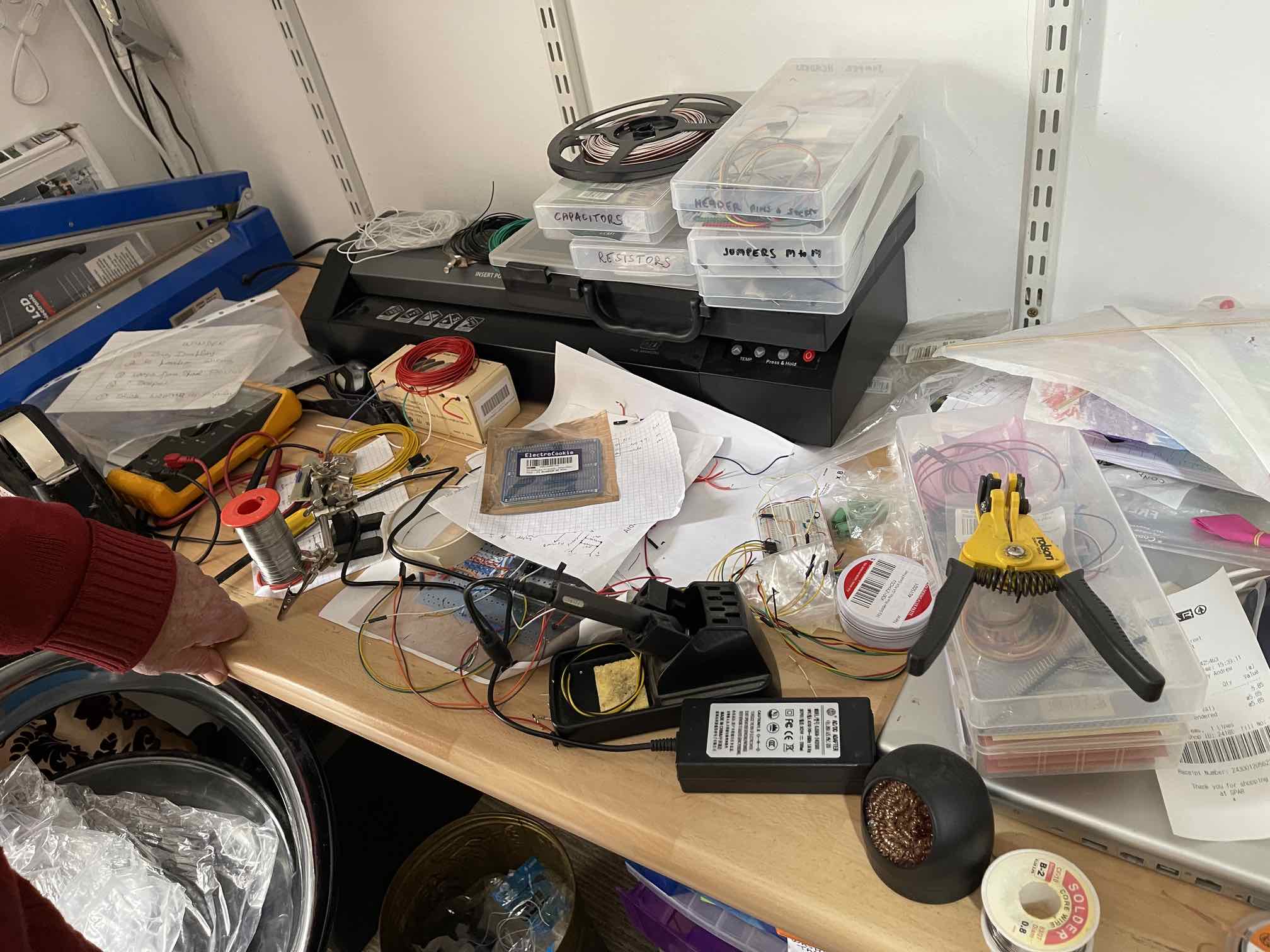
This is Dad’s workshop. It is reminiscent of the place where he taught me to solder, and to reason about electrical systems.
It is surreal being in a city where cars have been minimised. The streets are empty of traffic but for buses, and pedestrians don’t own the roads, but walk with leisure. Where there is traffic, there is a kind of even bargaining-power between pedestrians and cars for road access.
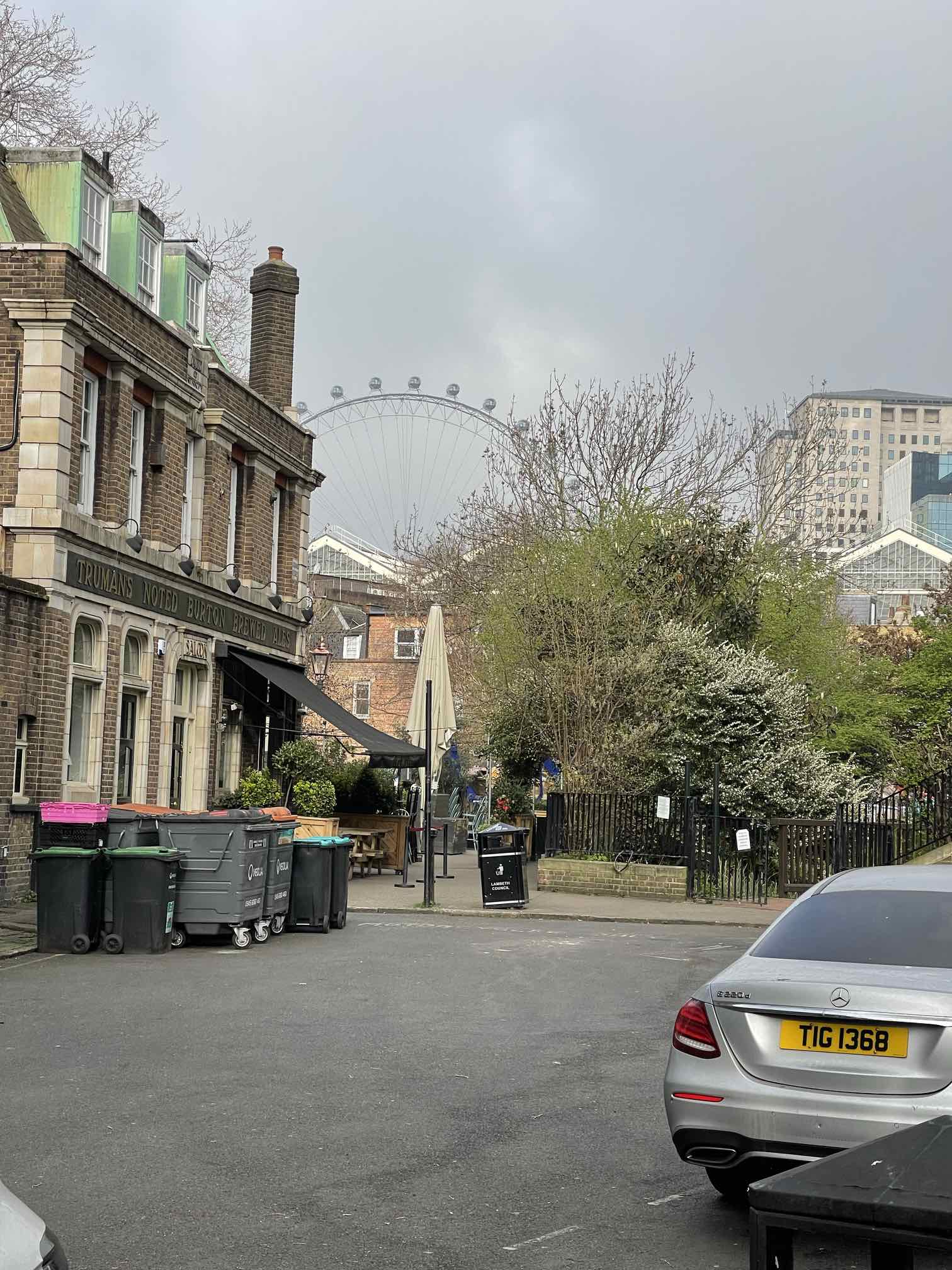
Walking out my door and see the top of the London Eye I am reminded I’m in a place that is not quite home. The chill dry 10° air adds to the sense of wonder.
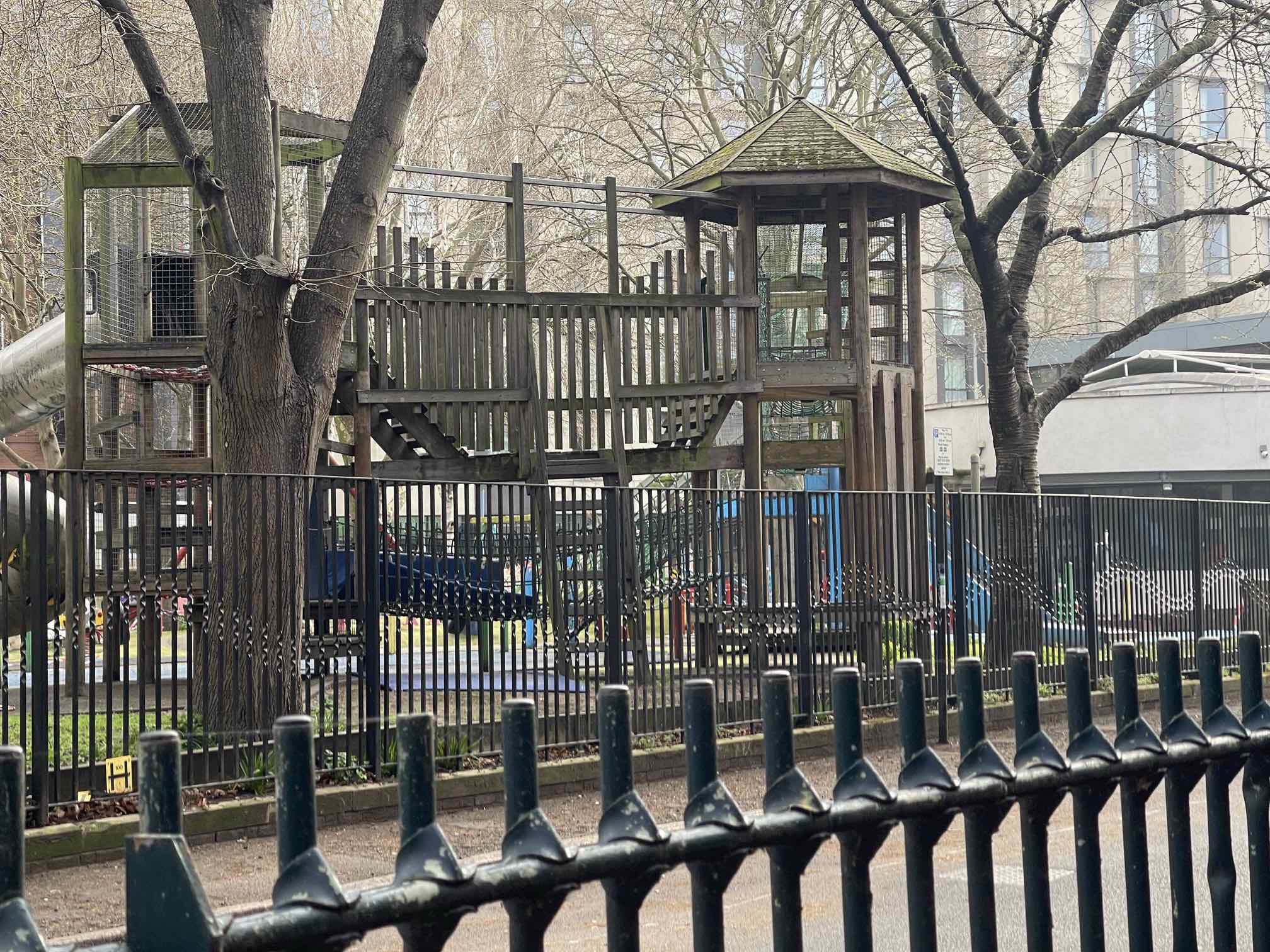
Across from my accommodation is a children’s play equipment that feels a level up from anything the Canada Bay Council ever provided.
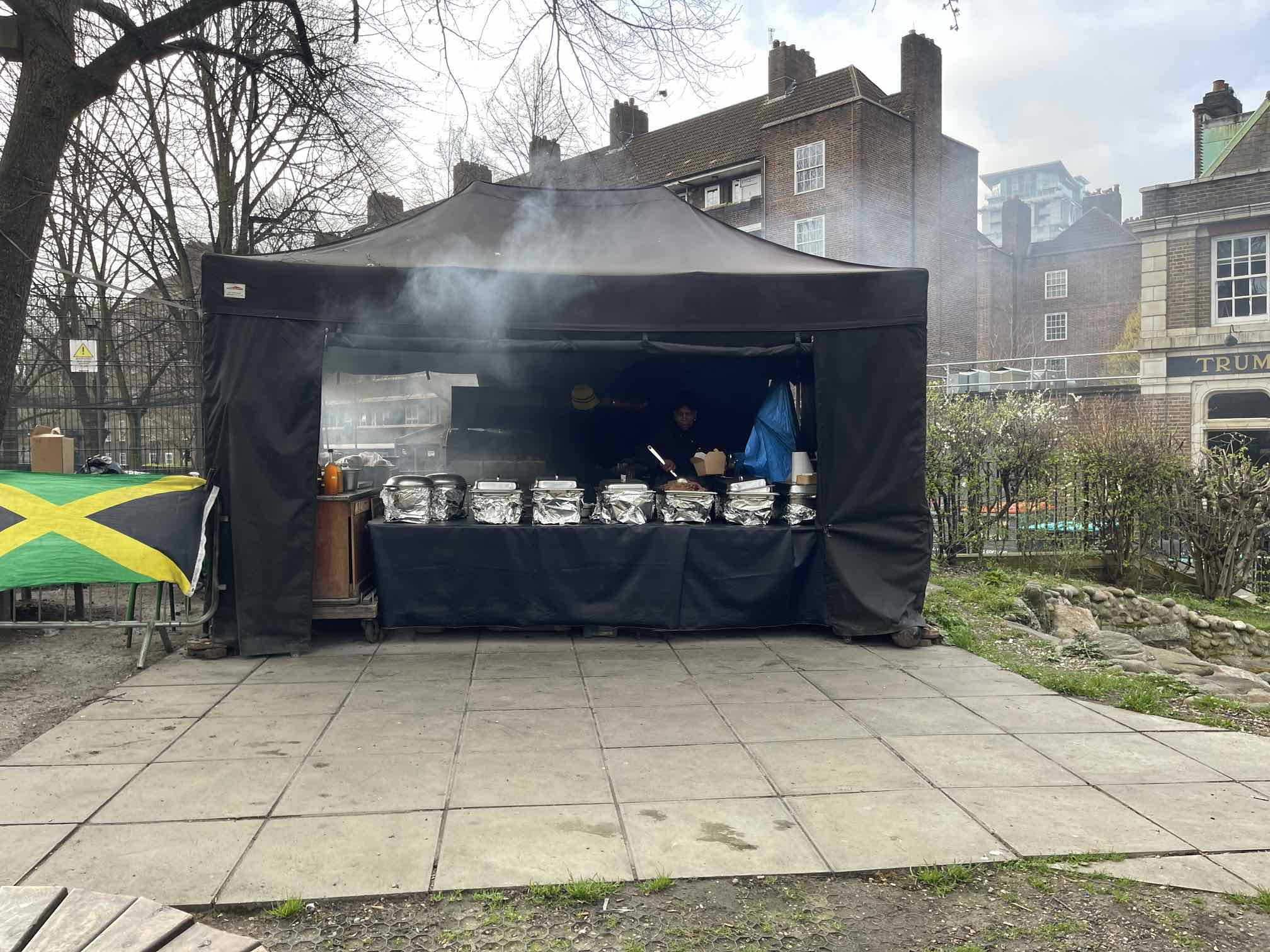
Across from my accommodation is a park which I walk into without a care in the world. There is a tent with smoke coming out of it that appears to sell food. I asked them what’s on offer and they say jerk chicken. I recall last time in London when I had to get them to explain what jerk chicken was.
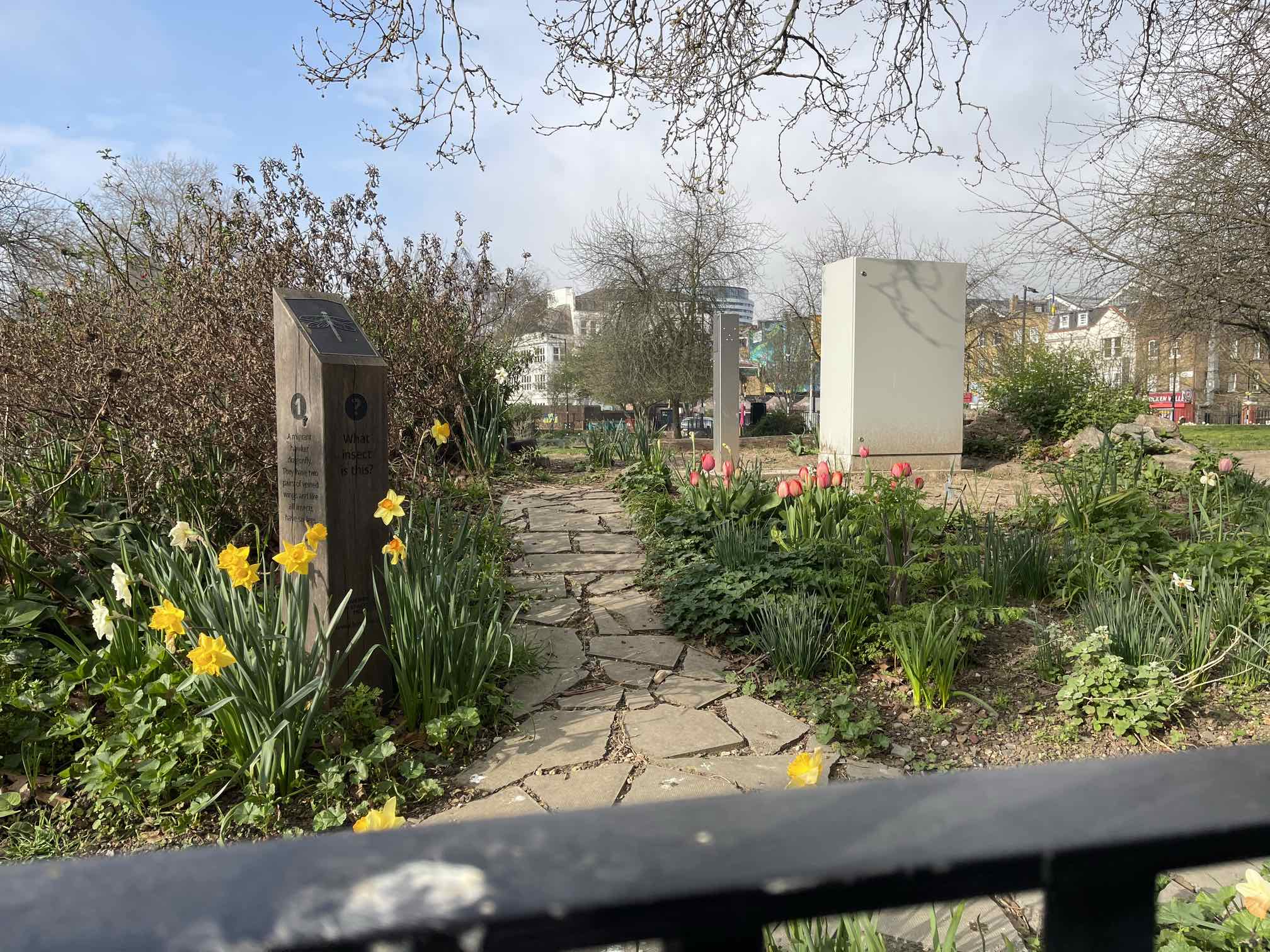
As I wait for my order, I look around the daffodils in the park and listen to the radio on in the background. On the radio the journalist is interviewing a local politician about vacant land tax policy. The journalist appears to grill the politician for inconsistencies in a way that I’m not used to in Australia.
Picking up my order there is a wonderful smell of barbecue sauce. I realise there’s enough here for both breakfast and lunch. I ponder sitting with the tulips and the daffodils but decide to keep going.
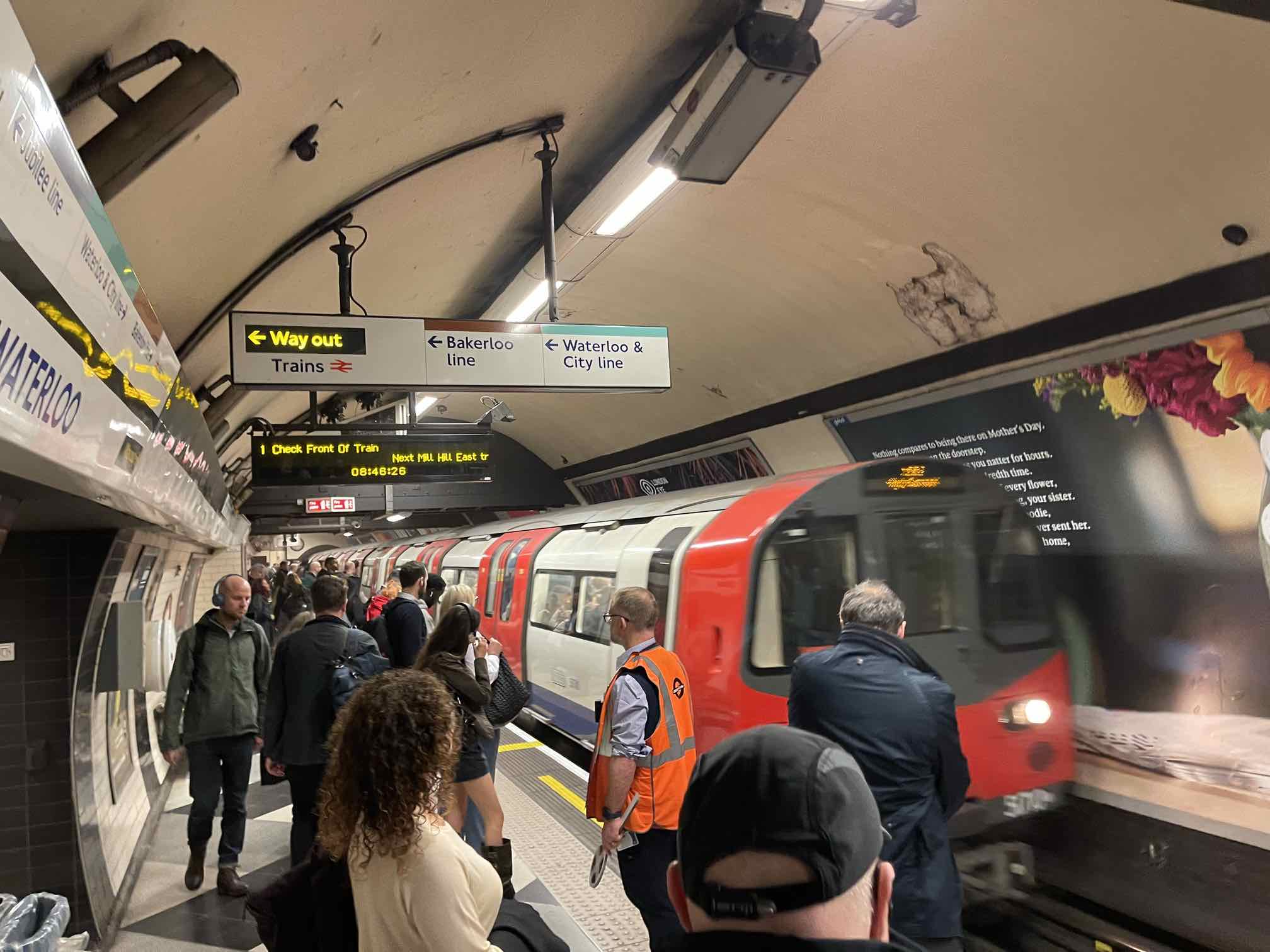
Walking through the tunnels to get to the underground at Waterloo station at 8.30 brings in a strong sense of the familiar and different. There is a very strong sense of being at Wynyard commuter hour.
Leicester Square station feels likeSt James station, but expanded out times 10.
Coming out of Leicester Square station I hit the theatre District and I wonder of white brick 5-story buildings.
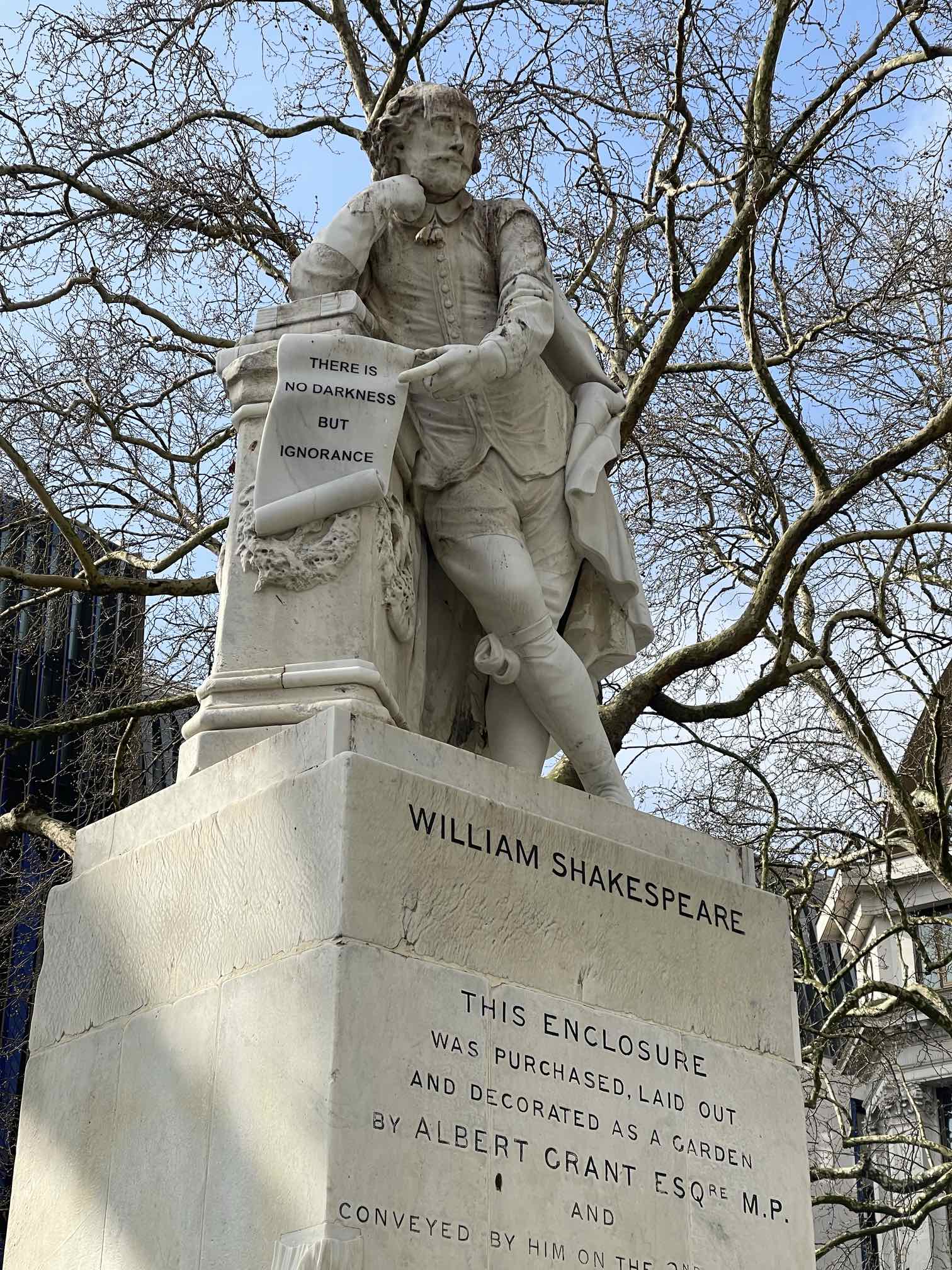
I pause for a moment and have breakfast chicken with William Shakespeare. His messages “there is no darkness but ignorance“. Whilst I appreciate the self-congratulatory nature of the message, I note that the statue was put up in 1874, the full height of British Empire. As I said, William argues with me, and says that he is ambivalent to the nature of empire and wants to celebrate the the playful flexibility of language and its tooling for many contexts. Then Shakespeare tells me that the meaning is the opposite. As Feste (the fool) in Twelfth Night mocks the pompousness of Malvolio (and perhaps the Empire Minded) for their shaded knowledge.
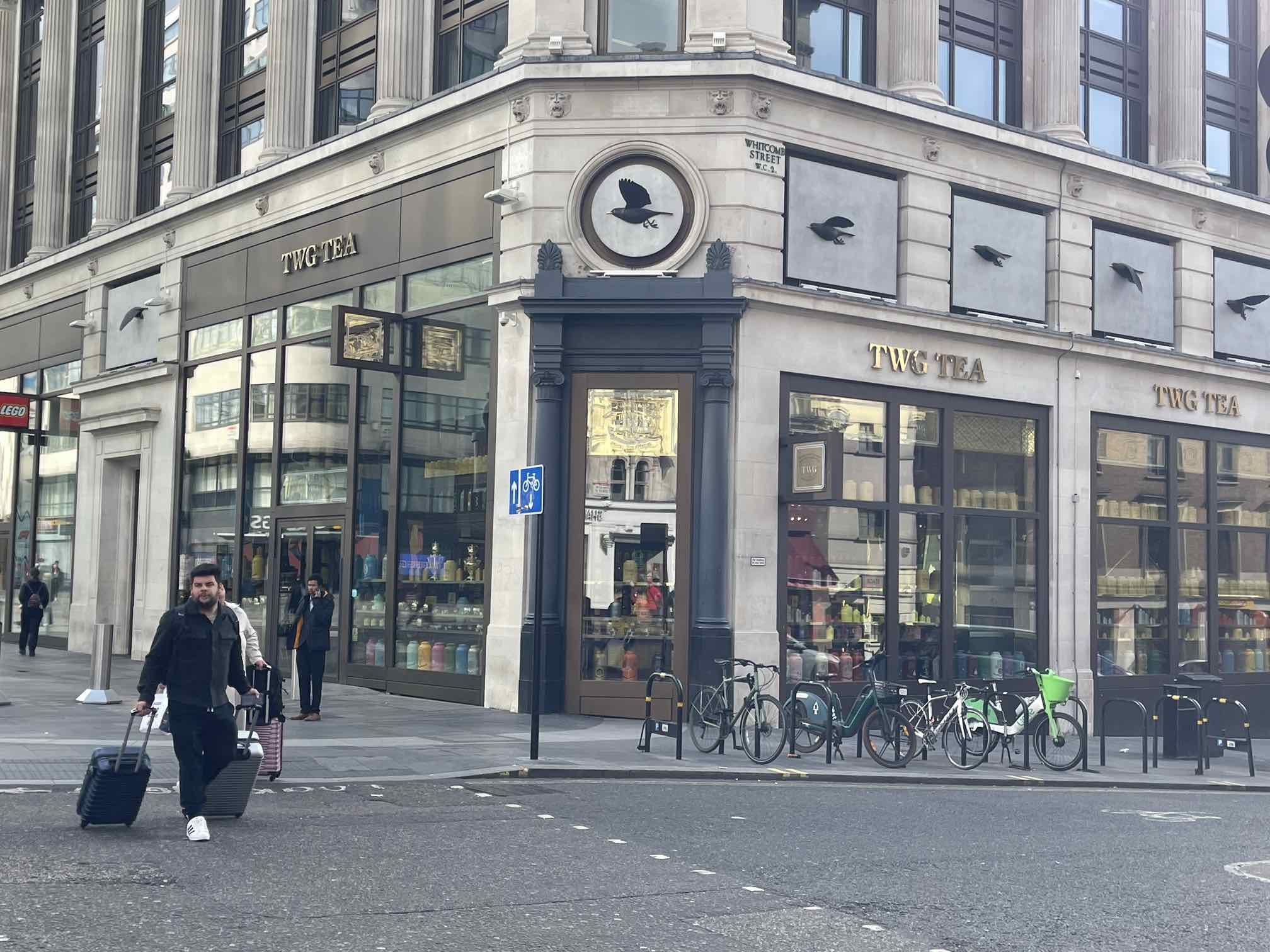
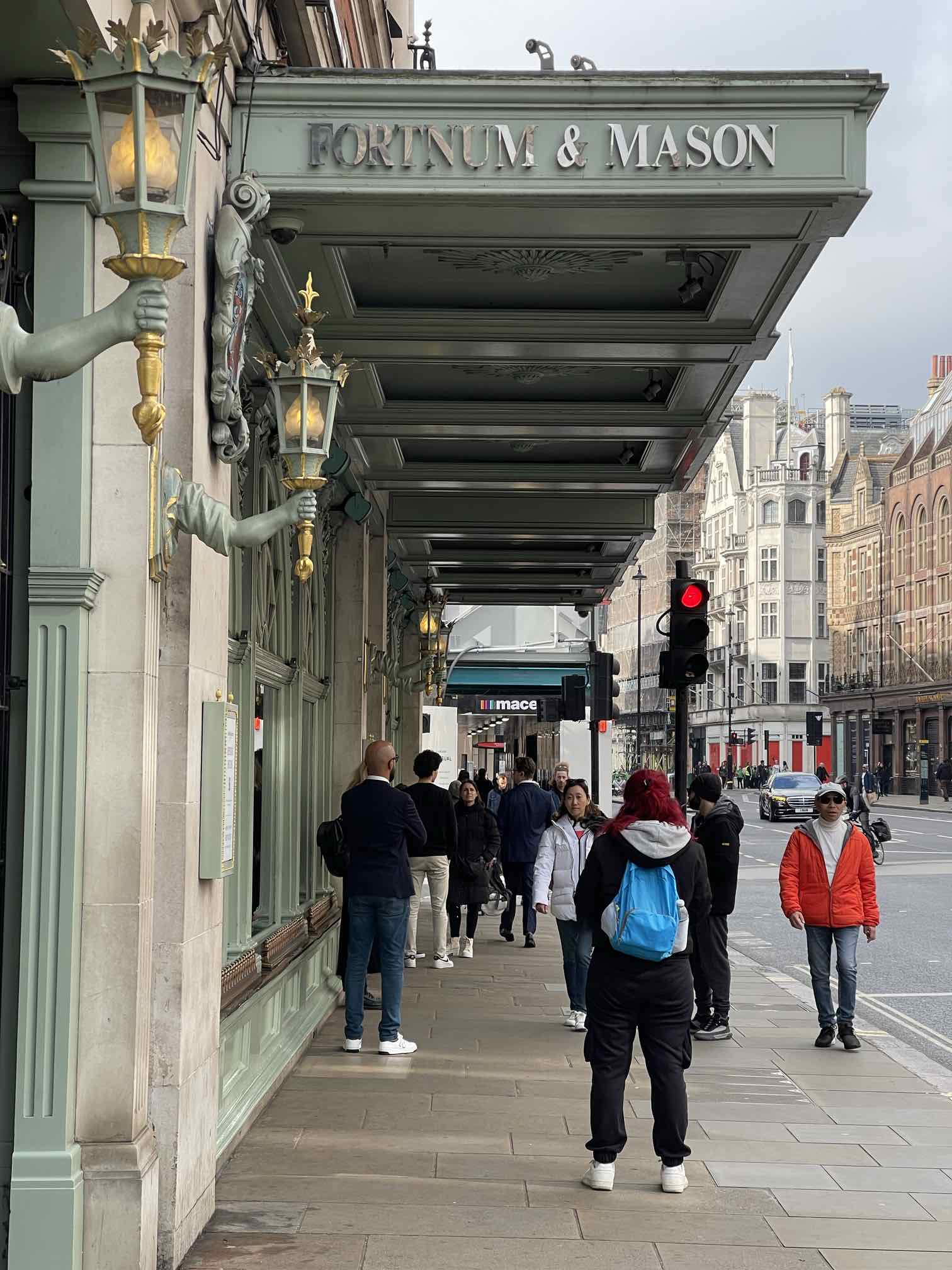
I walked past a vast TWG tea shop. A symbolic reminder of when ships sailed the world carrying tea as a primary source of international trade.
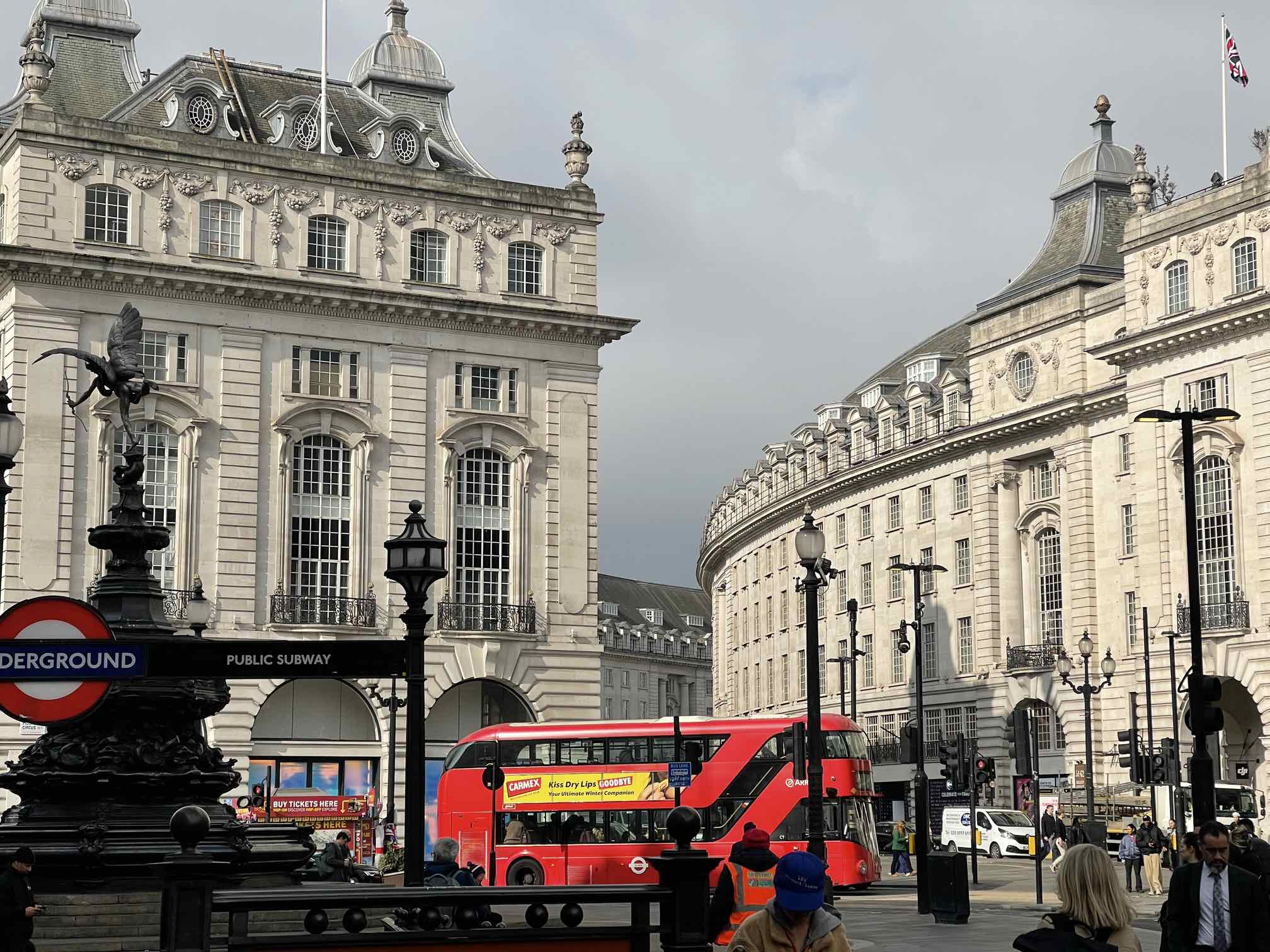
When I walk through Piccadilly Circus, I am entranced by the white buildings. Here I have a video call with family evening with background picturesque.
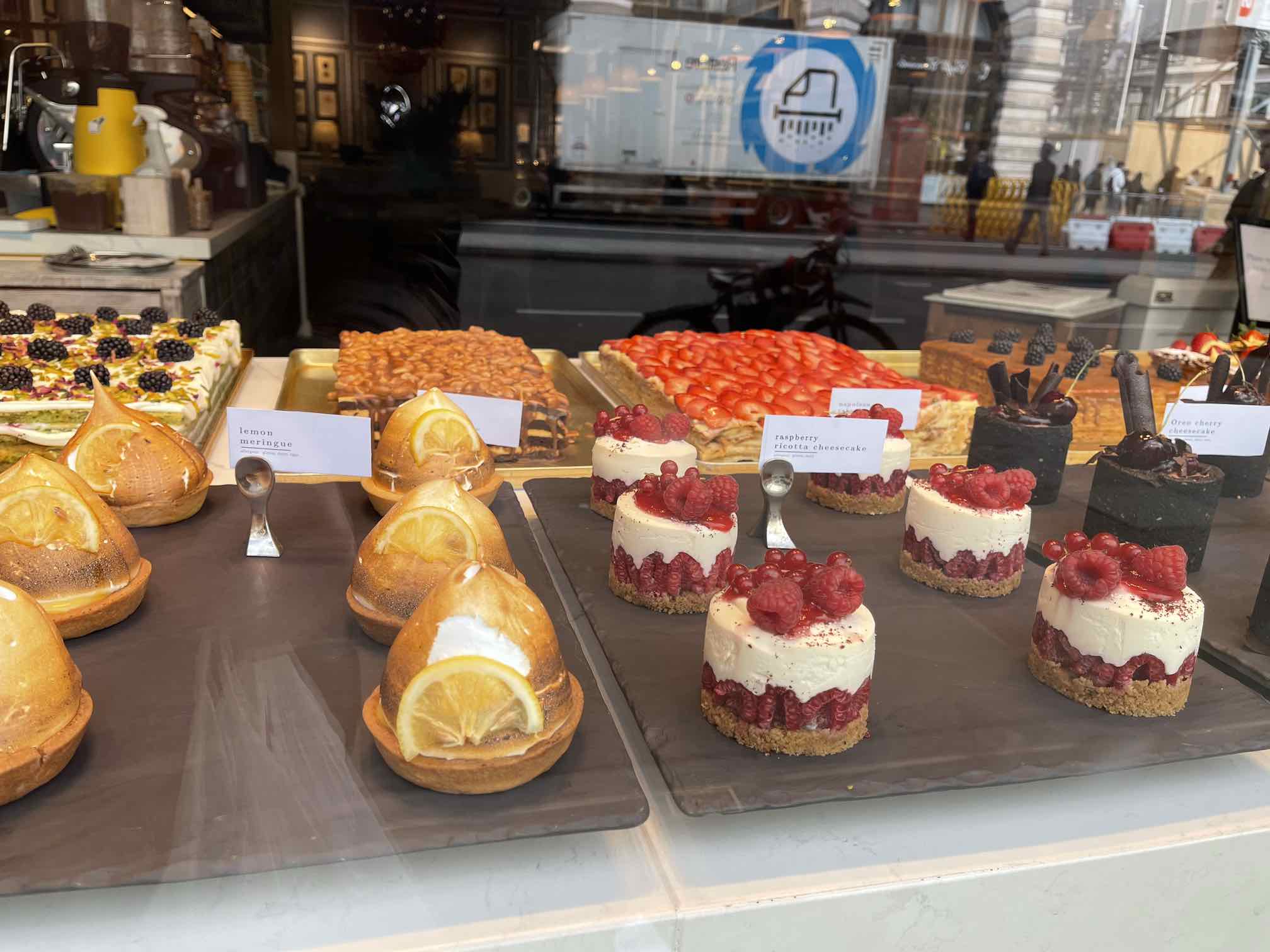
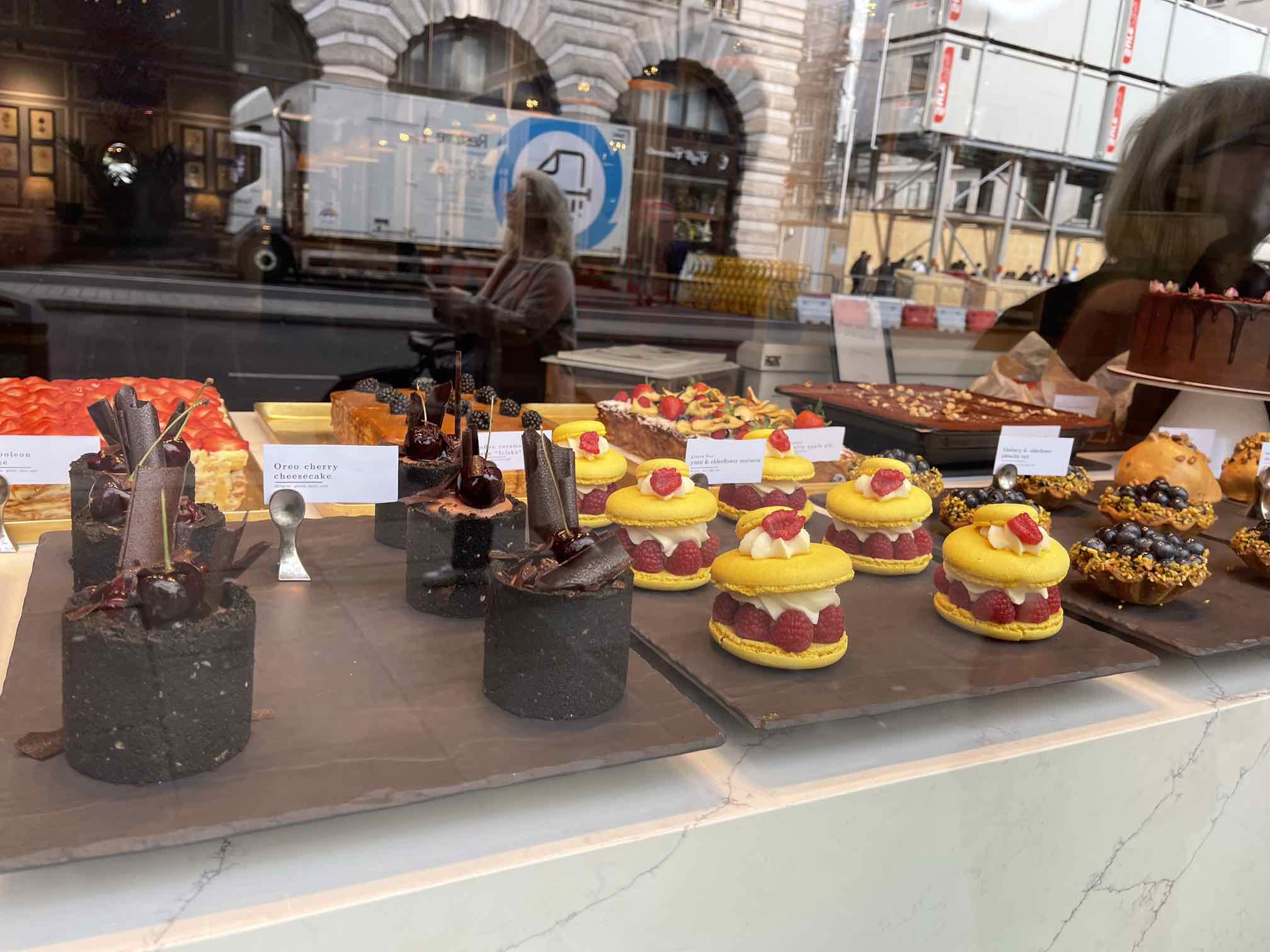
A tea shop offer desserts that seem a level up from what I’m used to.
I walked past a book shop offering gift subscriptions again a service I’ve never heard of but seems wonderful.
I pause outside another tea shop waiting for it to open, and snack on some gloriously smoky barbecue chicken.
The coming of the hour is marked by an exuberant chiming clock, It’s mechanics celebrating its Victorian design. Appreciating the attention, the clock goes on to play another four bars of a different tune.
More accent delights, clipped tongue, glottal stops, consonant clusters, and many more.
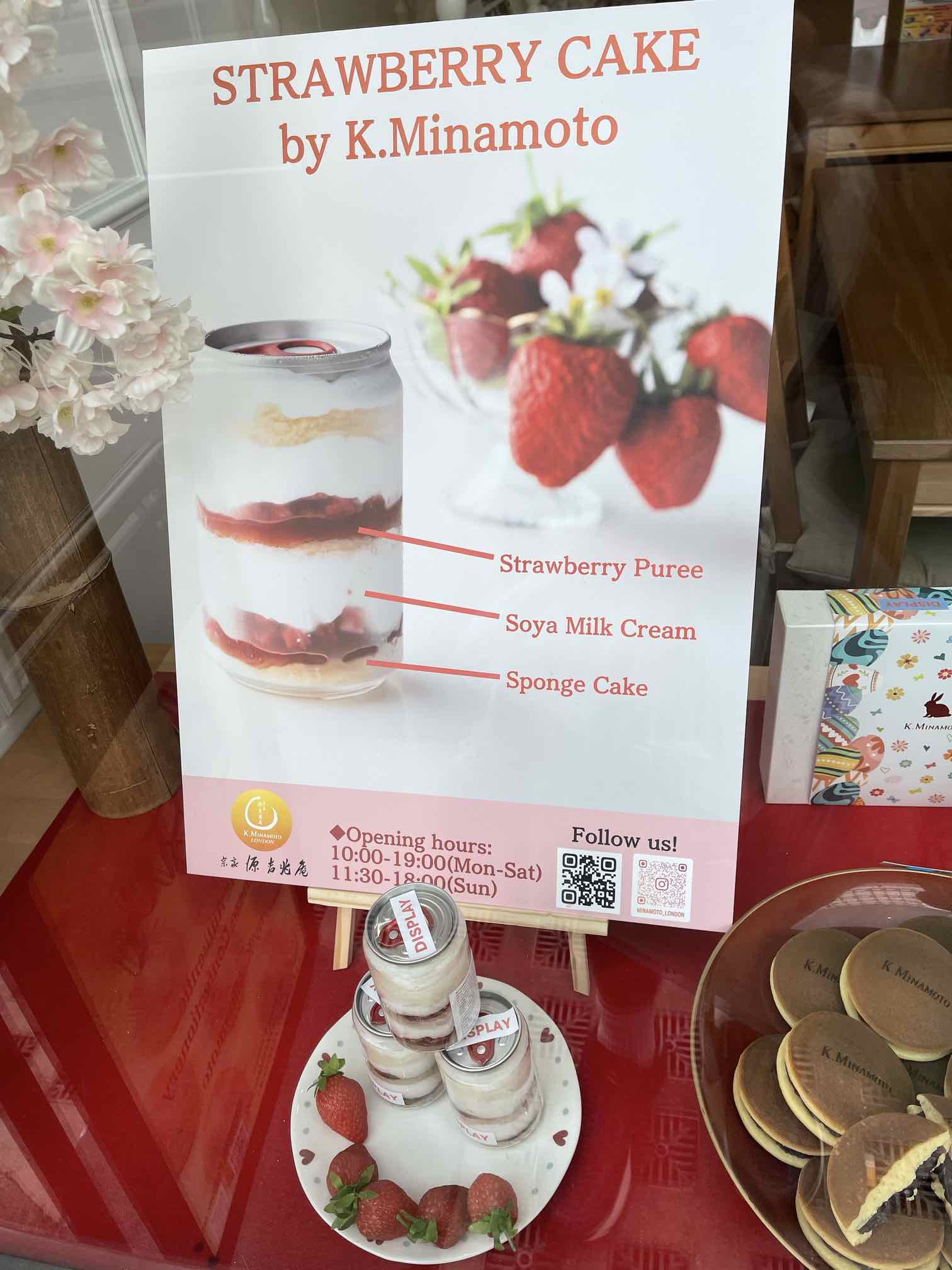
Walking back to the station I find two delights one a Japanese desert place offering a strawberry cream cake.
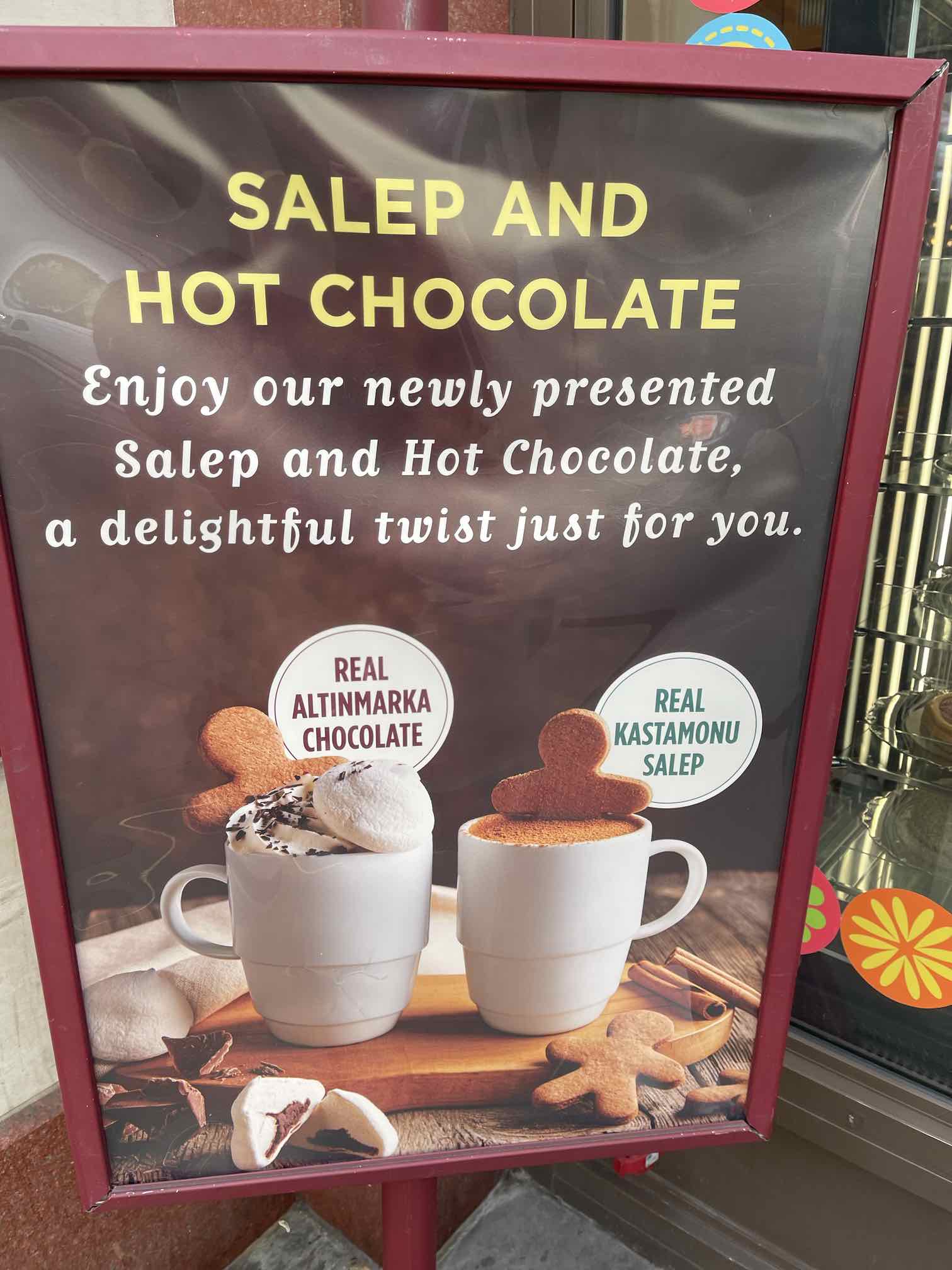
Second I find what appears to be a coffee shop actually offering Turkish Salep (warm drink).
At Kings Cross St Pancras station I see a sign on the escalators that says “please stand to the right.” Mystery partially solved but missing the reasoning.
Another underground to Kings Cross Station.
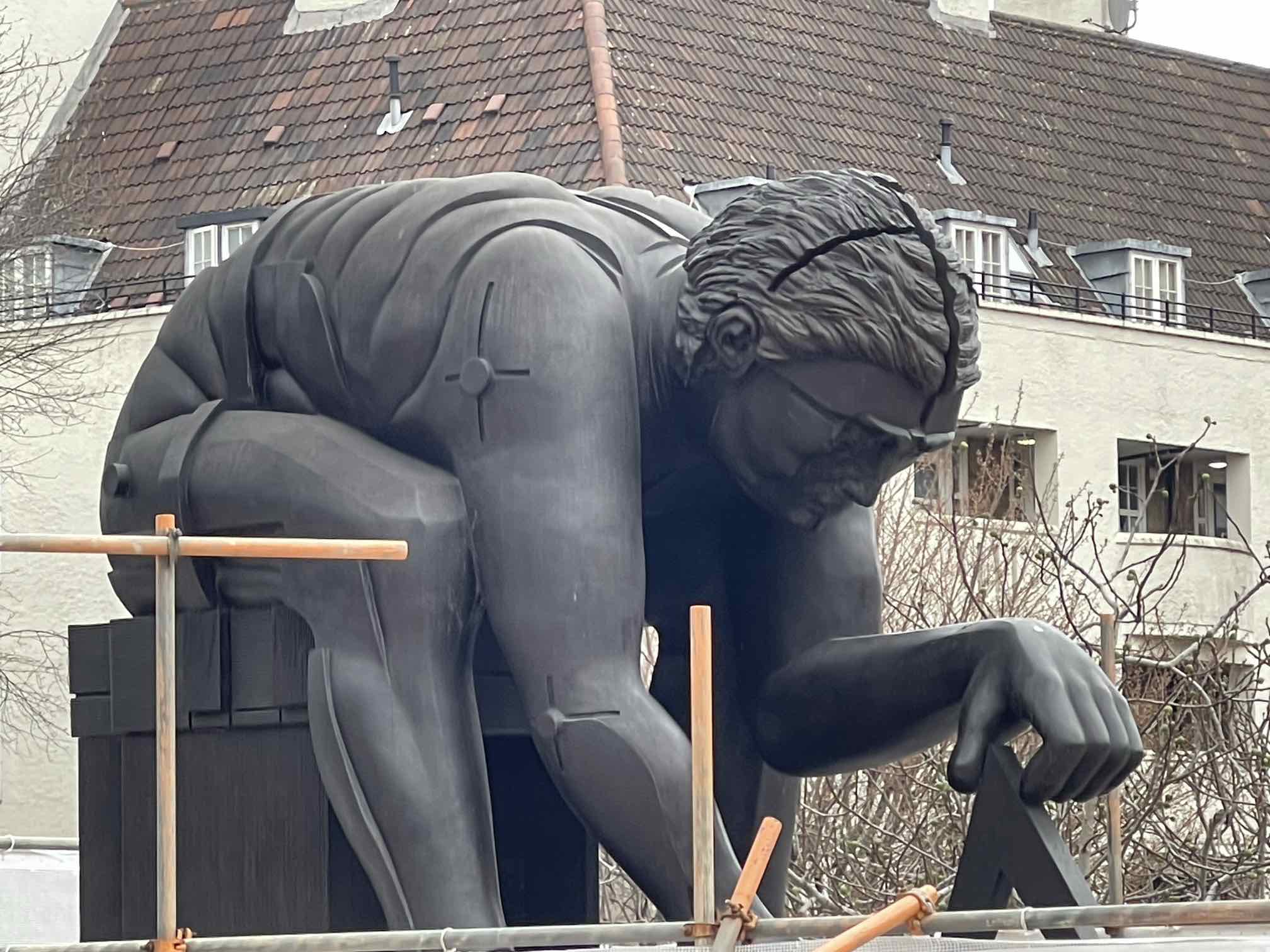
I pause at Euston Road to say hello to the Isaac Newton statue outside the British Library. I have some thoughts about this Newton Statue that I’ll put in another post. (The artistic message of this statue is a punch in the face.)
The train to Crewkerne leaves Waterloo station and pauses at Clapham Junction. That feels familiar.
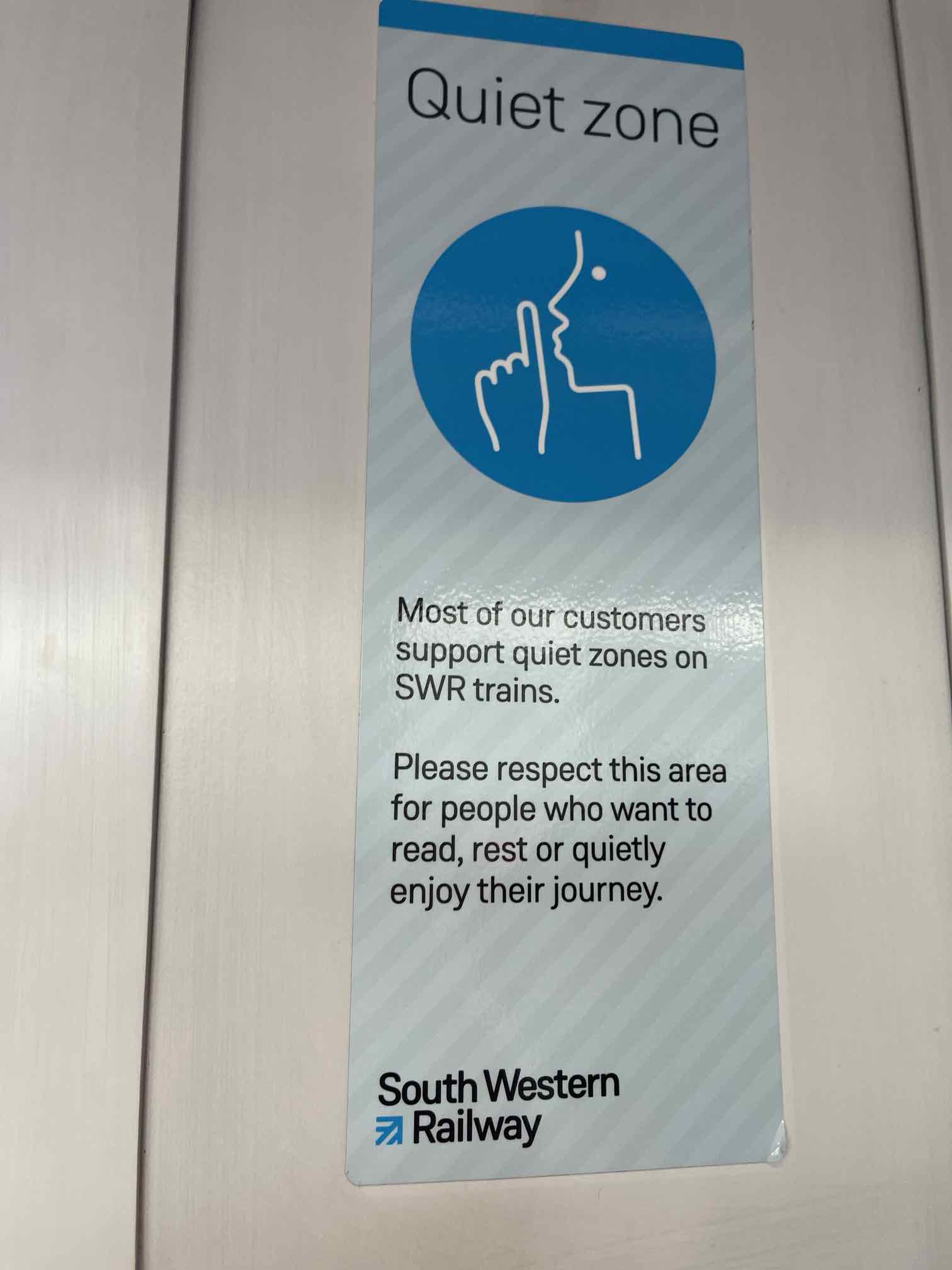
The train signs strongly indicate a preference for quietness, but are ambivalent about eating and subtle on litter.
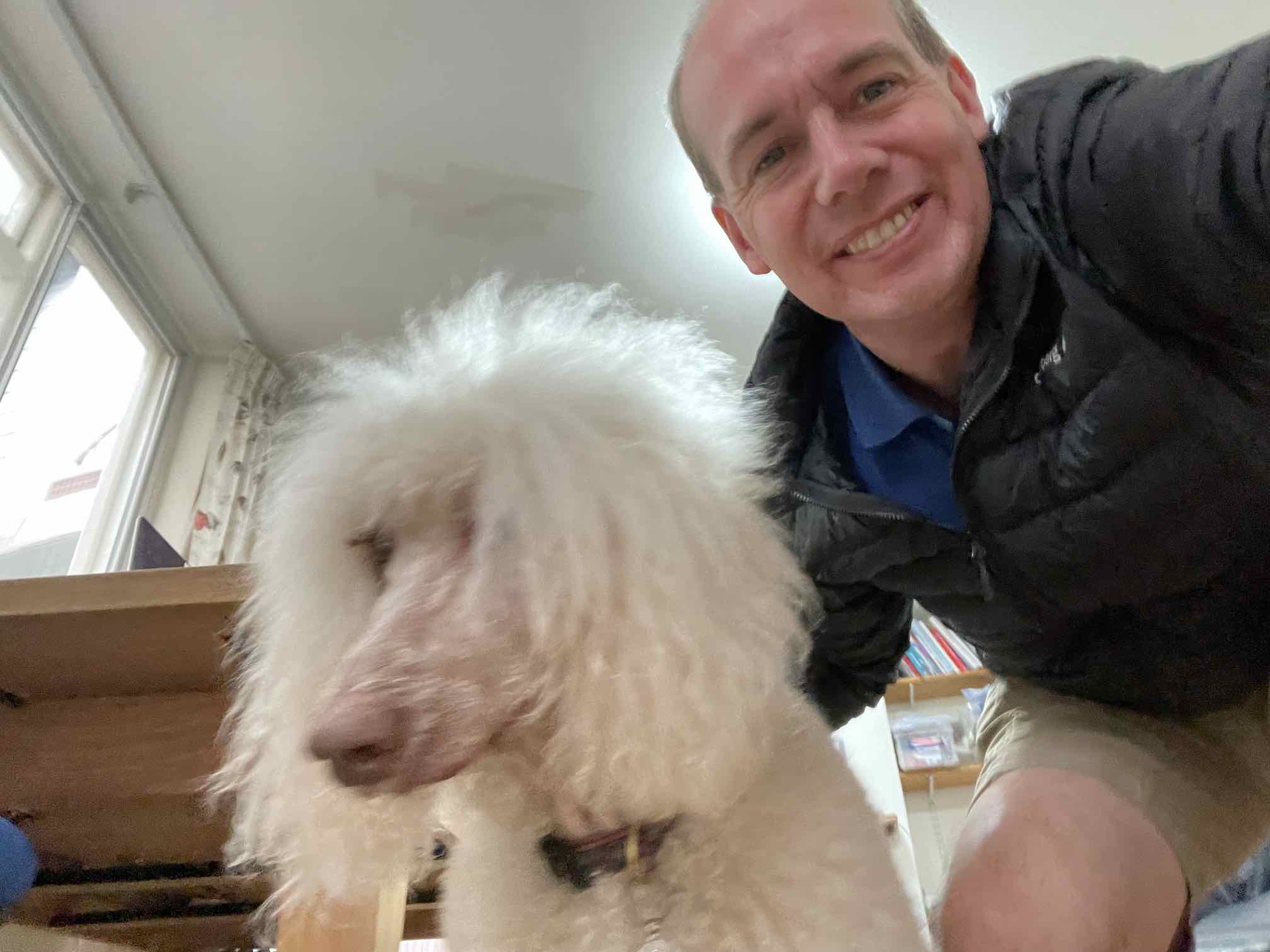
Dad greets us with his dog Trixie. Later we go for a walk around the village, and squirrels dash up trees.
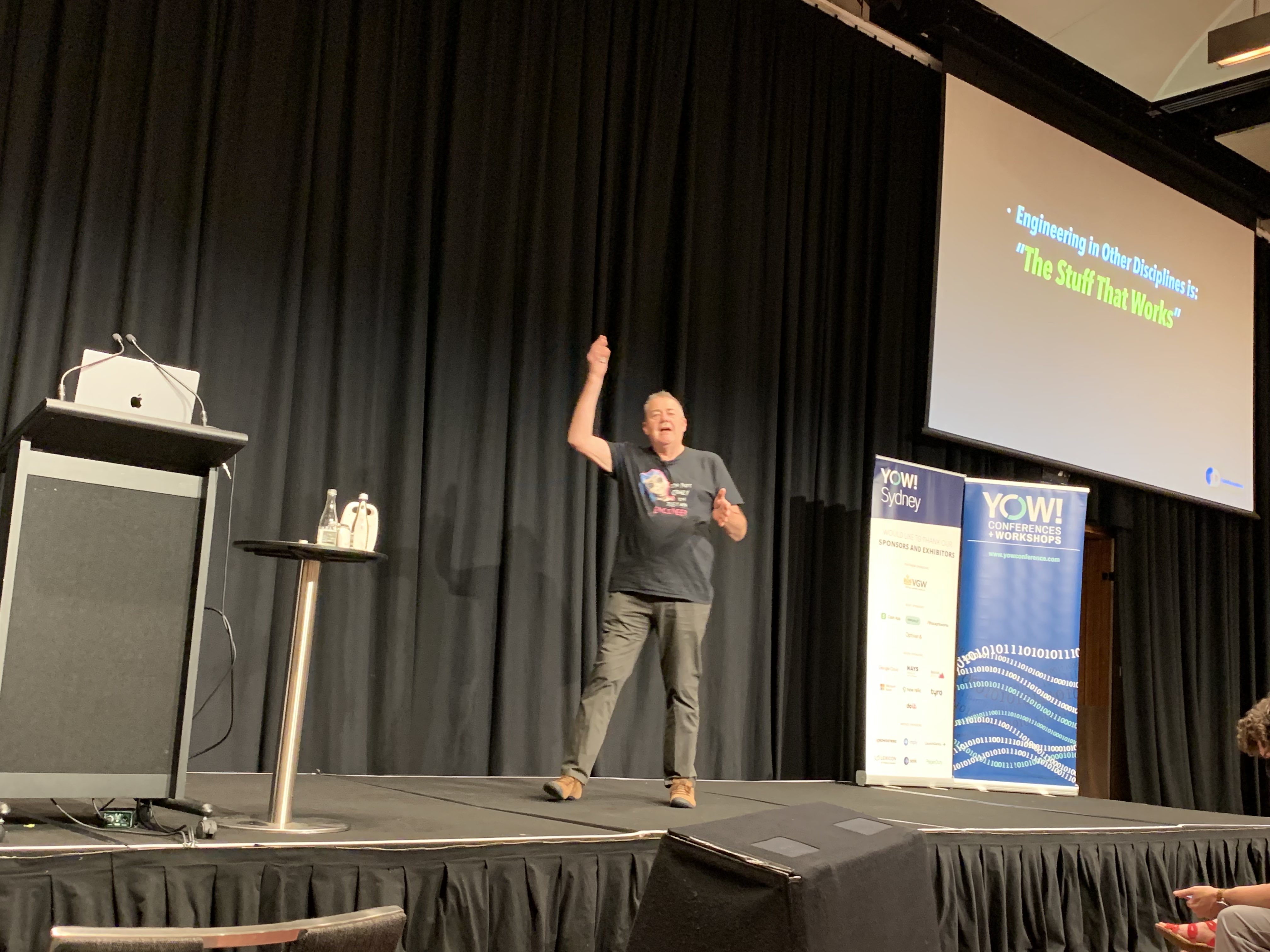
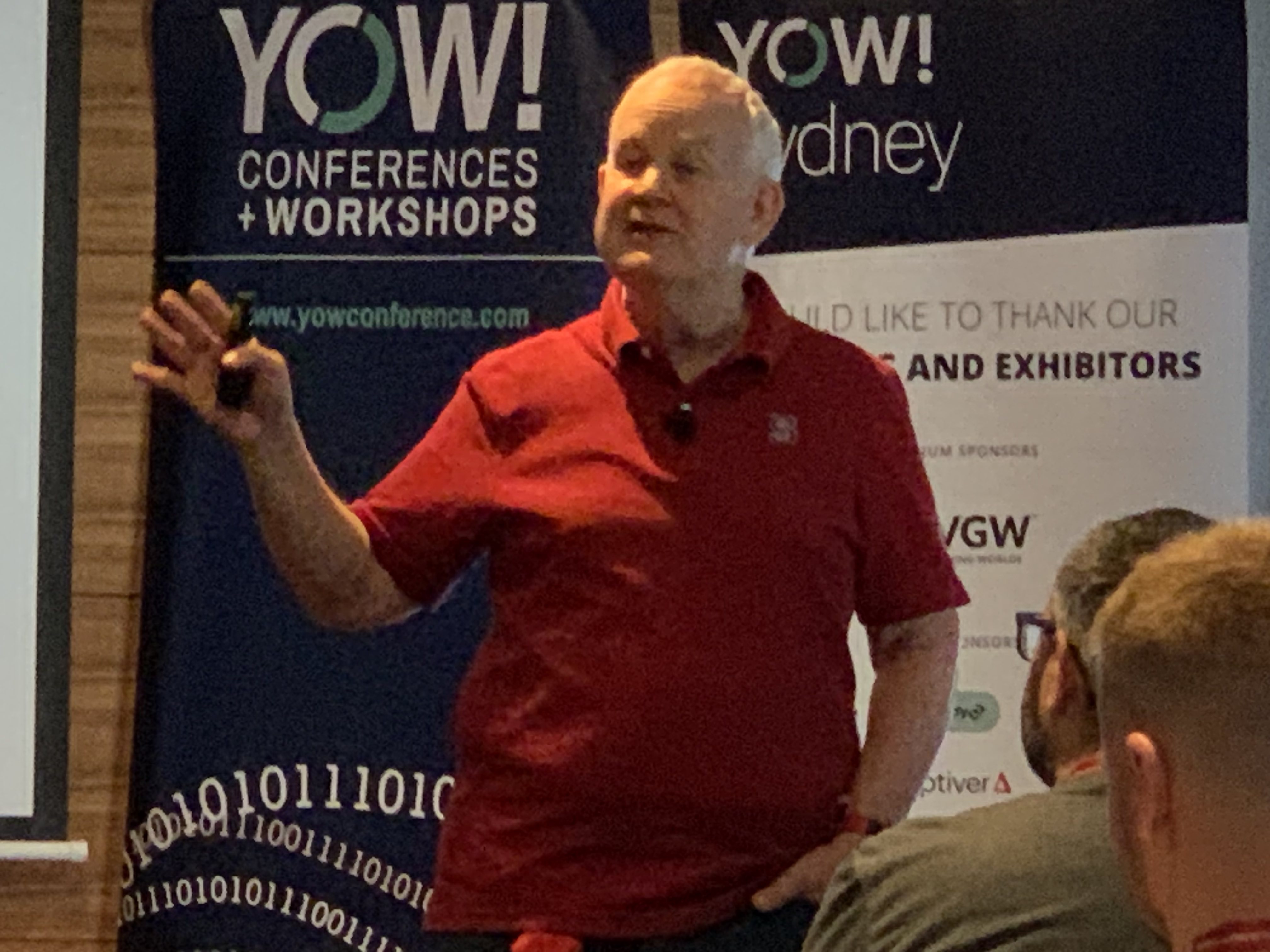
Dave answers the question “What are the durable ideas – that if we use in our work – are going to give us a chance of success?”
Dave has wonderful illustrations, the Space Station, engineering rockets, the development of cars, and it is clear he loves planes. We see his technocratic passion for the industrial revolution and how this impacts our lives as software engineers.
Timothy McNamara – When to Choose Rust
@TimClicks @TimClicks@mastodon.nz
Tim loves rust and compares common errors in C, Go, Java, Javascript and shows how these errors would be covered off the Rust compiler. His live-coding is entertaining and shouting “Yahoo” in a NZ accent at the output was priceless. His advice on how to win people of its value in your workplace was invaluable.
Lily Mara – A Kafkaesque series of events
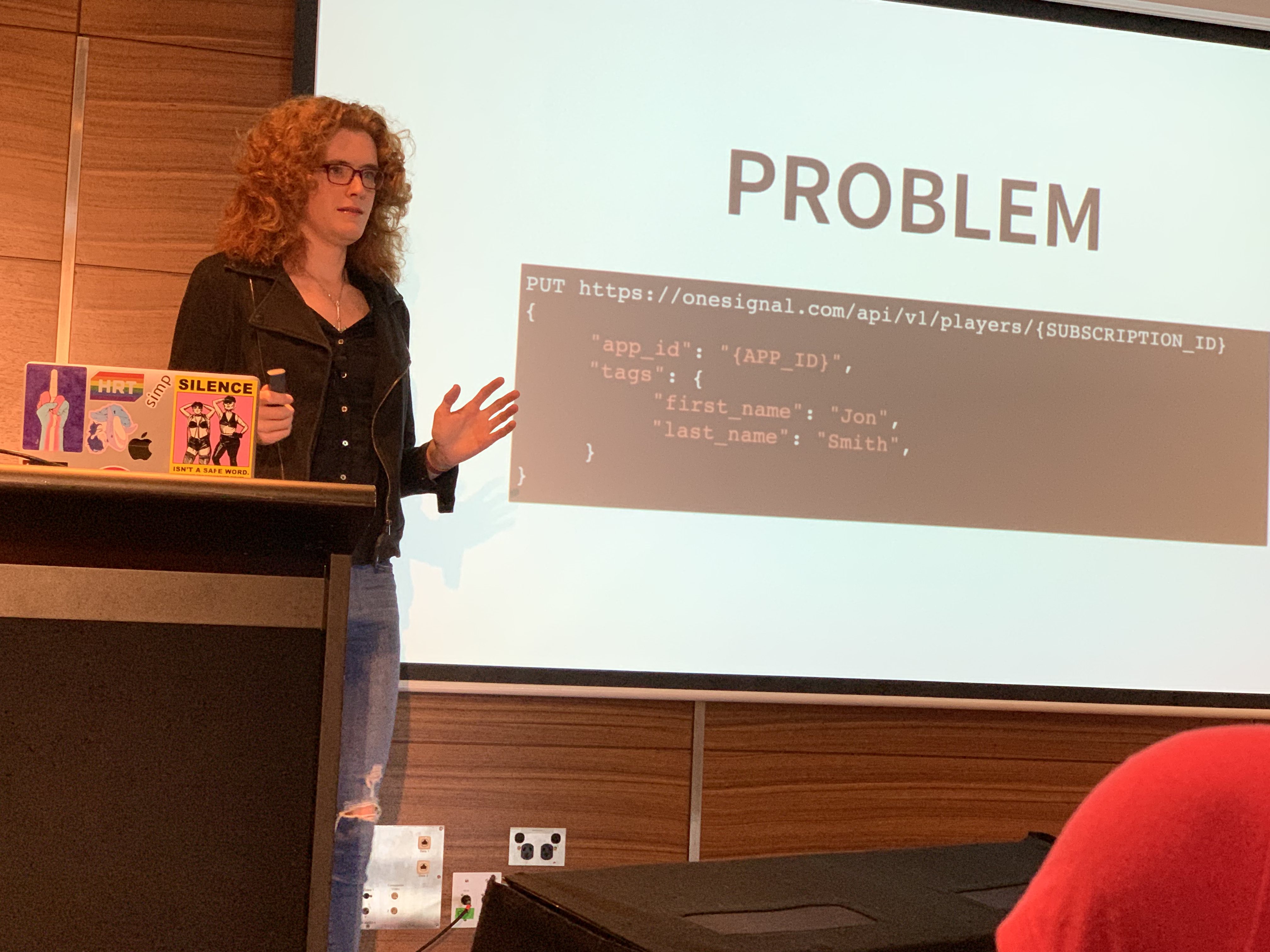
Lily digs into the detail of solving concurrency problems whilst working around Kafka’s partition limit. Good diagnosis of a production issue and how they diagnosed and fixed it.
Matt Ranney – Migrations – The hardest actual problem in computer science
Matt gives a very grounded view of doing migrations in large Silicon valley company. His insights included “If you use the phrase ‘source of truth’ then I know you’re not committed to an ‘always on’ migration.”
Michelle Gleeson – Sensible Defaults for Tech Management
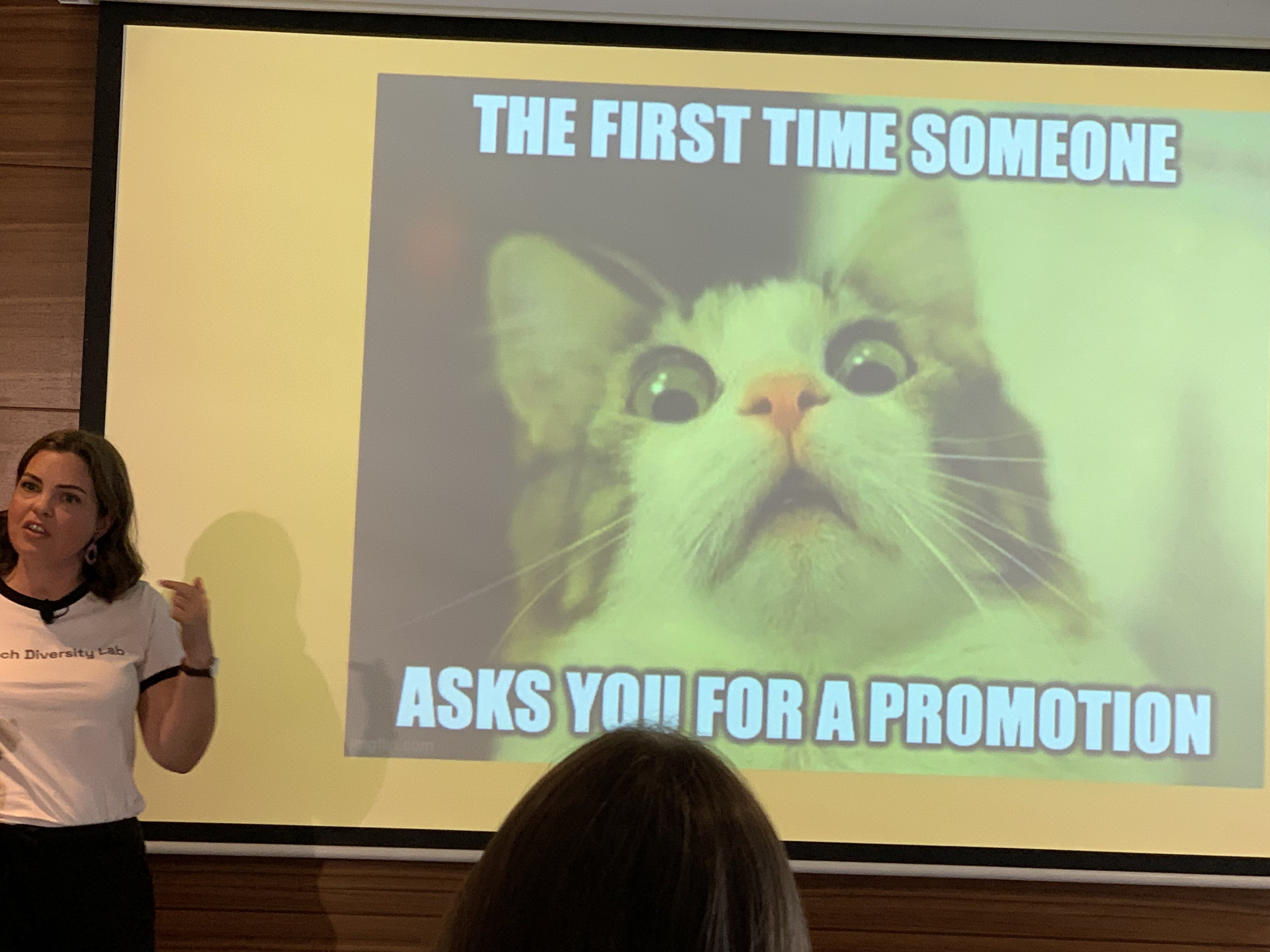
You need sensible defaults for management to defend against decisions of inexperienced managers and to provide equitable decision making.
Fred George – Sabotaging a Transformation
So much wonderful wisdom and experience from Fred. You can tell he has been around the block many times trying to change organisations.
“To be a change agent – you have to be willing to create a stink. Escalate and escalate. Don’t be afraid to get a consultant to do this, when they say a crazy thing, you look reasonable.”
Aino Vonge Corry – What We (Should Have) Learned from the Lord of the Rings
“Gandalf was a manager who gave a high degree of autonomy. He will leave you to figure it out, and then turn up the last minute to deal with the dragon.”
Astrid Atkinson – Building The Self-Driving Grid
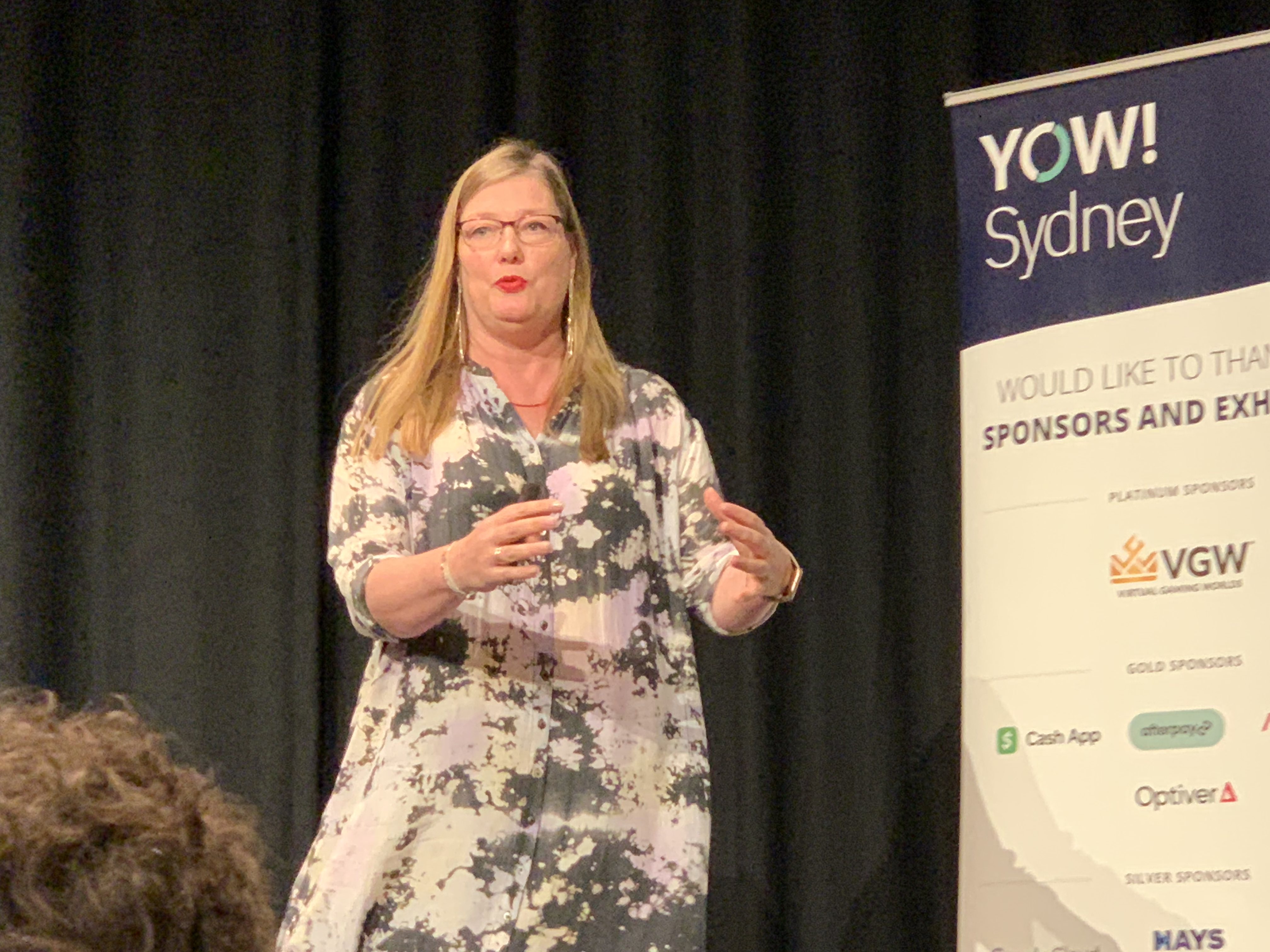
“Climate change is not something we have already failed at, or a single tipping point. every single action to help with decarbonisation matters – the opportunity to have an impact is full of meaning and opportunity. “
“we are applying the methods used to solve large-scale computing problems, like load balancing, to the challenges of the electricity grid”
“solar generation lowers apparent demand – creating a ‘duck curve’ (an emu curve in Australia because there is bigger use of solar)”
“When you can light things on fire – you have a different pressure on your software engineering. Fundamentally this is about trust. “
“I want a toaster where it could burn the weather into my toast…”
“We need to have a street or town operate as a micro-grid. The goal is not to have it completely isolated, but to be able to ride out small disturbances in connectivity – same as what we do in computing. “
Sara Achour – Programming Systems for Analog Hardware
Sara Achour at #YOW22 leaves the room with their mouths open as she describes a compiler that can take an equation describing a dynamical system and output a hardware description for *non-digital logic* but still get your answer.
Simon Brown – C4 Models as Code
Simon Brown demonstrates a system for individual teams maintaining a generated diagram of their system, and then loading that into an organisation view of all the integrated systems.
James Lewis – Software Architecture, Team Topologies and Complexity Science
Whenever you see hierarchies – you expect sublinear scaling (y less than x) – whether physical or informational – this is due to the shape of the network itself.
Alison Rosewarne & Stewart Gleadow – Fighting Software Entropy
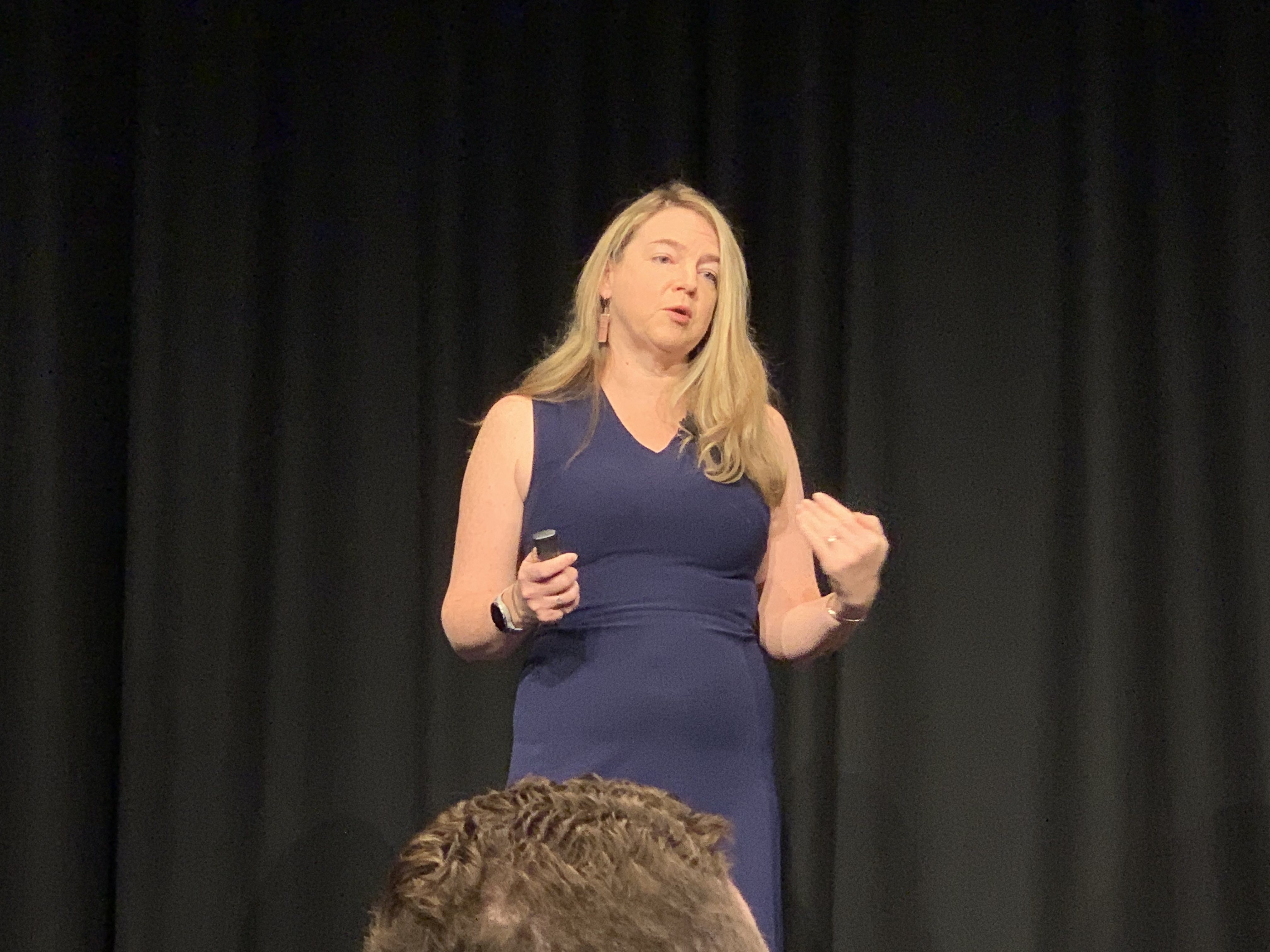
Insightful look at applying principles from physics in reversing entropy in product IT systems.
Lars Klint – Turning Dreaming into Doing – A Lifemanual for Nerds
@larsklint Are you truly happy? What are your goals? Be intentional. Do it. (and don’t watch Netflix).