The Fawlty Towers trope comes to mind, “Oh, he’s from Barcelona..”
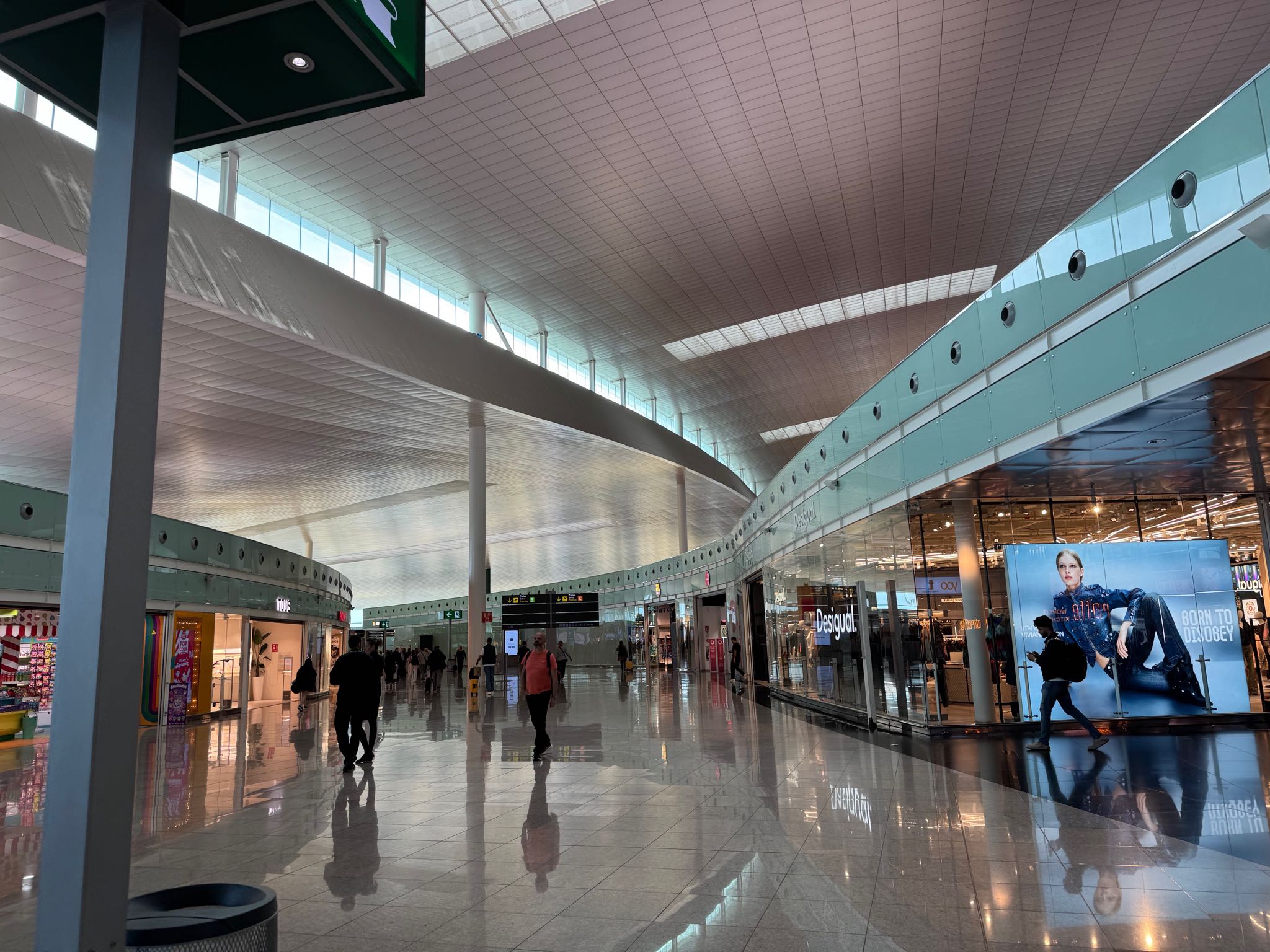
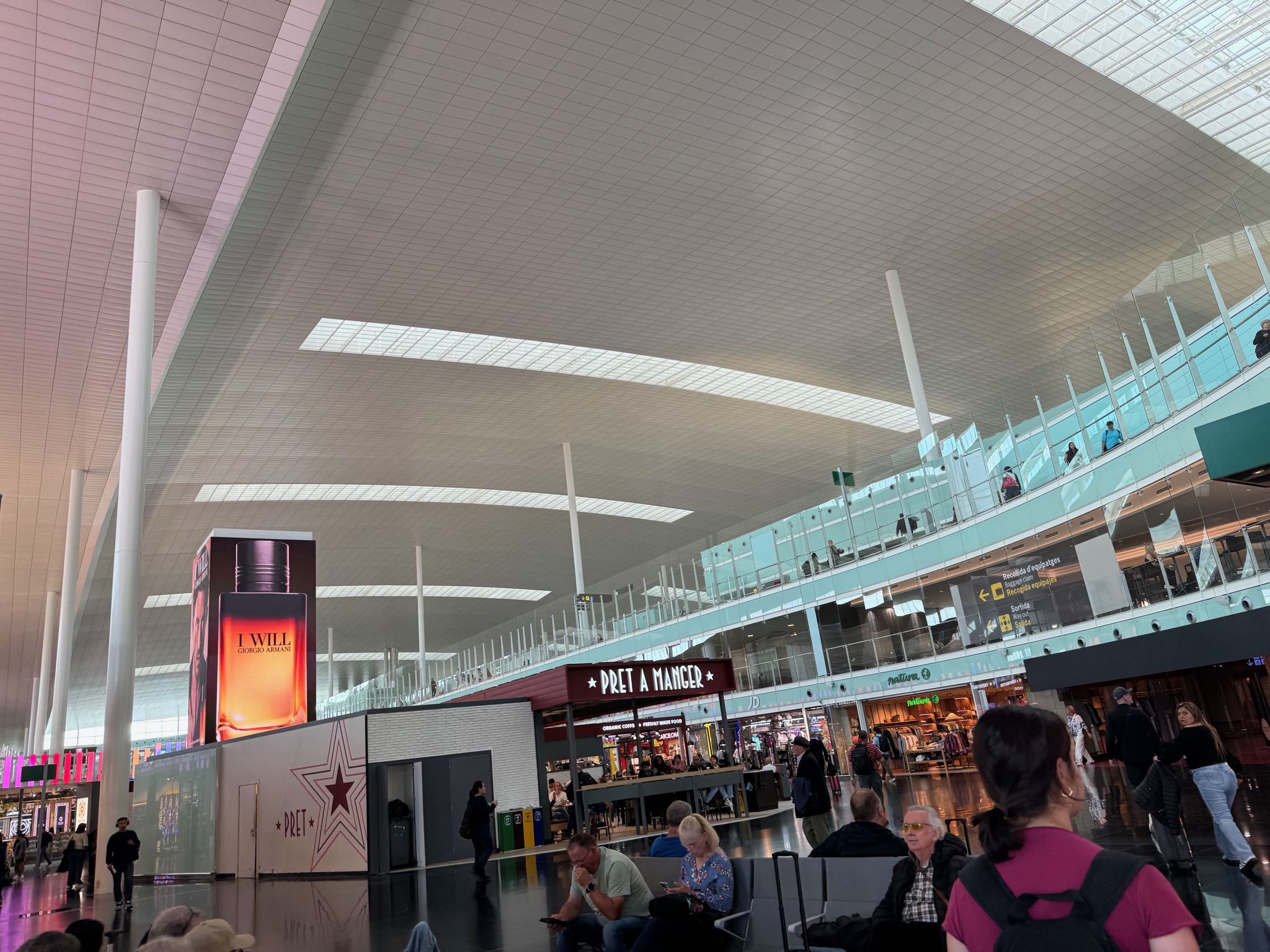
Barcelona airport is large and efficient and nods its head to the notion of fancy ceilings.
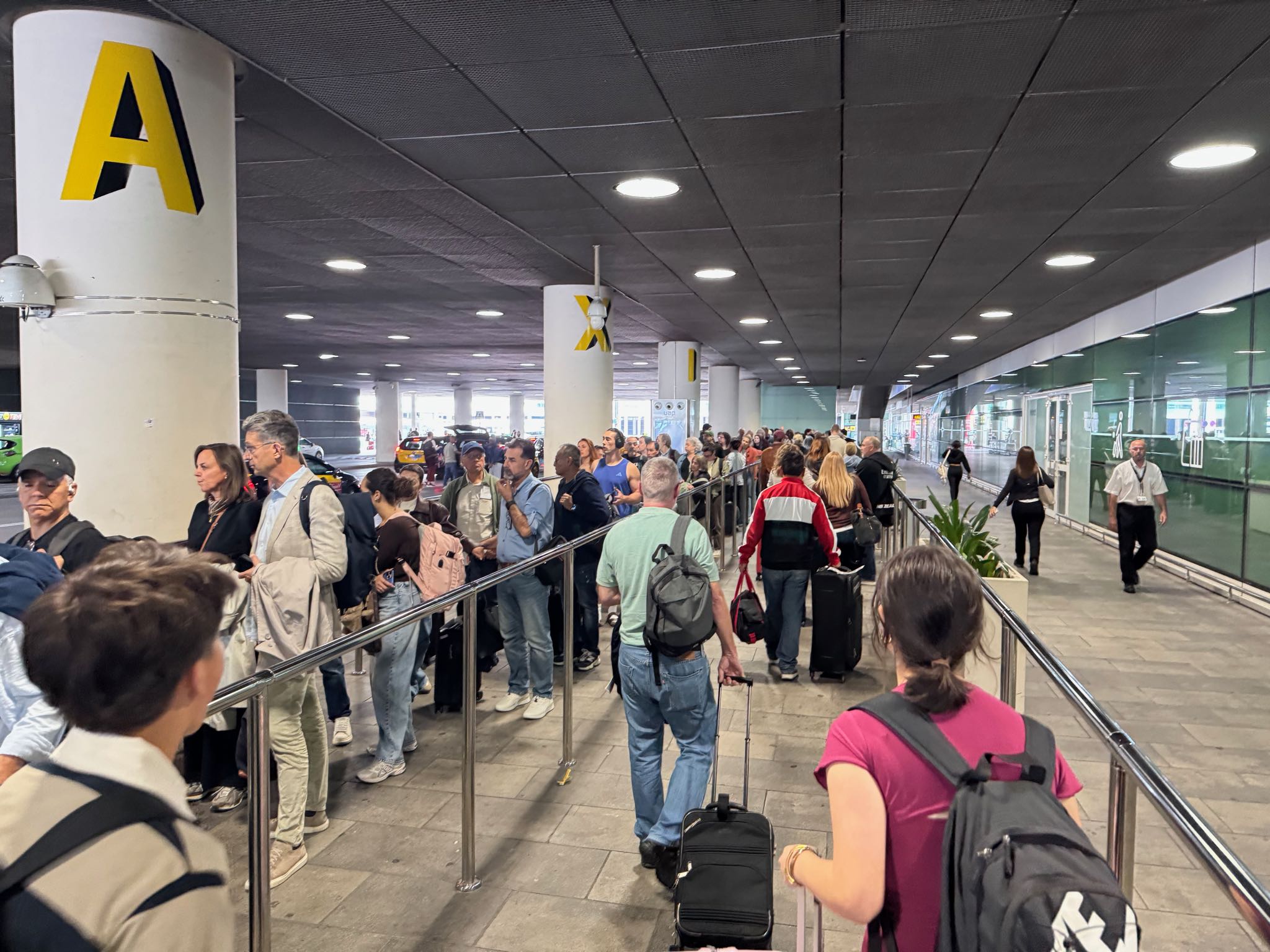
The taxi queue is Sydney-sized and Sydney-paced.
I ponder for a moment that Madrid is a place of etiquette – and the rest of Spain – to lesser degrees. The taxi driver is proud of being Catalan and not associated with Madrid. It makes me realise how Isabella I of Castile and Ferdinand II of Aragon’s marriage was such a crossing of cultures. This city has Australian pragmatism in its outer-city building approvals.
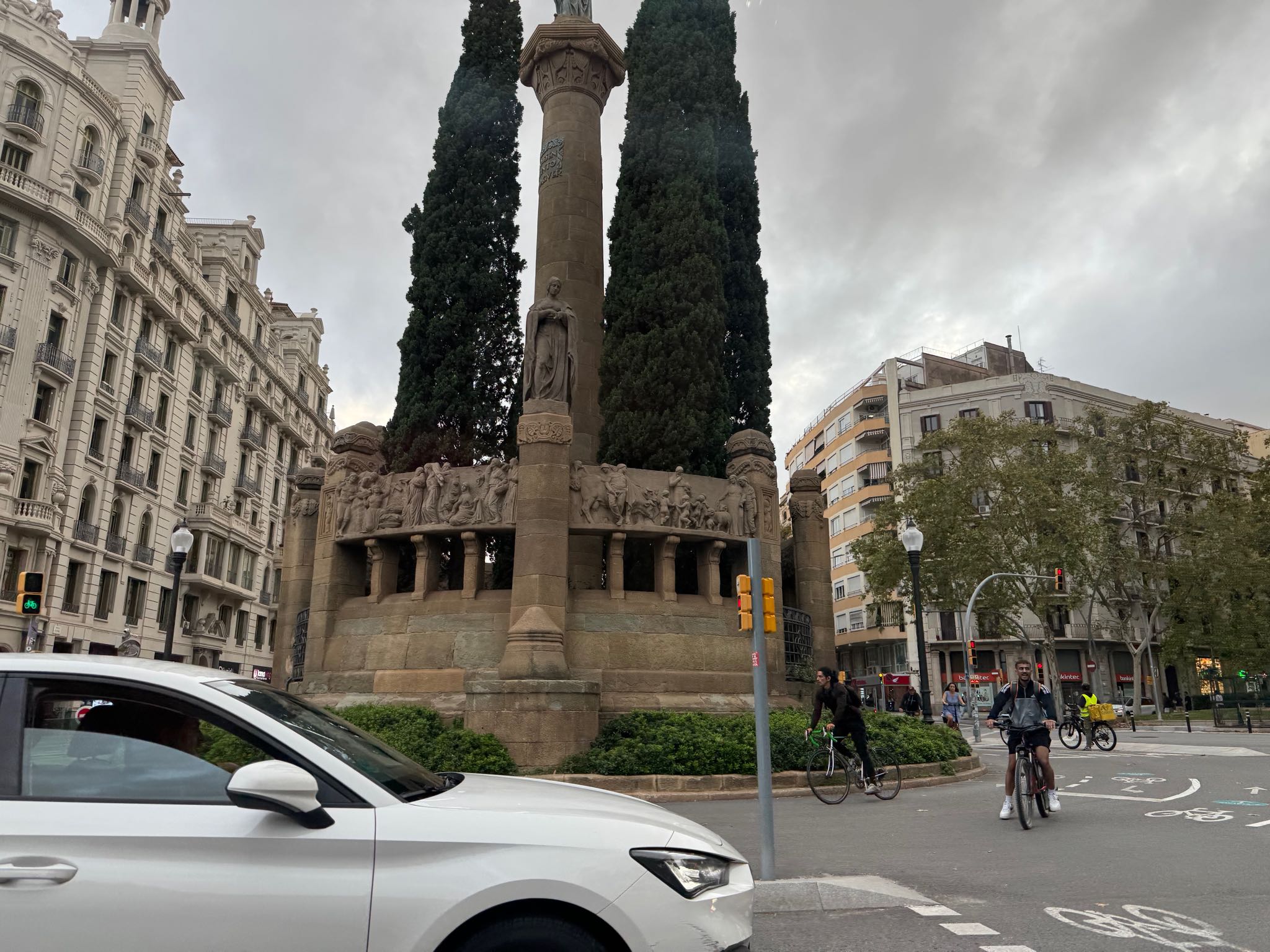
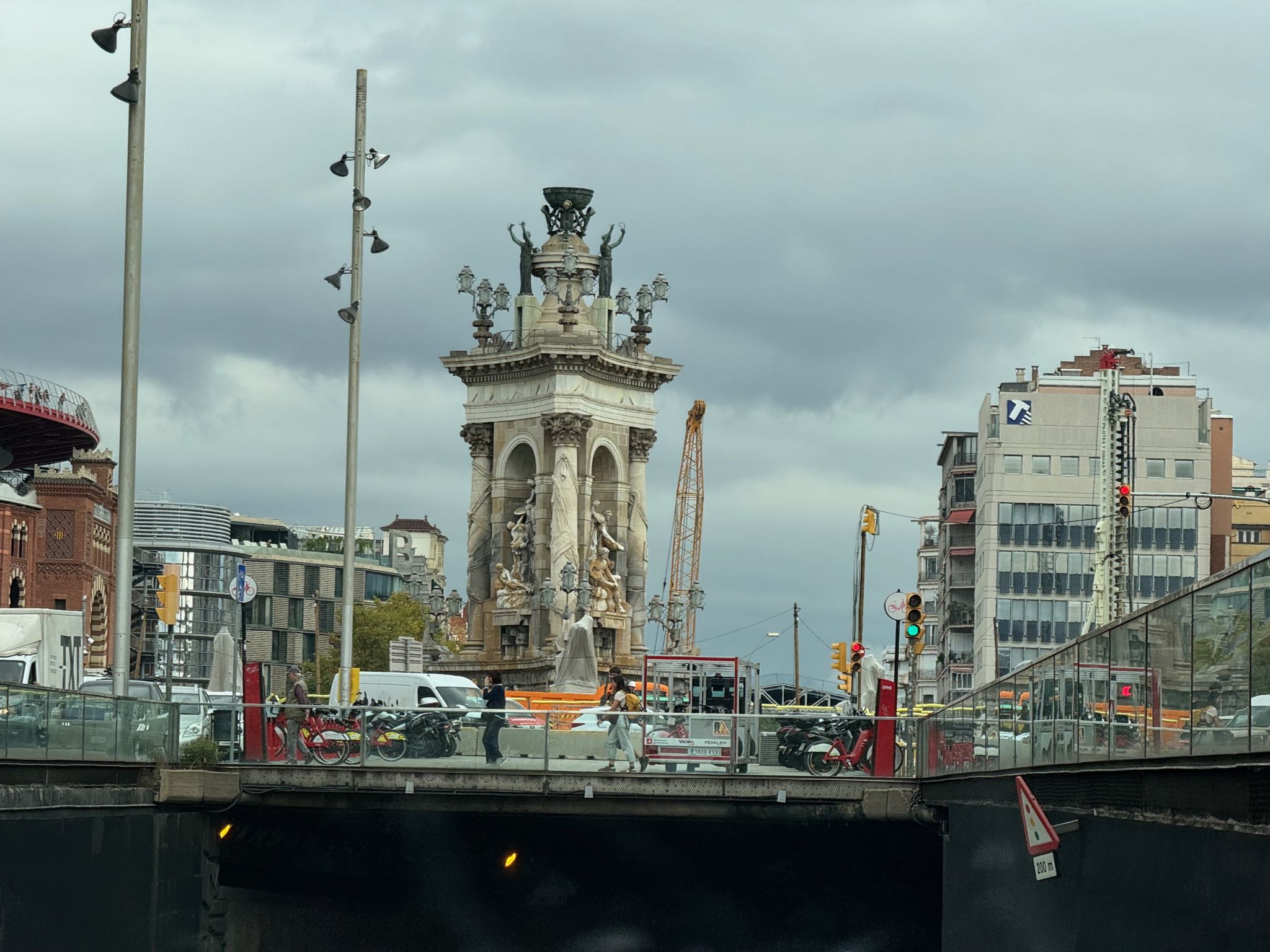
This statue is for the 1929 International Exposition (They had stopped calling it the World Fair.) It was designed by a collaborator of Gaudi, Josep Maria Jujol – and has seas and rivers representing religion, heroism, and the arts.
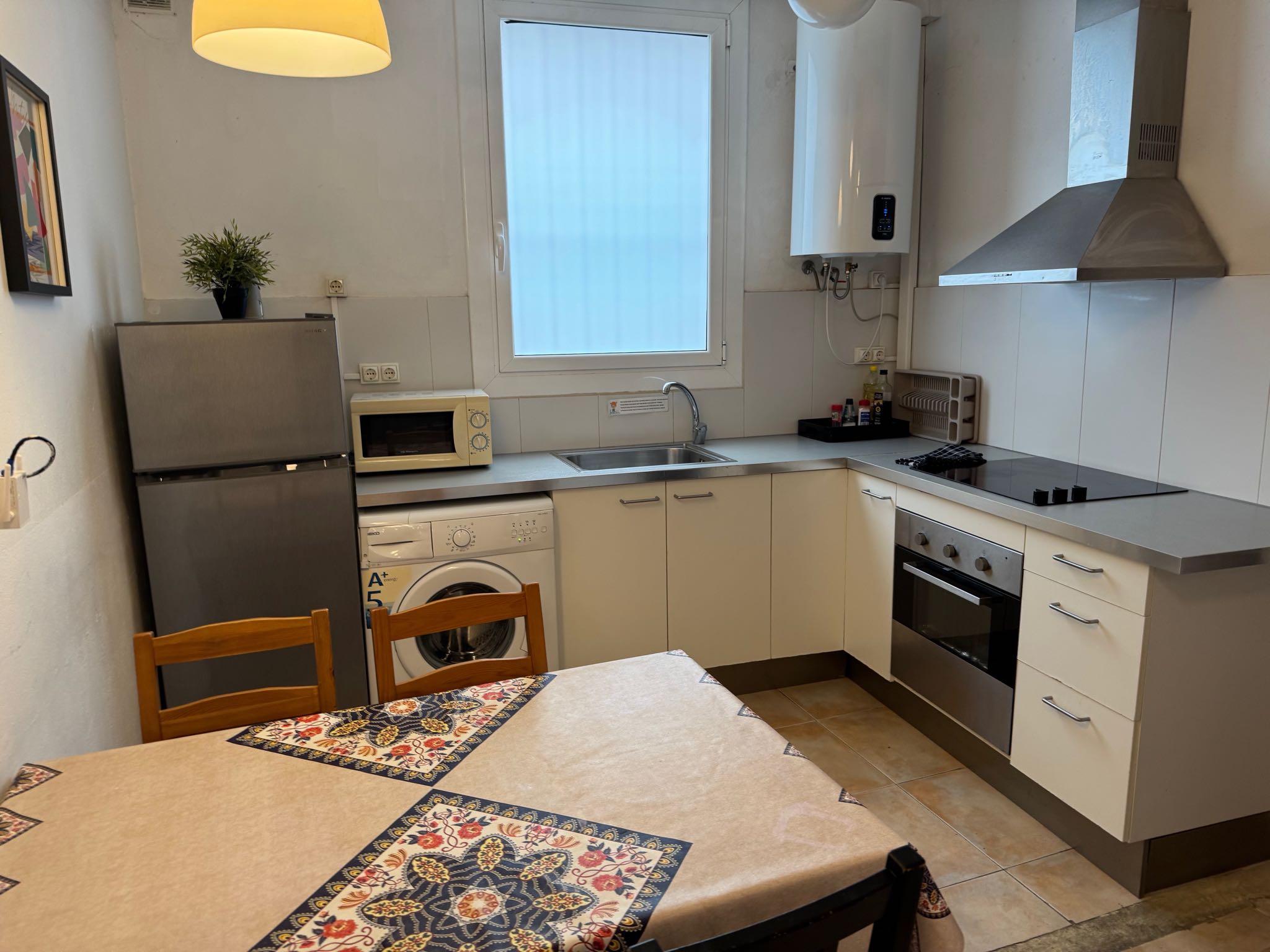
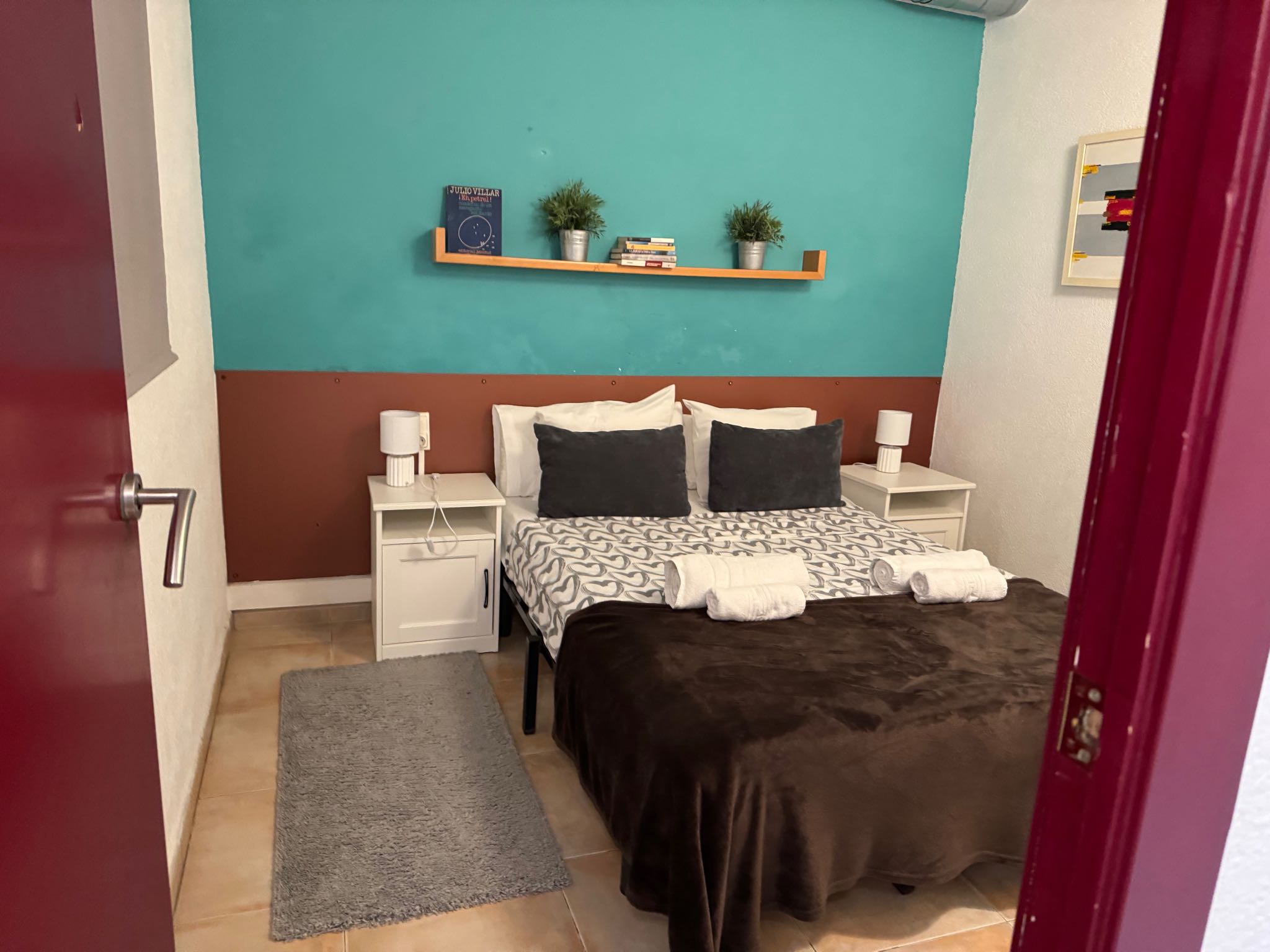
Our apartment is a bit more humble, the sort of place you might expect from an AirBnB in Sydney. (Hugh thinks of all the cities – Barcelona is closest to Sydney.)
Hugh and I pop out for eggs, milk, bread and yoghurt.
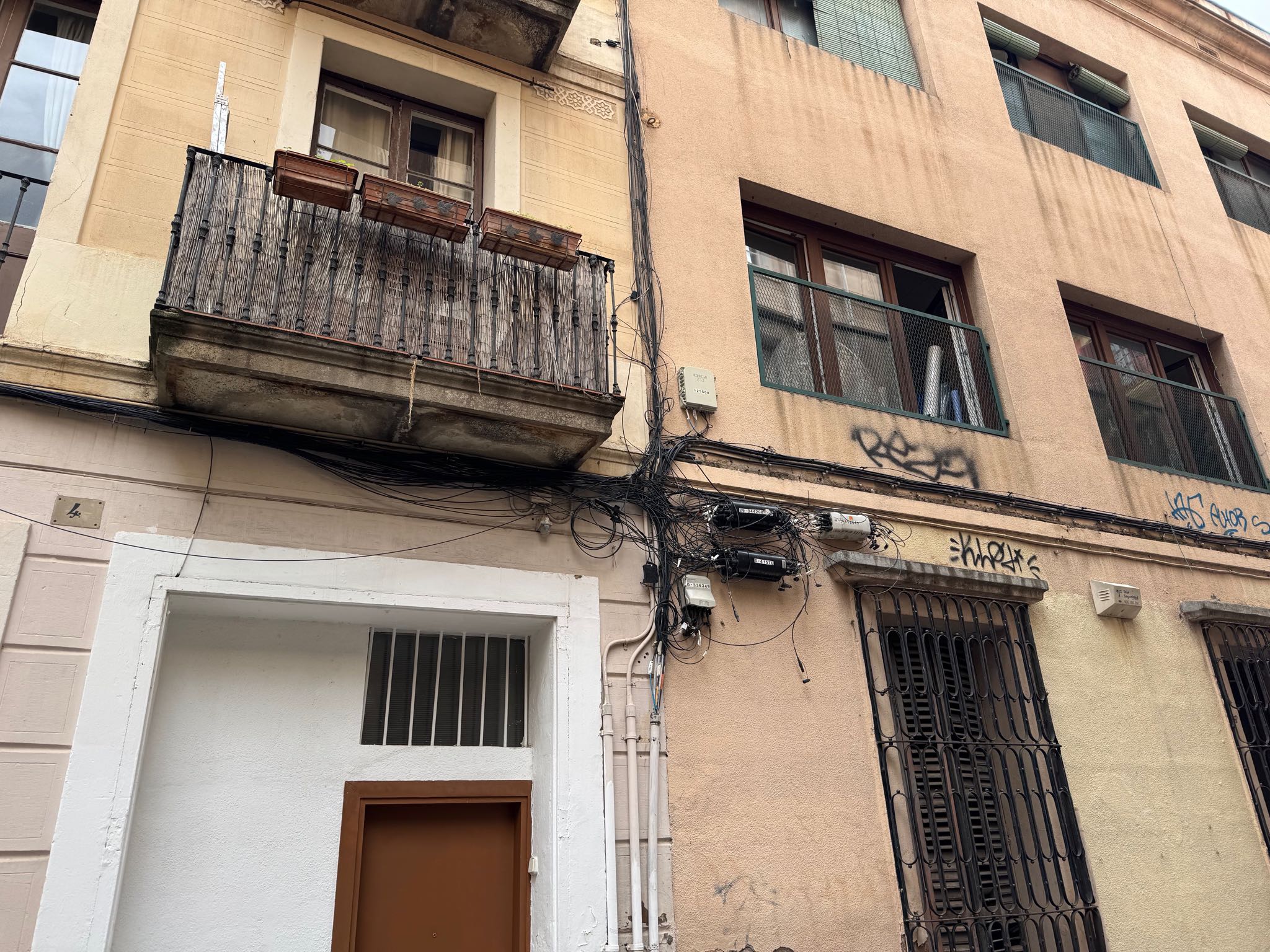
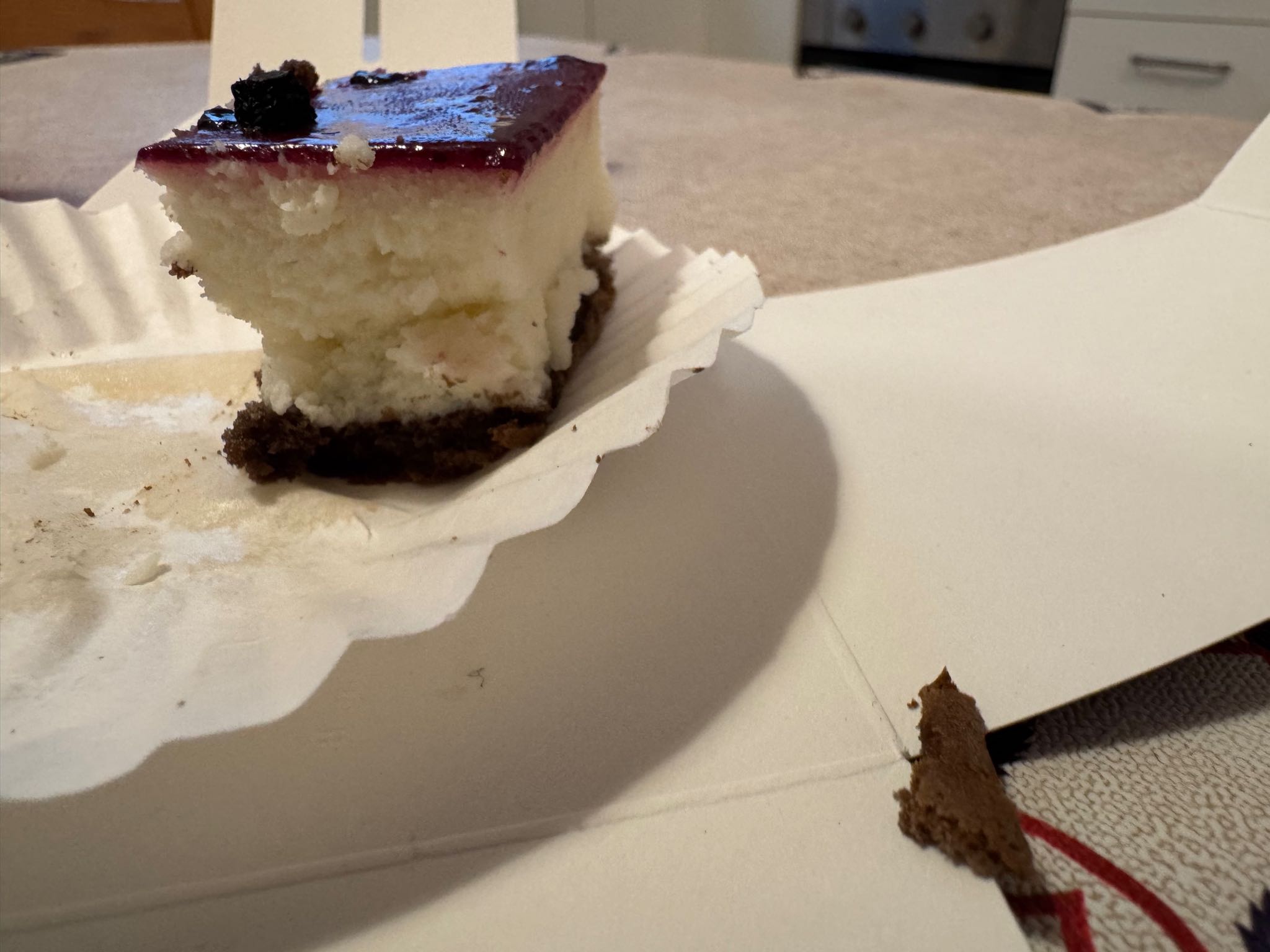
We stopped at a cafe for croissants, cheesecake and danishes.
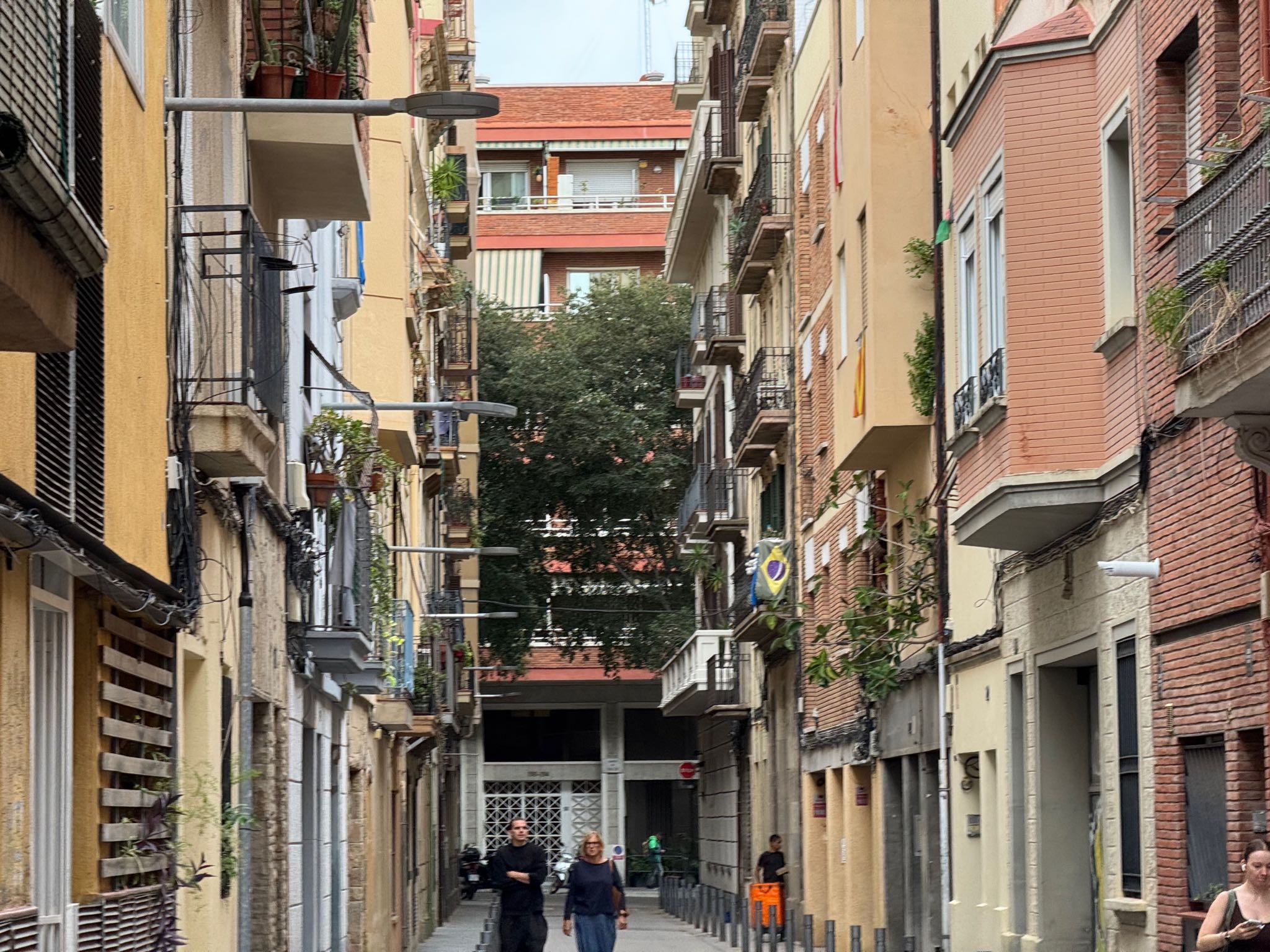
Inner city feels like Paddington and Lonsdale St Melbourne, with more bike access , extended out to a whole city.
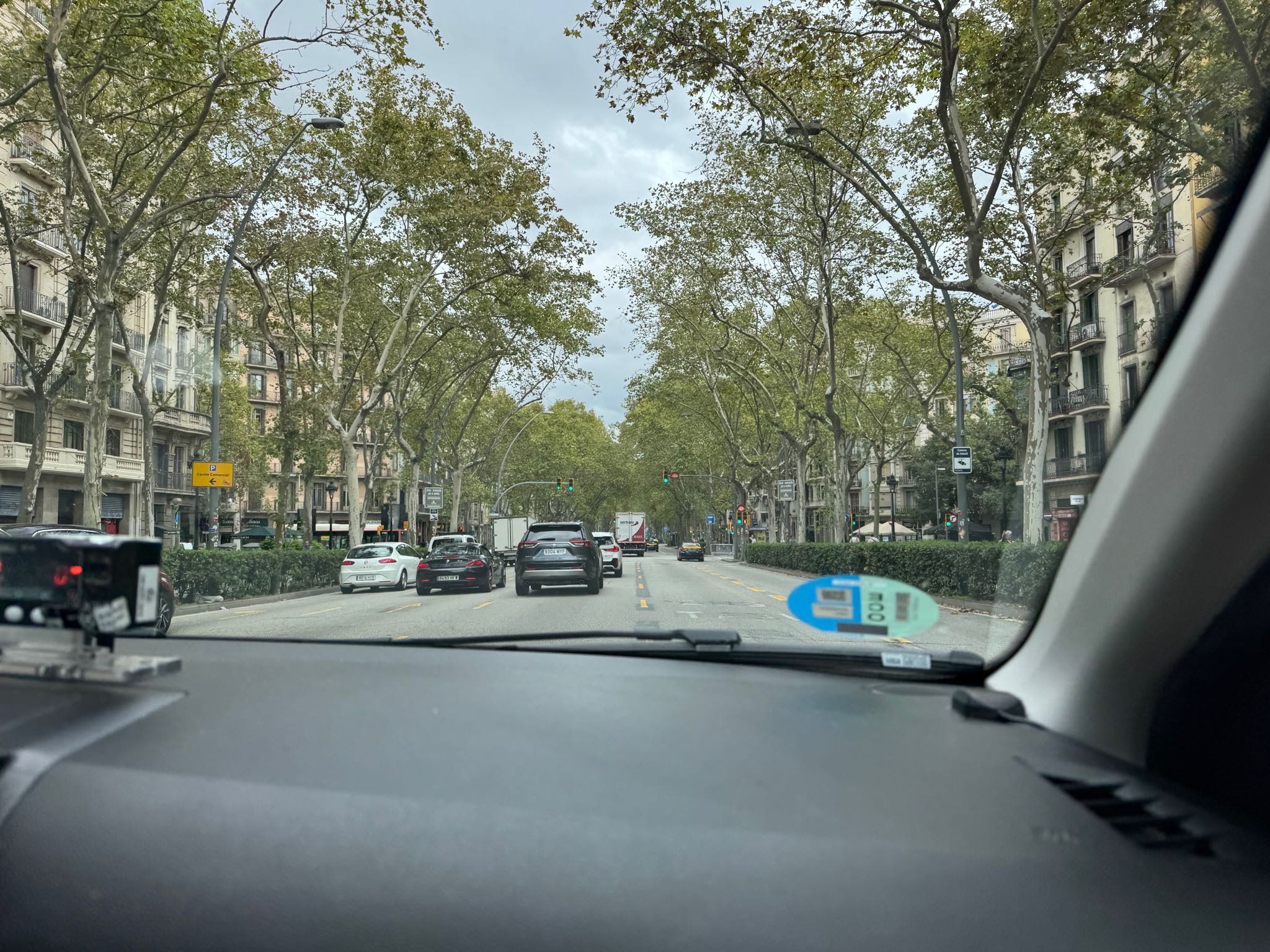
The intersections here are “Octagonal” by design. (To let more light in – for 6 story apartments)
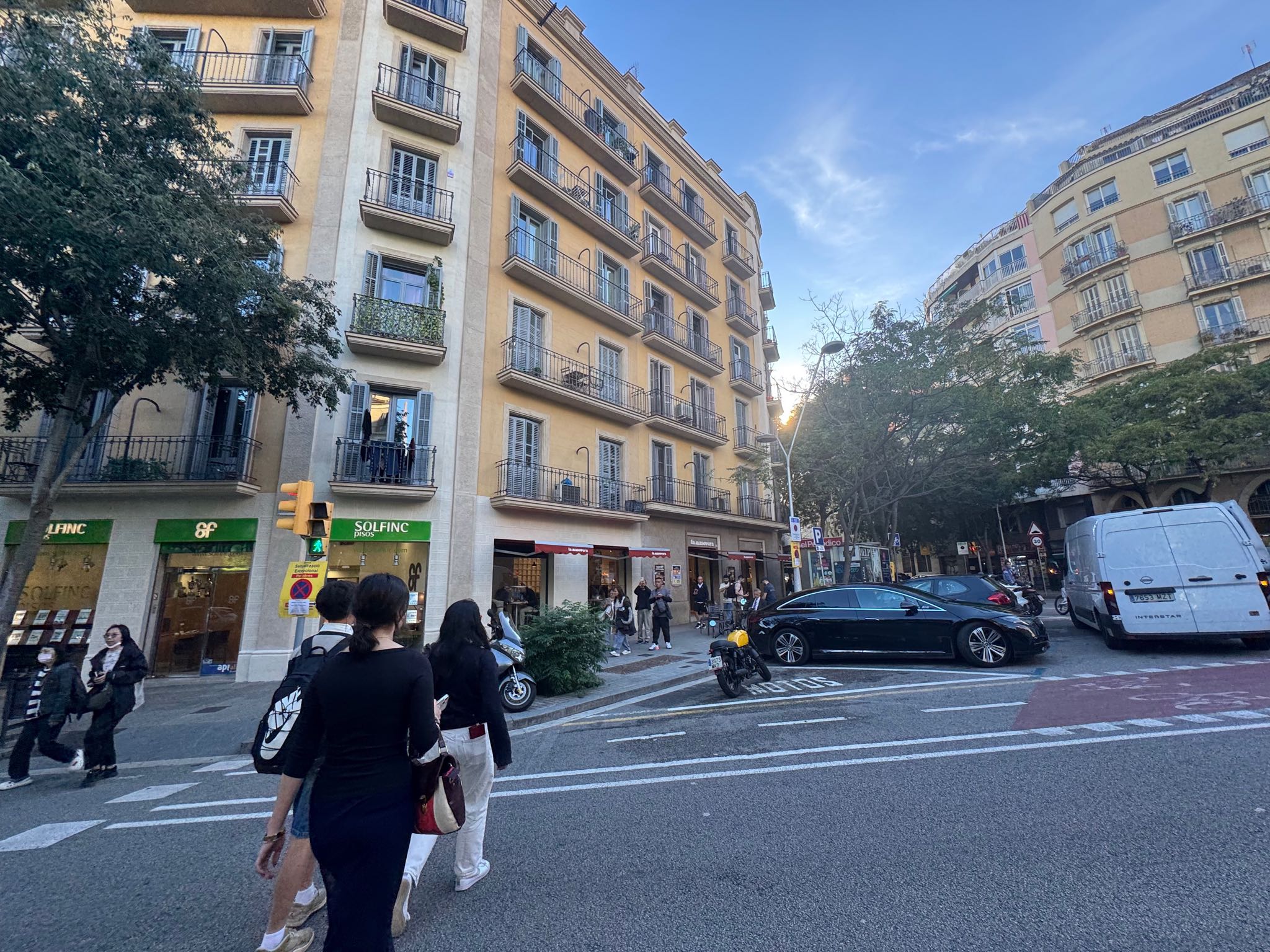
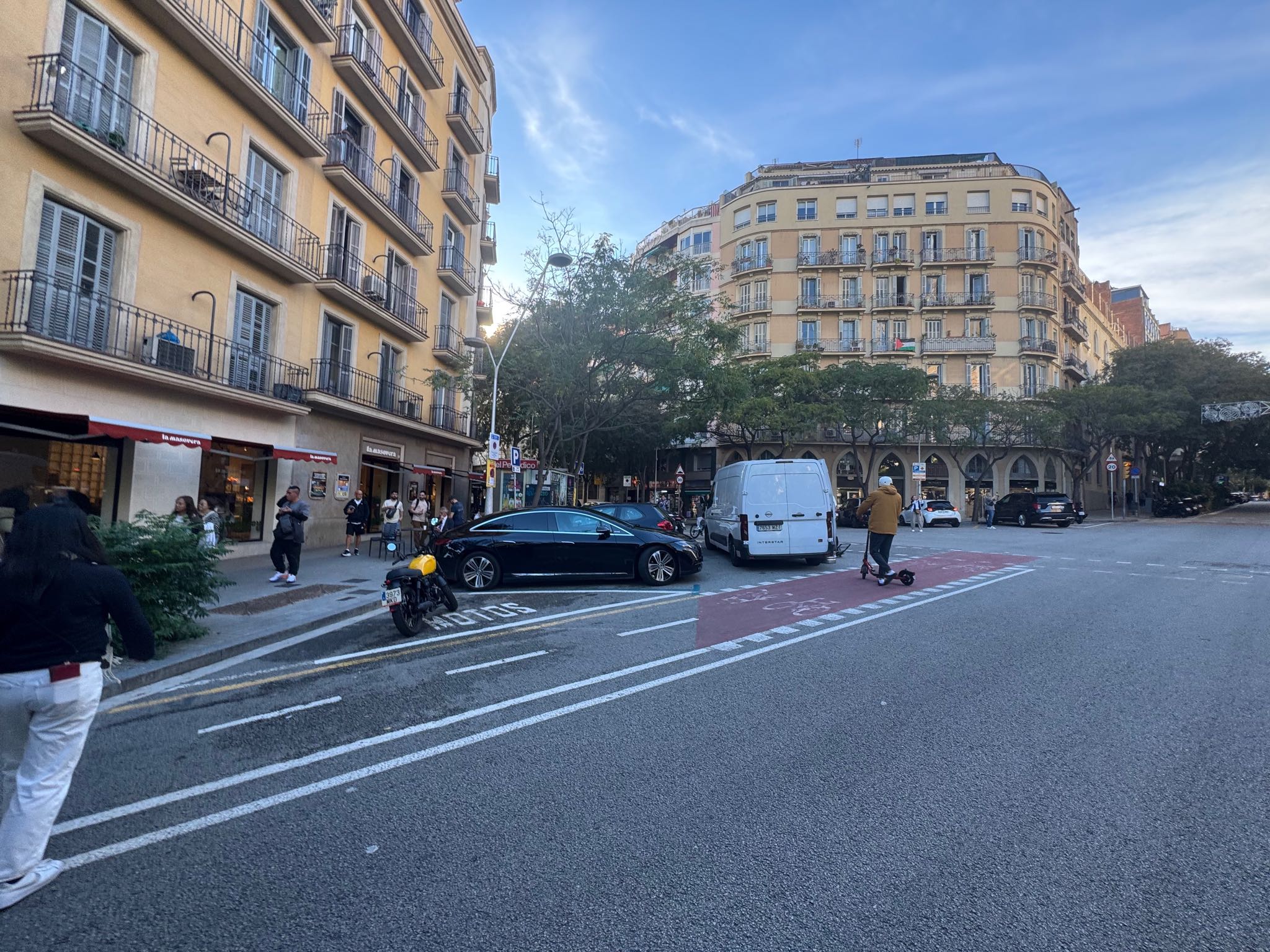
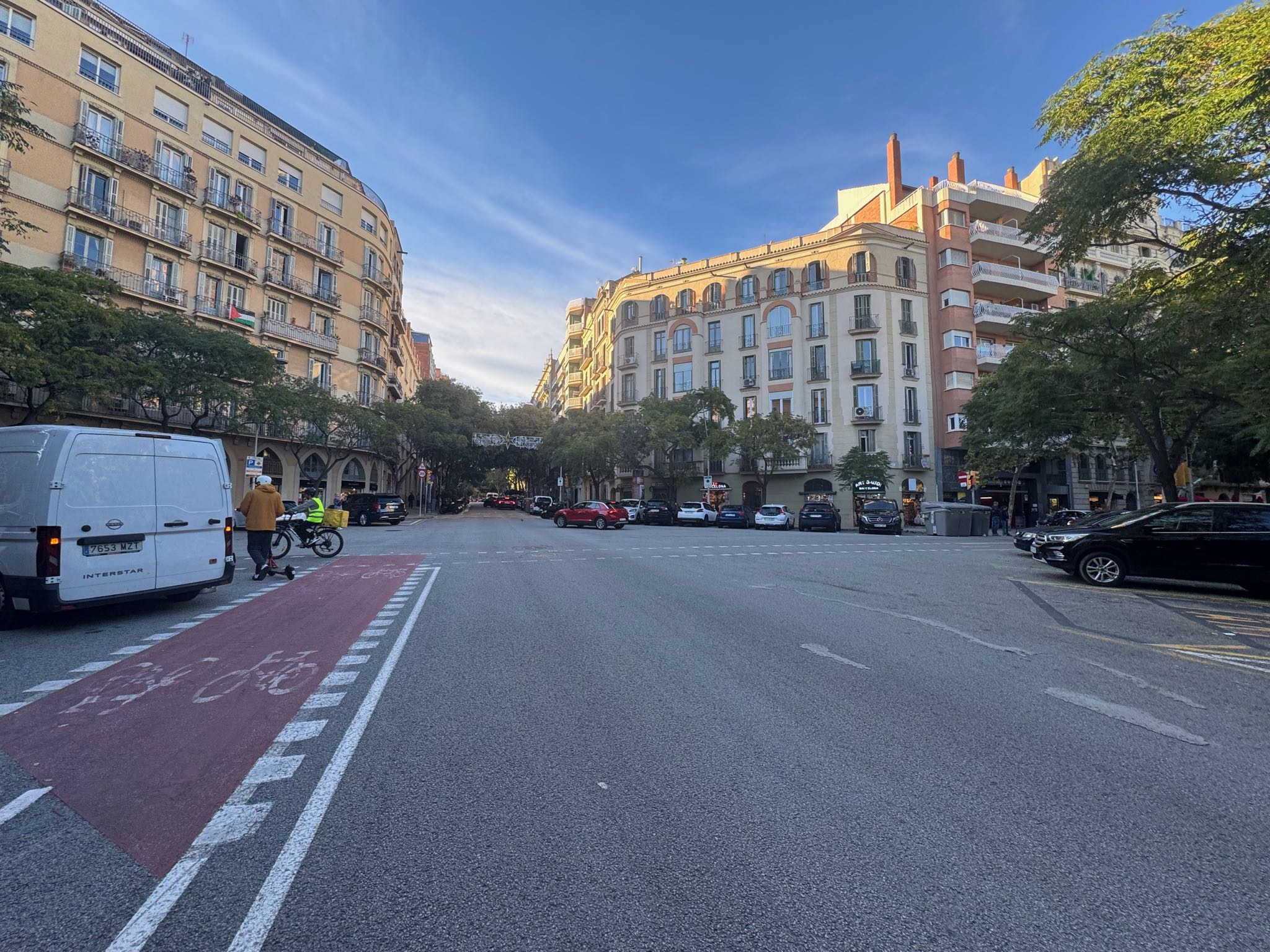
This means at the pedestrian crossings you have to go up the crossing street and back – even if you intend to go straight.
The cheesecakes we have had so far are not like a baked Basque cheesecake or a Philadelphia cream cheese cake. They have a cream cheese that has a yoghurt taste and a touch of cottage cheese. Not what one expects at all.
As Hugh and I walk past a sympathy street camp protest likes the ones in Madrid.
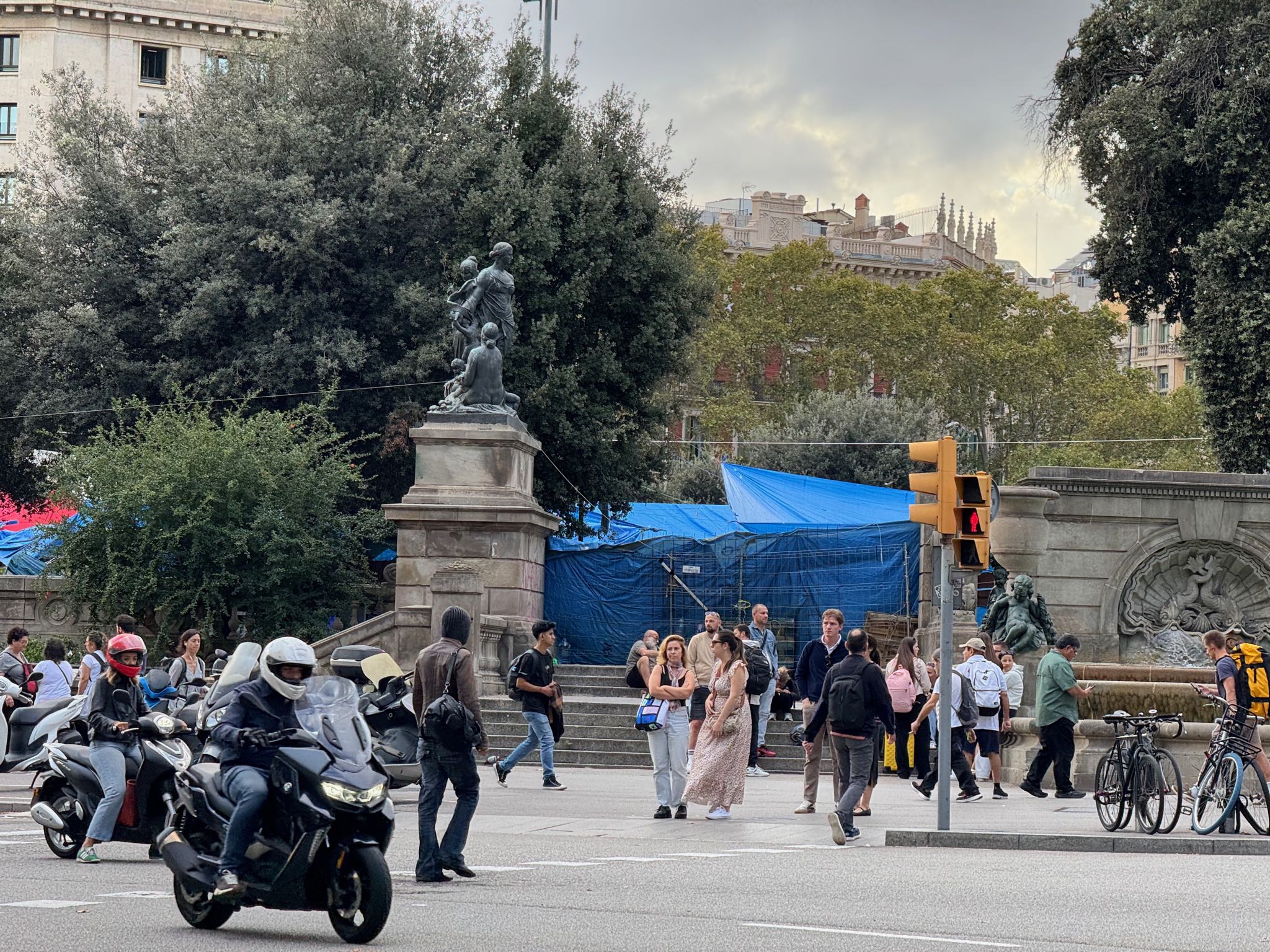
This one doesn’t quite have the same radical energy – but they are certainly making an effort.
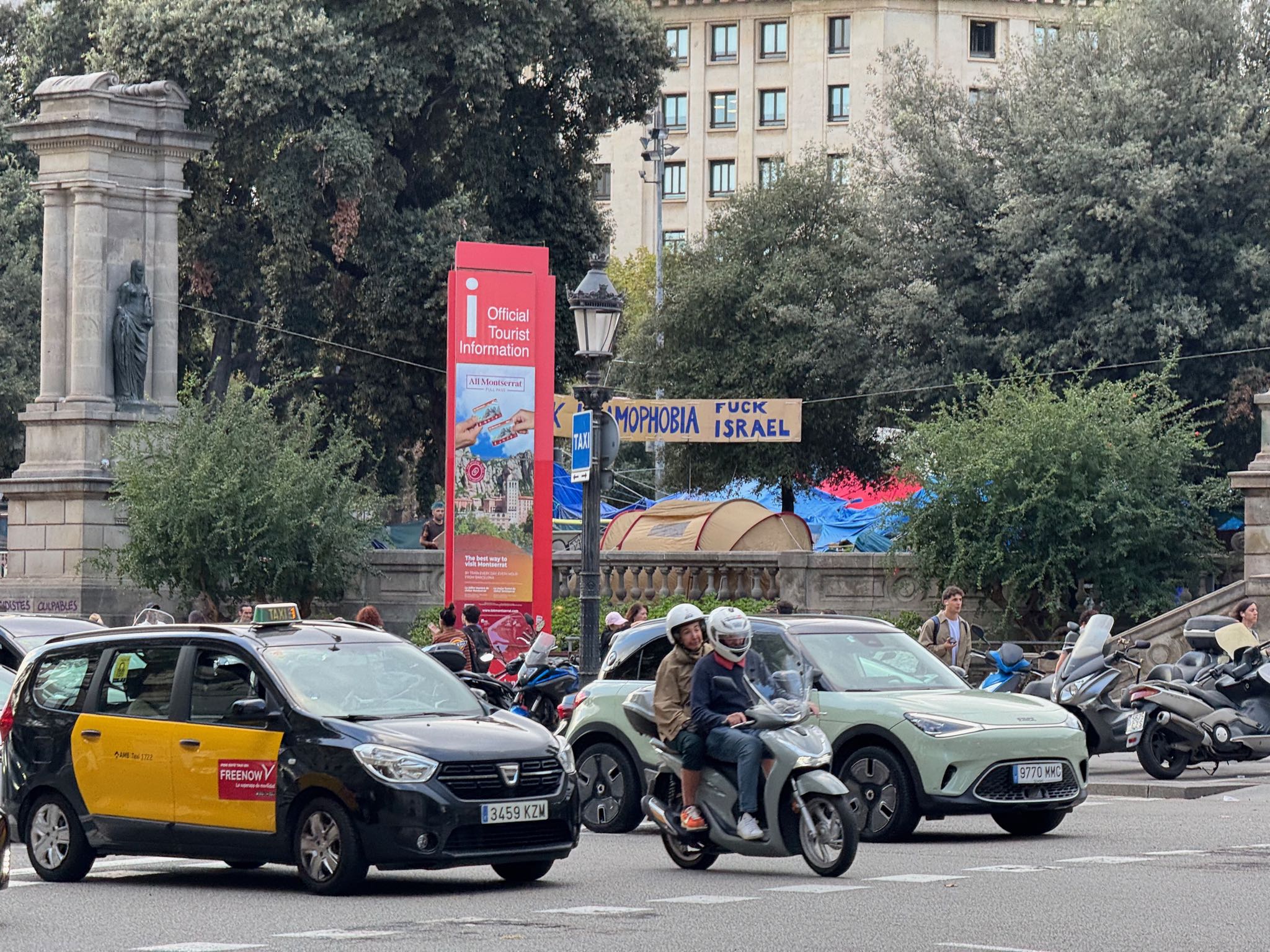
I ponder in Sydney the bulldozing of the Woolworths to create a square in front of Town Hall. (The State Government has seized the planning of it.) Whilst George St and Martin Place are both public spaces, they are divided up by transit lanes, making bulk gathering of protesters hampered. (I went to a University specifically designed to hamper protest gatherings.) Outside Town Hall now at night are all sorts of groups gathered, musicians and church groups. I wonder if a public space there would be an anarchist-magnet.
There was a State referendum in 2017 – with a voter turnout of 43% with 90% voting for independence of Barcelona (and greater Catalonia) from Spain. In response the Spanish Government invoked a constitutional provision revoking their autonomy. The moment has died down somewhat since then – going for more pragmatic negotiation, but the spirit still exists.
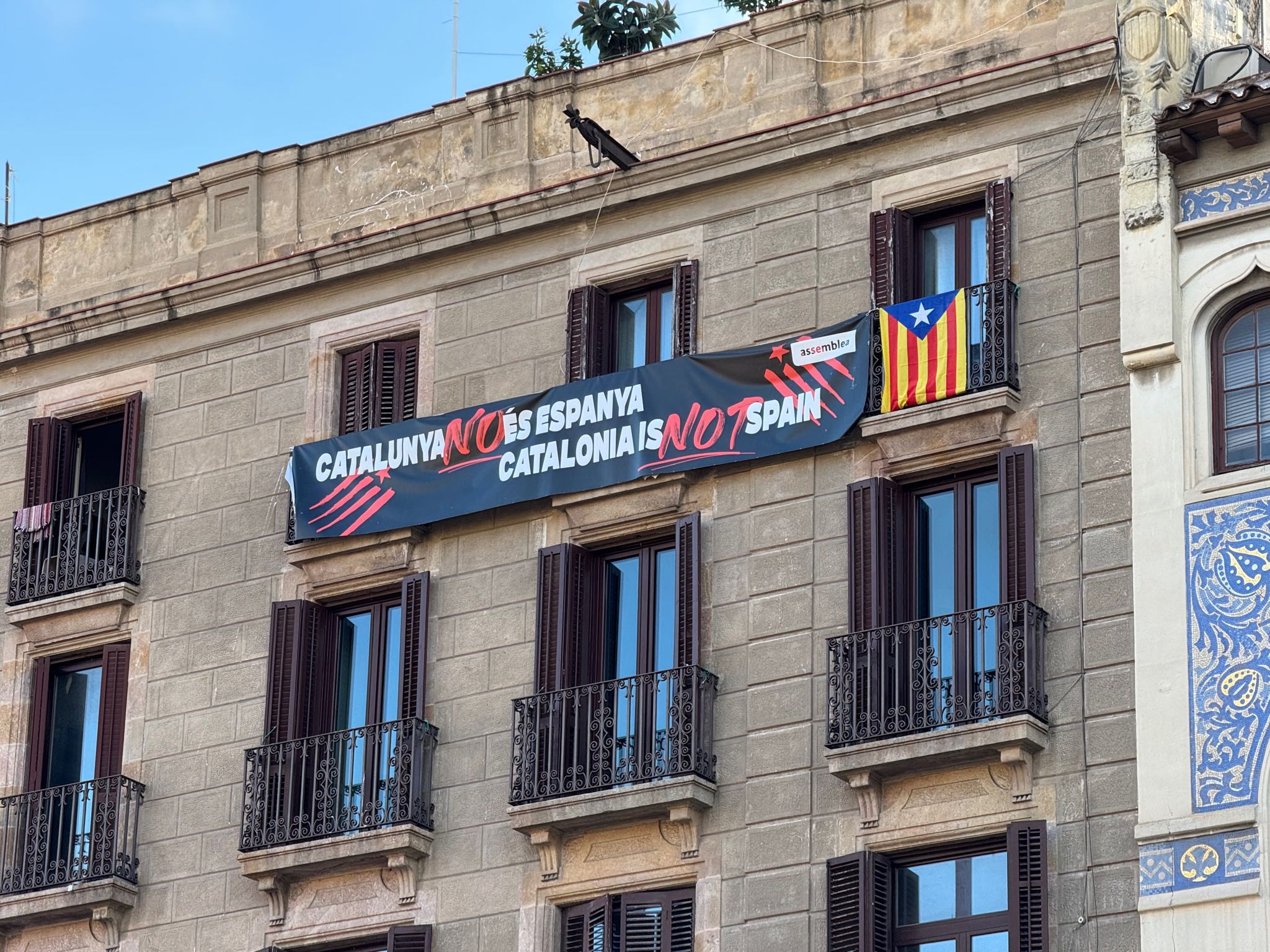
For our dear friend and fellow traveller:
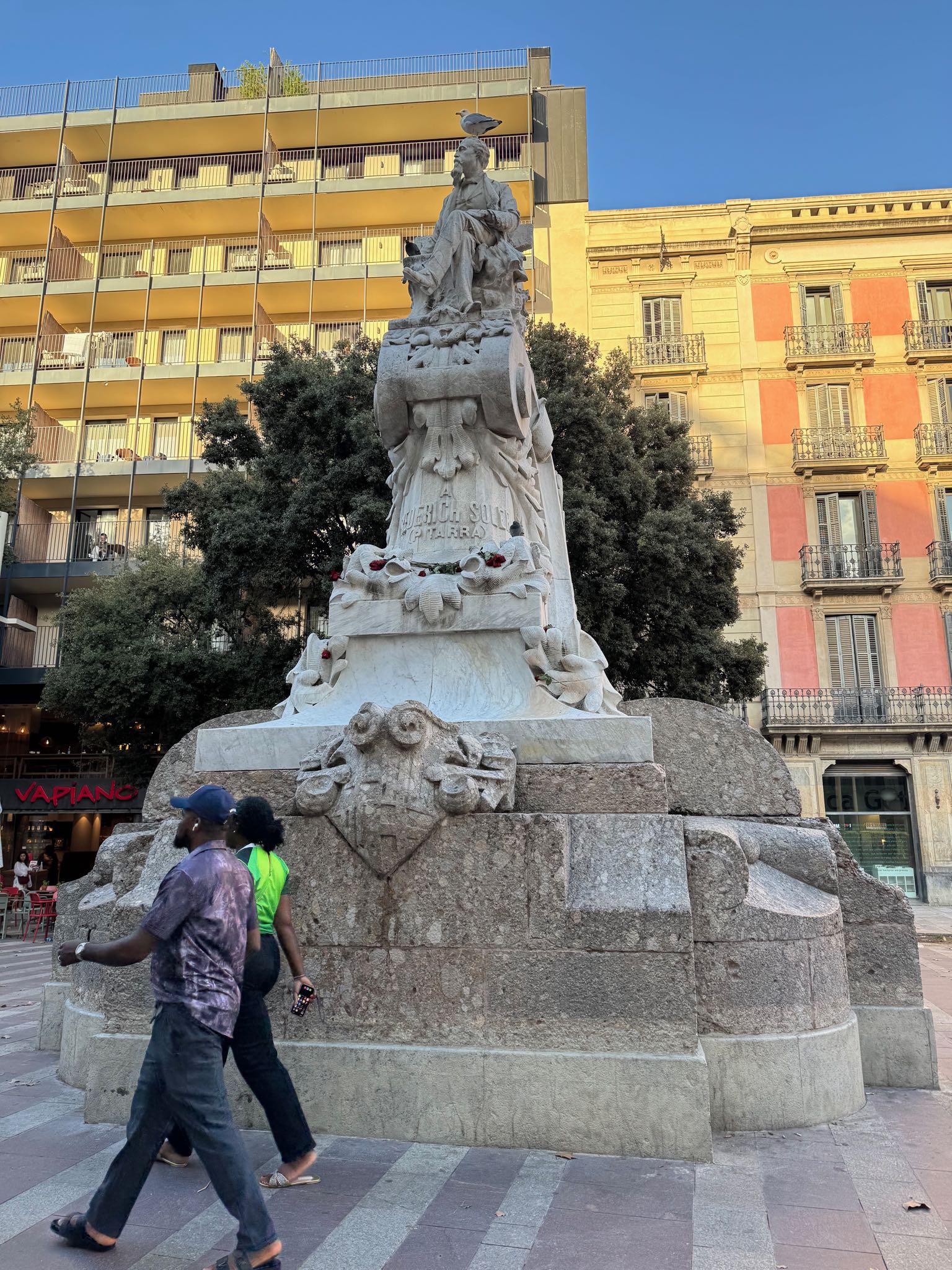
This statue is for Frederic Soler i Hubert (1839–1895), best known as the founding father of modern Catalan popular theater.
This is a statue to Christopher Columbus.
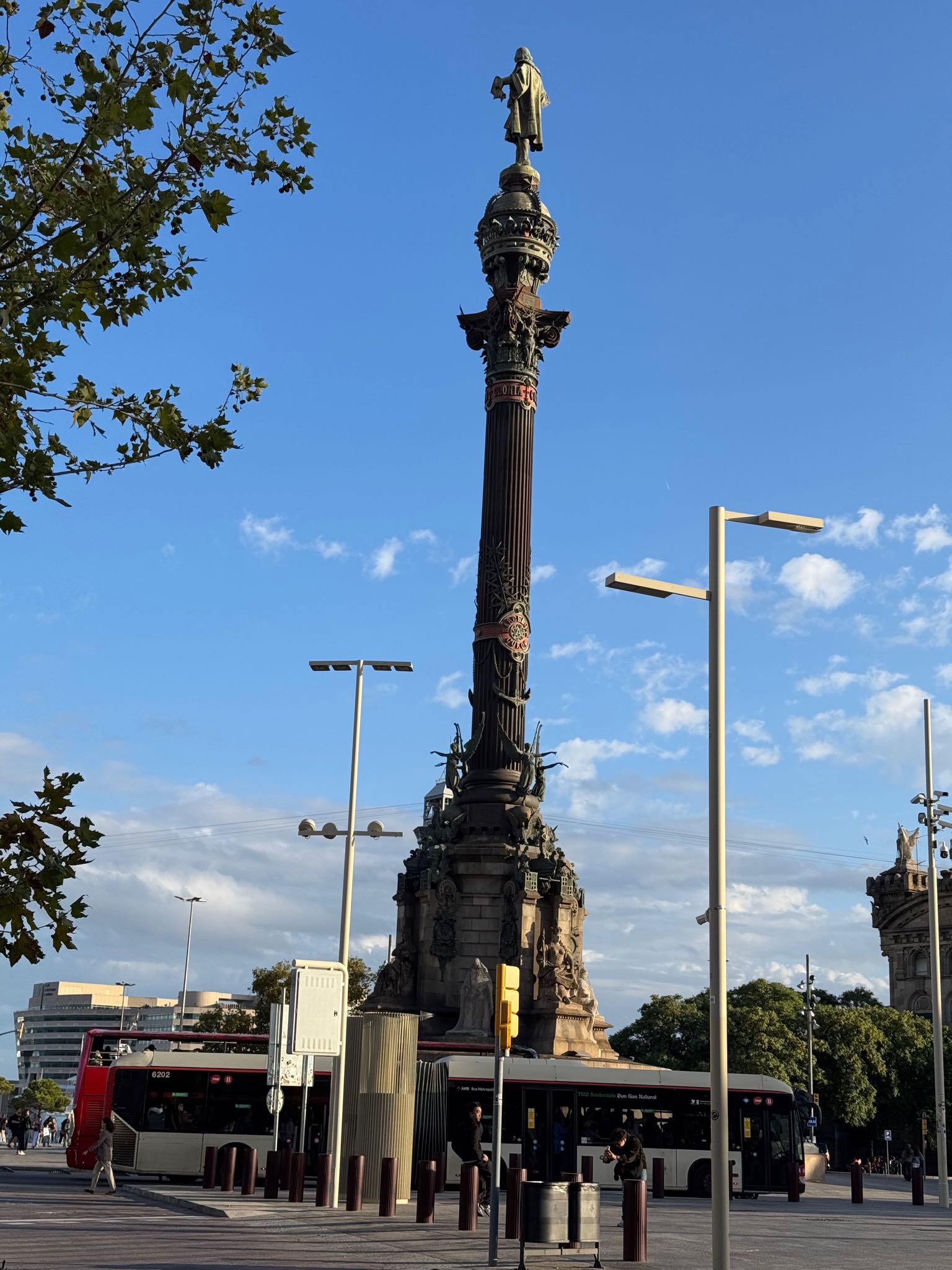
Now in historic terms he is right up there.
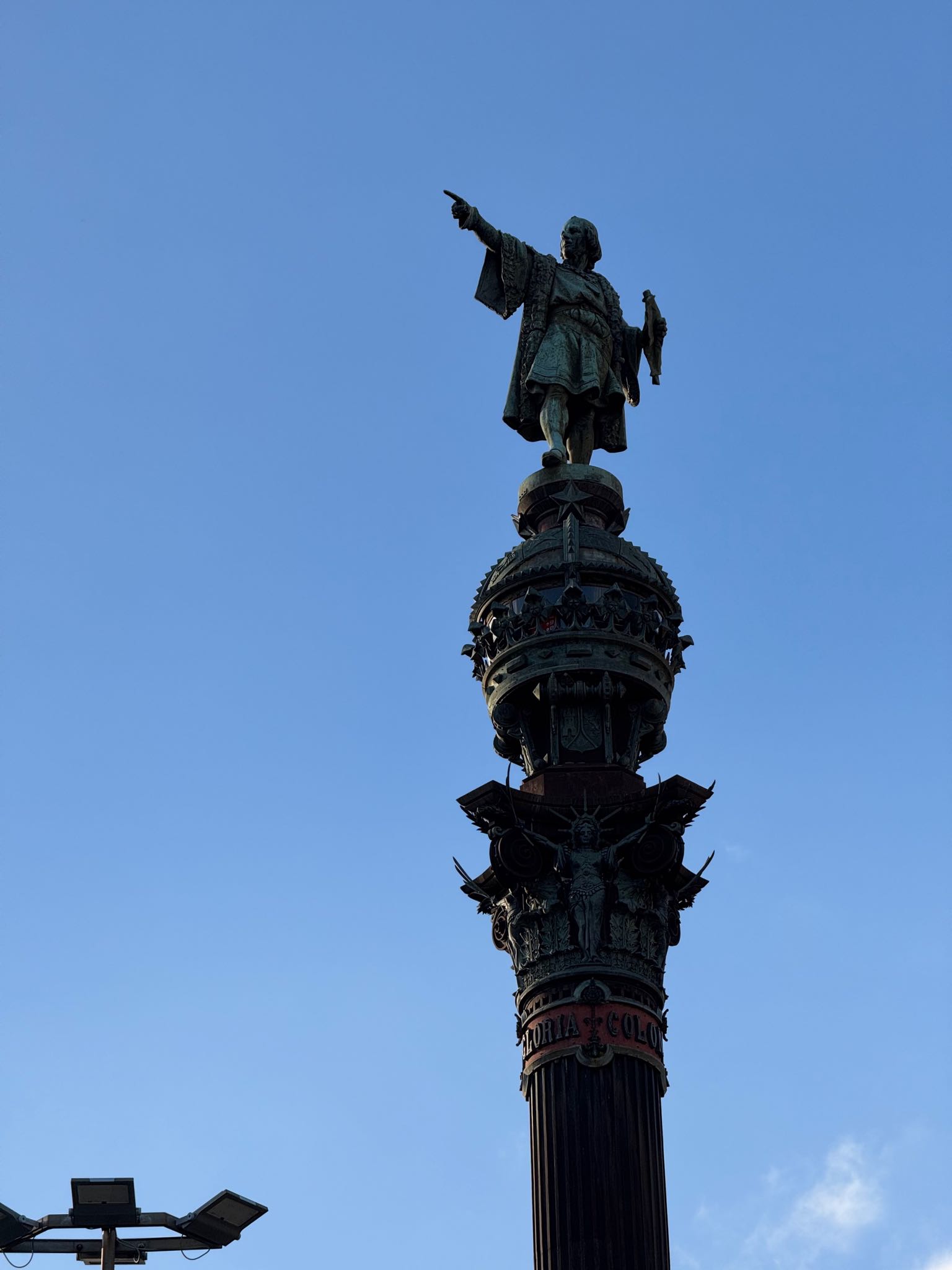
But I can’t quite muster the effort to get excited, as he didn’t actually leave from here. This is a statue to say “Hey, we’re a significant port too! Just on the Adriatic.”
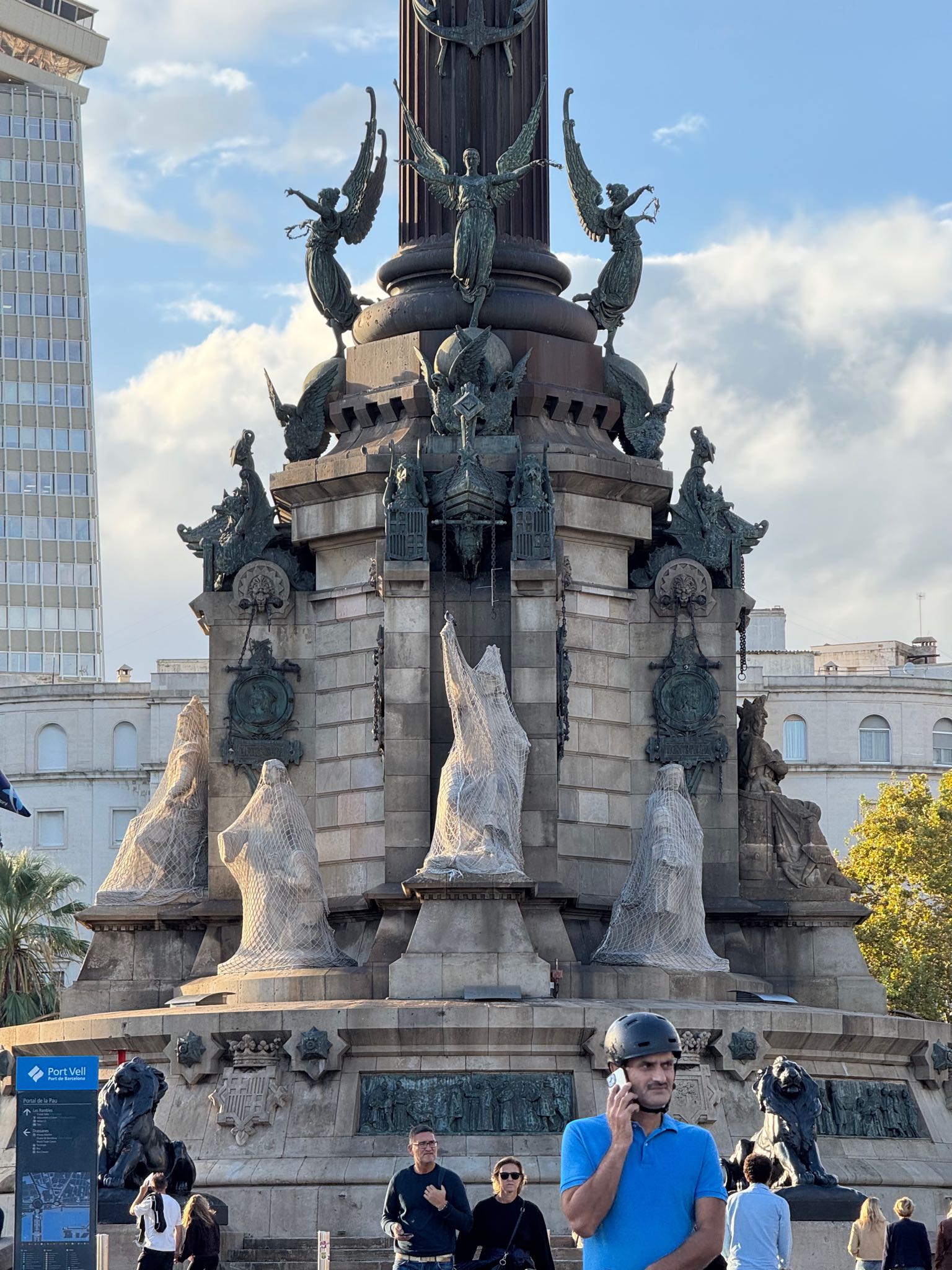
We reach the edge of the city – near the water. (Hugh and I have crossed half the city).
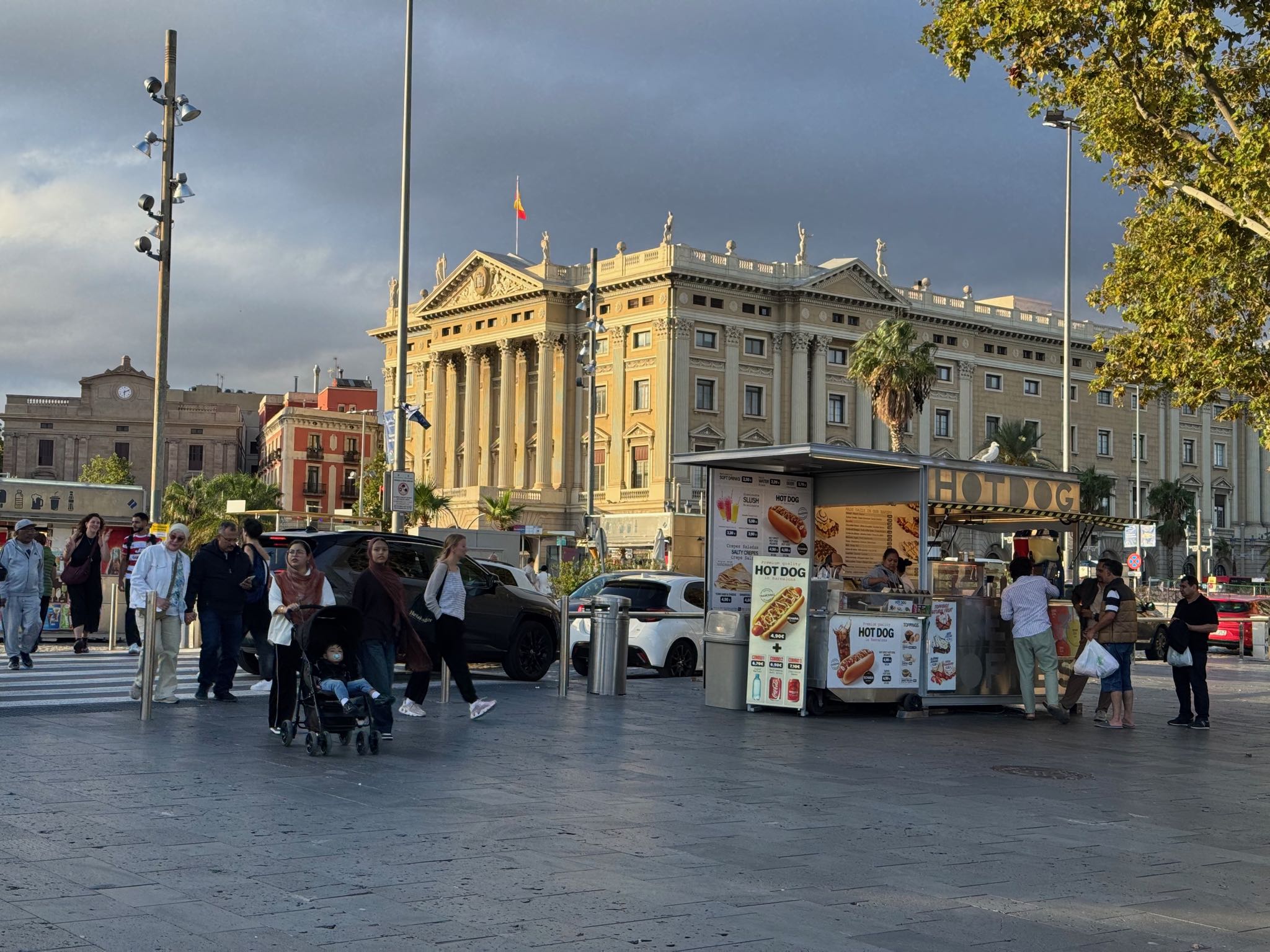
I will get here soon!
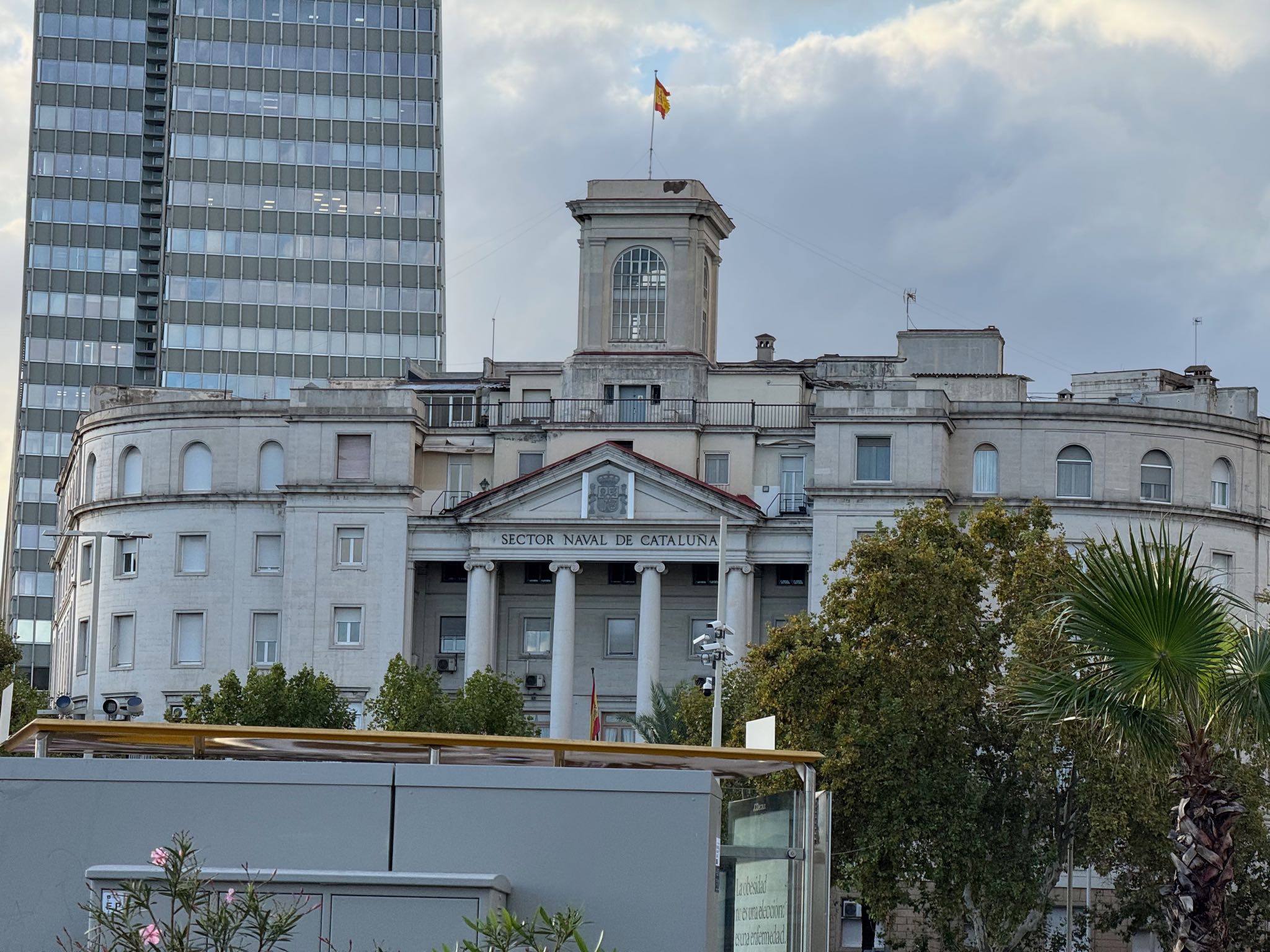
This is the Barcelona Arc de Triomf built for the 1888 Universal Exposition (World Fair) – instead of a military victory – it represents welcome, progress, and peace.
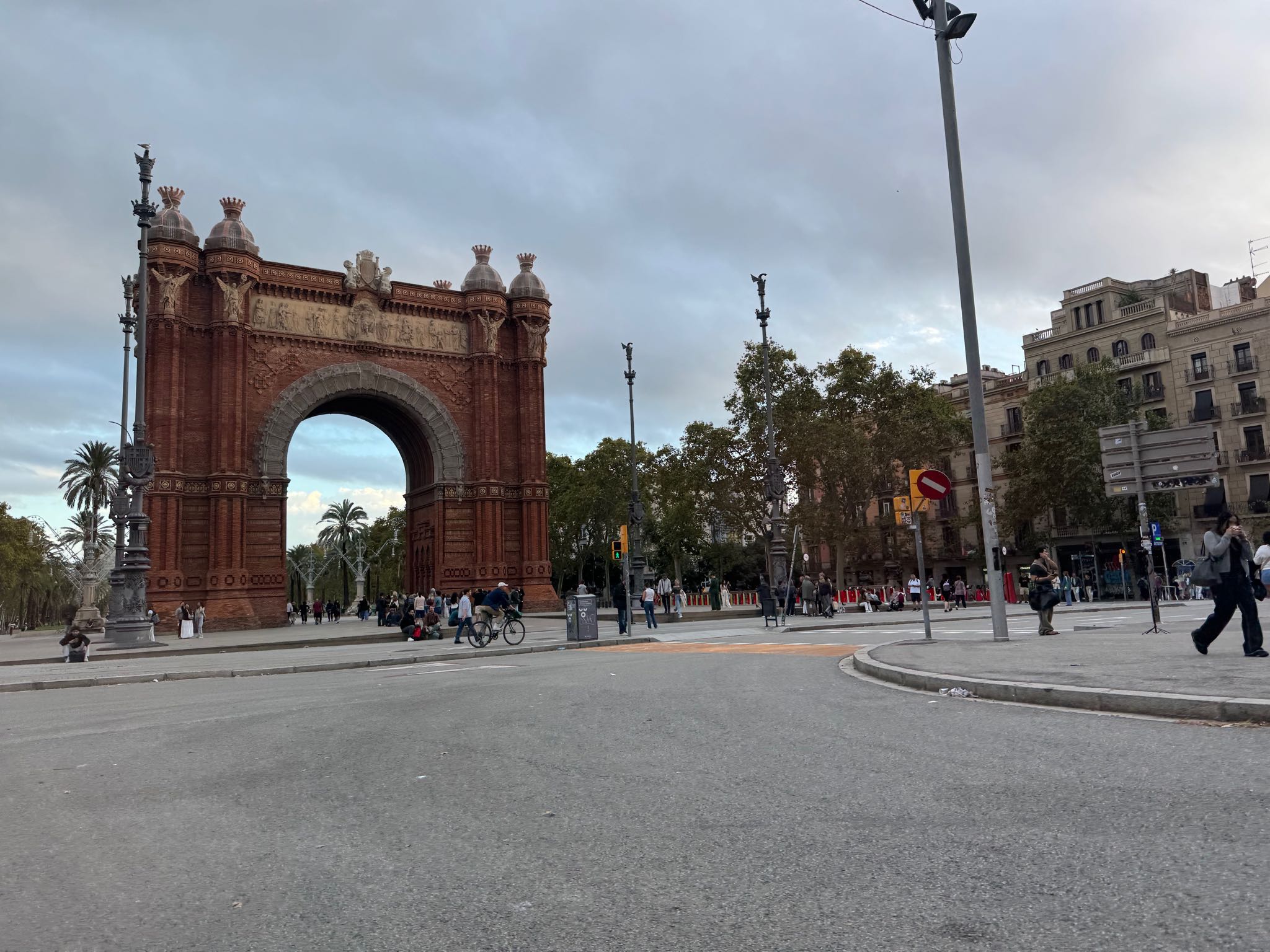
In taxis here they have the counter on the mirror.
This statue represents Mossèn Jacint Verdaguer a Catholic Priest and Poet. His epic poetry helped restore Catalan as a prestigious literary language after centuries of decline, making him a deeply beloved cultural icon of Catalan pride and identity.