Holy Toledo Batman!
We drive by hills that remind me of Bernard Cornwell’s Sharpe’s Rifles – imagining English troops cooperating with Spanish rebels against Napoleon’s forces.
The Cathedral, St Mary’s, is the main Cathedral in Spain. This follows a church hierarchy established in the time of the Visigoths.
Toledo is the second biggest producer of Olive oil after Andalusia. They also produce wine, saffron, cereals, pistachios and watermelons. The UK imports a lot of fruit and vegetables from Spain. Agriculture is 20% of Spains economy.
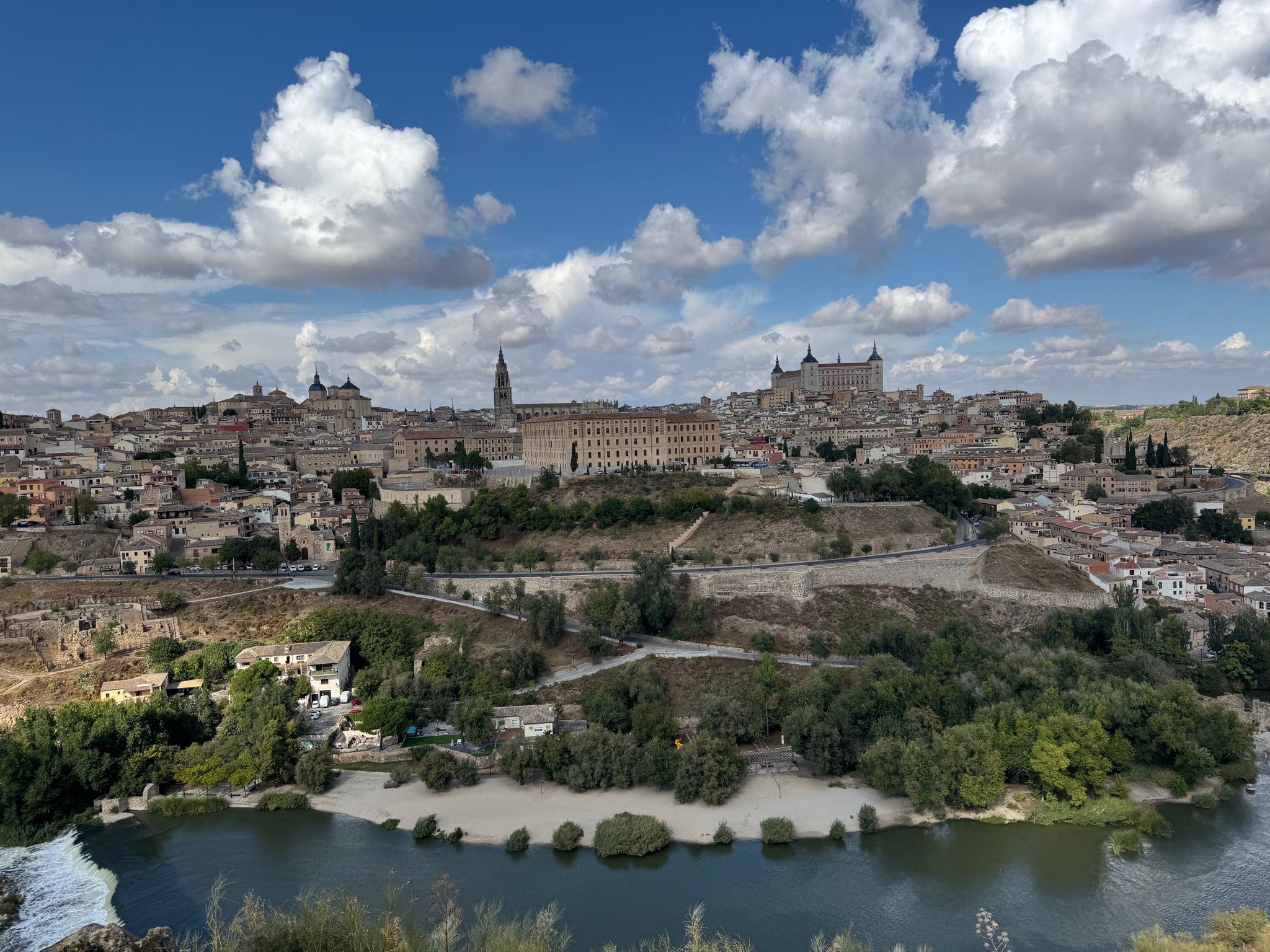
This place was popular real estate although geographically hard to conquer. (You need to get your army over or around the river.) It was conquered by the Celts, then the Iberians, then the Carthaginians, then the Romans in 2ndC BC, then the Visigoths, then the Moors in 8thC AD, then the Catholic Christians in 11thC AD.
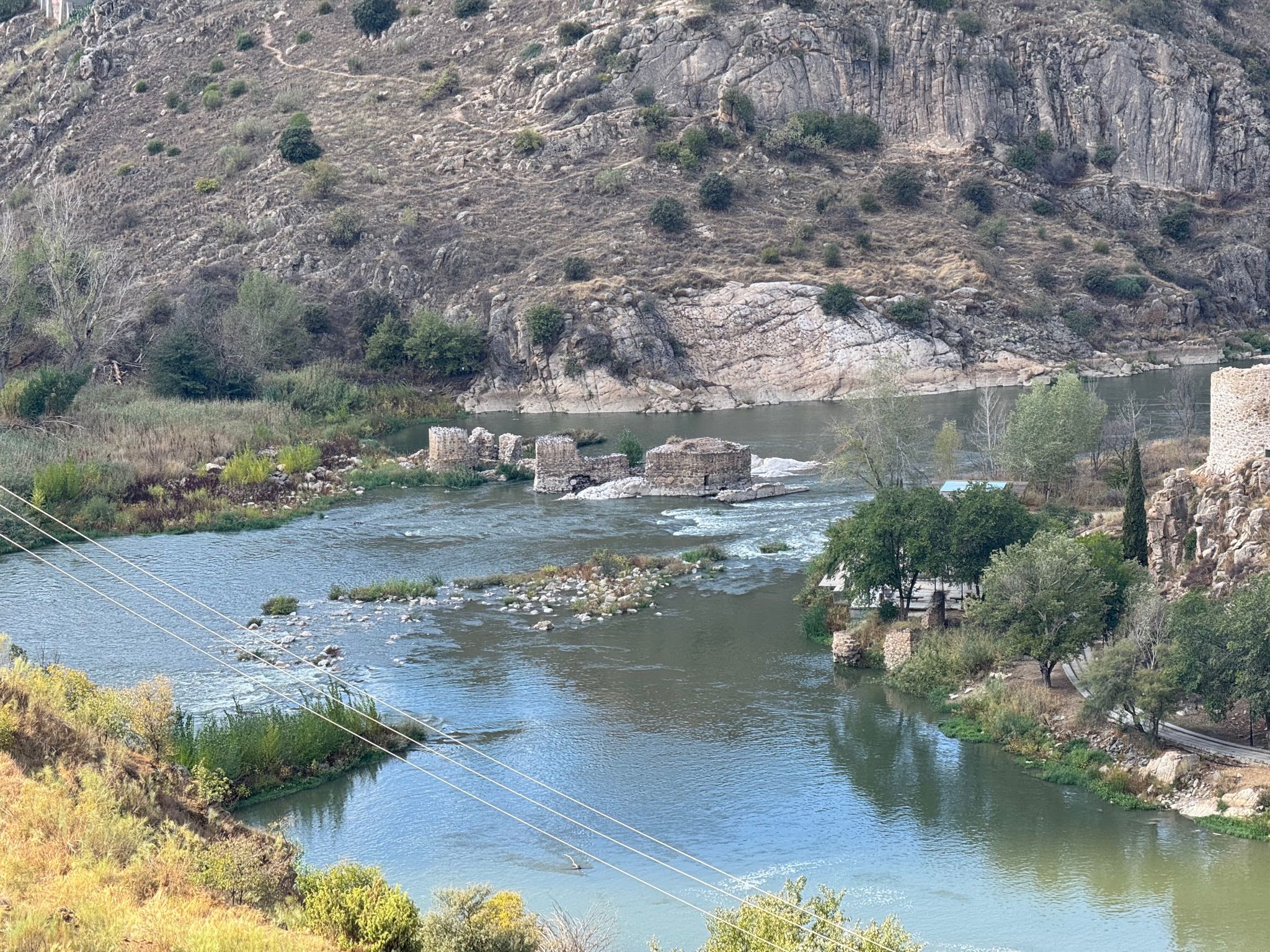
This bridge was built in the 13th century, and destroyed 100 years later, by Pedro the Cruel.
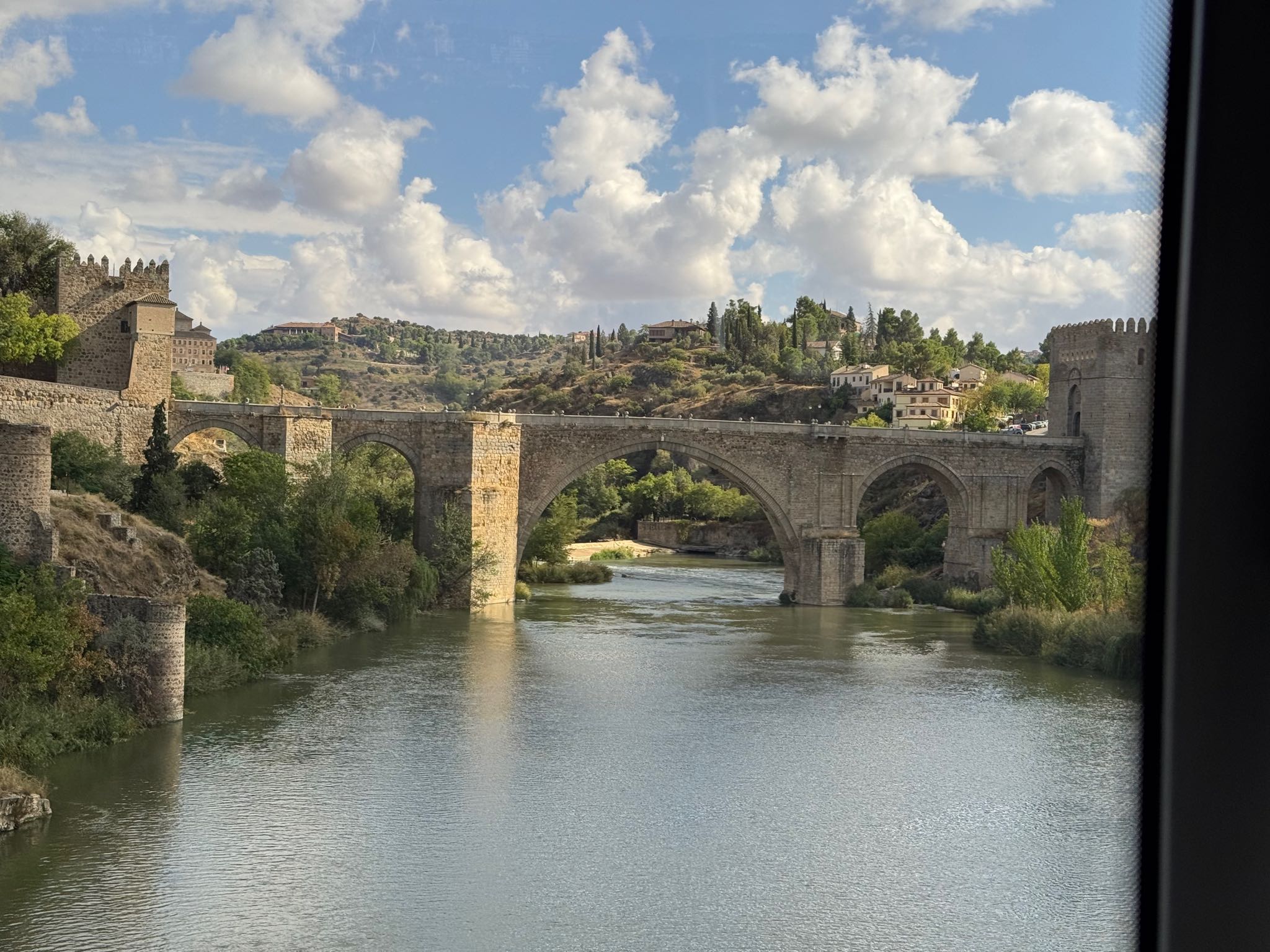
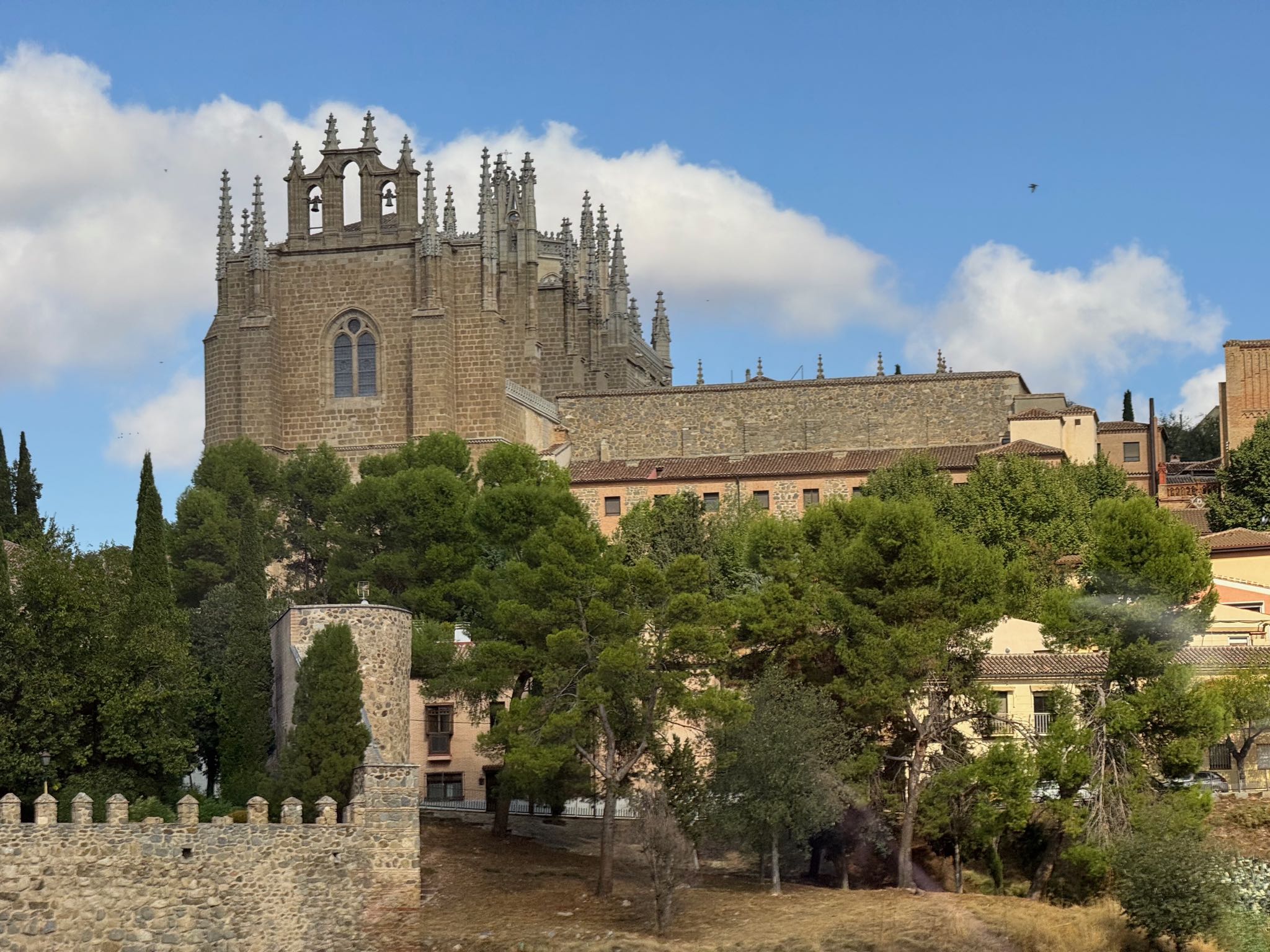
It was replaced by this bridge – Puente de San Martín built in the 1390s, commissioned by the local archbishop. This leads up to the Monasterio de San Juan de los Reyes – more later.
The river was the natural moat of the city. It flows all the way to Lisbon.
The Catholic kings built a monastery on the hill to get buried in for a while called Monasterio de San Juan de los Reyes, commissioned by King Ferdinand II of Aragon and Queen Isabella I of Castile. They originally commissioned it to get buried in, but then they ended up getting buried in Grenada after their reconquest there.
We stop at the view called Mirrador Del Valde. At the top of the city is a castle and a library.
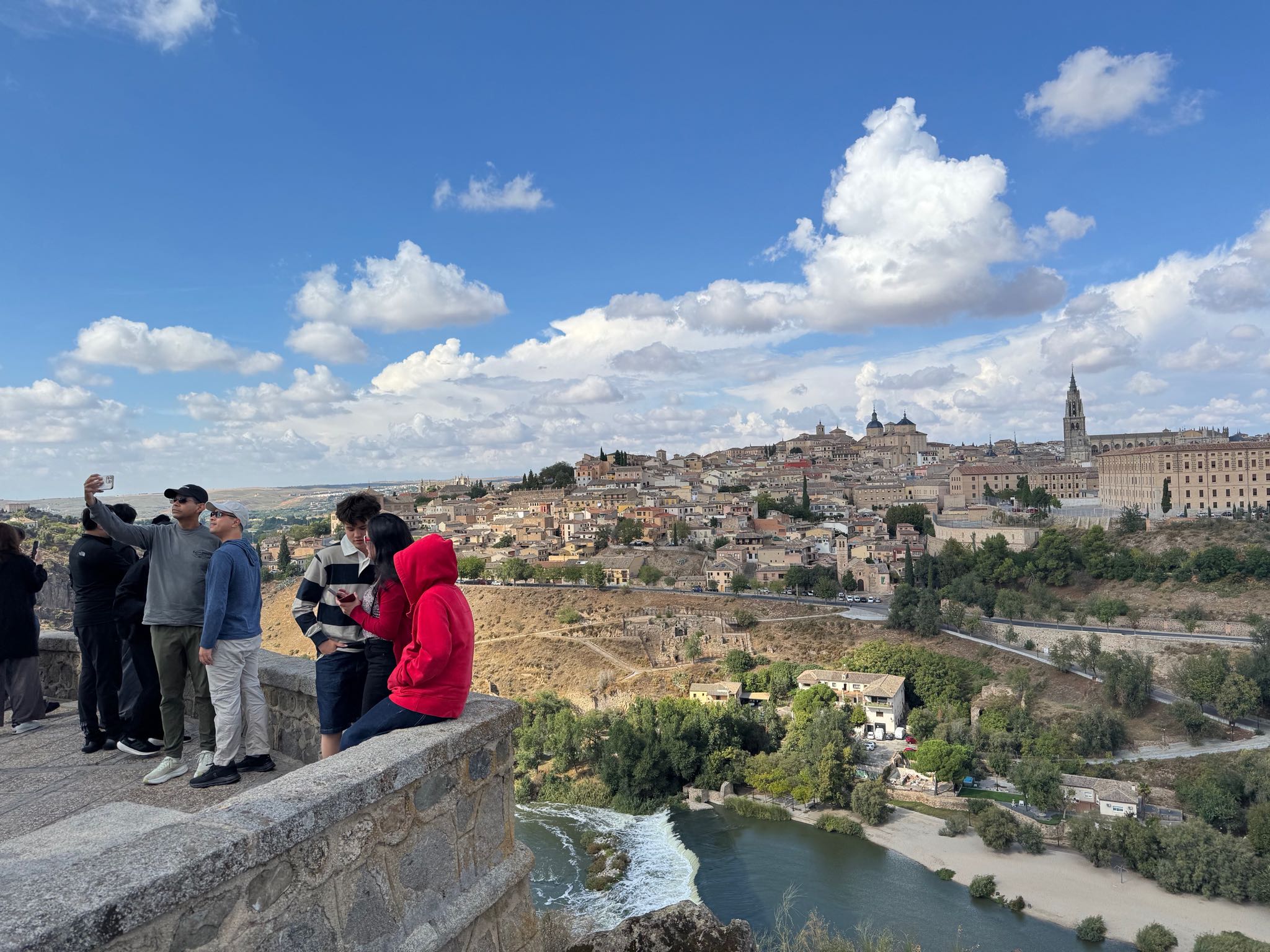
The broader region we are standing in is the land in which the Don Quixote narrative is set, the author weaves the city of Toledo into it as well.
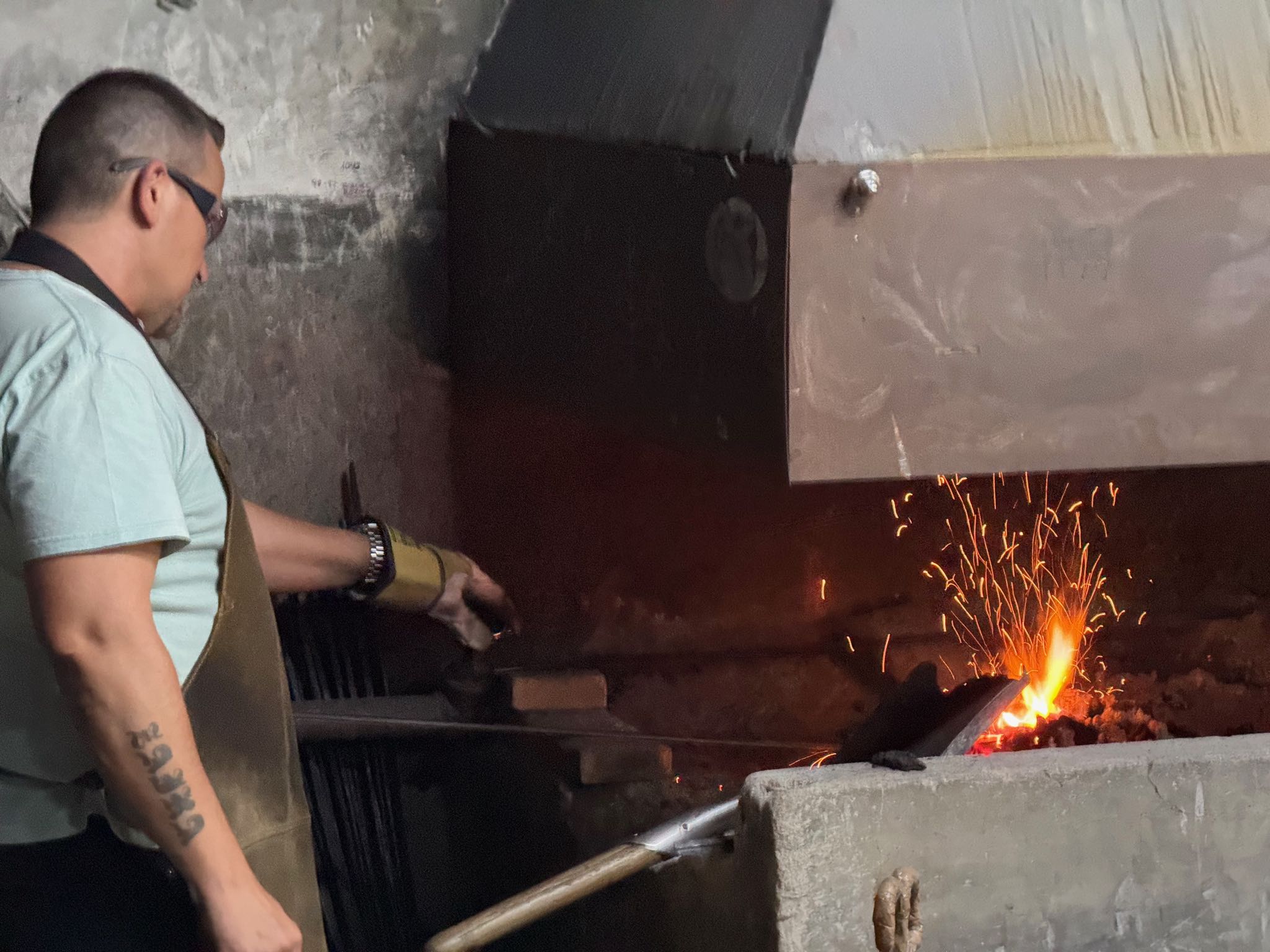
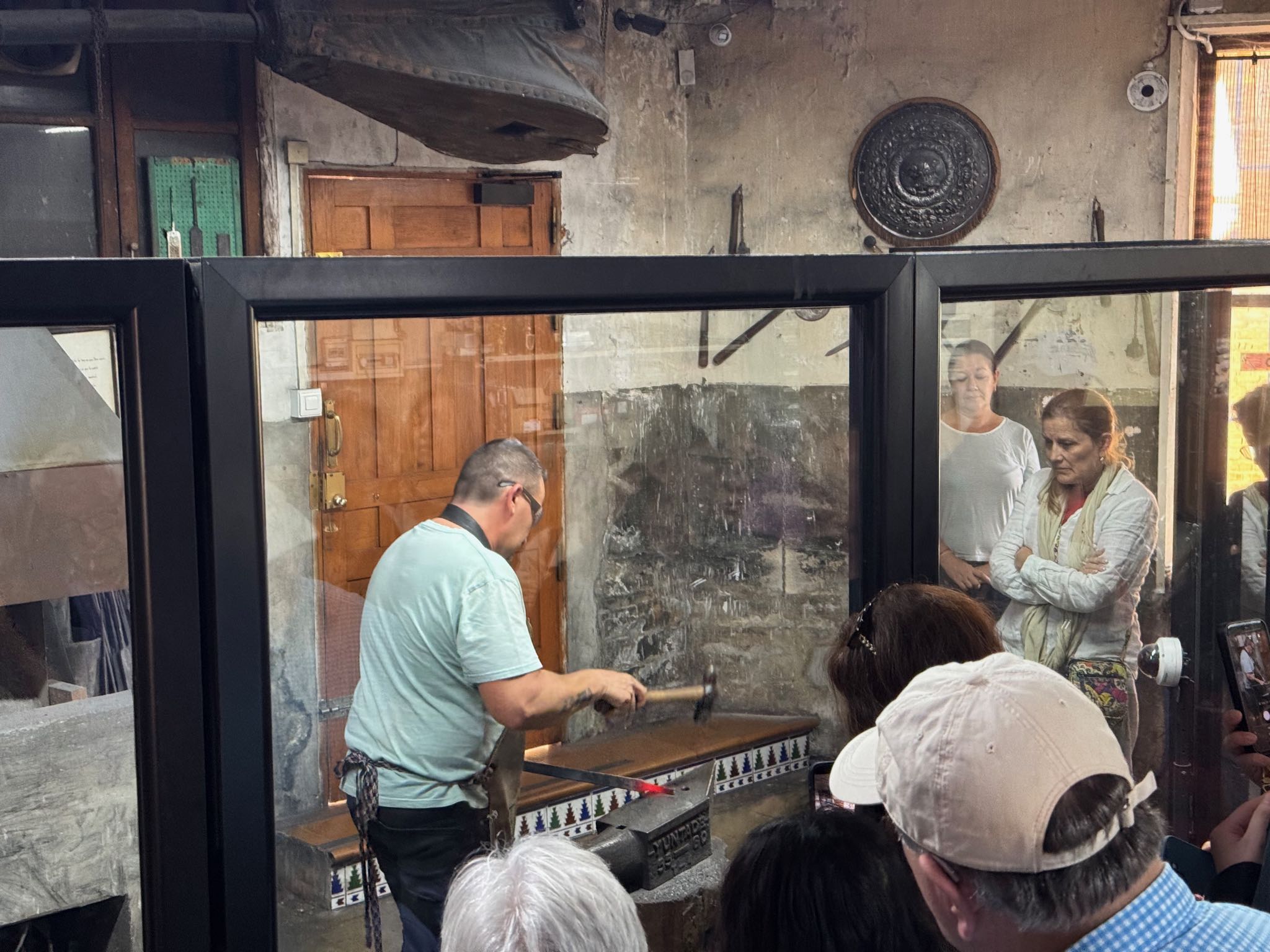
We visit a blacksmith hammering out a sword.
Upstairs we see a smith putting gold wire into steel following an ancient Arabic tradition.
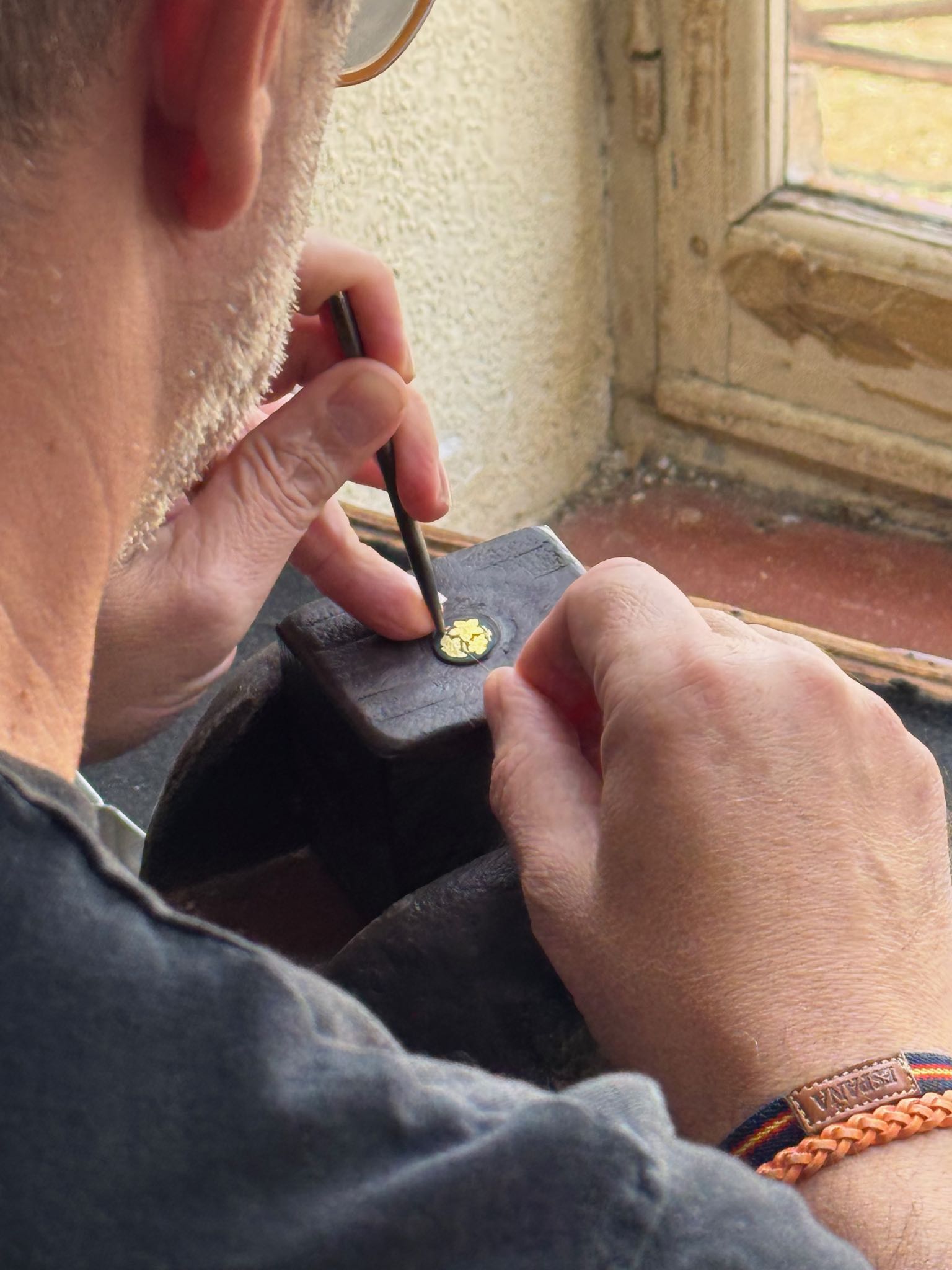
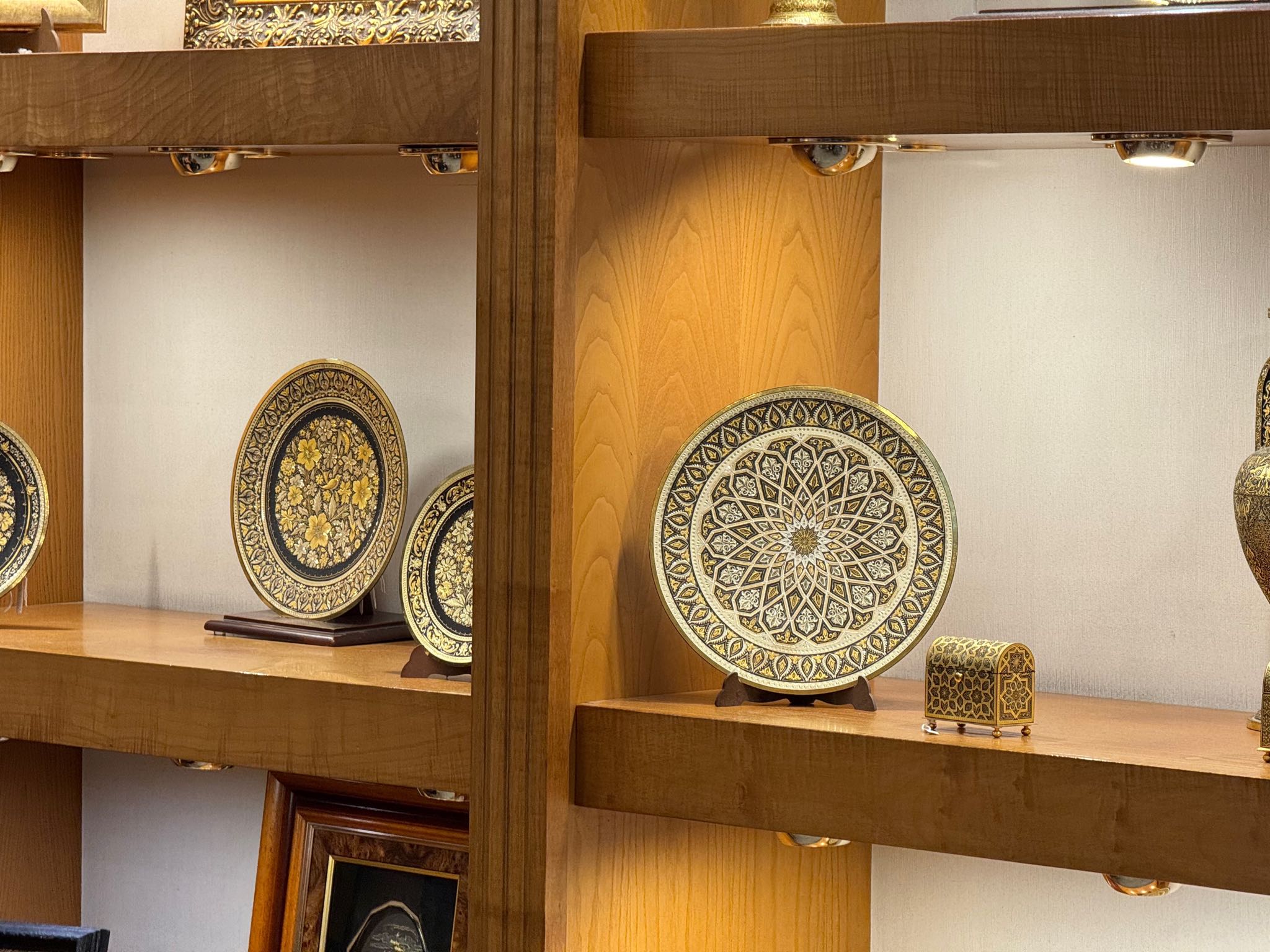
The technique is called Damasquinado (from Damascus) – threads of gold in steel and knives. The movie makers of Lord of the Rings, 300, Gladiator, Braveheart and Game of Thrones all came to this city to get the decorated swords. This craftsmanship tradition dates to Moorish times.
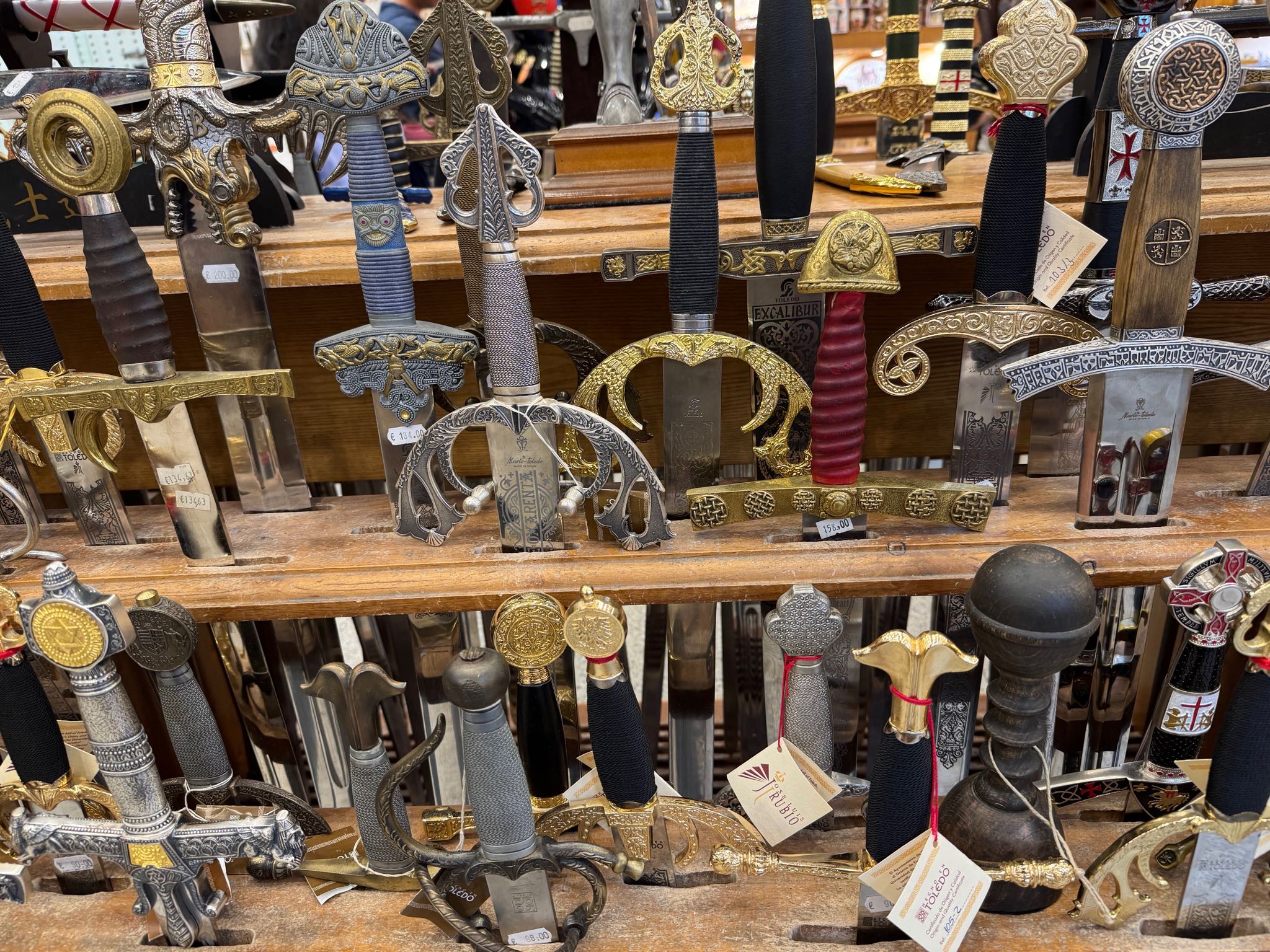
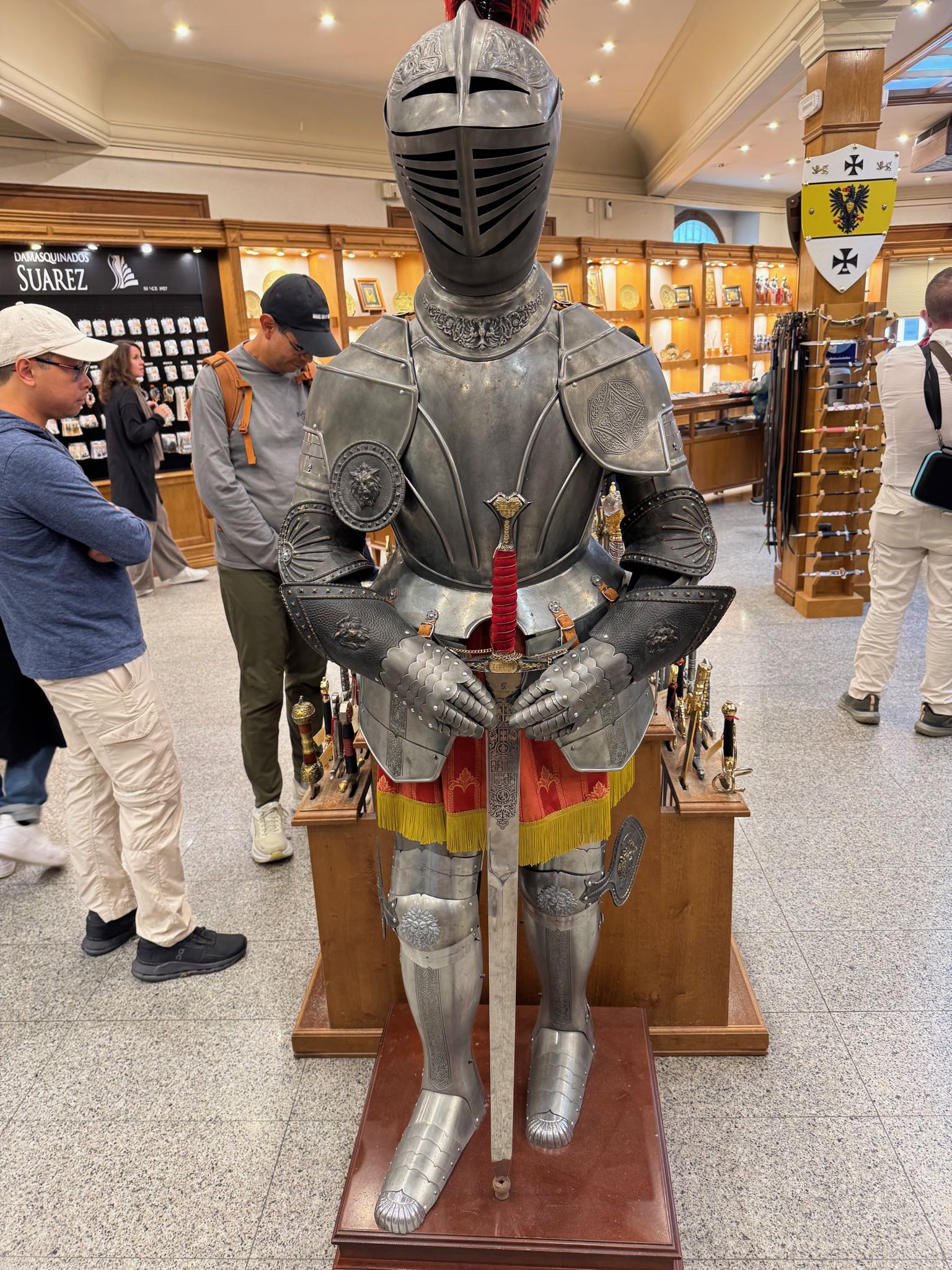
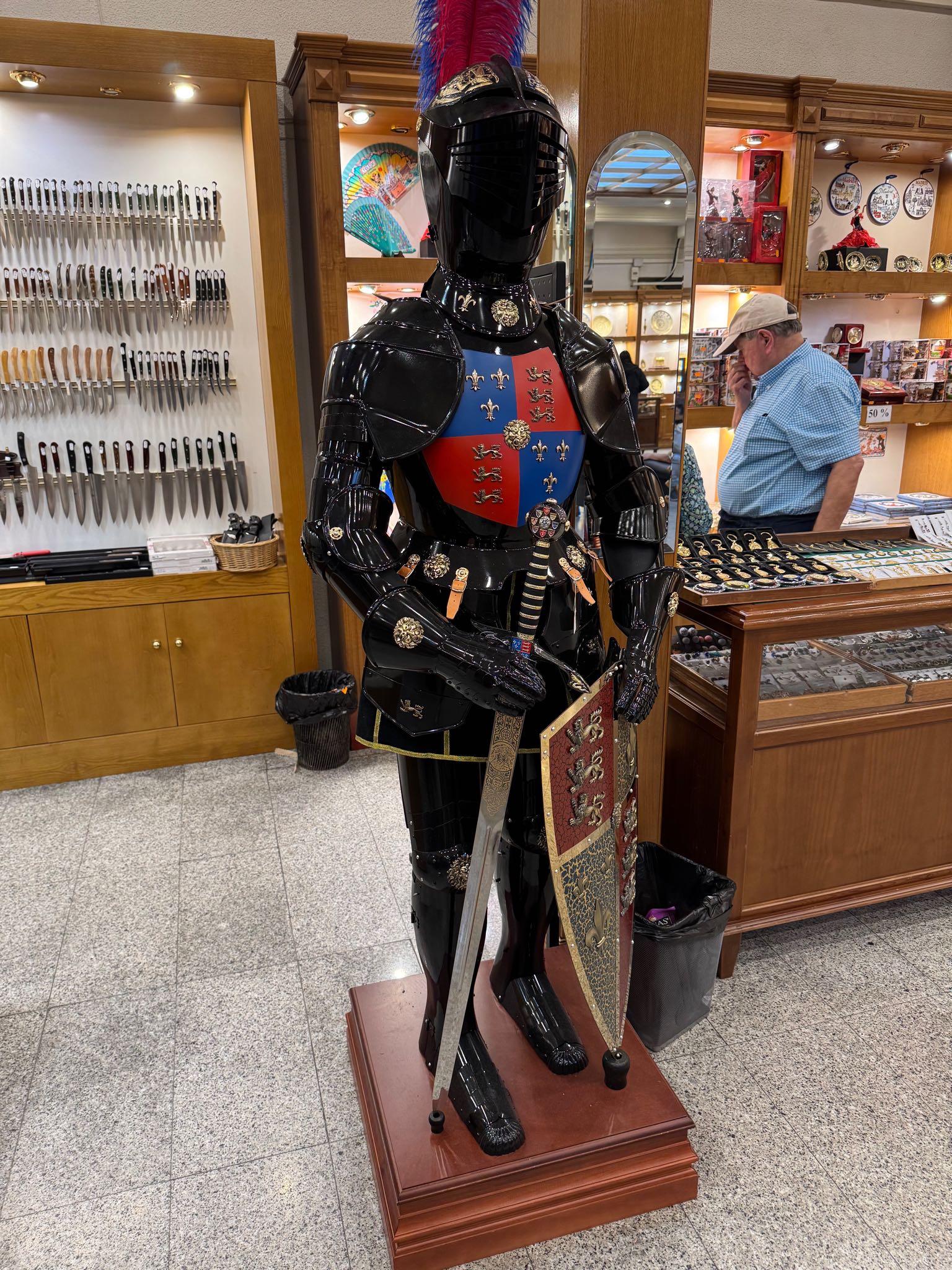
There is a shop with knights armour, swords, knives, plates and earrings.
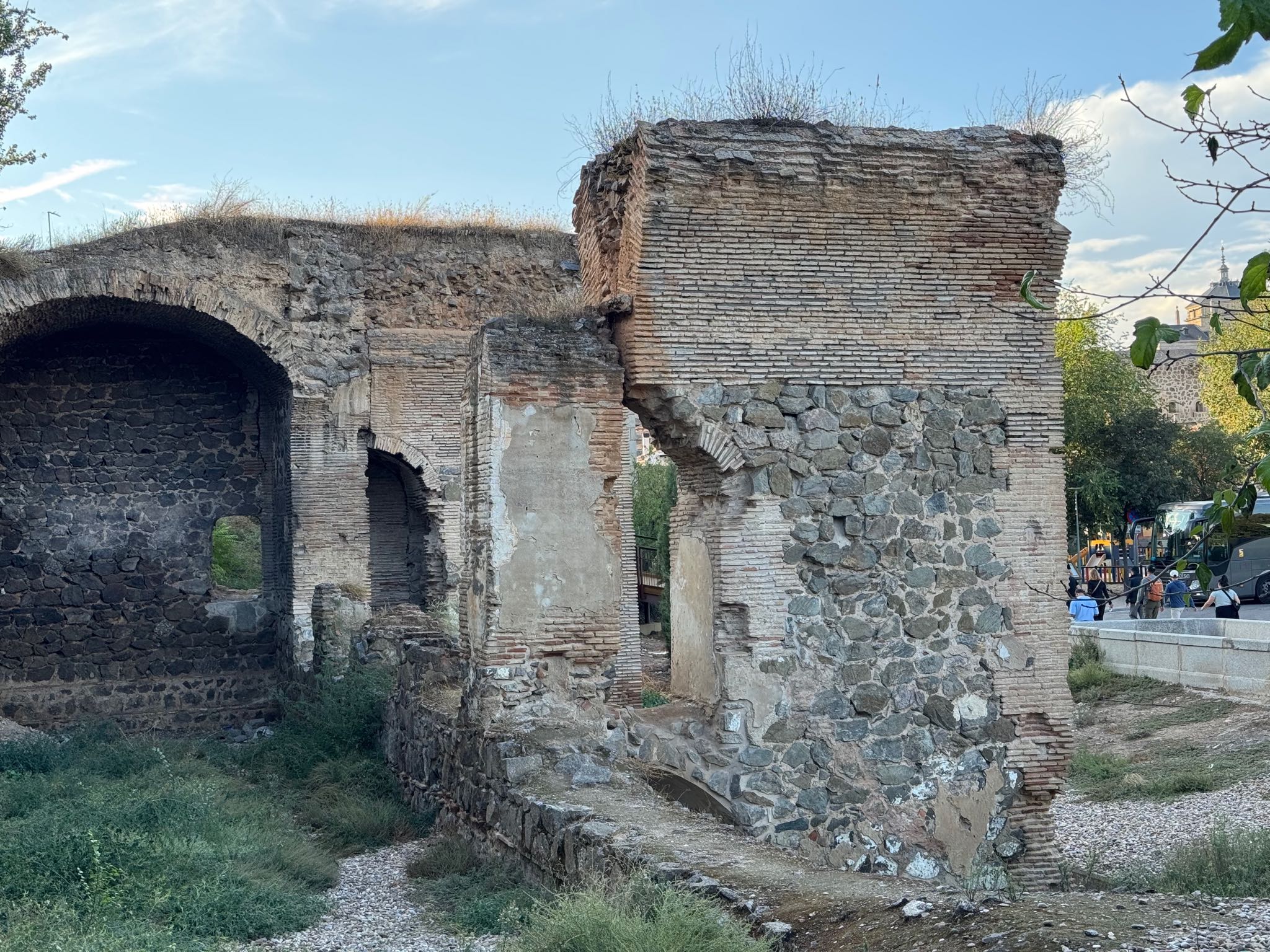
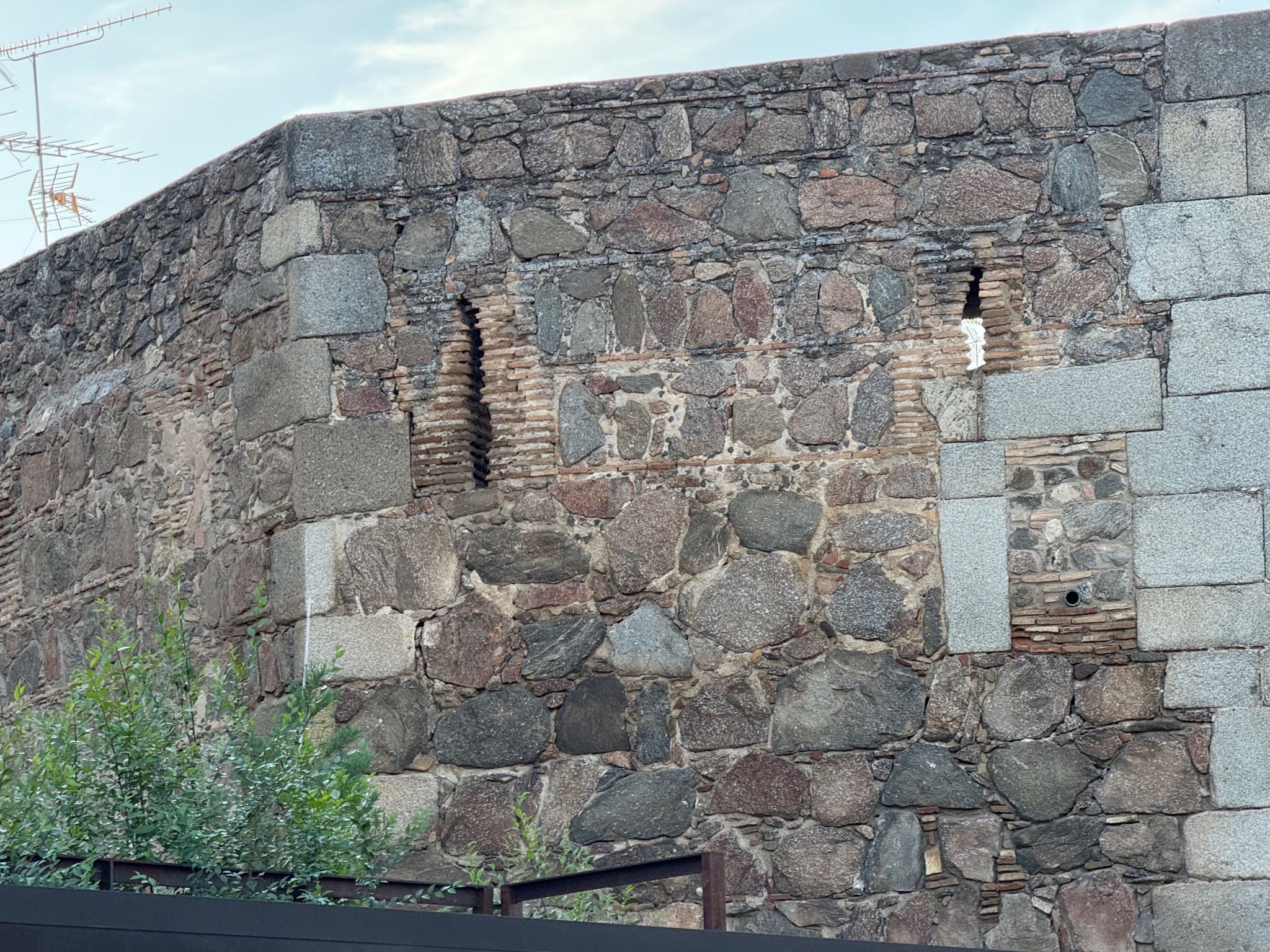
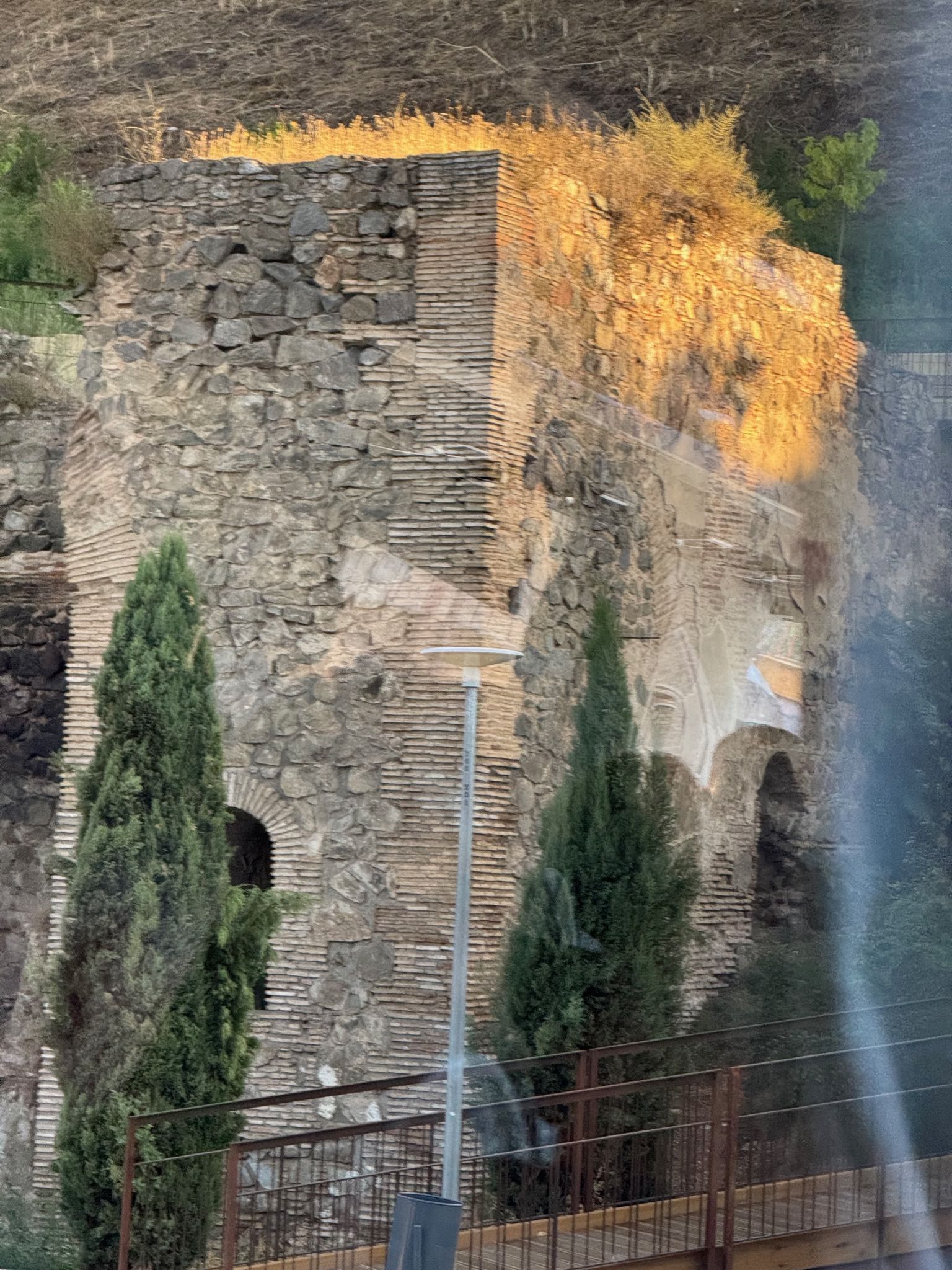
In Toledo we see the square towers are built by the Moors and the round Turrets by the Christians. (They upgraded turret technology during this time – which is something that sticks out to me every time I see a square Castle corner.) I ponder for a moment how many old cities must have been destroyed during the seiges of Napoleonic wars and WWII. There is this word – Mudéjar [Modae-ya] – a combination of architectural styles between Christian and Muslim In Toledo. Here the bricks are from different periods:
This nunnery is made of red brick to symbolise the blood of Jesus Christ.
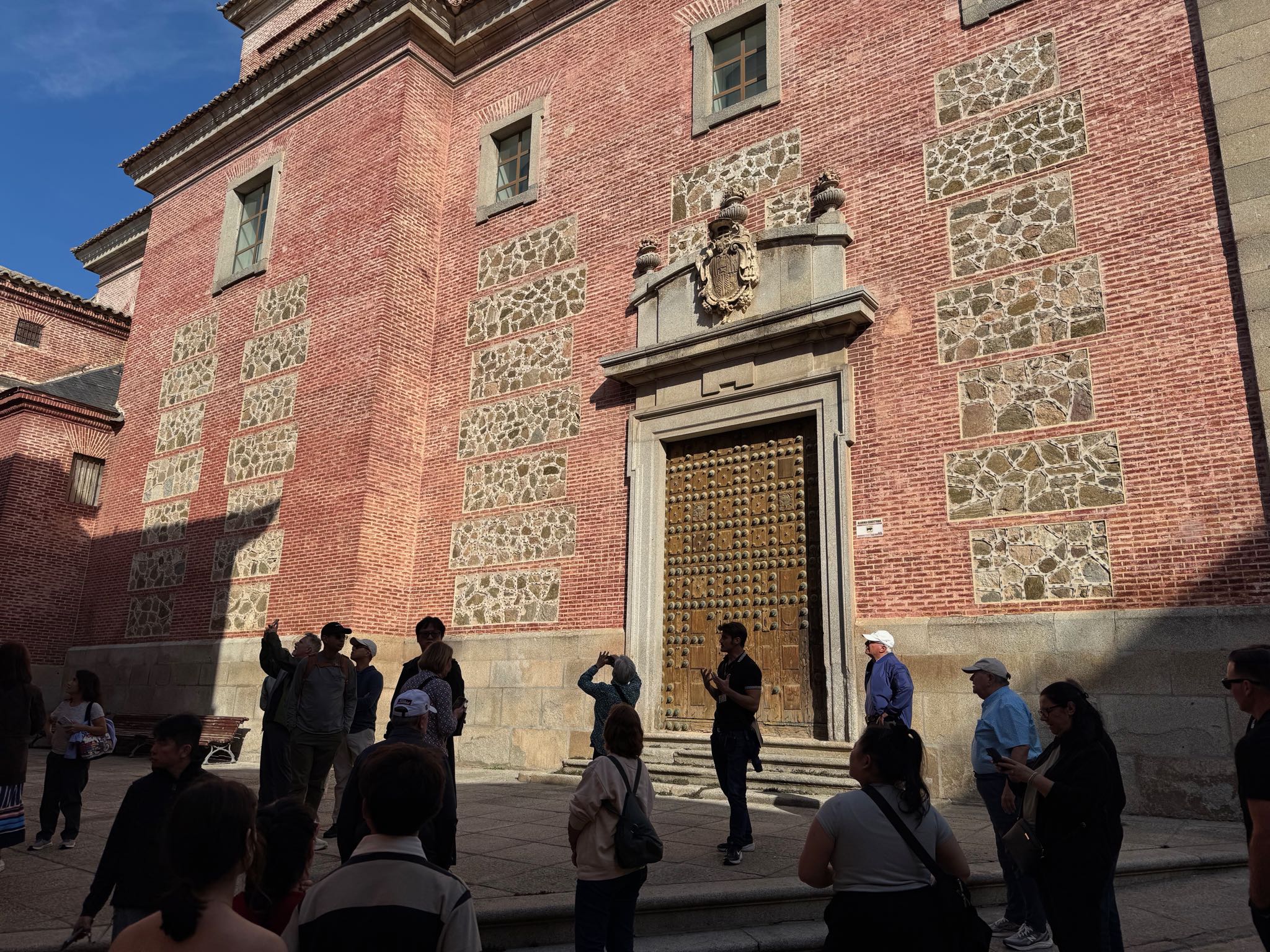
This city is known for the Spanish Inquisition (from the 15C to Napoleon – 400 years). Some excesses from this movement included banning men with pants in their pockets or women with makeup. These people were killed in this square.
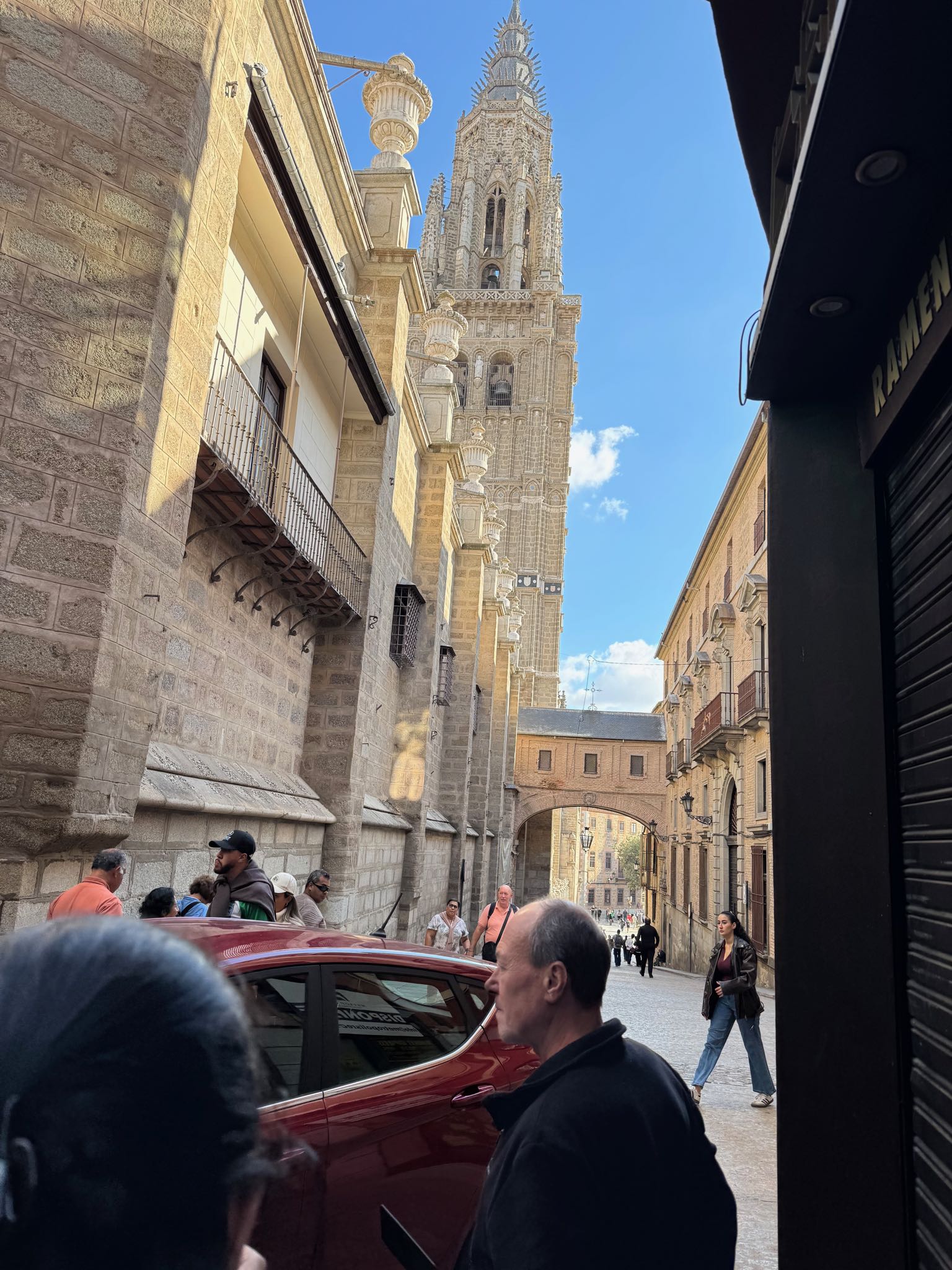
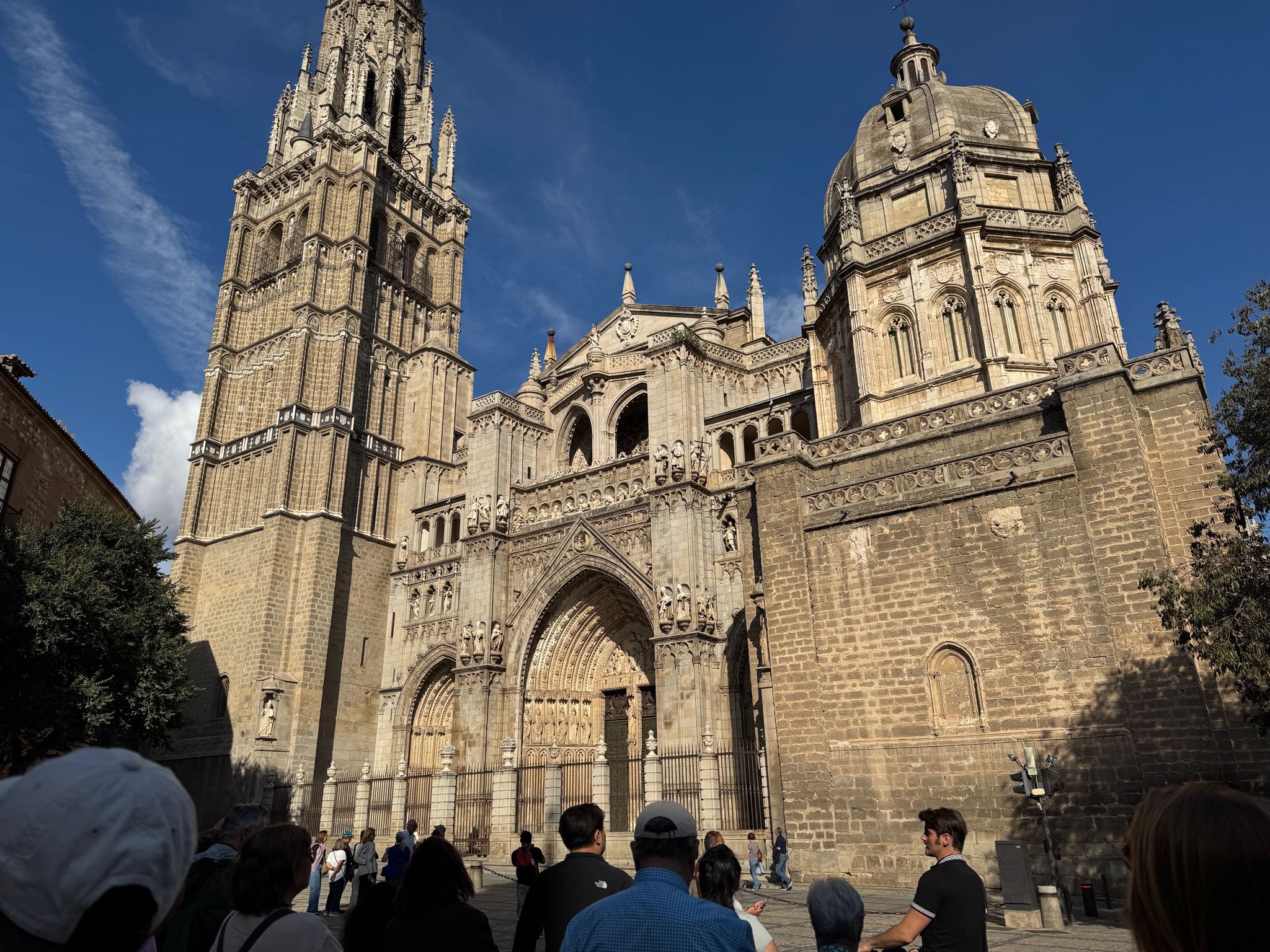
The main Cathedral, St Mary’s, in 1200 took 250 years to build. (Finished 1450.) The Mosque was walled off in 1200.
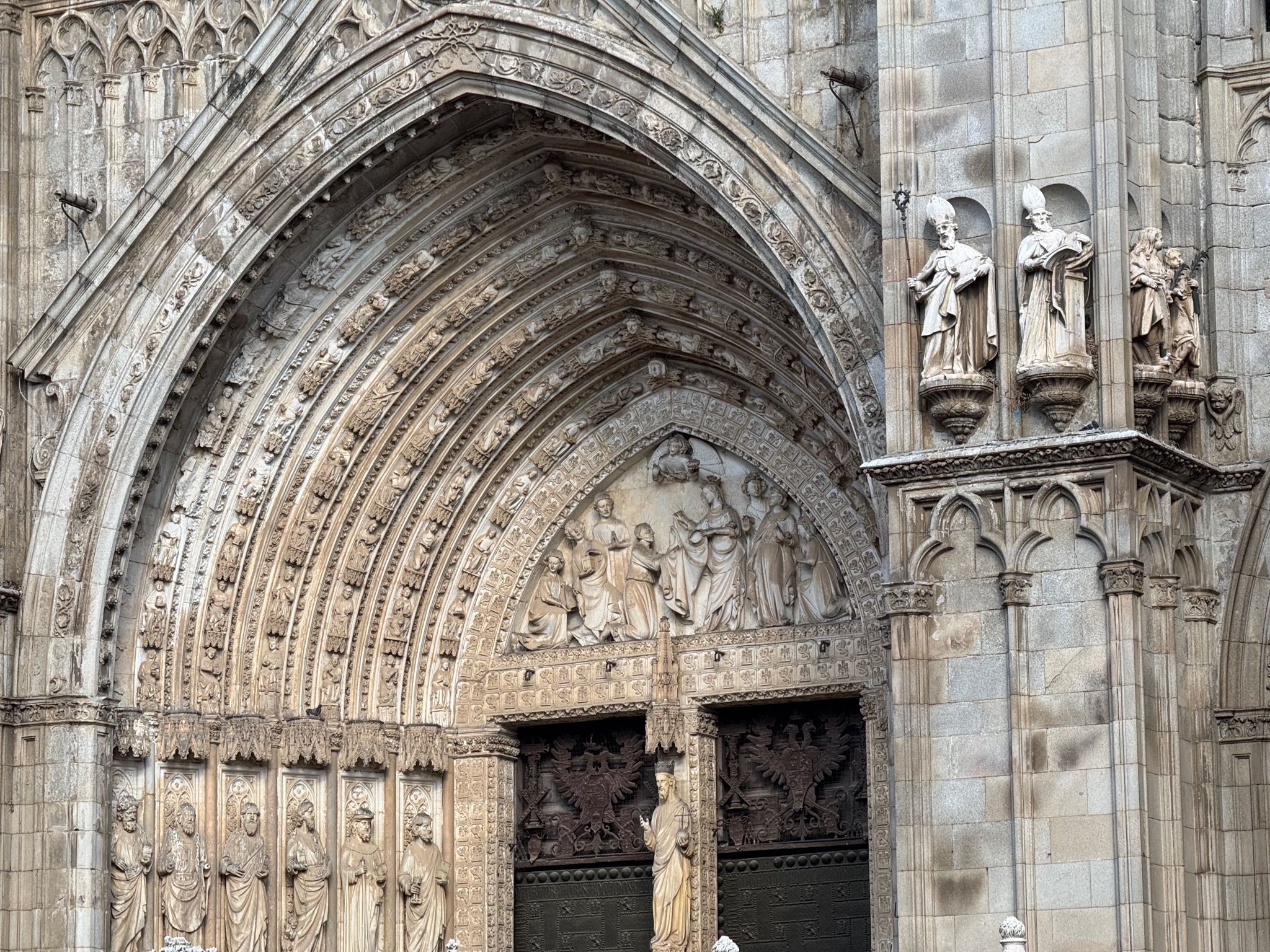
The Arch represents the Last Supper.
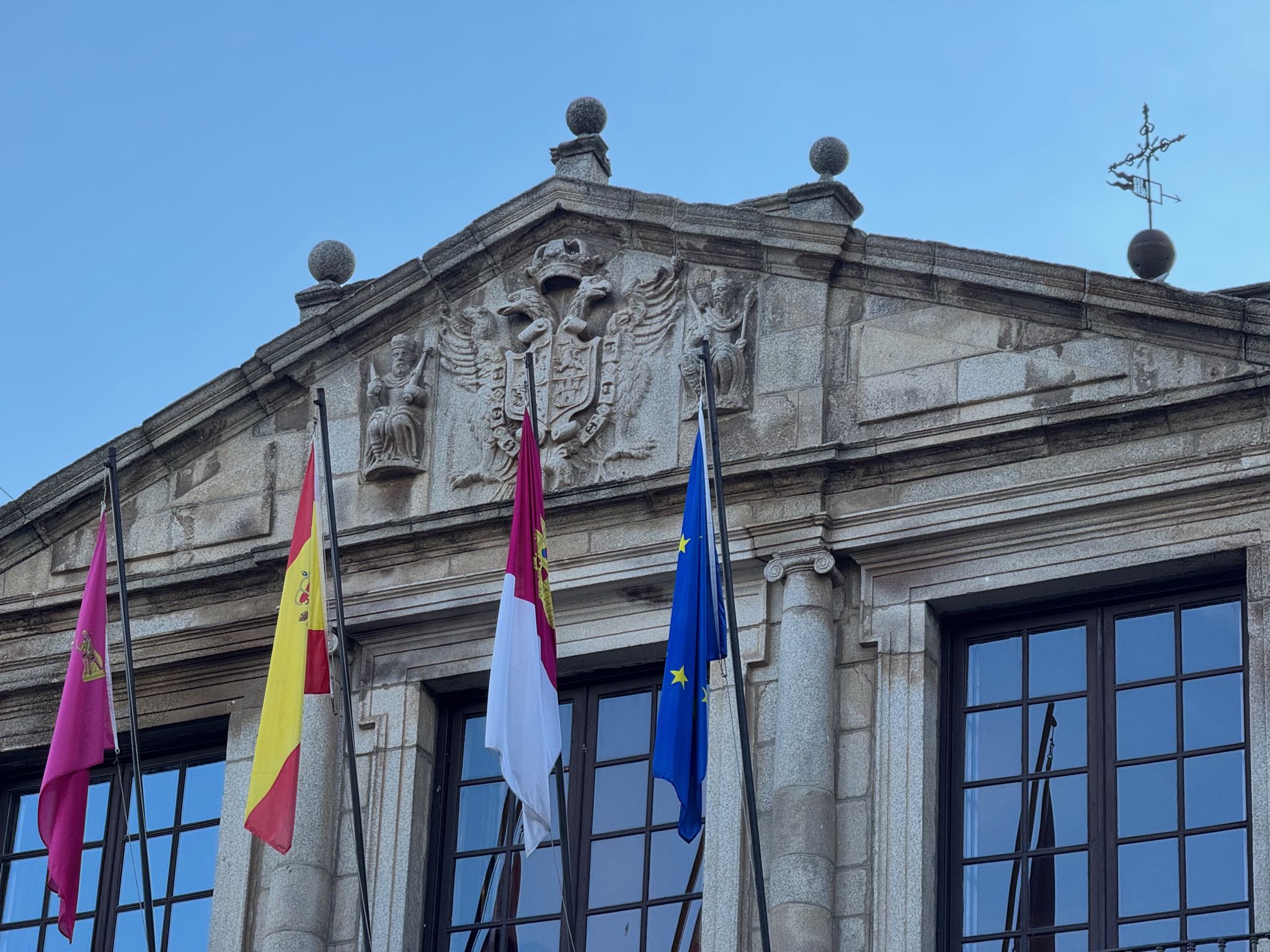
The city hall of Toledo has a logo with two heads representing the head of the Castilian empire. The capital of Spain was moved to Madrid by the Prince in …
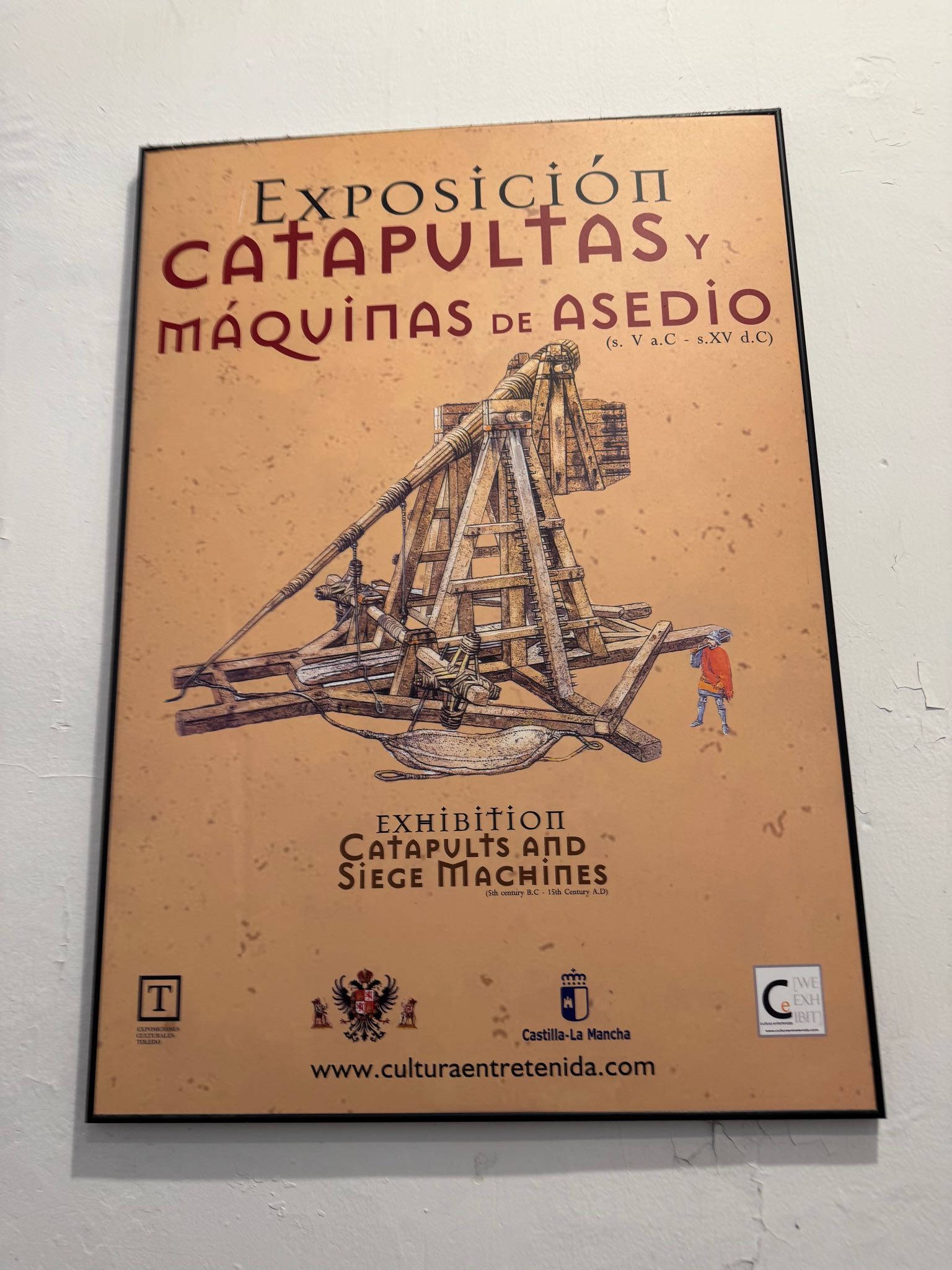
Hugh and I see a museum about catapults and siege machines. The thing that stood out with a Crusades were way of directing the walls to stop fighting each other and to direct their energies in a single direction.
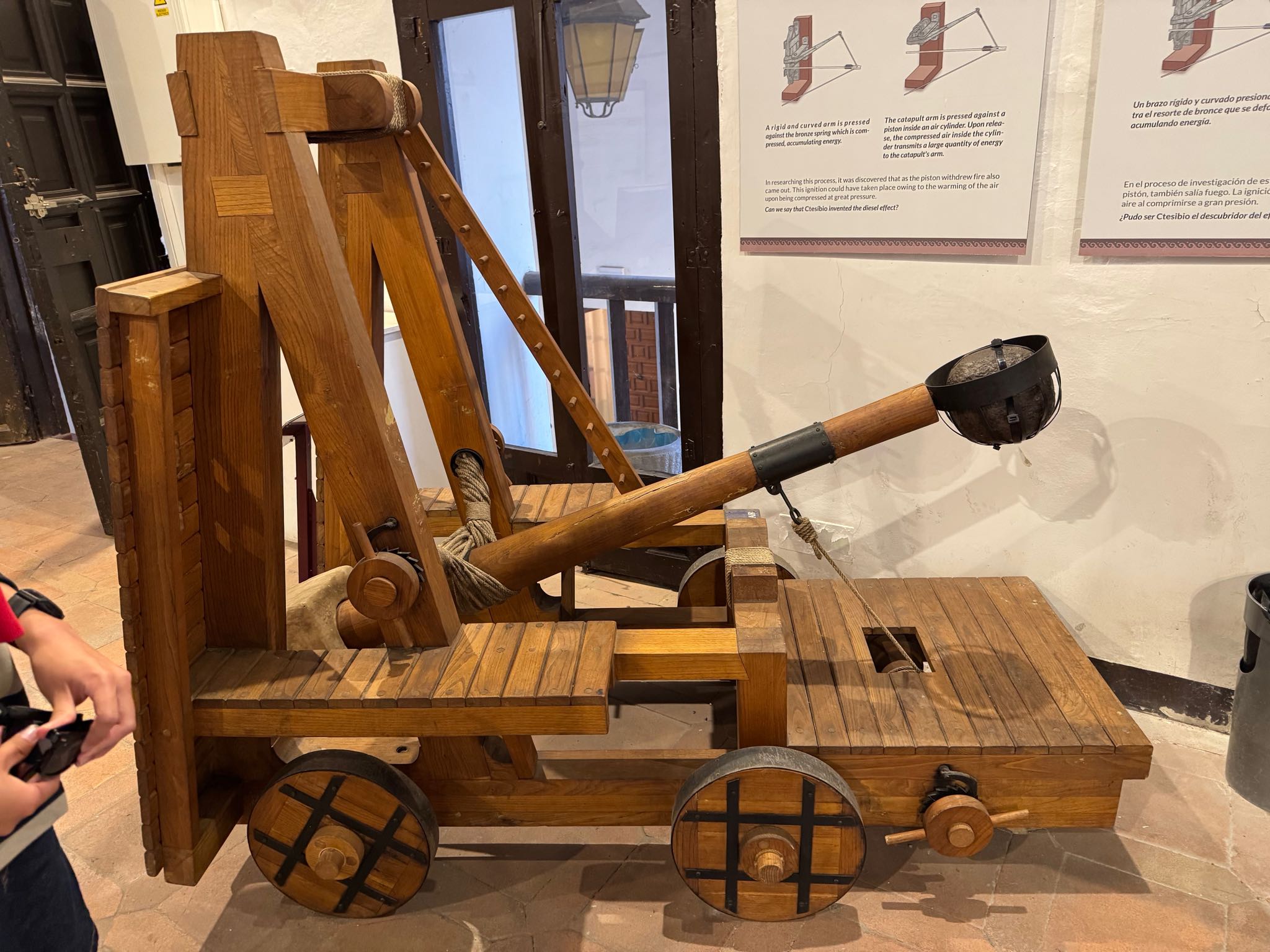
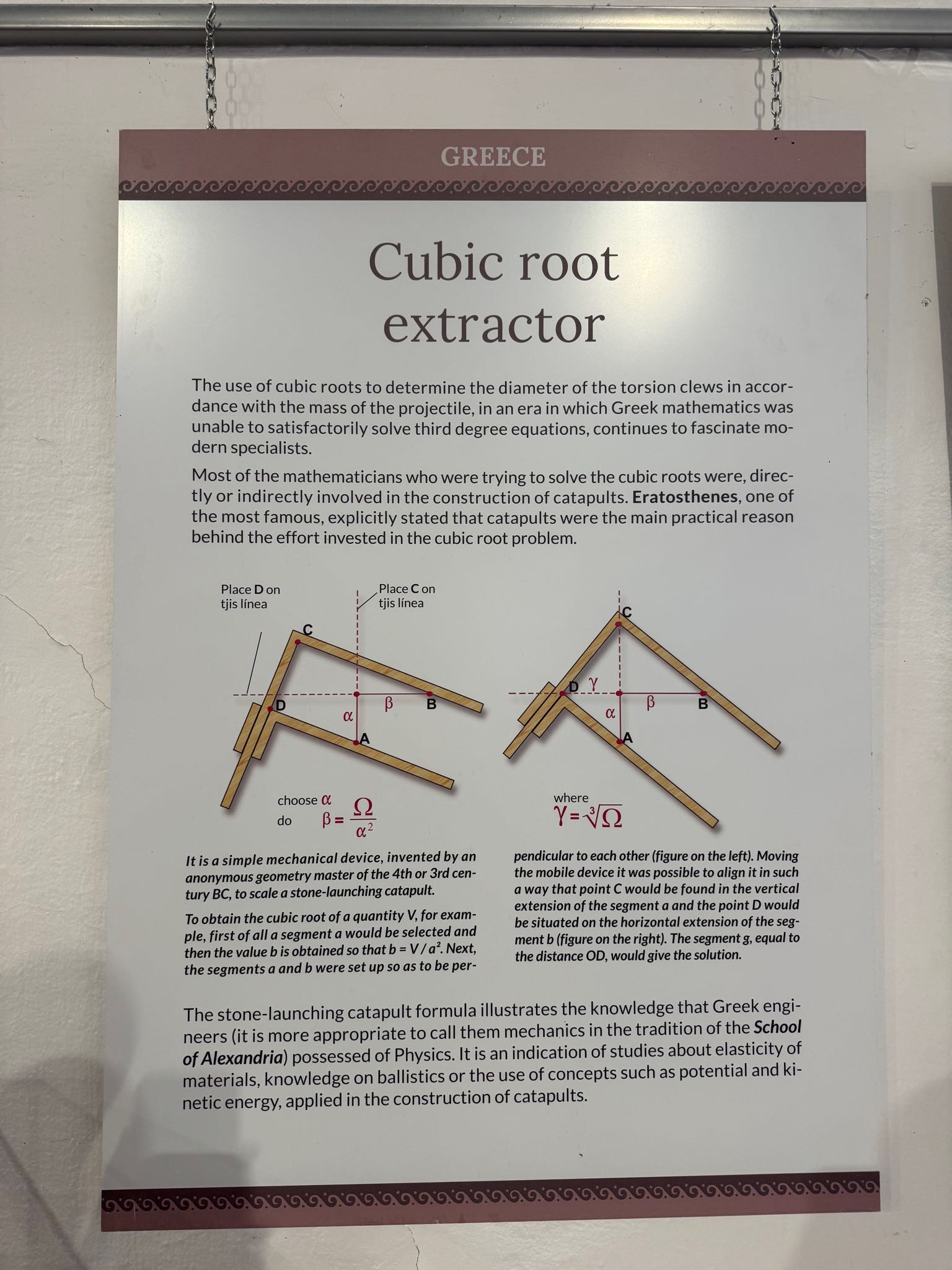
Another thing I learned was that the Greek mathematicians built devices to do cubic roots in order to calculate the angles of catapults.
The most incredible was something I had forgotten. Standard trebuchets could hurl a 100 kg rock with a 20 tonne counterweight.
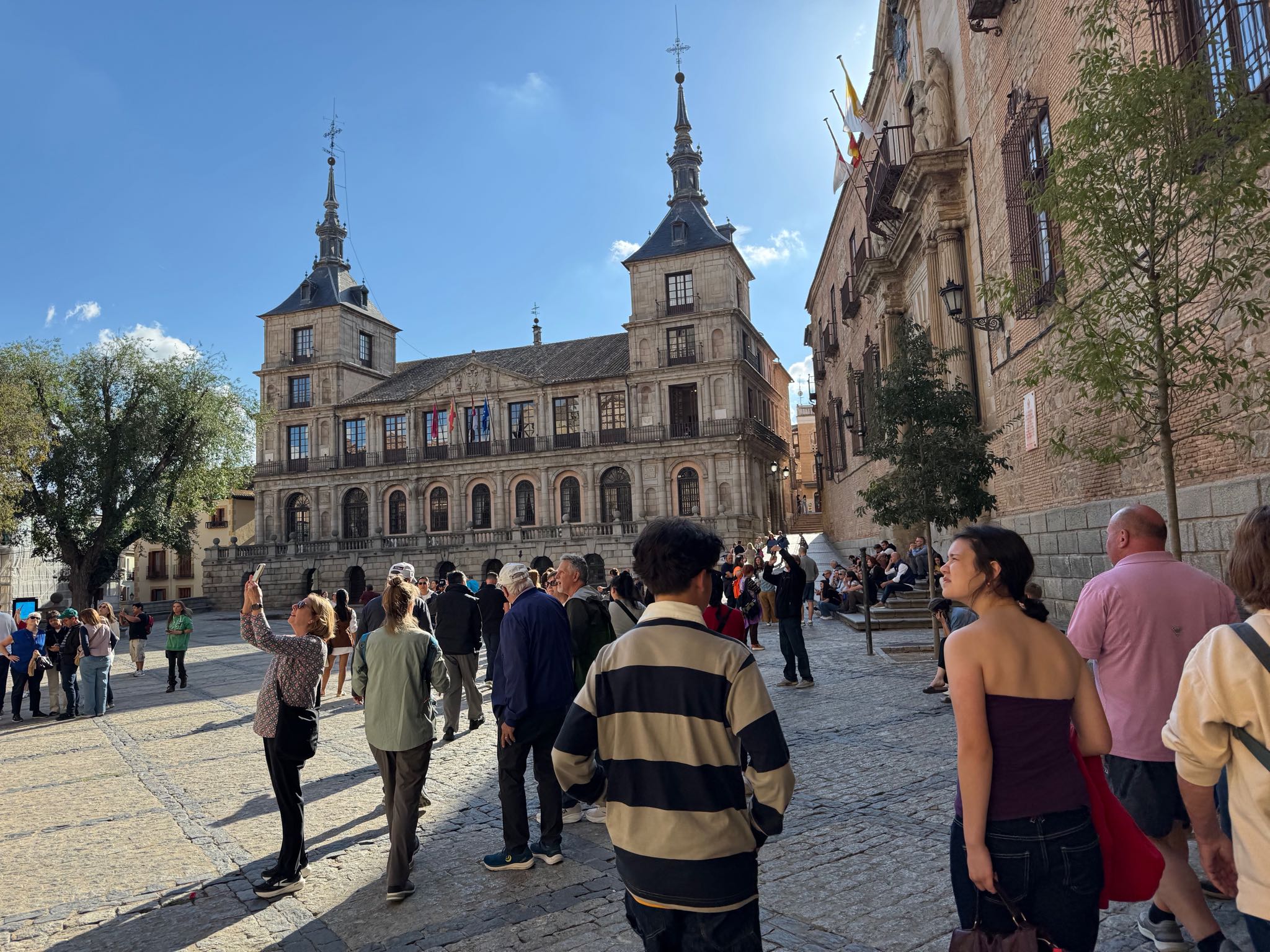
At 6.45pm it is still bright, feeling like the country made a mistake bringing the time an hour forward from Portugal.
As we drive back we see six story apartments next to agricultural fields of vegetables, something that would never happen in Sydney. I recall my Grandfather complaining about the lack of strict planning controls in Sydney.
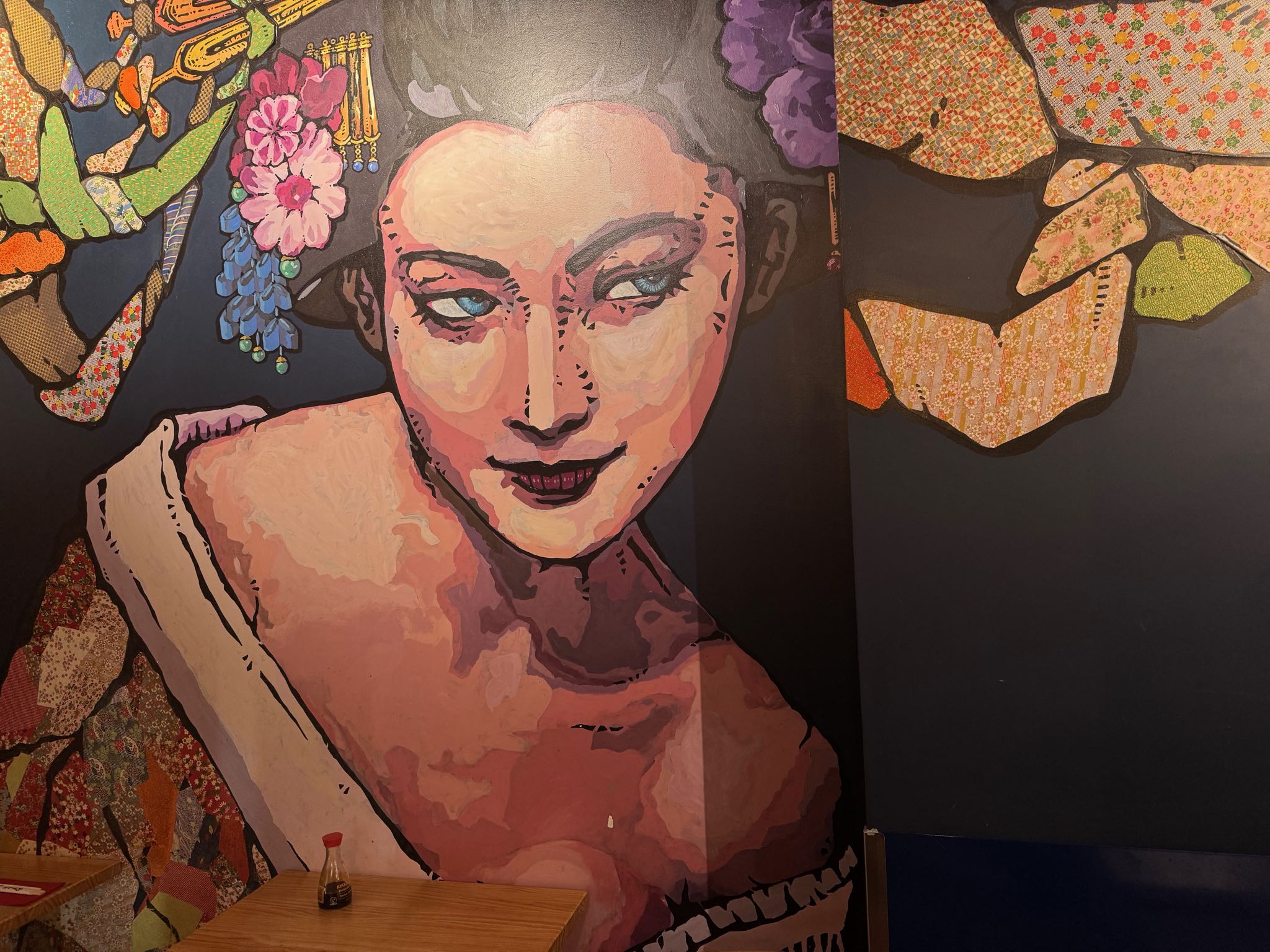
Back home. Dinner at a local Japanese restaurant.