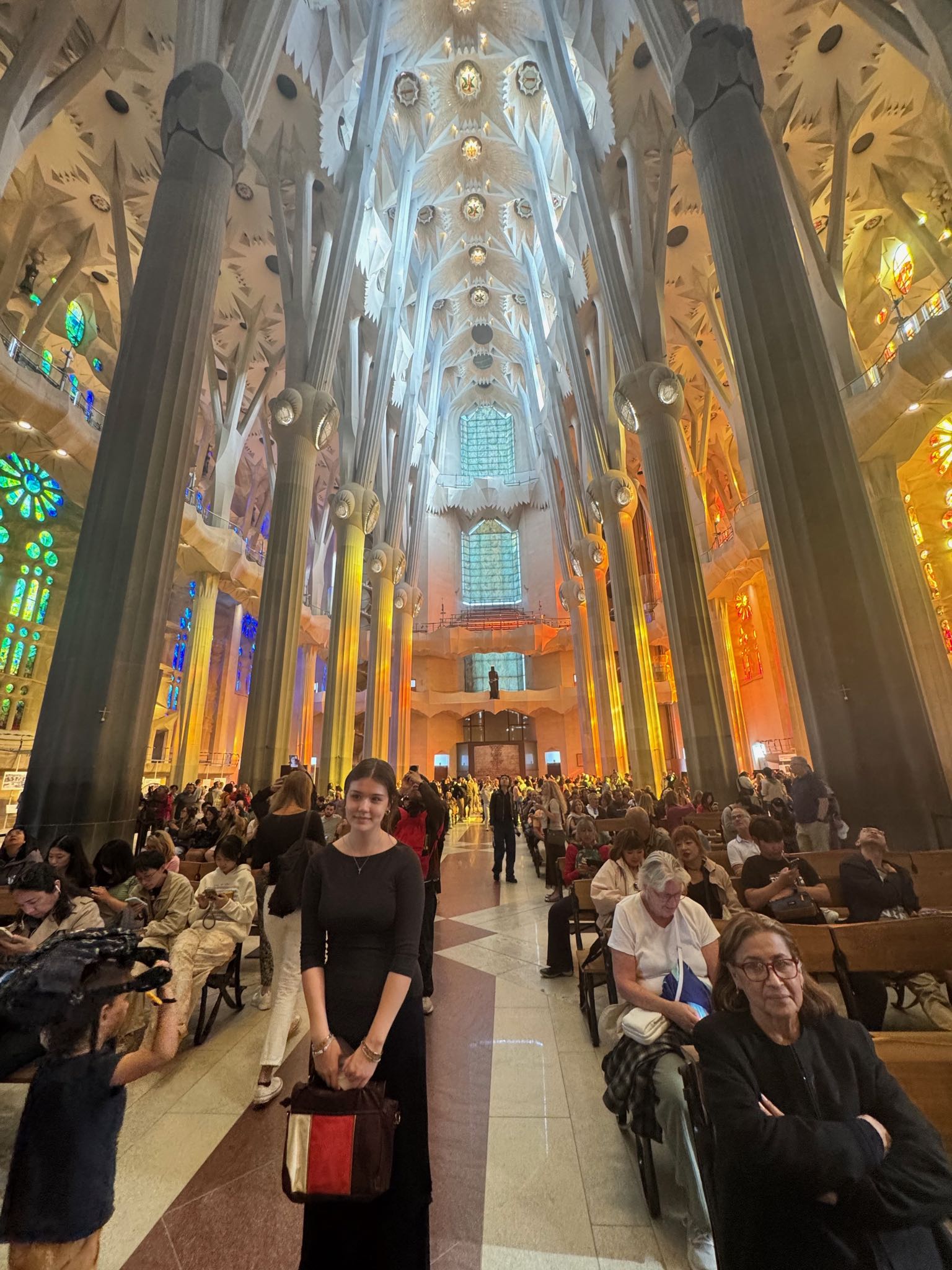
Sagrada Familia – Sacred Family.
I’ve heard stories of people going to Cathedrals in Europe – that look generations and generations to build. It’s funny to think of these Medieval people working on their half-built Cathedrals, carrying on a vision of a great church for a 100 year or more. It’s more amazing to actually go to one in the middle of construction, taken nearly 100 years to build, just like they did.
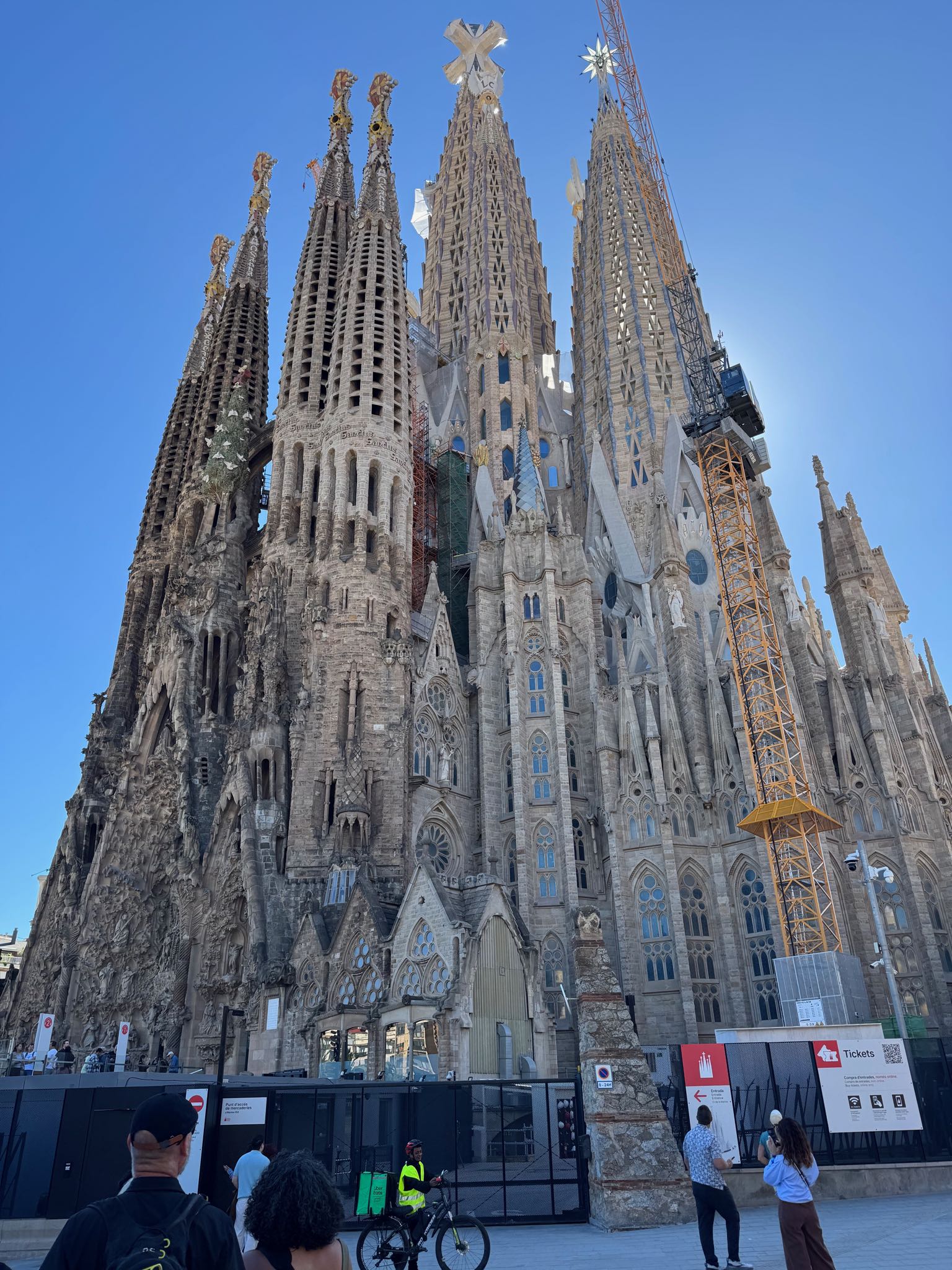
The building has 18 towers – 12 for the disciples. (Divided into four facades – Nativity, Passion and Glory) 4 for the evangelists. (Matthew, Mark, Luke, John). One Tower for Mary and the tallest one for Jesus. (Joseph doesn’t get one.) The tallest tower was Tower was 172.5 metres below a nearby hill (173 metres) to be a human creation less than Gods creation.
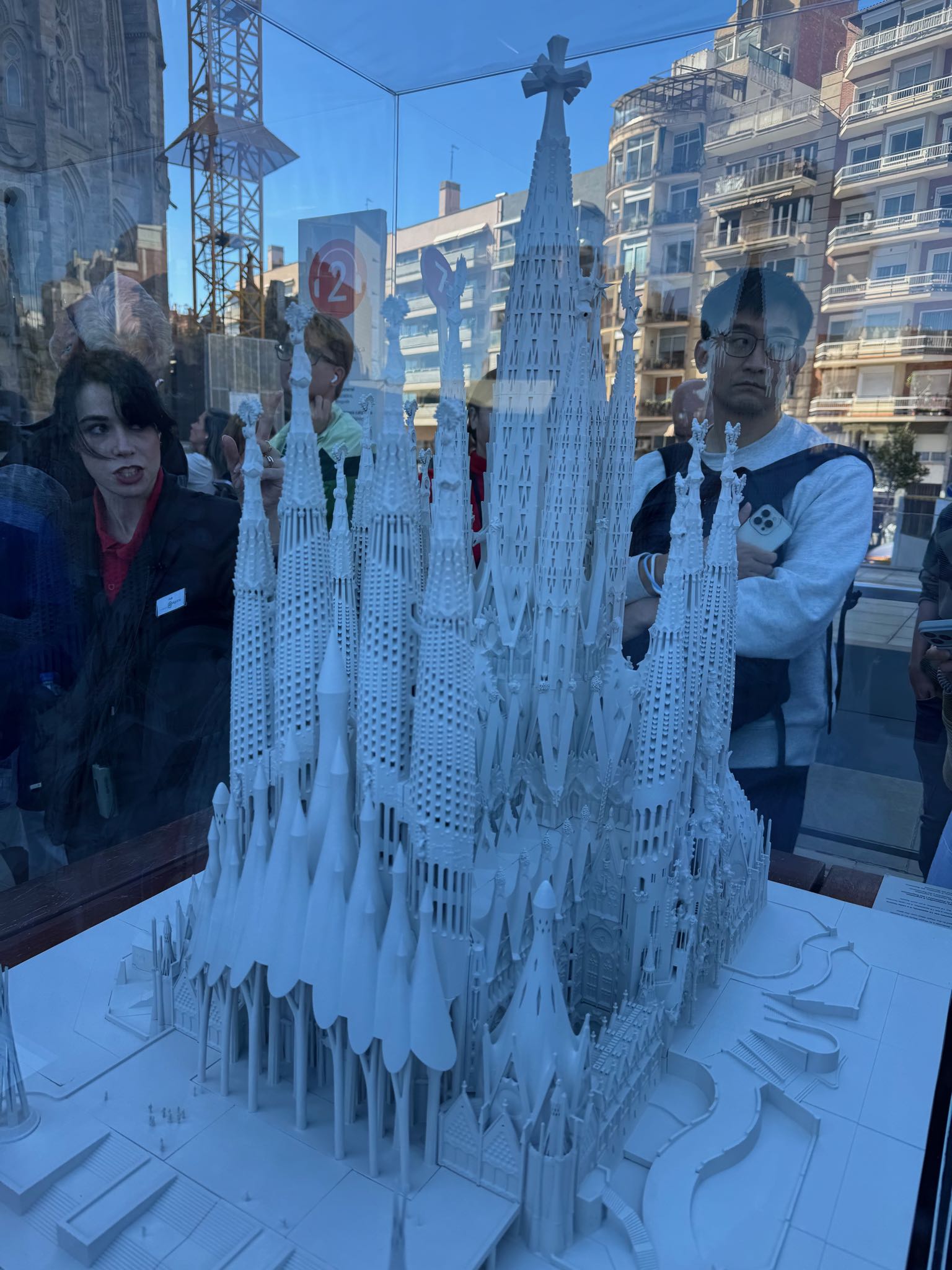
The main entrance doesn’t exist but is under construction. We went in the entrance near the nativity facade. They wanted to encourage future generations to continue building the church, so put lots of work into “continuing the vision.”
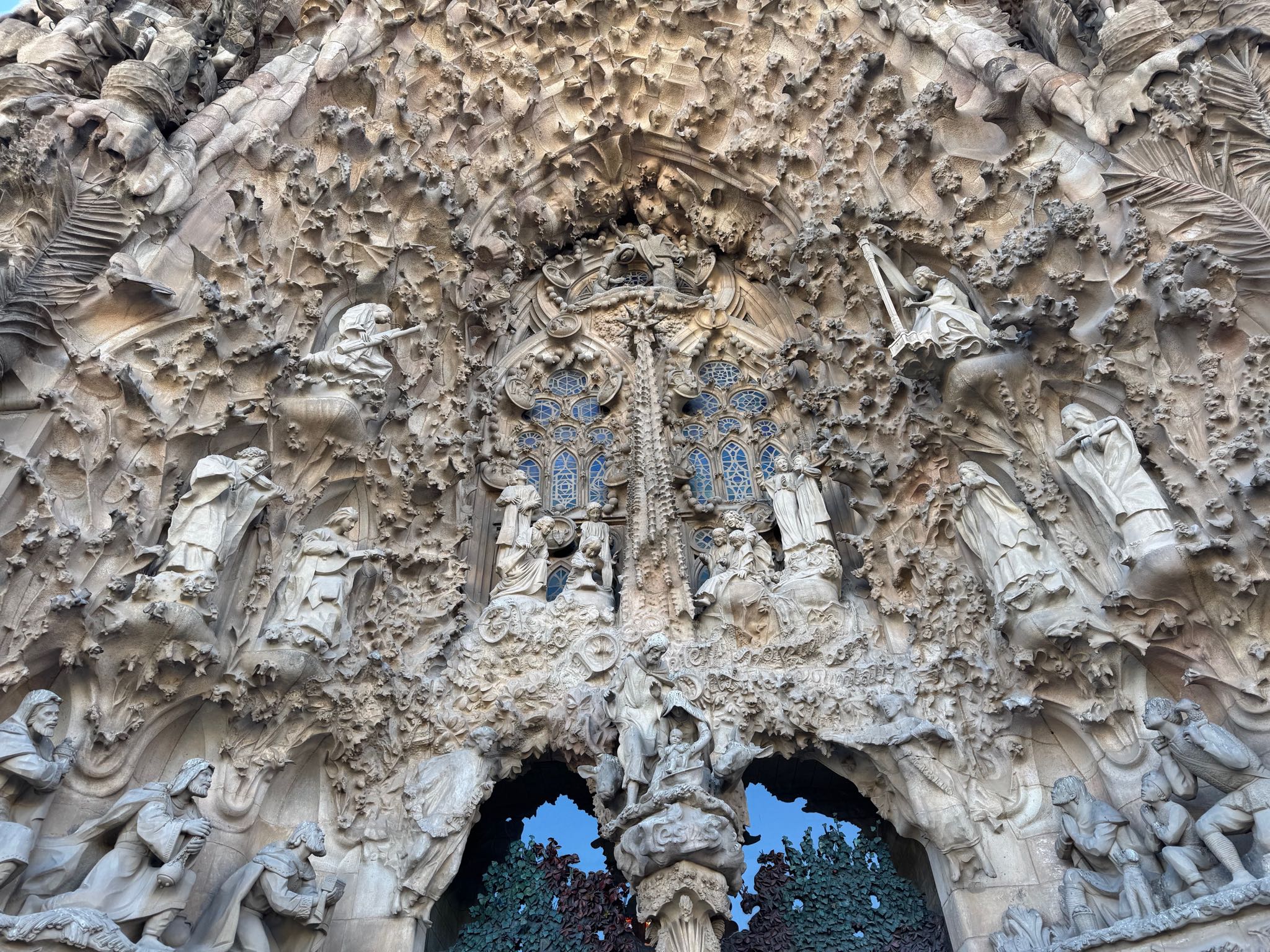
The nativity facade represents the joy of Gods creation. They originally built it in plaster then worked on carving it in stone, it was destroyed during the civil war, then they rebuilt it.
Columns for Jesus, Mary and Joseph.
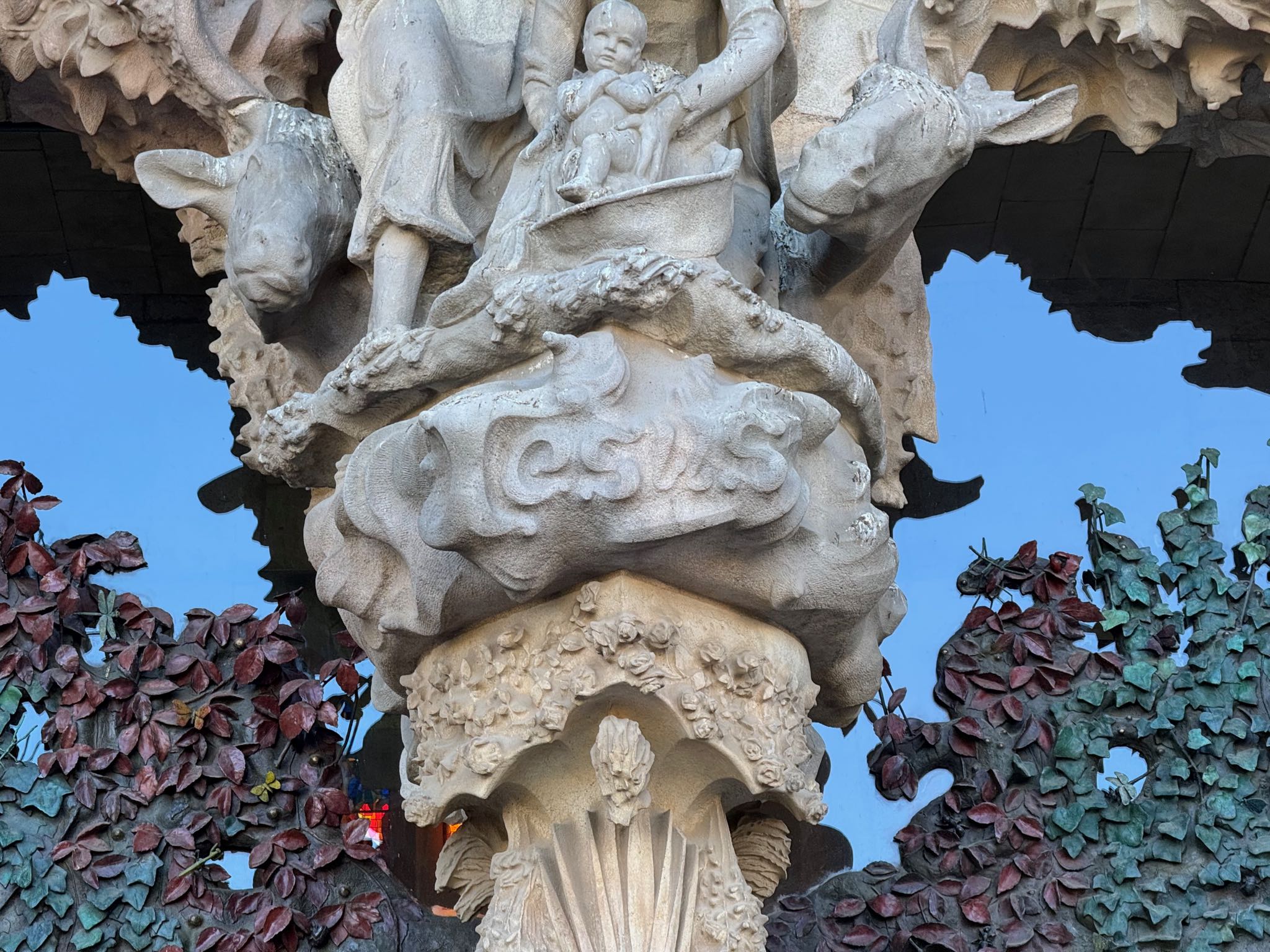
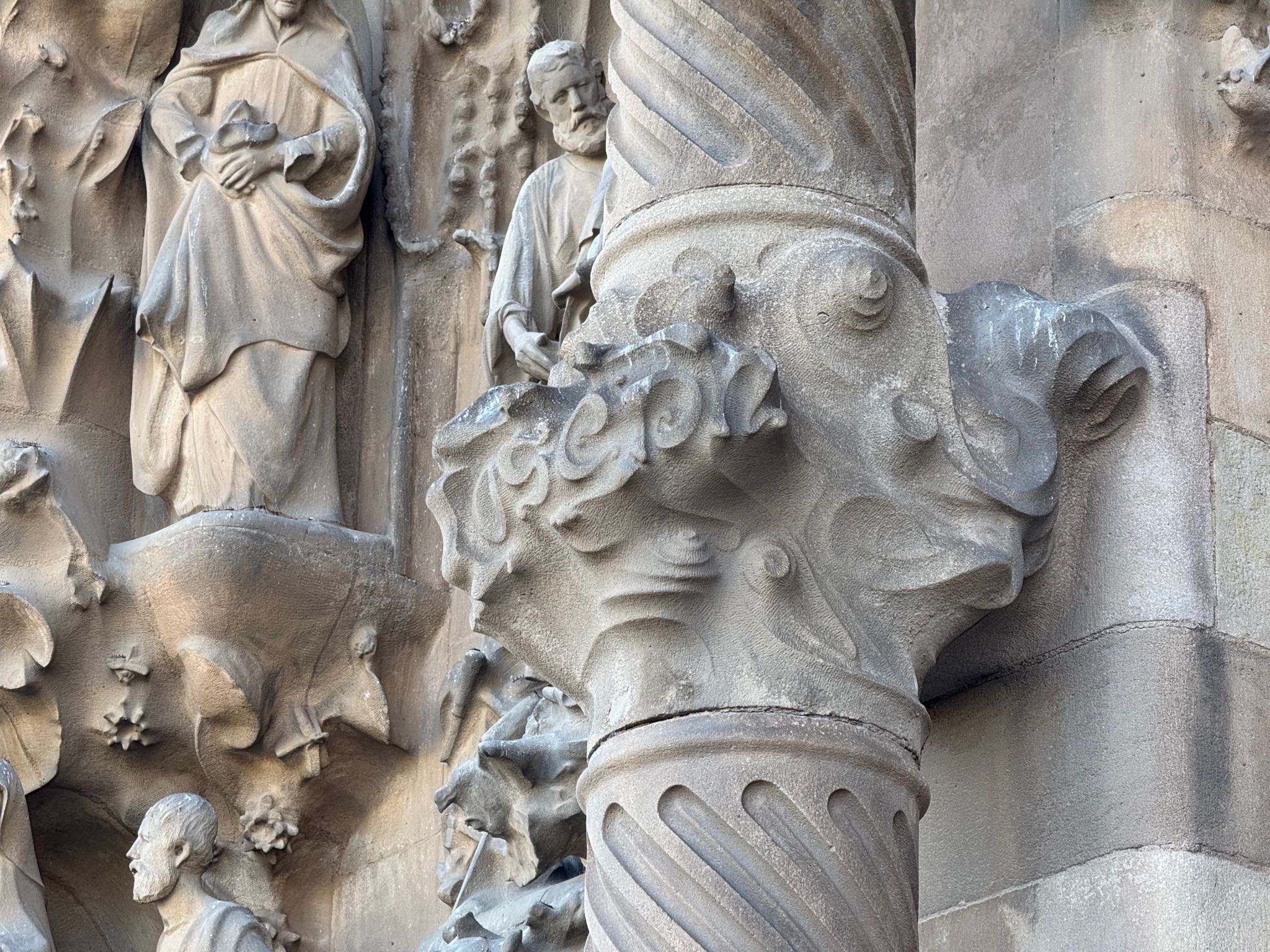
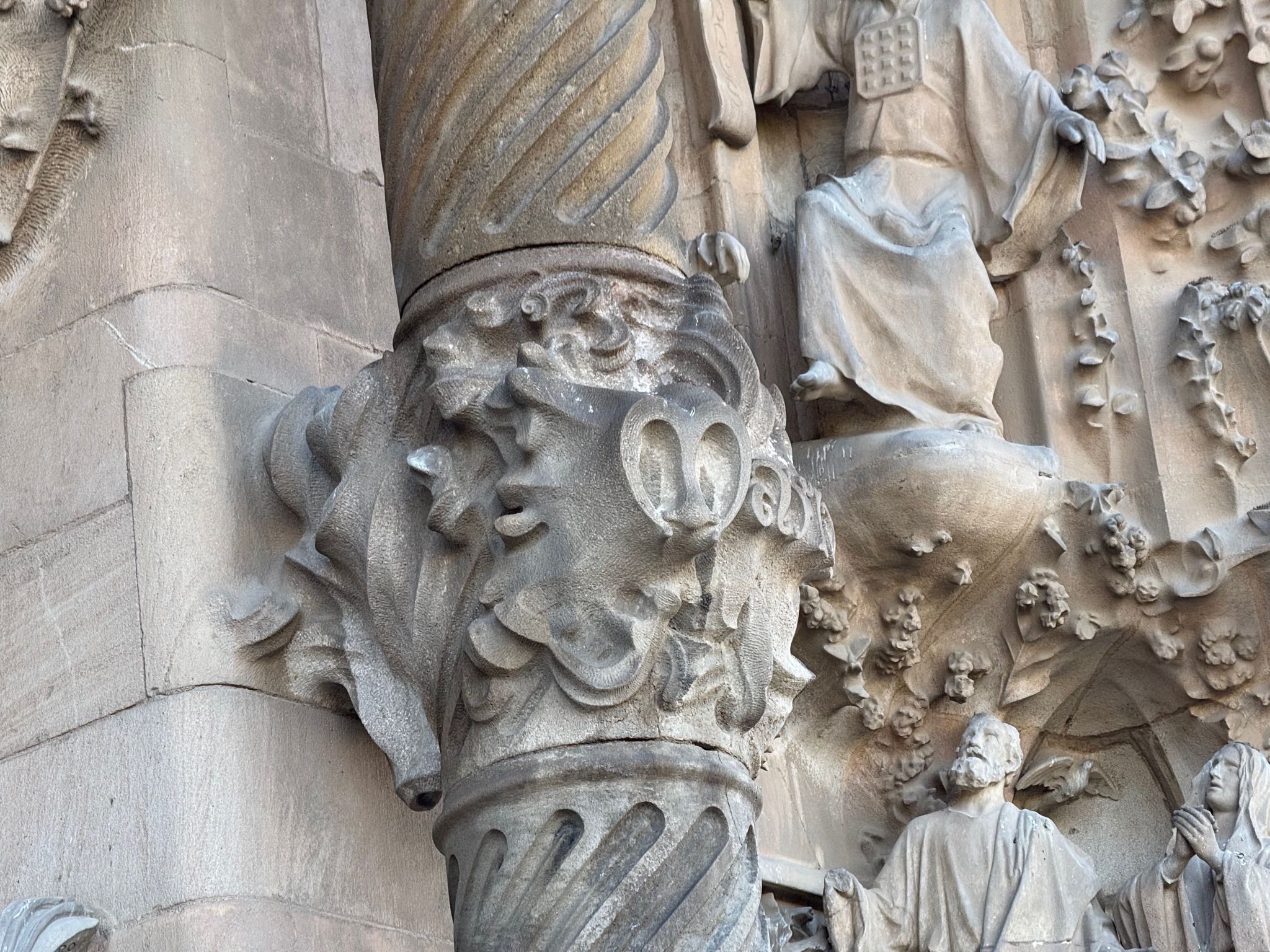
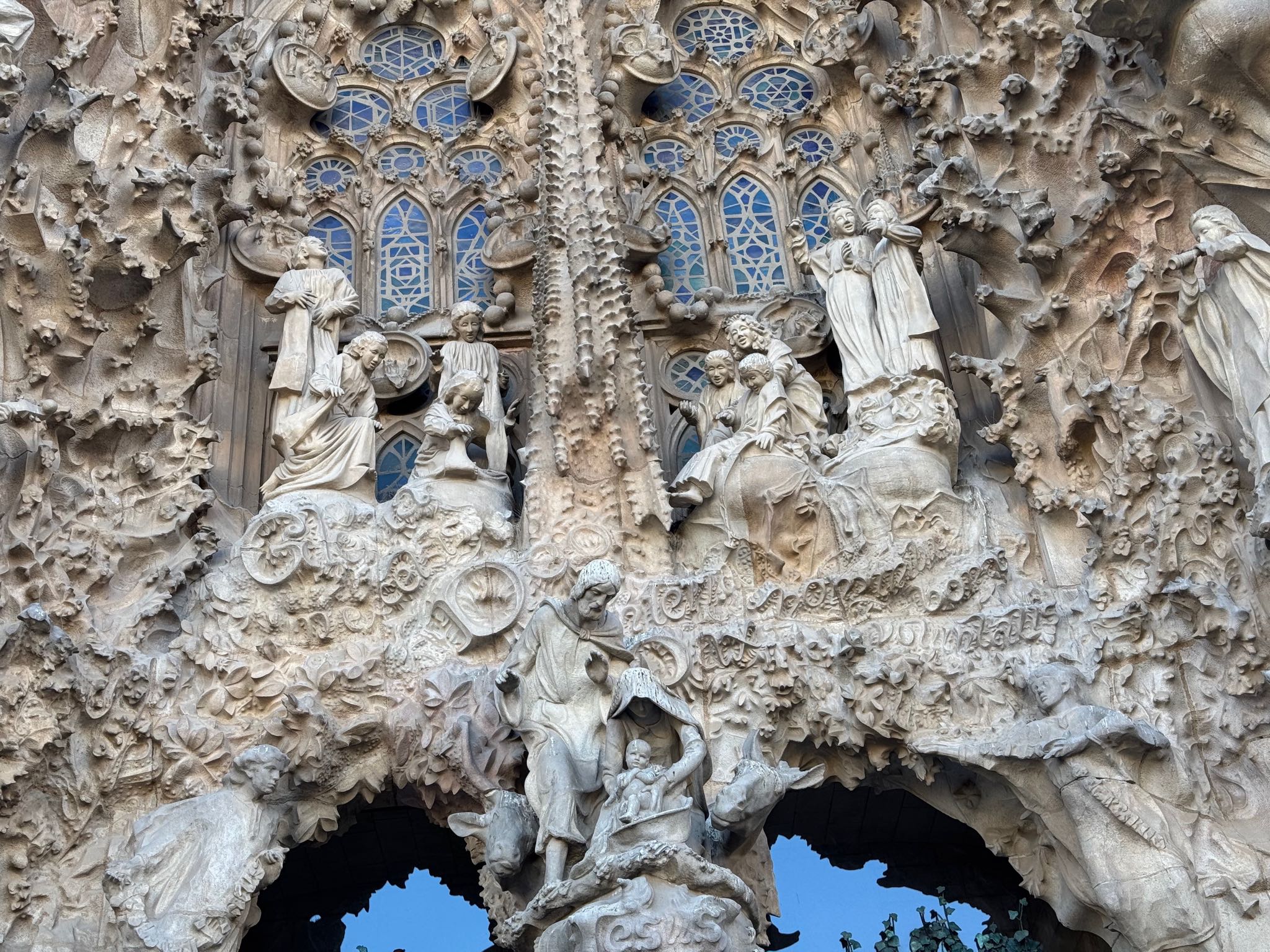
We start on the Jesus portal on the facade.
The Shepherds are Cataluñas.
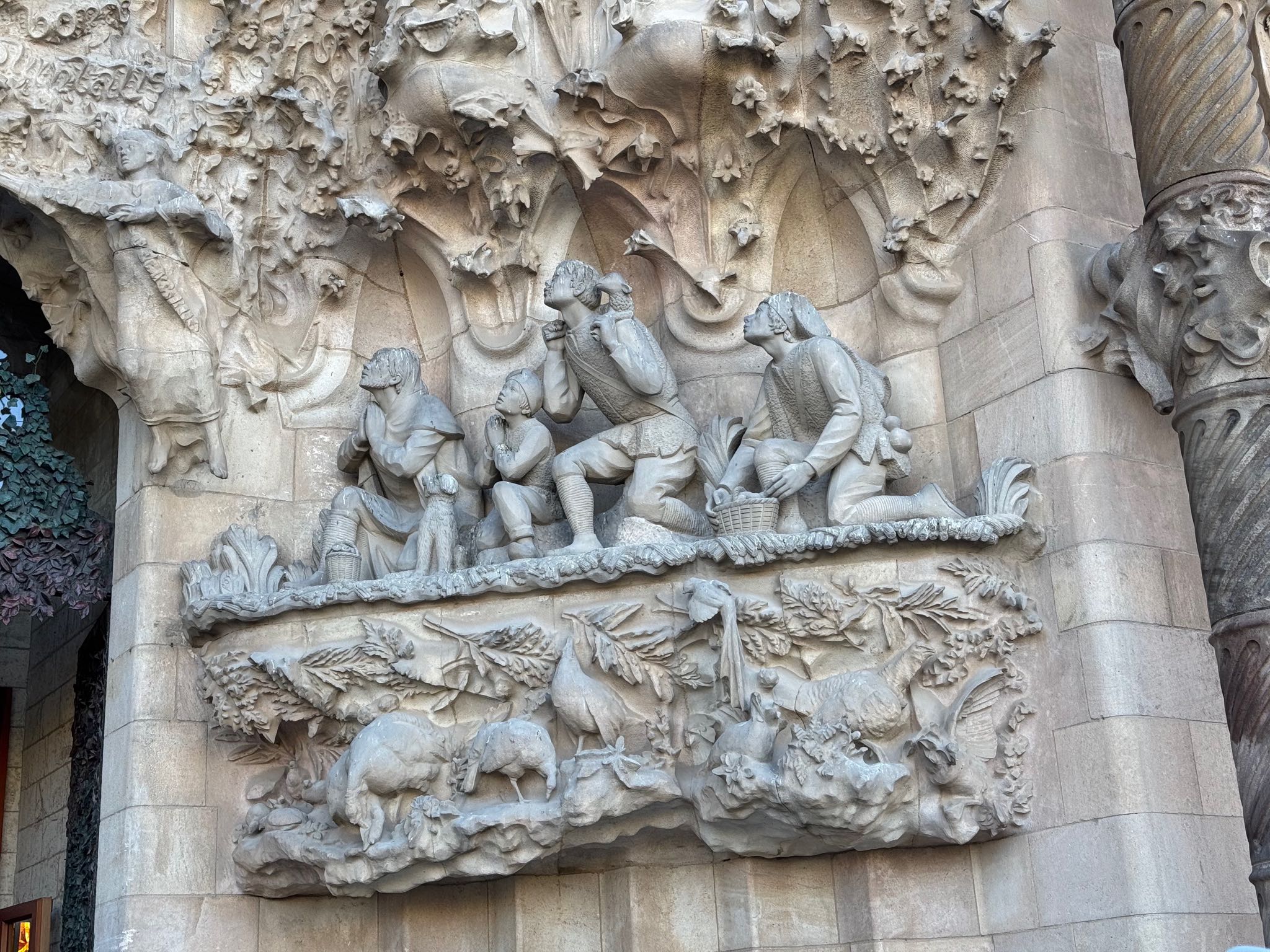
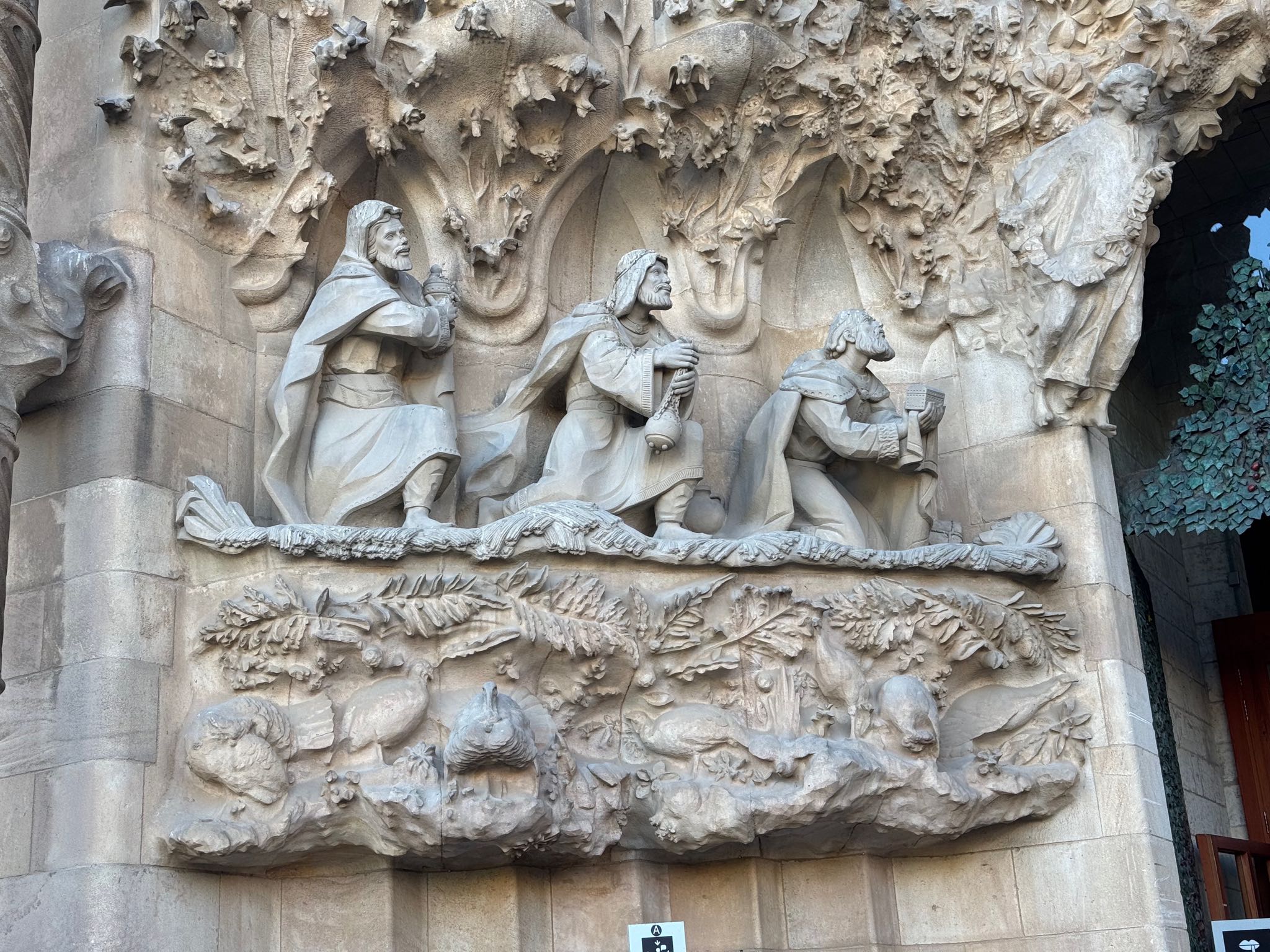
We see the wise men coming to visit Jesus.
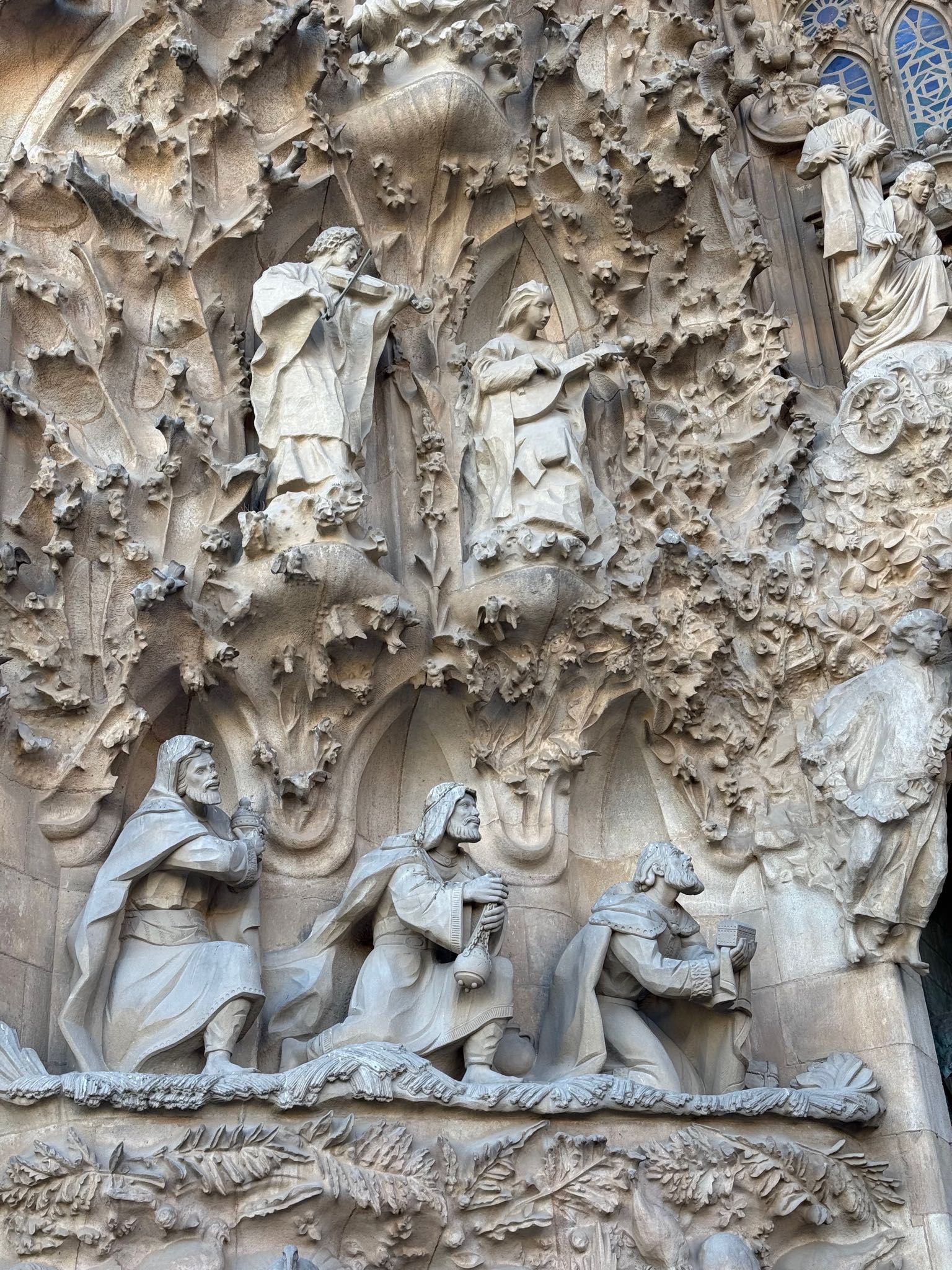
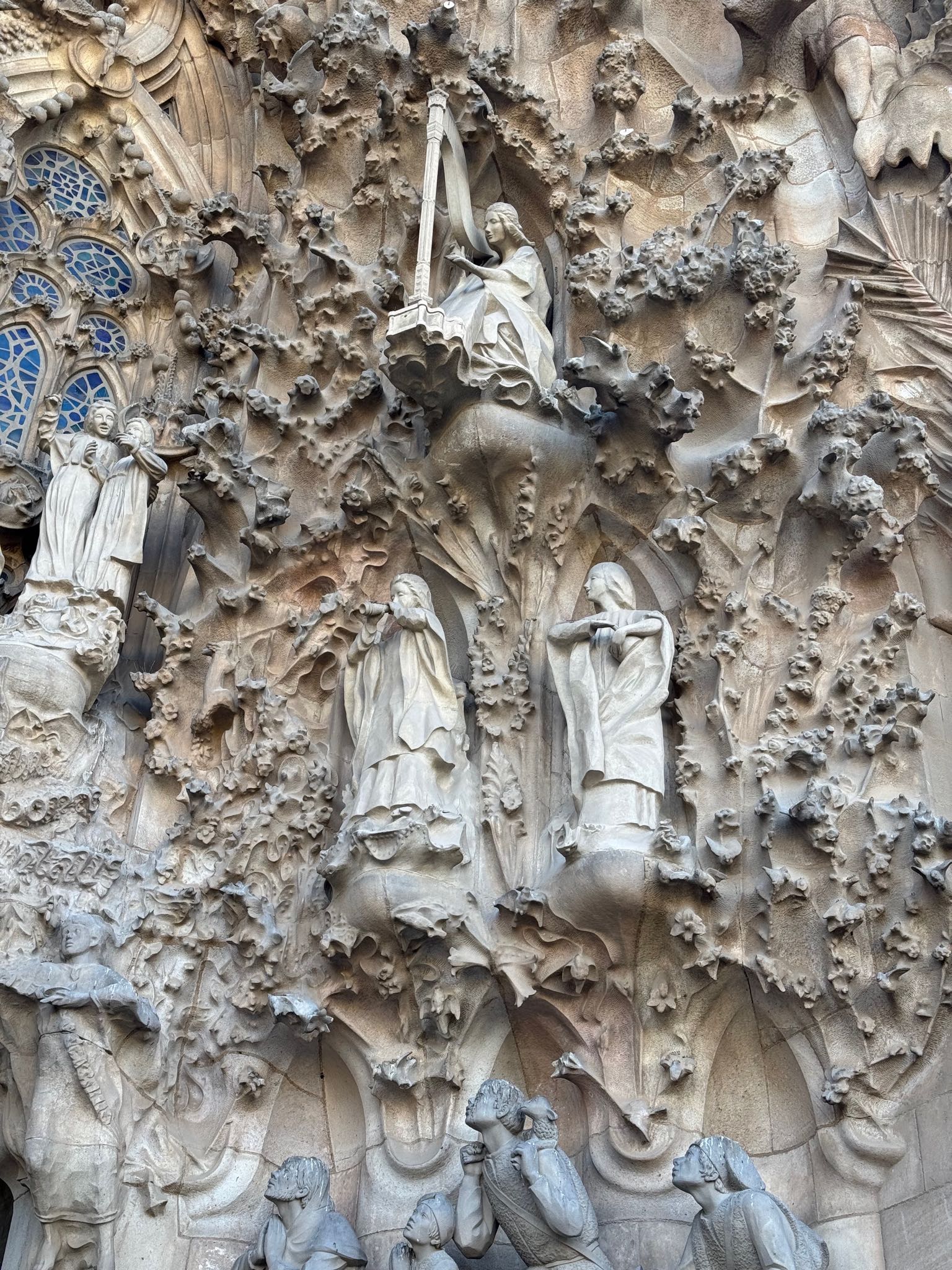
There are Angels in heaven playing music and singing.
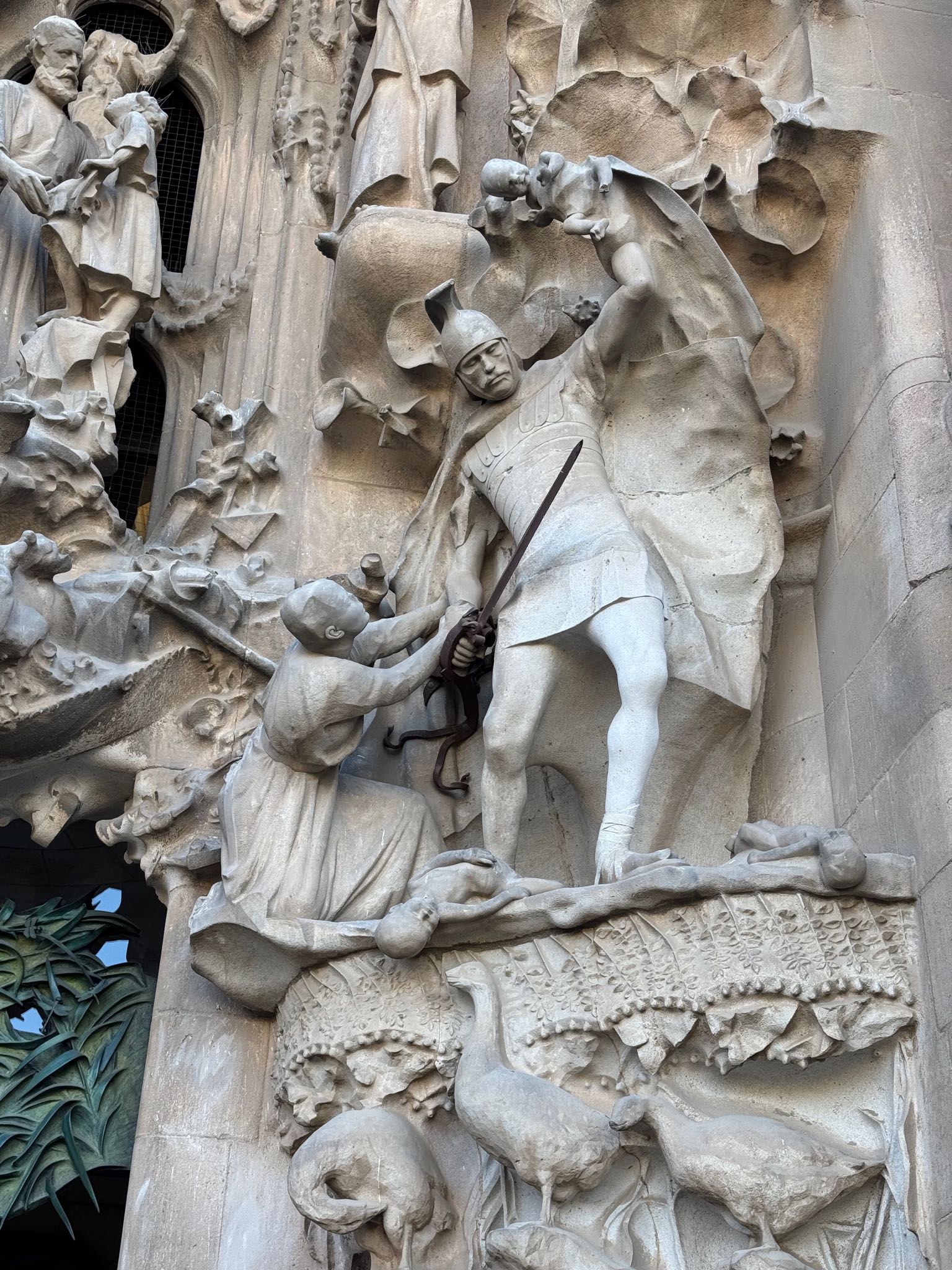
We go to Saint Josephs portal on the facade. This is dominated by an image of a Roman soldier destroying a baby, pointing to a father’s decision to leave their country. This I found the most moving on the whole site. It reminded me of how I felt when I visited Manchester, and pondered my Grandfather’s decision to leave there.
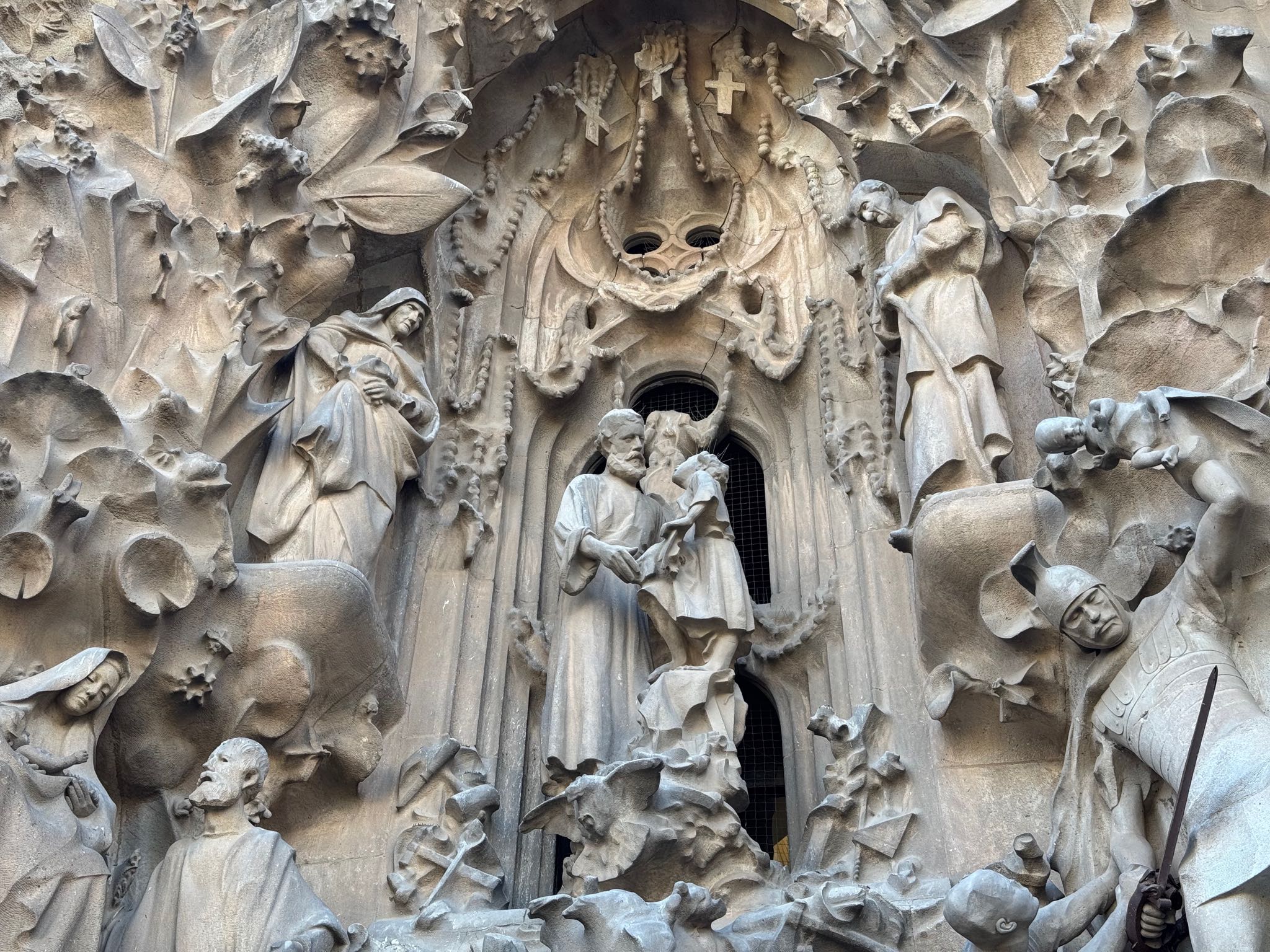
It shows them fleeing to Egypt. We also see the parents of Mary.
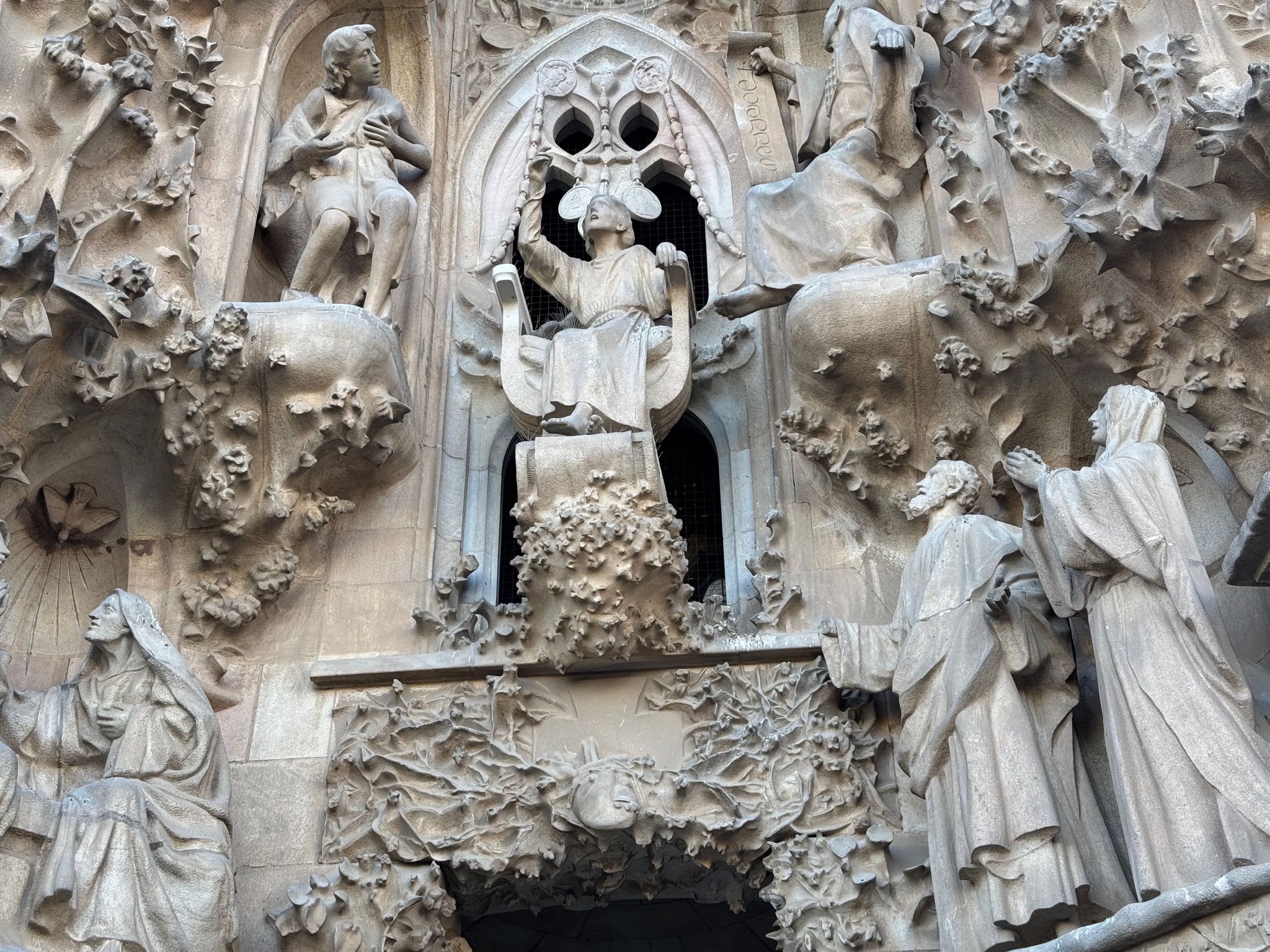
In the Mary portal we see Jesus as the temple meeting his Heavenly Father.
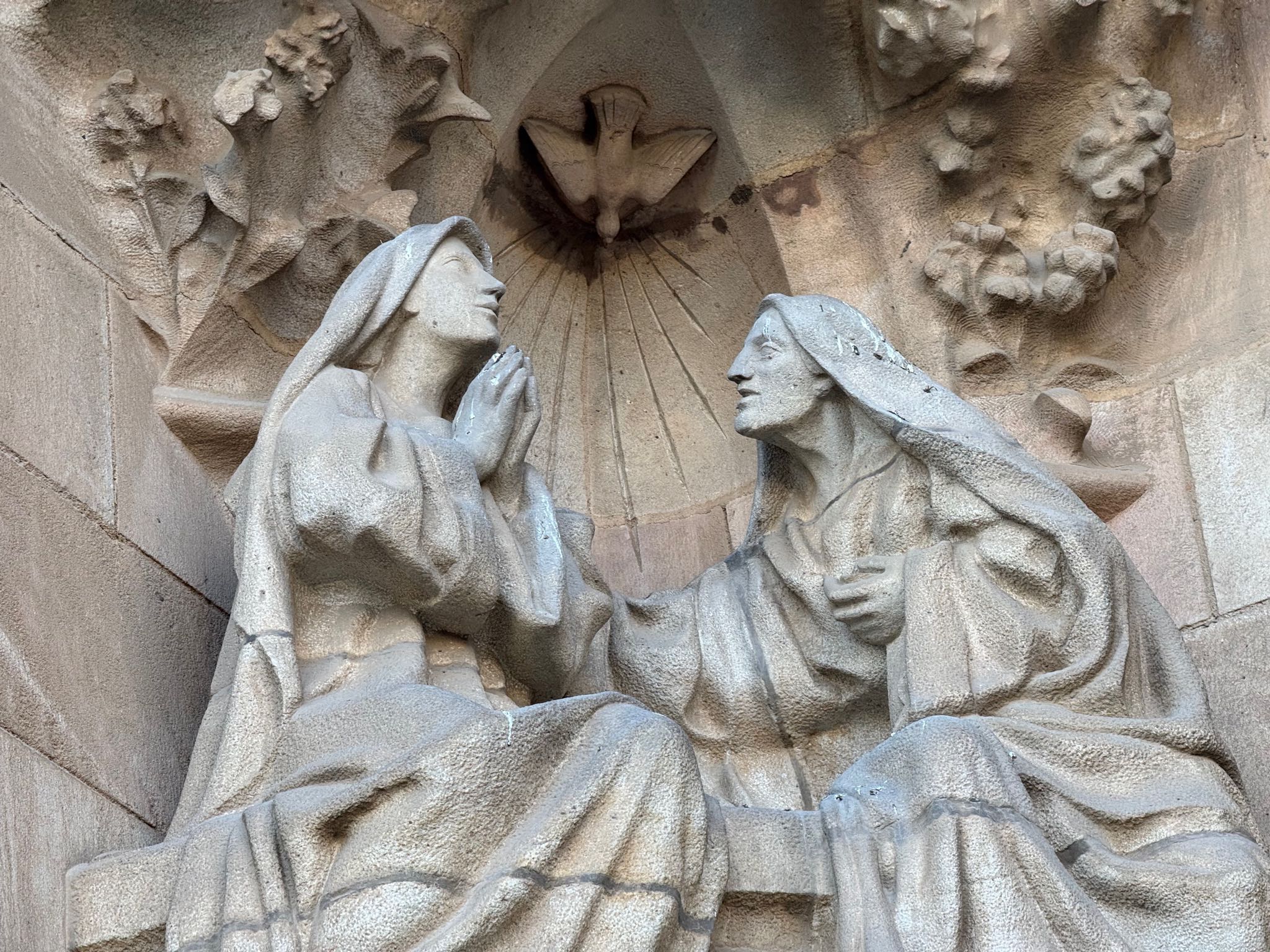
We Jesus leaning his trade. (No photo here) We see Mary talking with her cousin about having a baby.
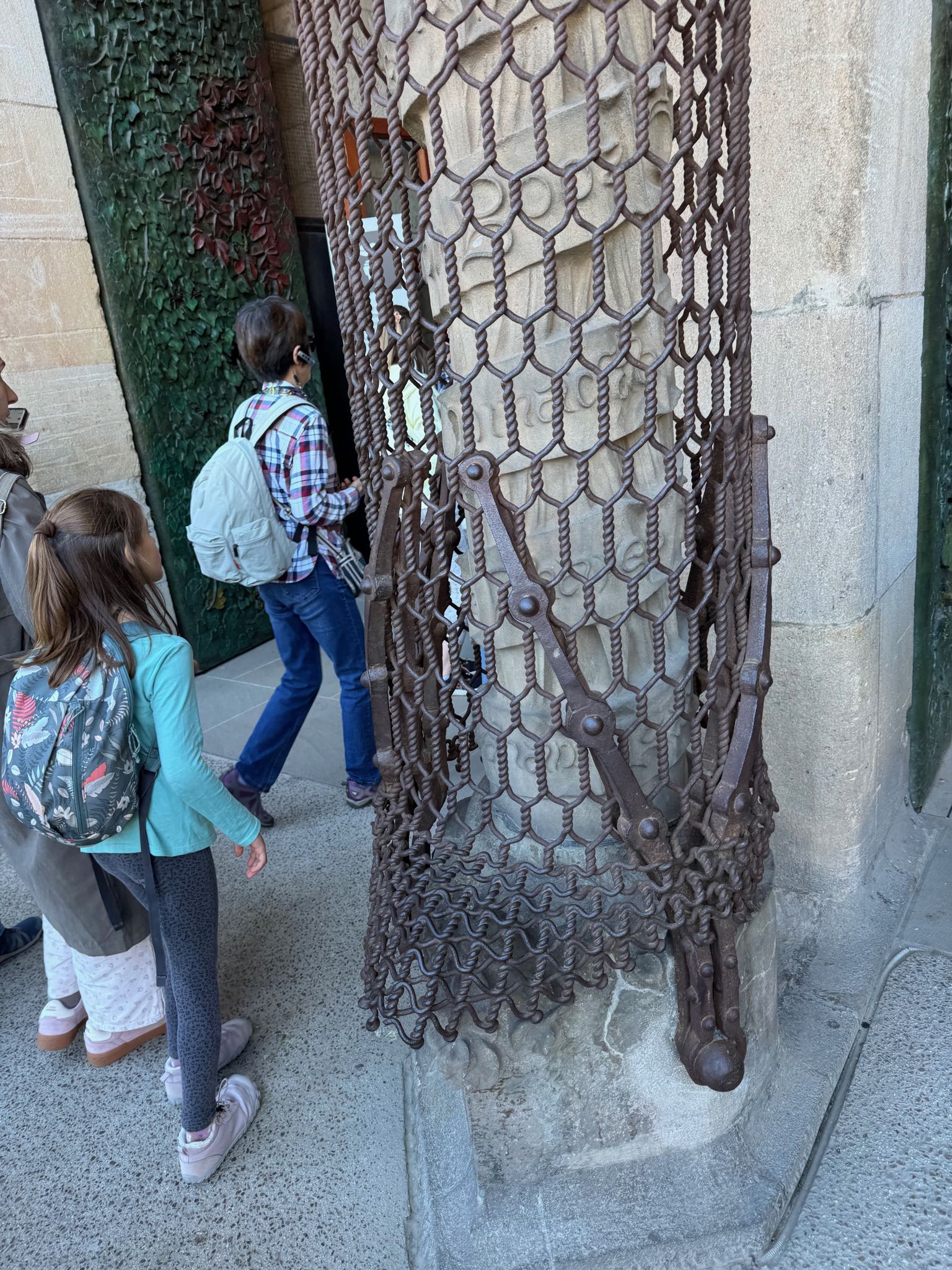
An apple and snake representing original sin on a column near the door. (Covered in heavy chain mesh because people were violent towards it.)
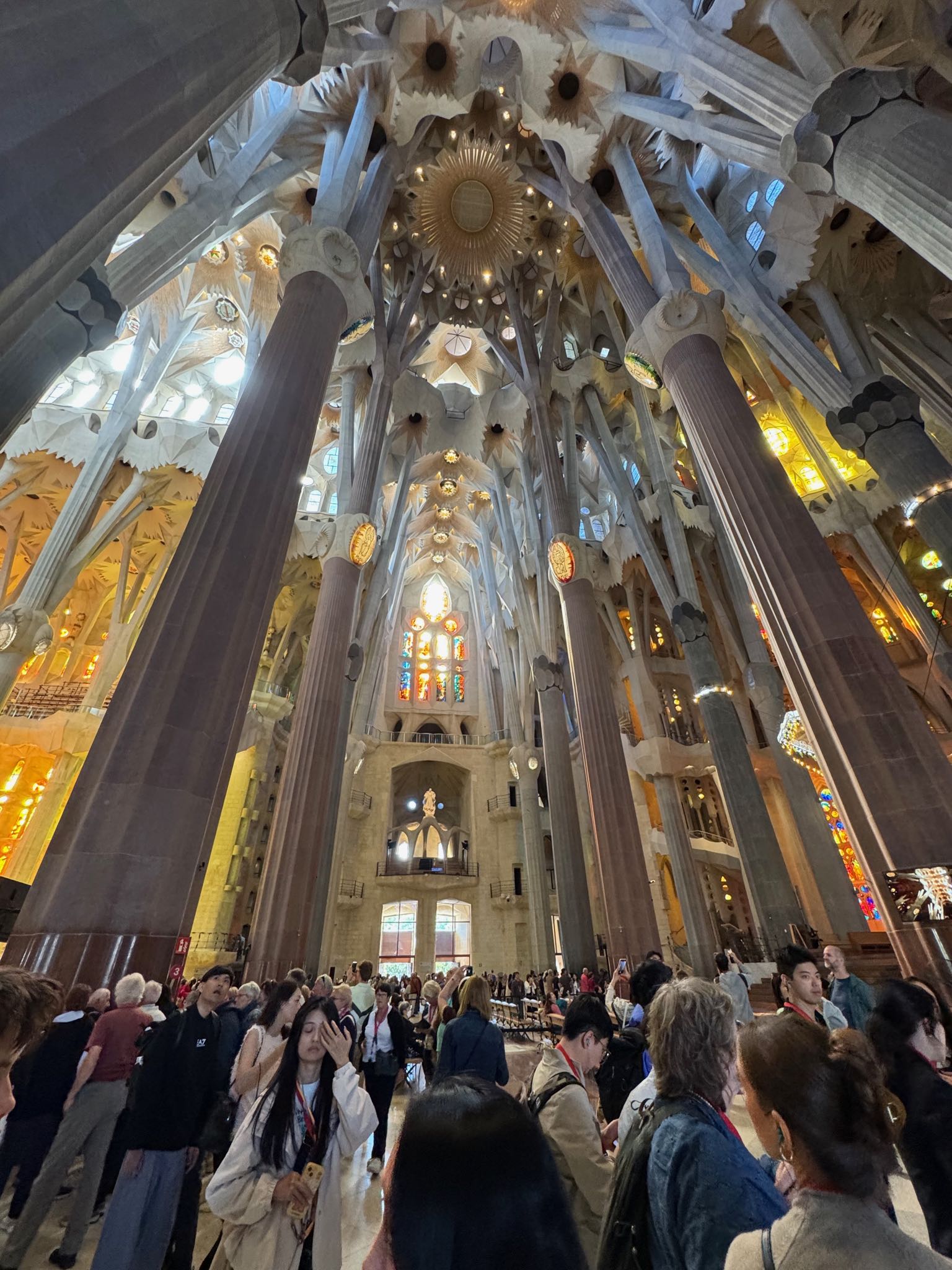
Inside Gaudi developed the Catalonian arc modelling on people’s legs standing to support the roof.
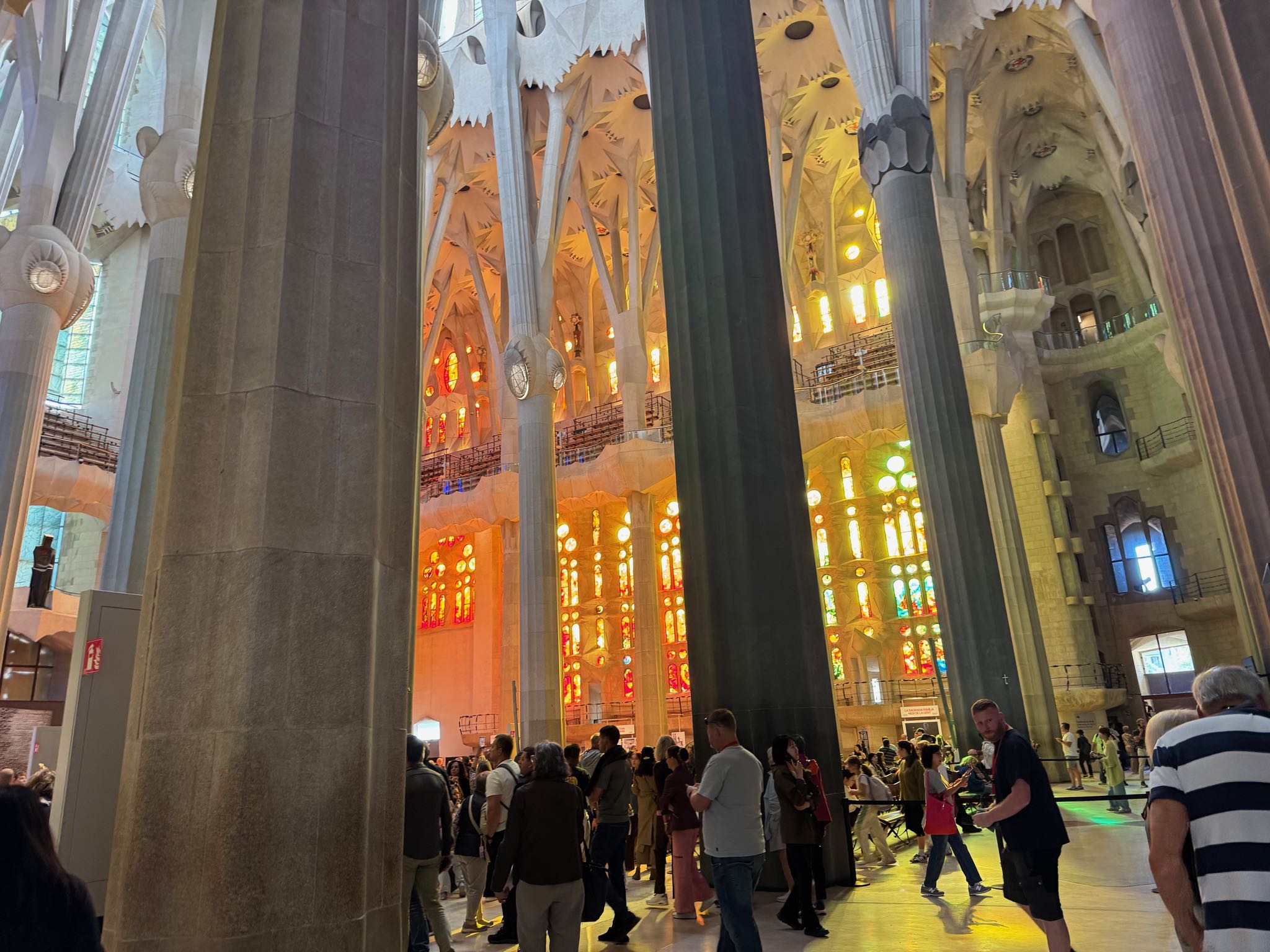
The columns are made of sandstone, basalt, granite and porphyry with concrete inside.
The columns here go to each of the Evangelists. These four load-bearing towers support the weight of the Jesus Christ tower.
This will be the future entrance to the church but it is under construction.
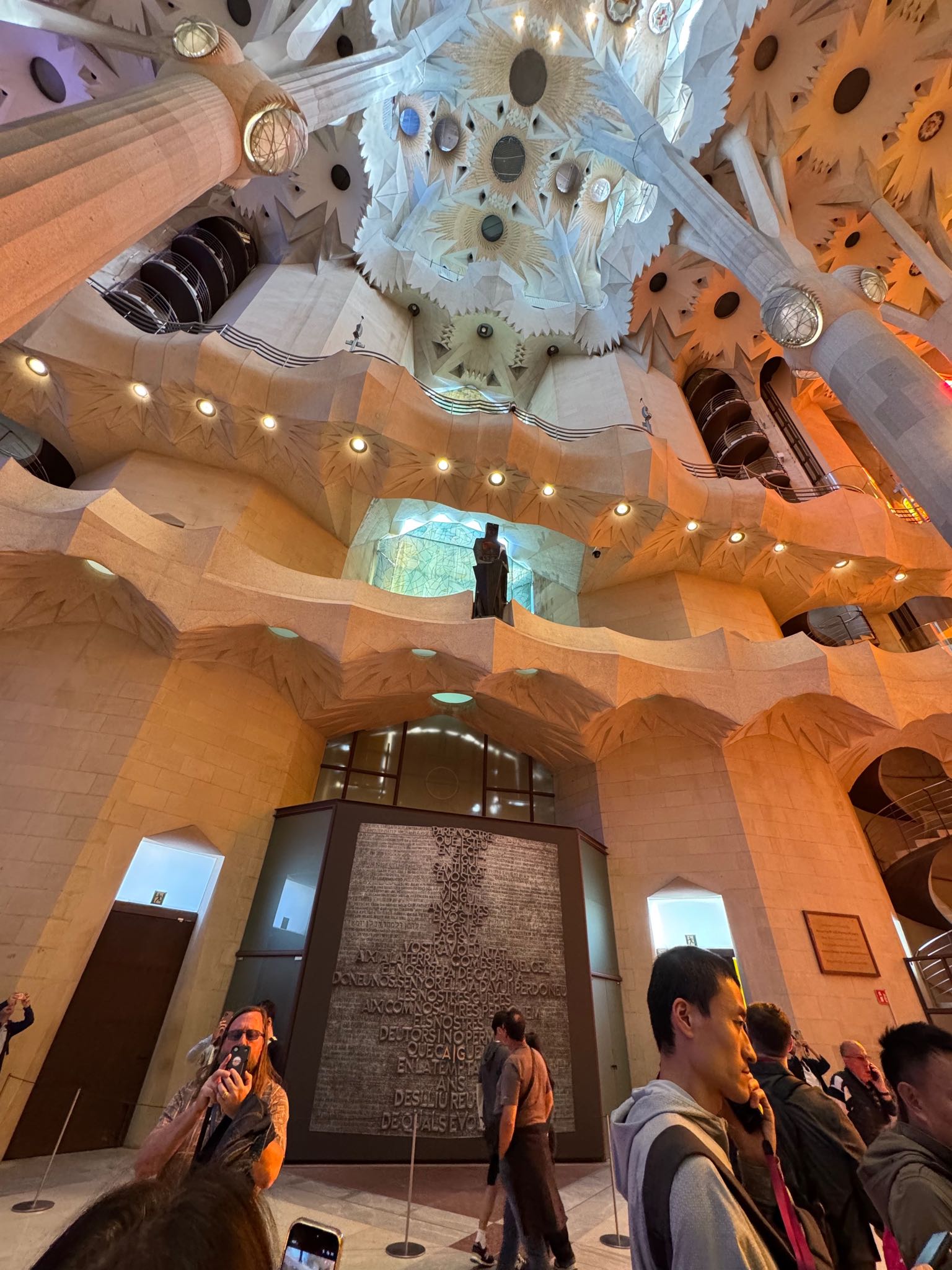
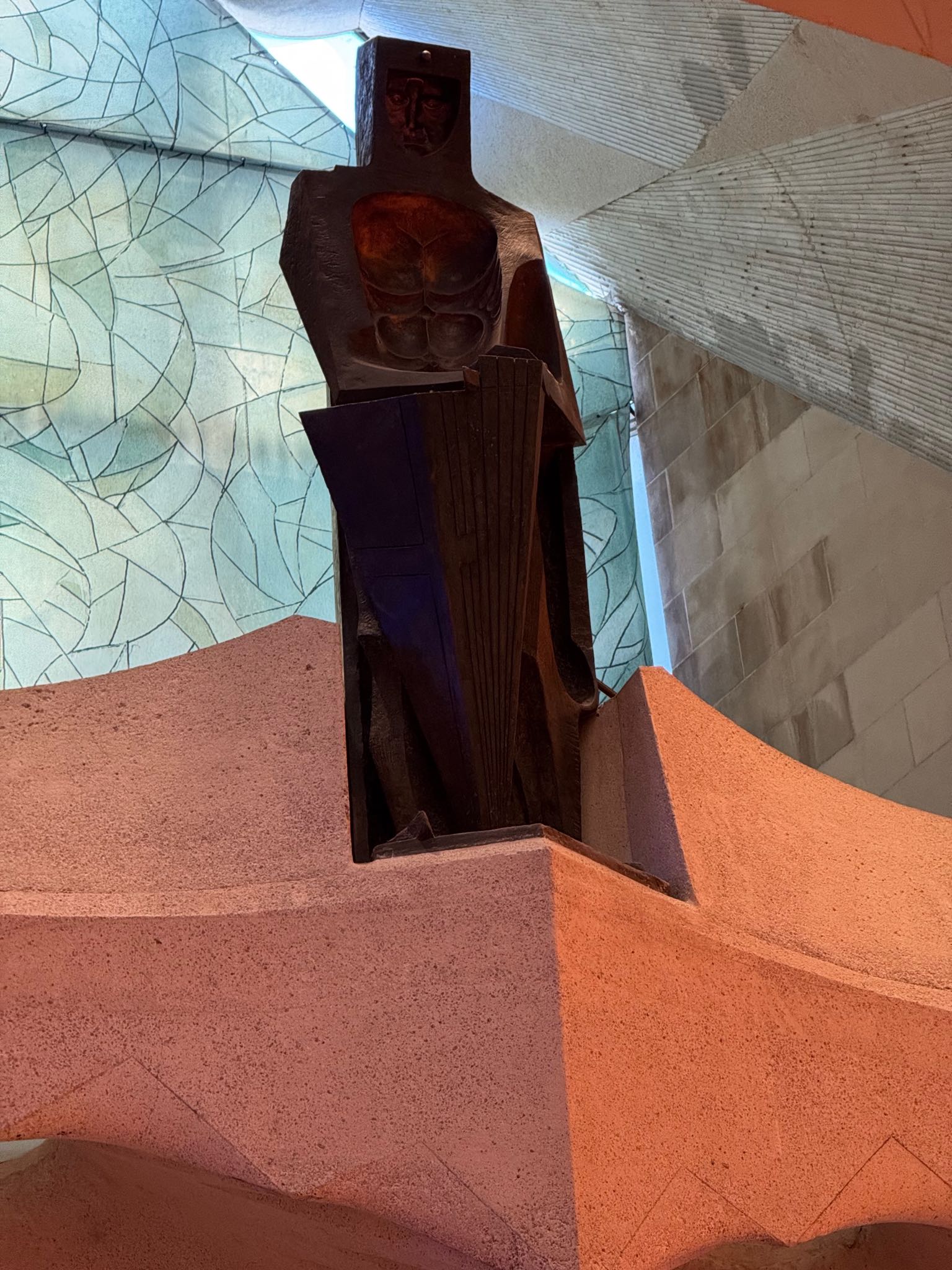
Knight representing St George at Catalonia.
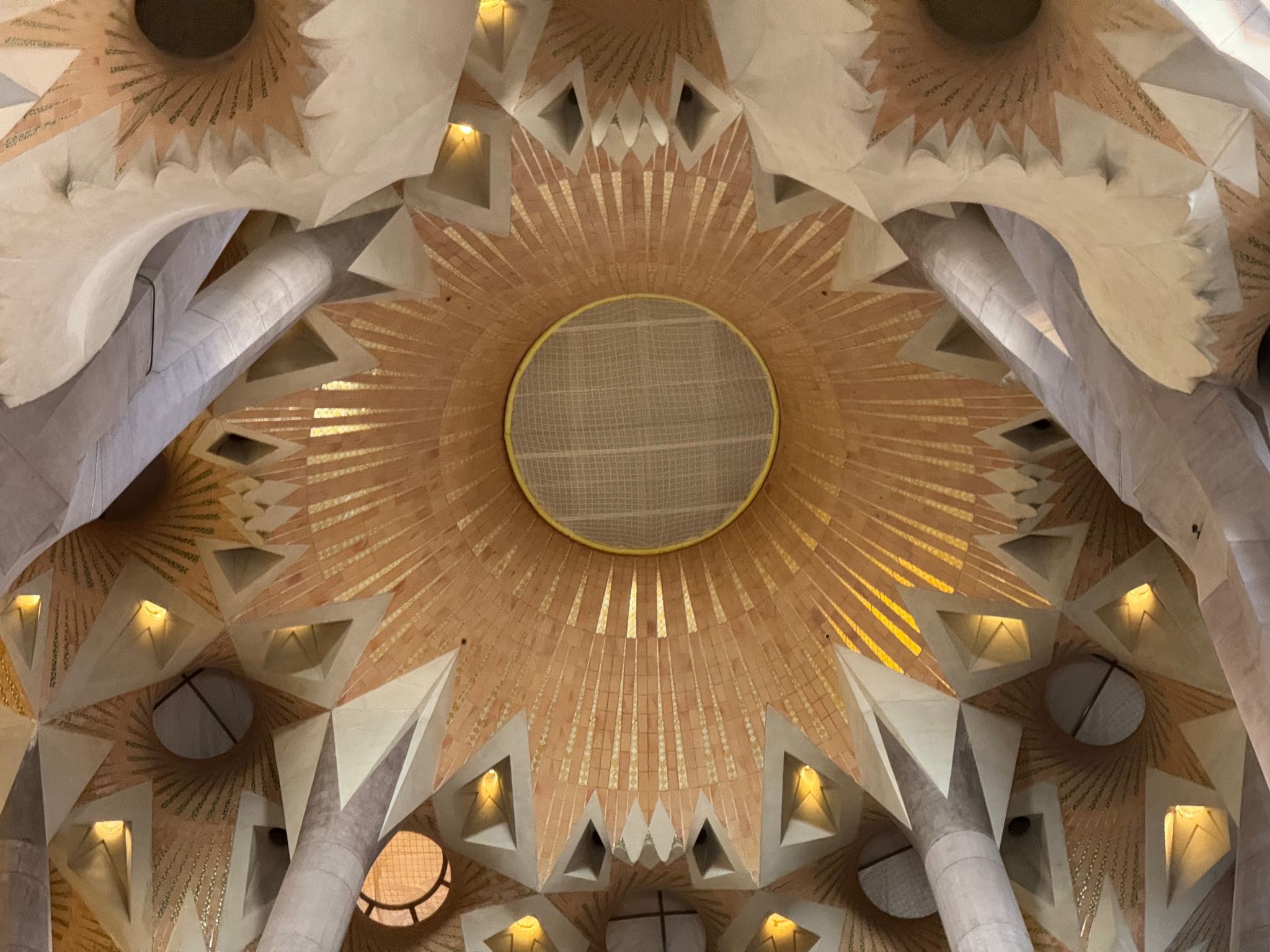
The ceiling represents the glory of heaven.
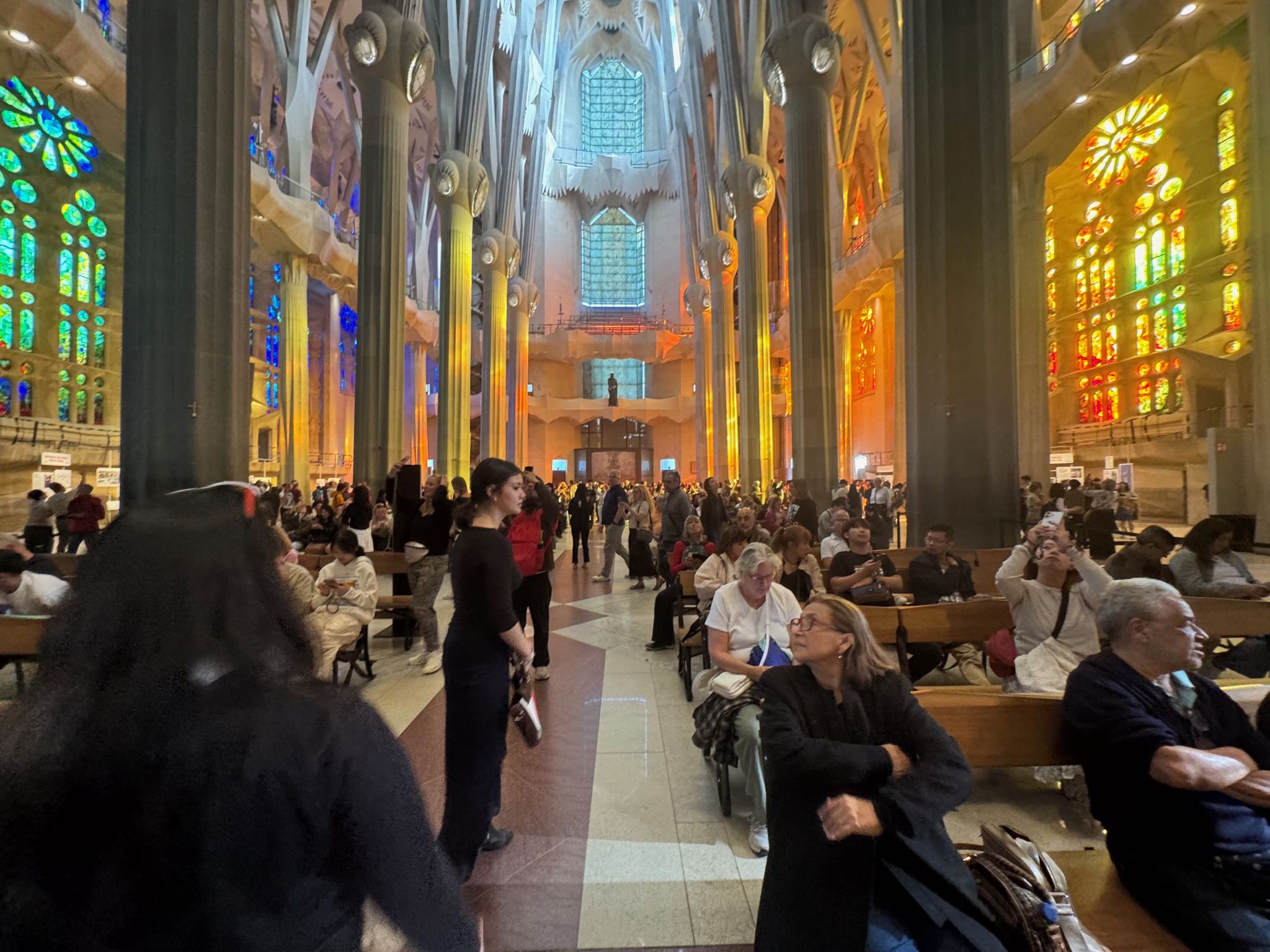
Blue and green on one side. Yellow and orange represents the end of the day and the end of life.
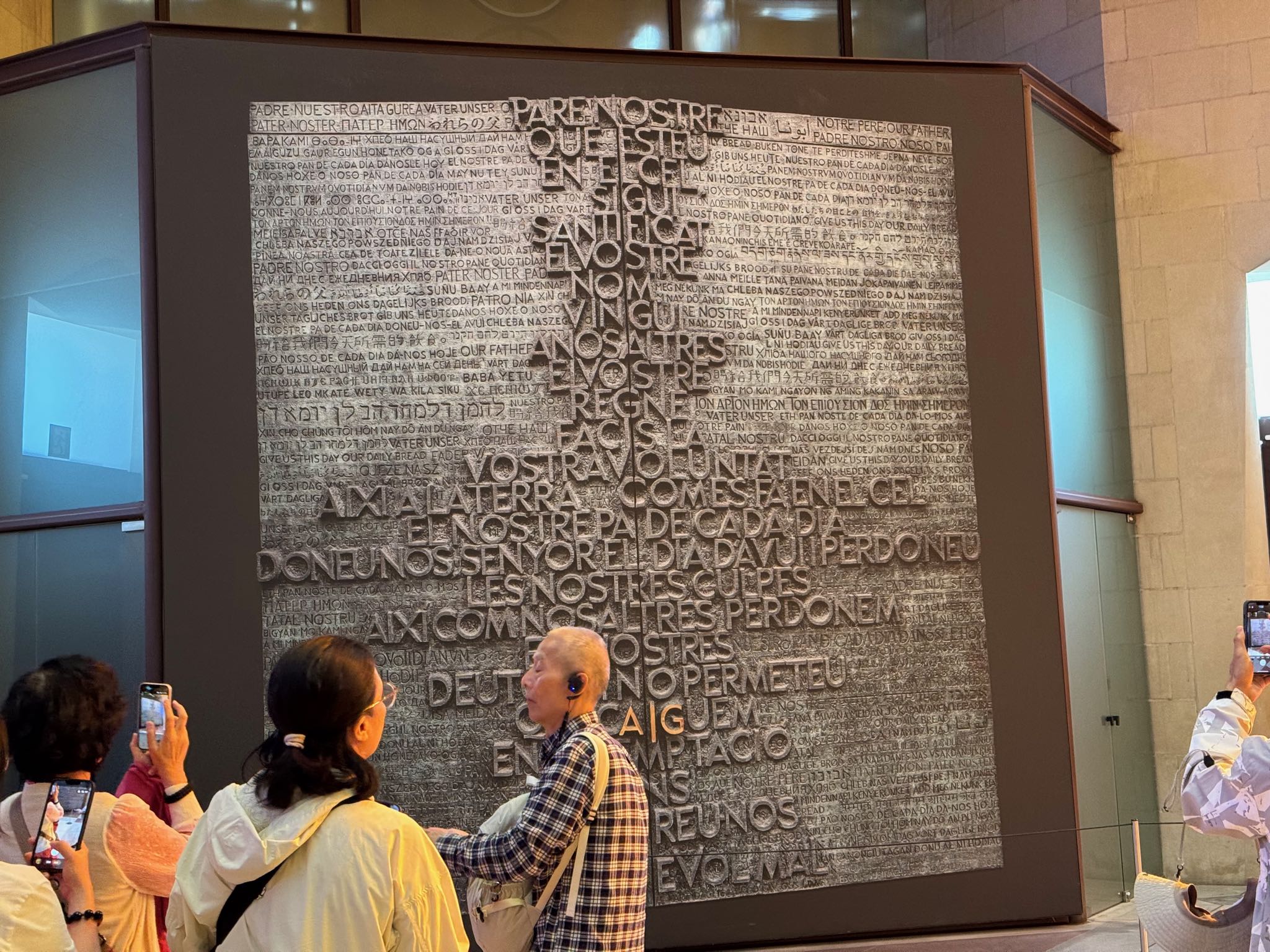
The doors are covered with all different languages so all different people from around the world can feel welcome.
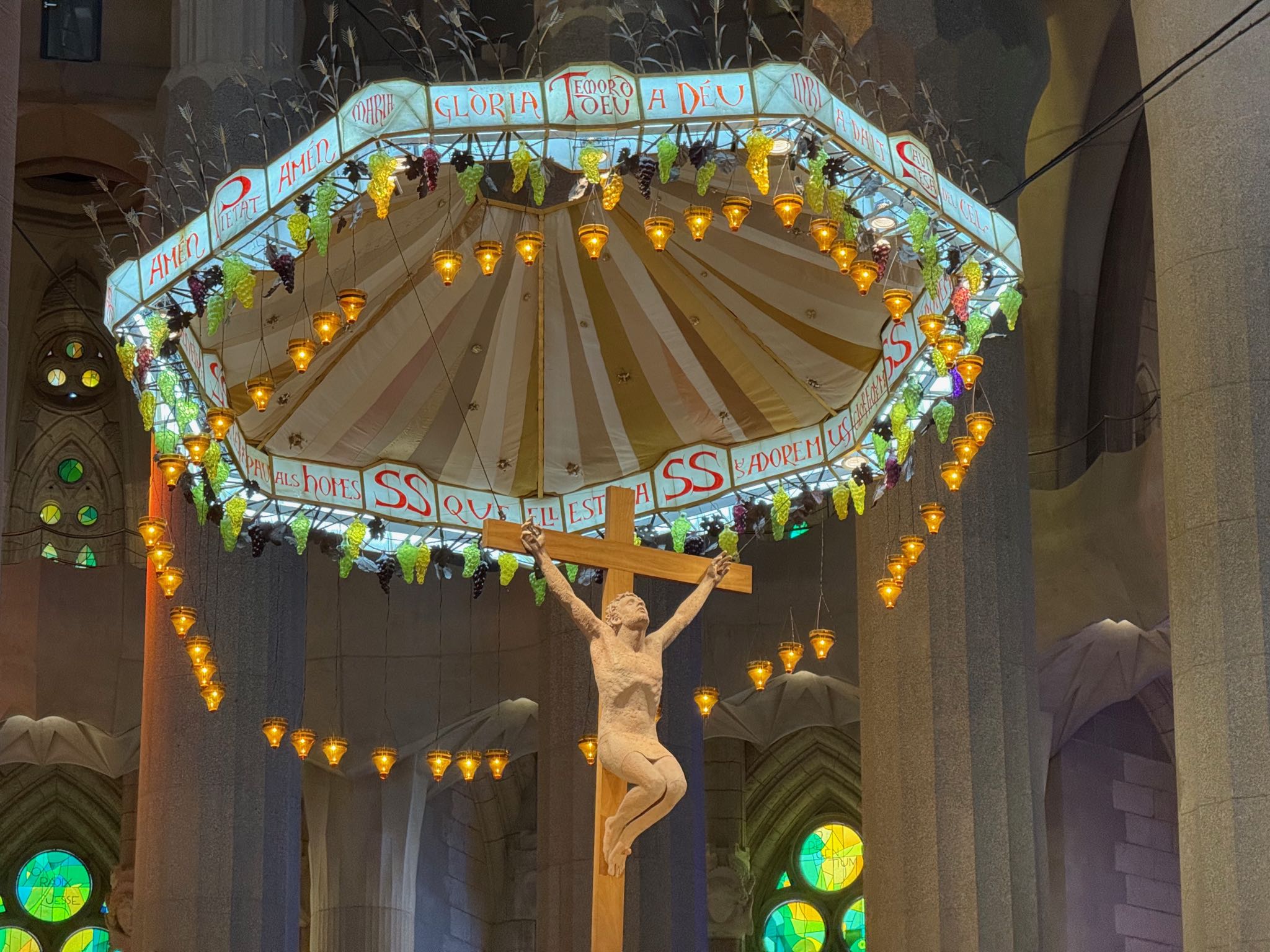
50 lamps representing Pentecost and the bread and blood of Jesus.
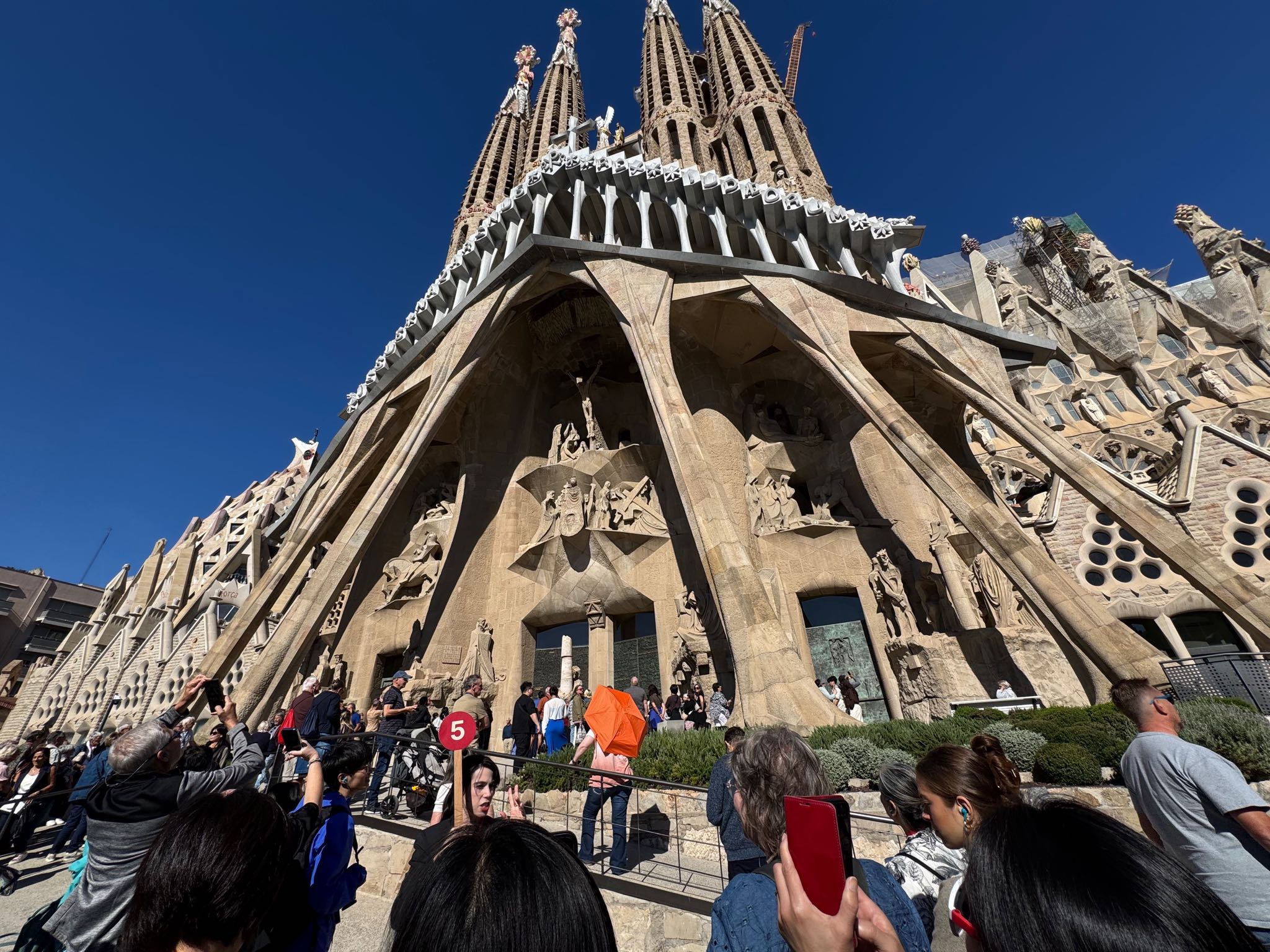
Next facade – the Passion (Crucifixion). The theme here is sadness, and then hope. (Fisheye lens to get it all in – it’s a bit wonky to look at.)
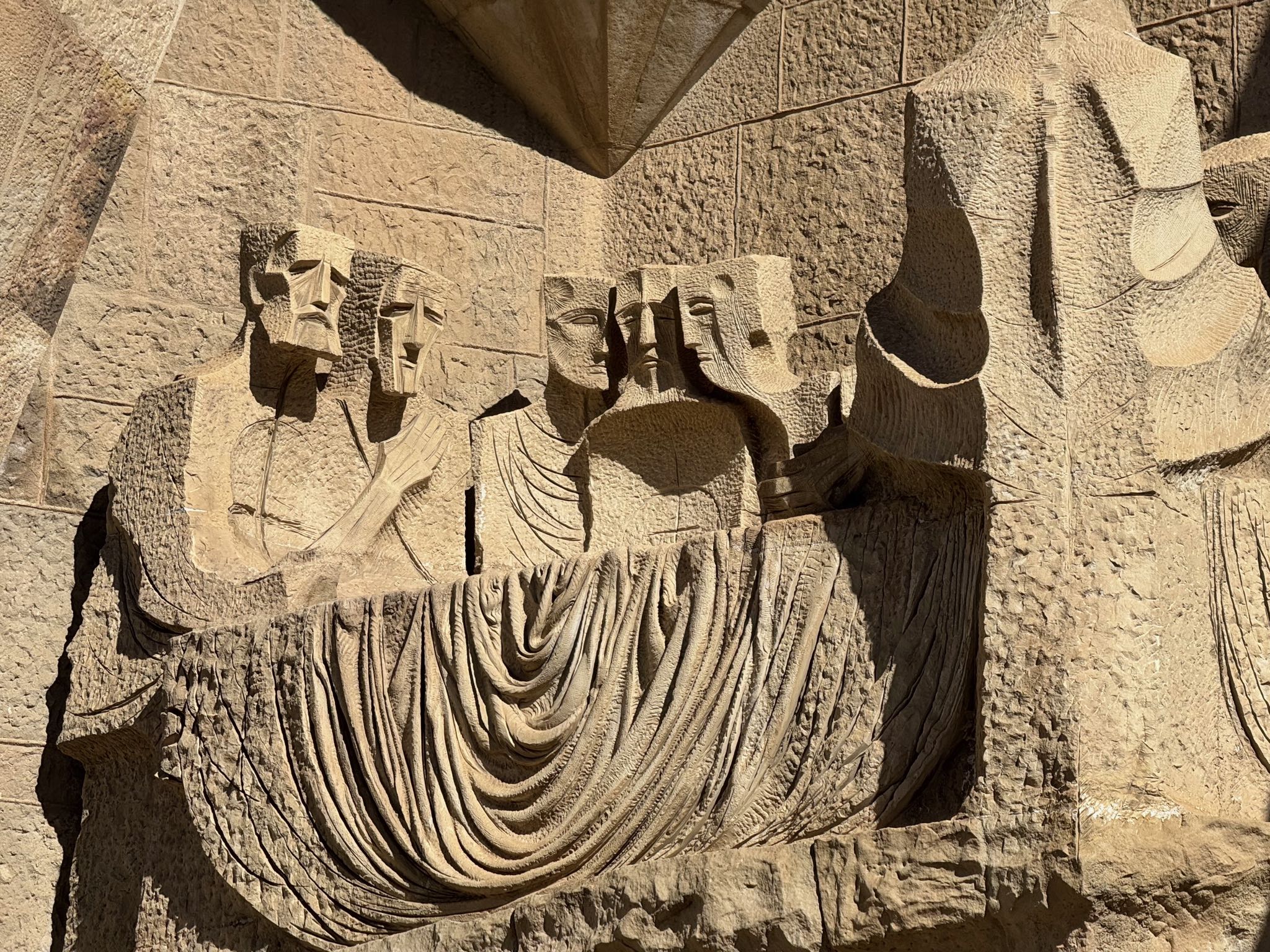
Last supper in a corner.
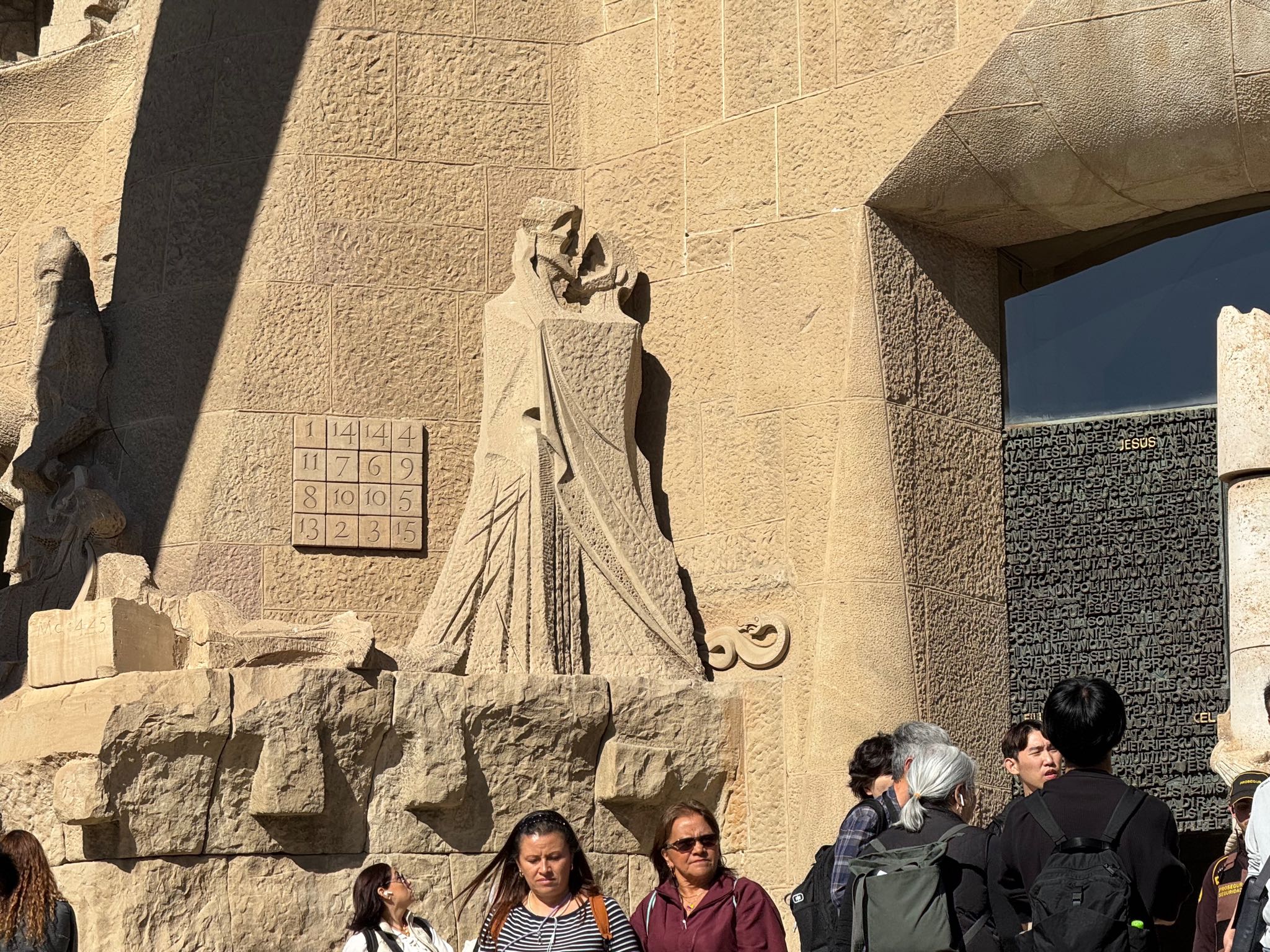
This is the kiss of Judas. With it we see a snake, and a matrix that adds up to 33 (the age of Jesus) if you sum it different ways.
This is the arrest of Jesus.
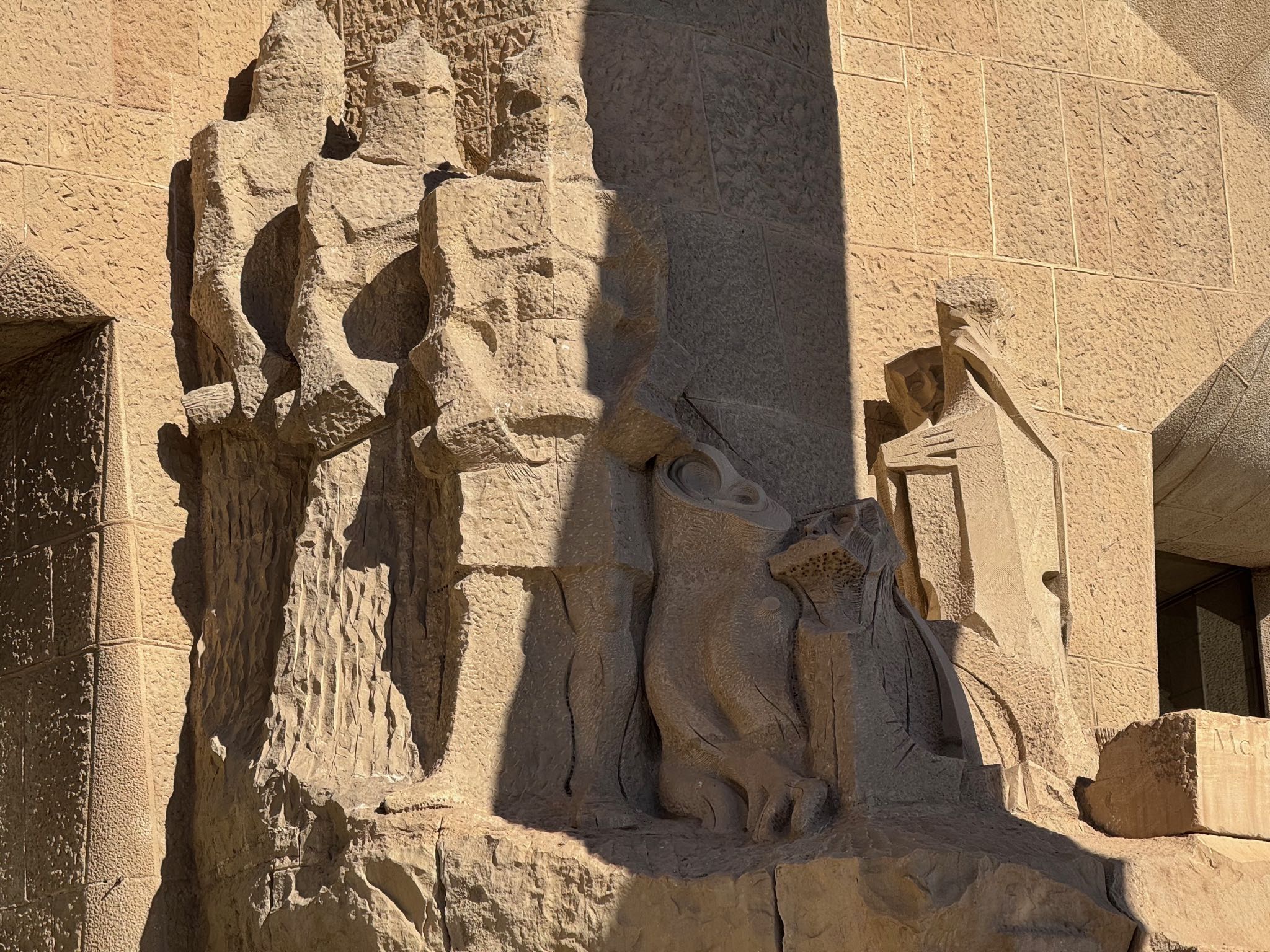
This is Jesus before Pontius Pilot. We see the Roman column, and Pilot washing his hands. The helmets of the Roman soldiers look like those on top of Gaudi’s buildings.
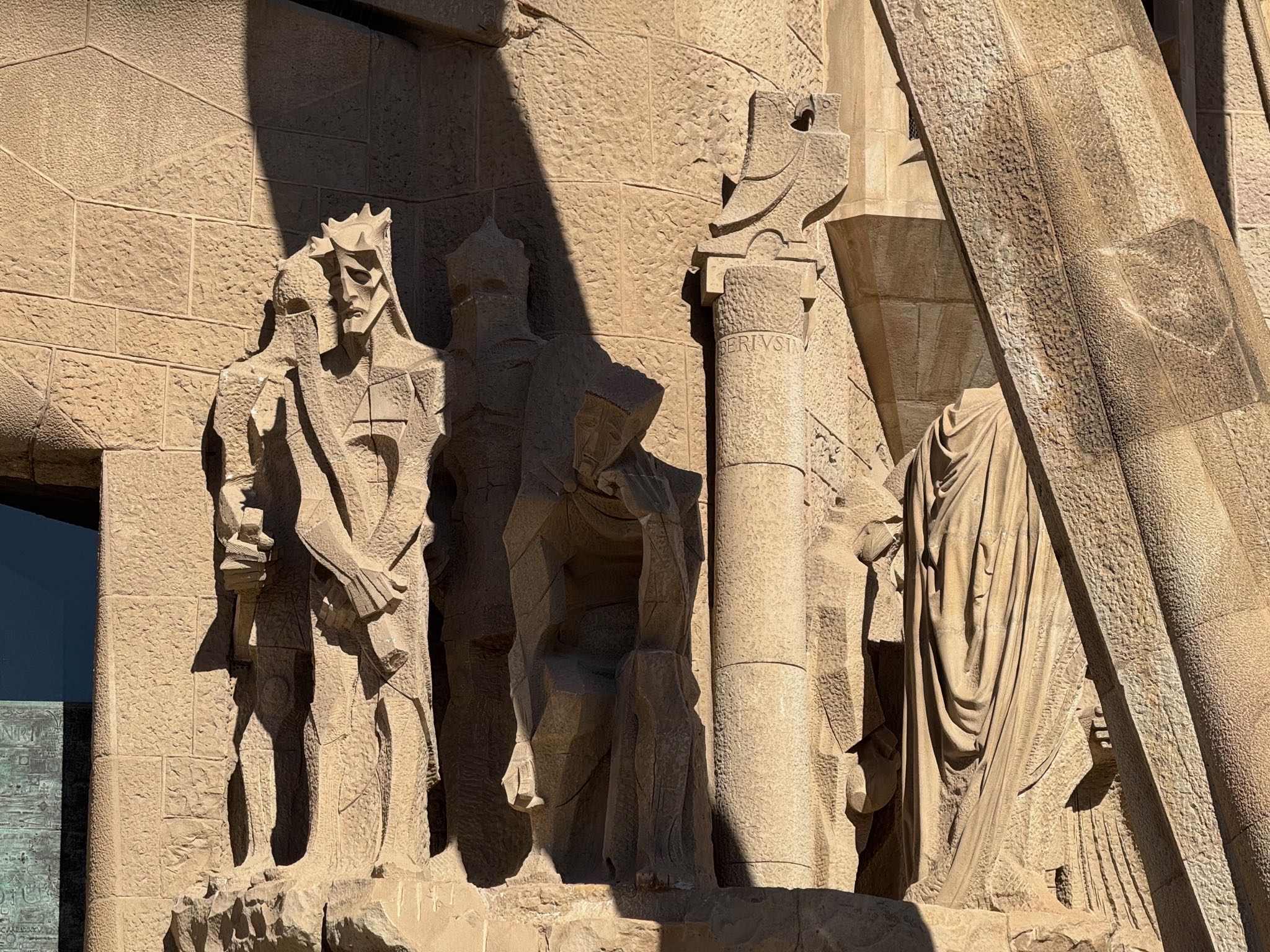
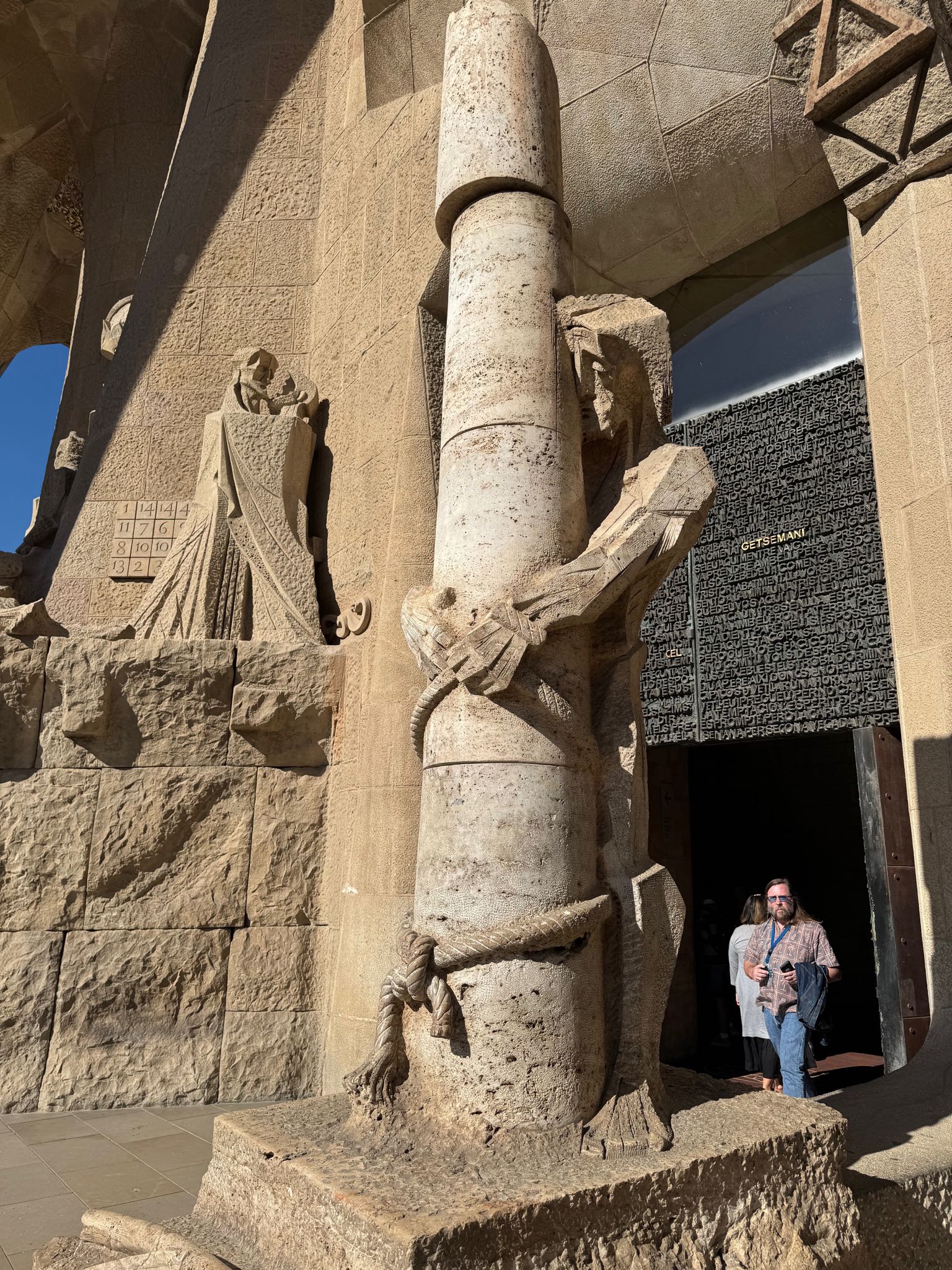
This is Jesus being flogged.
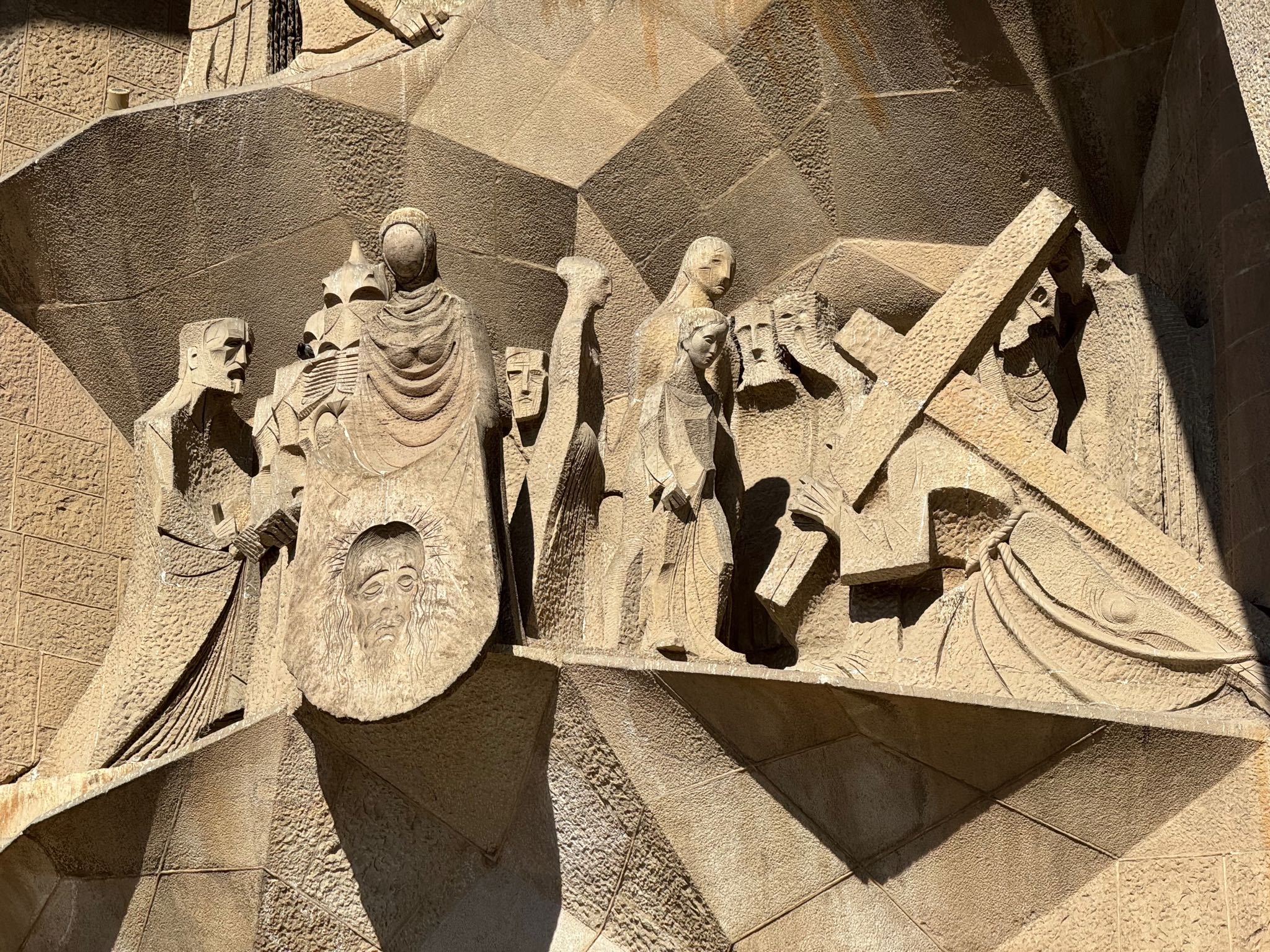
This is Jesus carrying the cross.
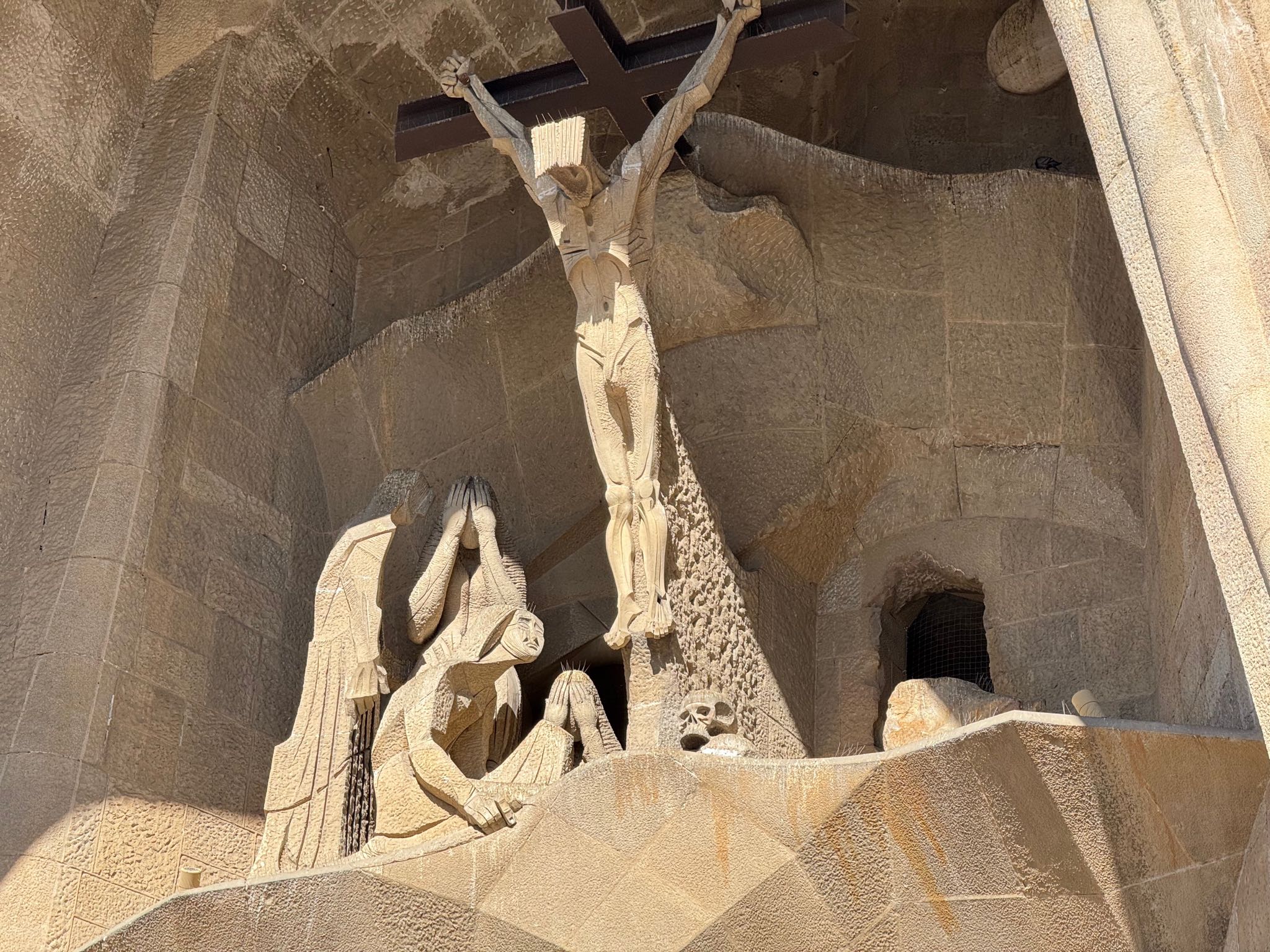
This is Jesus hanging on the cross (at the top of the facade.)
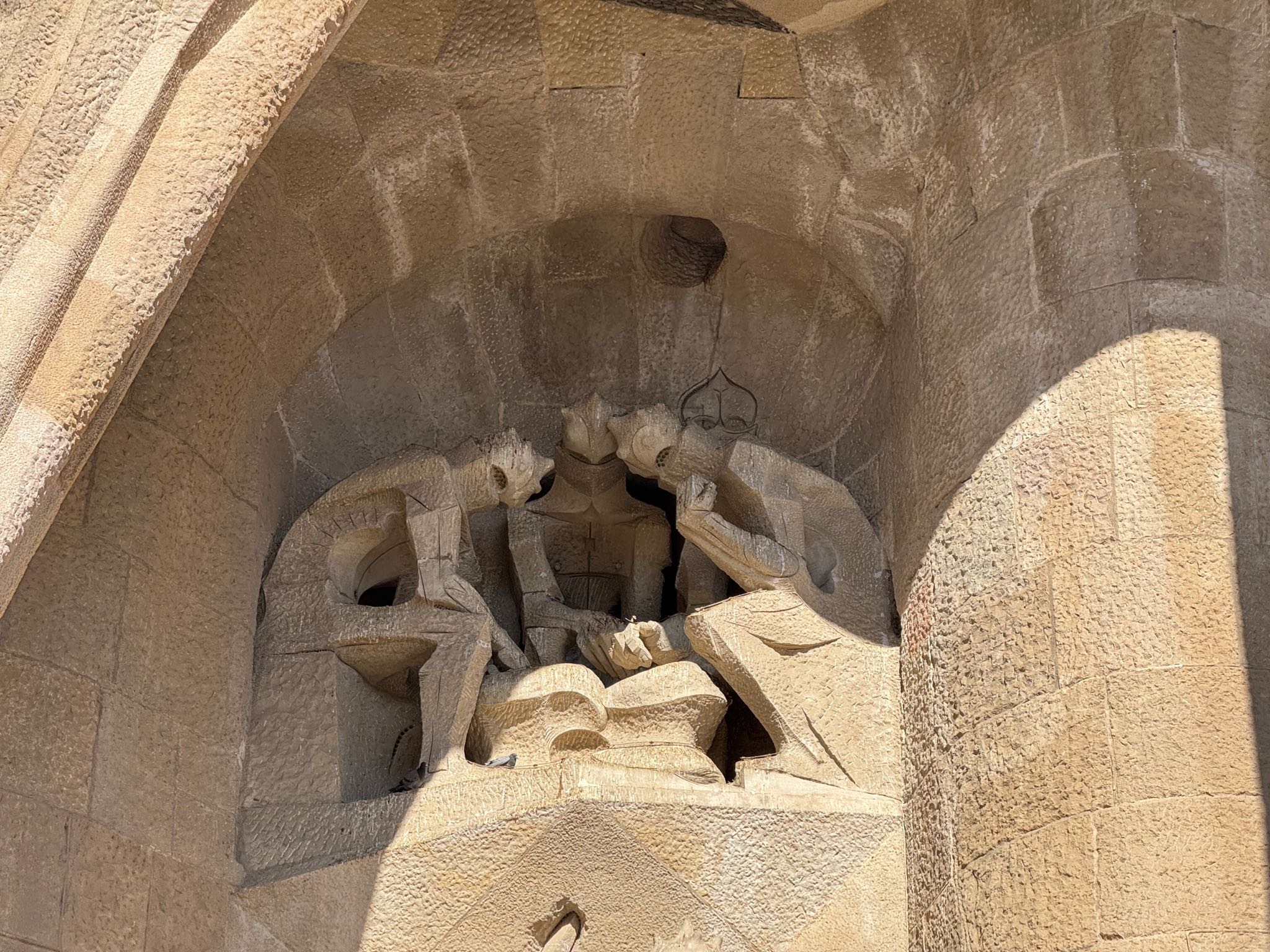
The Roman guards throwing dice over his clothes. Their masked faces indicate indifference to the scene.
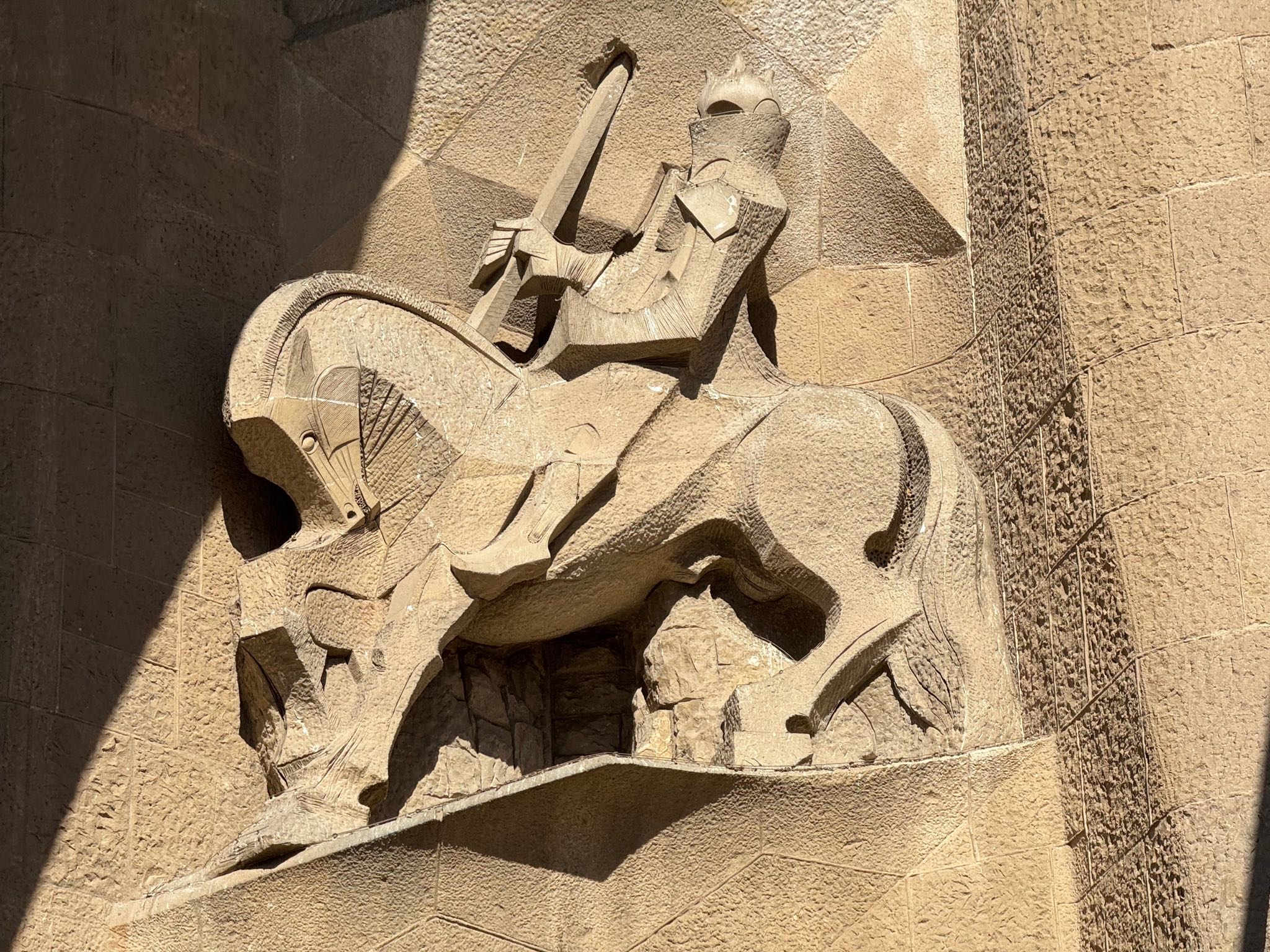
This is the Roman Centurion who pierced Jesus’ side to confirm he was dead.
This is Jesus being taken down by Nicodemus.
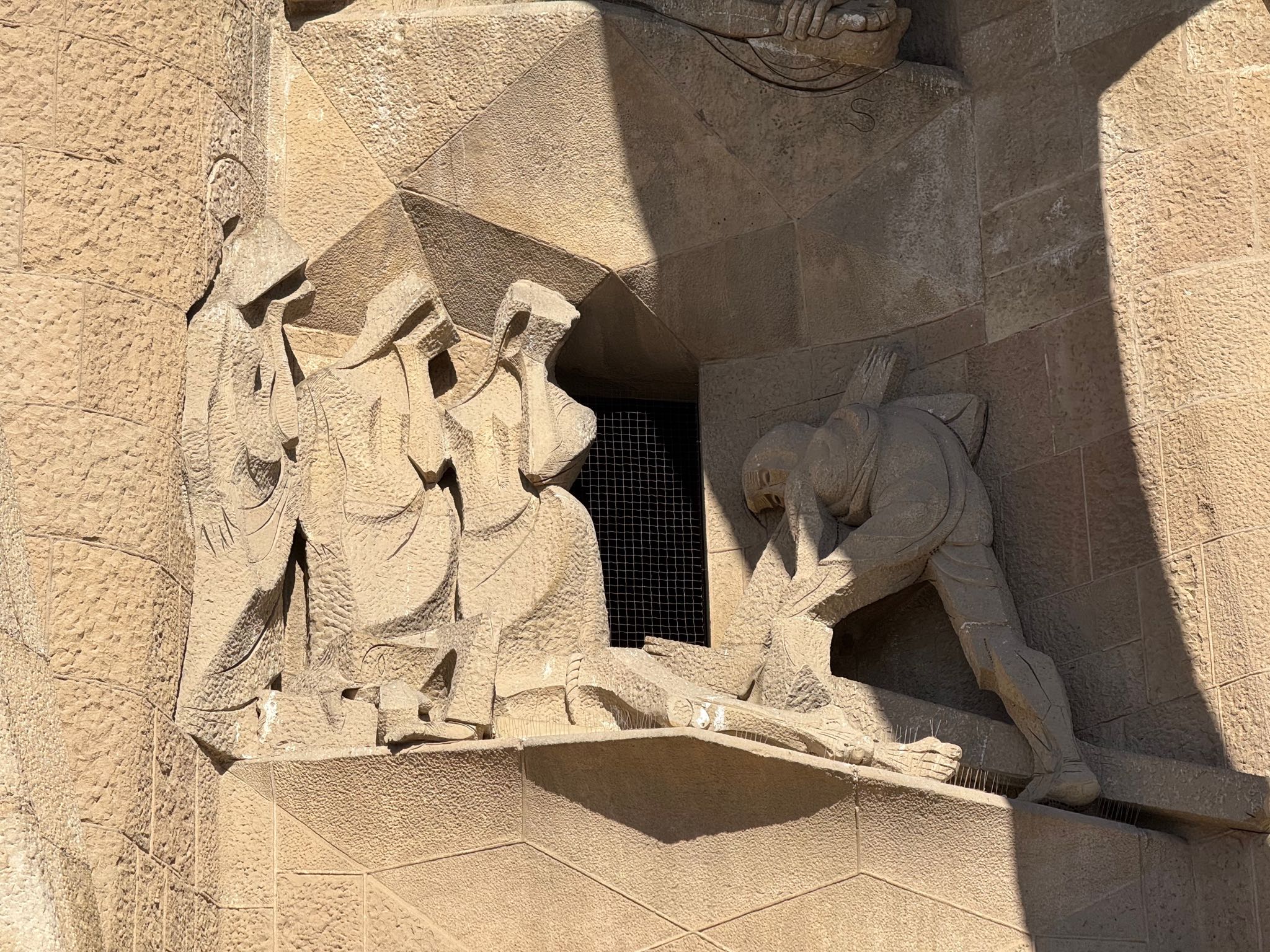
This is Jesus being entombed by Nicodemus.
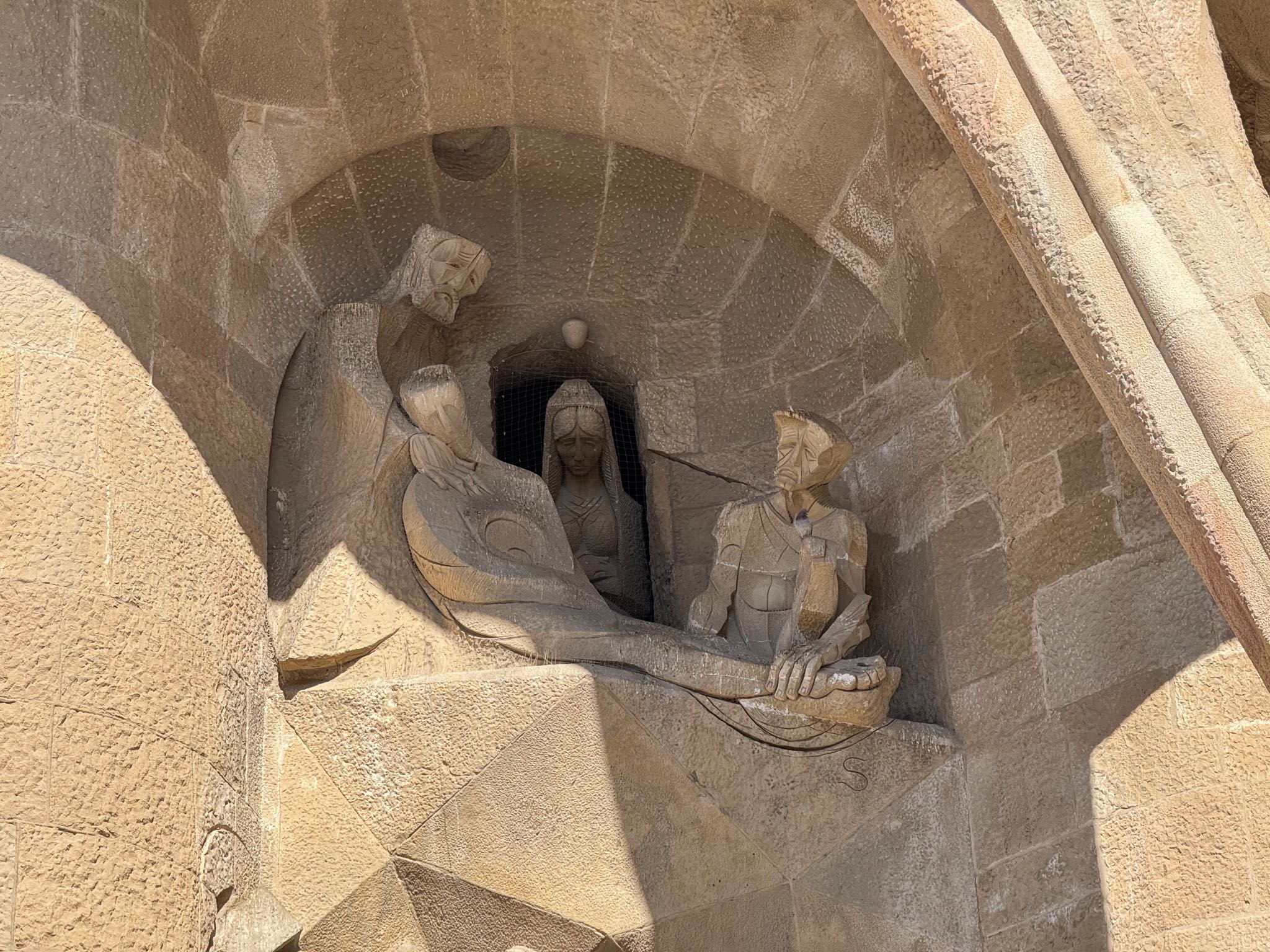
As you walk in – you lookup to see Jesus looking at you on the cross.
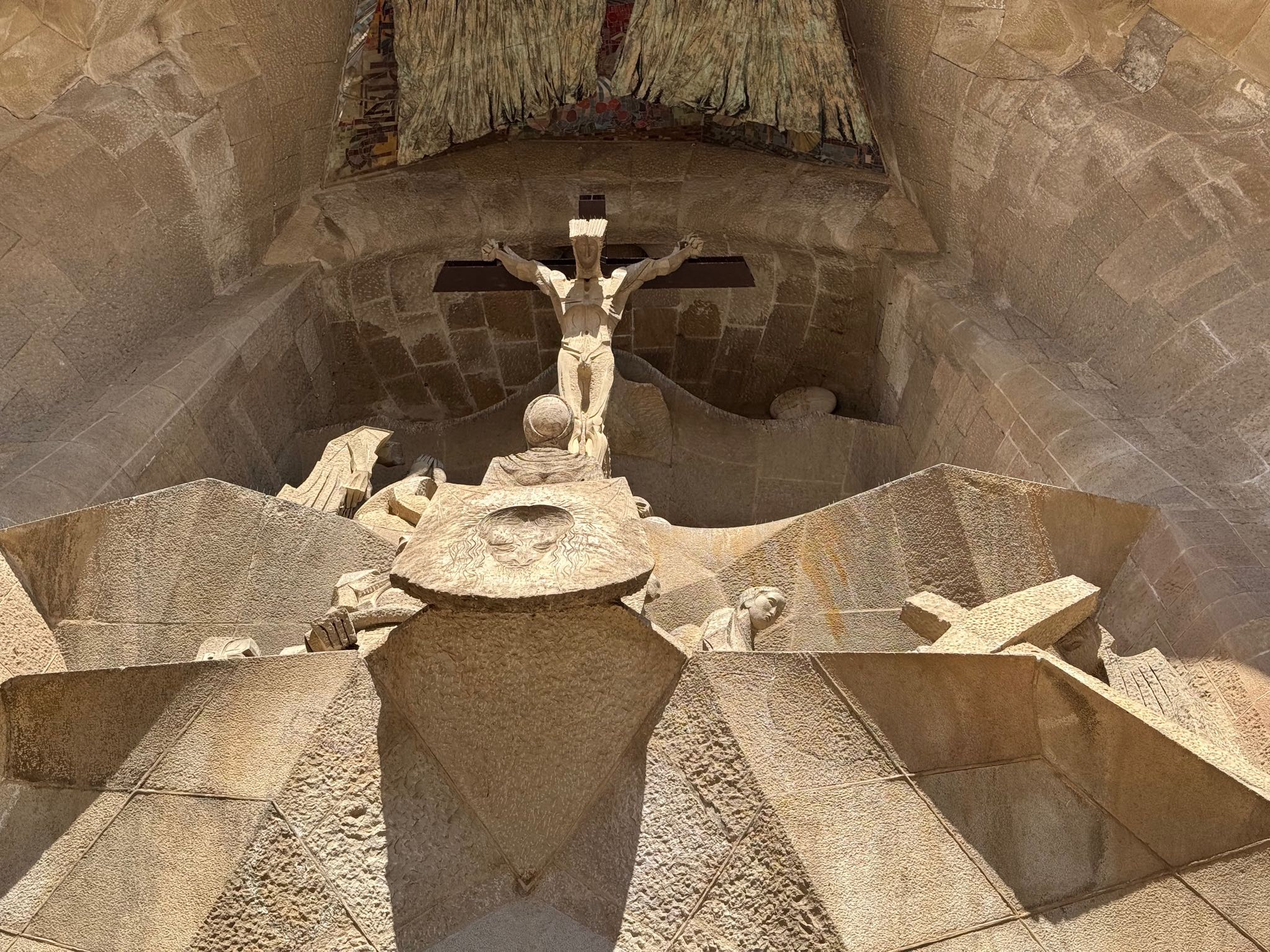
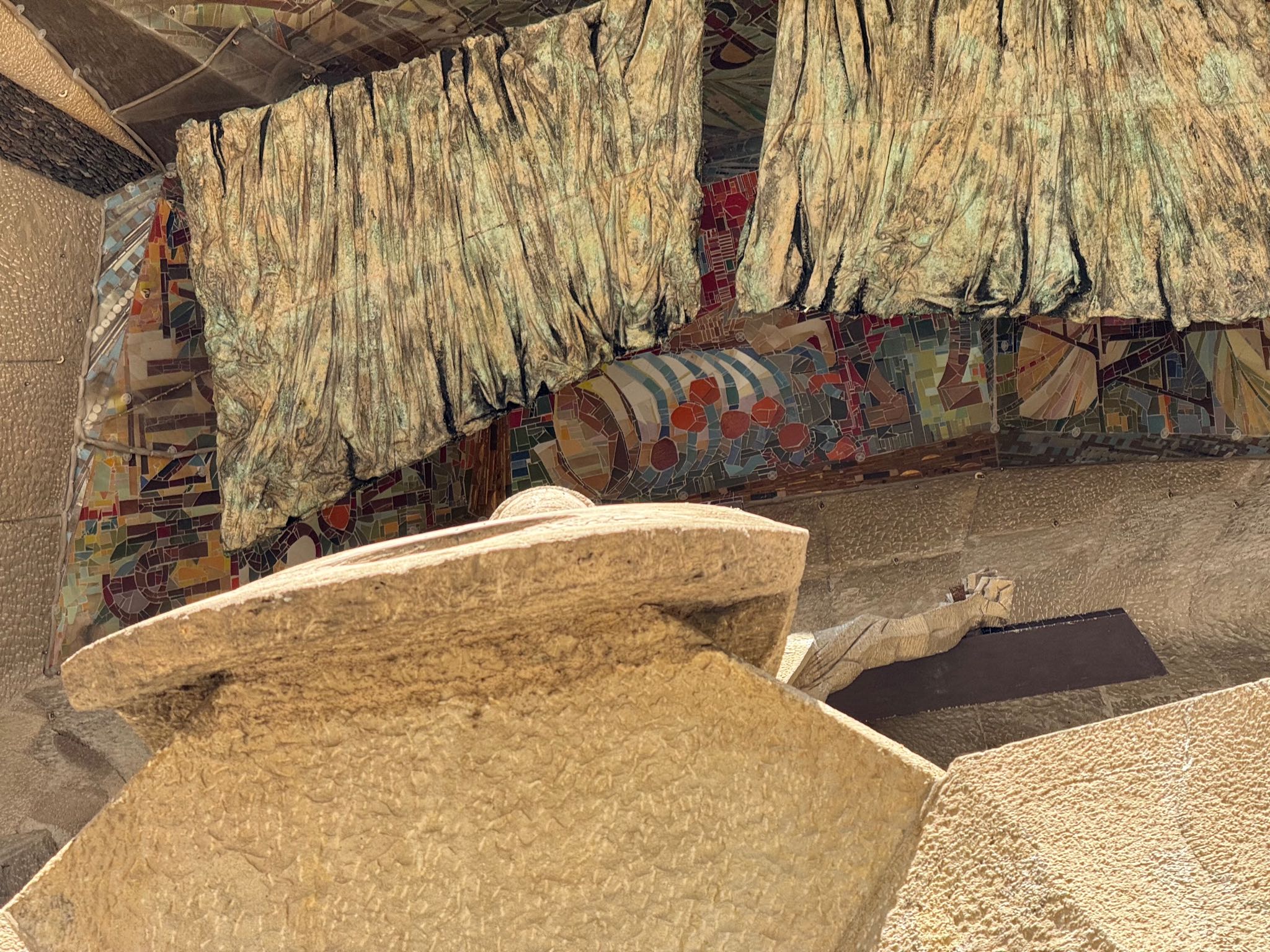
If you look further up – you catch a glimpse of the heavens.
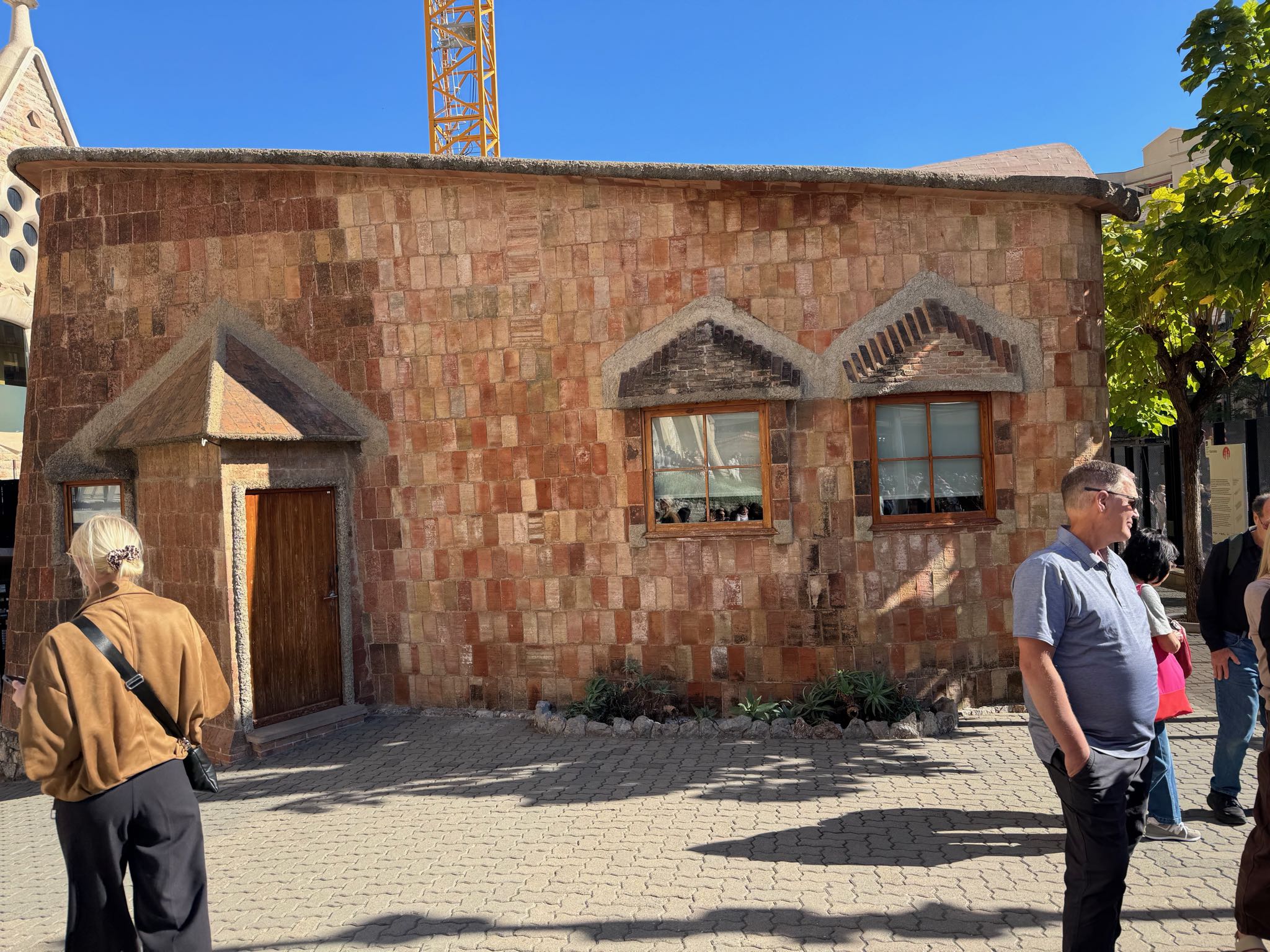
This was the childcare centre for the workers on site – now an entrance to the museum underneath.
The afternoon light coming in was stunning.
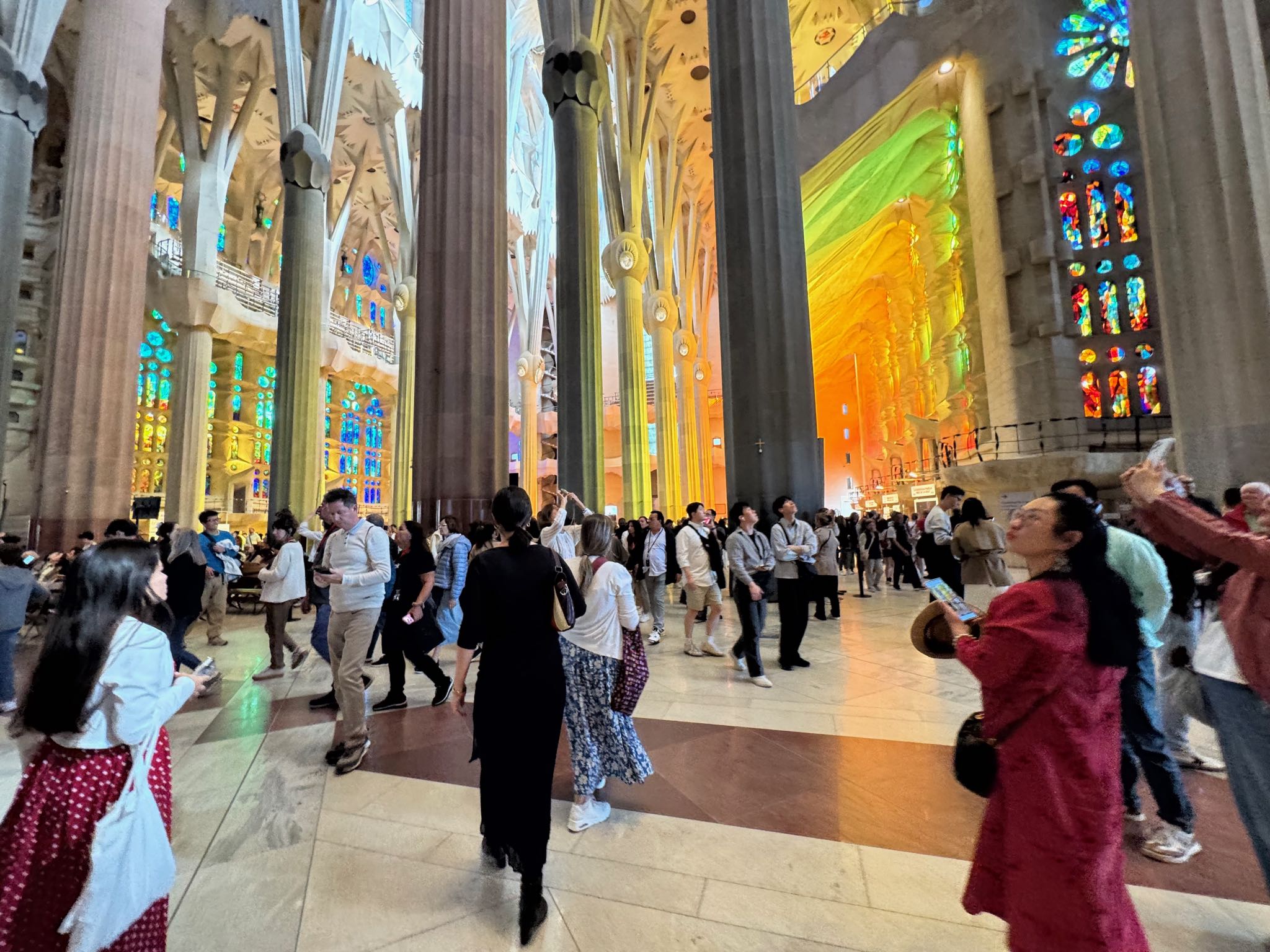
We go up the lifts into the towers.
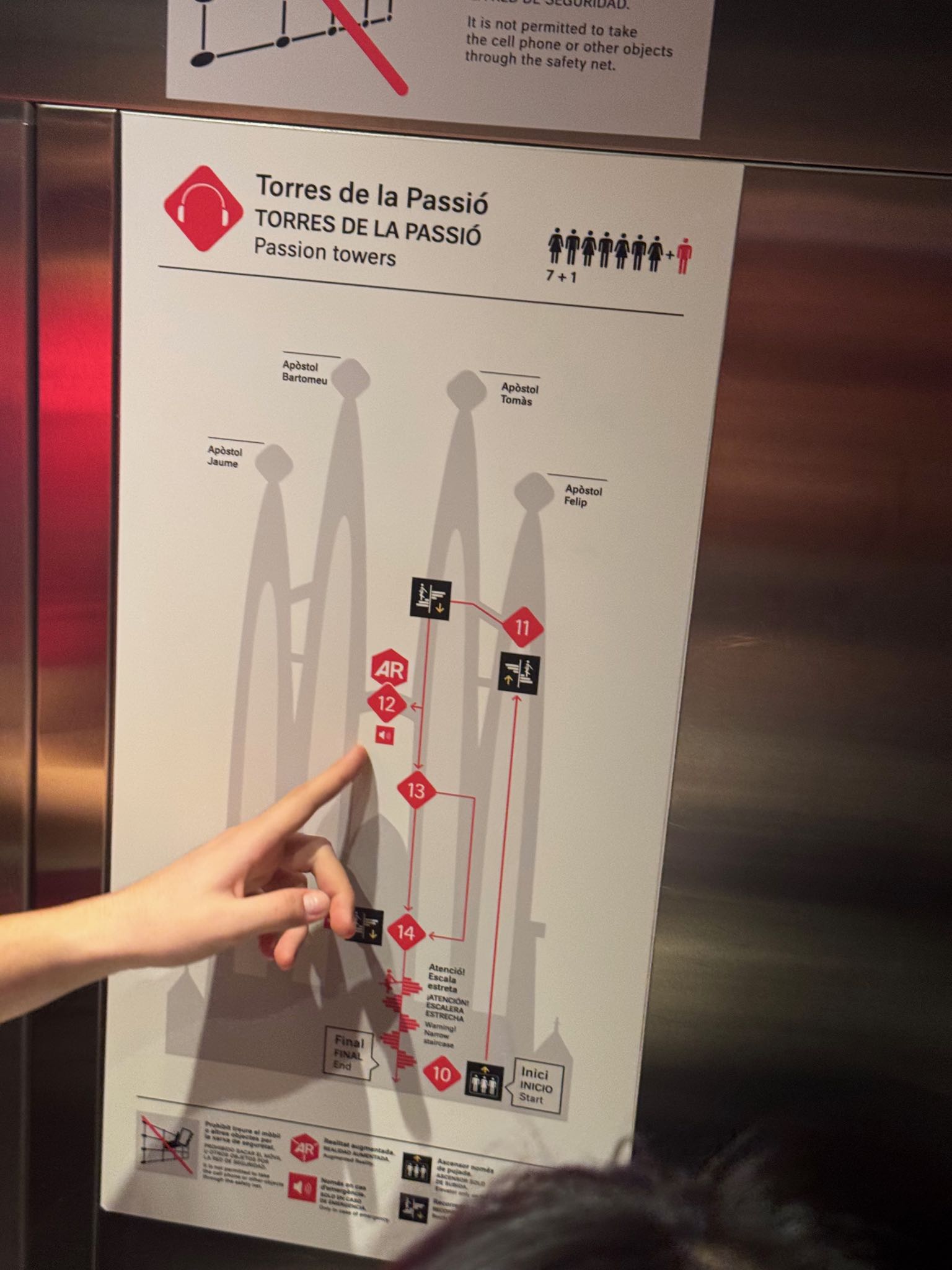
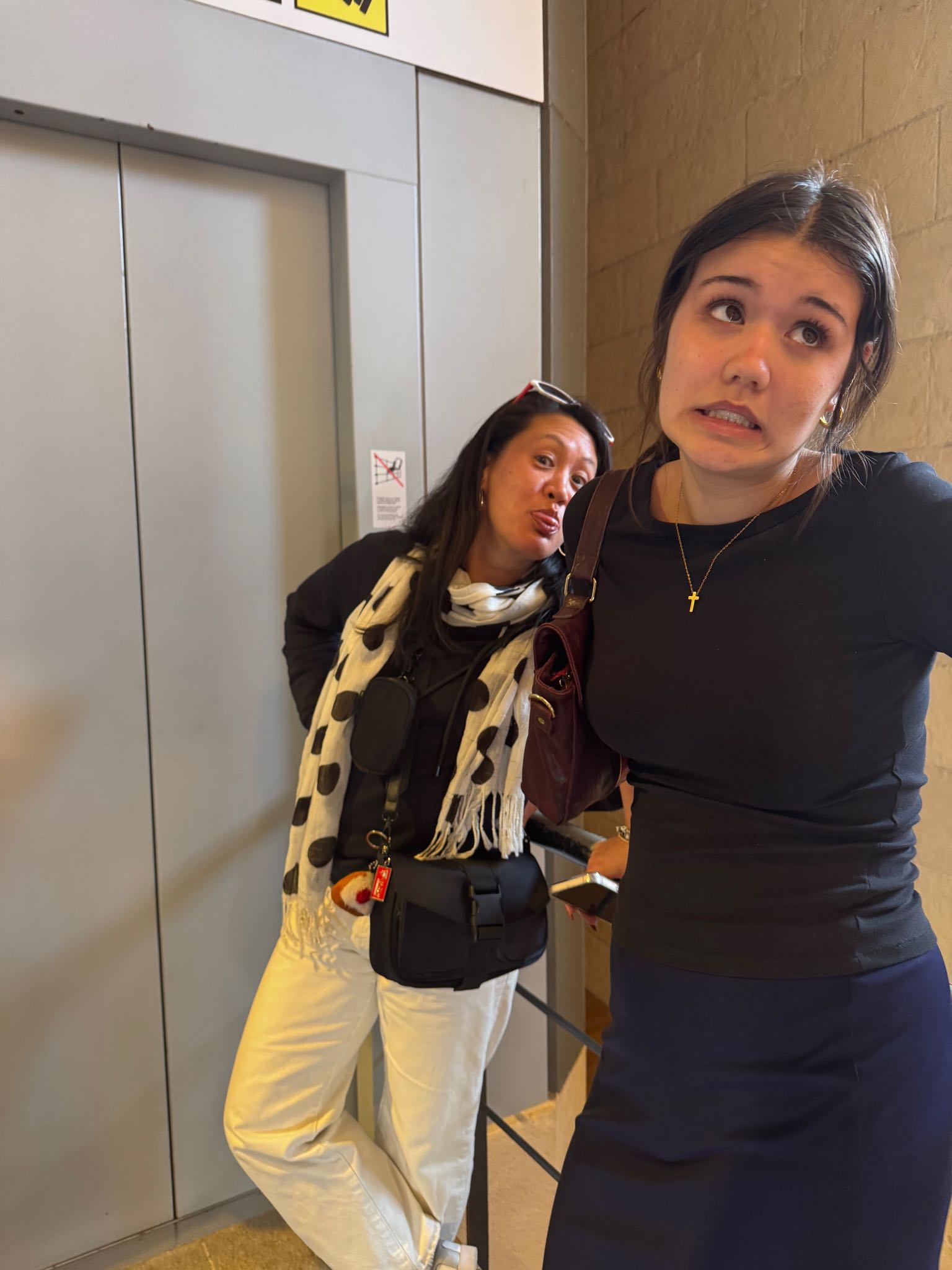
Waiting for the lift takes a while.
Then we walk up some stairs:
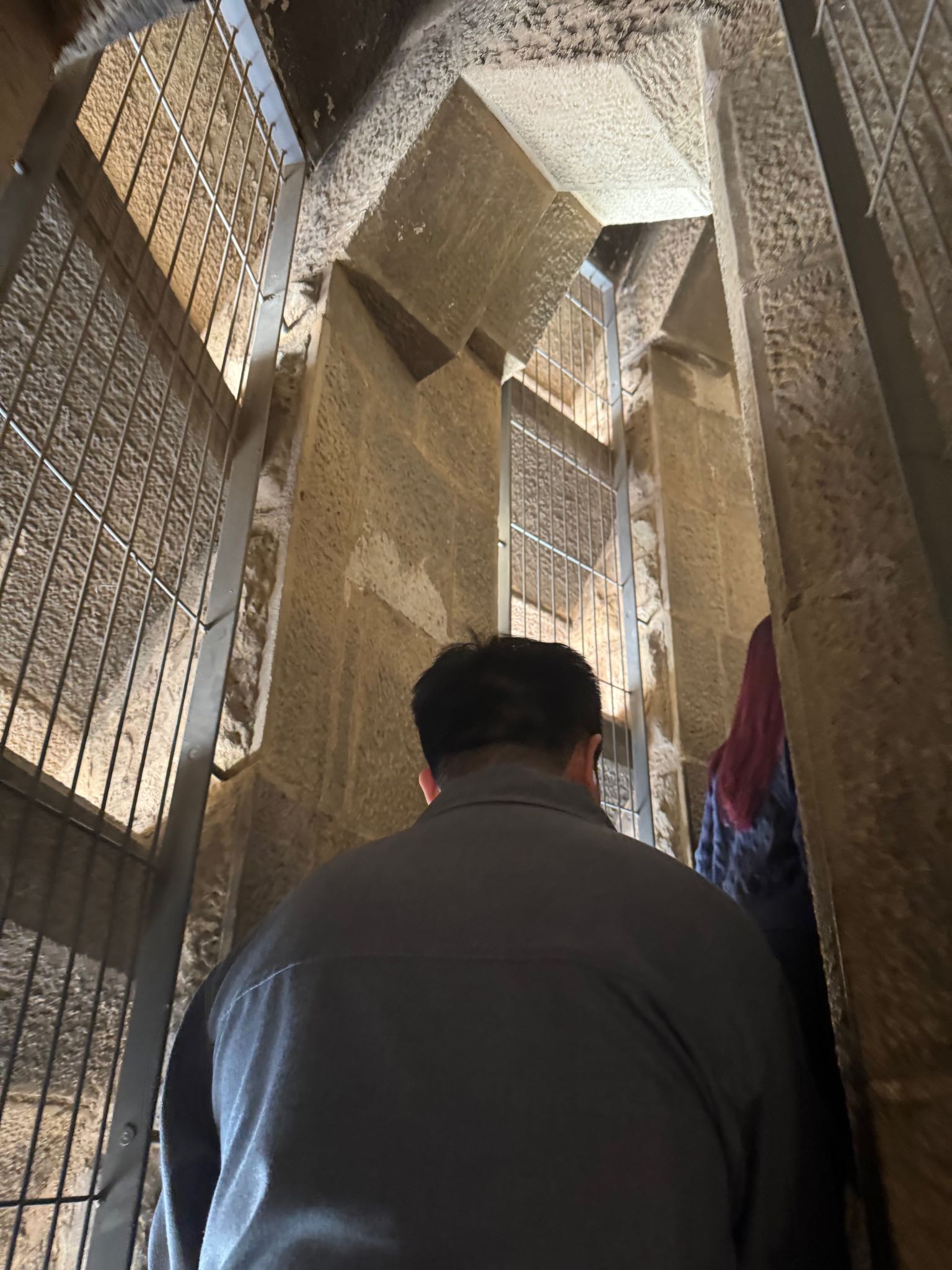
We reach a tower.
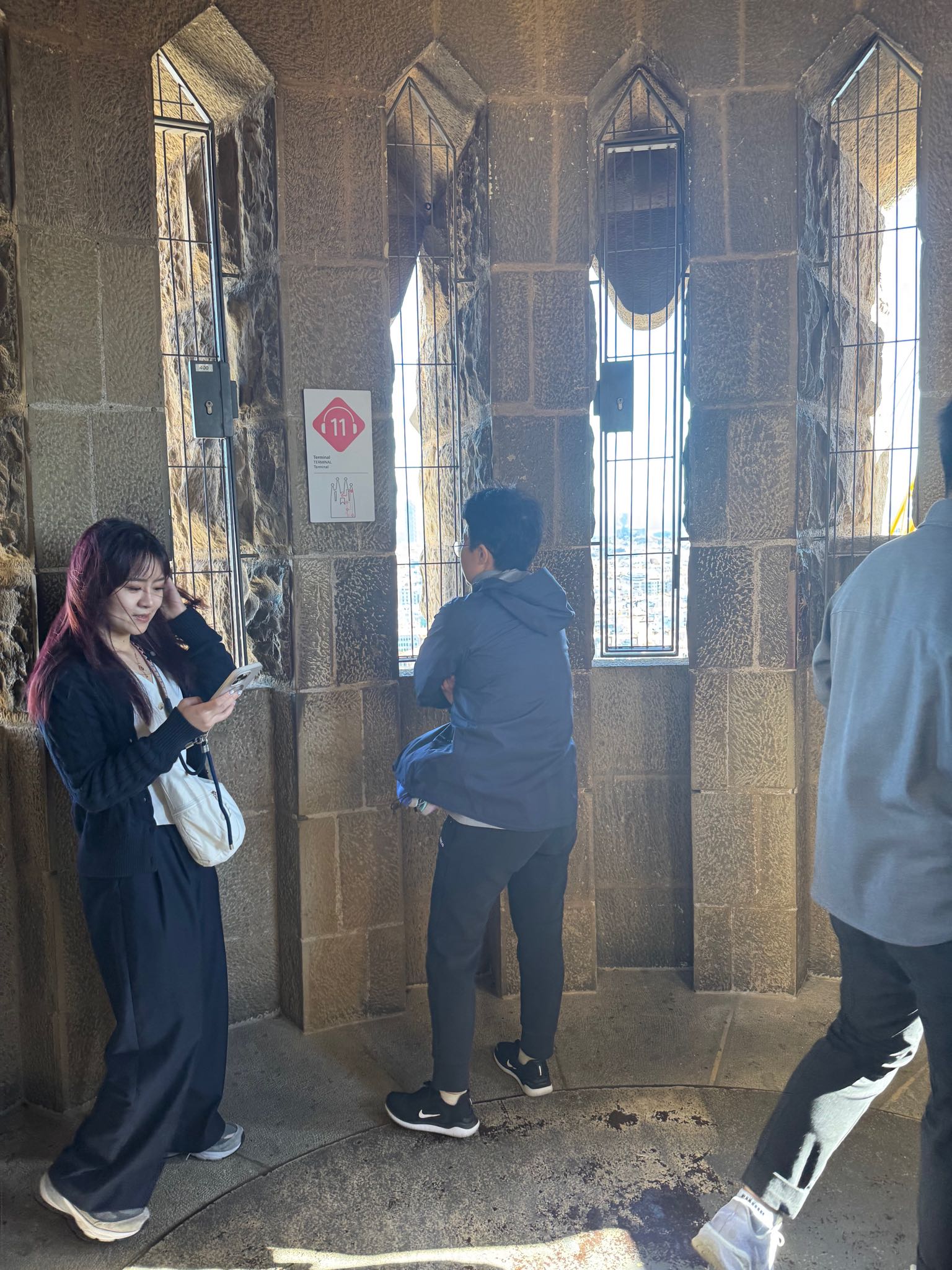
We go onto a balcony bridge of one of the towers.
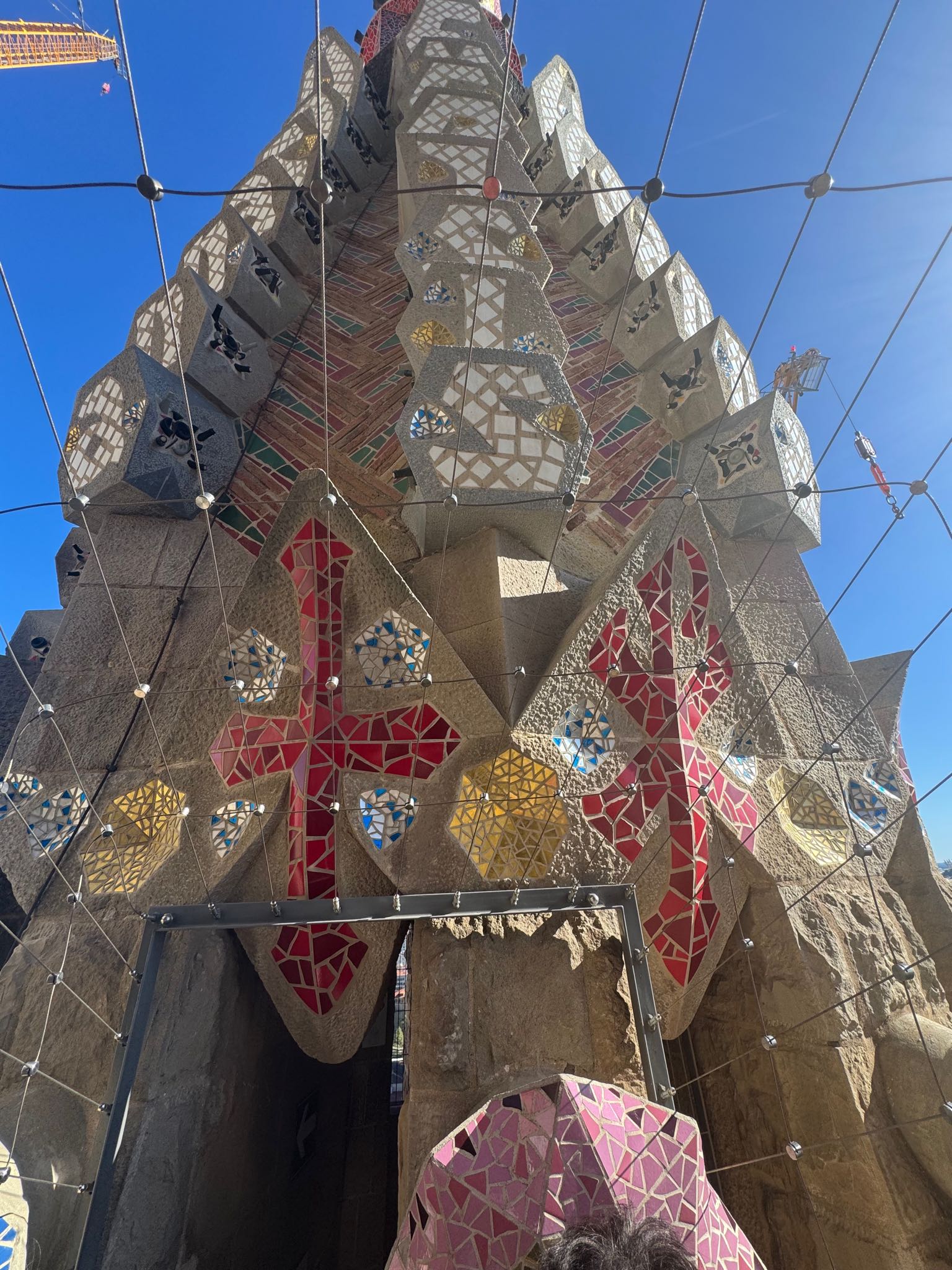
We get a view of the construction of the rest of the building.
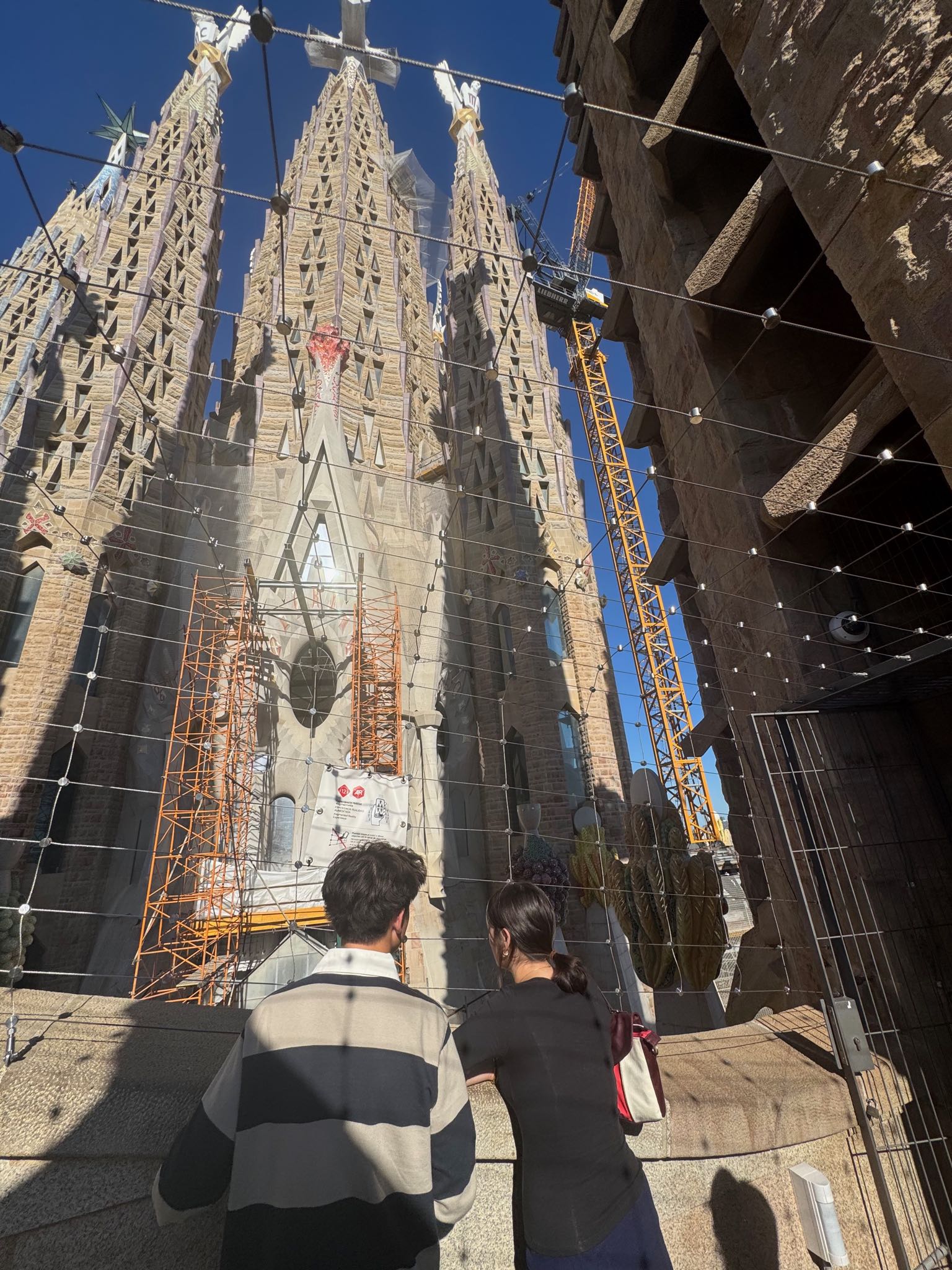
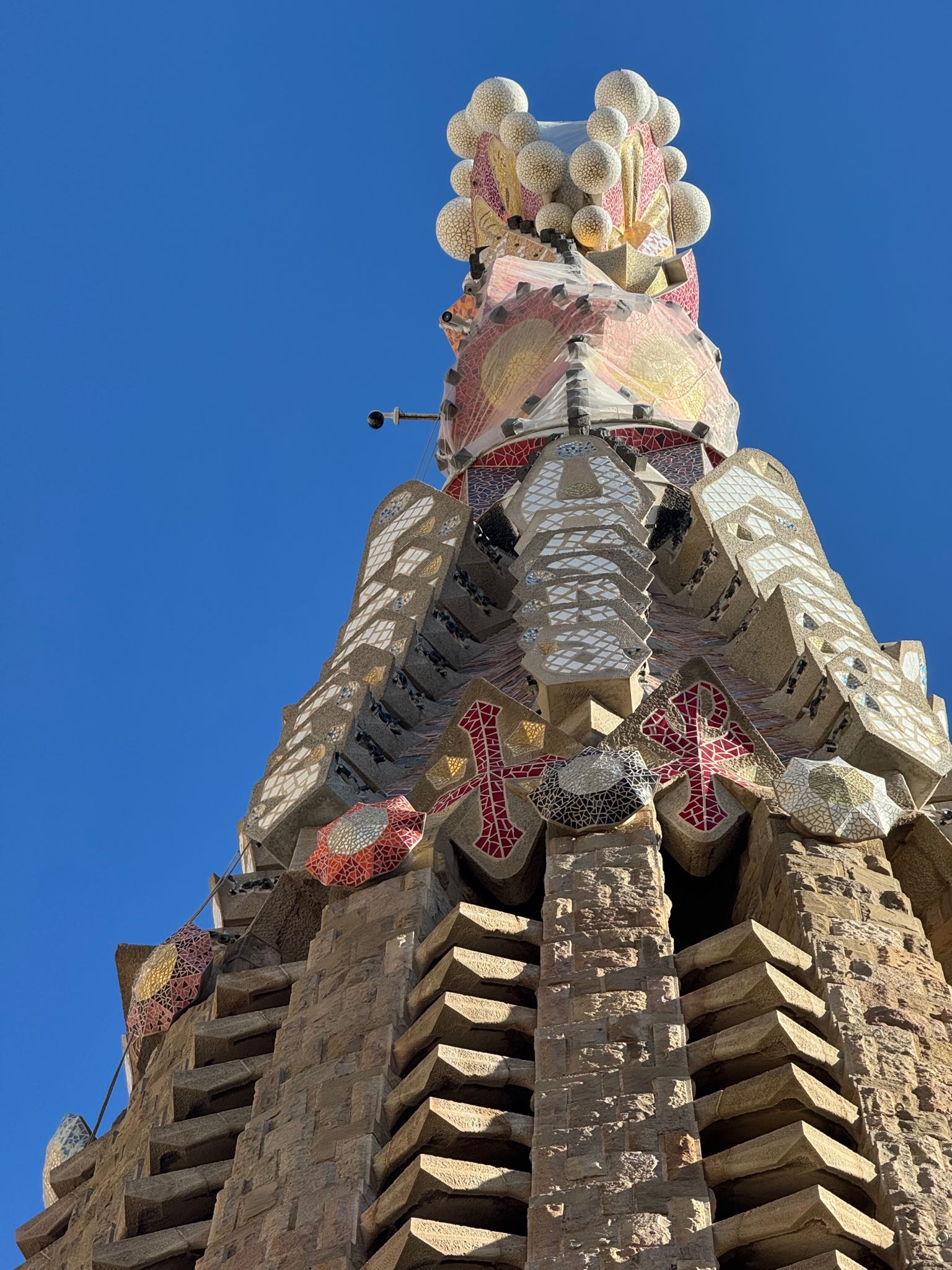
Up the top of some of the towers are sheaves of wheat and grapes, representing communion bread and wine.
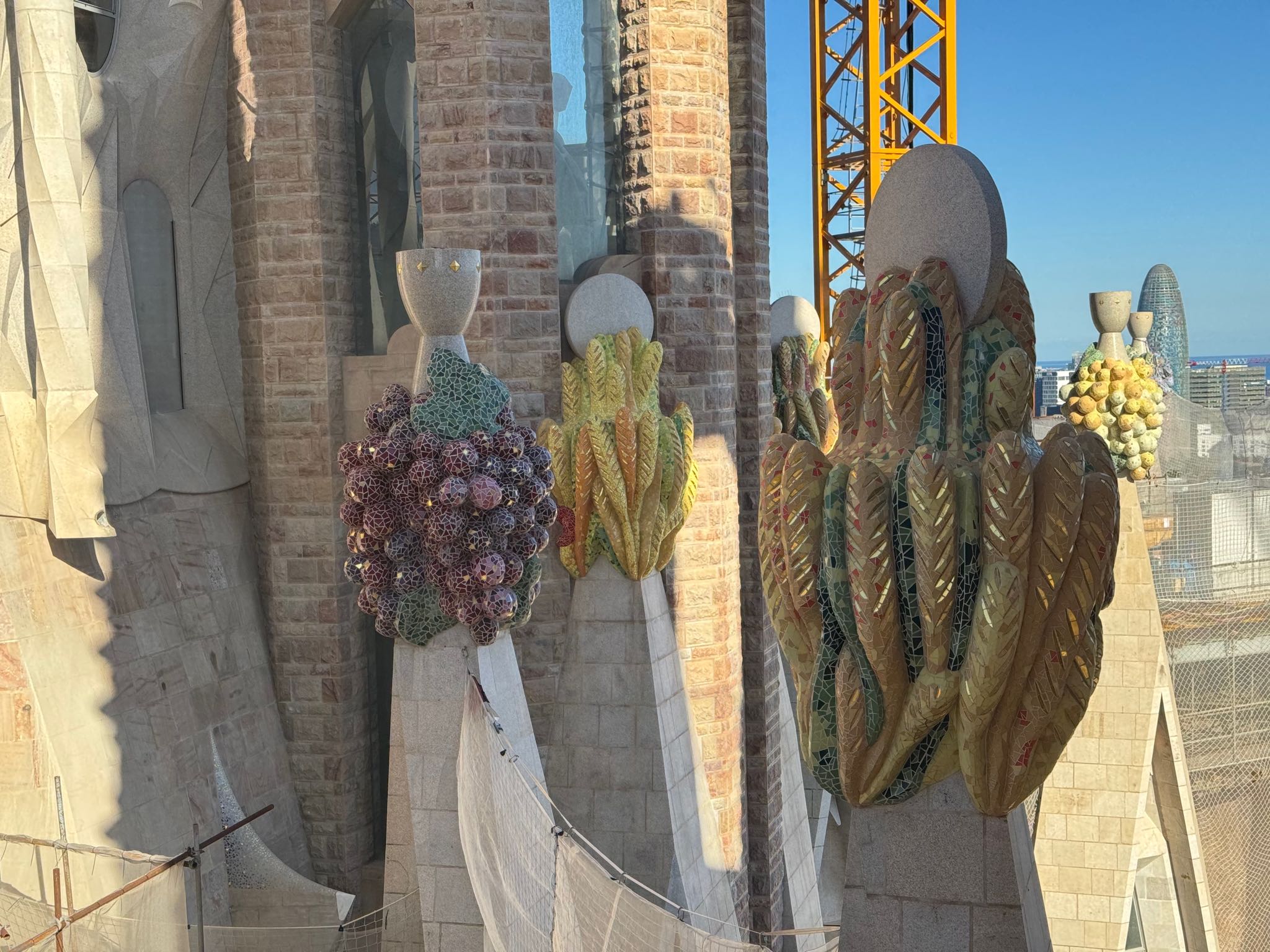
The top of another tower.
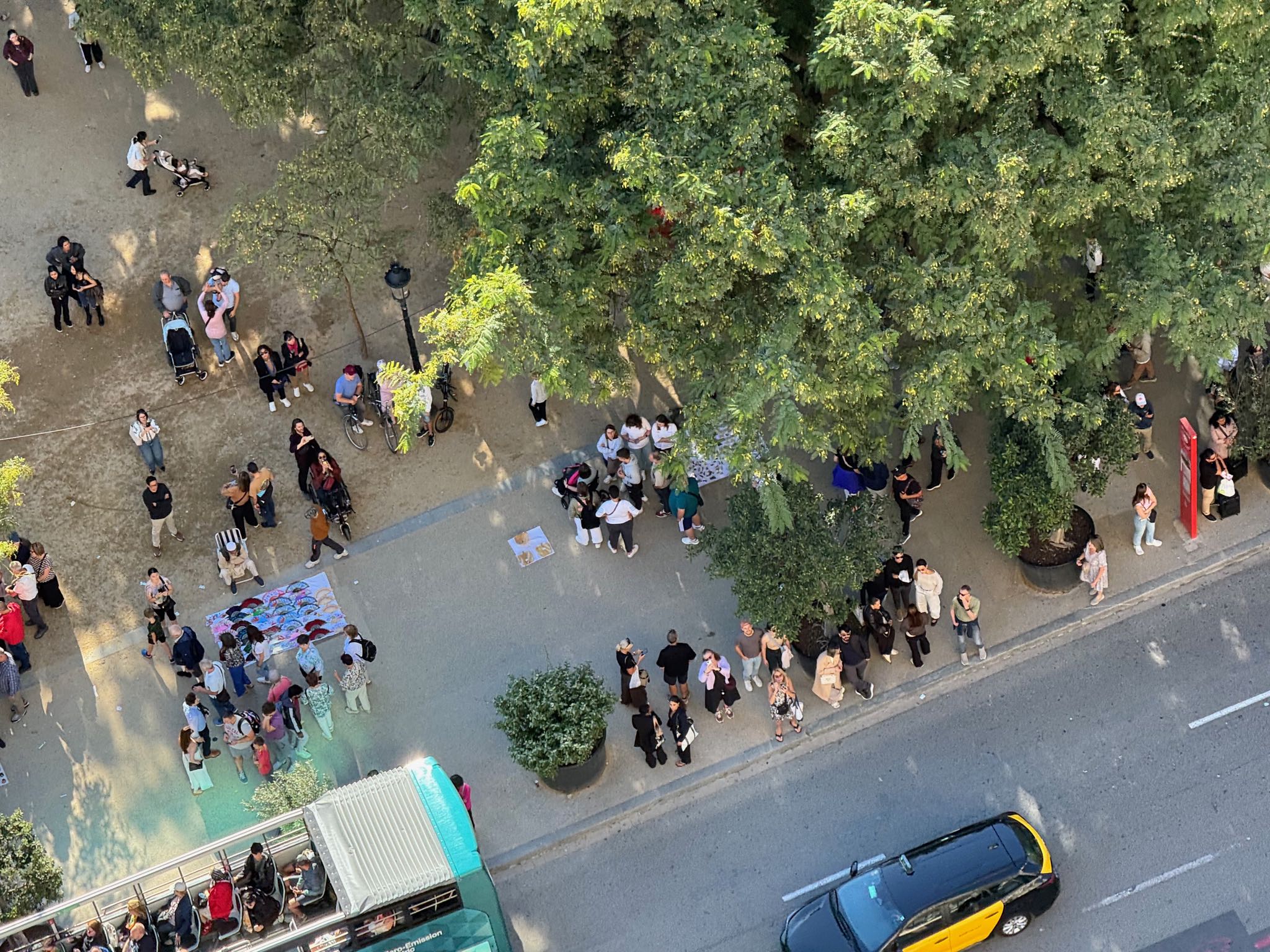
We are up quite high.
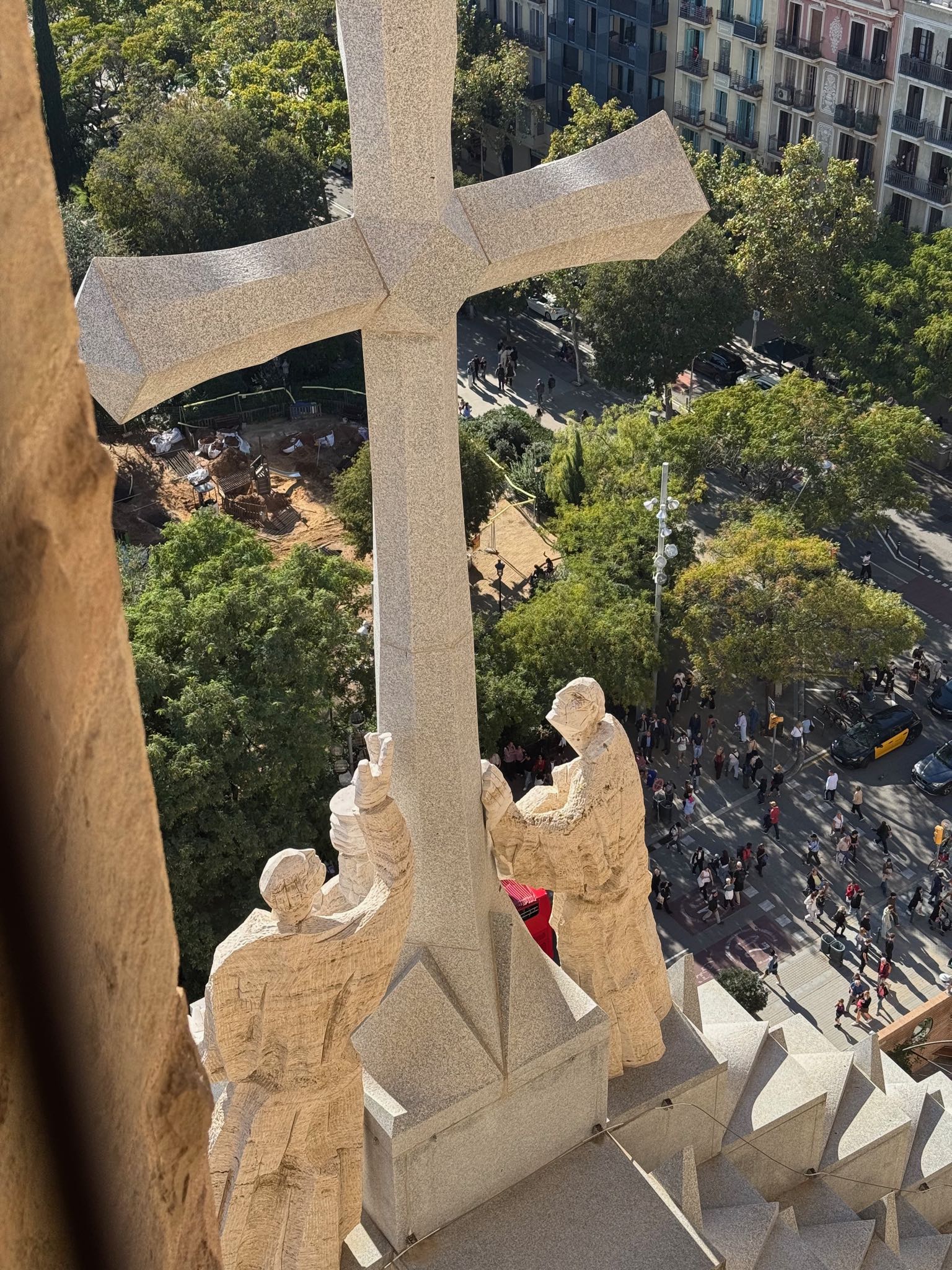
A crucifixion scene on top of one of the facades.
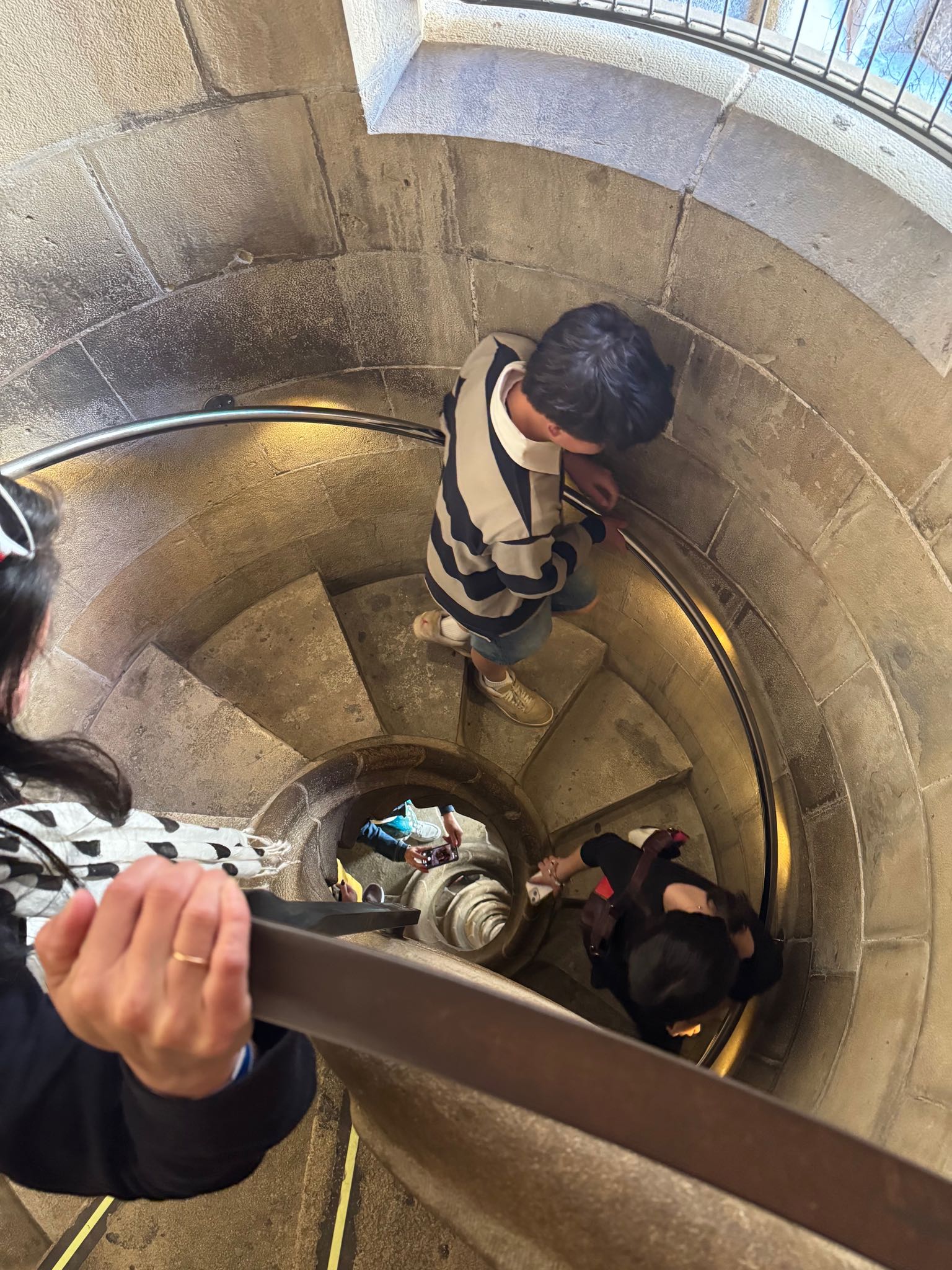
We go down, all the way – via a spiral stairs.
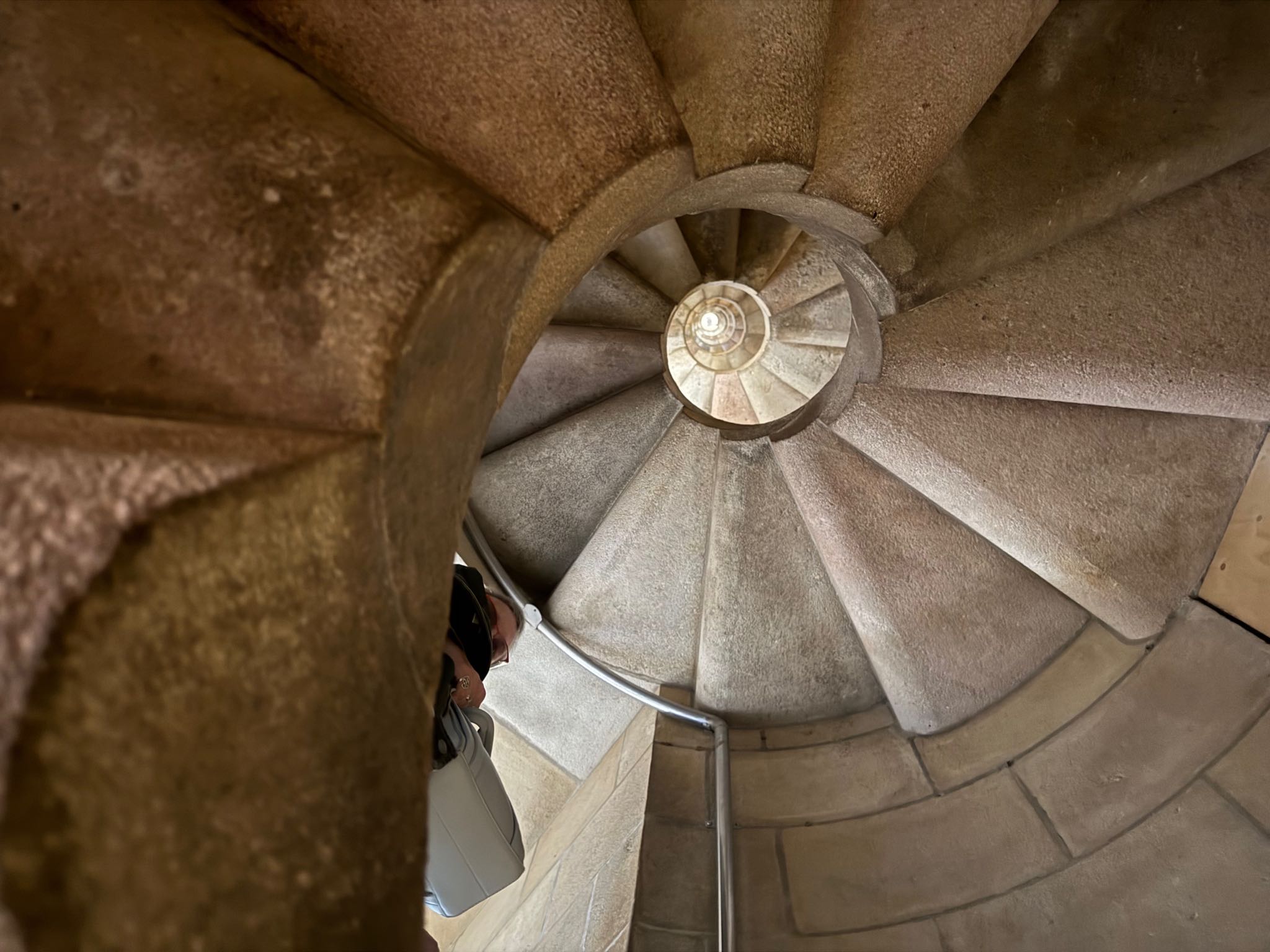
Quite an amazing place.