Posted onOctober 3, 2026|Comments Off on Thurs 1 October – Reflecting on Signs and Posters
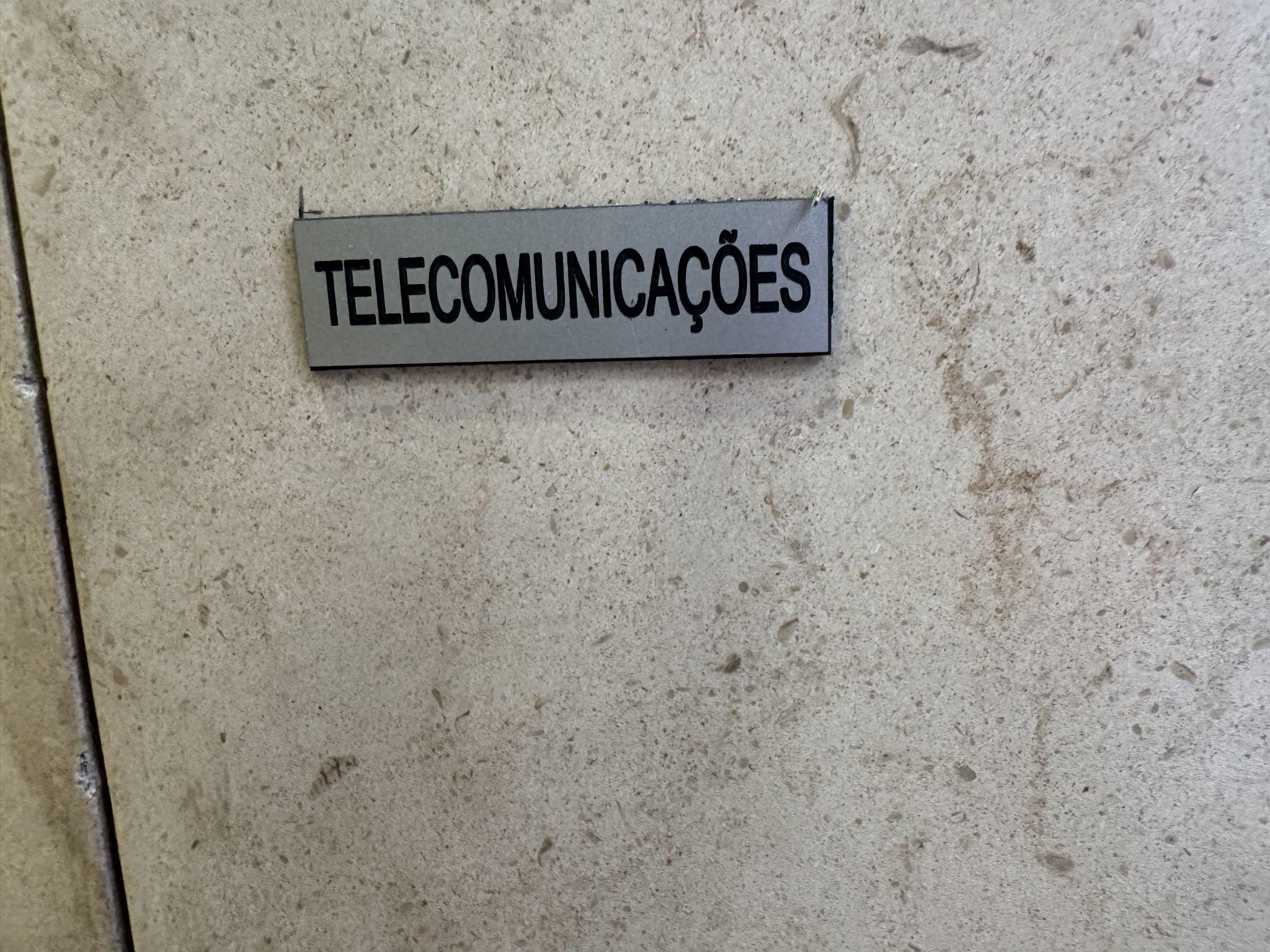
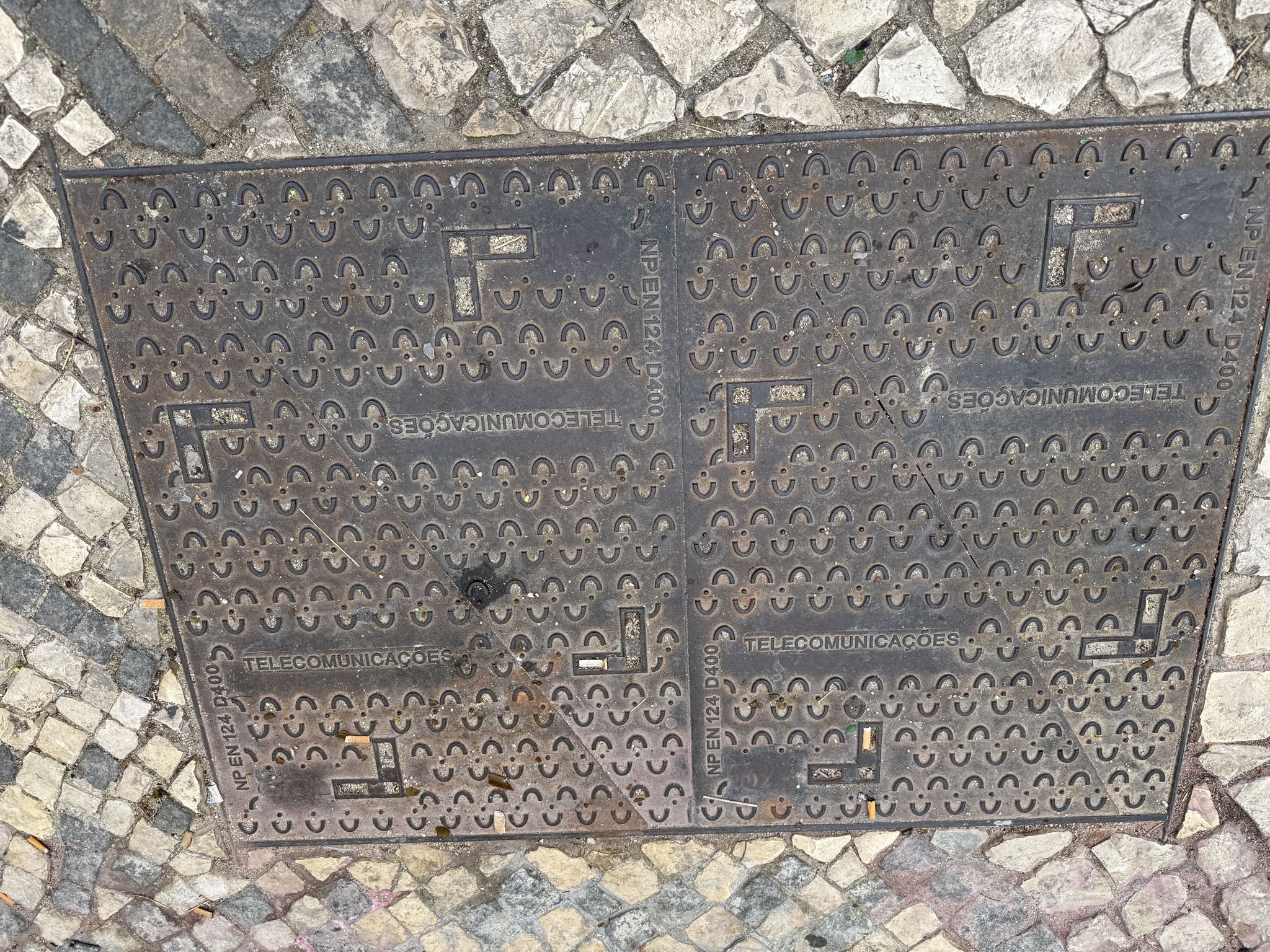
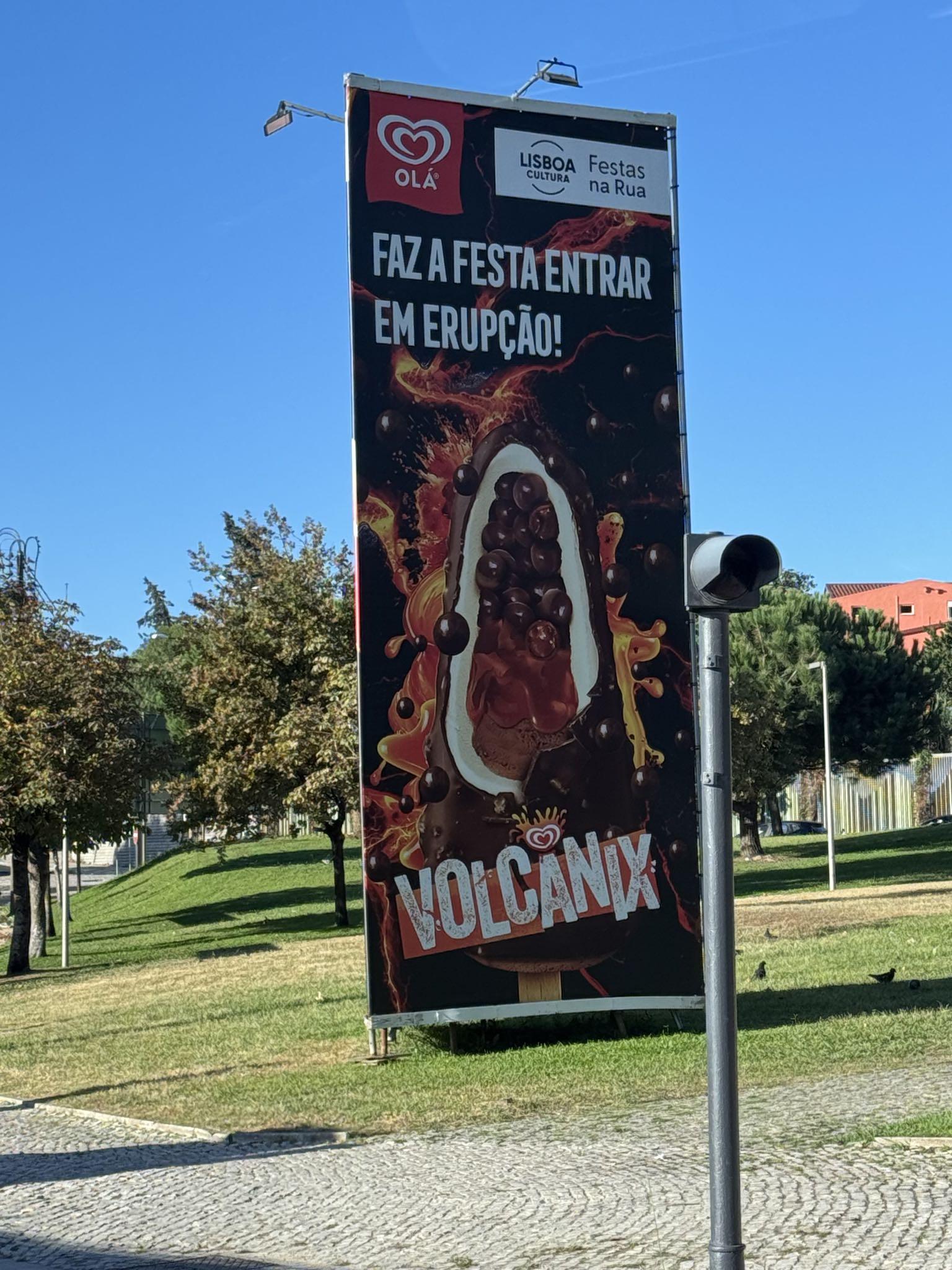
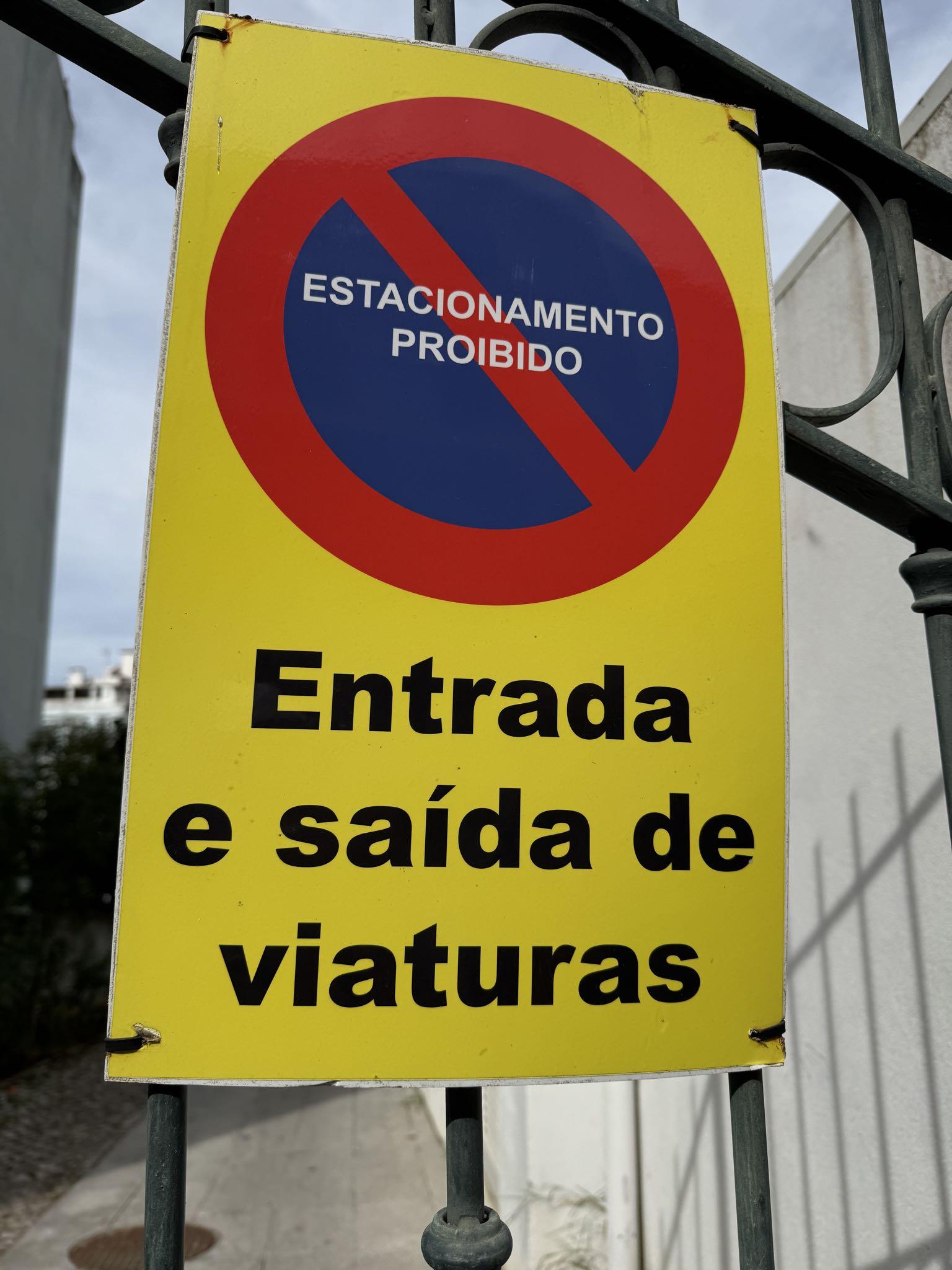
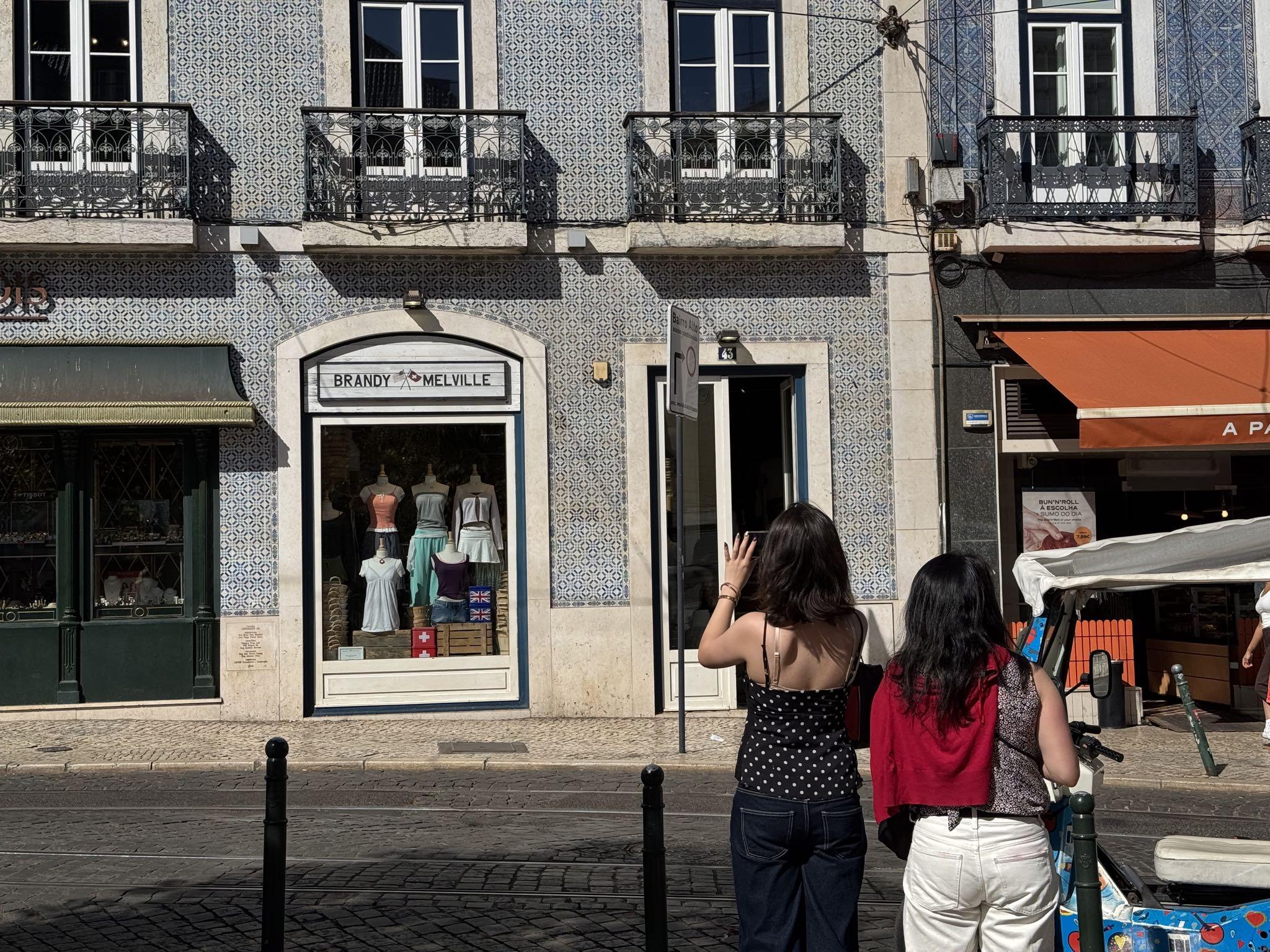
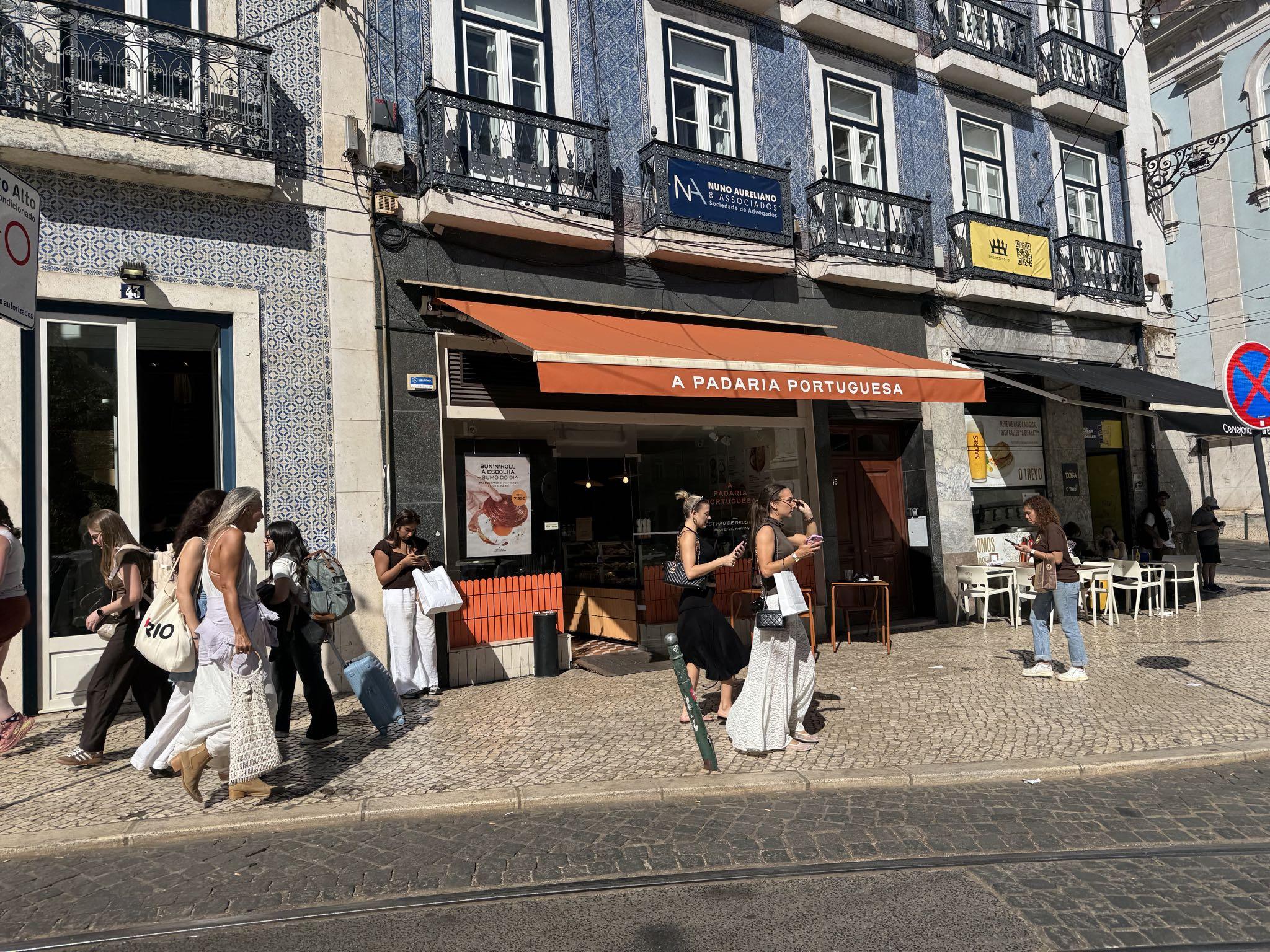
Portuguese signs have this wonderful latin quality of being able to stare at them and their meaning becomes apparent.
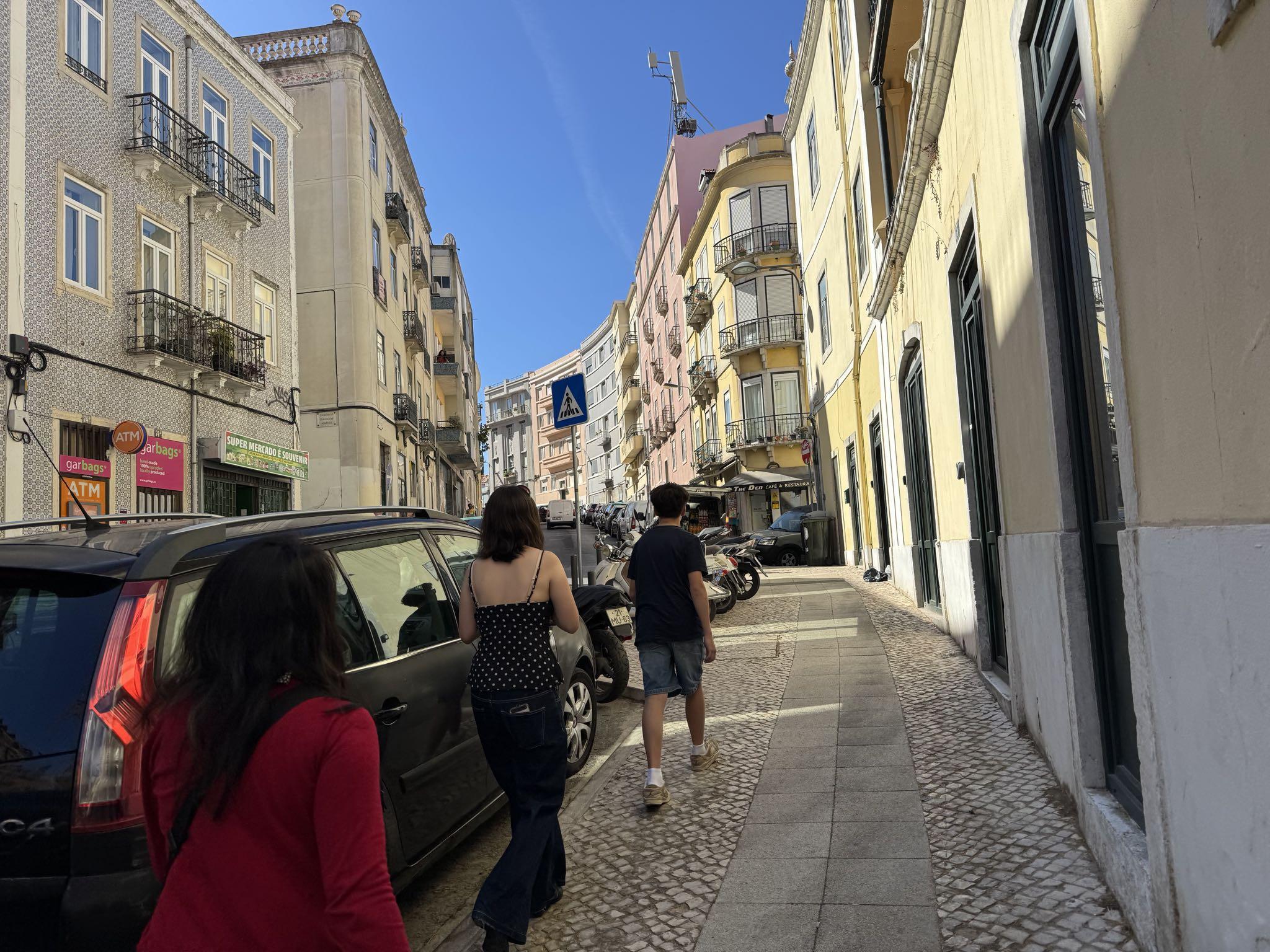
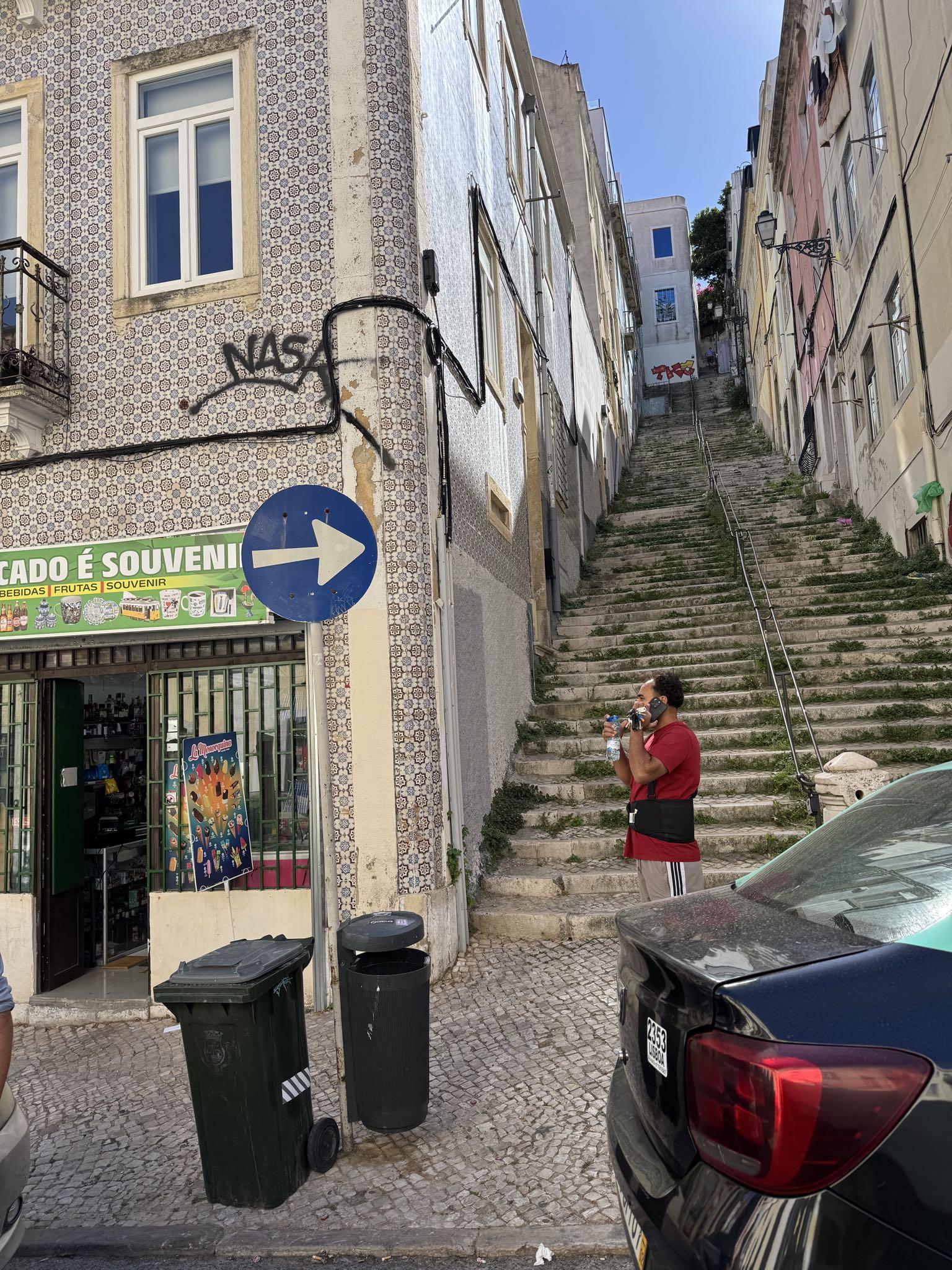
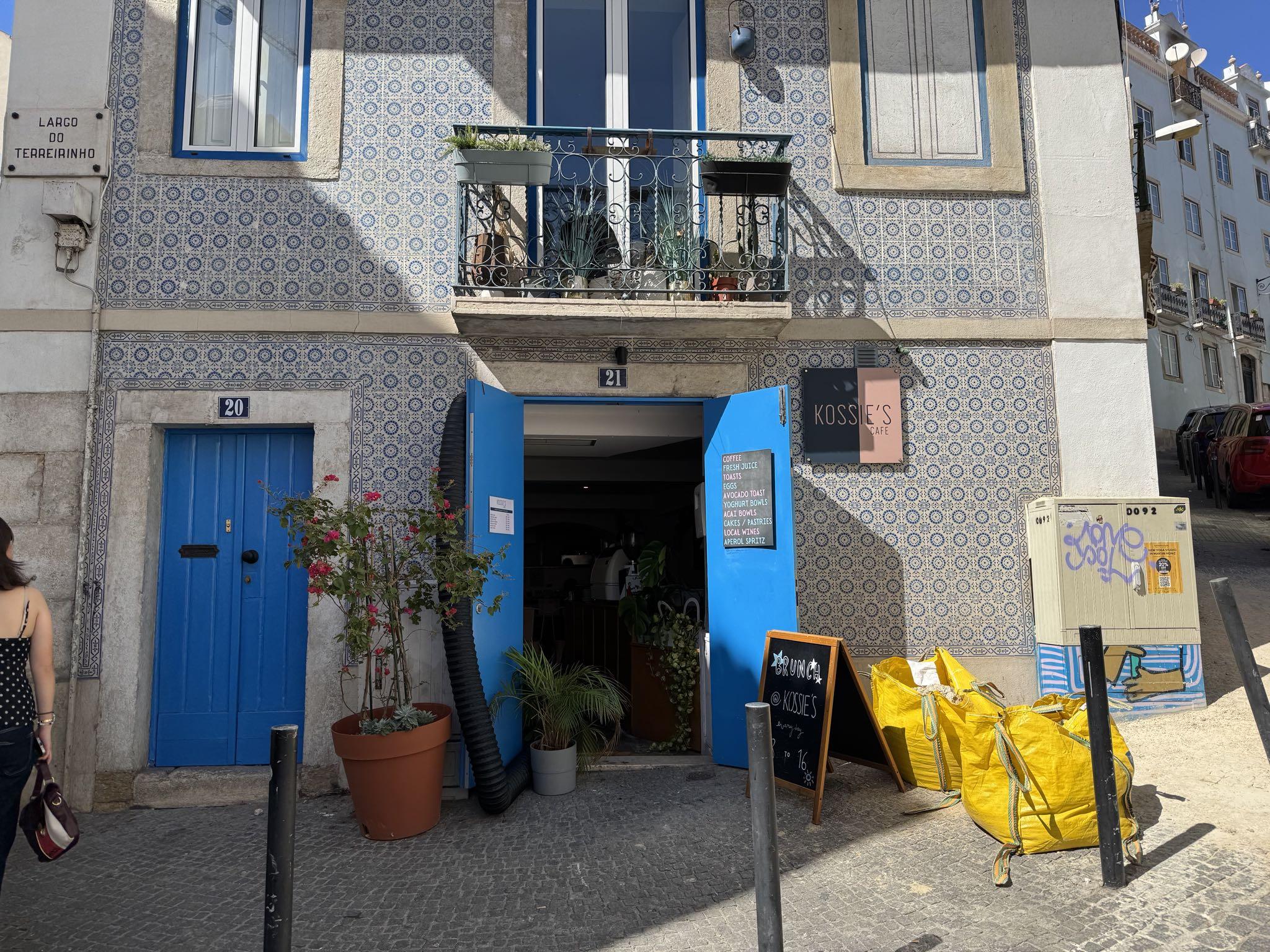
One sign says, “Oh, you have a problem with your phone? Perhaps we’ll talk about it over lunch and have some tomatoes..”
Another says, “Let’s have some icecream, and be enraptured at a street fair. It will feel positively volcanic.”
This one:
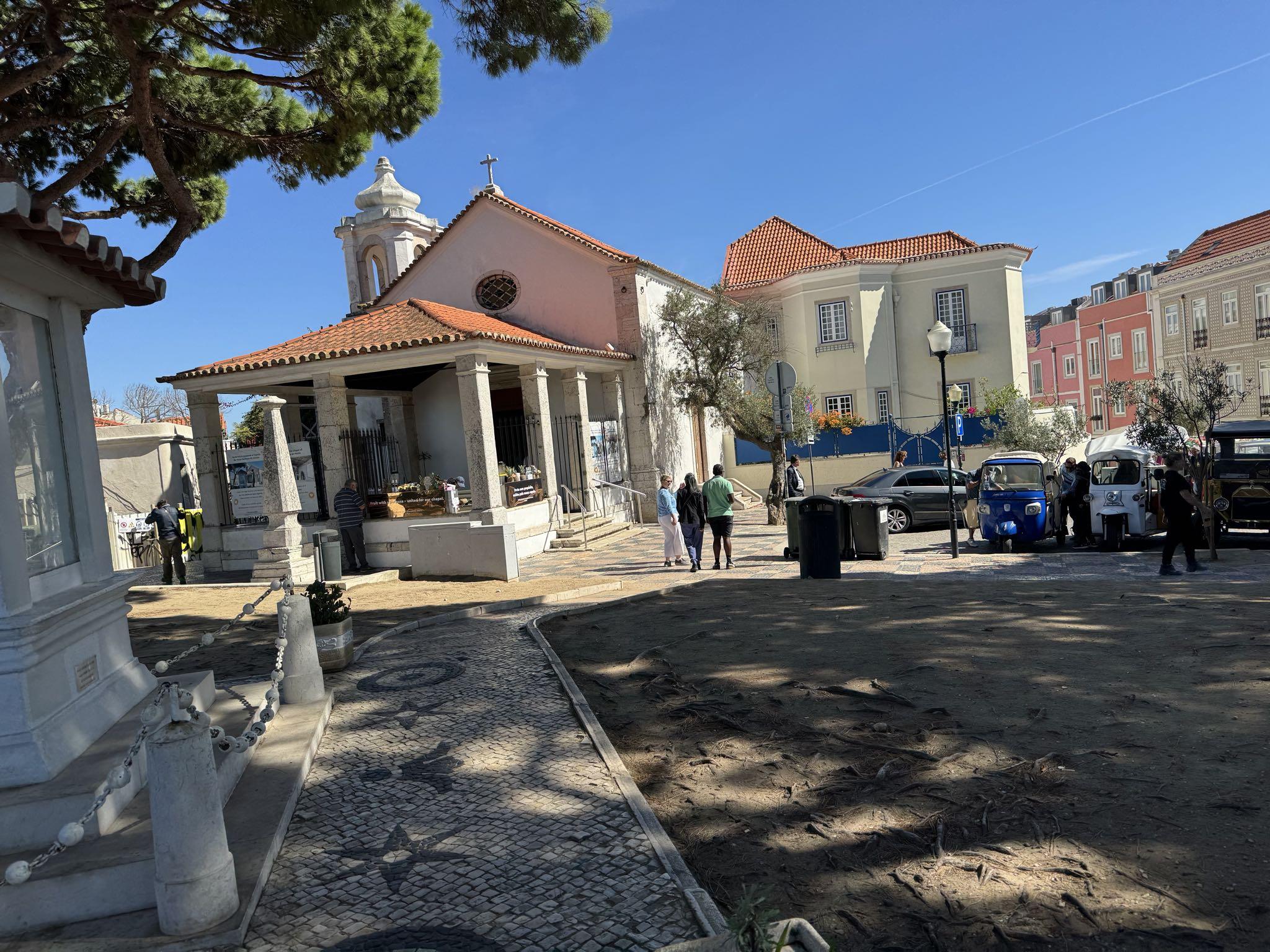
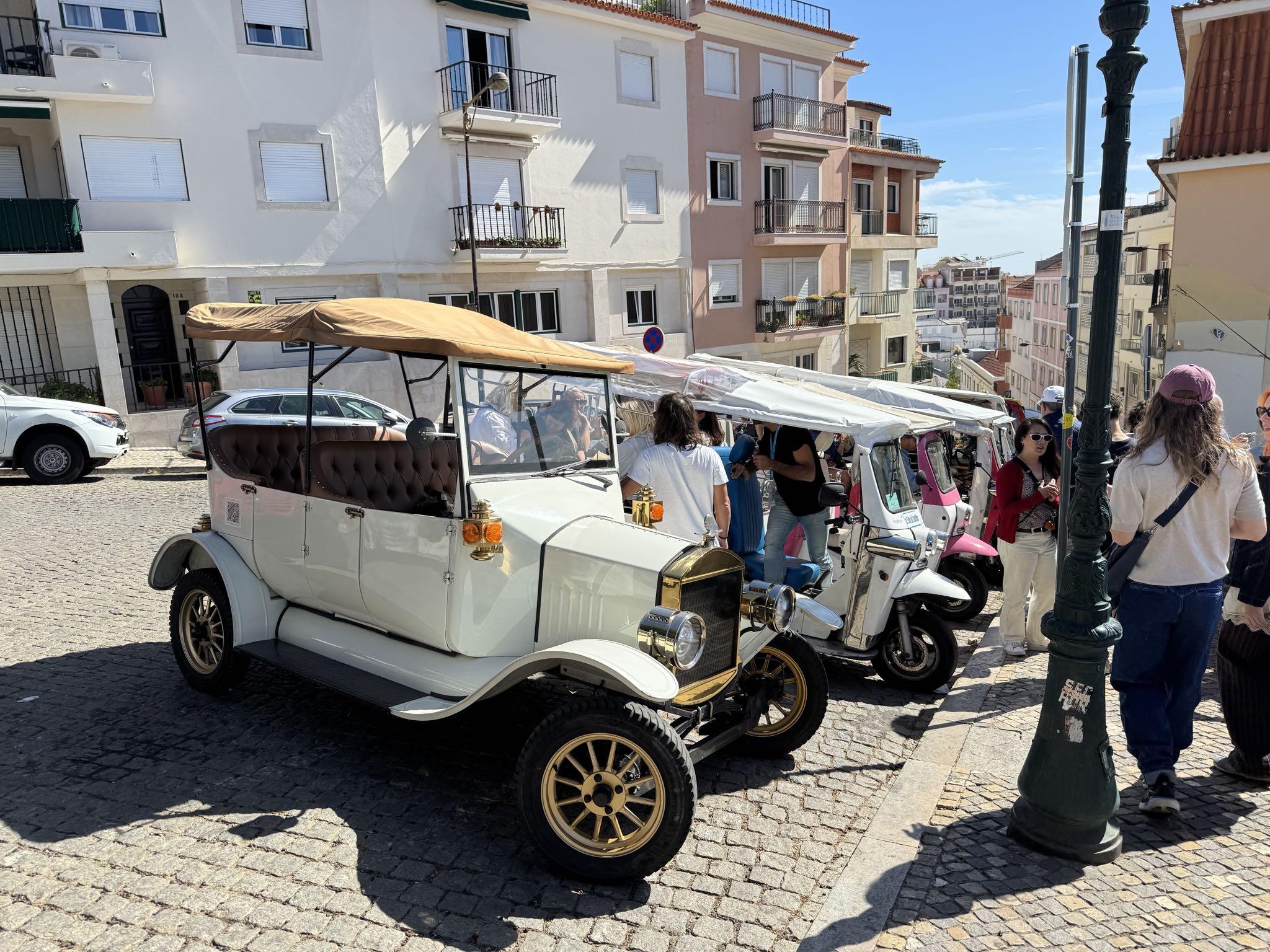
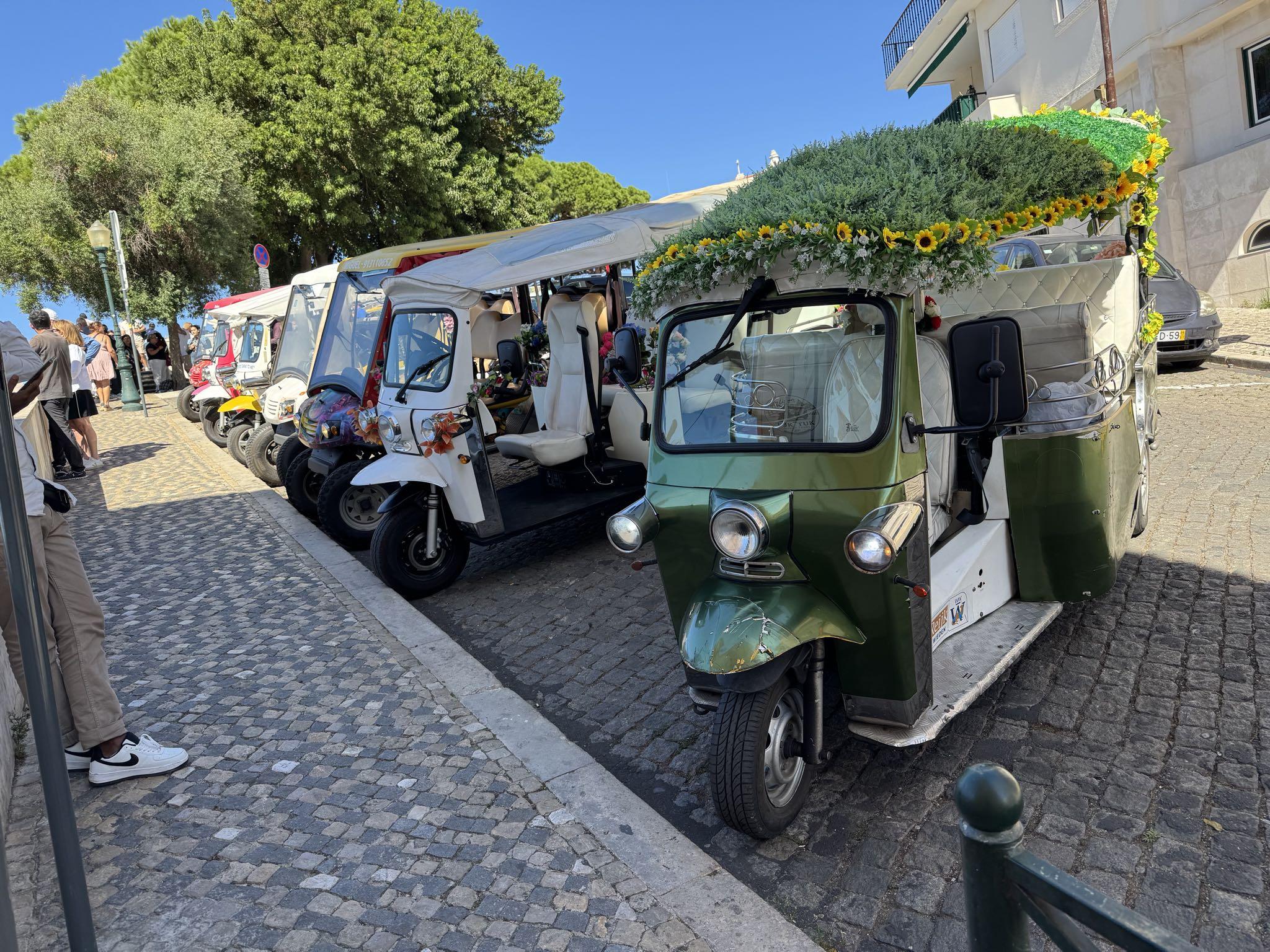
This one: “Stationing here is prohibited! This area is reserved strictly for entering and exiting with great flair by mysterious strangers in miniature sports sports-cars.”
Comments Off on Thurs 1 October – Reflecting on Signs and Posters
Posted onOctober 3, 2026|Comments Off on Thur 1 Oct – Walking Around Lisbon to Beat Jetlag
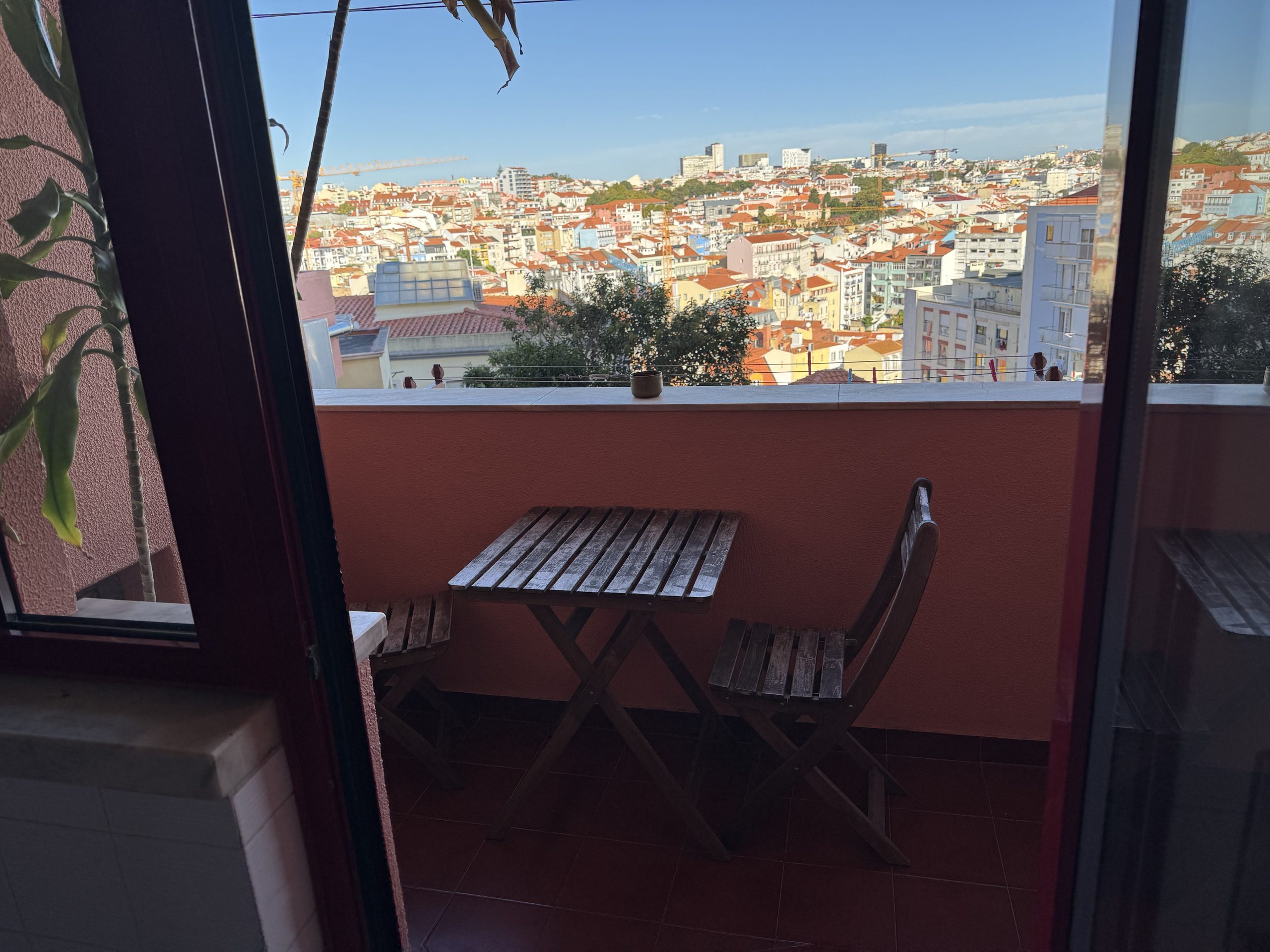
We arrived at our apartment and the lifts (like the traffic) were quirky and unhurried. A theme seems to be developing here, but I sense it is bigger than Portugal.
We took a moment for a shower and staggered out to get some sun.
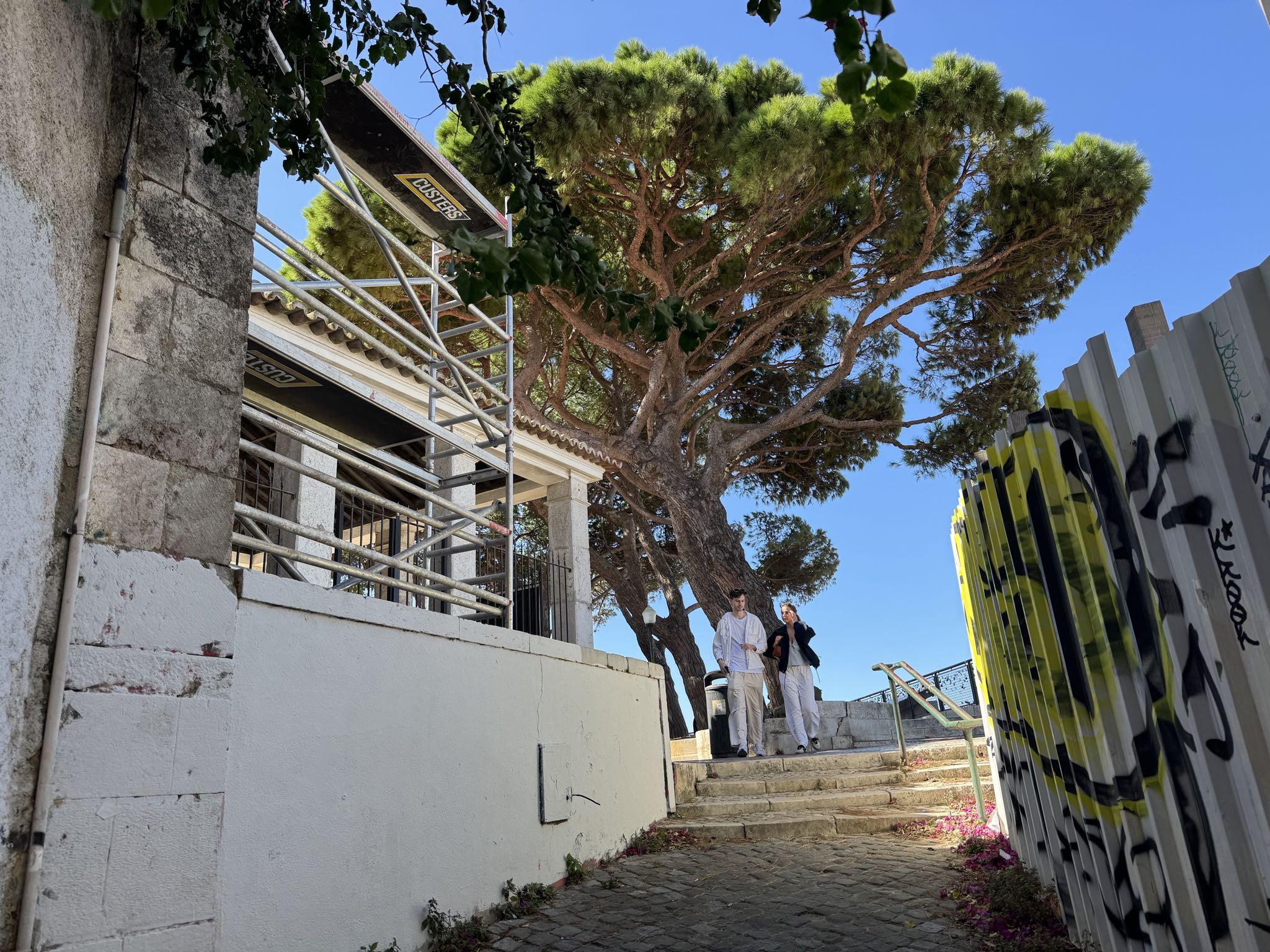
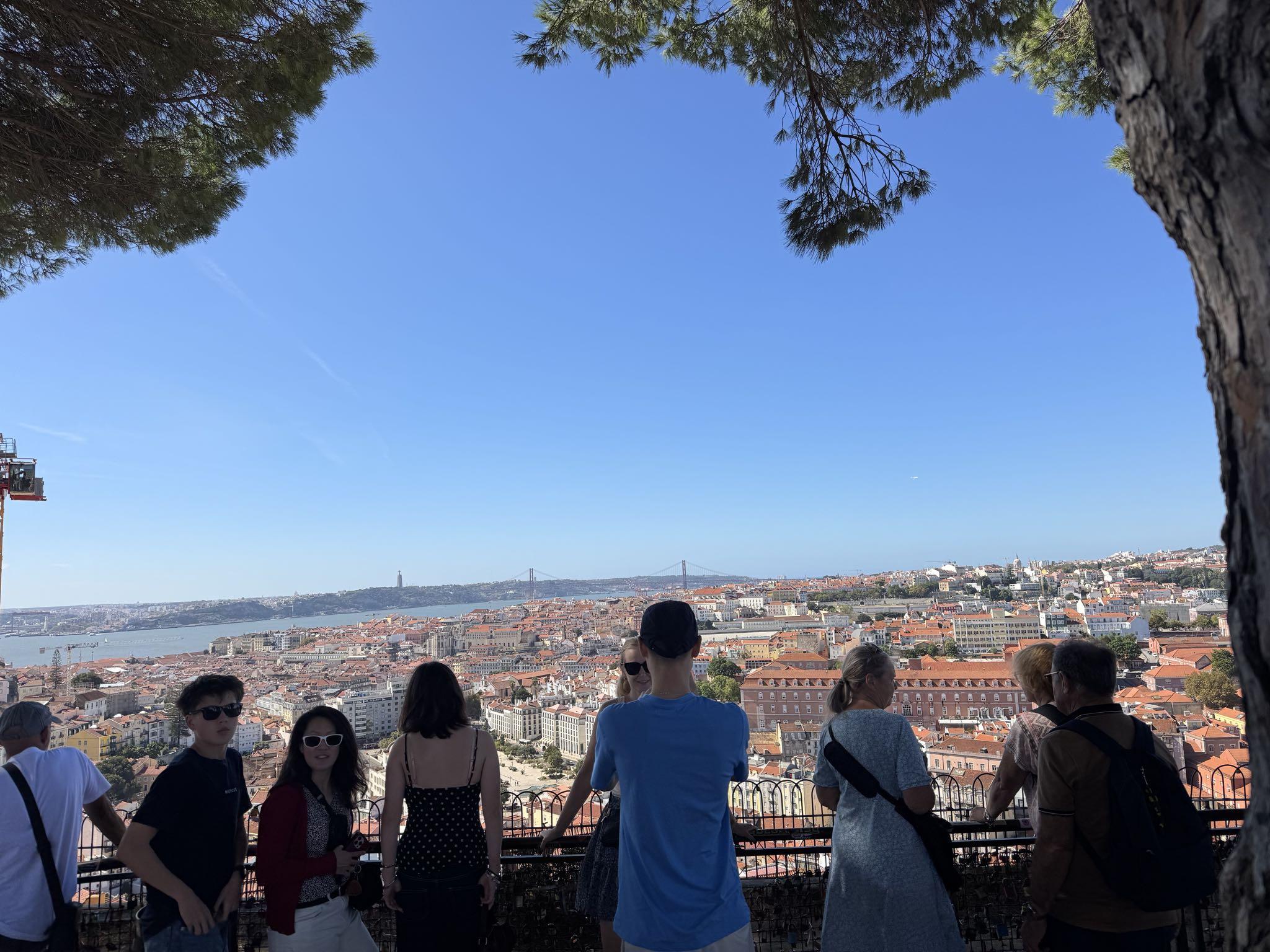
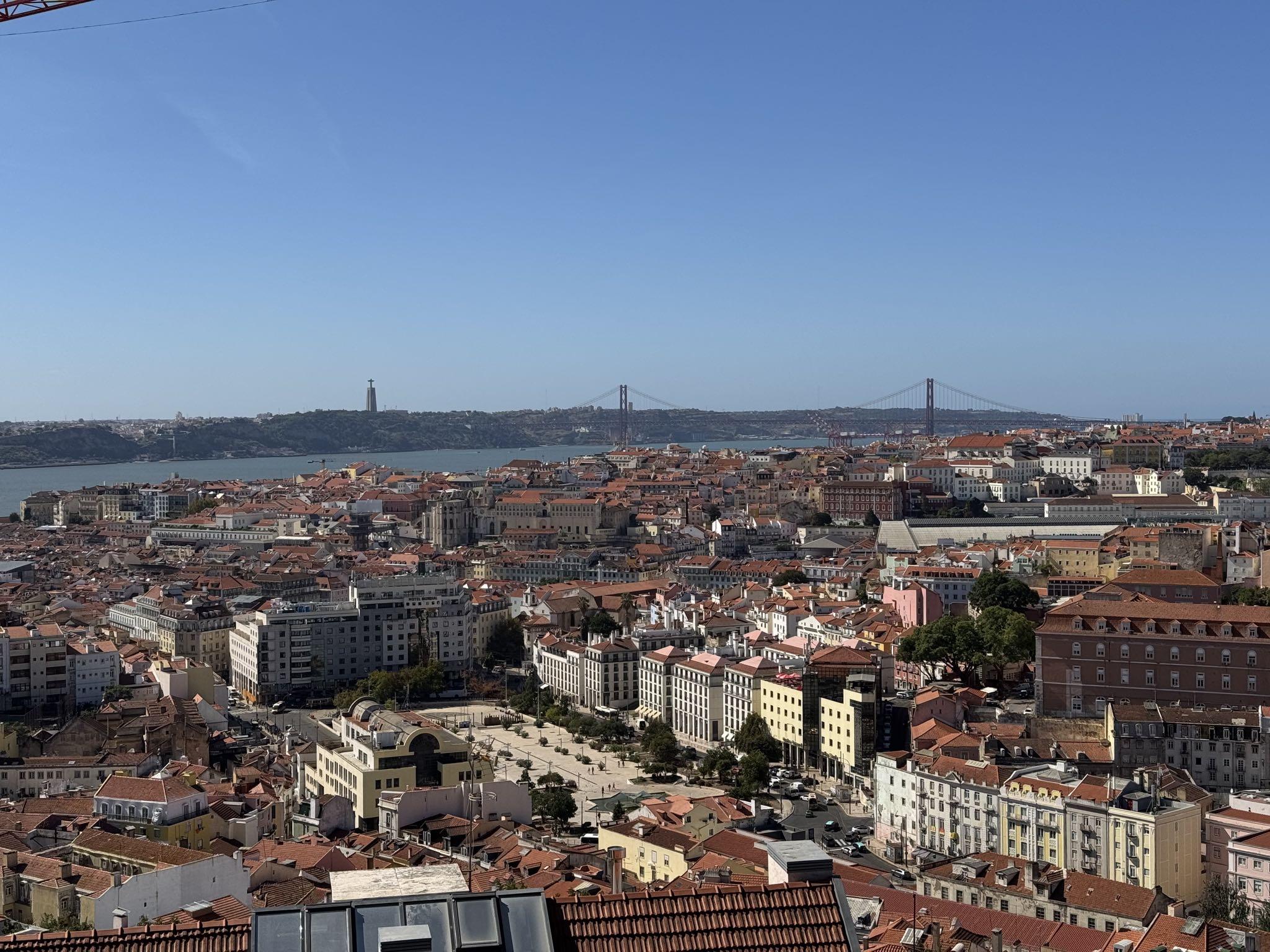
We walked up stairs to a lookout, outside a hilltop Chapel.
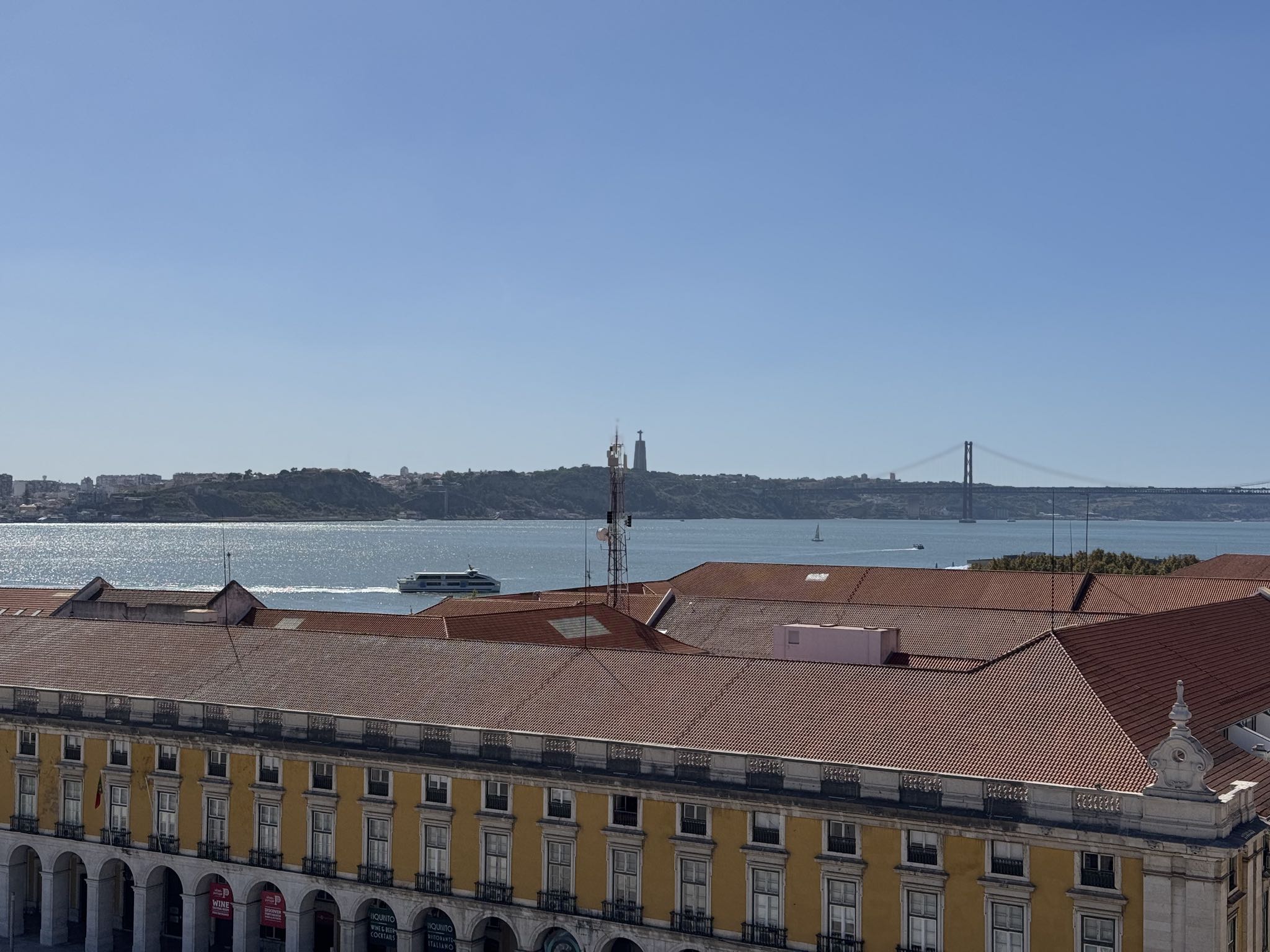
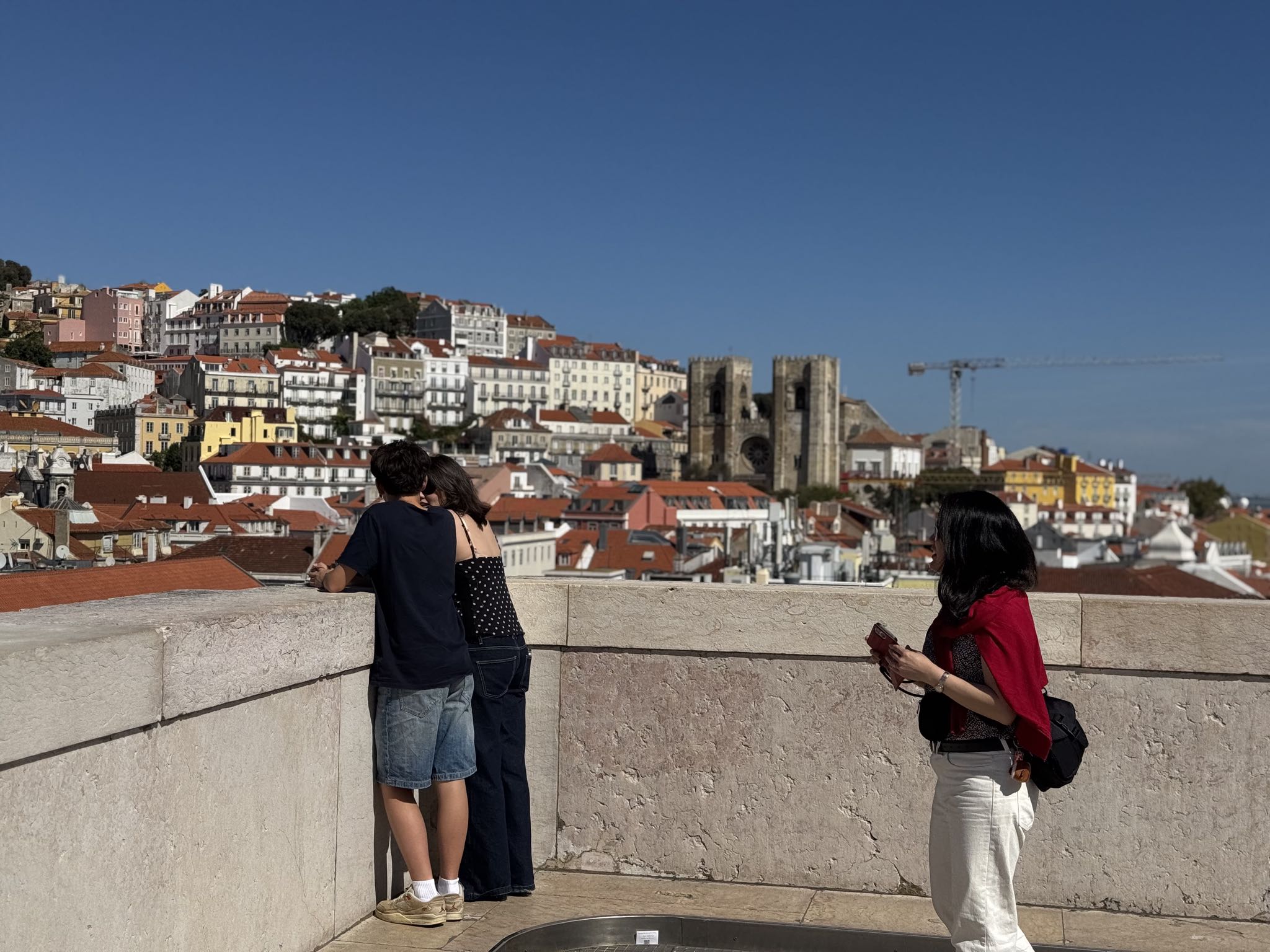
We can see a view over Lisbon city to the harbour and the bridge. There are echos in this view of Sydney and San Francisco. I imagine this view has similarities across Europe. You can imagine how people coming from Europe over the last 300 years wanted to make the New World and their new homes more like the places they had grown up in.
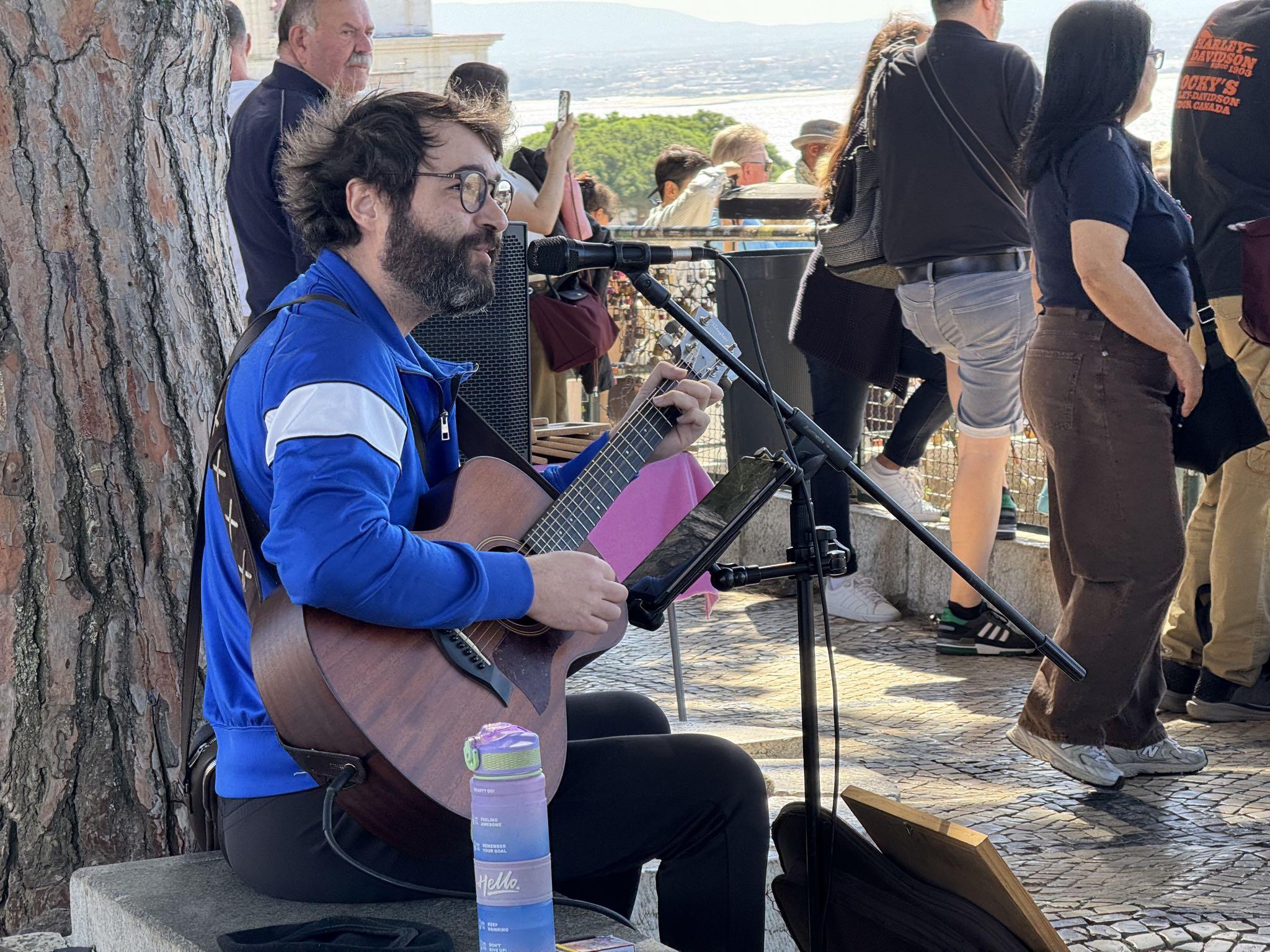
Nearby, a busker sings Cat Steven’s in Portuguese.
As we walk down the hillside, thai taxi-trikes (Tuk Tuks) offer a solution to Lisbon’s hills. Not for us today, the journey is the destination.
Our executive planning function dissolved entirely under the quiet tyranny of empty stomachs. We ducked into a random corner café, where the familiar twang of home greeted us behind the espresso bar—a full Aussie crew, thousands of miles from Sydney. A spirited debate unfolded—pitting the fastidious, high-concept precision of third-wave Australian coffee against the robust, understated traditions of Spanish palates.
We stop at a McDonalds in Lisbon to compare differences. Box of carrots; soup; smoky veggie burgers; Veggie nuggets. Curious but not compelling.
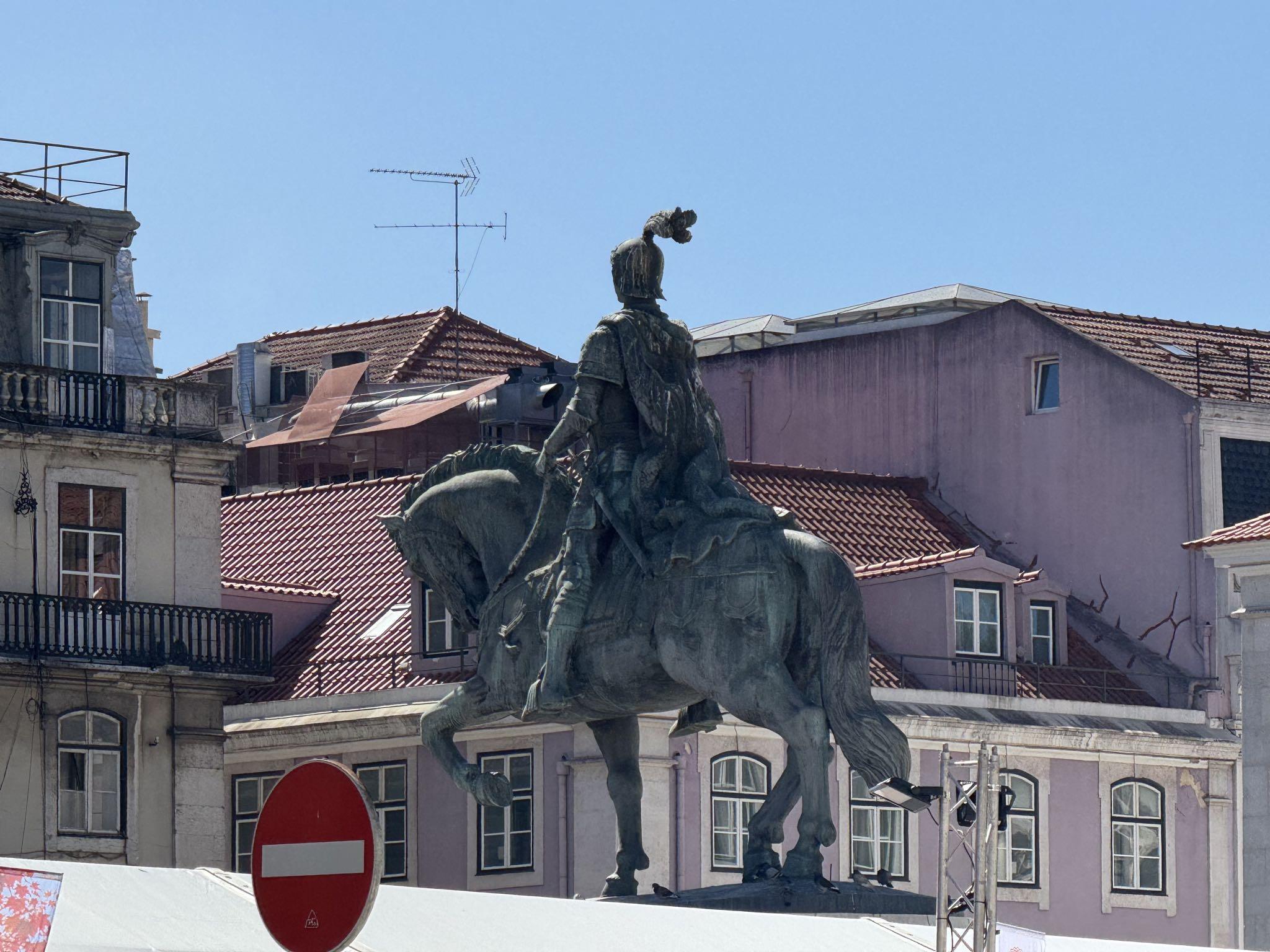
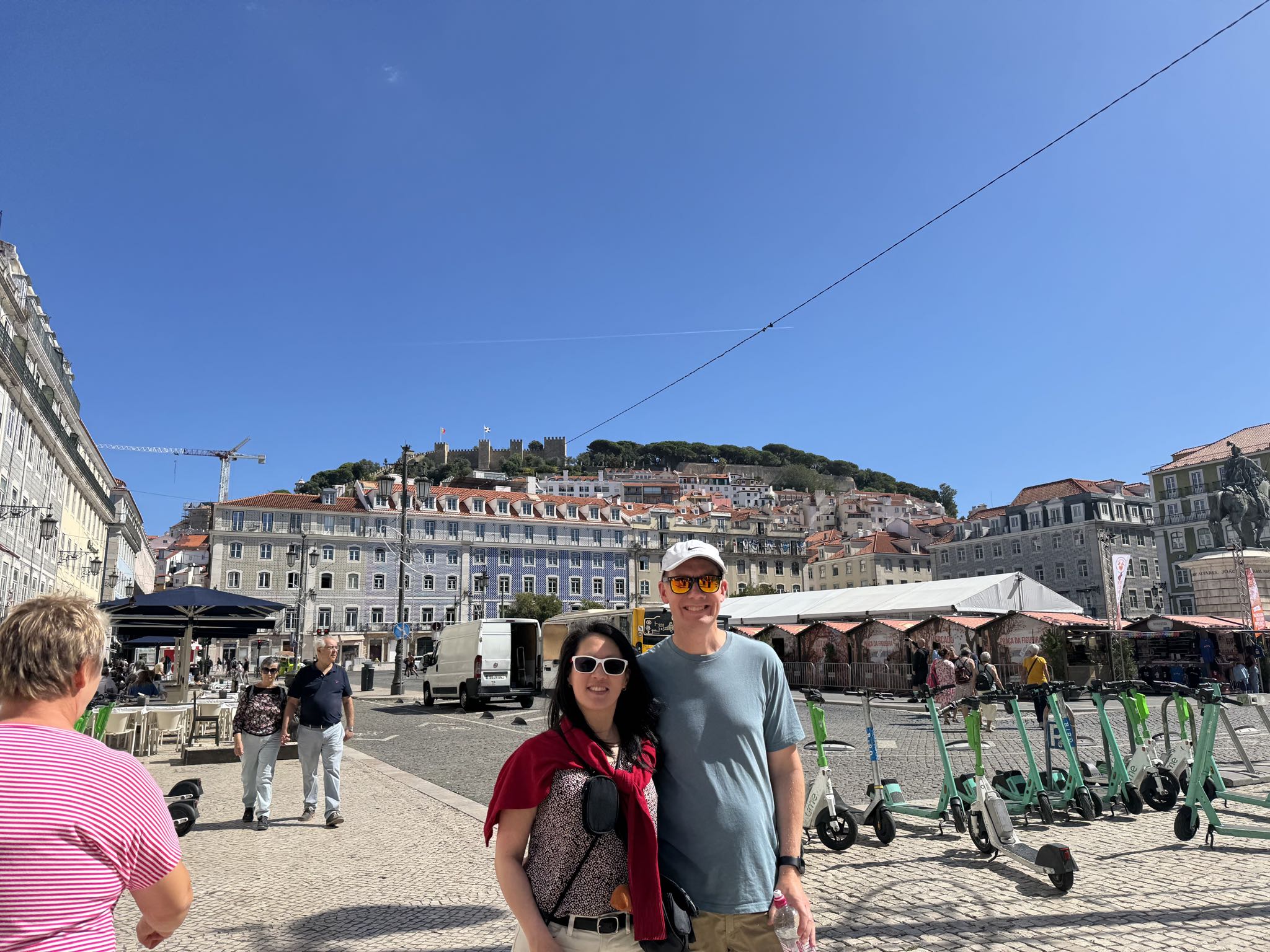
A statue of King John I – D. João I, 1357–1433 – whom I shall refer to as King Jono. (I’m still sorting out the history in my mind as it relates to various art and statues.) This was roughly 200 years after the Moors had been kicked out of Lisbon by the first King Alfonso Henriques. He is remembered for defending Portugese independence from Castille (not yet Spain, but a sort of pre-emptive Brexit from the coming Spanish Union). He is linked to the Portugese age of discovery (getting around the Cape of Good Hope, travel route to India – travel route to Brazil.) To me even then it was too small an economy, more as we shall see later.
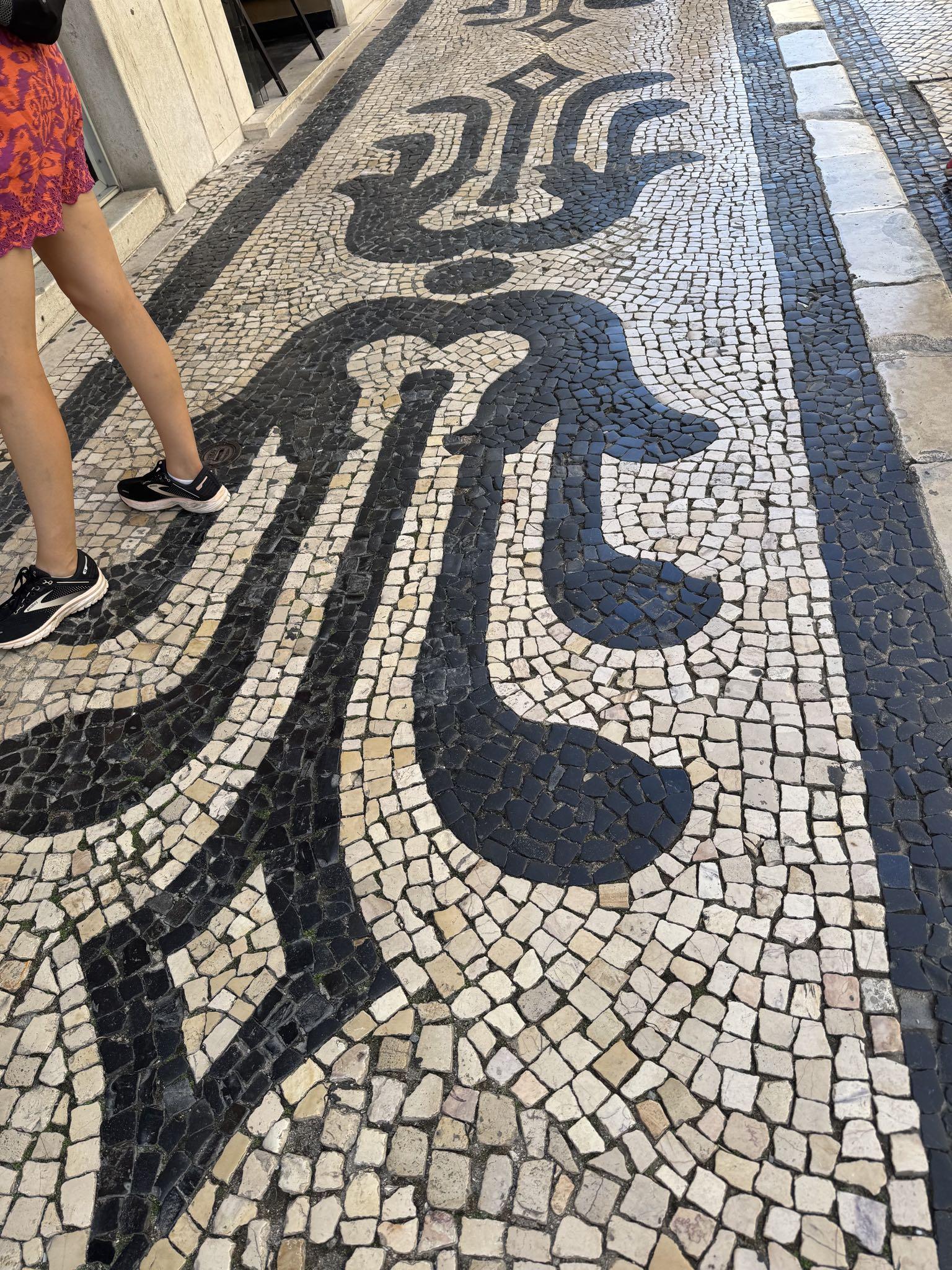
Lisbon has incredible streets tiled rough brick tiled in patterns. They are part of a broader theme of tiles that I’ll cover tomorrow.
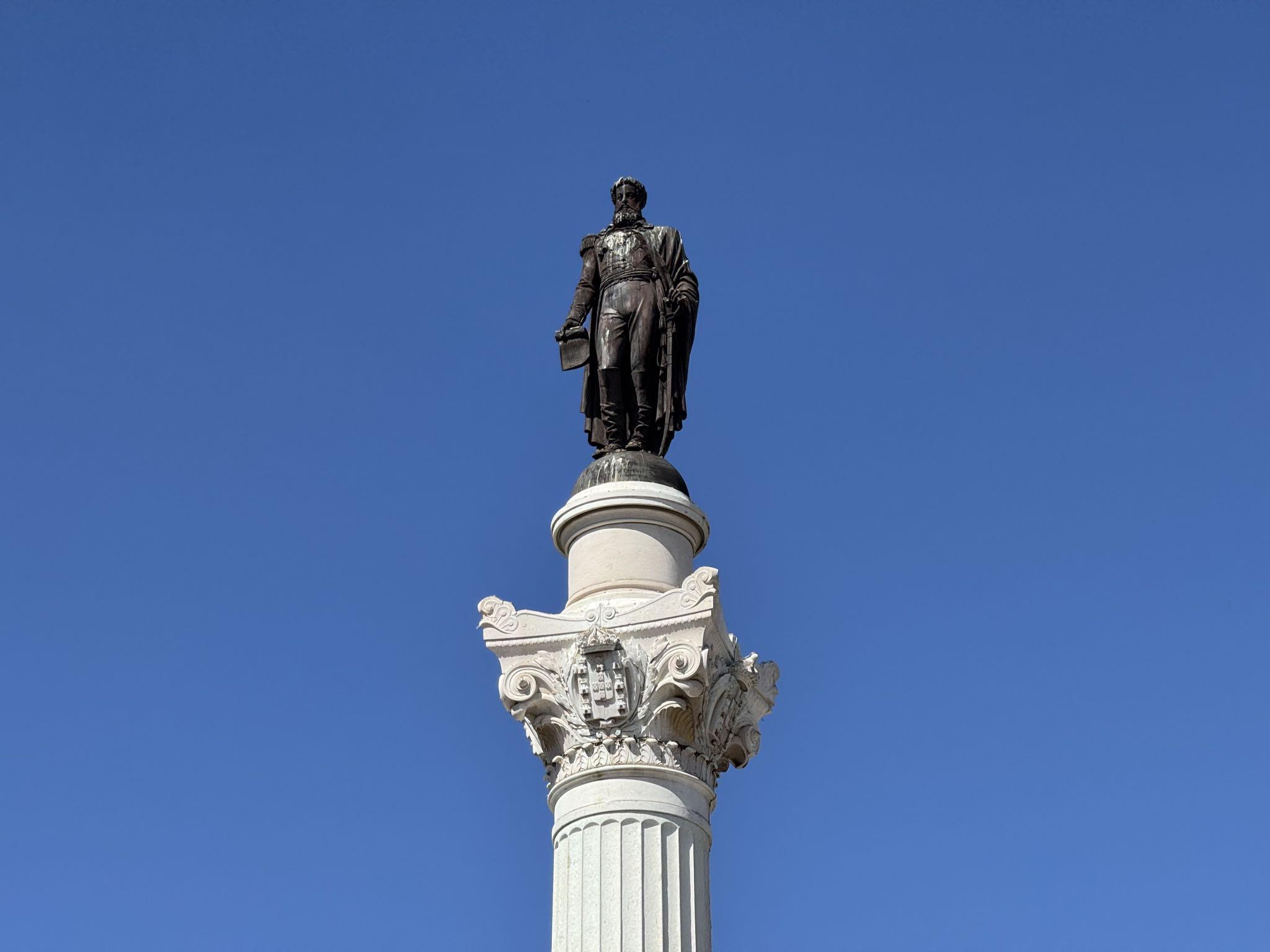
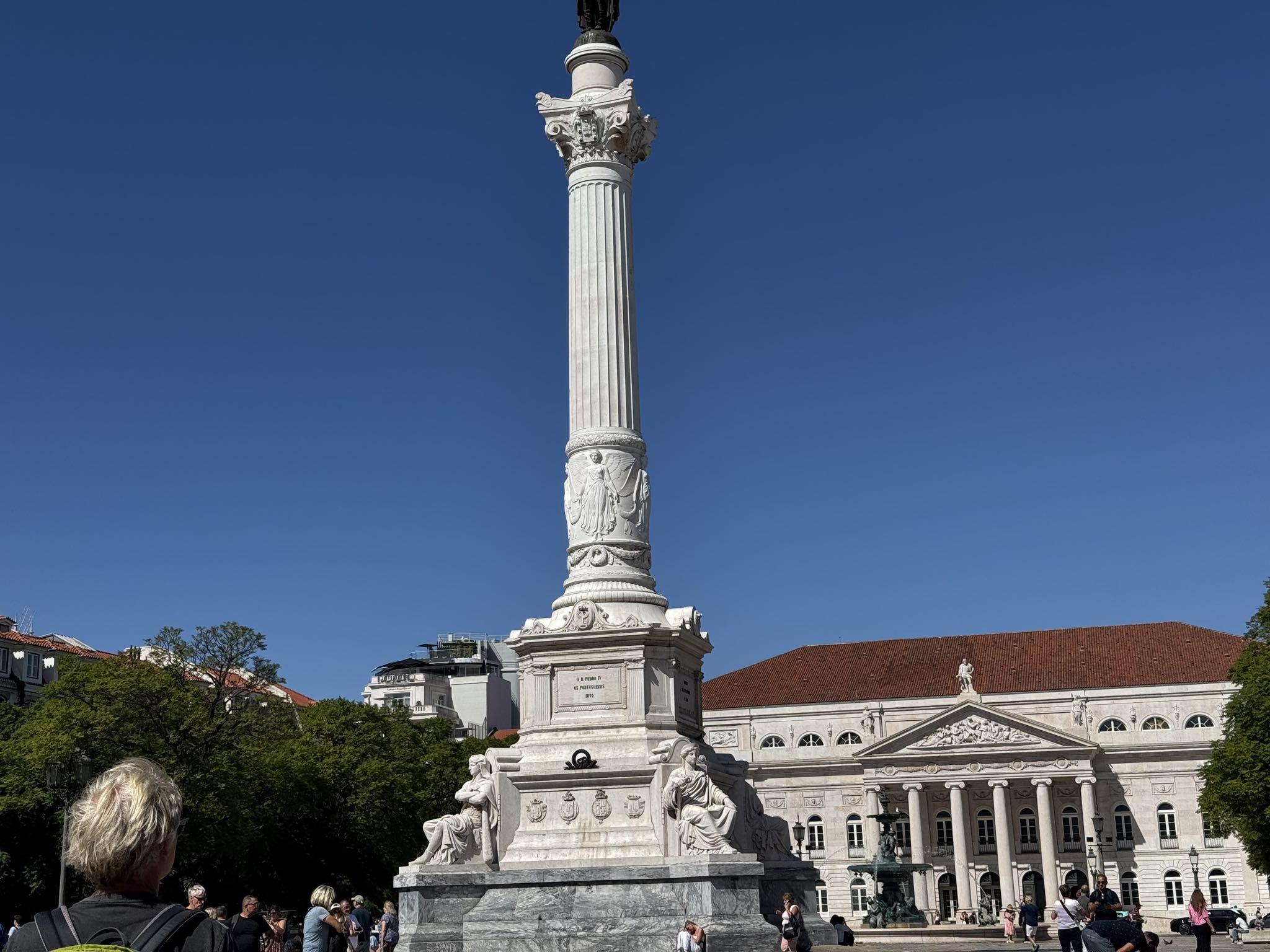
Europe is big on statues on pedestals in a way that Australia is not. (That itself is a chicken-and-egg problem for another day.) This is King Pedro IV in Rosso Square. He declared a Constitution, his brother seized power and kicked him out, and Pedro came back with some European friends, kicked his brother out and put his daughter on the throne and put the Constitution back. This has the dubious distinction of being Portugals longest running Constitution, implying they gave up on it for a while, and now have a new one. (More on the theme of Portugal being too small for their own stability. Perhaps even bigger cultural and legal themes about South American government stability.) The statues at the bottom of the pedestal represent Justice, Prudence, Fortitude, and Moderation – a kind of “for the people” “anti-corruption” vibe.
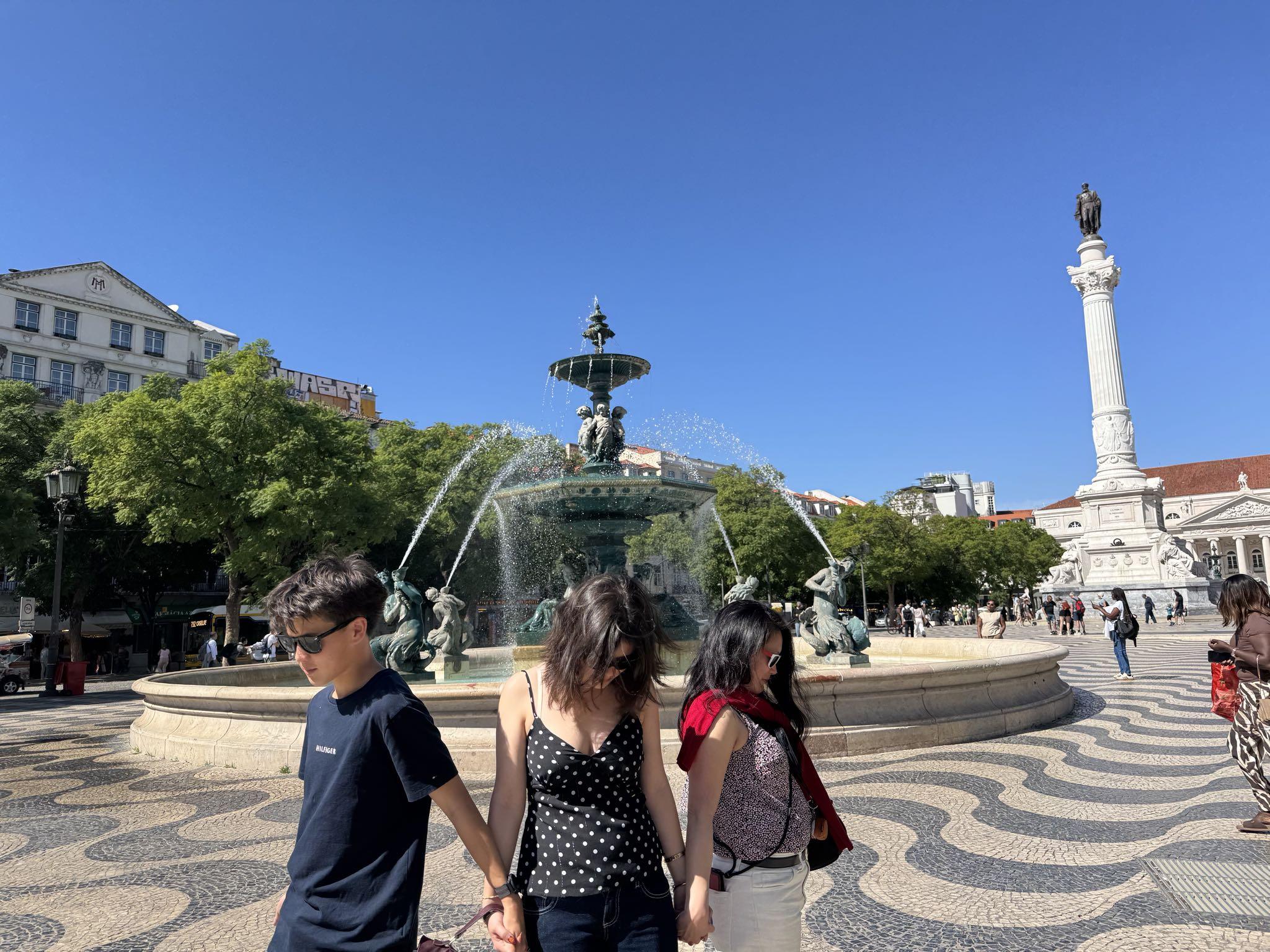
Next we have a fountain imported from France – with themes of fertility and fortune from water from the gods. Seems a bit off-brand for Portugal – which has a mixture of Christian and can-do humanism about it.
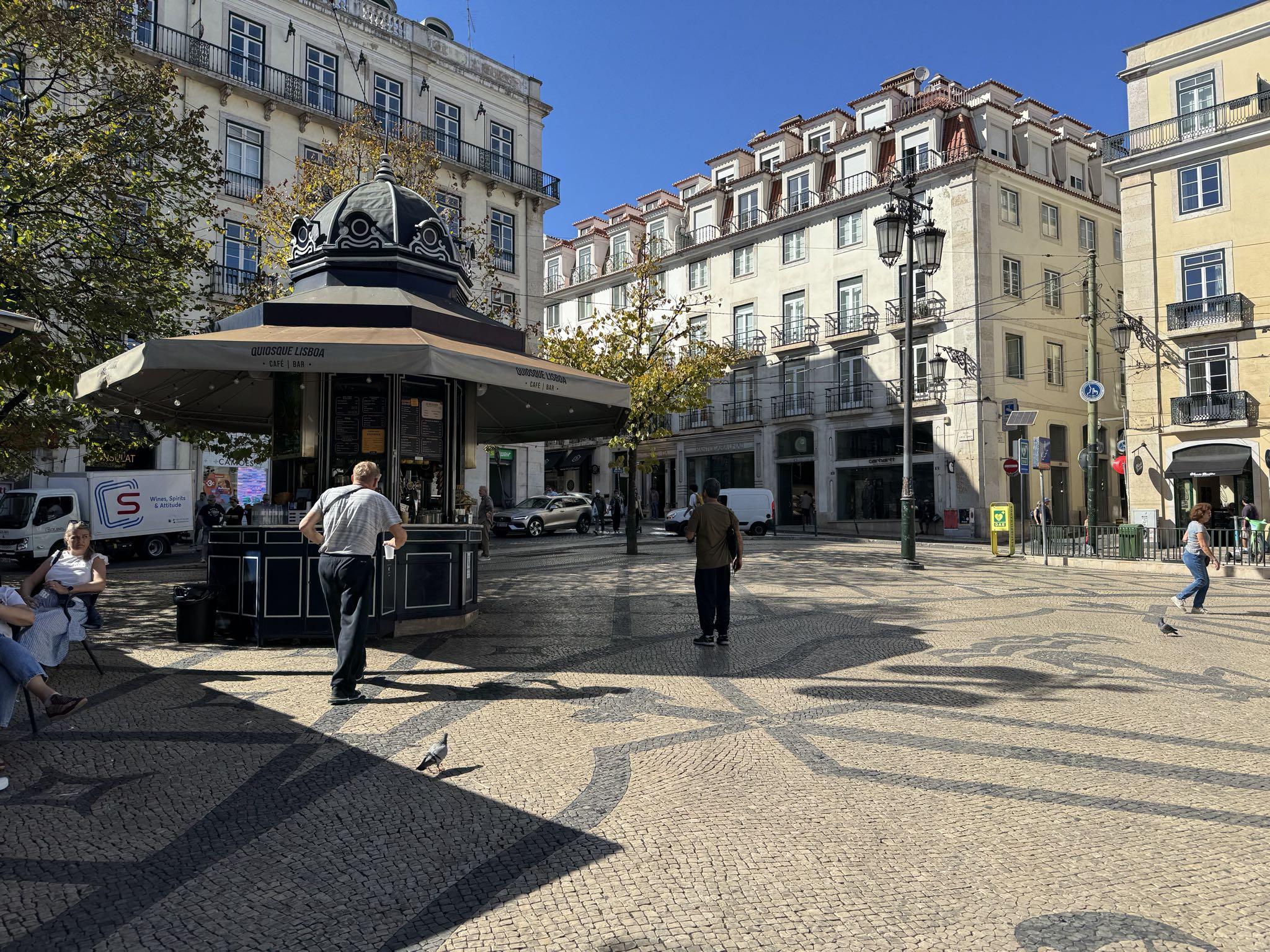
Walking around in the square we see some interesting priorities in Portuguese cafes – churros, beer and steak. Nobody in my group is disagreeing with that.
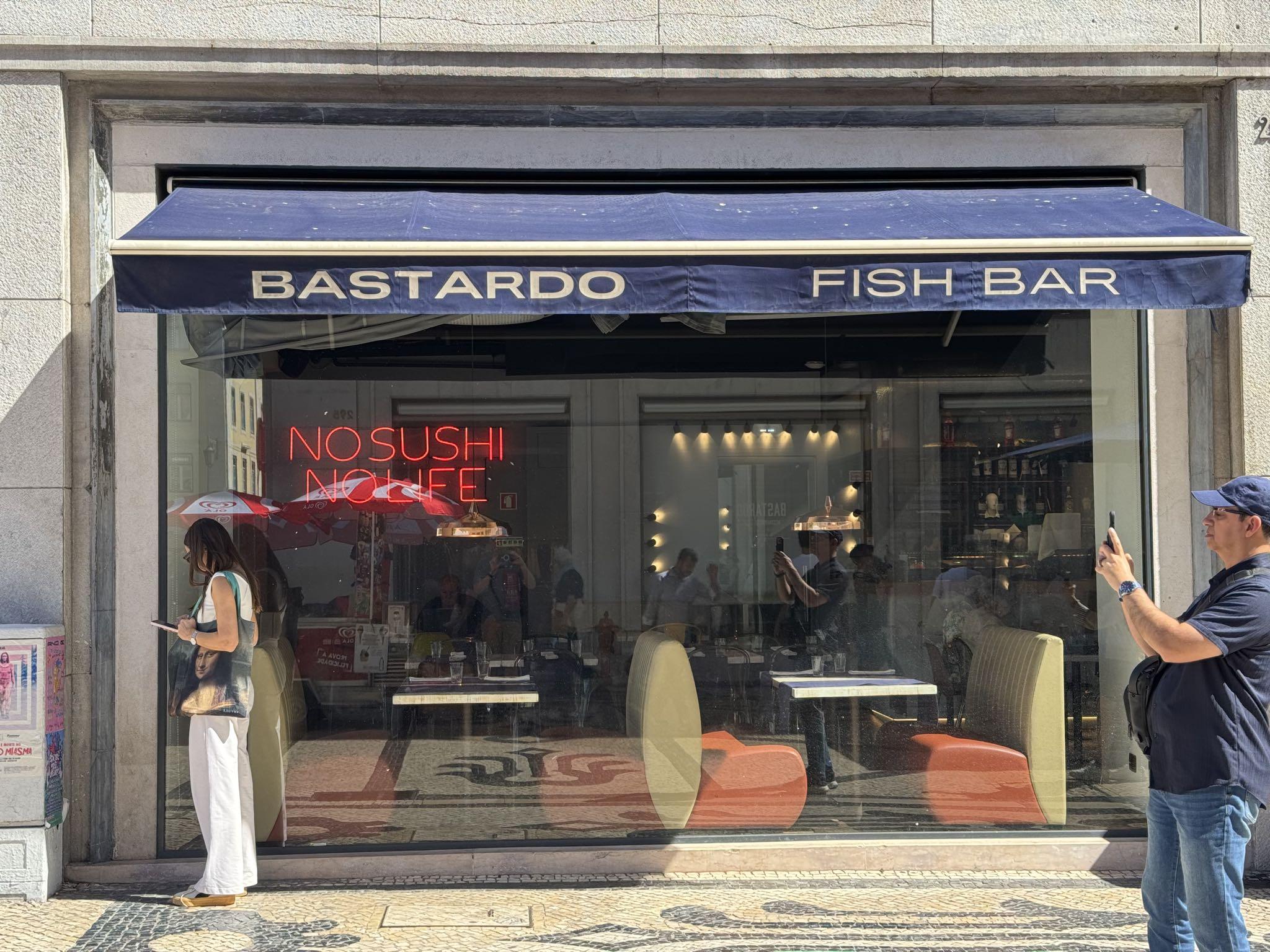
We come across a Portuguese fusion sushi bar. (The bastard child of different cultures).
We walk along and a moment of European artistic moodiness overtakes Trinity.
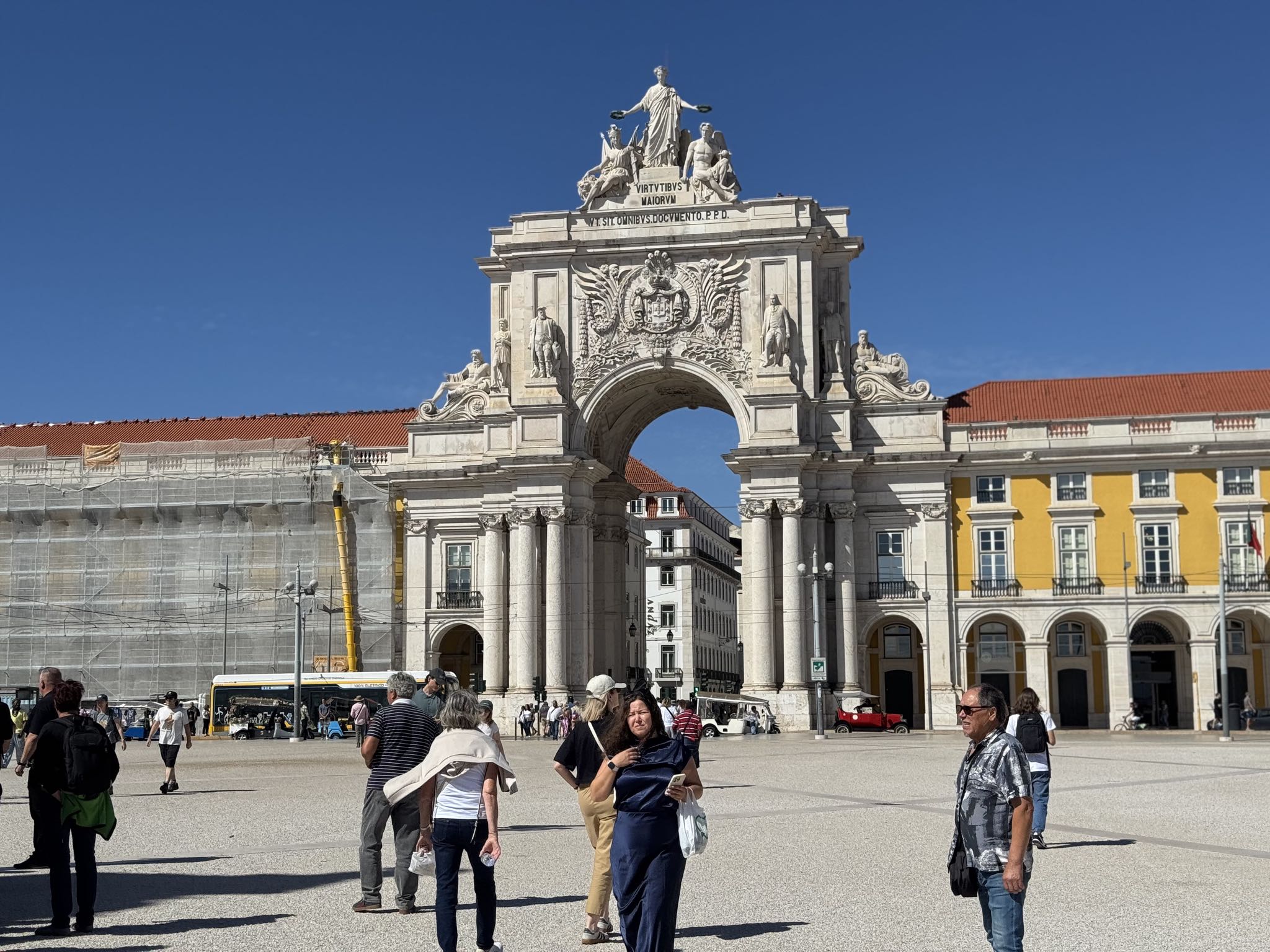
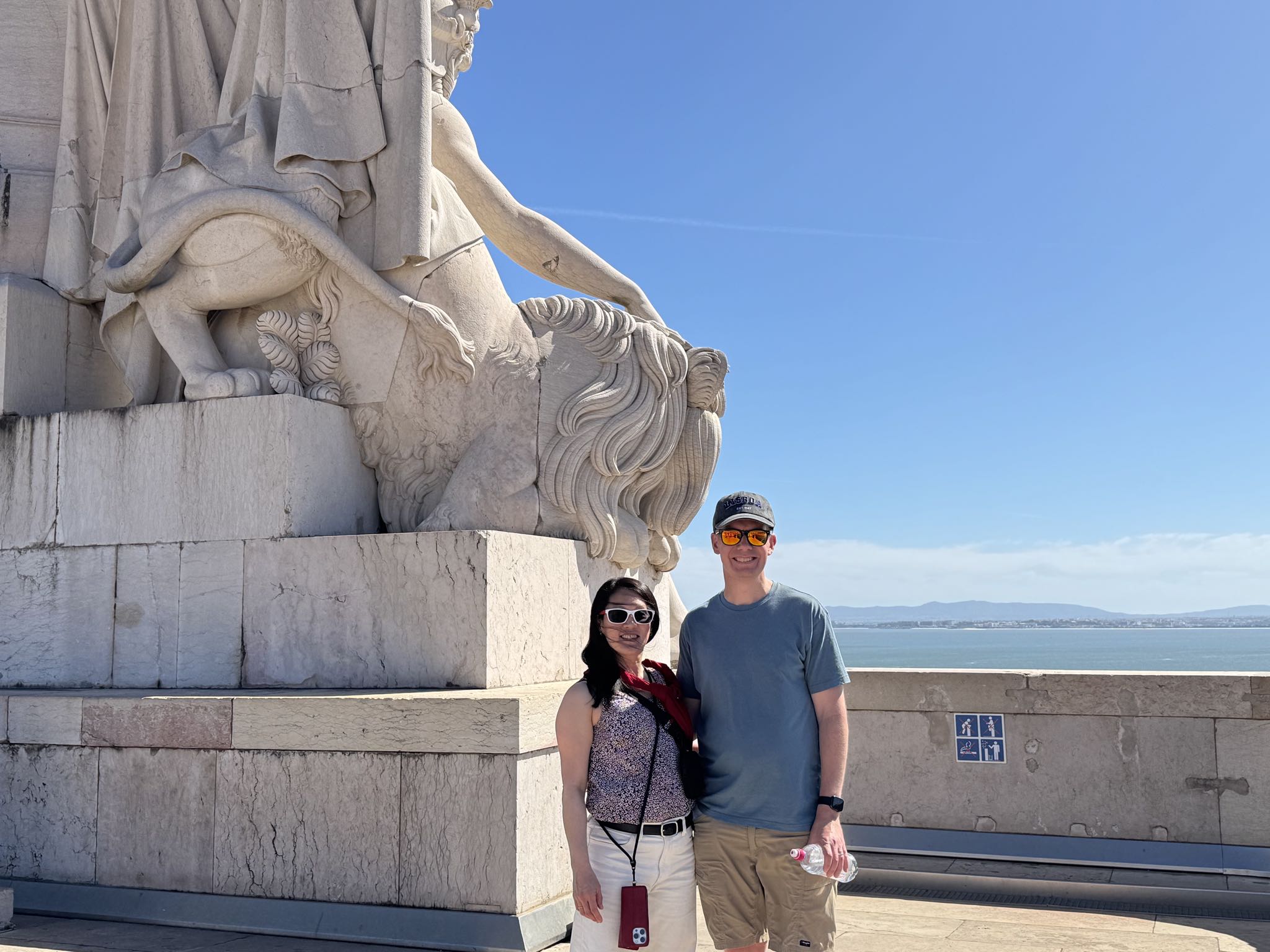
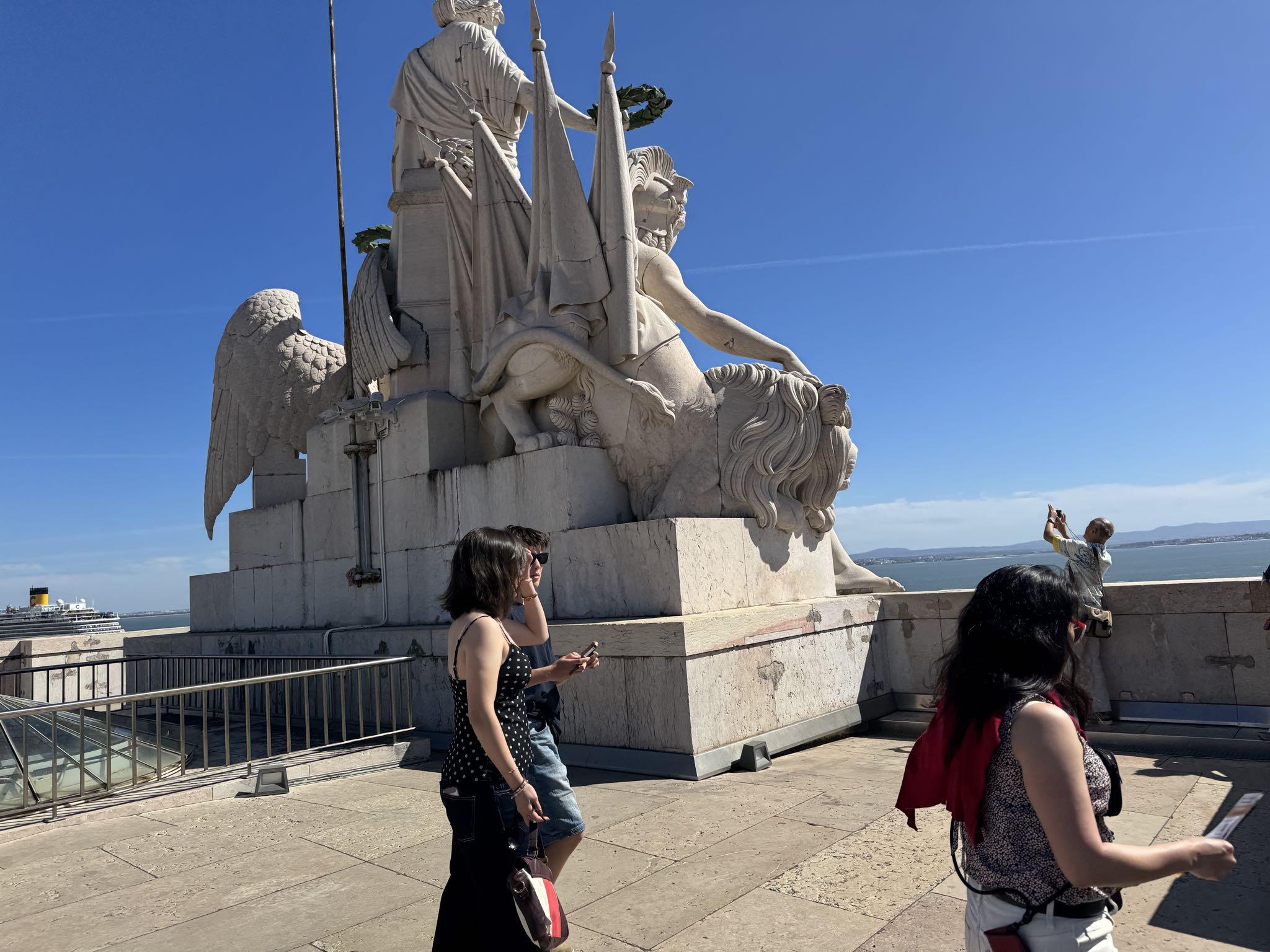
We climbed the steps to an arch to celebrate Lisbon surviving the 1855 earthquake. This Earthquake ultimately devastated the Empire, although at the time of building this it was not clear. It makes sense at the time of economic downturns to do building projects, and the theme of this arch is that Lisbon is the little engine that could. It looks out at the water and say “Yes! We can do it again.” But it has all the substantive weight of a 90s motivational poster of a kitten hanging onto a rope saying “Hang in there baby!” Portugal and Lisbon is ultimately a lightweight that turned inward.
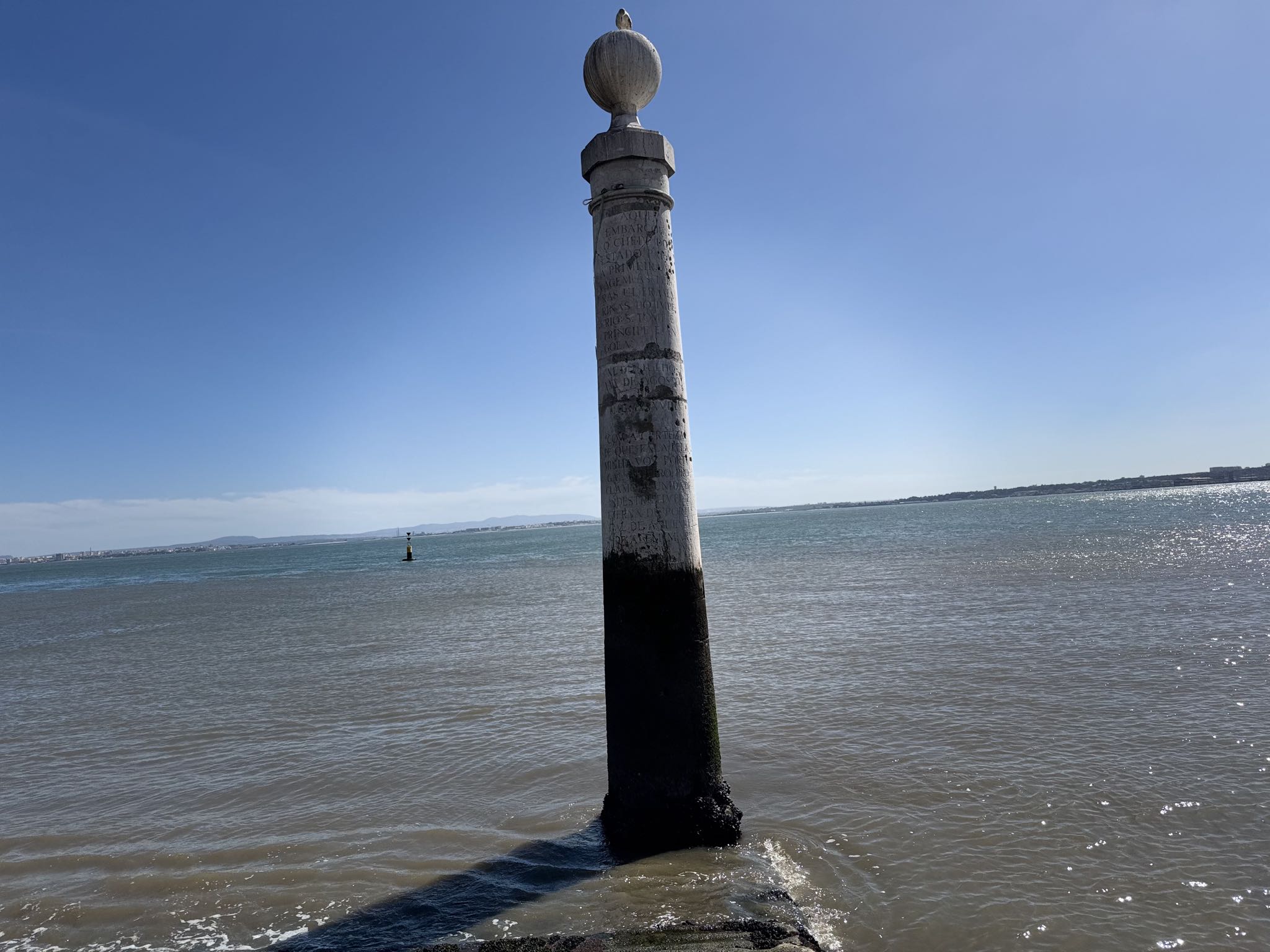
We walk further down the square to a symbolic dock at the Harbour. You might for a moment stare at in hope you have found the place where all the magic happened. That you are standing in the footsteps of those grand voyages. A quick google search dashes your hopes. The discoverers left from upriver in Belem, and Portugal was too poor at the time to fund Christopher Columbus. This dock is pure motivational-kitten-poster stuff. I want to stomp off in disgust. Perhaps I’ll find a custard tart.
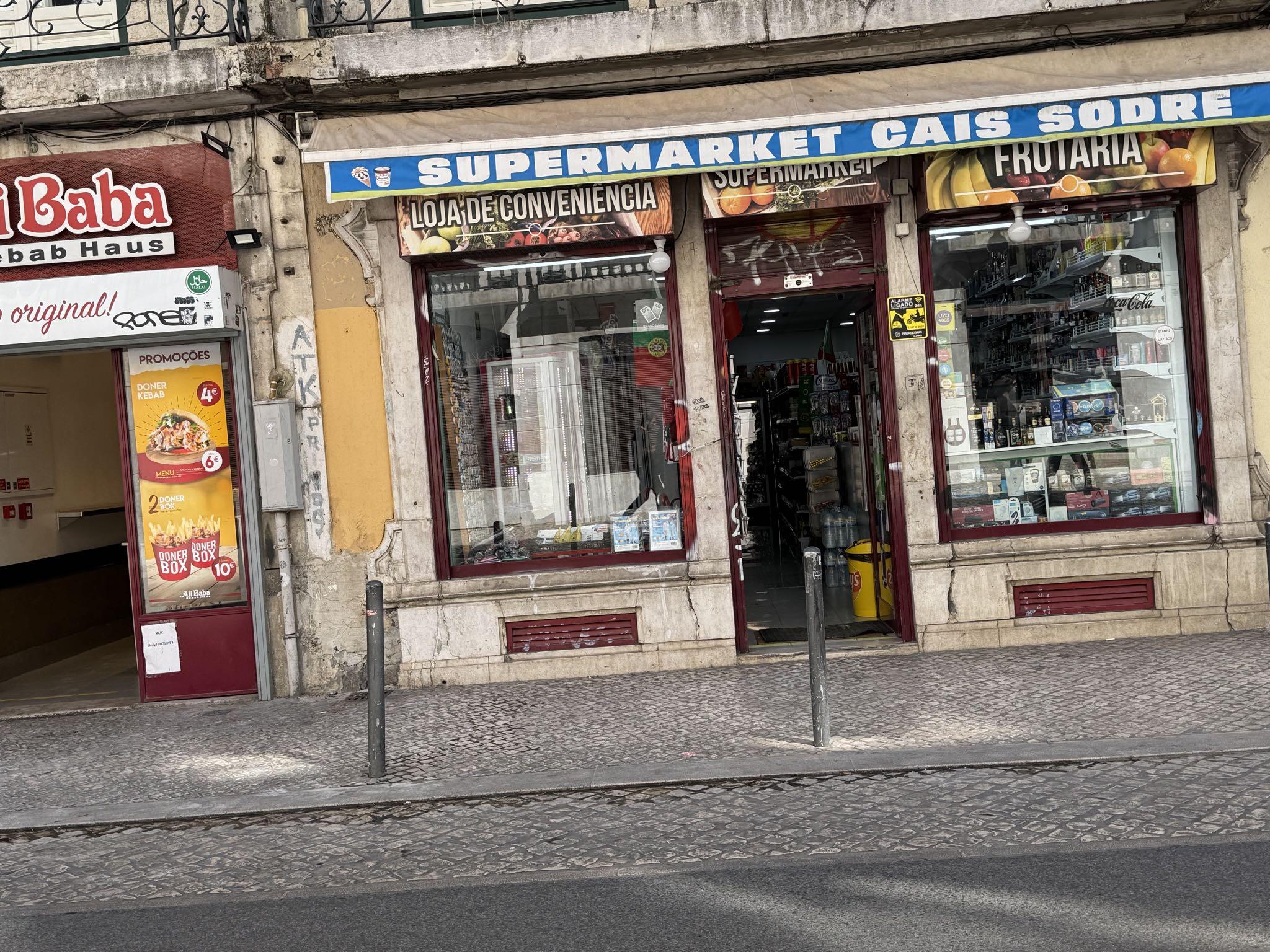
This is the vibe of the small convenience stores in the city. (Loja de convienca – lodge of convenience – Convenience Store.) I feel that in a decade or two they will all become a chain of a European brand like Liddl. In speaking to locals they talk of how Lisbon has become culturally homogenised since European Union. I look at what is taking place in the EU (enabling single Corporations to span the whole EU instead of being state-based), and say “You ain’t seen nothing yet.”
Portugal wants to be both European and its own. You might say this is form over substance. A thoughtful reflection might suggest it is soft-power influencing.
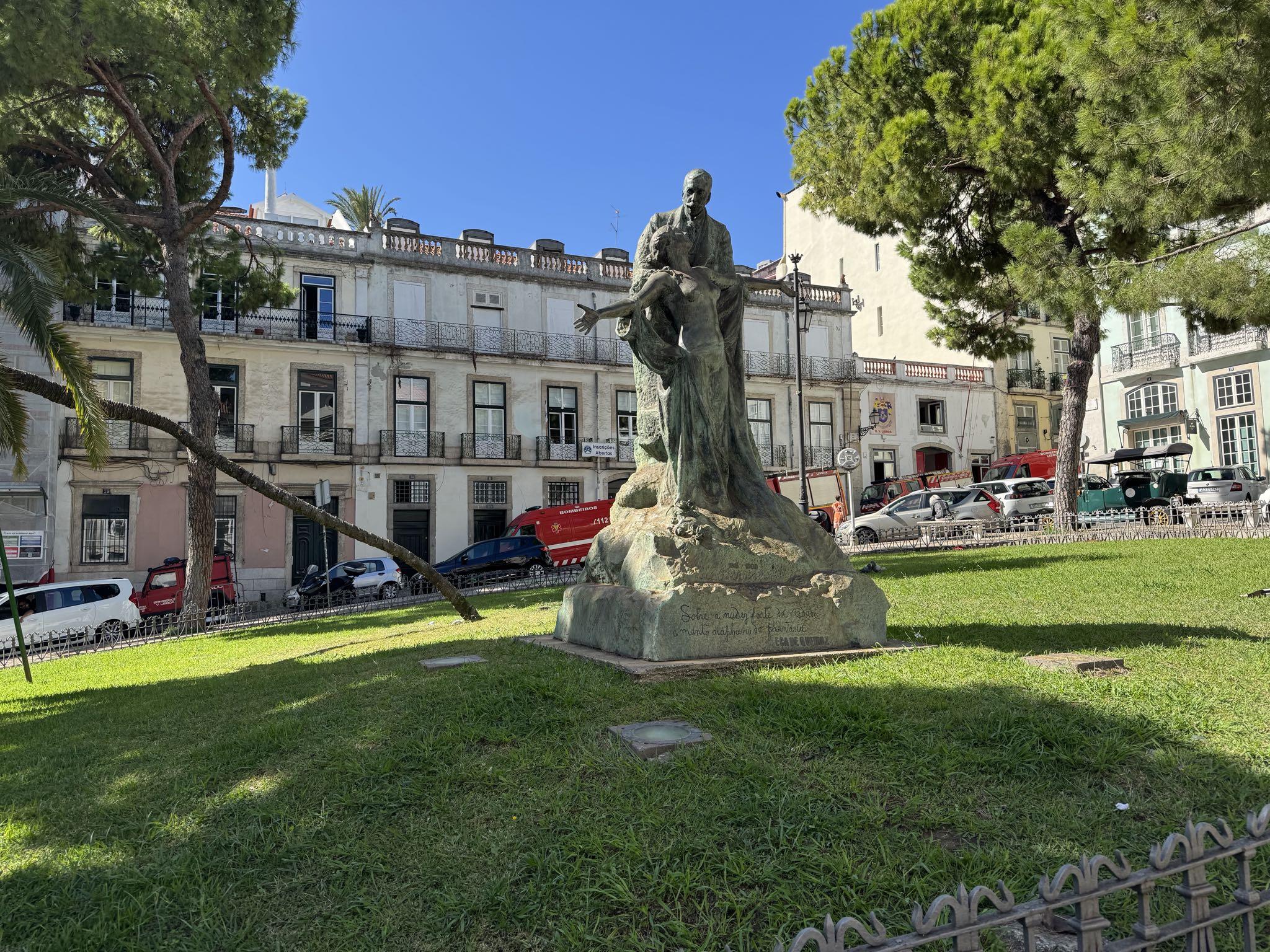
This is the Portuguese Charles Dickens. The Inscription reads “Over the stark nakedness of Truth, the diaphanous cloak of Fantasy”. He is celebrated for being a diplomat, novelist and sharp social critic. He lampooned the hypocrisy, bourgeois superficiality, religious corruption, and political stagnation of late 19th-century Lisbon. The statue depicts Truth draping herself in this transparent cloak—symbolizing how a novelist uses imagination and storytelling not to hide reality, but to render raw truth human and accessible.
Trinity found one of her “destination sites” for visiting European Cities.
We decided on afternoon tea respite next door sitting in a cafe eating Portuguese custard tarts. It was a warm afternoon and we were running out of steam.
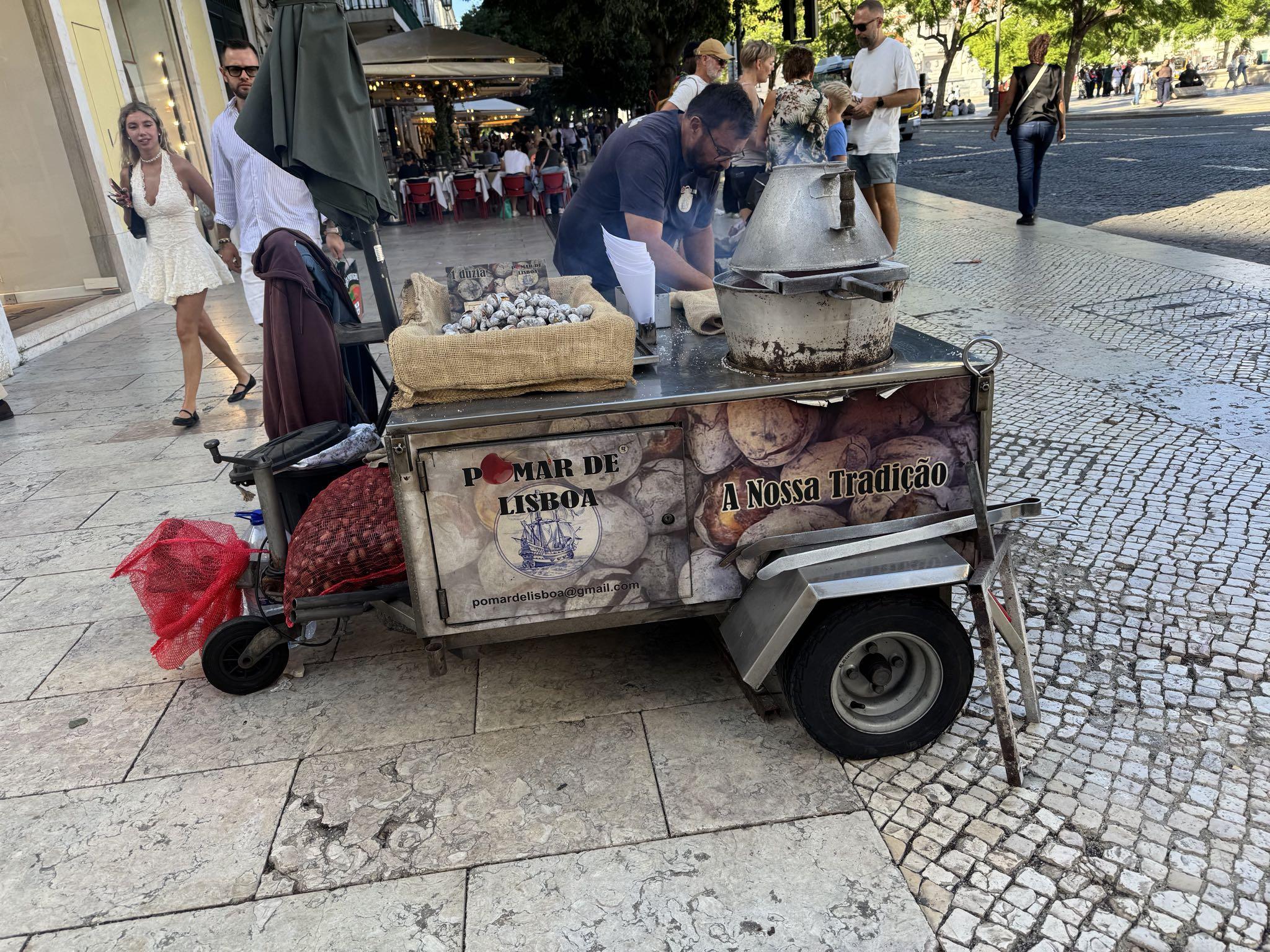
Walking back we saw a man smoking chestnuts. My limited experience is that these don’t actually taste very good, but are a strong link to an 18th century world. (More on this theme later.)
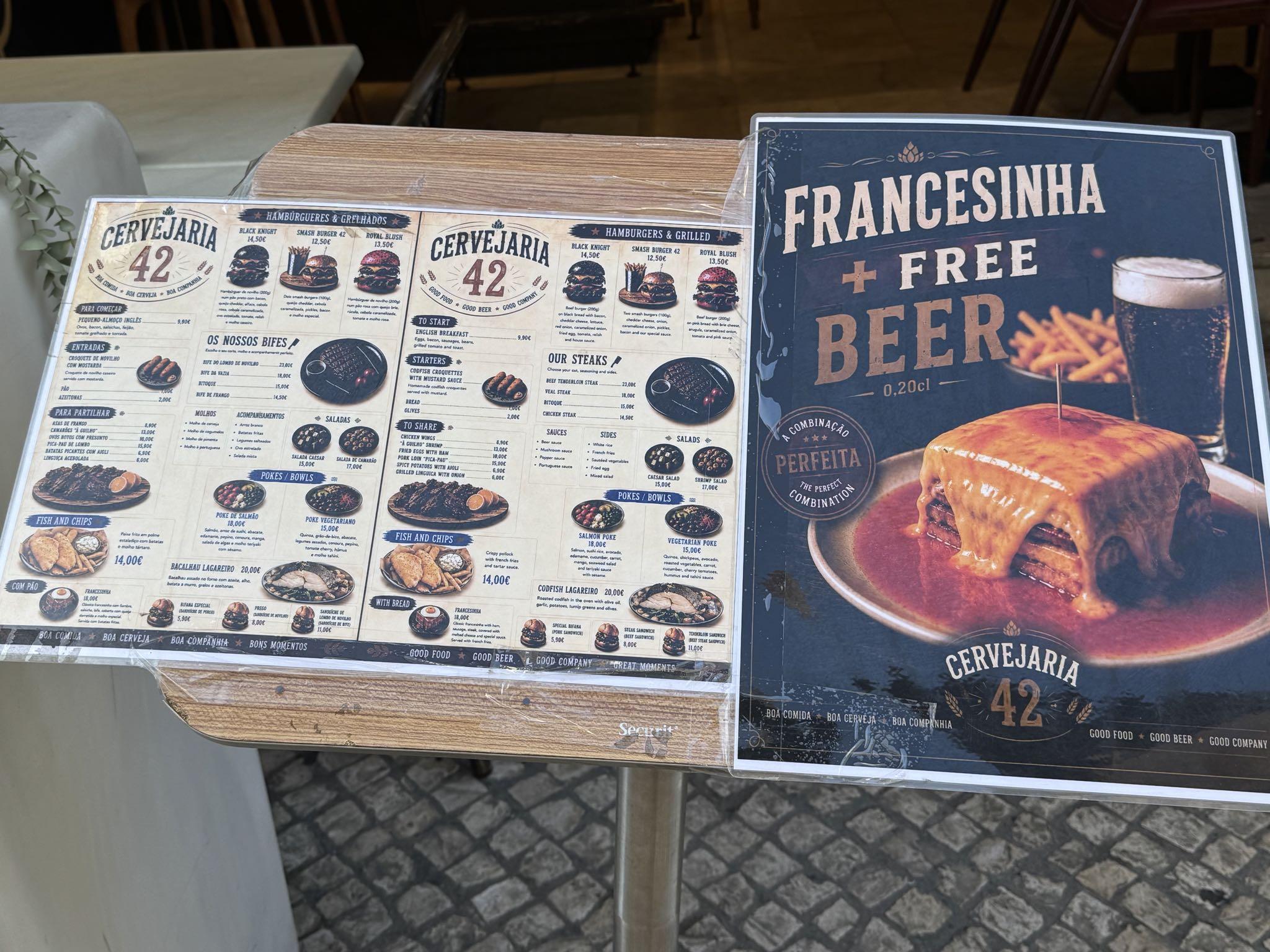
Dinner was at a local corner restaurant, sampling various ways to cook a Cod meal. (Which Lisbon is really into.) This and various ways to do cheese sandwiches (Francesina) are Portuguese staples. (This photo is not where we went but is an indicator of what what kind of meals are on offer.)
Comments Off on Thur 1 Oct – Walking Around Lisbon to Beat Jetlag
Posted onOctober 3, 2026|Comments Off on Thur 1 Oct – Landing In Lisbon
After more than 24 hours on flights – the main goal for this day was to get in and beat jet-lag by staying awake. Thoughts today are fairly unsynthesised, and captured in point form as an experience-snapshot.
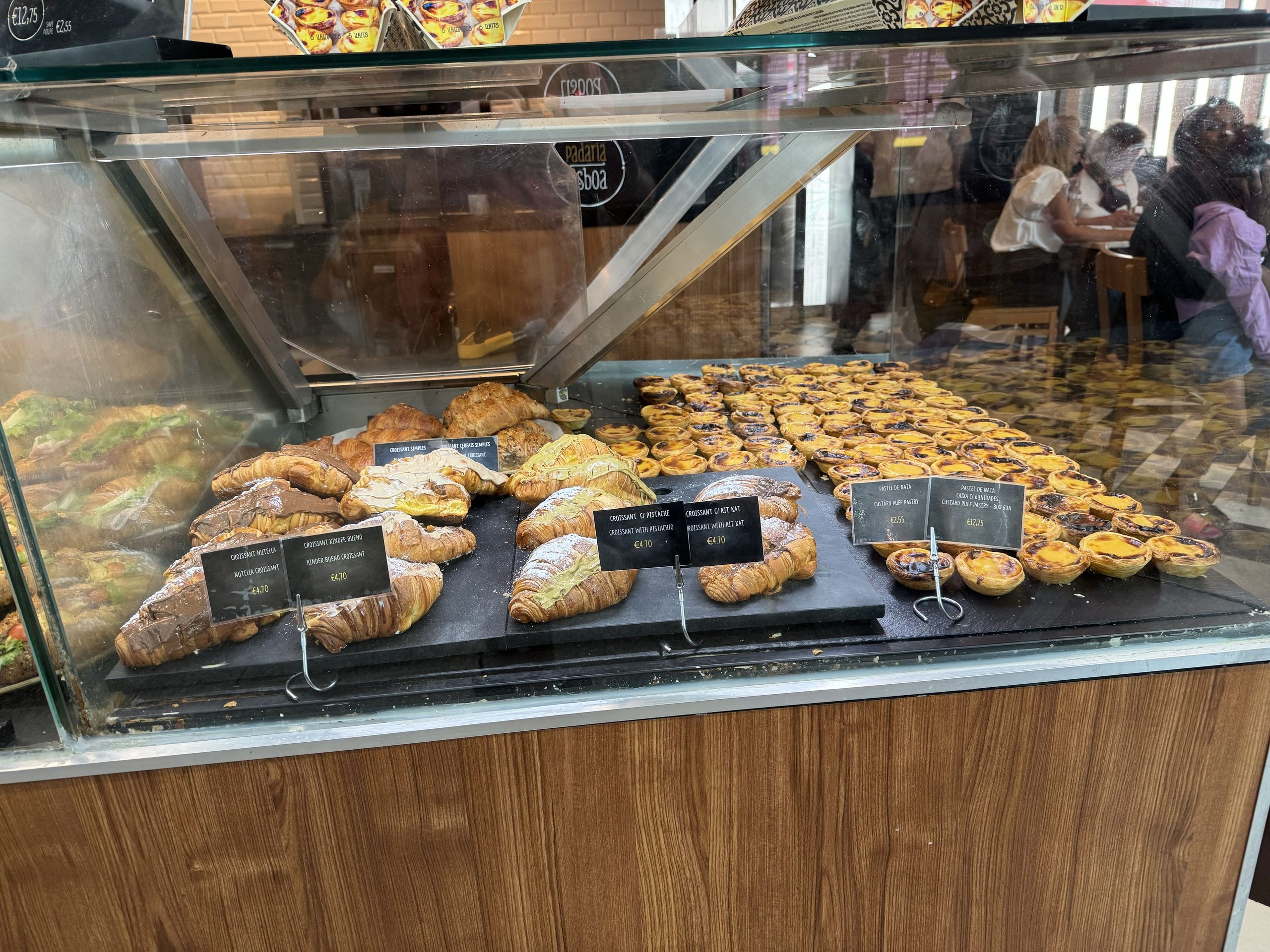
At the airport, custard tarts are EUR2.55, which feels after conversion, the same as or slightly cheaper than Sydney. A theme for the trip.
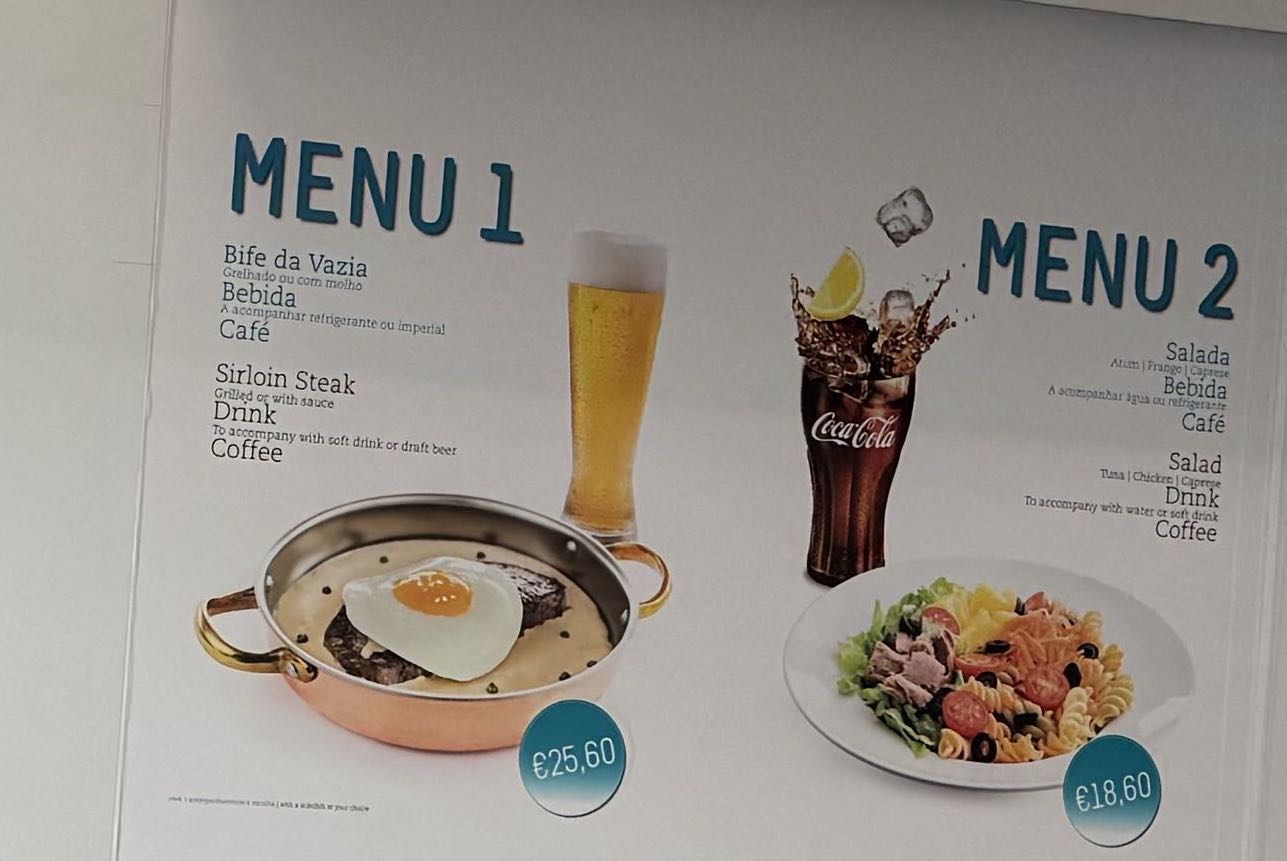
A Cafe menu offers a steak with a fried egg on it.
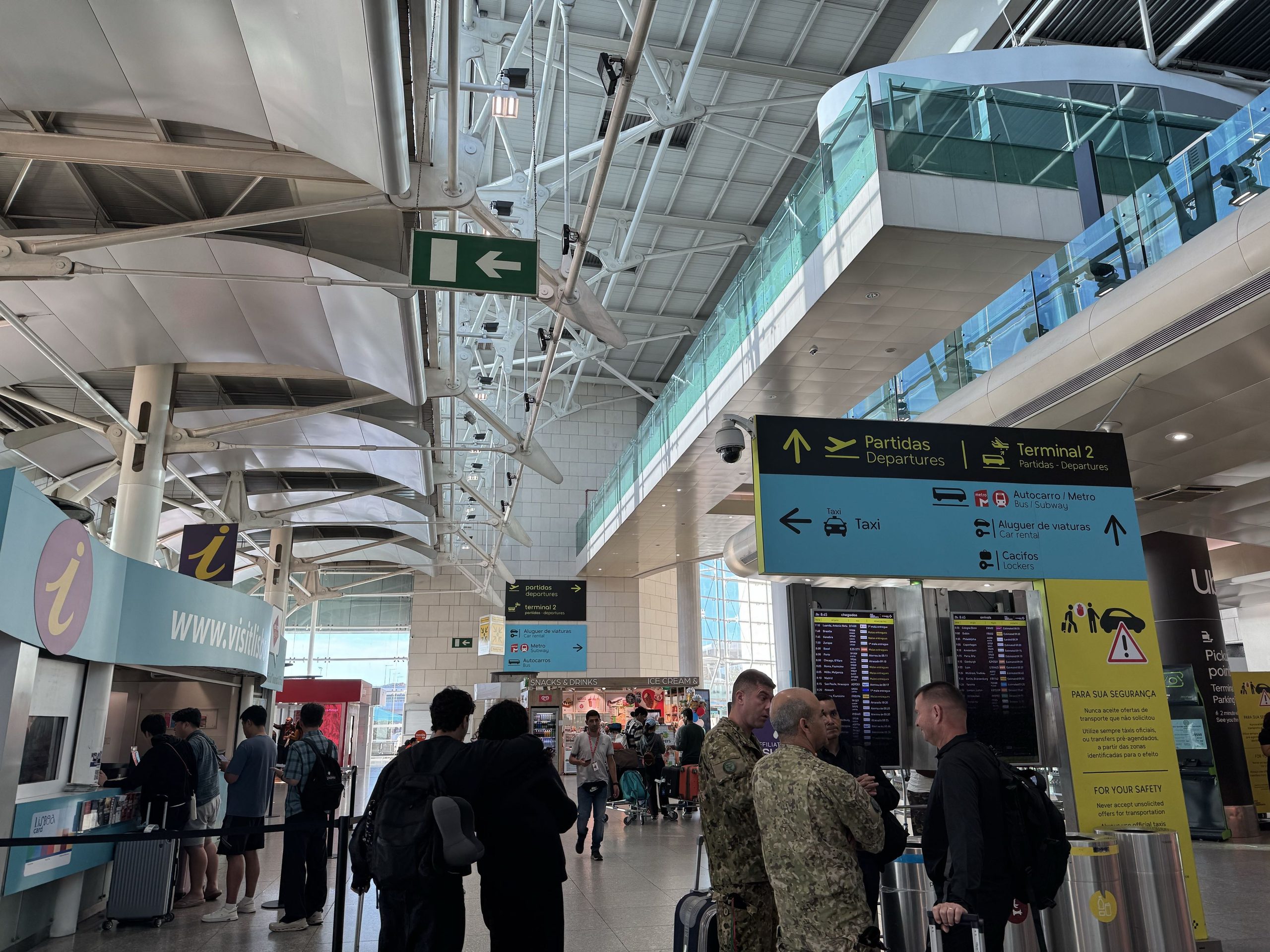
Lisbon airport feels like Brisbane, more intimate, more of a personal touch.
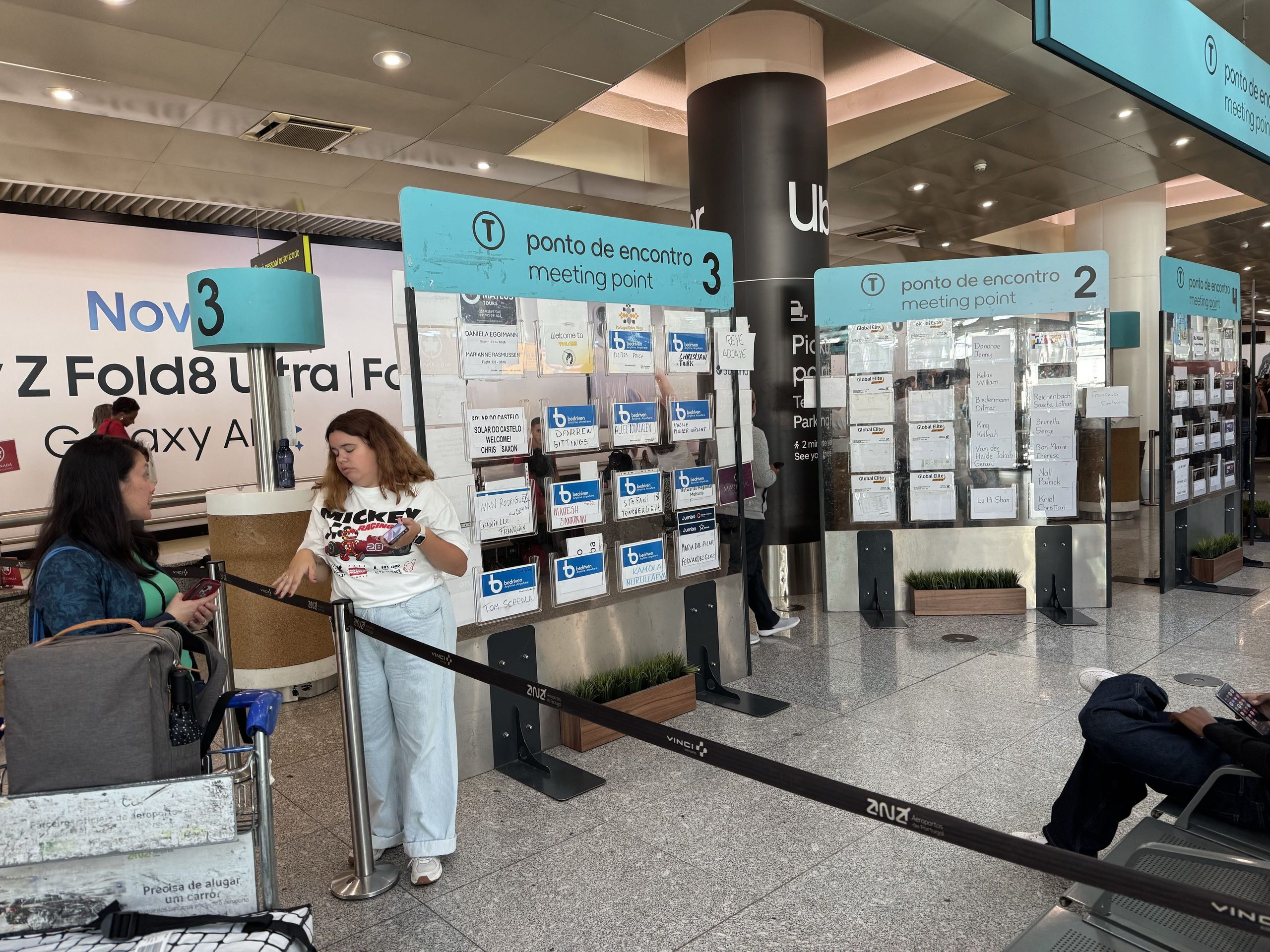
Lisbon Airport has a system with your name on it for meeting your driver. We are told our driver will get turn up in about 10 minutes.
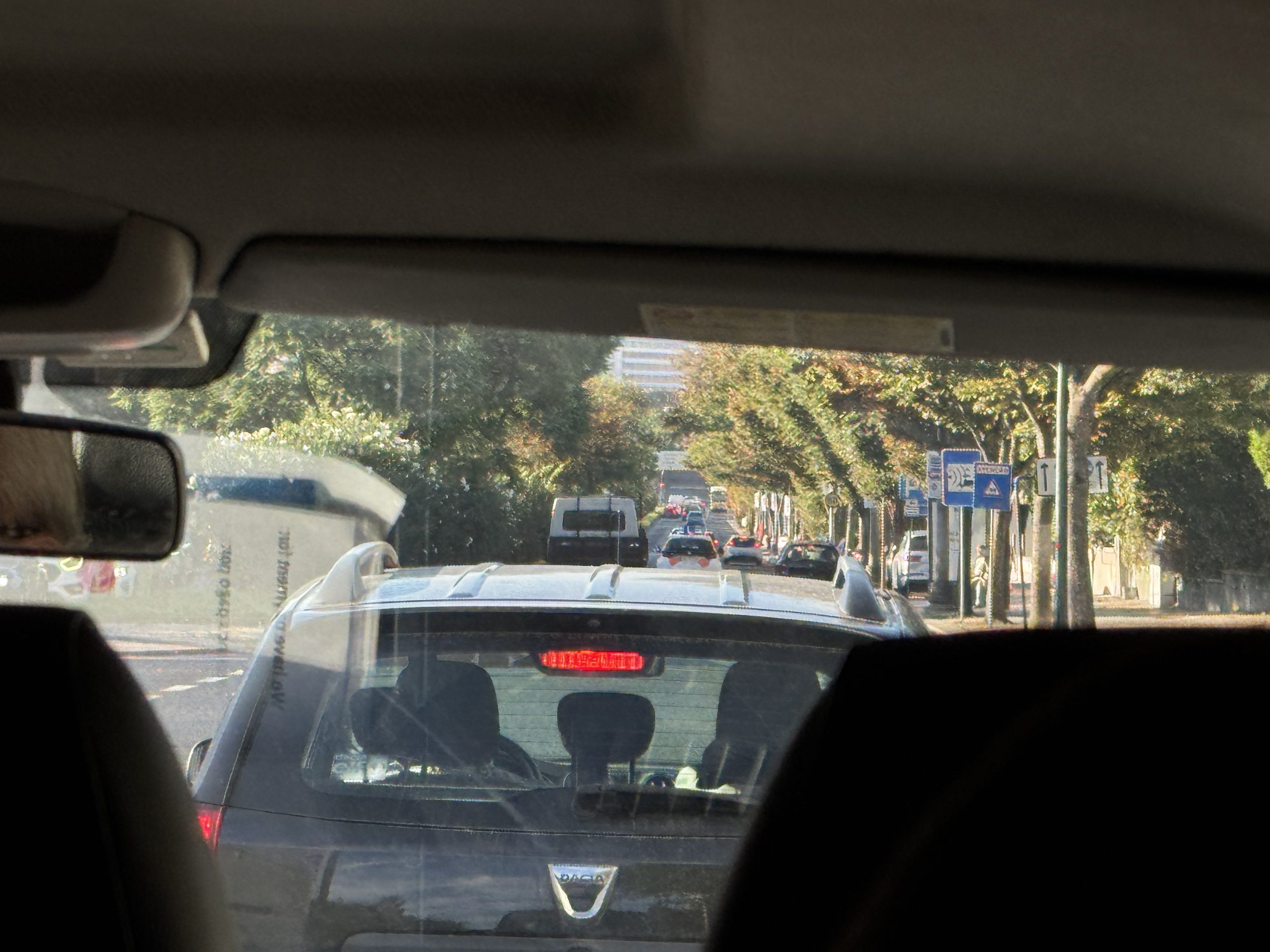
The traffic from the airport is unhurried.
Taxi drivers in traffic open windows to exchange conversation, I feel like I’m in a 1970s Michael Caine movie.
Longer stretches of driving along roads overhung with trees with a touch of autumn leaves – in the middle of the highways oleander shrubs flower in white.
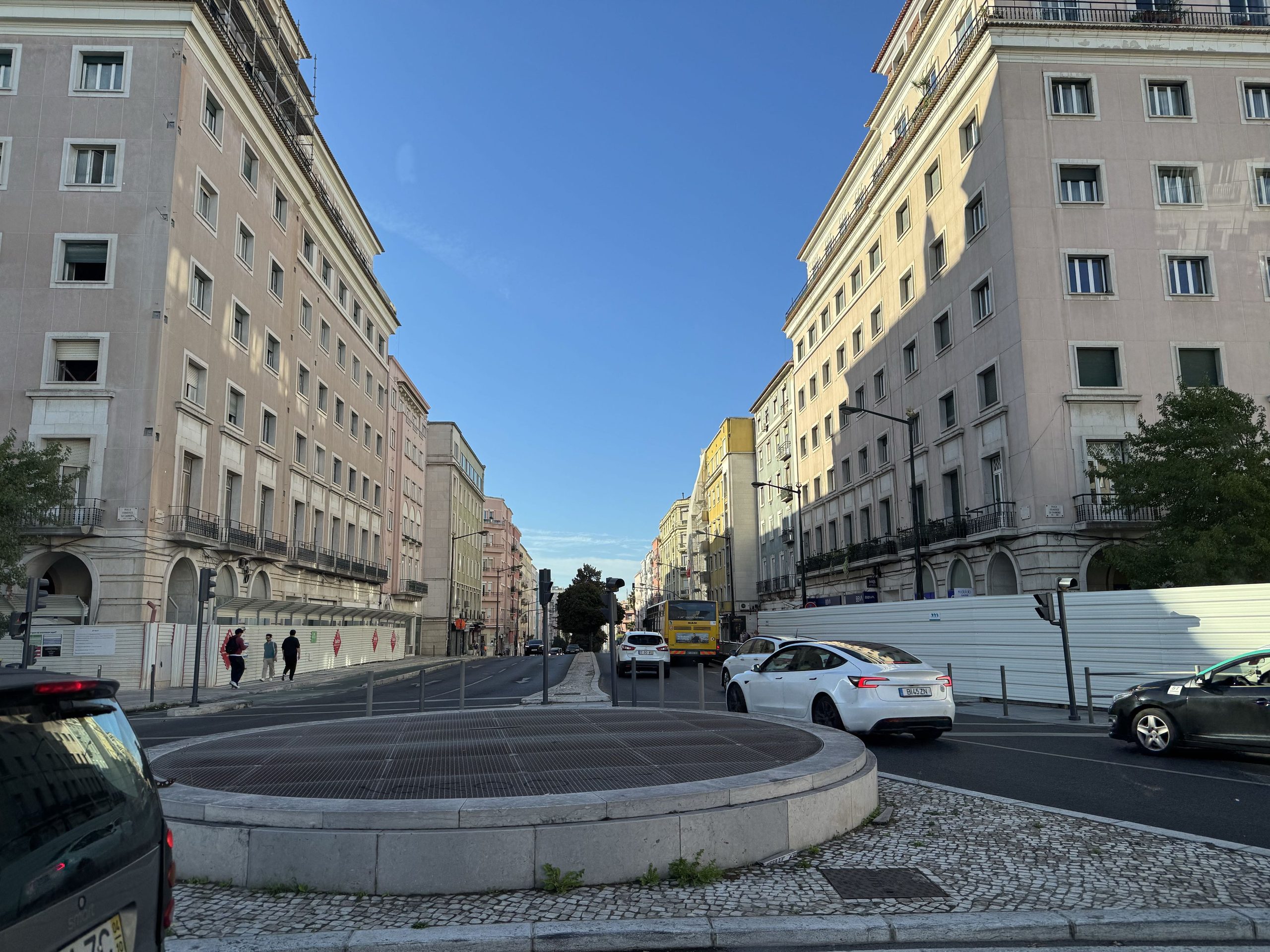
We drive to a city roundabout surrounded by pink buildings with white window frames.
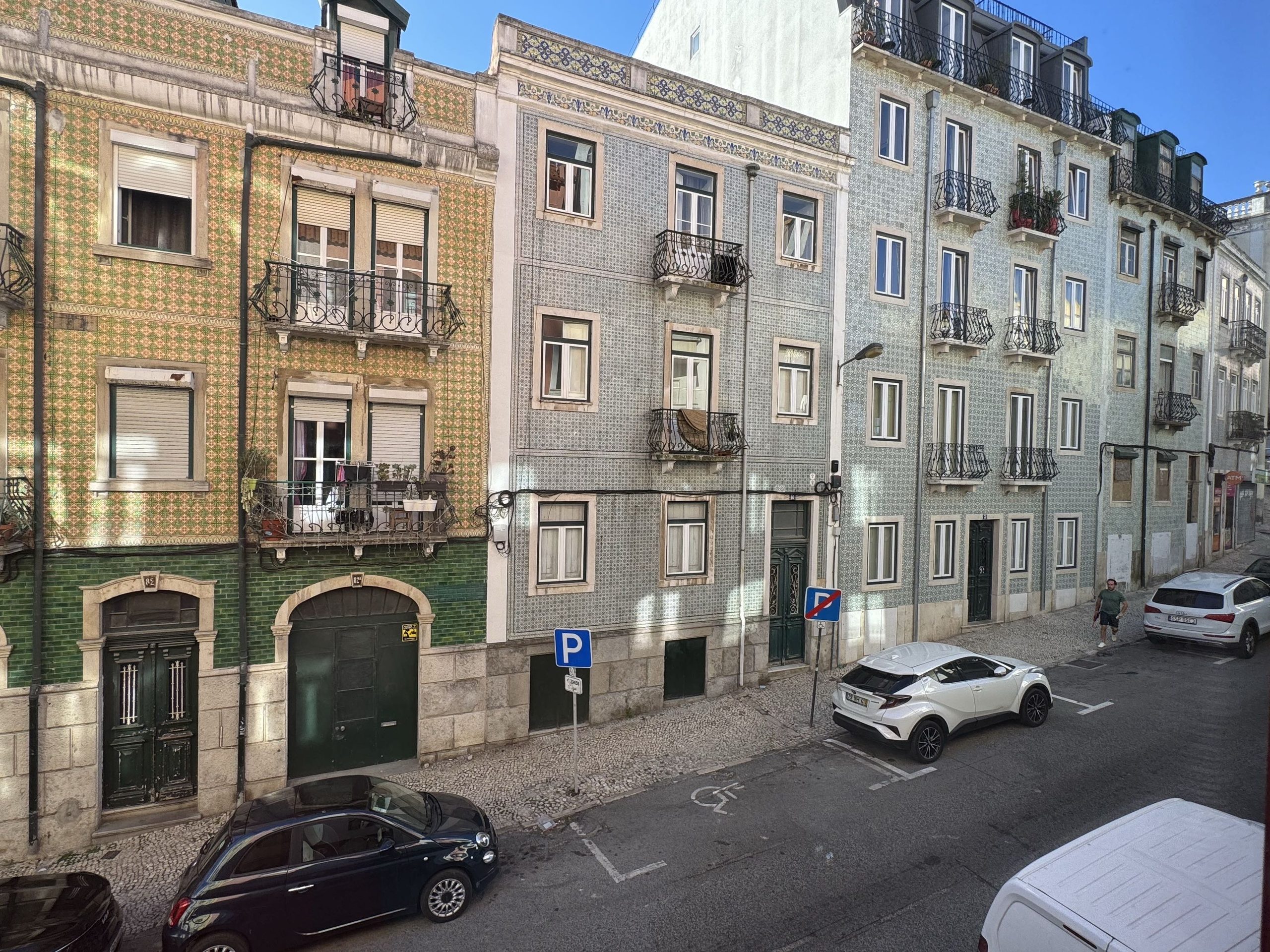
There are some serious tiles in this place. A theme for the trip.
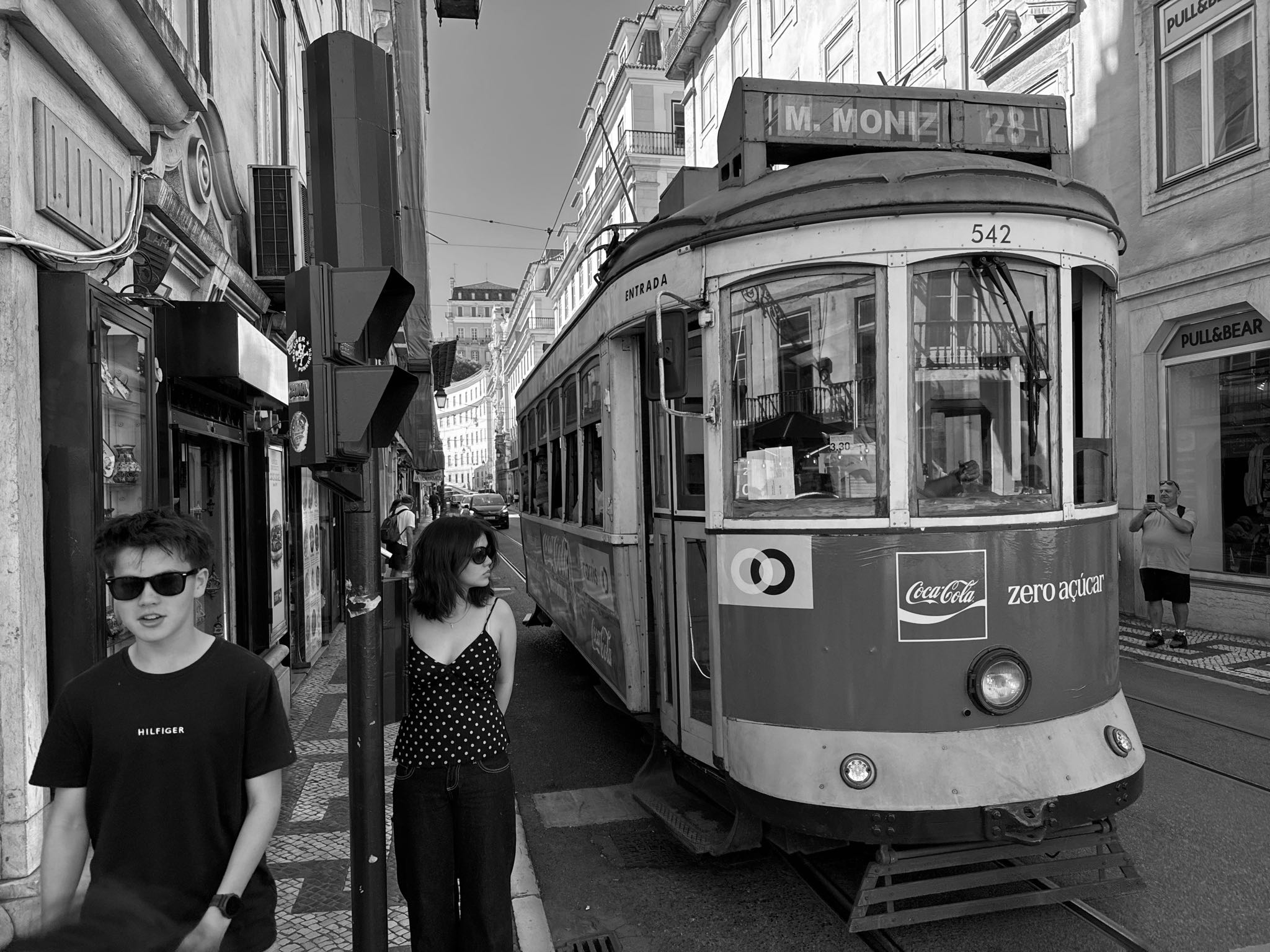
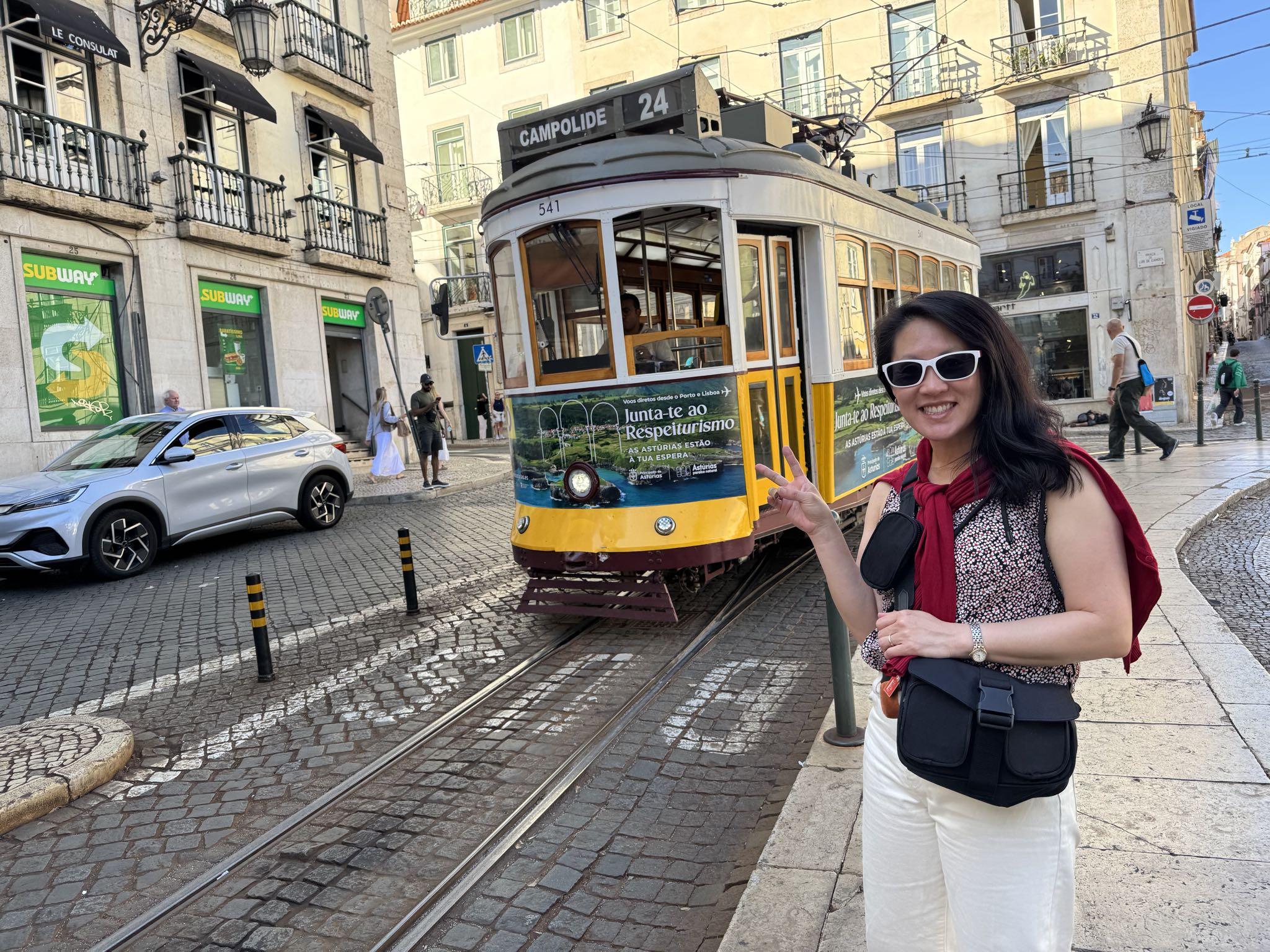
The trams are fearless on the narrow hilly streets – I can definitely see a famous architect getting killed by one.
We arrived at our apartment and the lifts were quirky and unhurried.
Posted onOctober 3, 2026|Comments Off on Wed 30 Sep – Expectation and Reality
I climb into the seat on the plane. We barrel down the runway. The plane ascends – taking off to an adventure. The city shrinks to a map. The wings tilt back down and we enter a space beyond the clouds.
You’ll remember from reading my previous adventures: China, the UK, Indonesia, that this is an exercise in literary flourish and reflection. A snapshot of some feelings from the day. Do remember the trees in Indonesia strangling the buildings and reaching up to the rain clouds, or the dancing astronomers at Greenwich Observatory.
In The Great Gatsby, Nick Carraway searches for the dream of Gatsby. An almost unattainable legend – something everyone describes but seems has not truly found. Ultimately Gatsby chases Daisy for five years but she doesn’t live up to his imagination. The green light at the far side of the bay seems amazing from a distance, but up close it is small and unremarkable.
In The Art of Travel Alain De Botton says travel brochures (and today Instagram) feed our human ability to create fantasy worlds for ourselves. That in this we crop and filter out the unpleasant contextual details to better frame our selective imagination. That we create an experience of beauty, forgetting that physical reality is never so cleanly filtered. This expectation leaves out two unavoidable variables, our emotional states and our physical bodies. On arriving we battle jet lag, heat exhaustion, bad digestion or aching feet. The mind carries its own anxieties, relationship friction with the new environment, and self-consciousness.
Consider Duc des Esseintes, who after reading Dickens, plans a trip to London. Whilst waiting on a Paris train station, he has a vision of rain, tea and atmosphere that leads him to conclude the reality could only disappoint him. So he cancels the trip and goes home. Alain says we fail to recognise that imagination compresses time, and strips away the mundane friction that accompanies real life.
For the whole of the trip, the plane is in a sense still in the air, until we return to land in Sydney. The holiday experience as a heady feeling of a constructed world. Unlike Des Esseintes, I’m staying on the plane and will endure the aching feet and jet lag because I expect something. For a memorable family trip. Perhaps to catch some glimpse of the Age of Discovery, to see why these great nations of Portugal and Spain became great trading empires, but then gave it all away. Perhaps to just take this world as it is, and celebrate being in the moment.
When we arrive in Portugal the plane will still be in the air.
Comments Off on Wed 30 Sep – Expectation and Reality
Posted onSeptember 30, 2026|Comments Off on Sitting in Sydney International Airport
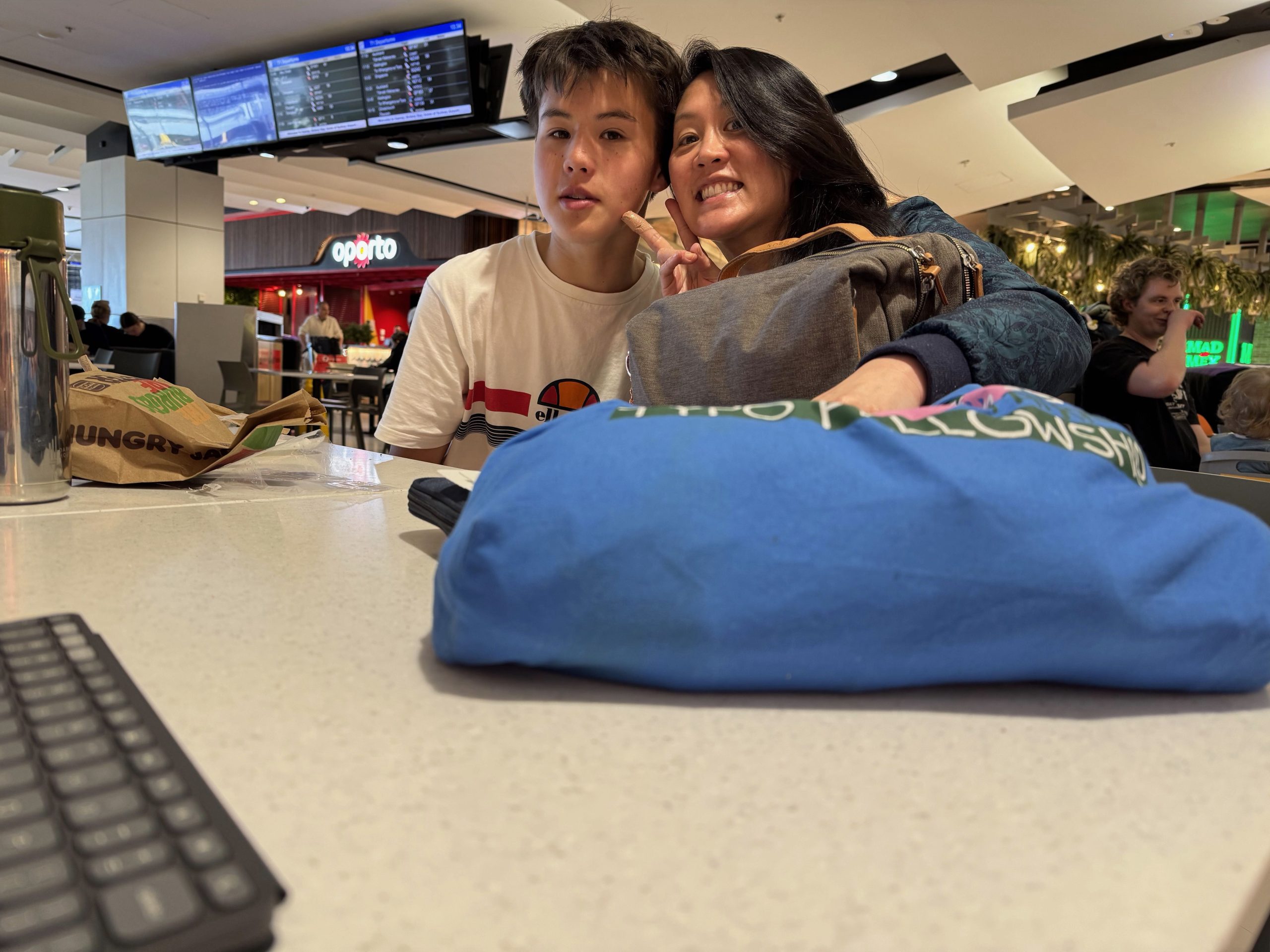
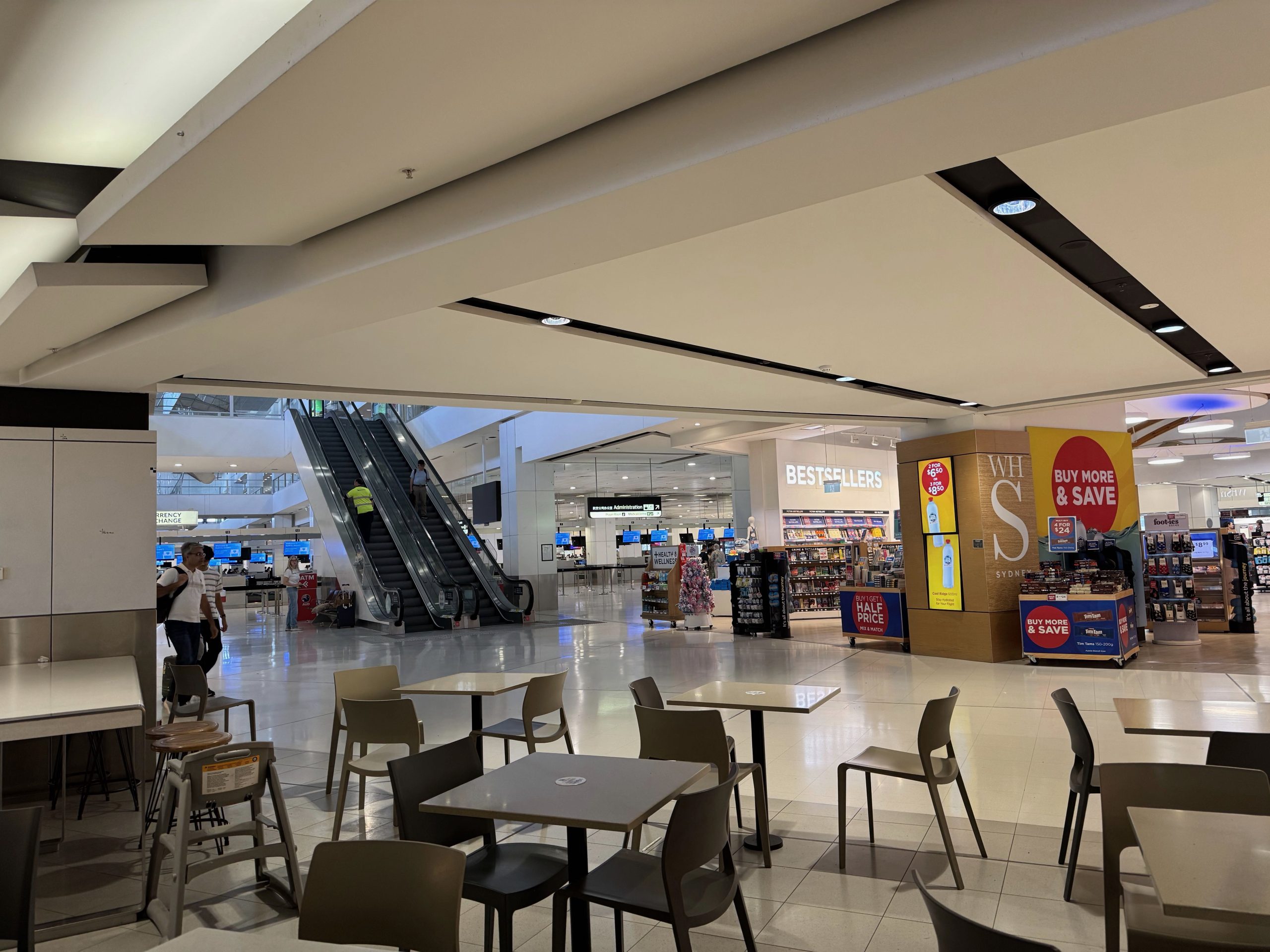
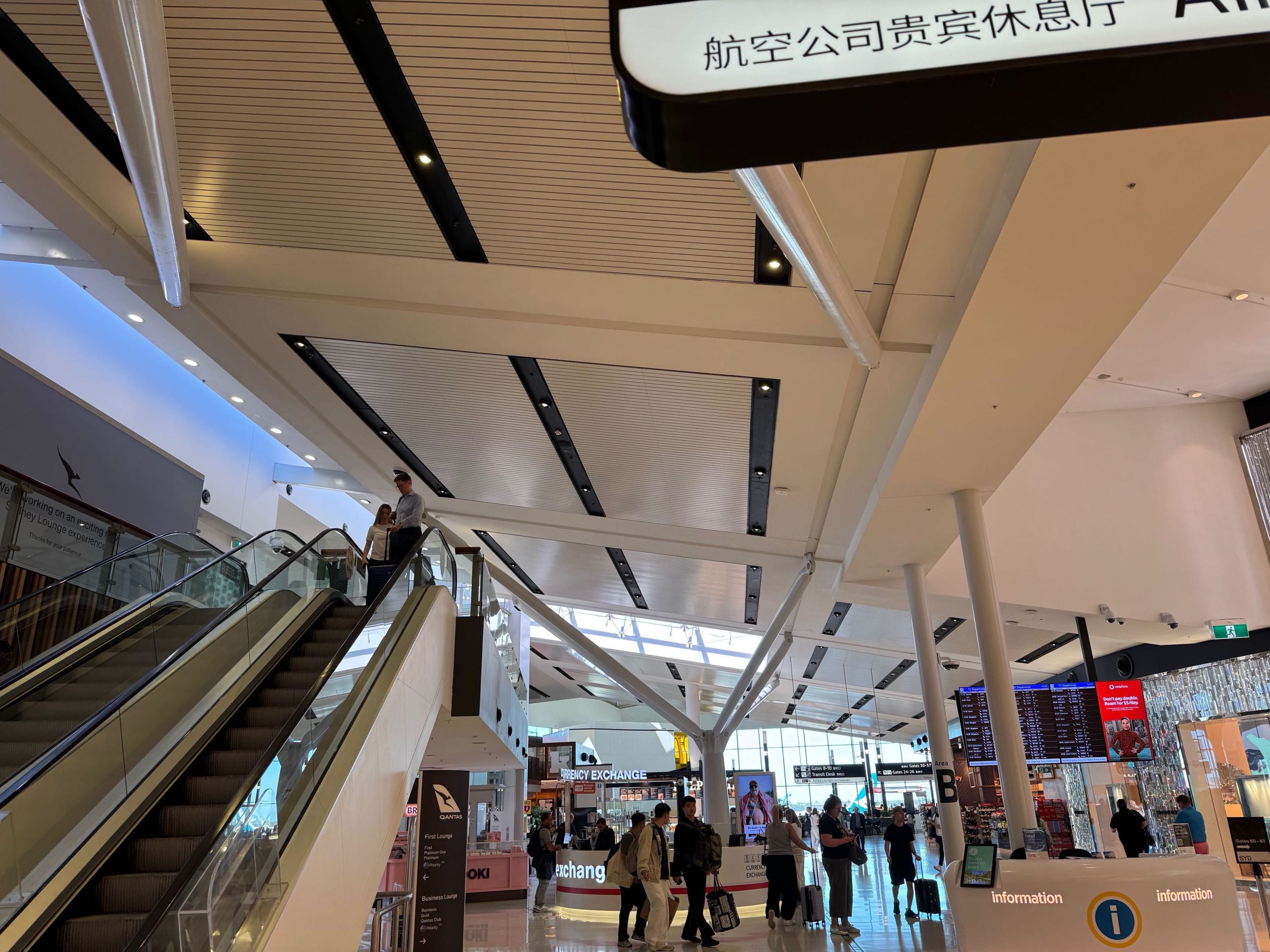
Waiting to go through the gates. Two and a half hours to go. Airports are luminal spaces, a place you occupy whilst you’re passing through from one place to another.
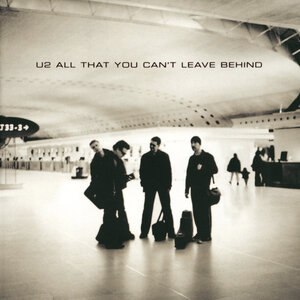
U2 wrote about them in their 2000 album All That You Can’t Leave Behind. One of the music videos and the Cover were filmed in Charles De Gaulle Airport. Elevation was on theme. U2’s long time producer Brian Eno also did a 1978 album Music for Airports.
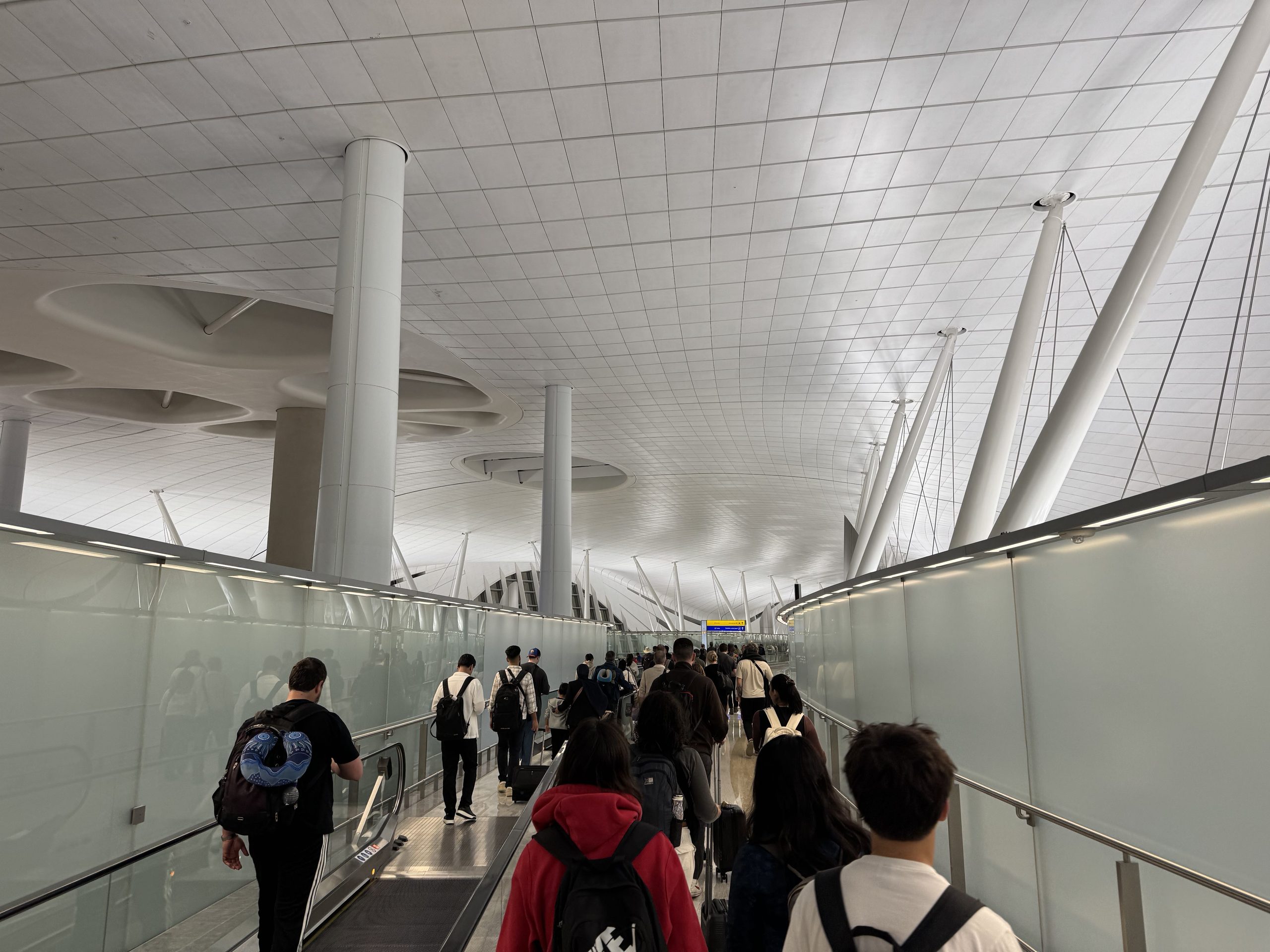
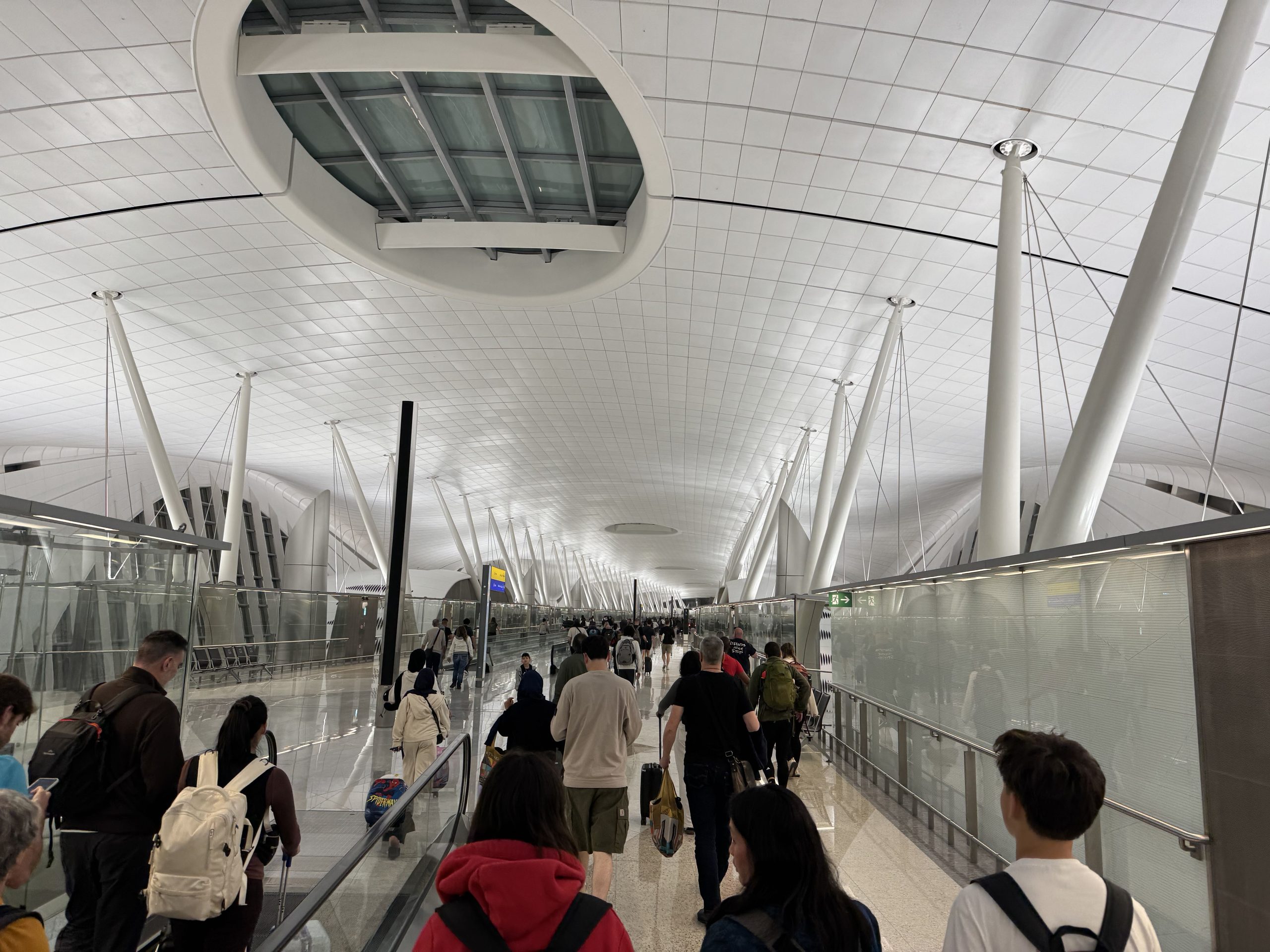
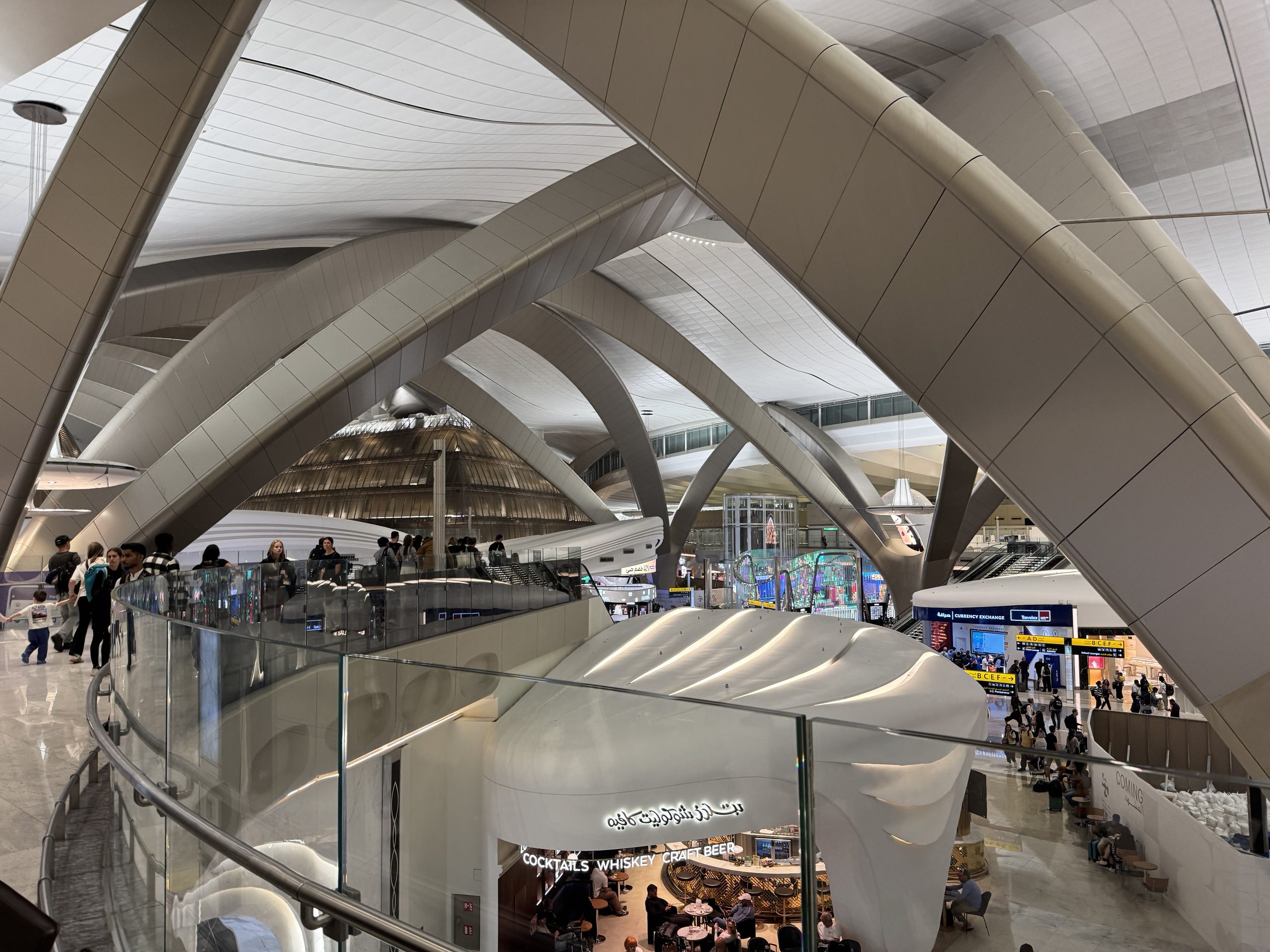
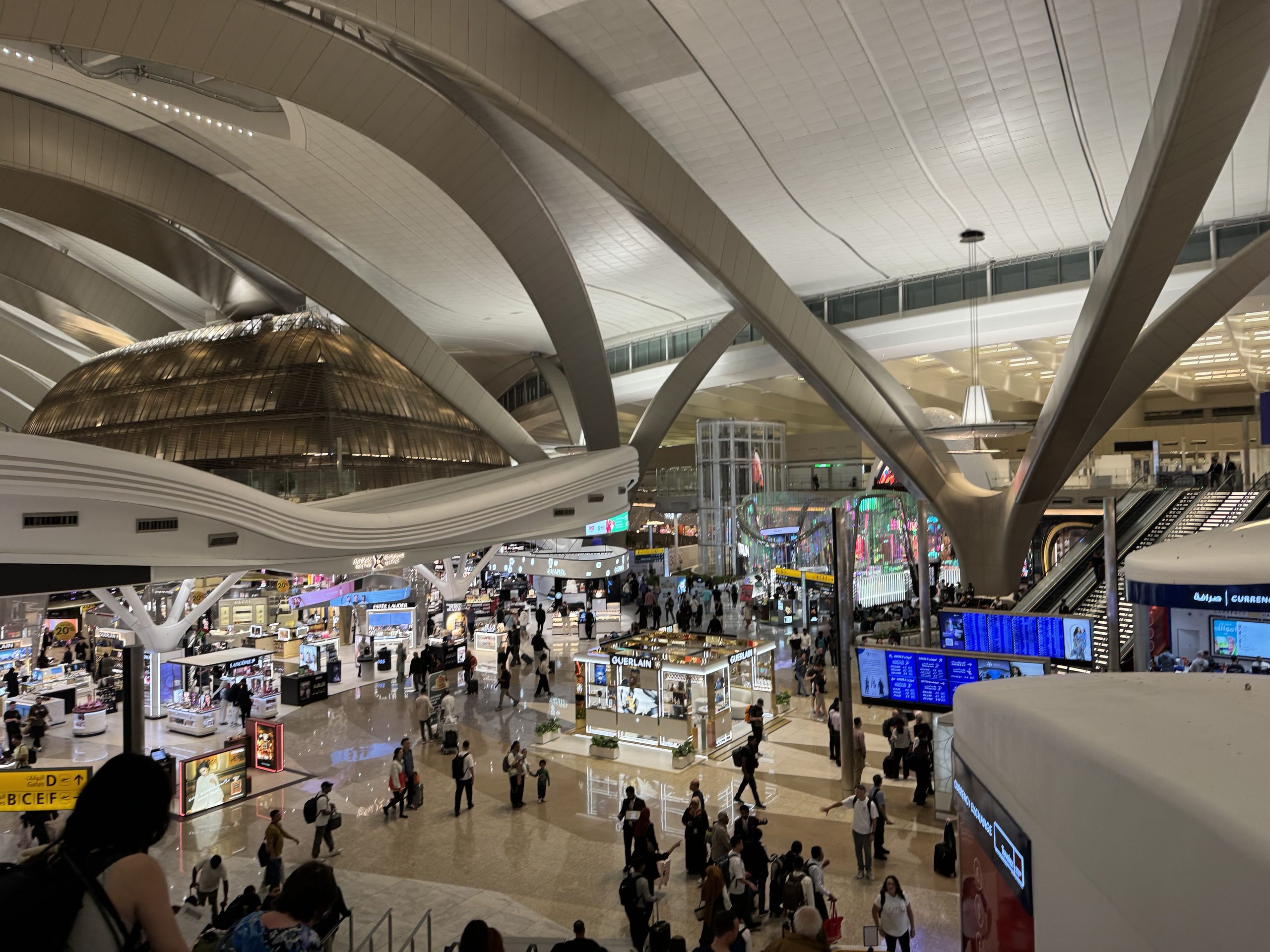
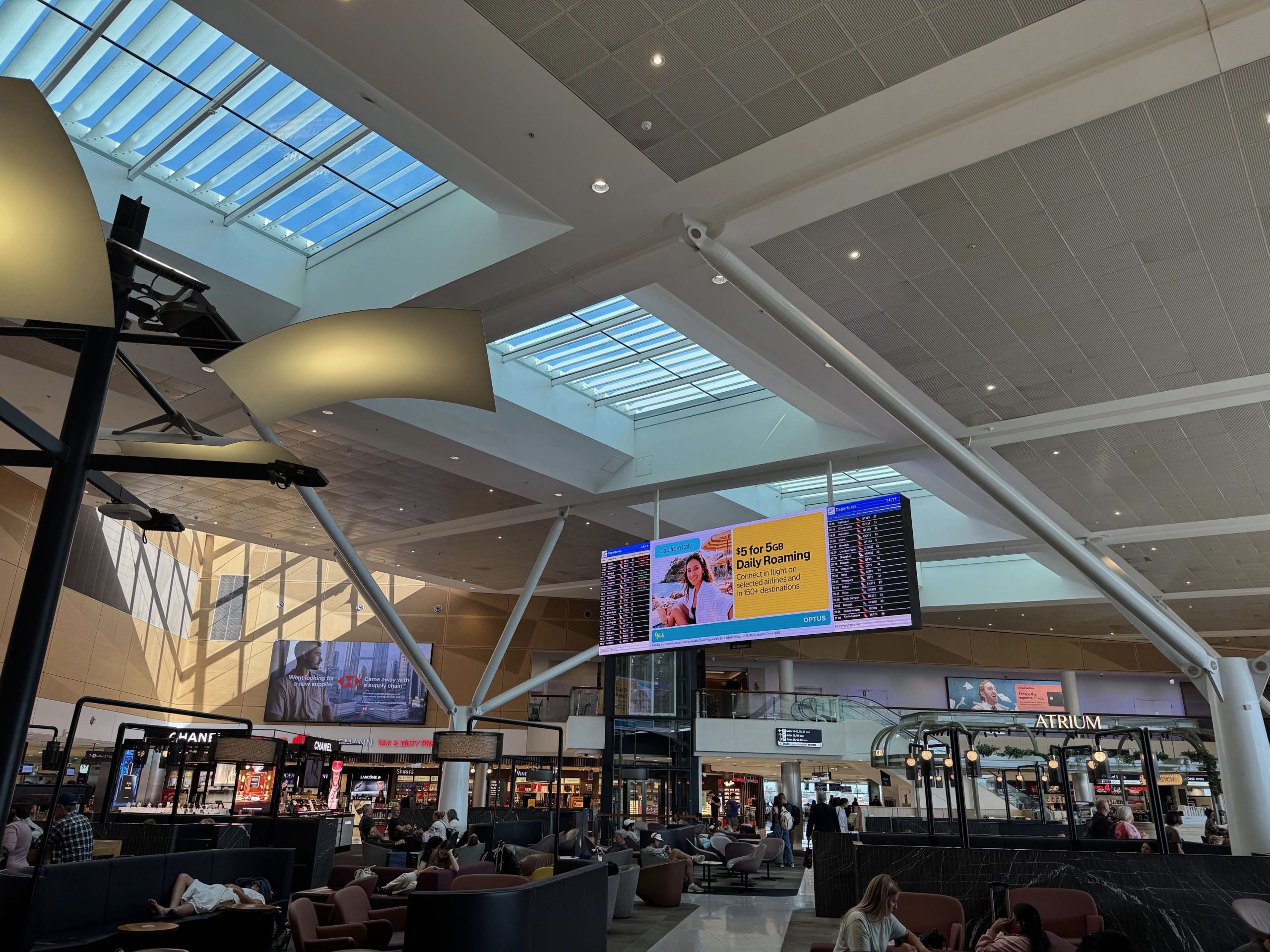
Many international airports are a celebration of the size and space that planes fly through, with wondrous internal ceilings. Sydney airport’s check-in dining is not that. But it is a wonderful place to stop and think.
Alain De Botton has crafted a wonderful tome, The Art of Travel. In it he ponders the experiences and meaning of travel.
Alain paints a picture of airports as a space of refuge, a place between domestic and professional responsibilities, a neutral introspective space where you are free to reflect. That this gentle movement prompts thoughts that might otherwise stall in the static environment of home.
Alain explores the paintings of Edward Hopper, of American diners and train carriages in a kind of non-failing isolation. From these paintings he talks about a dignified loneliness.
I wonder about Alain’s travelling experience. As I sit in the airport there are multiple crying toddlers in close proximity. I am filled with thoughts about a teenager’s capability to be responsible for their stuff. I am very privileged to feel a contrast to the picture he is painting, one of noise and bustling family life and issues.
Sometimes it takes a moment for the writing to get flowing. I’m getting warmed up.
Comments Off on Sitting in Sydney International Airport
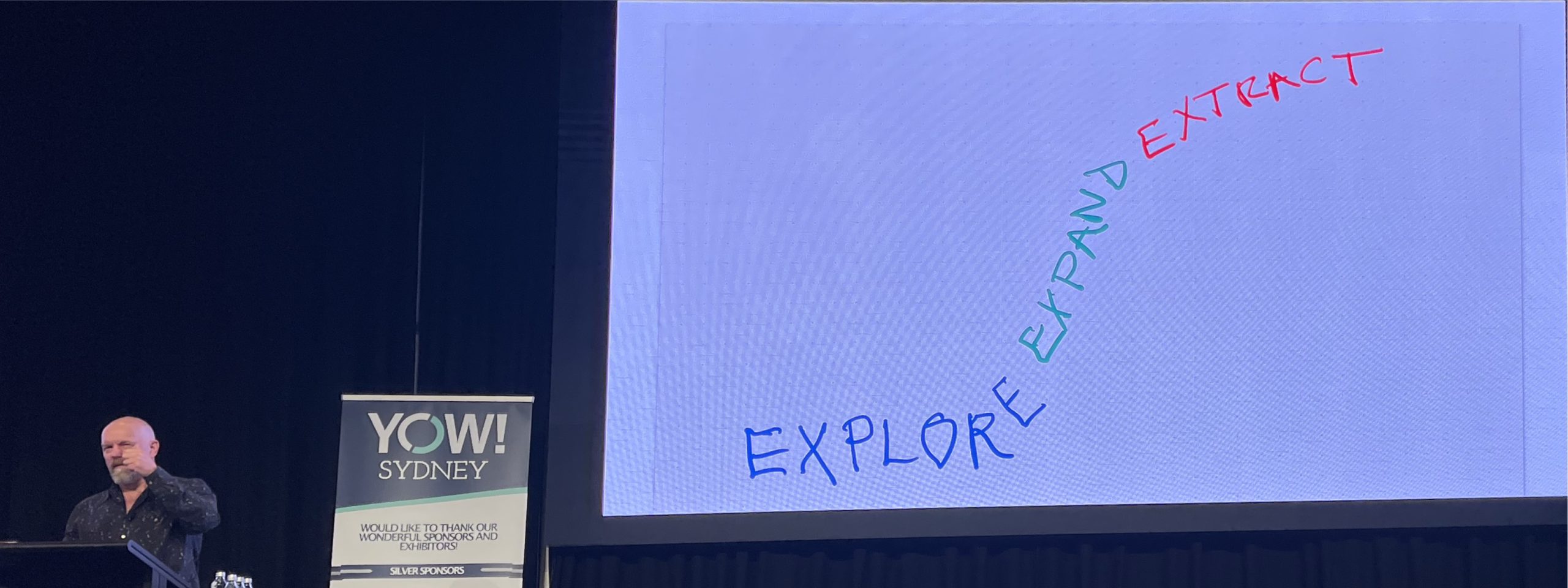
Kent told us we have been thrust from a predictable world of extraction into a brave new era of exploration, where AI amplifies our leverage but requires us to prioritize high-level systems thinking and design optionality over raw coding speed.
Rather than fearing obsolescence, we must embrace our duty to mentor junior developers, whose fresh adaptability combined with our experienced guidance is the only way to prevent this powerful “genie” from creating unmanageable technical debt.
Ultimately, that we must resist the anxiety to simply run faster and instead claim your time to experiment and learn, remembering that your life is a finite opportunity for craftsmanship, not just a race to clear tickets.
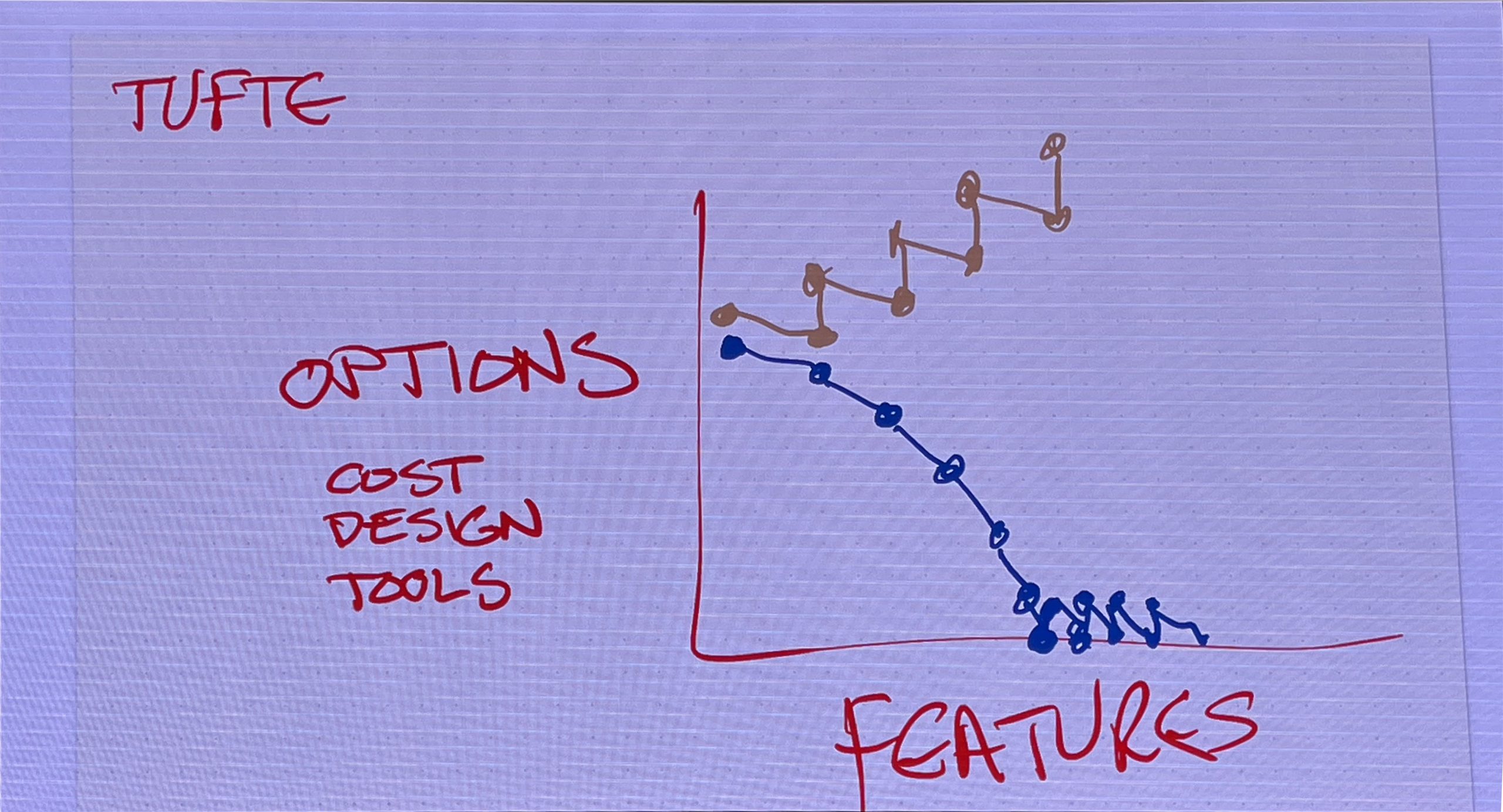
We have entered the era of “vector magic,” where high-dimensional mathematics allows computers to finally understand context, turning everything from wizard spells to Pikachu images into number arrays that measure semantic meaning.
While the tooling landscape is now so crowded that you can essentially “pick the logo you like,” the real power lies in using these dense vectors to connect distinct worlds, like building a “Shazam for heavy metal” that deciphers growled lyrics.
Ultimately, the talk leaves us with a hilarious survival strategy for the future: since AI is mastering human language, our only hope to stay off the grid might be communicating exclusively in unintelligible grunts.
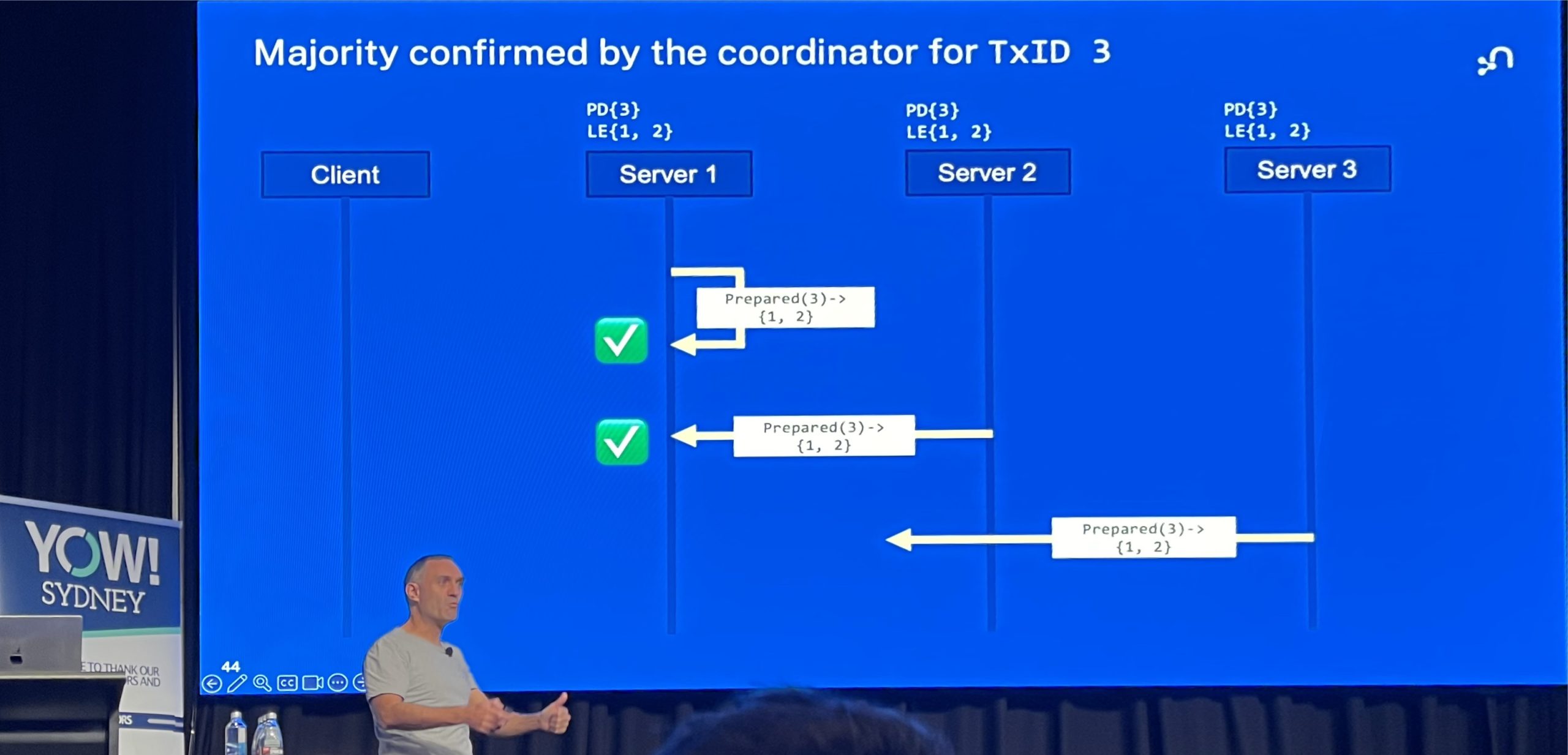
Jim Webber traces the evolution of distributed consensus from the academic complexity of Paxos to the empathy-driven design of RAFT, arguing that true engineering brilliance favors understandable solutions over intellectual “flexing.”
He introduces RIOT, a protocol designed to handle the unique tensions of sharded graph databases, proving that we can achieve massive scale and strict correctness without creating systems too complex for humans to manage when disaster strikes.
Ultimately, this talk serves as a reminder that the most robust architectures are built on kindness and clarity, urging us to “be awesome to each other” by designing systems that our future selves can actually understand.
Roy van Rijn – Pushing Java to the Limits: Processing a Billion Rows in Under 2 Seconds
This talk showcases a thrilling “Advent of Code” style competition, pushing Java performance from a baseline of 4 minutes and 50 seconds down to an astonishing 1.5 seconds by ruthlessly optimising every layer of the computing stack.
The journey from simple streams to victory involved deep mechanical sympathy, leveraging advanced techniques like SIMD As A Register (SWAR) for fast delimiter finding, and using magic numbers to write branchless code that fundamentally eliminated CPU pipeline bottlenecks .
The takeaway is that true high-performance engineering means exploiting the underlying hardware, from using Unsafe and memory-mapped files to eliminating object allocation and understanding L3 cache shared access, proving that peak performance is a continuous, fascinating process of questioning every assumption.
WebAssembly has evolved from a client-side browser optimization into a powerful, secure, and fast universal binary format for polyglot applications across the entire stack, delivering on the promise of “write once, run anywhere” with exceptionally small binary sizes.
The exciting journey to run WASM on Kubernetes is demonstrated through lean, multi-flavor containers, showcasing a massive reduction in image size down to a mere 2MB by replacing the OS layer with a simple WASM runtime shim.
However, be warned: while this world is blazing fast and full of potential, the ecosystem is currently moving so rapidly that dependency instability can break production code in a week, meaning this is the perfect arena for innovation, but not yet for stability-hungry enterprises.
This talk presents “Vibe Coding” as the evolution of software craftsmanship, urging you to take the “red pill” and embrace AI tools like Cursor to dramatically maximize your coding output by making you a more precise, high-level architect rather than a typist.
The true secret to unlocking this potential is not just using the tools, but actively experimenting with the latest models and feeding them detailed prompts, enabling them to handle the vast majority of the implementation details for you.
Ultimately, your expectations must be reset: modern AI assistance paired with array programming paradigms (like BQN) and highly optimized GPU frameworks (like Parrot) completely transforms what is possible, allowing you to focus on elegant, dense solutions at speeds previously unimaginable.
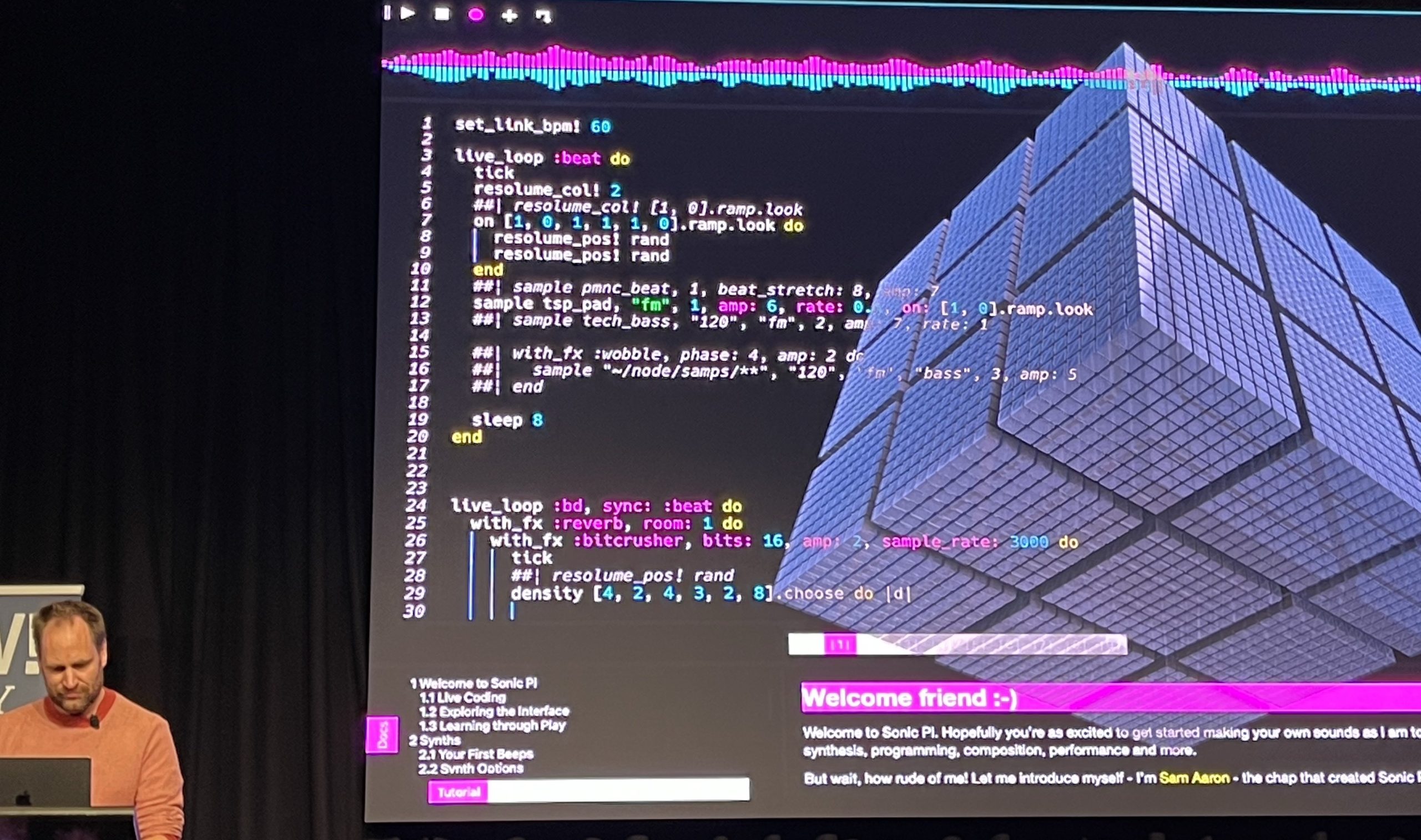
Sam Aaron – Beyond Sonic Pi: Tau5 and the Art of Coding with AI
Sam Aaron’s journey with Sonic Pi reveals that programming’s true power lies not in business logic, but as a vibrant tool for human expression, using music as the infectious bridge to teach complex concepts like concurrency to children.
Driven by the need to make this experience accessible and live-codable in the browser, he faced the monumental challenge of porting a complex C++ synthesizer (SuperCollider) to WebAssembly, a task only made possible by treating the LLM as a tool that constantly tries to gaslight you, demanding meticulous verification and code annihilation.
Ultimately, by overcoming technical impossibilities and refusing to let institutional barriers stamp out interest, Aaron is creating a new world of “fun human expression and joy,” inviting us to redefine programming as an exciting, performative art form that everyone is eager to embrace.
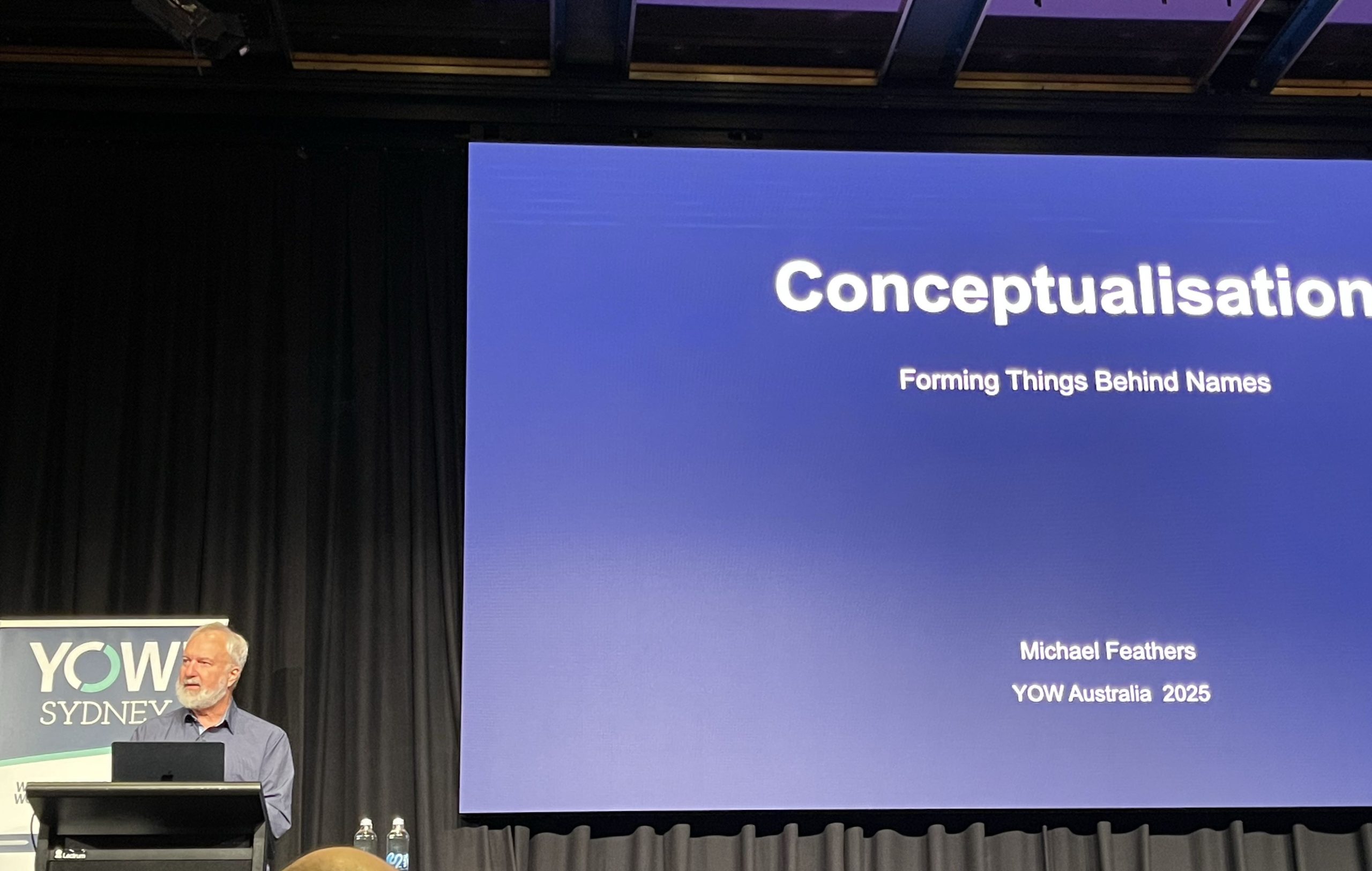
The core struggle behind “God classes” is a conceptual drift where the structure outgrows its original name, challenging the rigid Aristotelian view of categorization and demanding we recognize that our software abstractions are always lossy maps, not the full territory.
To refactor effectively, we must move beyond simple renaming by fundamentally evolving the conceptual space, leveraging insights from Prototype Theory and the potential of LLMs to discover new, deeply resonant ways of classifying the complex behaviors we model.
Therefore, our task is to become conscious vocabulary inventors, coining precise new terms and comparing models across different contexts to break the inertia of existing names, thus fostering a shared understanding that empowers us to manage the inevitable growth and complexity of our systems.
The C4 model provides a practical, notation-independent framework for visually documenting software architecture at increasing levels of detail: System Context, Containers (process boundaries like web apps or databases), Components, and Code.
To maximize usefulness, focus on the first two levels, Context and Containers, which define system boundaries and inter-process network interactions, treating containers not as deployment artifacts but as crucial isolation boundaries to clarify technology choices and communication paths.
Ultimately, C4 is a tool for achieving architectural clarity; by using its structure to map complex systems, you move your team past the “ad hoc” documentation stage toward a mature, shared understanding that enables large-scale organisation and efficient system evolution.
Kevin Dubois – Create (Agentic) AI-infused Apps, the Easy Way
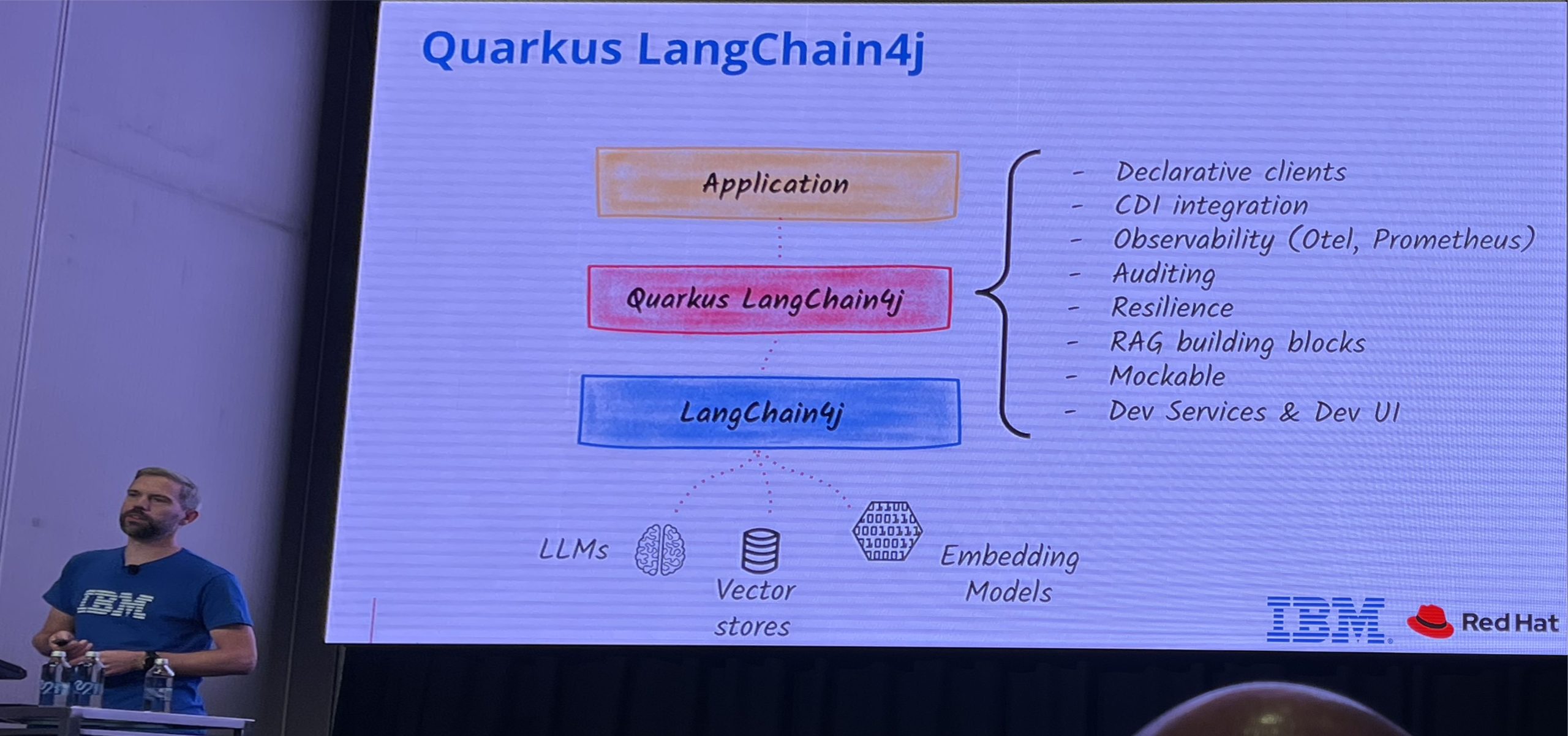
Kevin Dubois showed how to build powerful agentic AI apps effortlessly using the Quarkus stack and Langchain4j, leveraging features like structured POJO returns, conversational memory, and Retrieval-Augmented Generation (RAG) to inject specific knowledge.
He demonstrated control with the Model Context Protocol (MCP), enabling deterministic tool use, while critical GuardRails and fault tolerance mechanisms ensure your agents, even when orchestrating multiple specialised experts, are safe and enterprise-ready.
Kevin showed the future of development where minimal code creates sophisticated, goal-based autonomous systems with hot-reloading developer experience, proving that integrating cutting-edge AI into Java applications is now both simple and profoundly powerful!
Nada Amin – Metaprogramming, Synthesis, and Verification
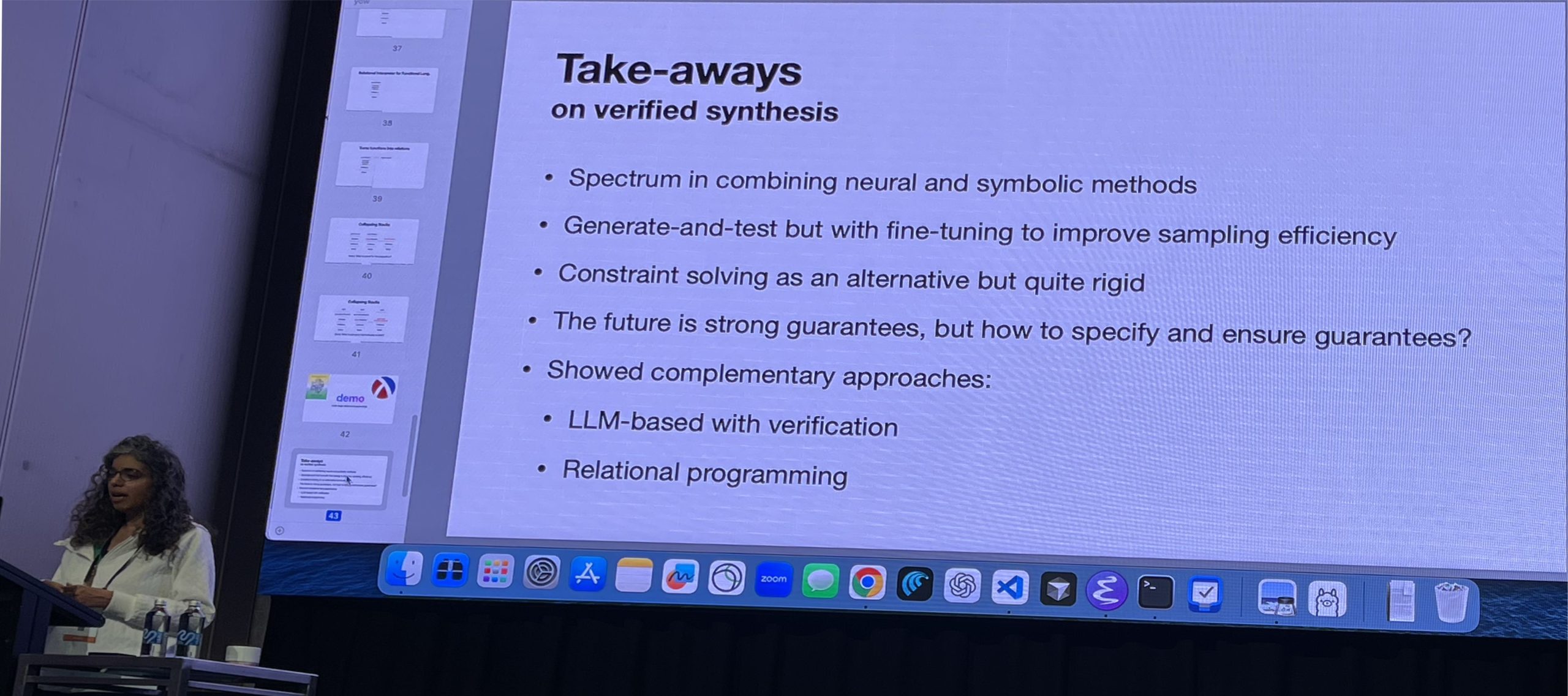
This talk was a vision of the future, led by Nada Amin, illuminated the goal of Verified Synthesis, uniting the expressive power of neural language models with the certainty of formal verification systems like Dafny, defining a frontier where code is generated with provable correctness.
The presentation showcased the dedication required to achieve high-assurance software, detailing how techniques like design-by-contract verification and structural induction, even when aided by AI scaffolding, provide strong signals that ensure complex systems, such as the AWS authorisation engine, are formally guaranteed to uphold their semantics at scale.
This pushes the boundaries of programming itself by exploring powerful paradigms like relational programming and utilising constraint solvers (Holey, minikanren) not just for debugging, but for synthesising correct-by-construction code, promising a future of trustworthy intelligent systems that fundamentally change how we reason about and build software.
The AI revolution’s next phase demands a shift from fragile, non-deterministic Python notebook experiments to robust, enterprise-grade applications, especially in mission-critical business processes where failures are costly.
Rod Johnson’s Embabel framework addresses this challenge by maximizing determinism through careful orchestration, breaking complex goals into small, testable steps, and deeply integrating with existing business systems and type-safe domain models, leveraging the strengths of Java developers.
Everything we learned about building resilient software—types, transactions, and testing—is now more vital than ever to build reliable agents that move beyond personal augmentation into trustworthy, goal-driven automation.
Sarah Meiklejohn – 13 Years of Cryptocurrency De-anonymization (and Counting)
Despite the initial premise of anonymity, the globally visible nature of public ledgers like Bitcoin makes them fundamentally traceable, allowing researchers and law enforcement to effectively de-anonymise transactions by treating cryptocurrency like traceable digital cash.
By applying clustering heuristics, like identifying change addresses, it is possible to group disparate addresses back to a single entity, allowing investigators to track vast sums of money across the blockchain, even tracing funds stolen from exchanges or used in Dark Net Markets.
This work transforms the blockchain into a powerful tool for accountability, offering a testament to human ingenuity: though technology attempts to obscure, the careful study of transaction patterns can always bring transparency to complex systems.
Comments Off on YOW Conference Sydney 2025 – Conference Review
Posted onApril 8, 2025|Comments Off on Saturday 5 April – Train to London, What To Do with Three Hours in London? Plane Home
On the train at Manchester the accents wash over me.
“Youe go’ u’ early todey innit?”
What to do with three hours in London? Roll a dice on Monopoly board. Euston Road to Kensington.
And here I am.
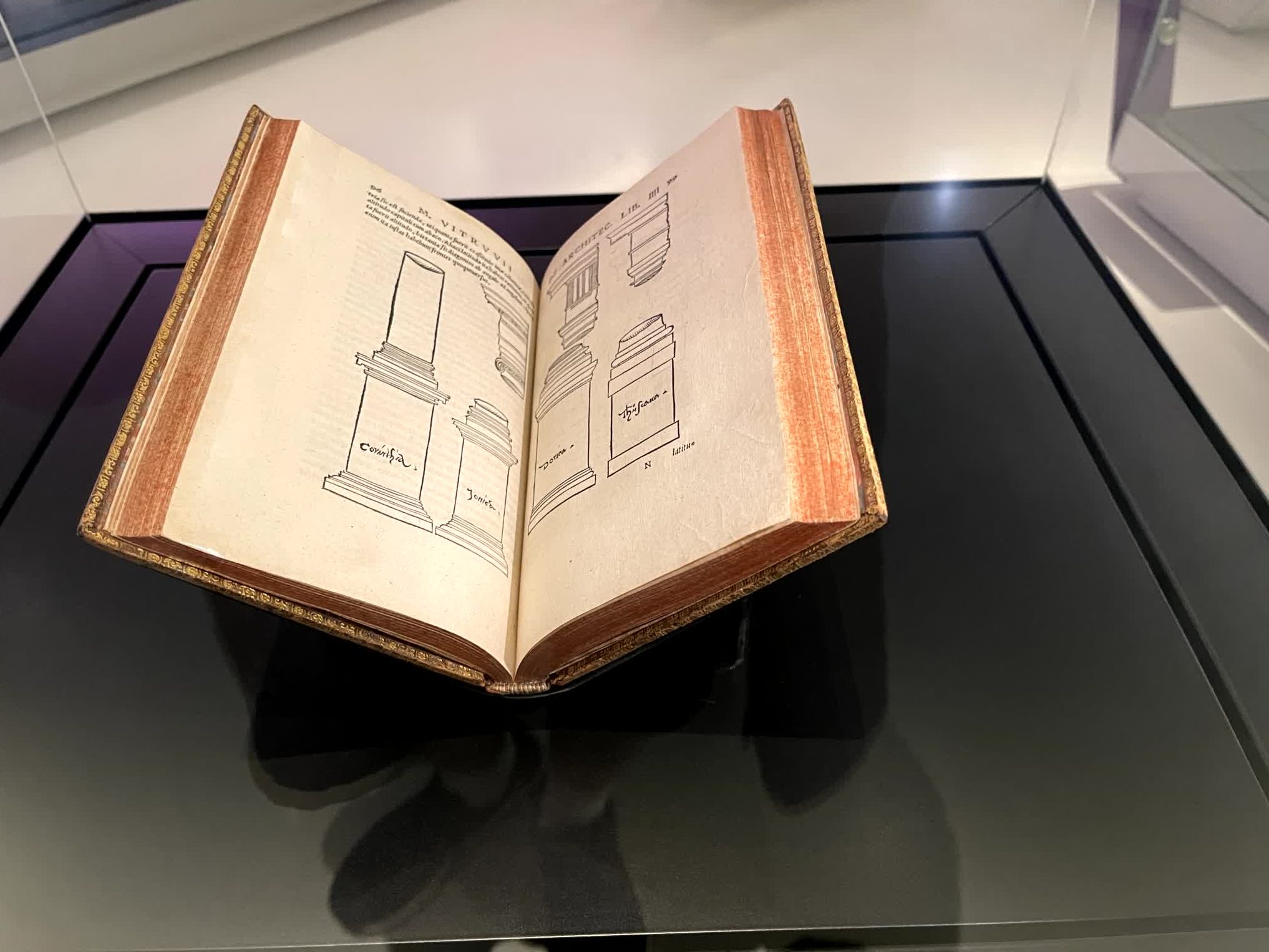
This is a 1543 edition print of a book by Vetruvius, a Roman architect. He emphasised Mathematical symmetry and perspective in architectural beauty. It less than 100 years from the time of Da’Vinci – and he would have read an earlier print of this book, when producing his work the Vetruvian Man.
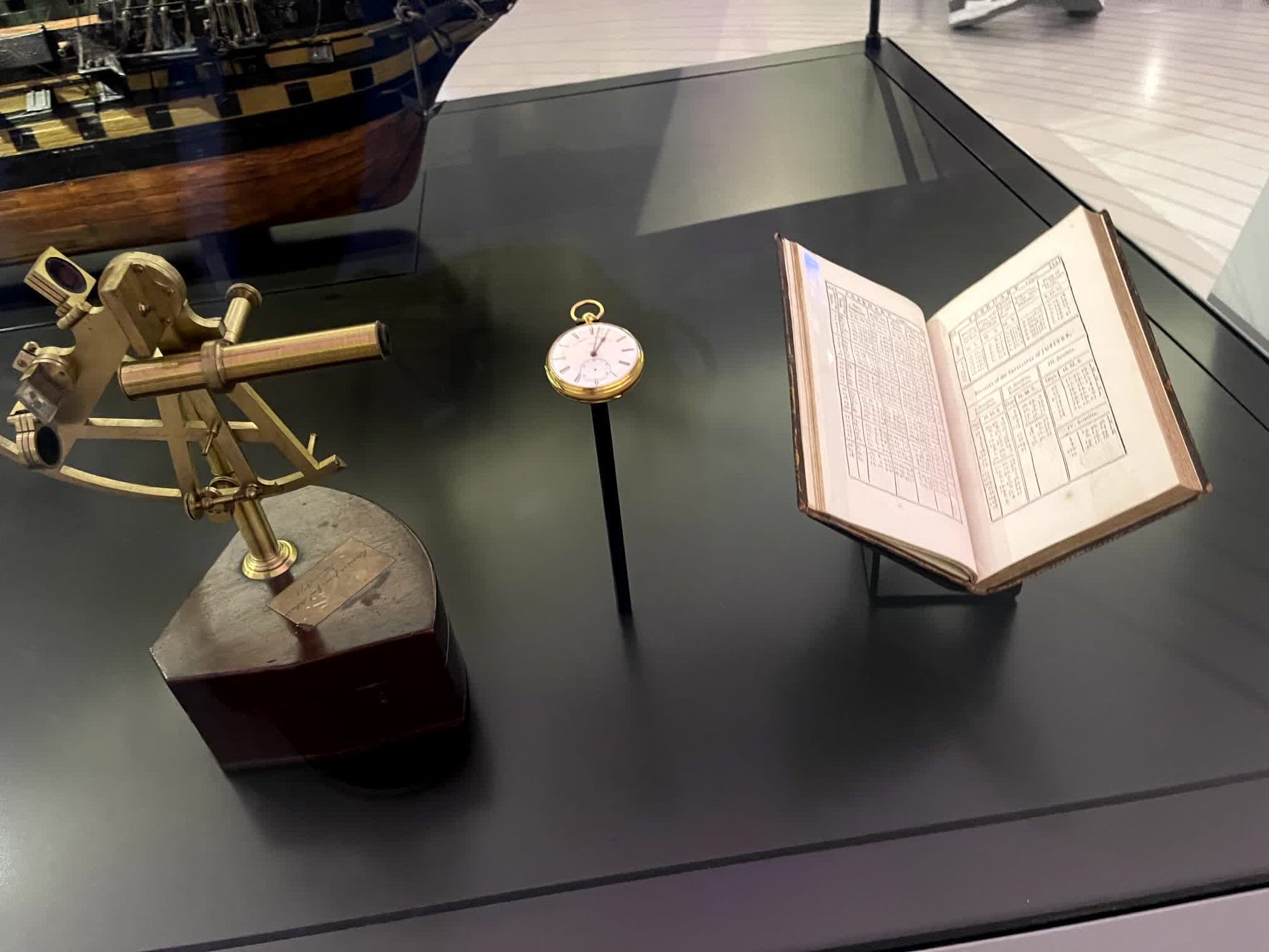
This is a Sextant and book of Log tables they used on ships for navigation.
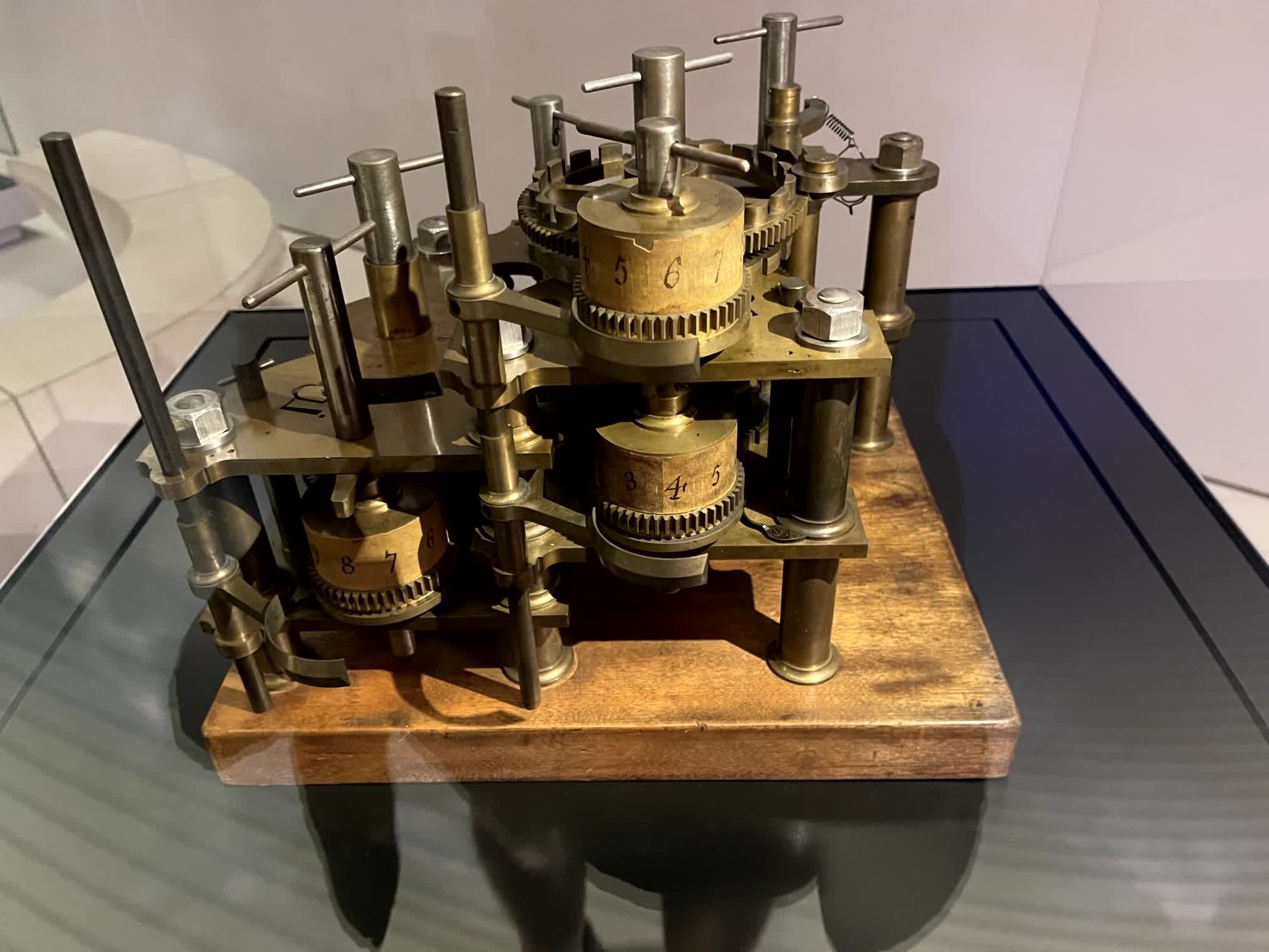
This is a fragment of Charles Babbage’s Difference Engine (The Log Tabulator). He would have used it for obtaining further funding. It indicates that his complete machine was never built.
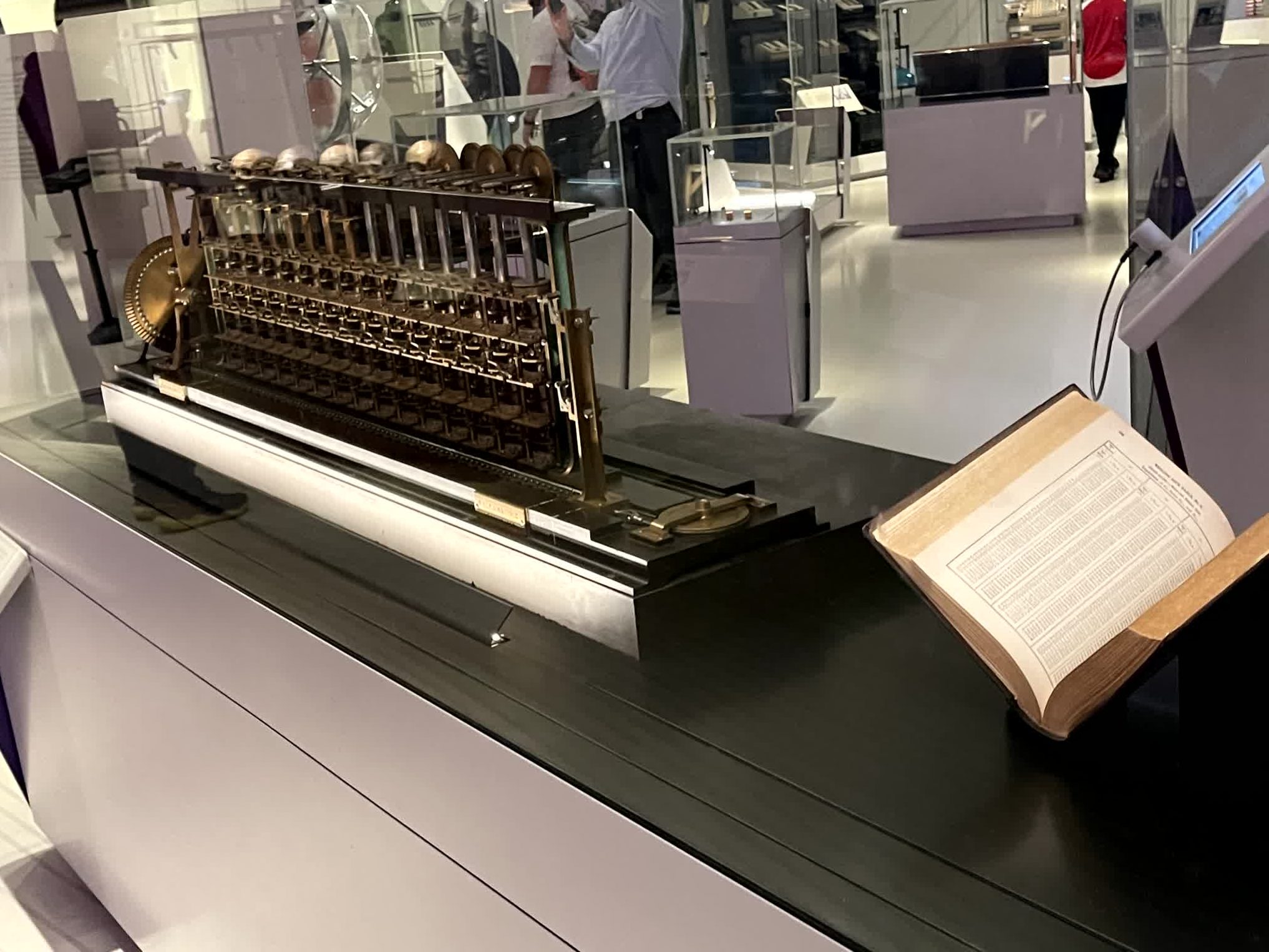
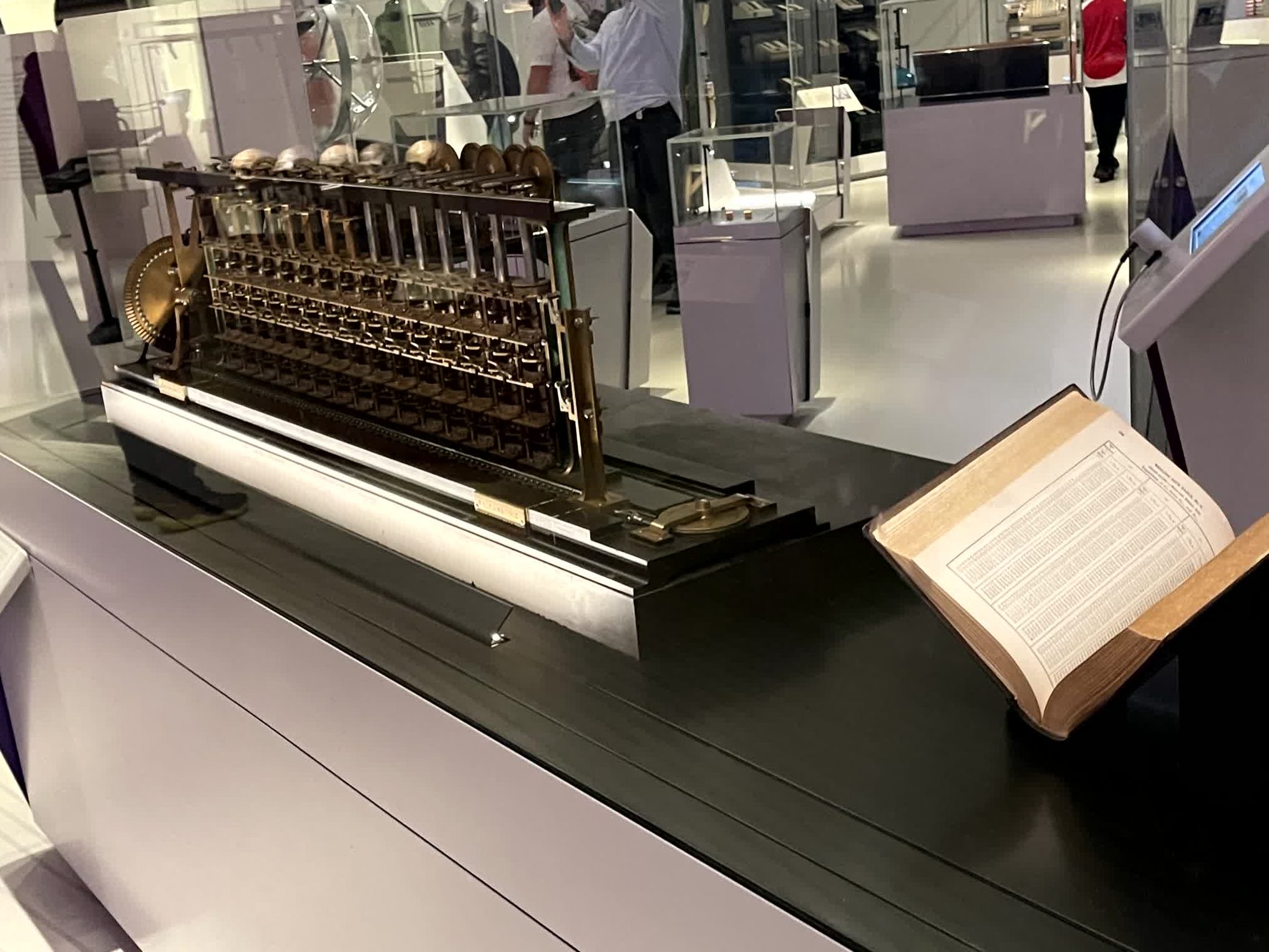
This is a slightly bigger but still incomplete version (of the Log Tabulator) done by this son after his death using parts that he found. You can see a book of log tables next to it.
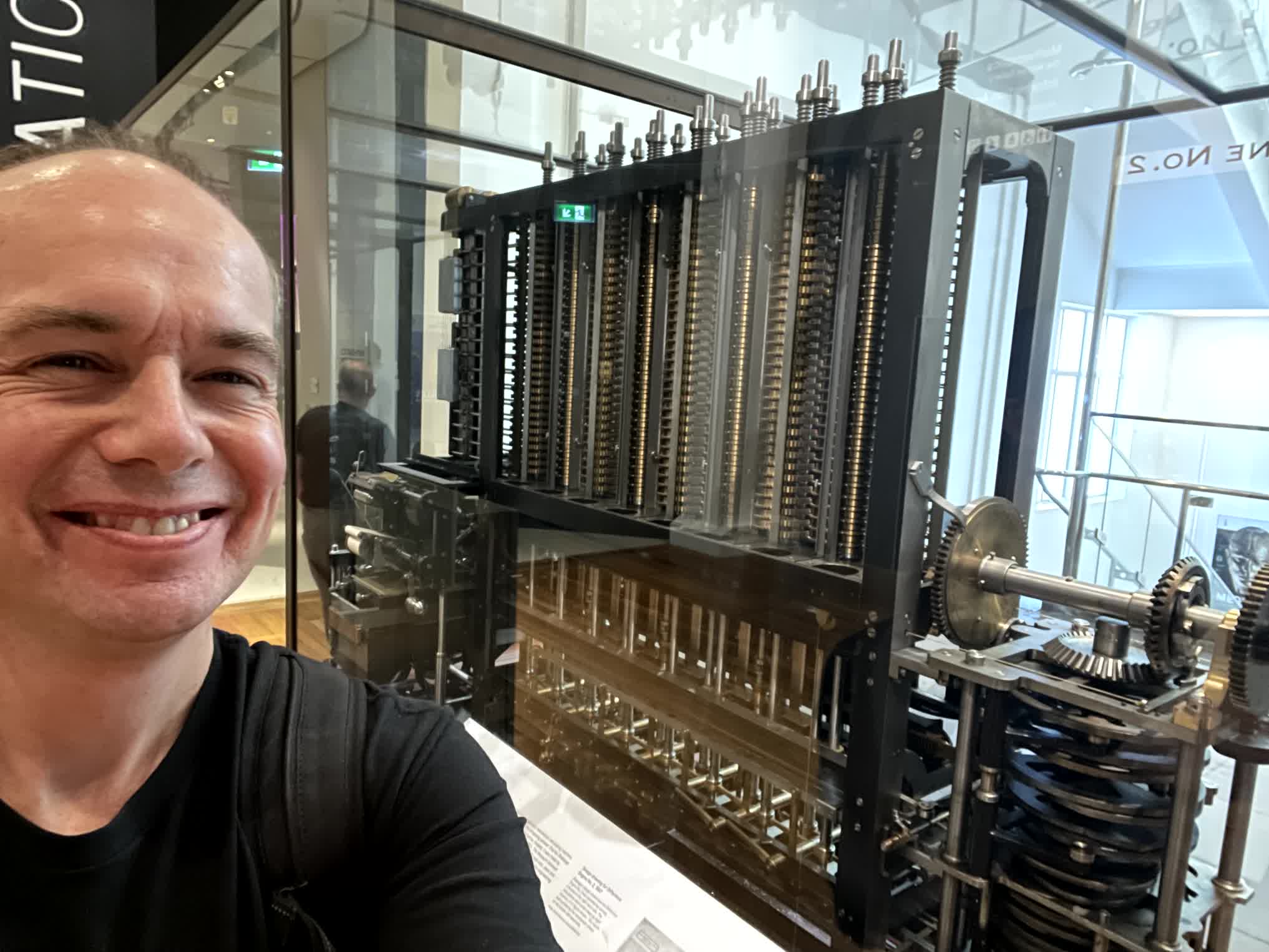
This is a complete reconstruction of the Difference Engine (log tabulator) built in 2002 by Computer-Engineer historians.
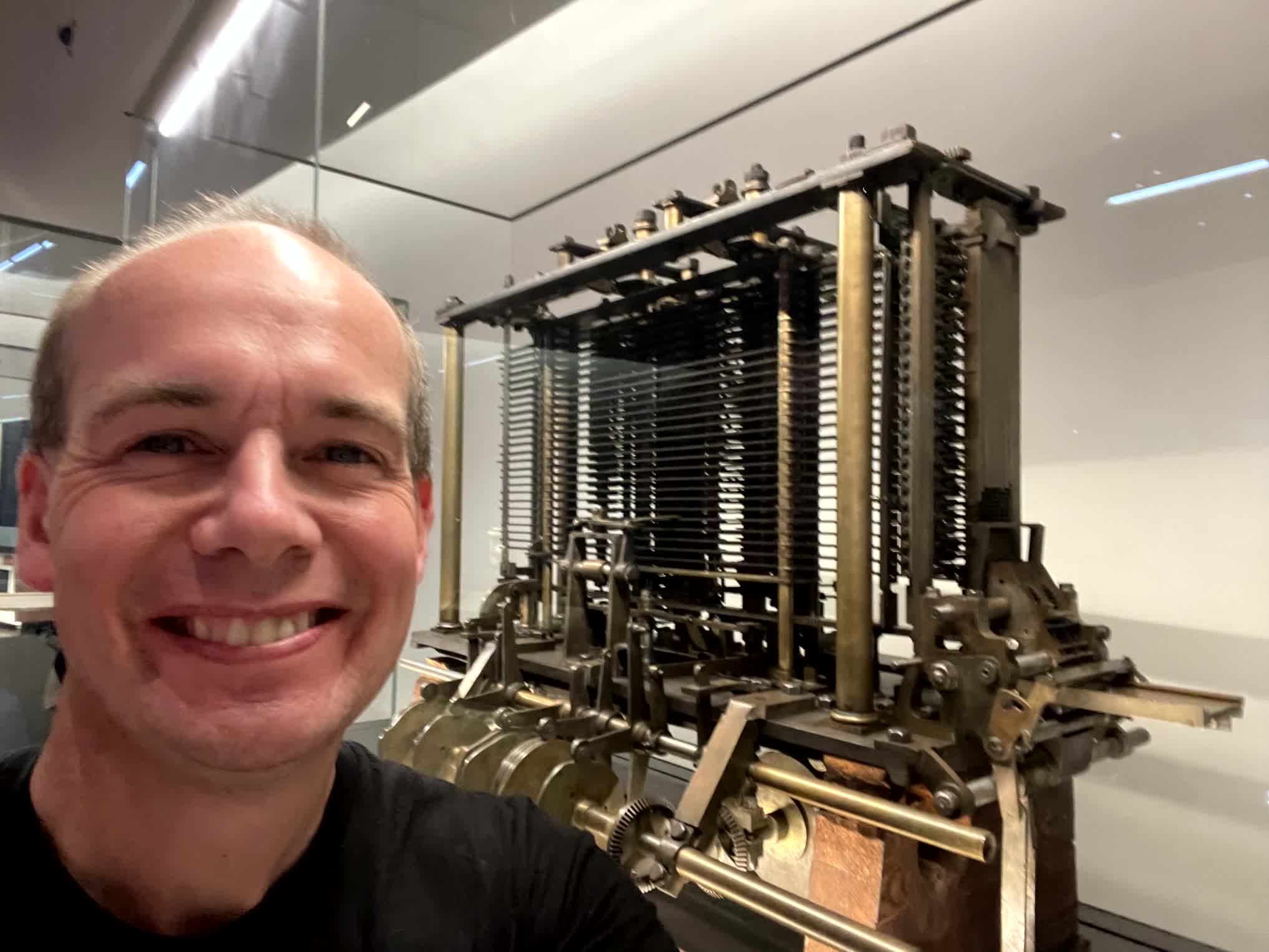
This is a part of the Analytical Engine (enables numbers to knit numbers) that Charles Babbage completed. Plans show that if completed, the final result would have been much bigger.
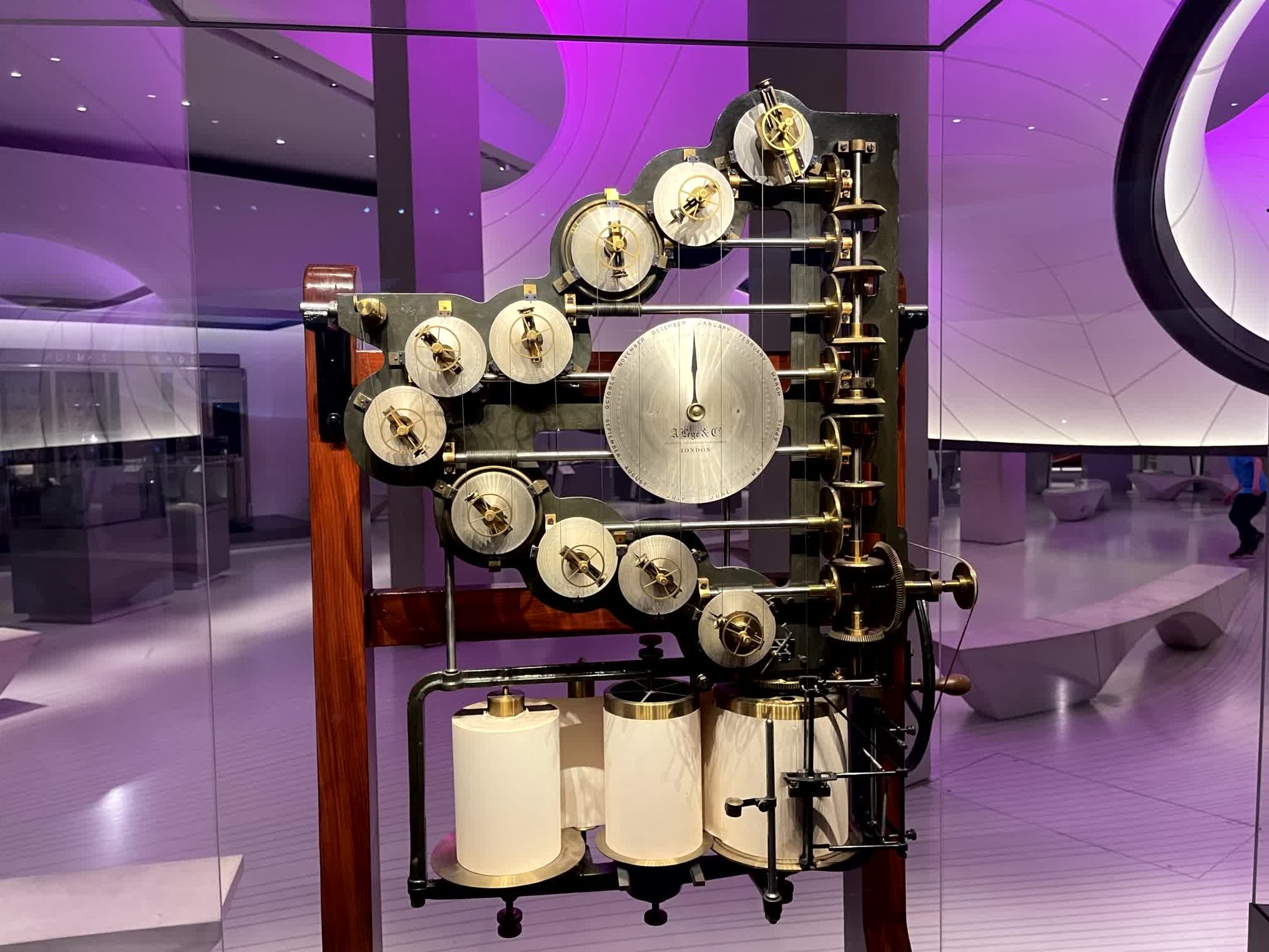
This is a calculator/computer that Lord Kelvin (William Thomson) built to predict tides. Some have called it the first Victorian Computer.
Comments Off on Saturday 5 April – Train to London, What To Do with Three Hours in London? Plane Home
Posted onApril 5, 2025|Comments Off on Fri 4 April – Supermarkets, Manchester Science and Industry Museum, Reflections on Manchester
Tesco breakfast porridge pots are surprisingly good. Speaking of supermarkets, there is a progressive evolution here. I recall in the 1990s, when a lot of the small chicken shops closed down because Coles and Woolworths started offering hot roast chicken.
When I came to London in 2000 it was novel that the supermarkets offered takeaway sandwiches of the chicken and egg variety,. Still more expensive than doing it at home but remarkably convenient.
What we’ve seen in supermarkets at home has been the expansion of the take-home instant dinner meal. Here at Tesco’s they have expanded that to the next level.
We see two tears of dinner meal package deals. On the lower tier we see the equivalent of a pasta and a desert and a take-home soft drink.
On the higher-tier we see take-home meals for two that have a roast mains to microwave, a side of vegetables, a desert, and an alcoholic beverage.
The population of greater Manchester is 3 million. In 1992 Sydney was competing with Manchester for the Olympics. At the time, Manchester was considered to have high unemployment and rainfall. (I didn’t see much evidence of either thankfully.)
Manchester today is famous for football, music (Oasis, The Verve, Chemical Brothers, Simply Red) and the world’s longest running soap, Coronation Street.
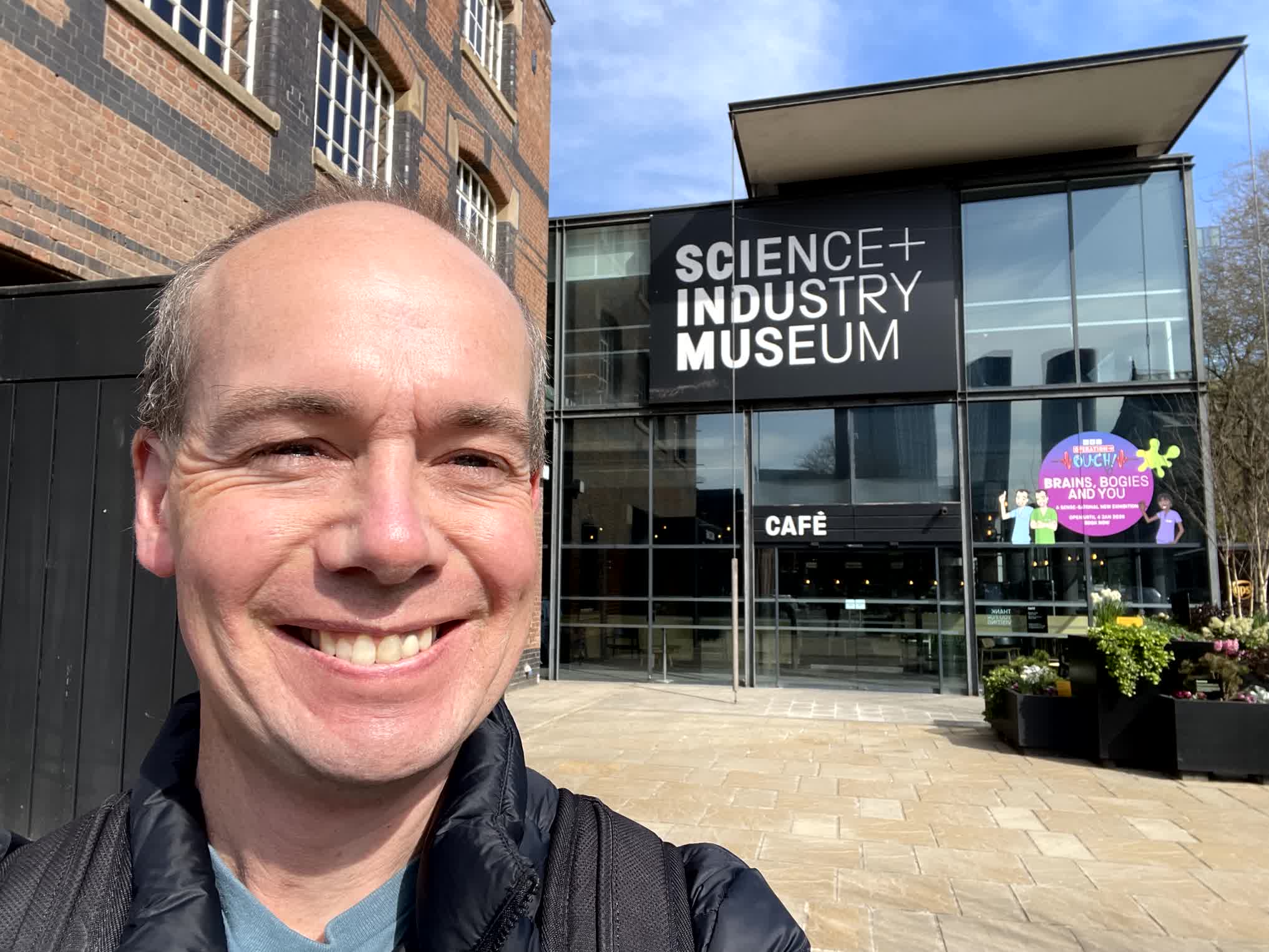
The Manchester science industry Museum. The building was built 200 years ago to store cotton brought in my the first inter-city train from Liverpool.
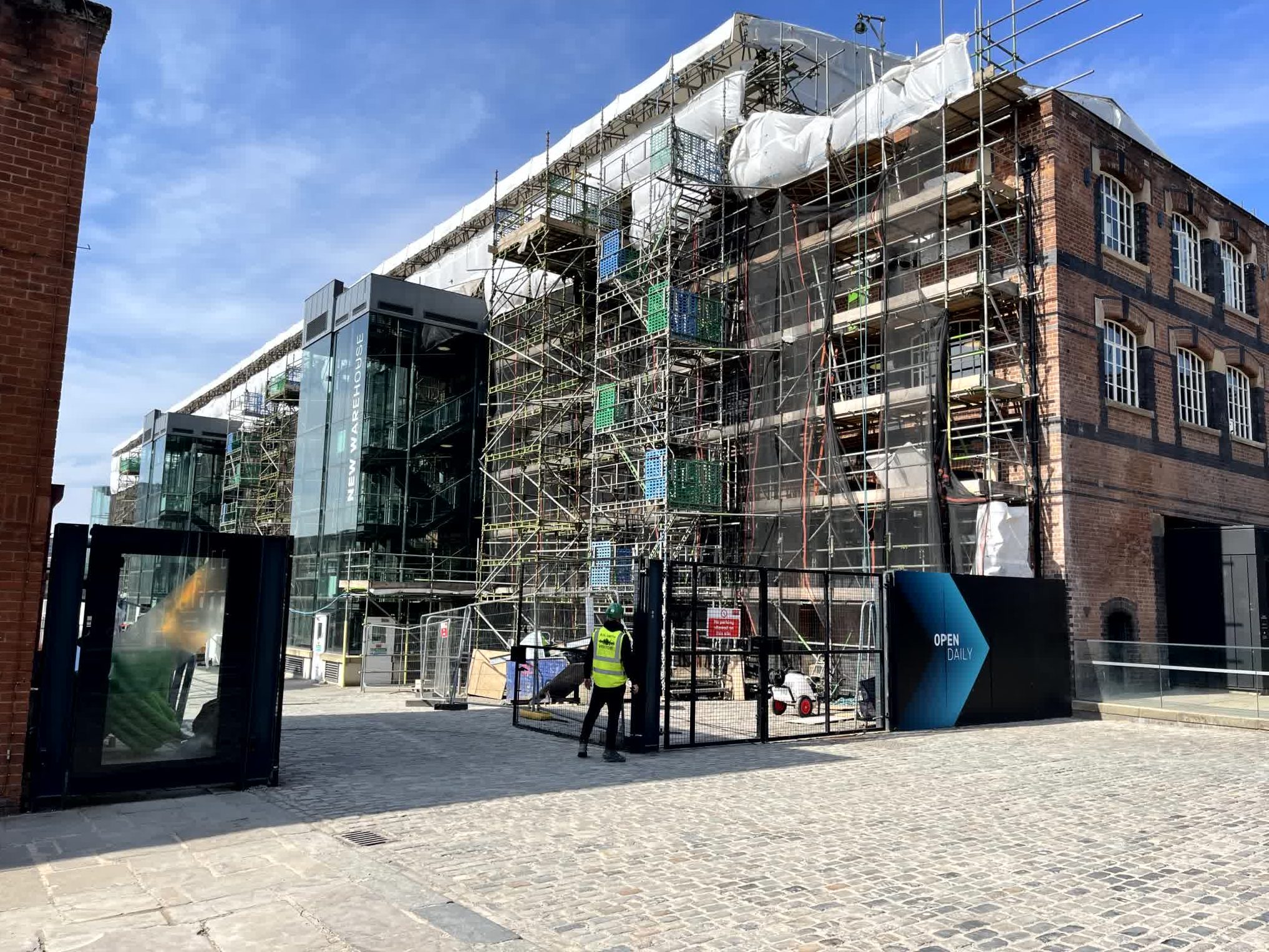
The Museum was under construction and still running due to changing the roof, and reconfiguring the displays, away from the aeroplane museum and back to an 1850s train station replica.
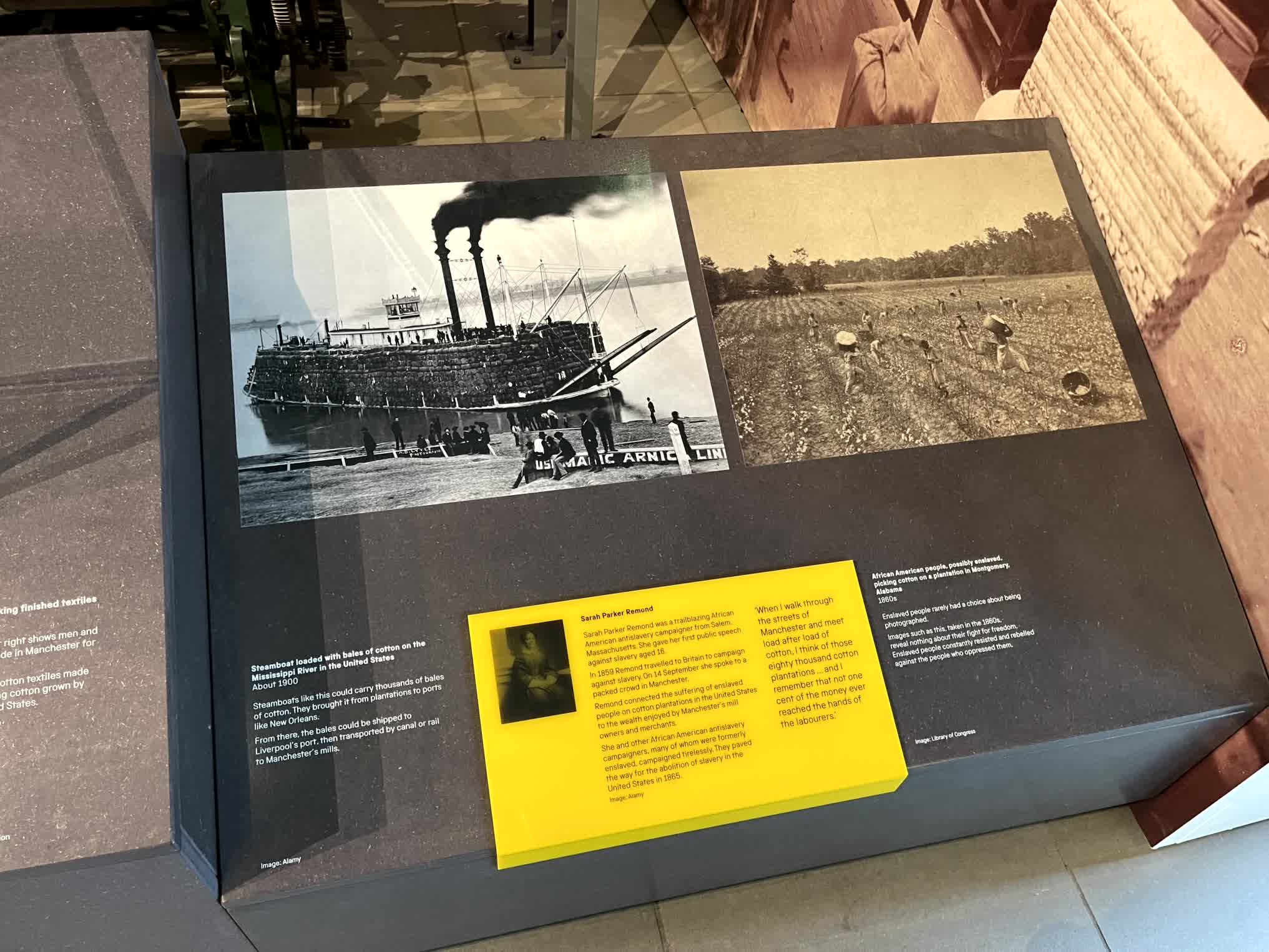
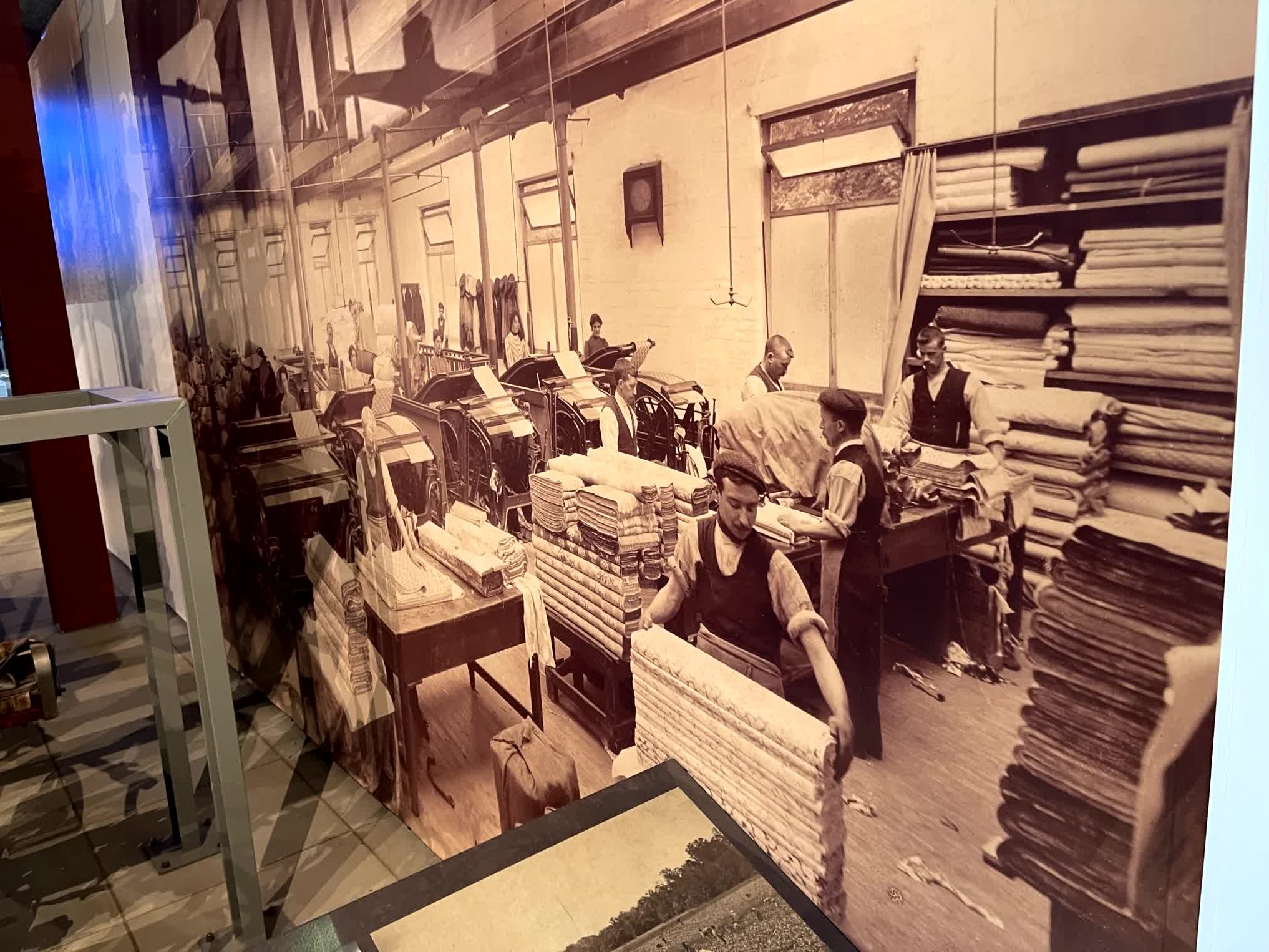
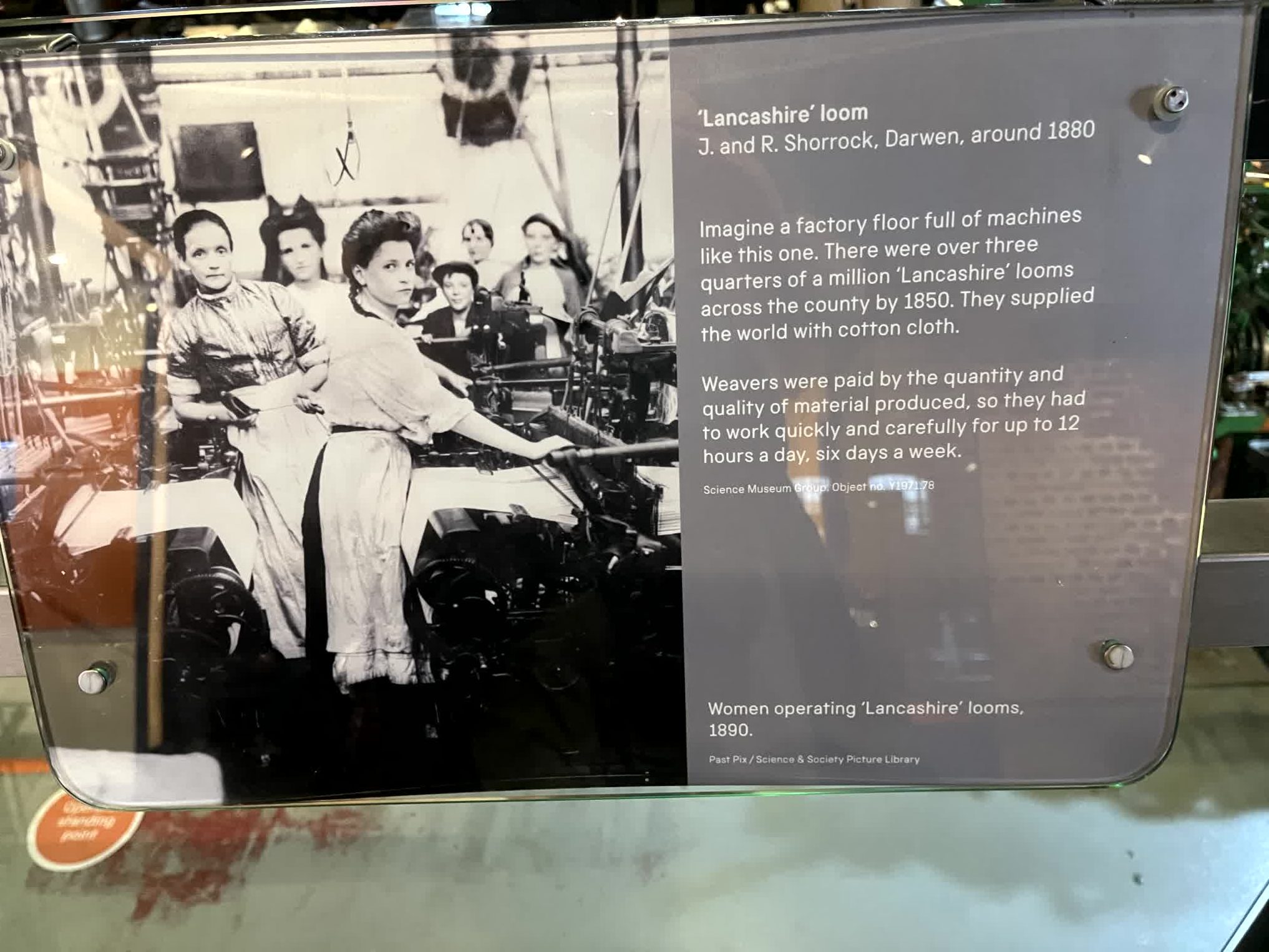
Manchester grew from a collection of towns that weaved cotton in 1800 to an Industrial City in 1895 (they claim the first City that grew out of the Industrial Revolution.) The Museum had a collection of Cotton spinning and weaving machines.
The presenter says that Manchester’s industrial wealth needs to acknowledge the slave labour of African people receiving no pay in the Southern US.
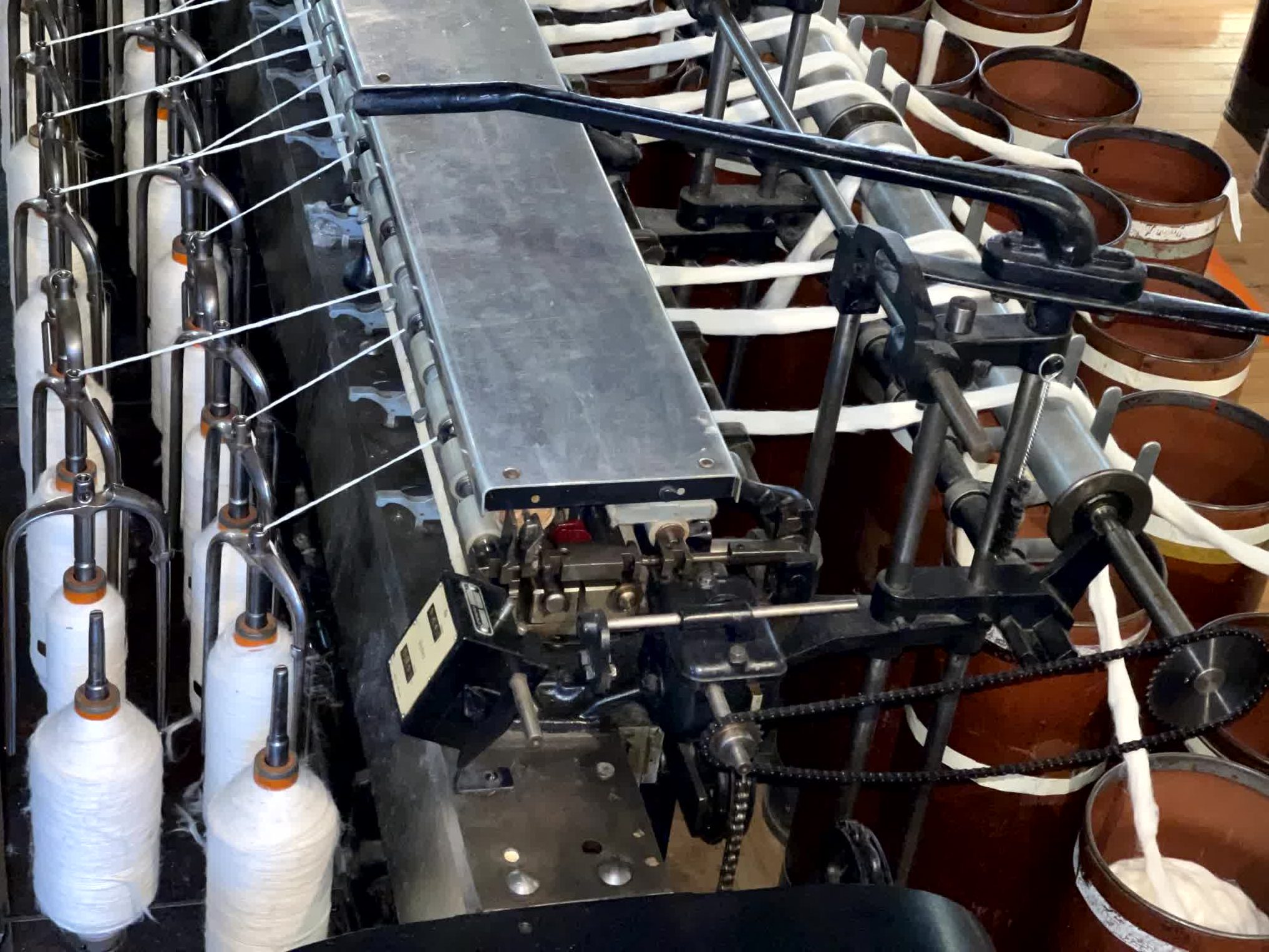
We see a Slumming machine then a Roving machine to make cotton thread stronger. We could see the Roving machine rotating parts could injure a hand and the belts could scalp a person.
https://youtu.be/Q4zYTNR4FiQ
We saw a spinning machine – one woman worked two at a time, on opposite sides.
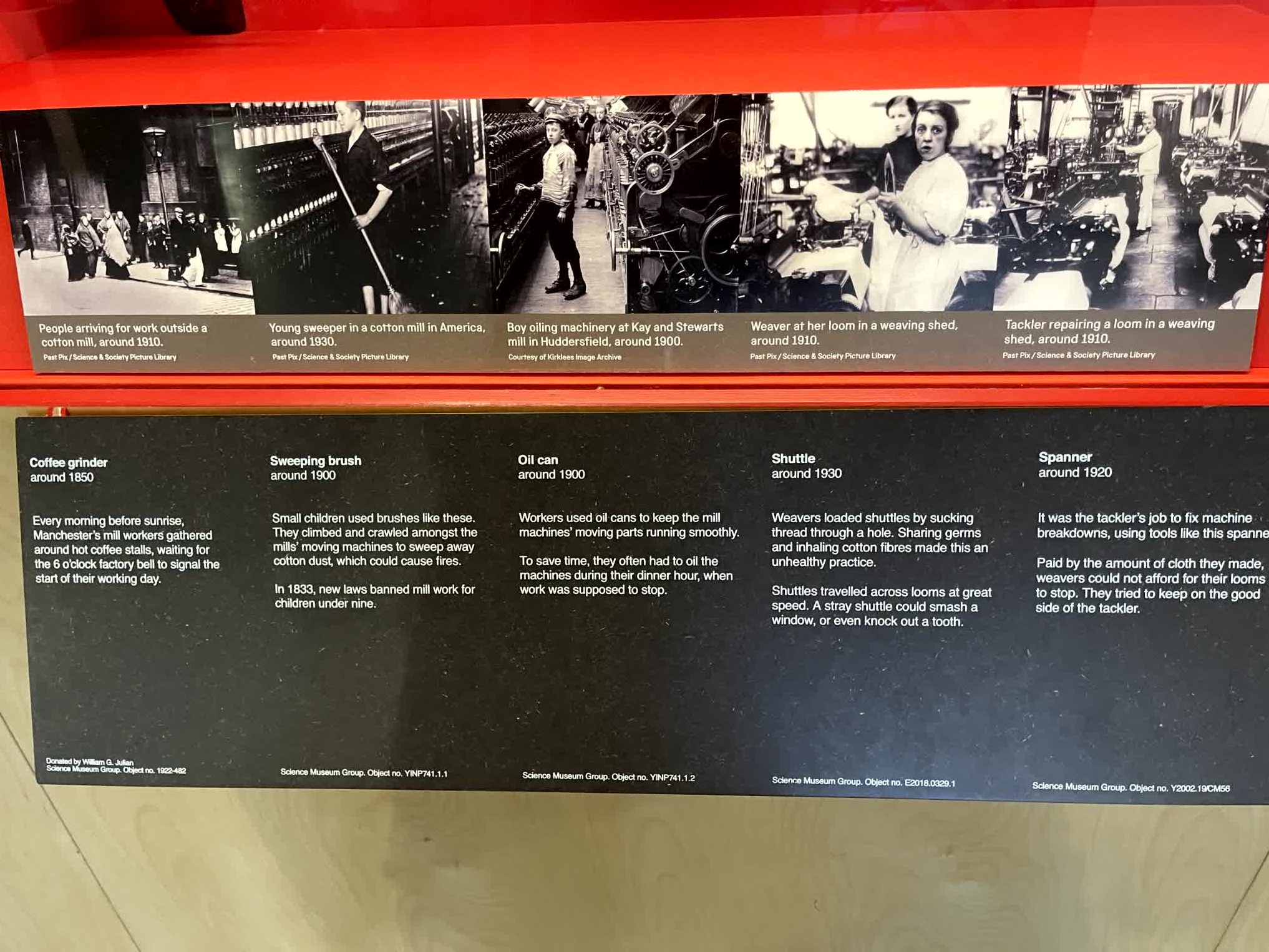
Workers gathered in the 1850s around coffee stalls before 6am, waiting for the shift to start. A shuttle that flew off a machine could take out a tooth or smash a window.
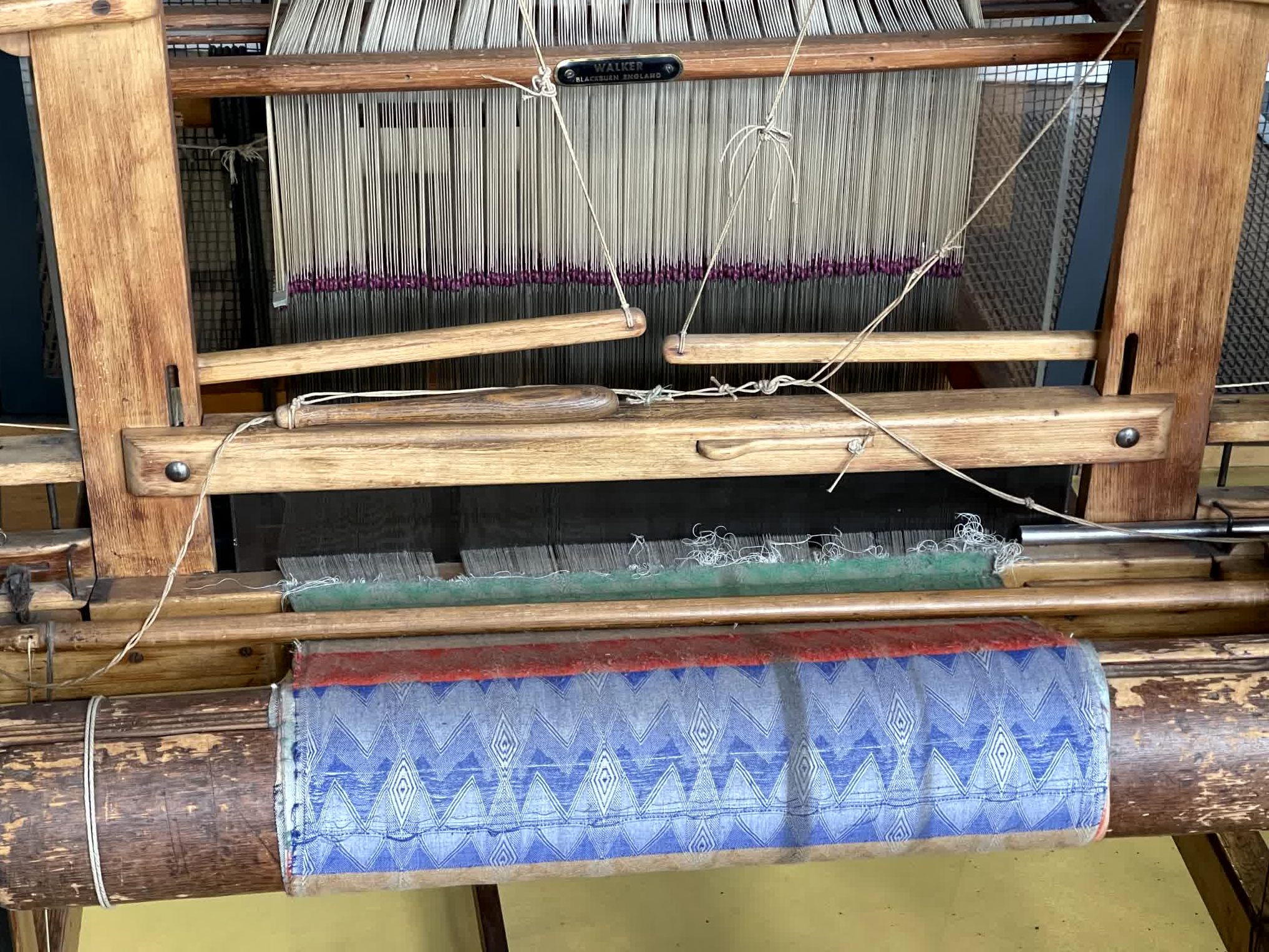
They showed looms doing patterns.
There was overcrowding, filth and grime. They had a lack of clean water. Engineers and campaigners acted to bring protests and projects to bring clean water to the city.
In Manchester the workers (trade unions ) fought for weekends, health and safety and education for children.
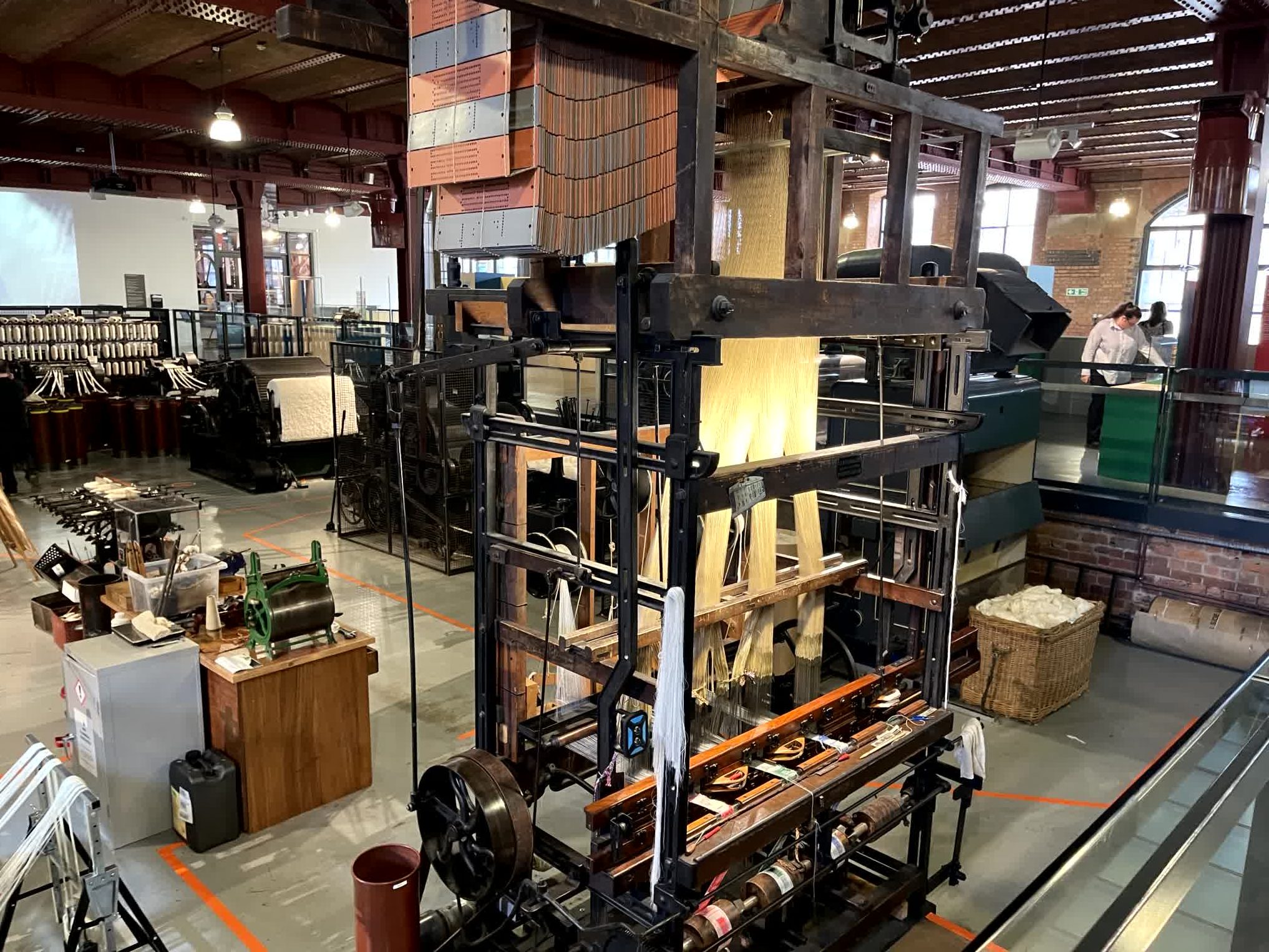
A treat – the first pattern-sewing machine – a 1700s-Era Jacquard Loom – one that Ada Lovelace and Charles Babbage would have known and imitated.
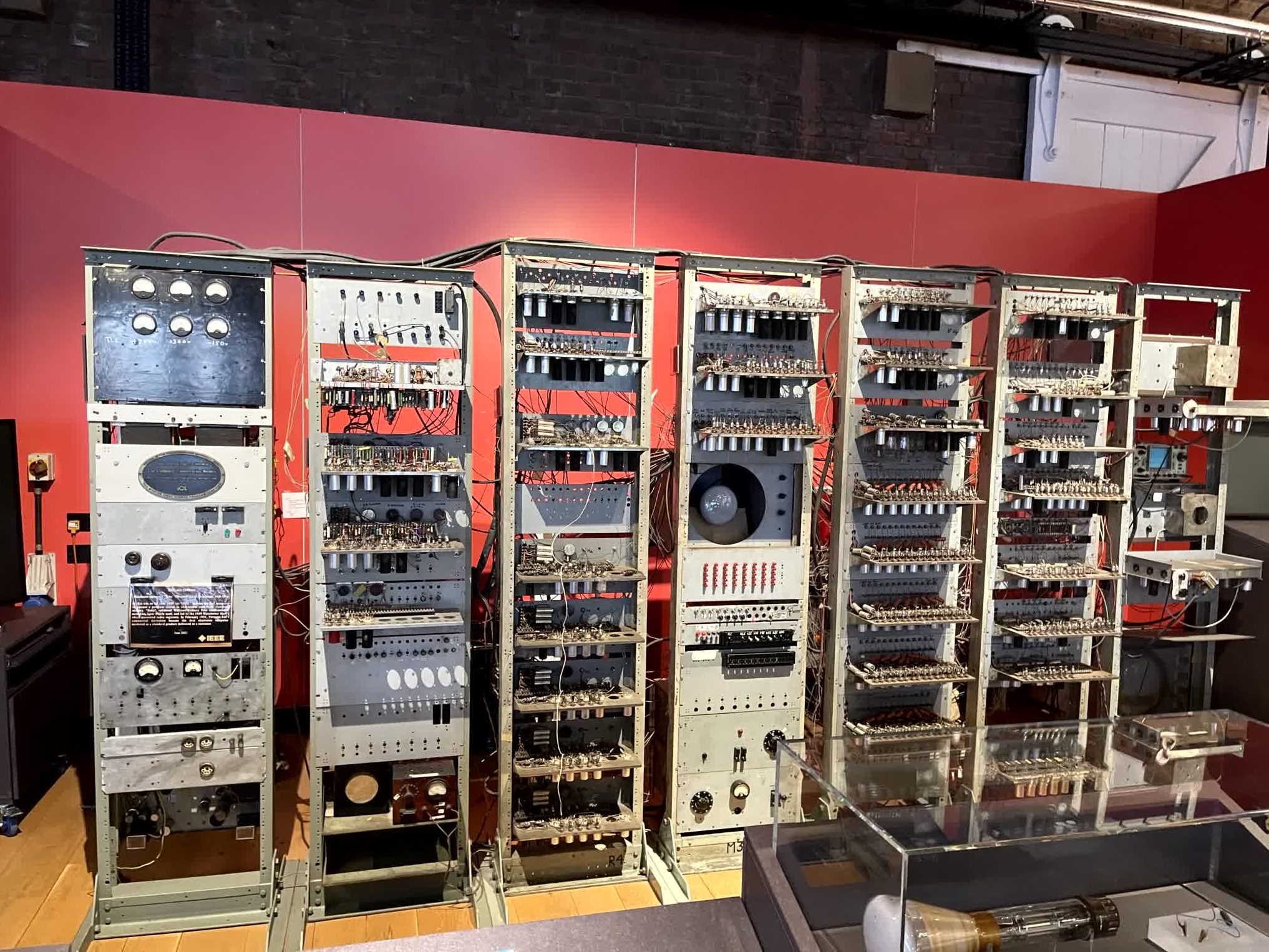
I’m here to see the Manchester Baby. (“Munchusta Bebi”). The first “modern” stored-program Computer. I have no philosophical qualms about calling this a computer. (This differs from the ENIAC in that the ENIAC had no memory – and had to be wired up for each program.)
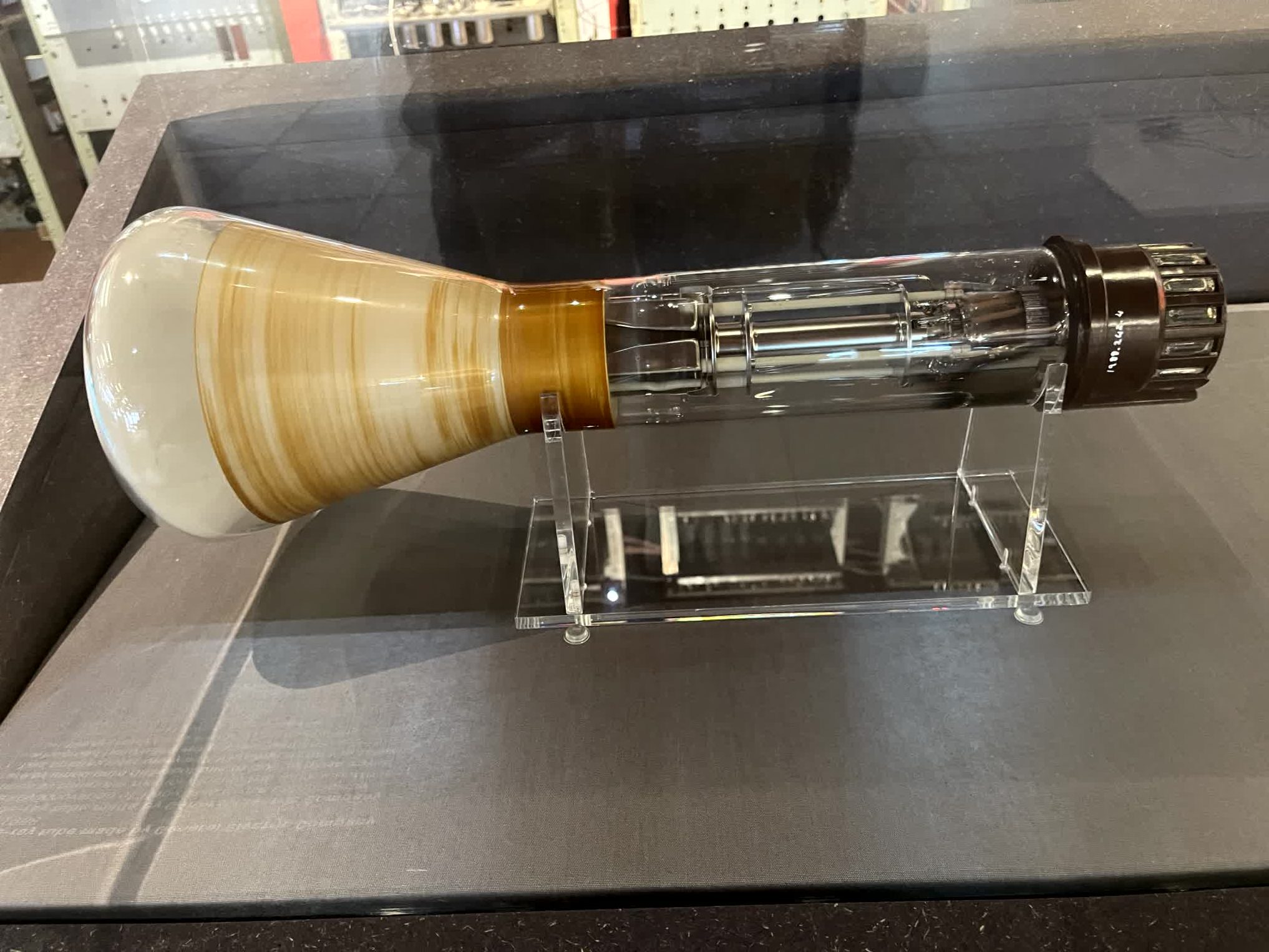
Its storage was on Cathode Ray tubes. (This technology was quickly superseded.)
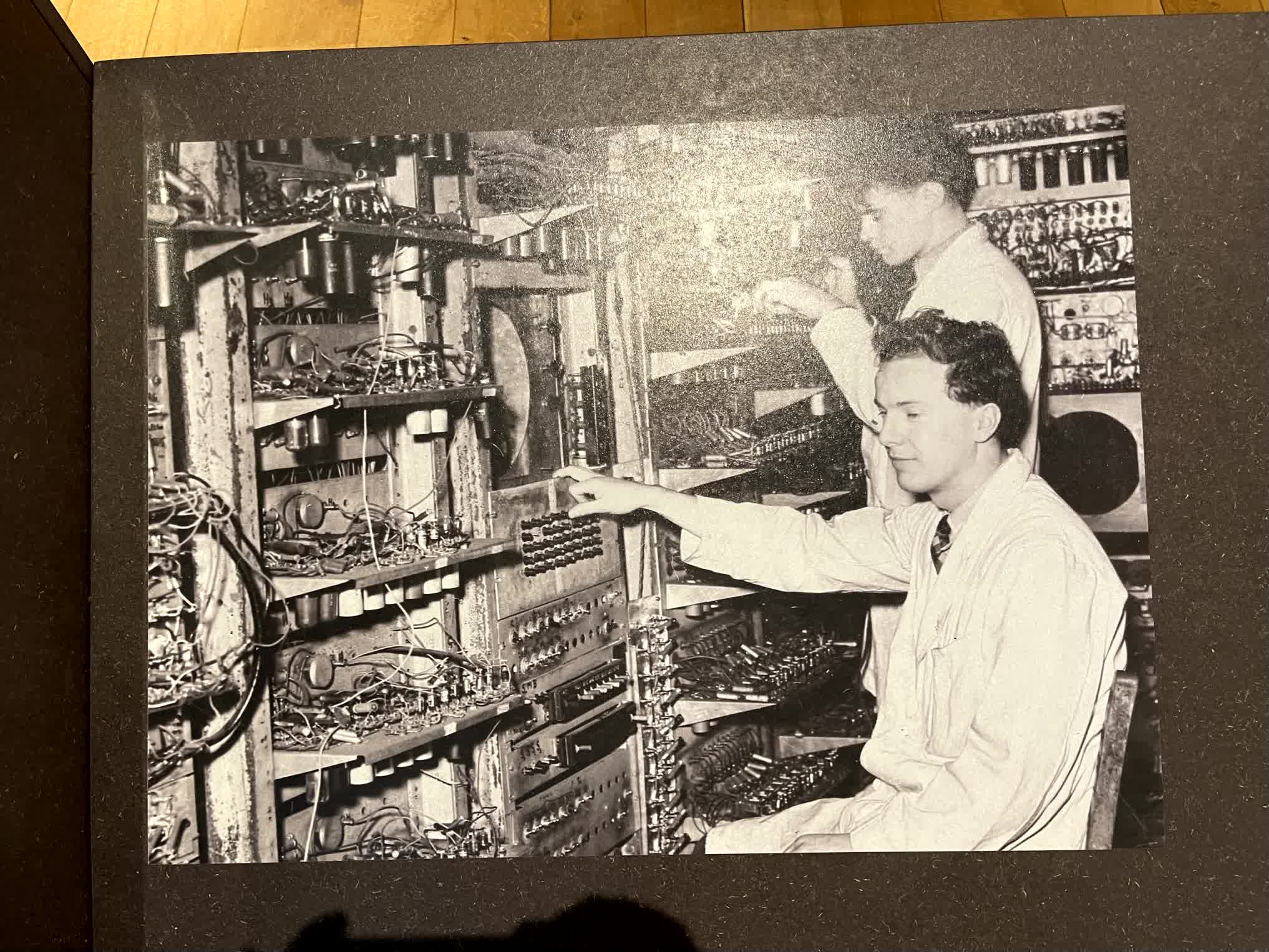
It was built by students from Manchester University – who went on to start the UK’s first Computer Science department.
The cotton mill machines (hundreds of thousands in Manchester) drove a demand for Engineers. Engineers who had a desire to improve and automate. Manchester became a place of machined and precise parts. They build cutting machines for building precise gears – and machines of increased accuracy (Joseph Whitworth 1860 – cutting down to a millionth of an inch.)
In 1862, the process was perfected in Manchester for a rolling machine to produce wire continuously.
There were stories about women working in airplane manufacture factories during WWII, cutting parts.
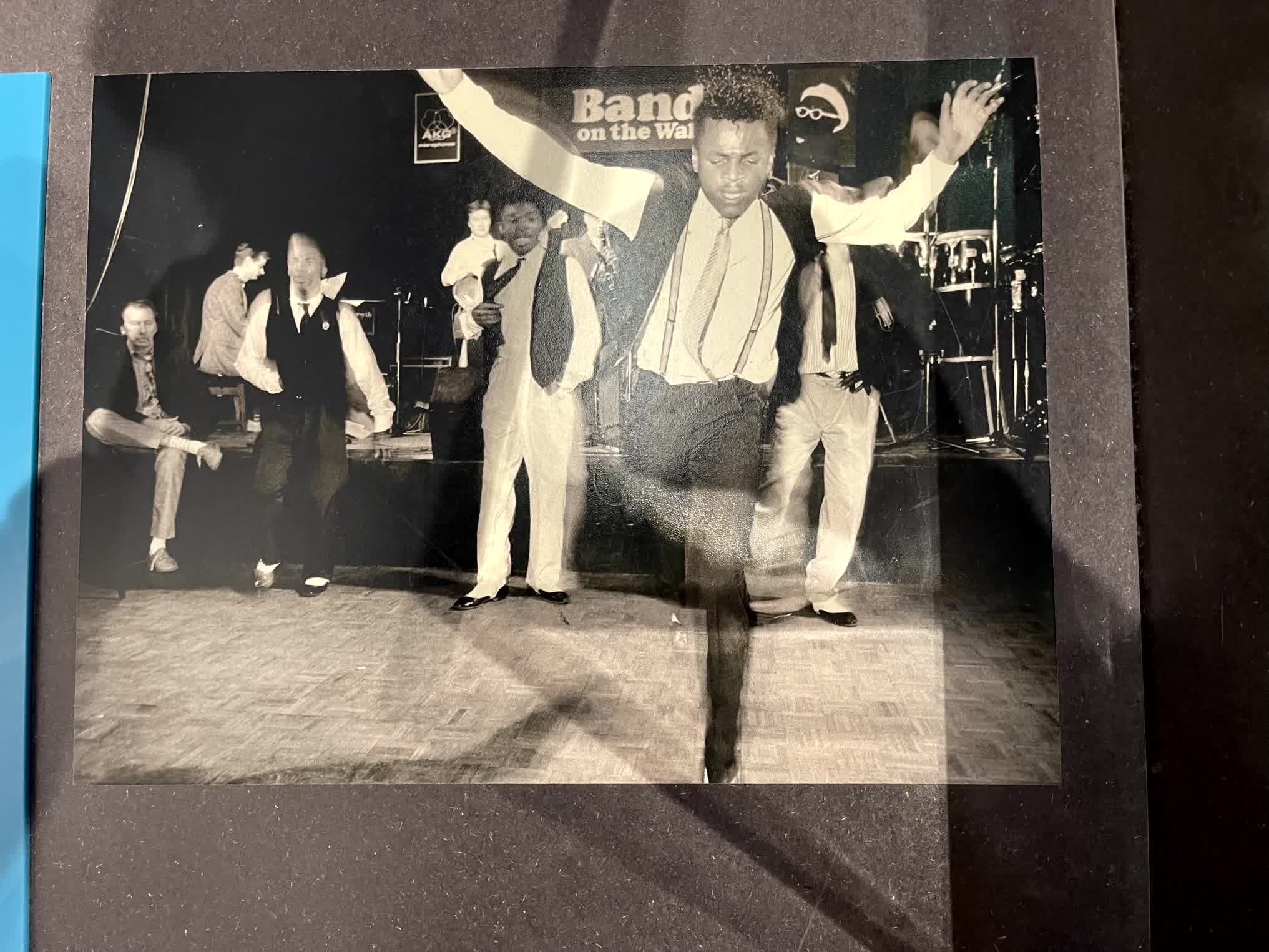
Then they linked the creative and Industrious past the music Industry in the 1970s in Manchester with Factory Records, and the Band on the Wall club.
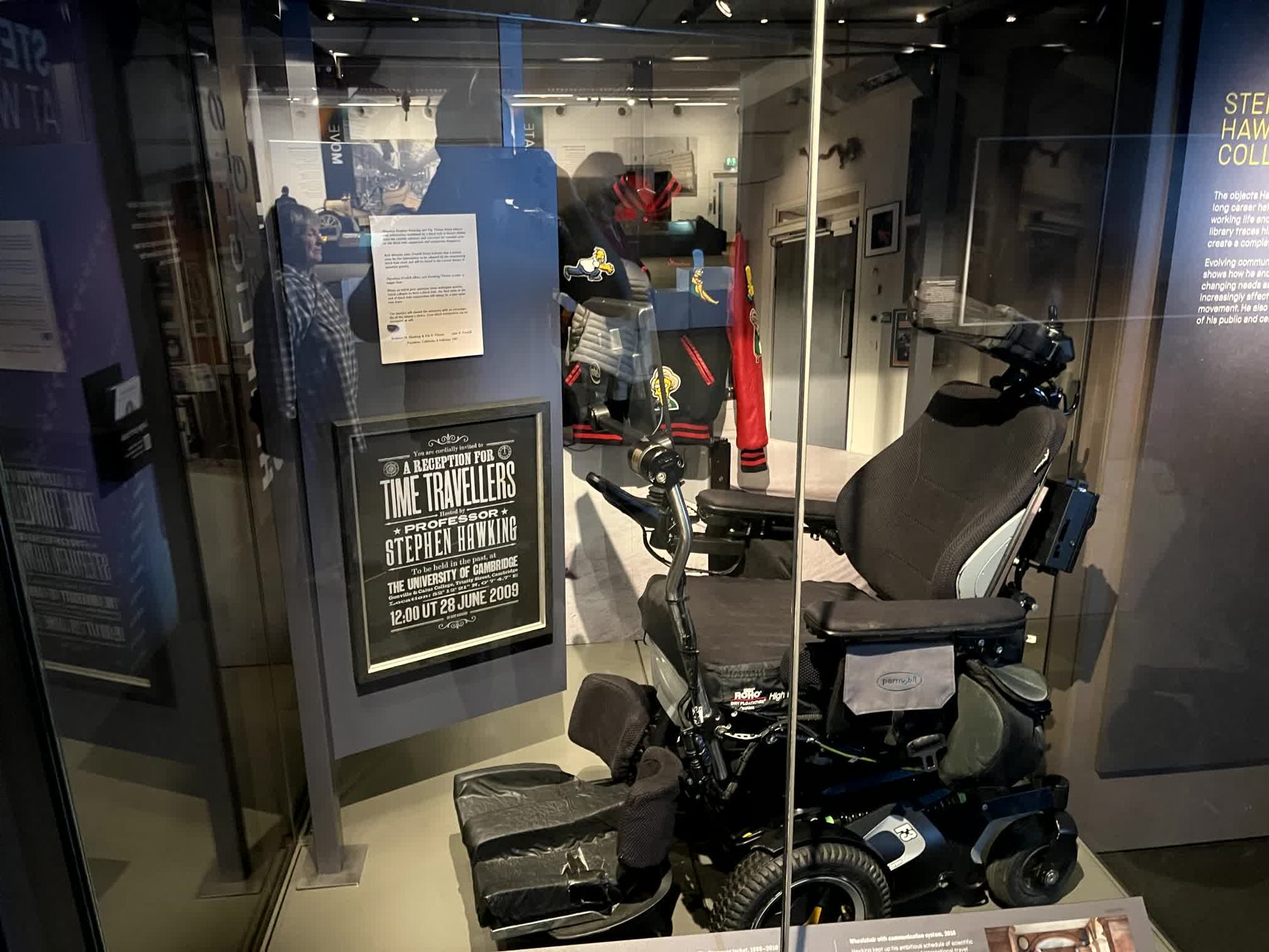
There was a display on Stephen Hawking. It was inspiring how determined he was to keep going with engaging with people (being on the Simpsons and Star Trek) and pushing the clarity of his vision for Astrophysics. He was buried at Westminster Abbey with Isaac Newton and Charles Darwin.
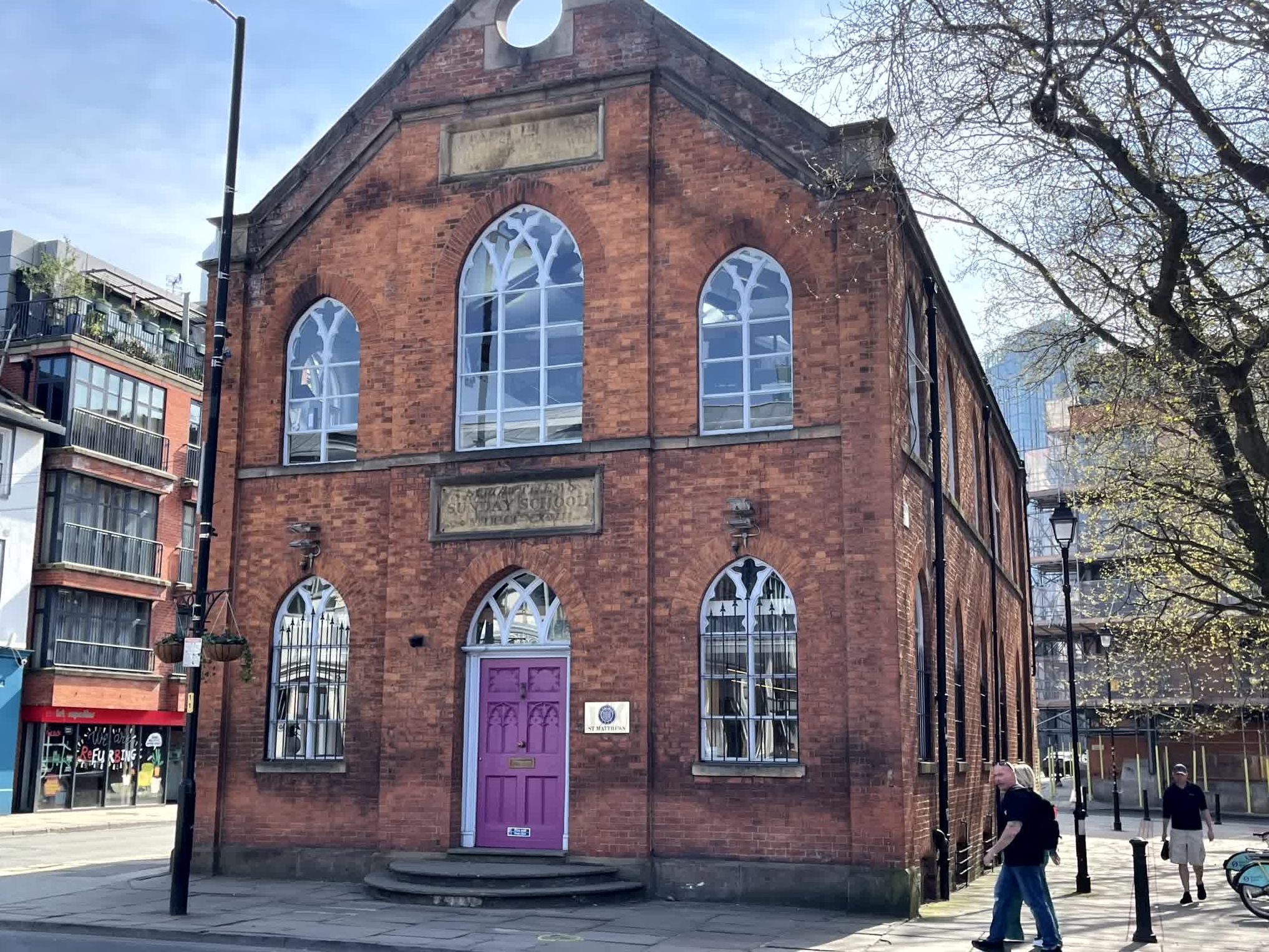
Nearby is a Sunday school just like at DPC. At DPC this seems to be a copy of English conventions, but I wonder if this was in part sold by social issues of the time.
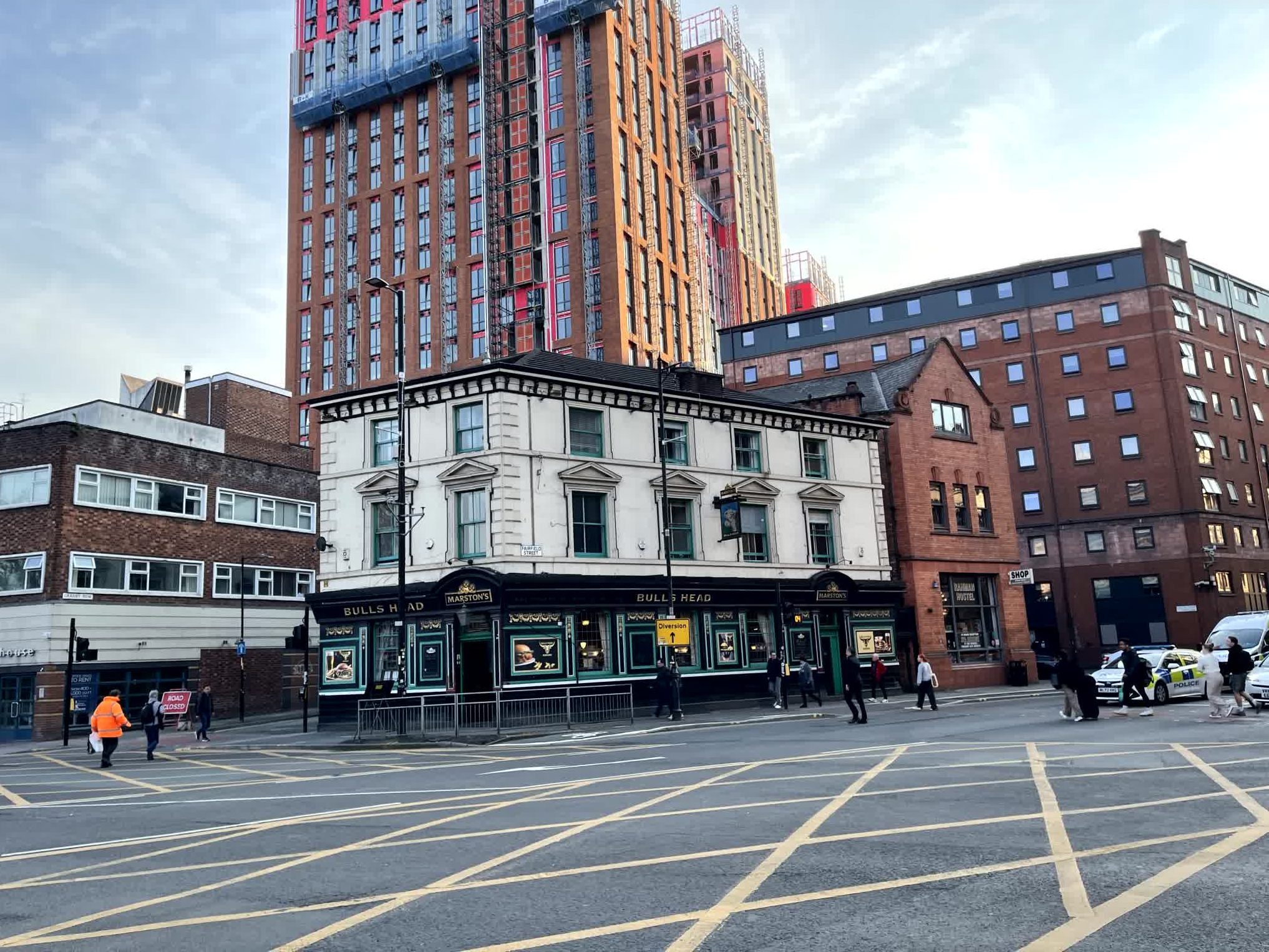
The city of Manchester, the City where my grandfather was born, is filled Industrial Revolution era buildings, with little time for gardens and no daffodils.
It is not a place for poetic contemplation or aesthetic beauty, but for focus, productivity and people. It celebrates dynamism, progress, innovation and results.
My grandmother once said describing a relative “he had a proper job you know, in an office.” She came from 1940s Britain and at the time (the 1980’s) I took that to mean, she meant they escaped working the plough in a field. What’s clear to me now is that she meant that they escaped working in a factory or a mill. They had left Britain at a time when opportunities for education were not readily available, and unemployment was increasing. They came to Australia, leaving a war-torn England, to provide opportunities and a life for their boys.
Comments Off on Fri 4 April – Supermarkets, Manchester Science and Industry Museum, Reflections on Manchester
Posted onApril 5, 2025|Comments Off on Thur 3 April – National Computer Museum, Manchester
An offshoot of the Bletchley Park museum, which leans more towards military stories, this Museum is a place for the stories of Britain’s computer Industry following World War 2.
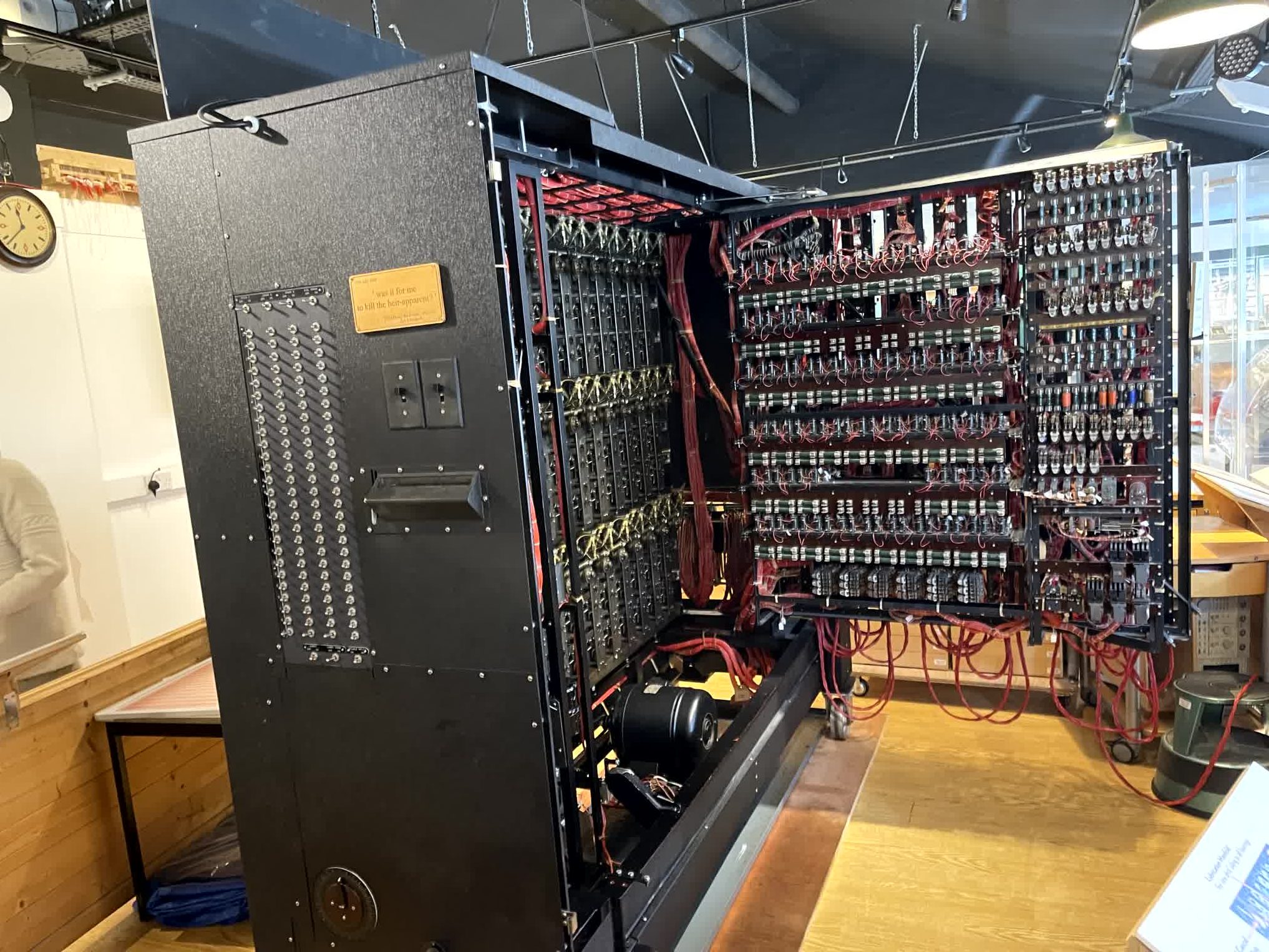
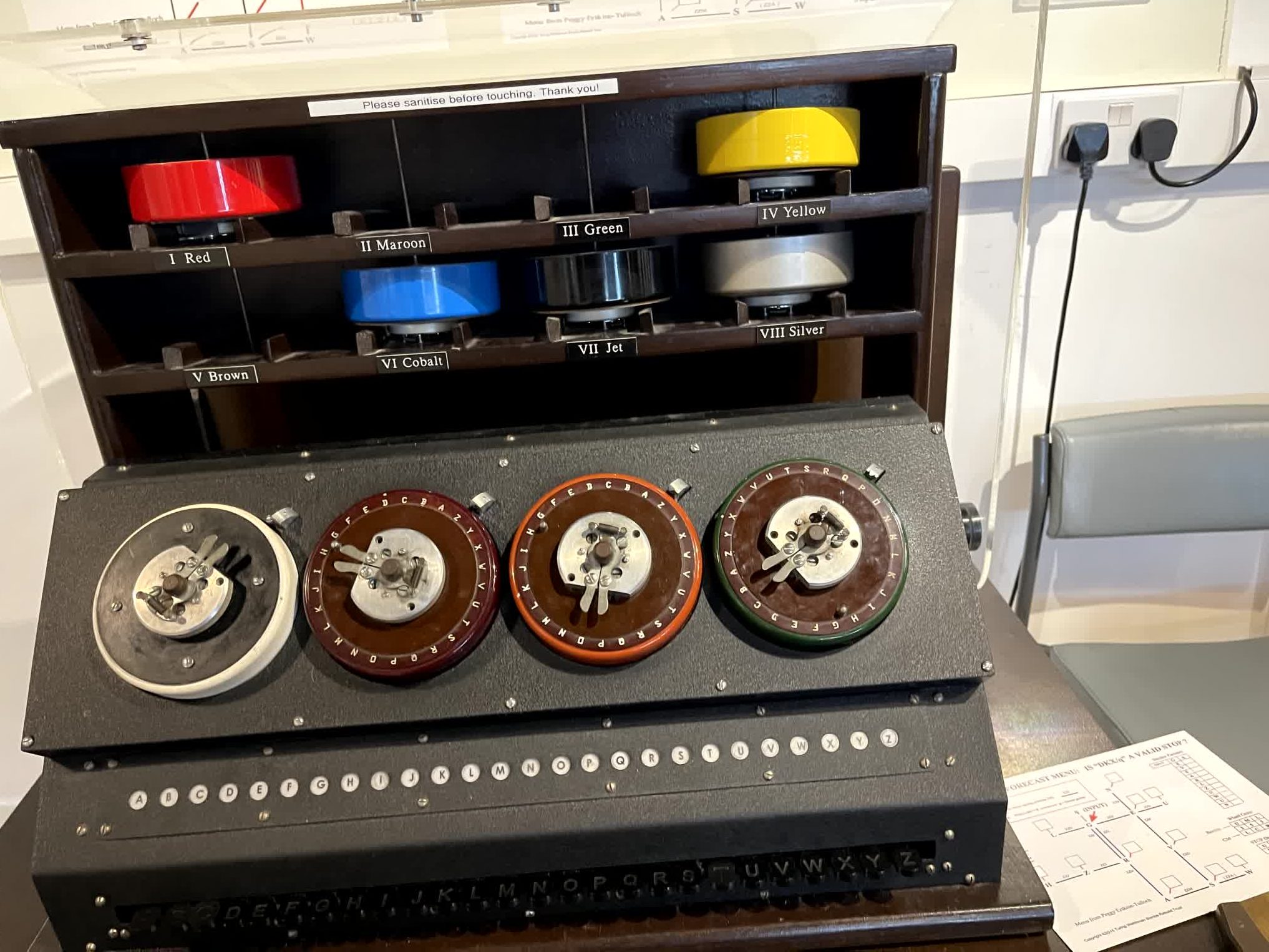
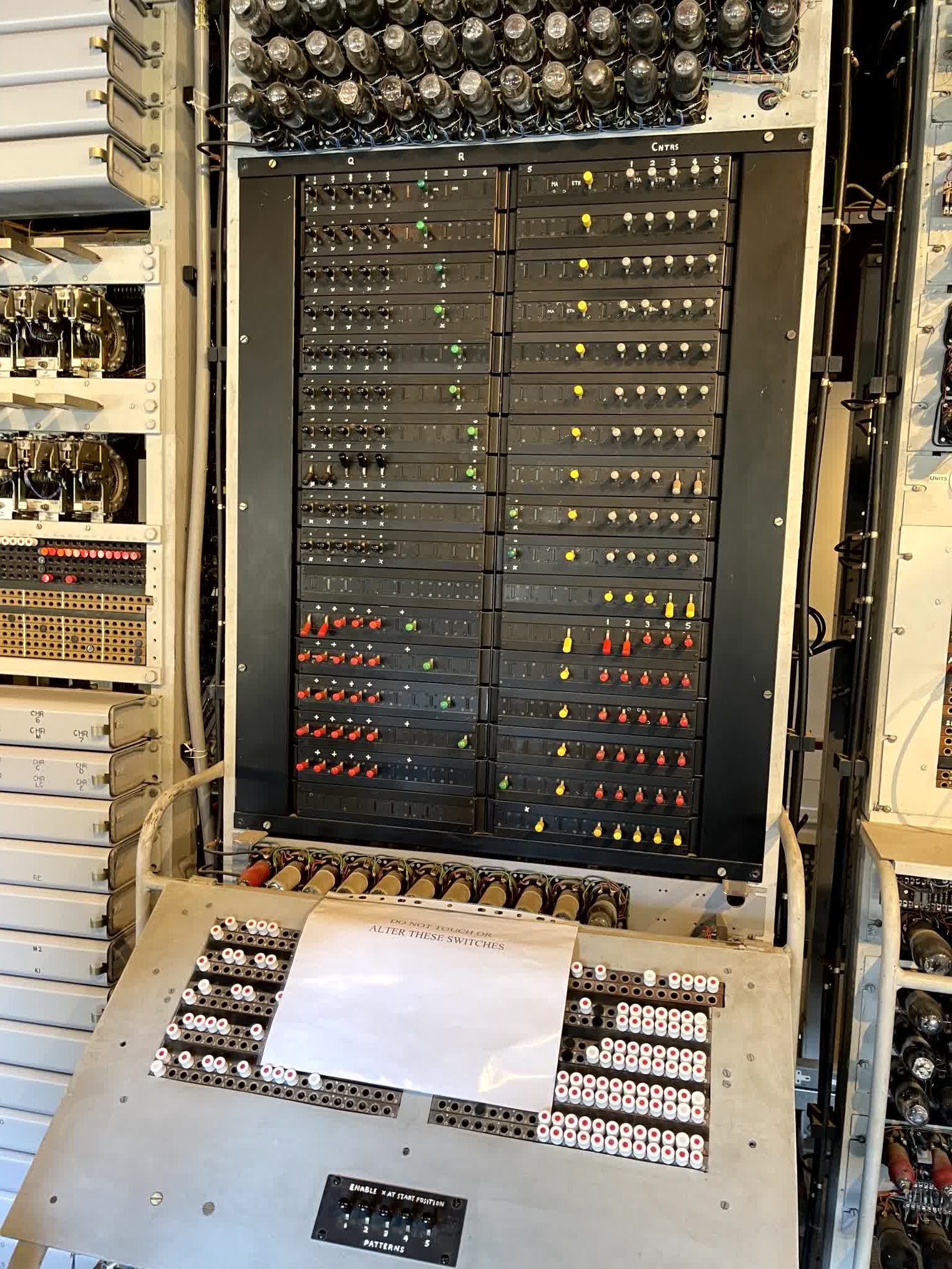
They start with a largely working Bombe machine replica – ticking over to find combinations that might work against a particular encrypted message.
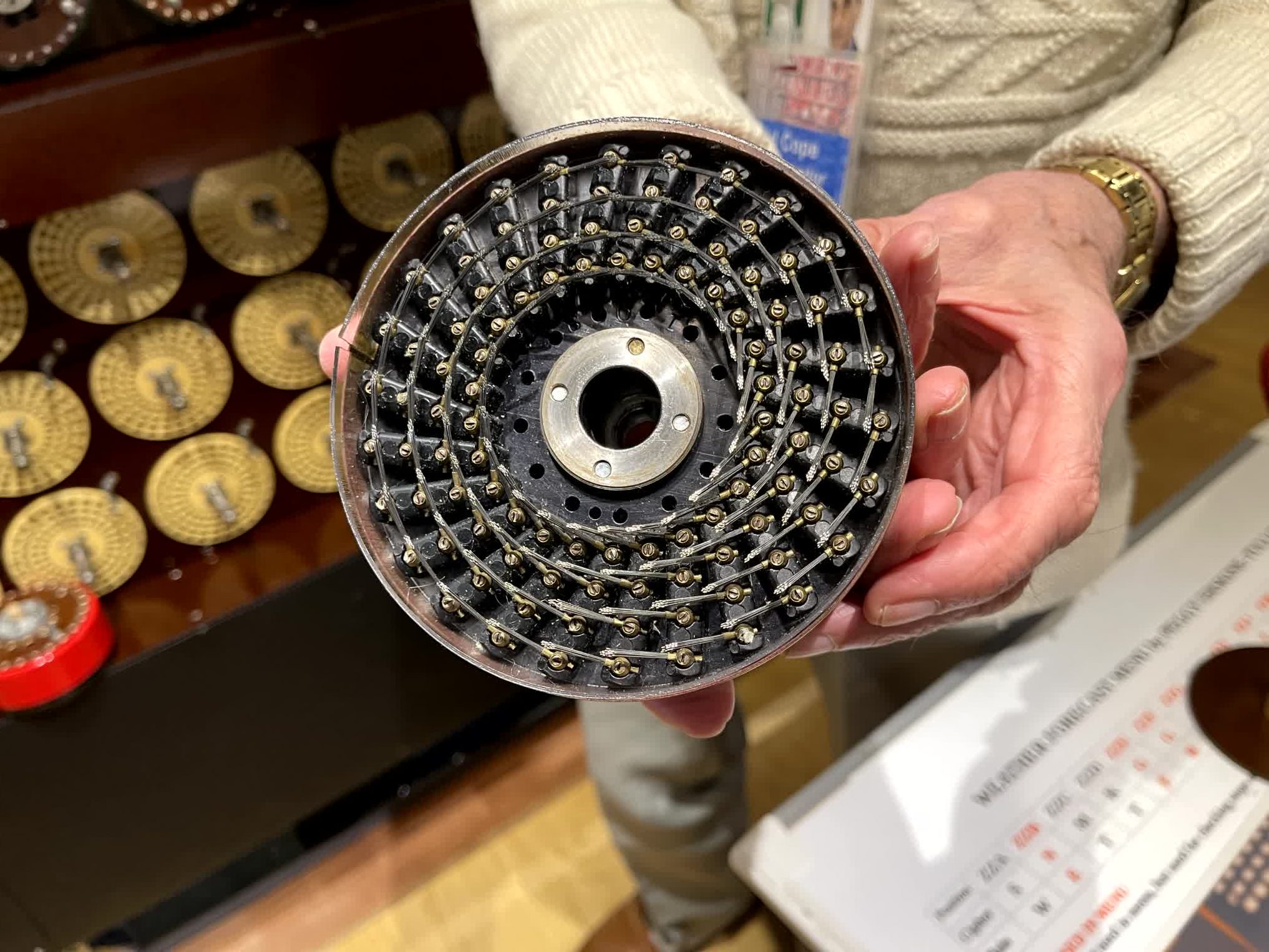
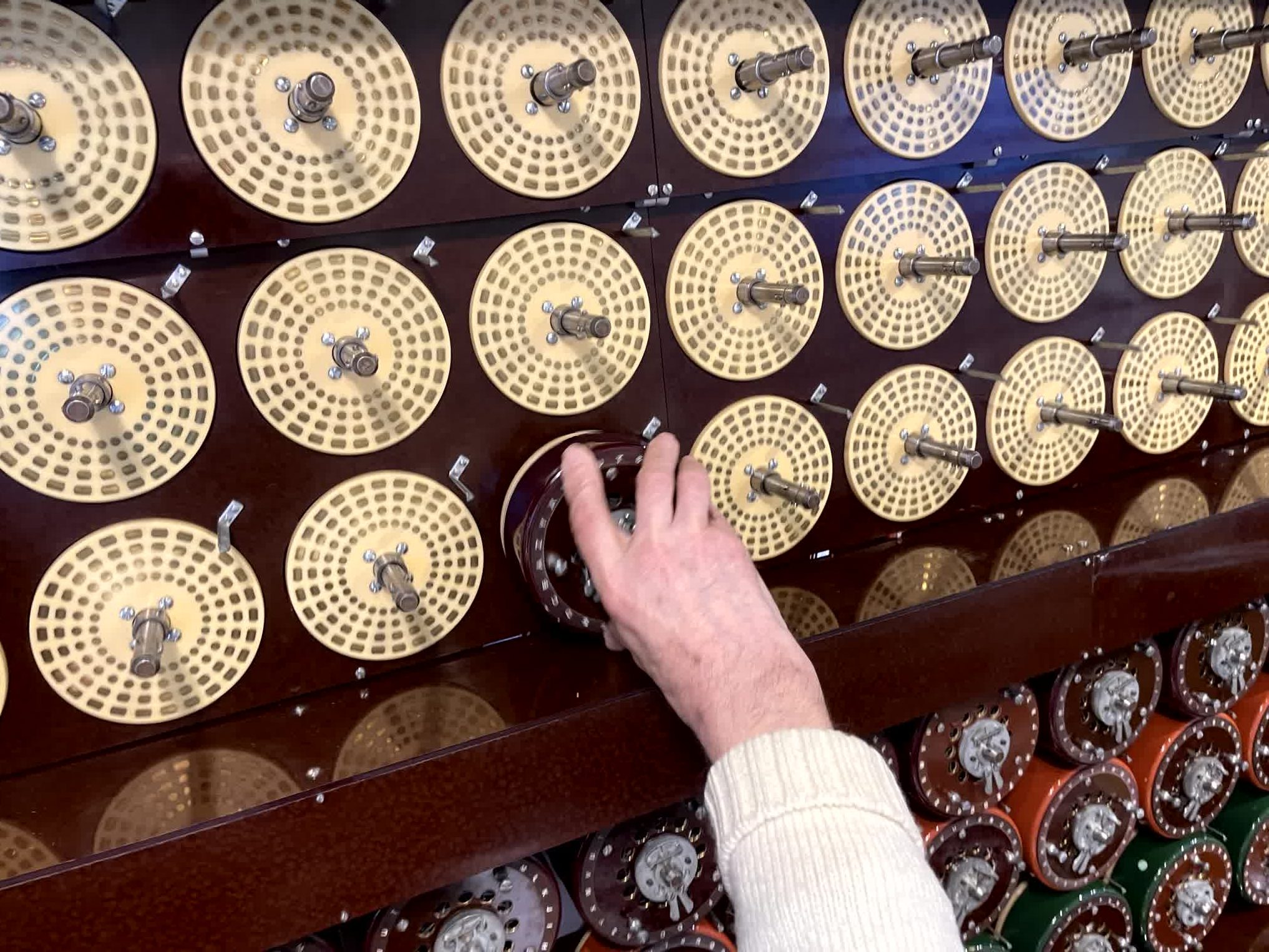
Inside of a rotor, fine brushes made contact with the commutators. These were cleaned with tweezers by an operator. (This was modelled on the Enigma machine’s rotors).
The rotors were plugged into the commuatators:
On the back were plugs (26 pins for the alphabet) which were matched up to each rotor depending on the instructions for the run.
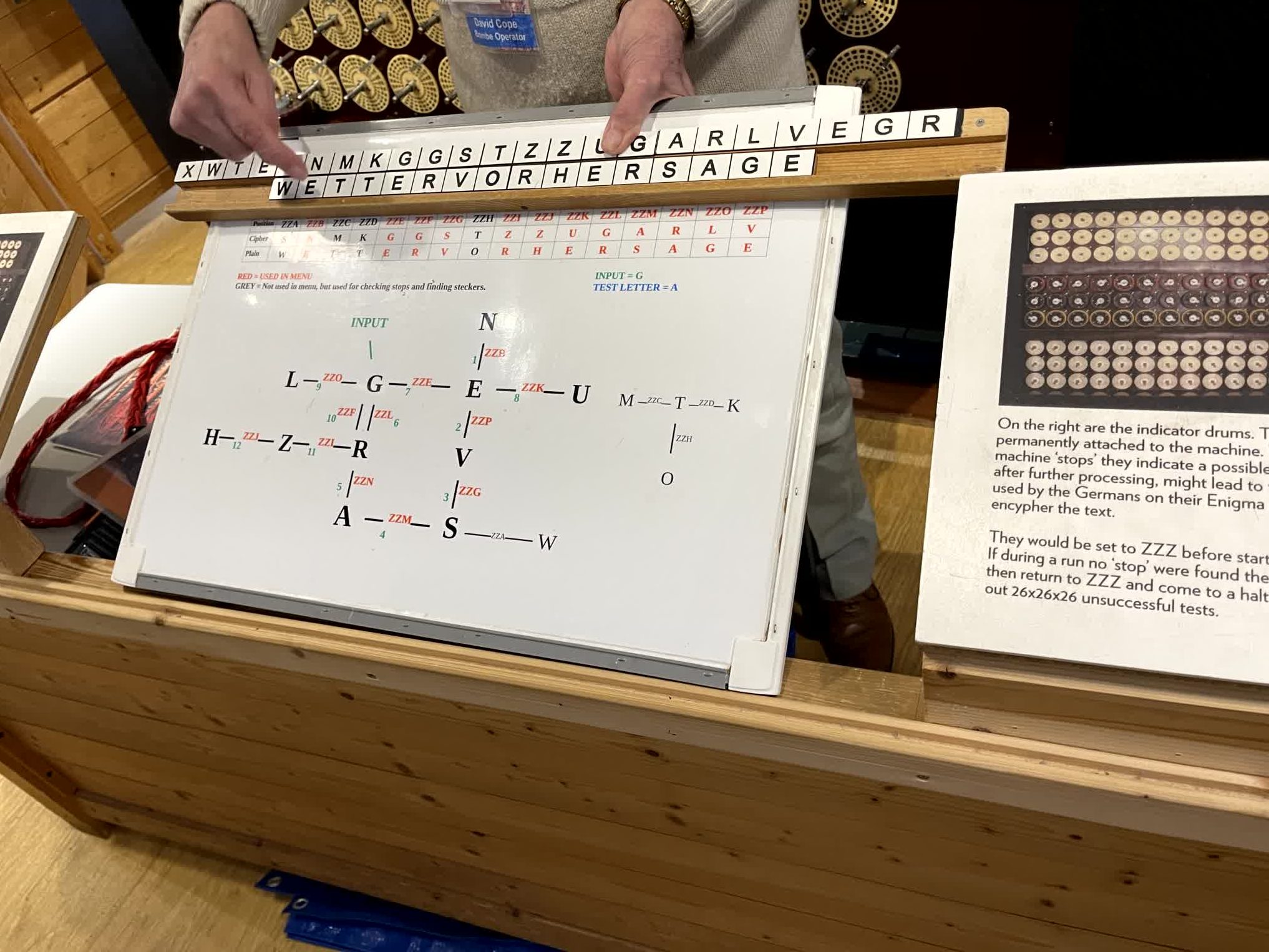
To choose settings for the machine – you would check for a crib (like the weather report) to check for letters not translated (ie the ‘W’ in the Weather Report would never be translated to W – so you could exclude that as a possible translation with a sliding rule.
After the Bombe had ‘stopped’ – you took it to a checking machine to see if you had hit a valid combination.
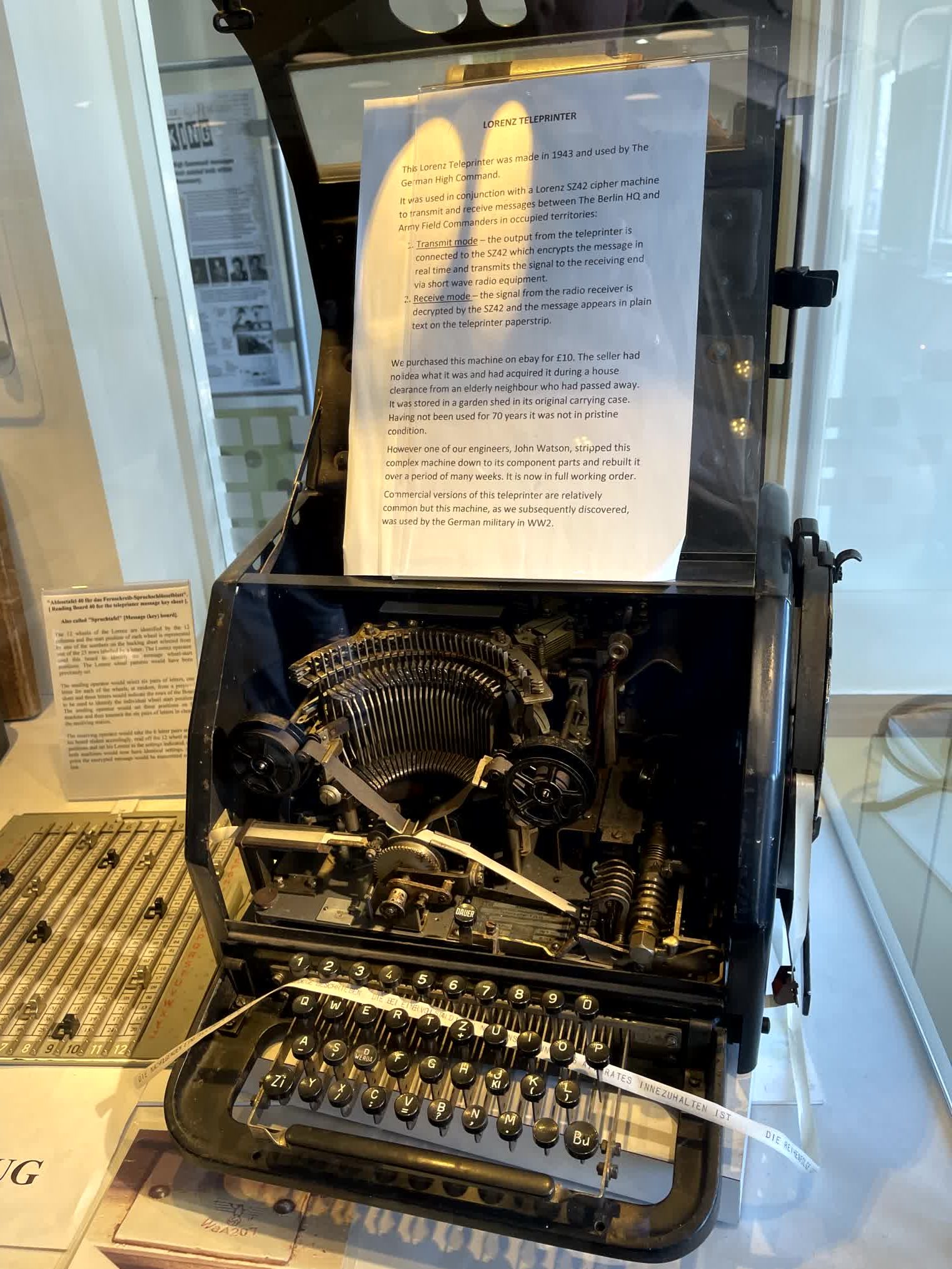
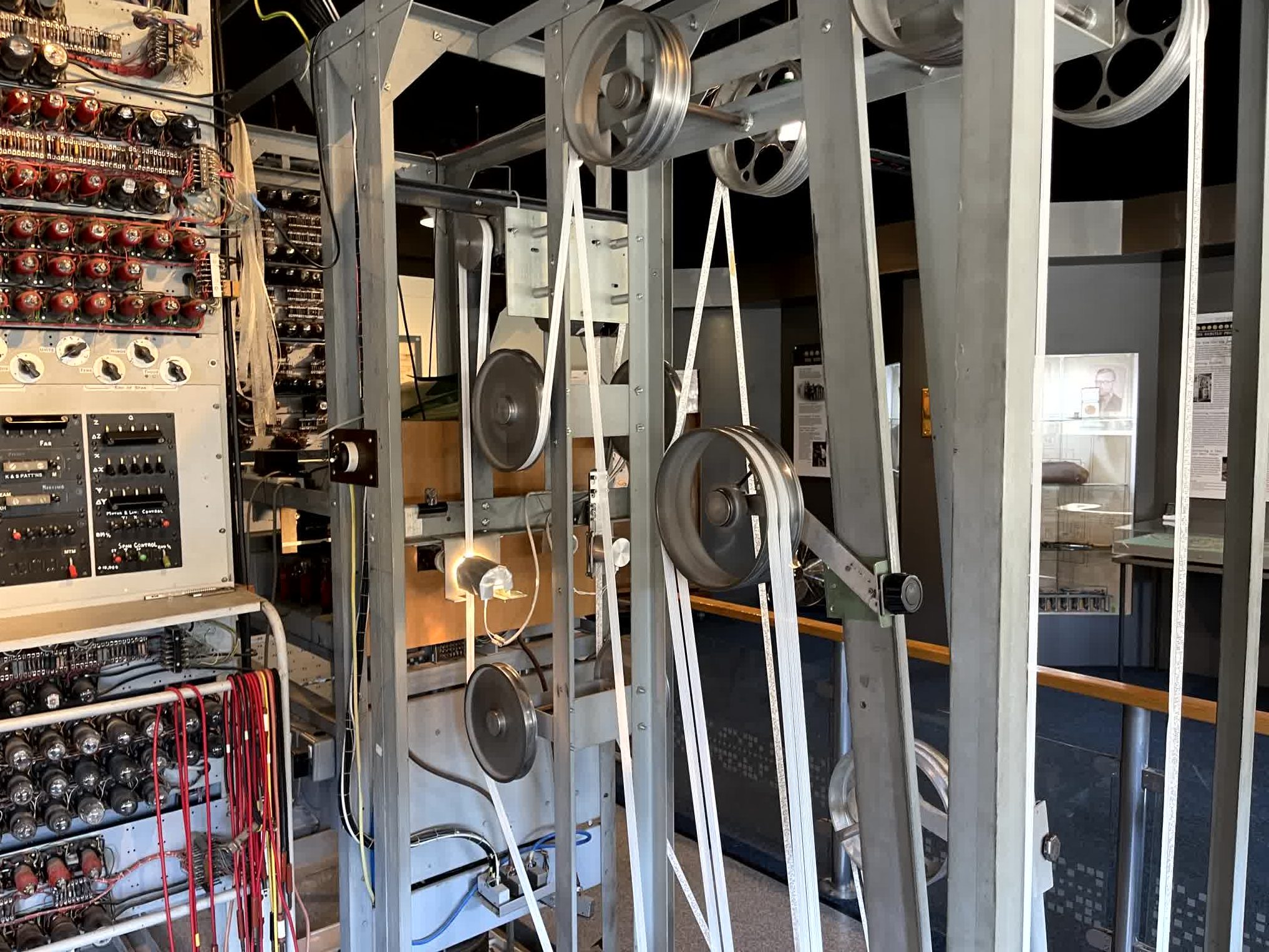
Next they had the Lorenz Machine and the machines for cracking it – a more sophisticated 12 rotor (instead of 3 rotor) machine the German high command used for overall strategy.
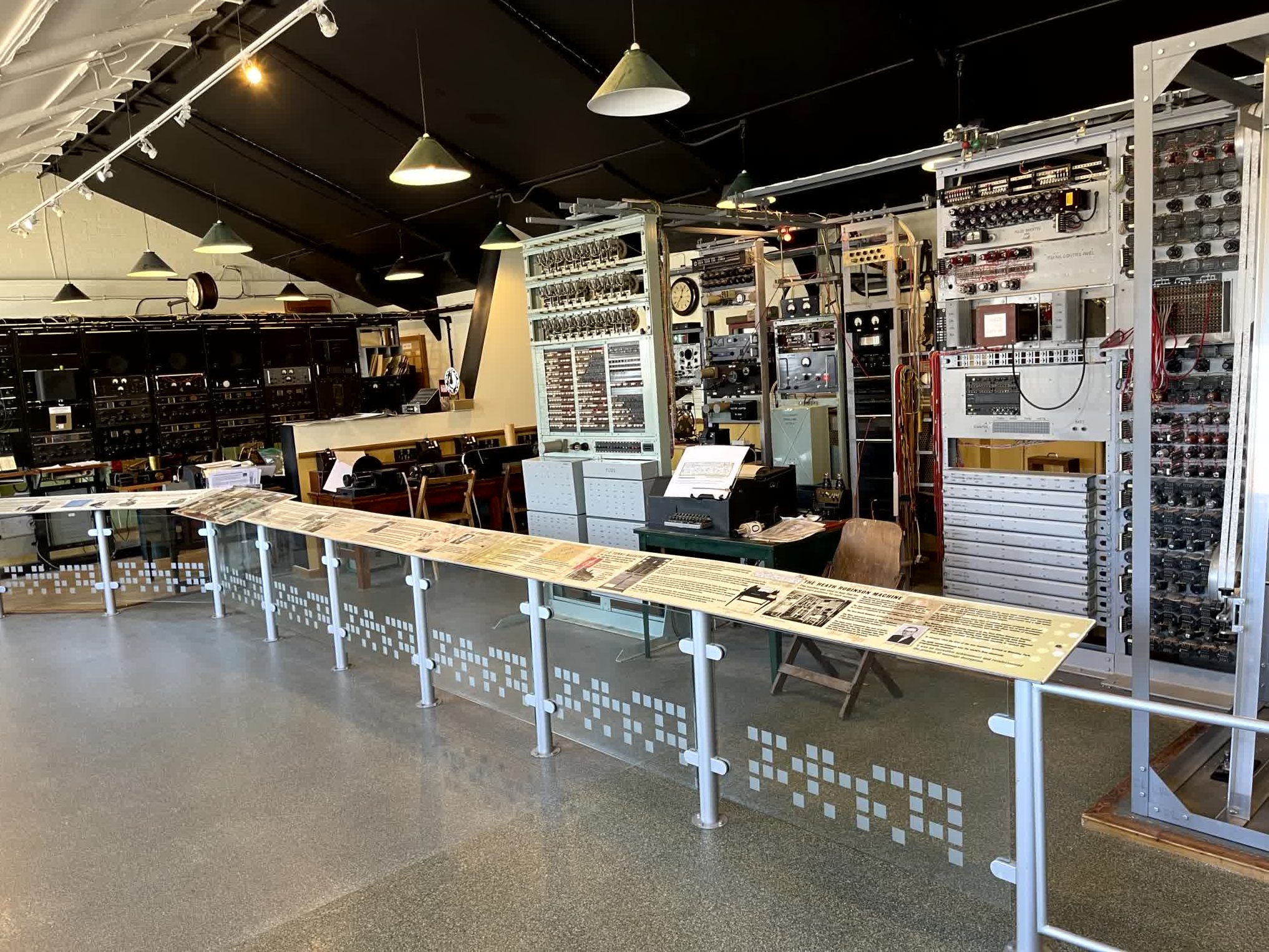
The first machine they attempted to build to crack it was named the ‘Robinson Machine’ – because it was considered an unreliable bunch of wires. It had two tapes, which were always getting out of sync with the machine.
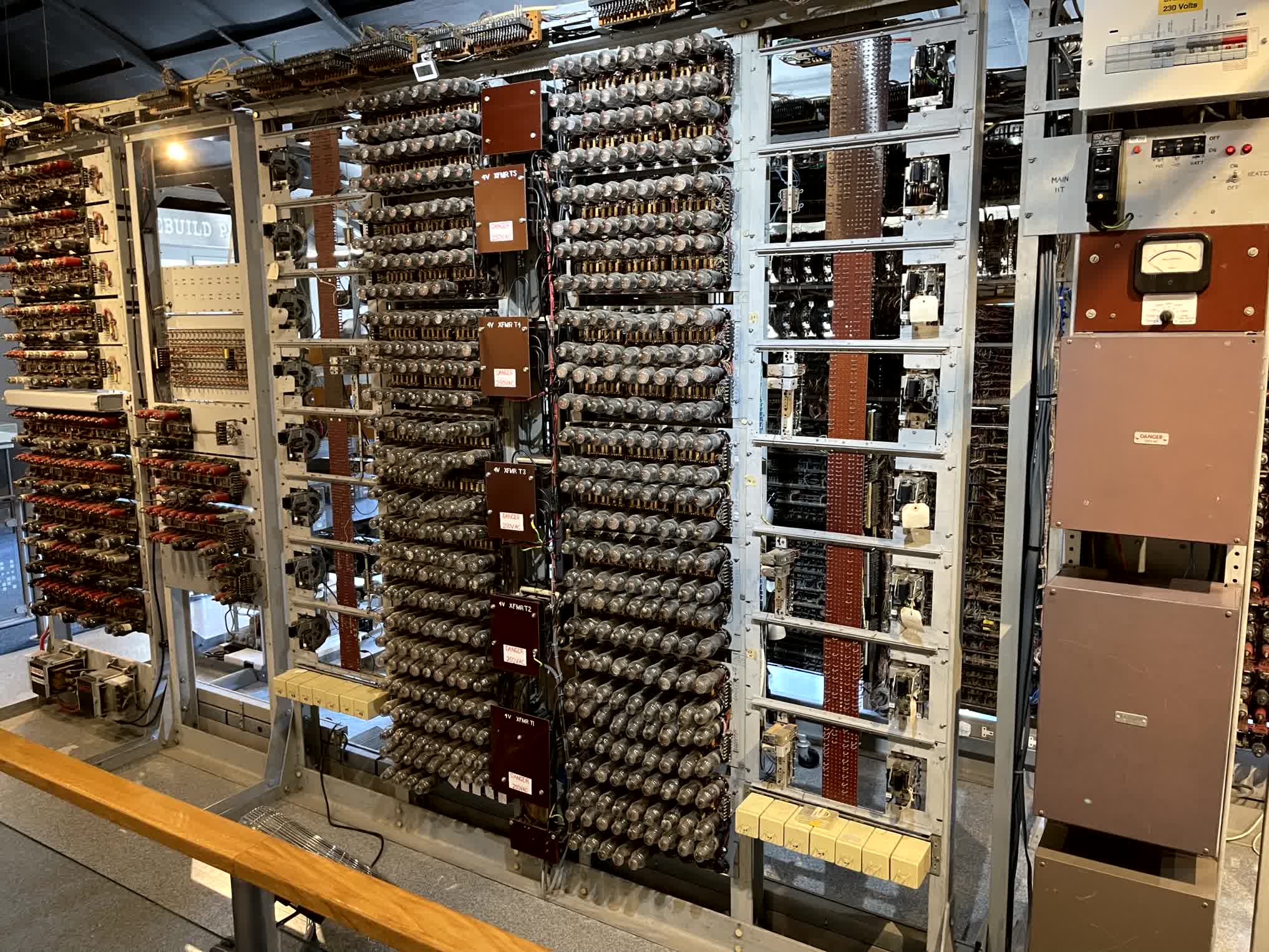
Their next attempt was the Colossus – built by people from the GPO who had worked on telephone exchanges.
It had a single rotating tape. (5 bits wide – one for each finger of your hand.)
There is a philosophical question about whether it was truly the first computer. It had shift registers and branching instructions, but no memory. It was not general-purpose programmable. I am truly on the fence on this question. (It seemed like a bunch of electronics to do statistical attack calculations, looking for the ordered pattern in the randomness of encryption possibilities.) Still it is very close to Turing’s Phd thesis model of a Mathematical computer running on a tape.
The leaders of Bletchley Park at the time were so impressed with the first demonstration they commissioned 3 more on the spot to be delivered in two months. (The builders had spent 11 months working 12 hour days for 6 days weeks to deliver this prototype.)
Tony Sale did a rebuild of the Colossus in 1994 after working to save the Bletchley site from developers in 1991. He got notes from an Harry Fensom who worked on the original Colossus.
There is a profound historical parallel to the Biblical writings, where people don’t seek to preserve things by writing them down or publishing them, until or after the original people who experienced it were on their deathbeds roughly 40 years later.
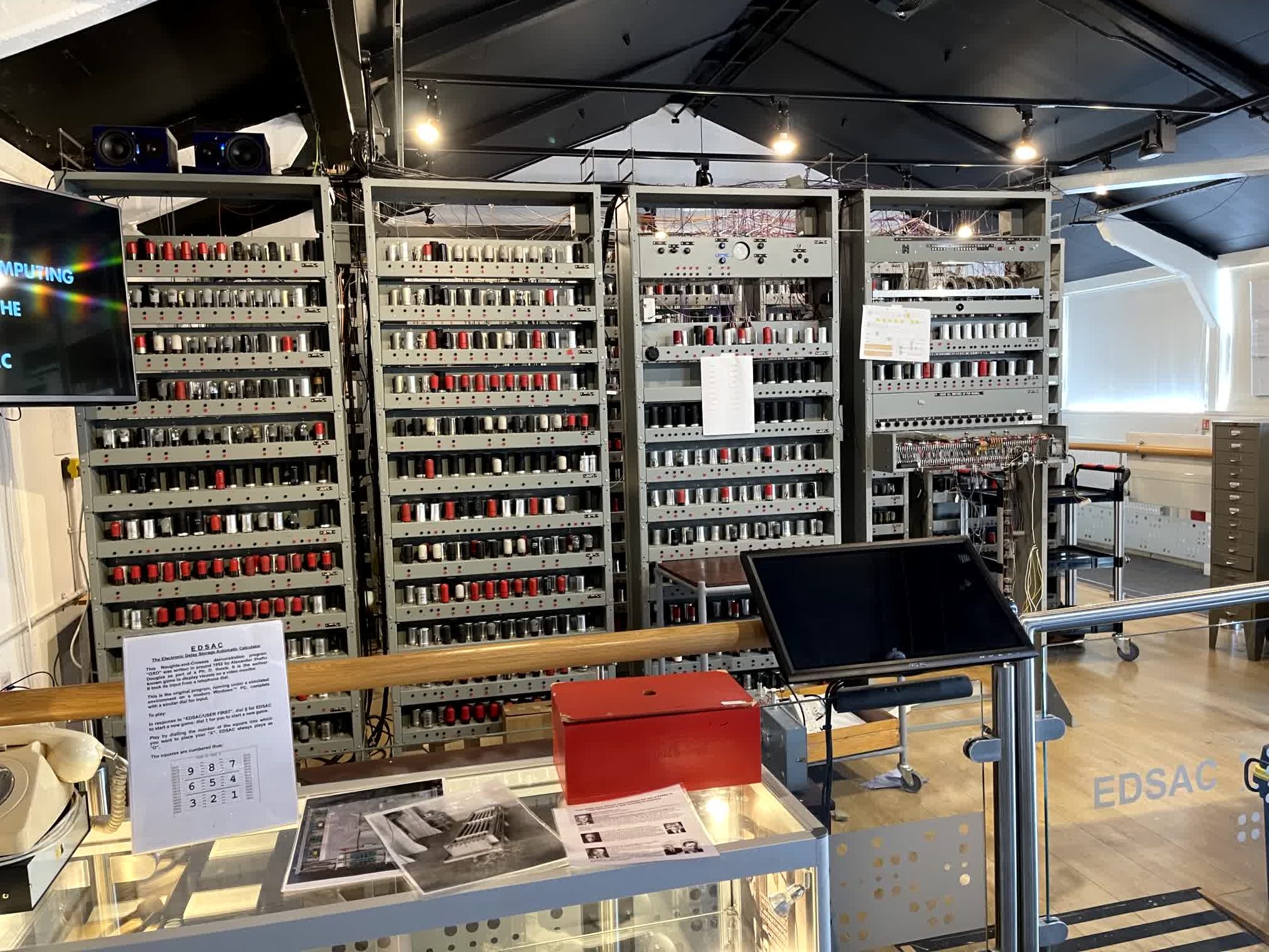
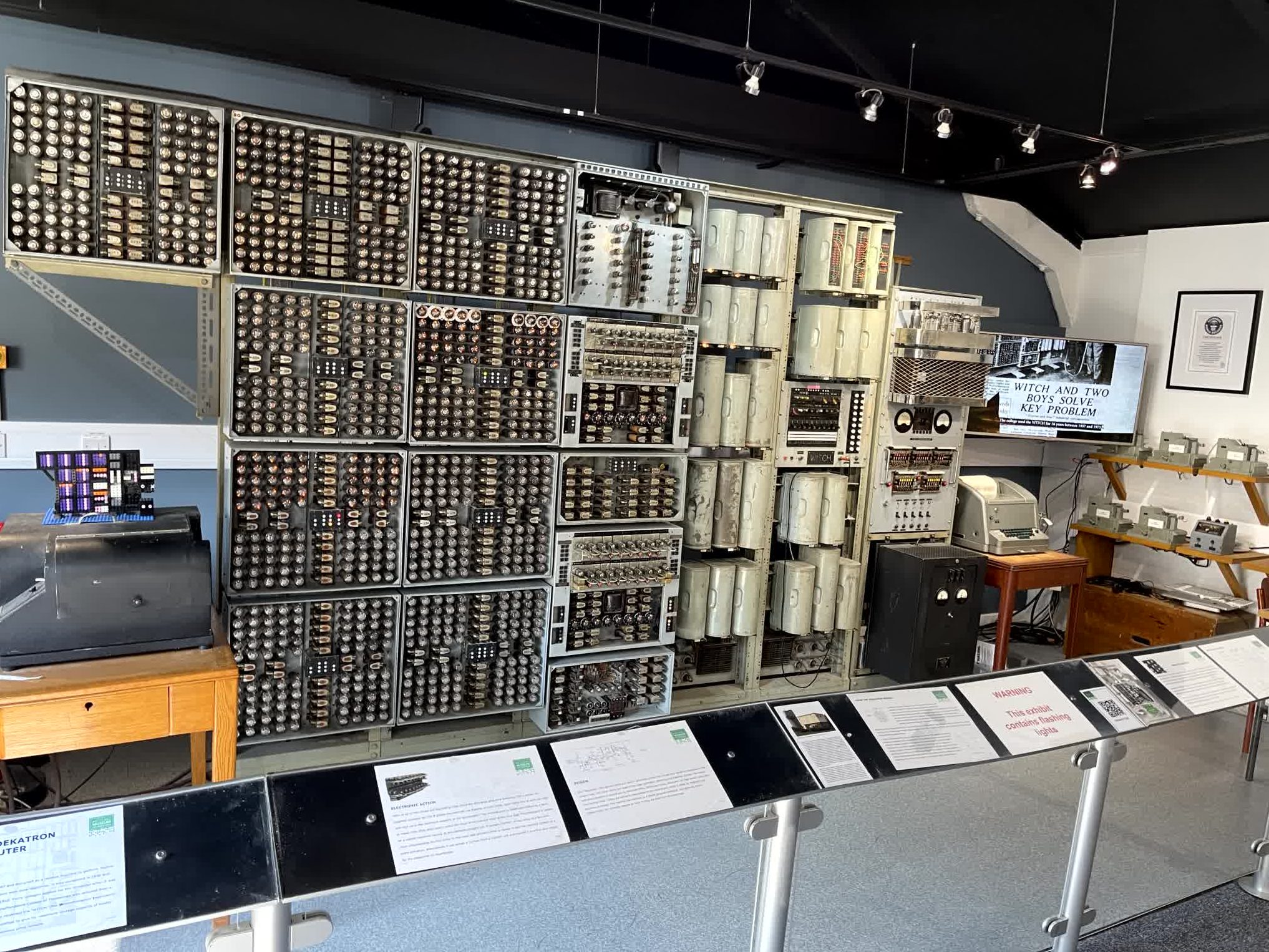
The museum also had a rebuild of the EDSAC computer. It was built for the Cambridge Math’s department. This was significant because it had Turing’s design for storage, a mercury delay line, and had a form of assembly language converted down to binary.
They had a Harwell computer, made from Geiger Counters (10 bit cathode tubes). A one-off given to a Maths department. It was as slow as a human at calculations, but but resilient and less error-prone. It was an early general-purpose computer.
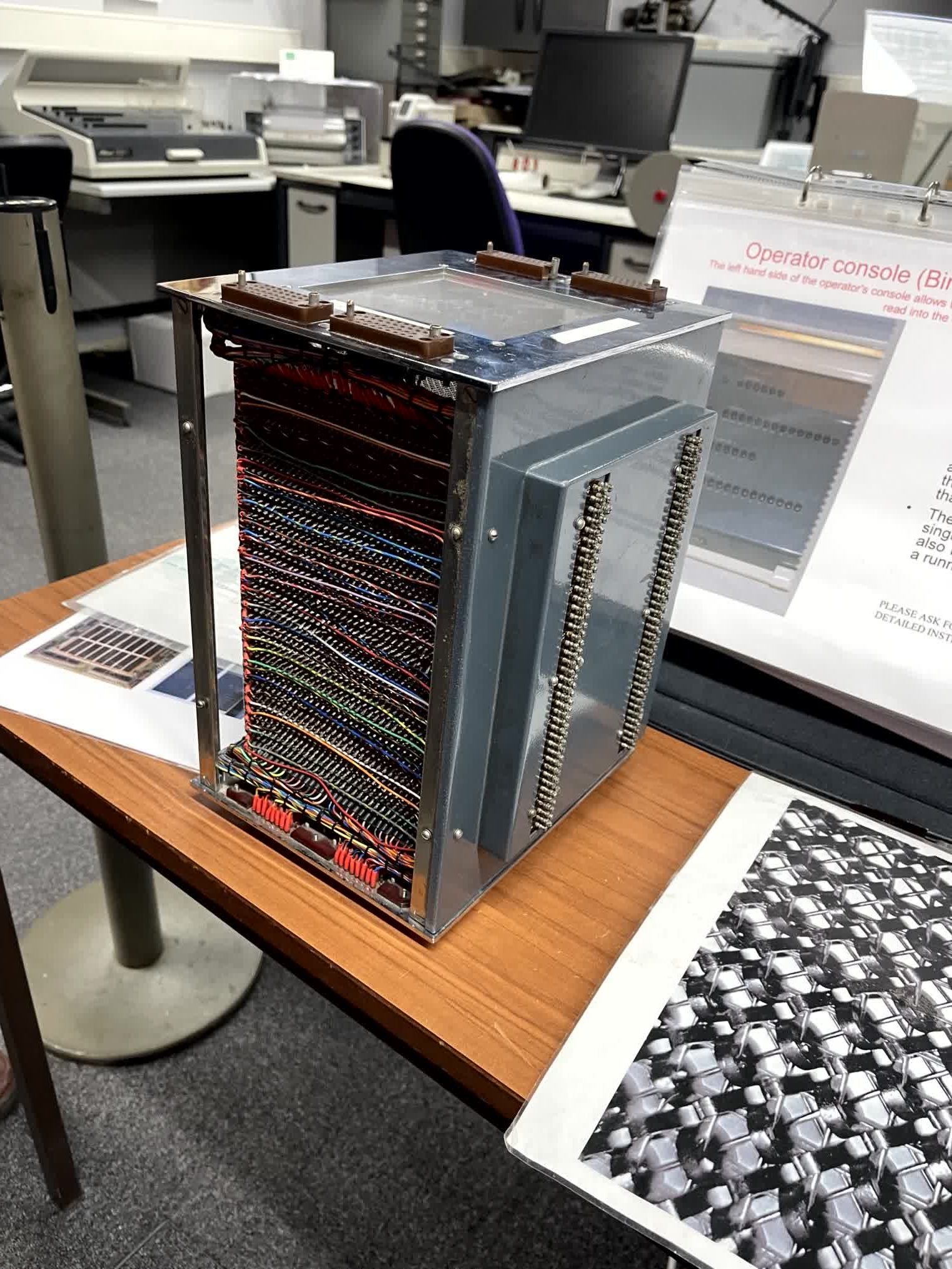
They had a mainframe memory core. From what we get our phrase ‘core dump’ still used in diagnostics today.
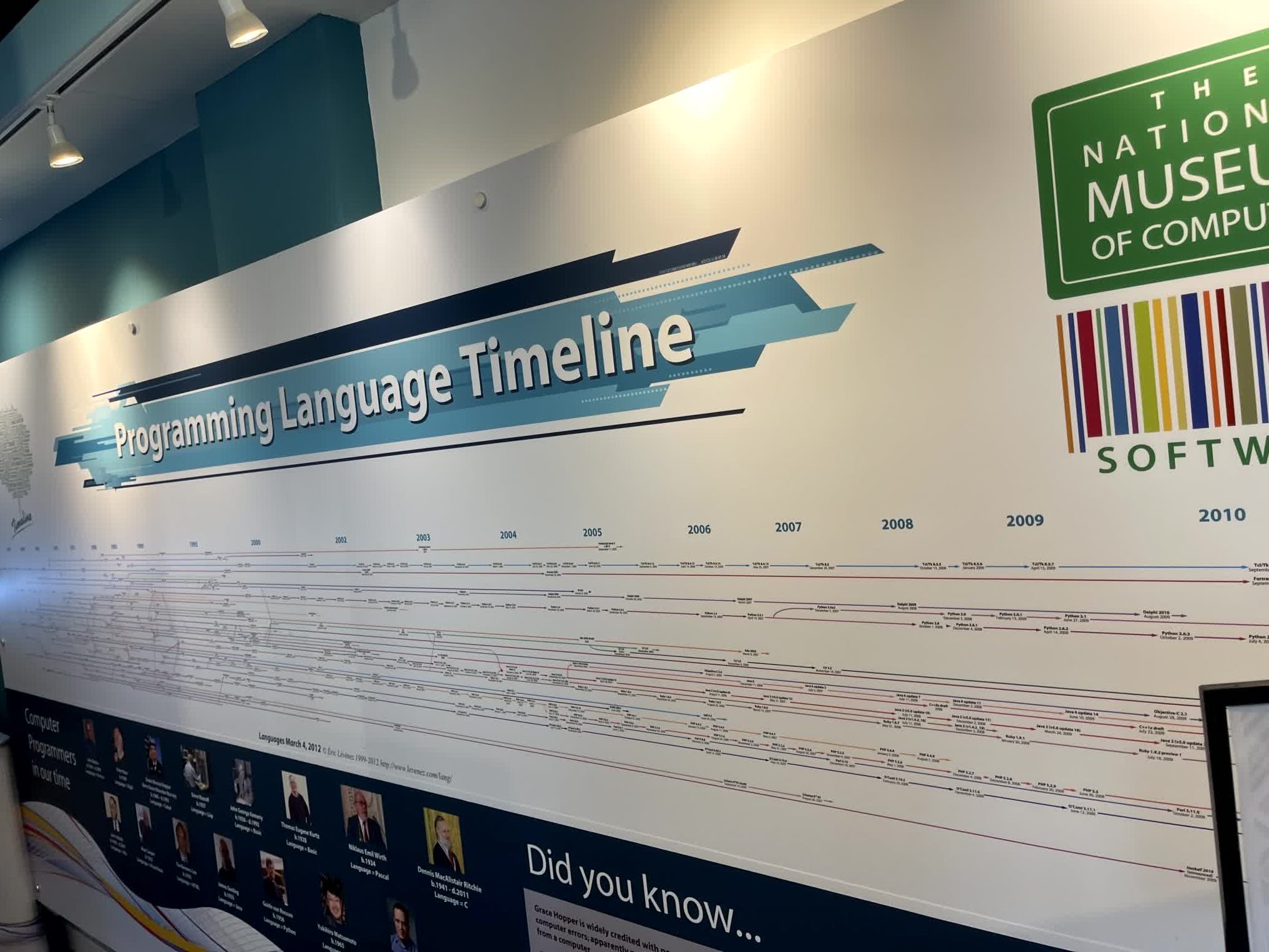
They had a software section with a programming language timeline.
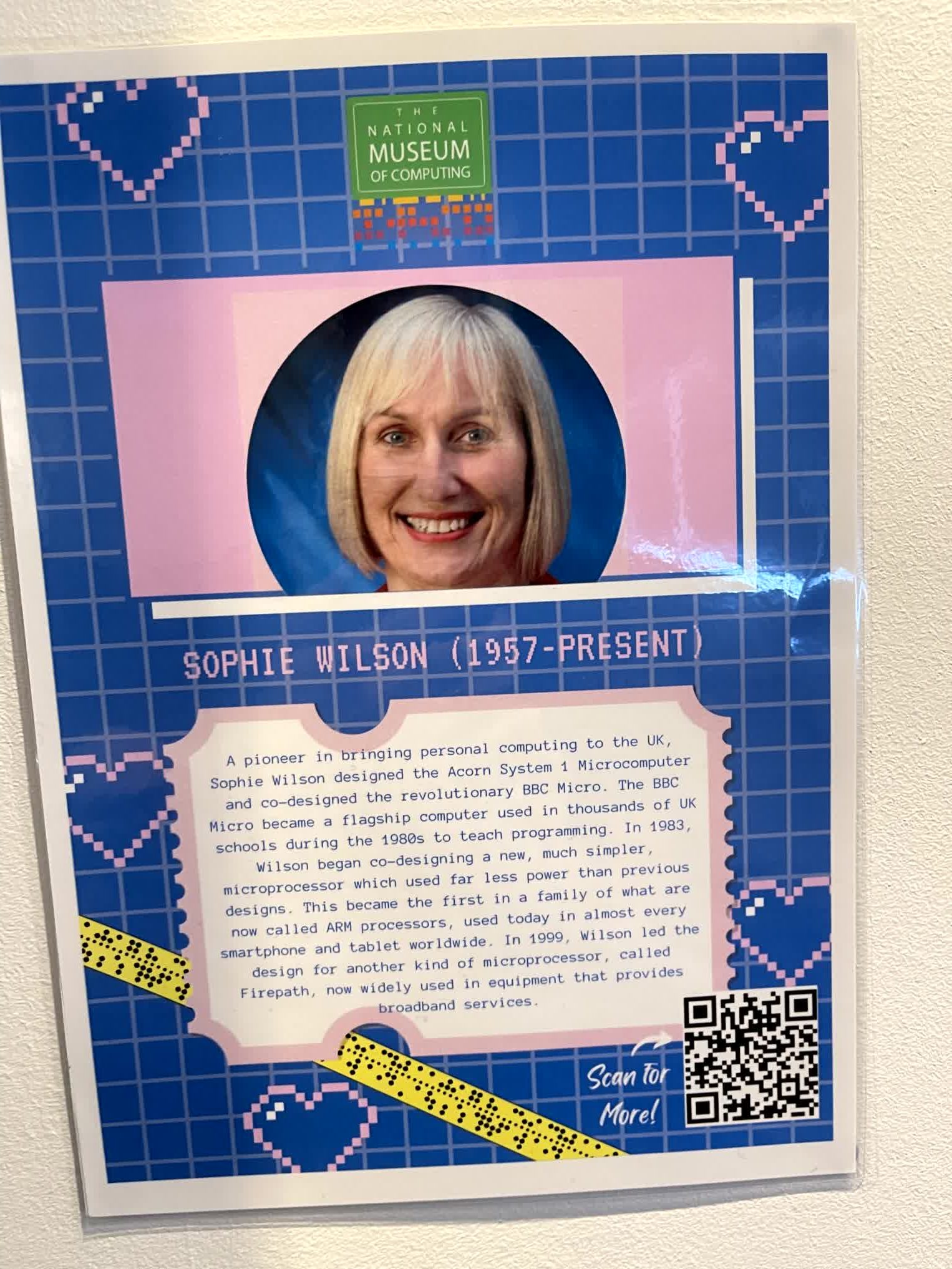
A note about Sophie Wilson, who designed the Acorn System 1, co-designed the BBC Micro, and was involved in the design of the first ARM chip.
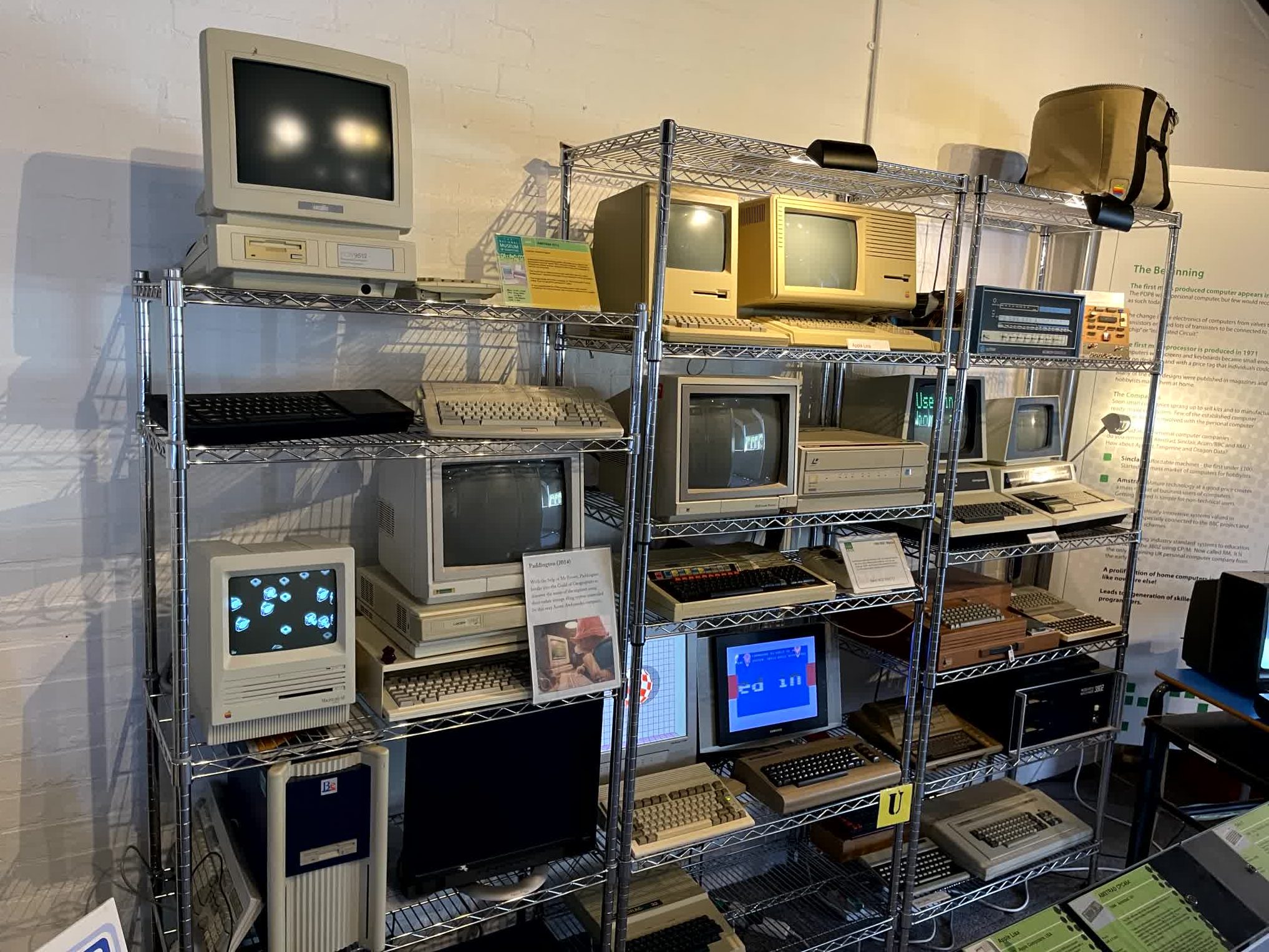
Then they went onto personal computers. There was a Be next to a Macintosh.
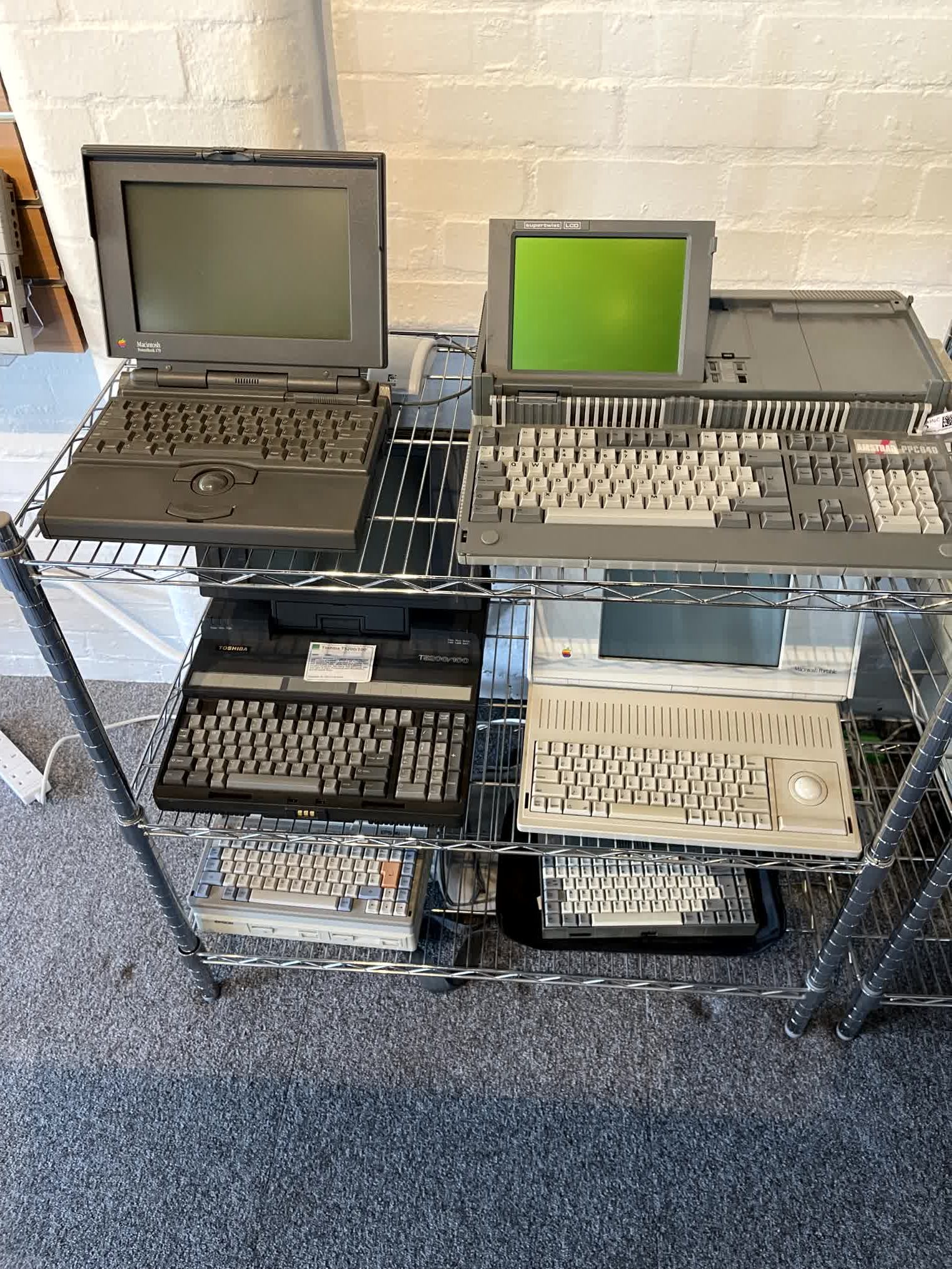
They had a section on portable Computers, including a couple of Apple’s I remember from my childhood.
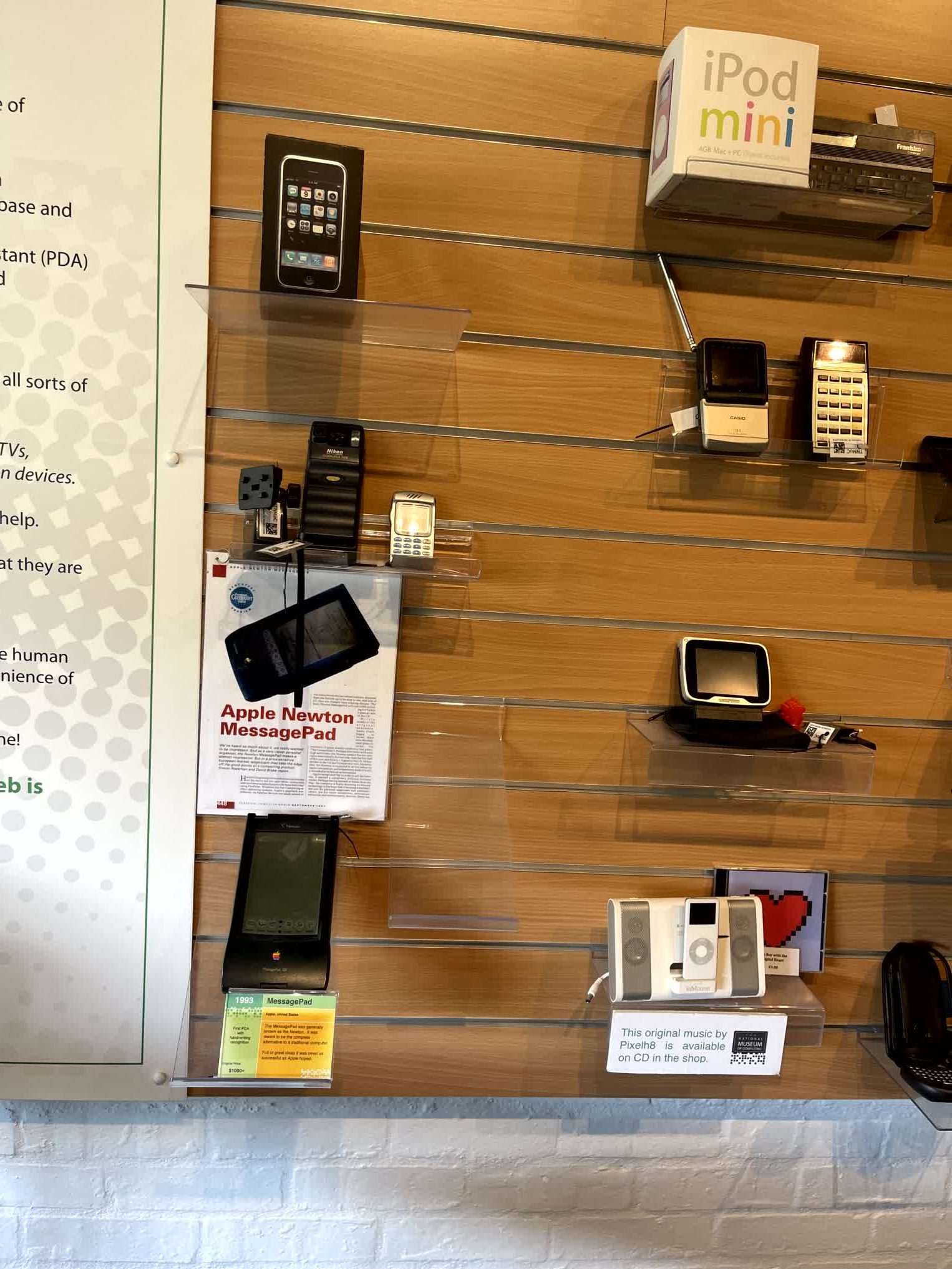
They had a section on the development of smartphones, including an Apple Newton and the original iPhone box.
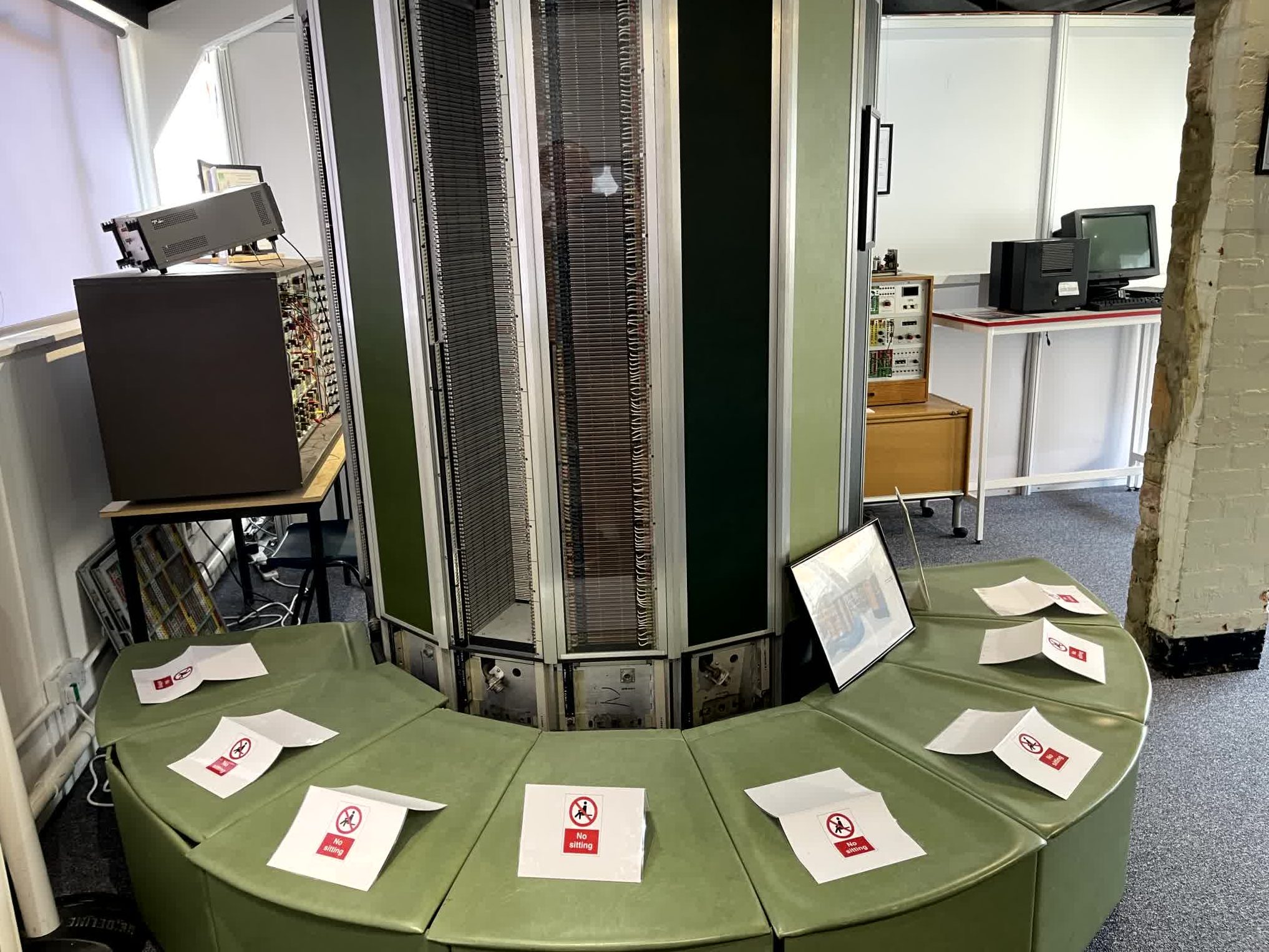
They had a Cray 1 Supercomputer from 1976. (Which my watch now beats in performance).
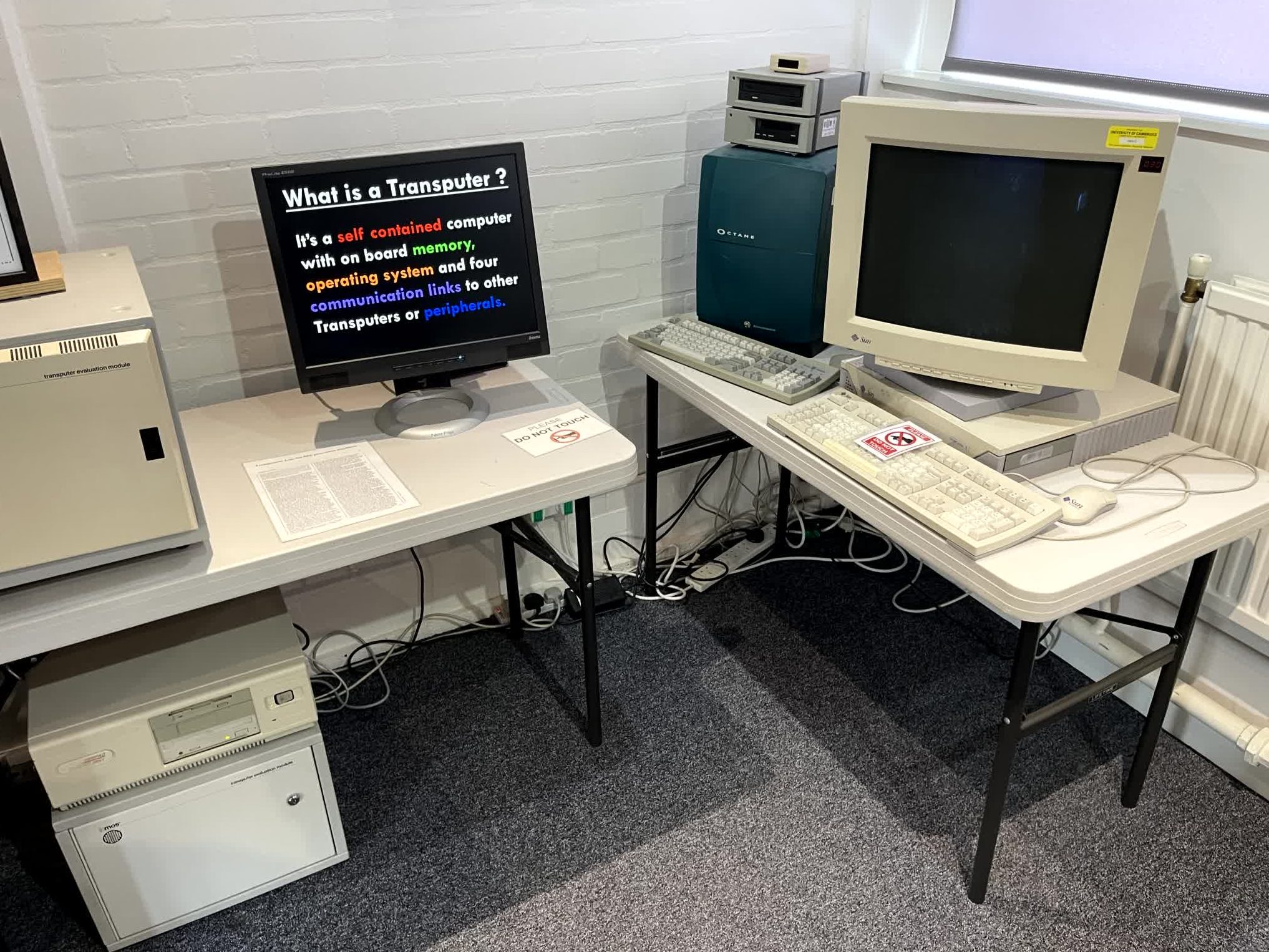
They had a Silicon Graphics workstation and a Sun workstation that I recall from Uni.
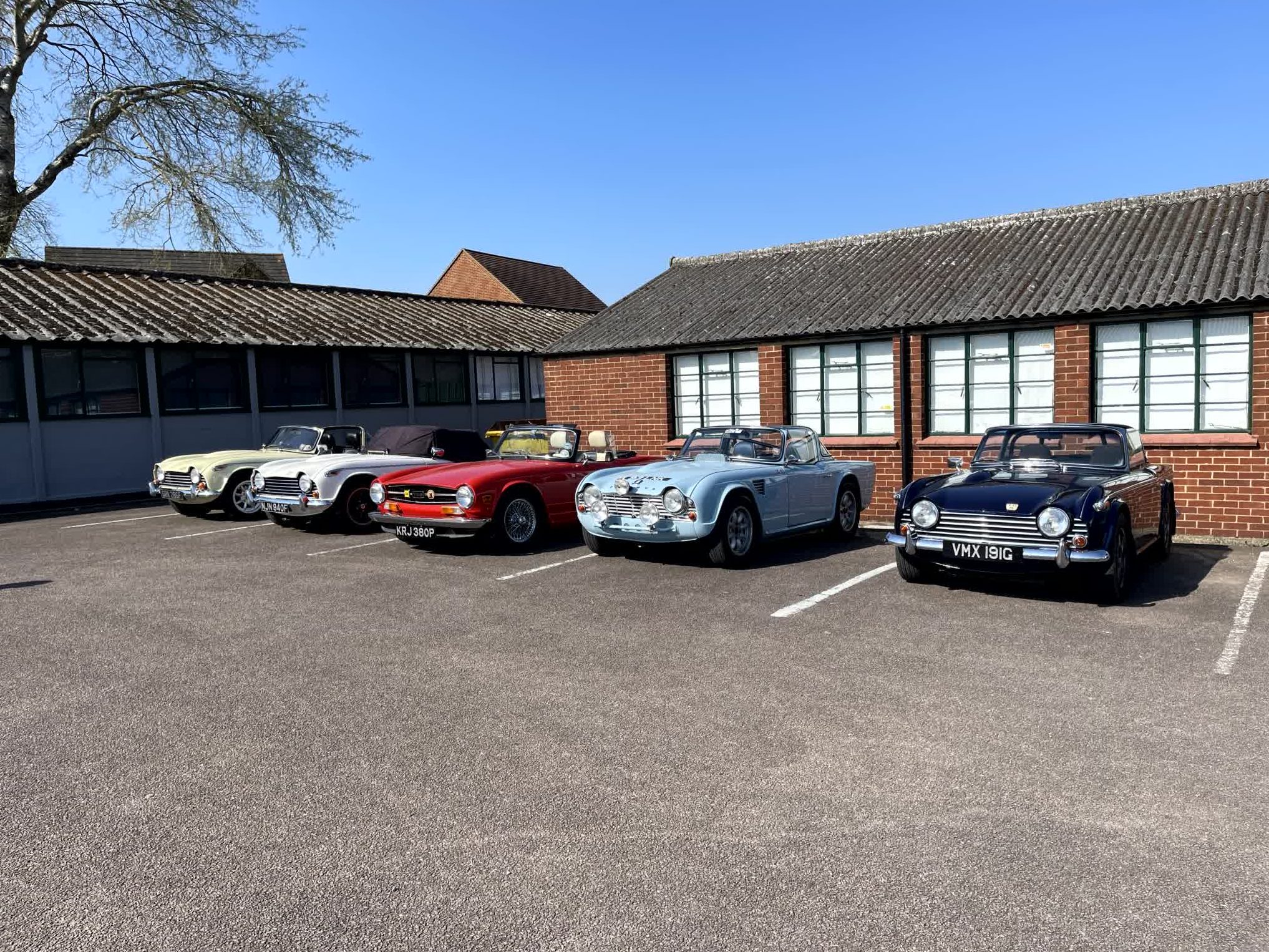
A driving club had come for a visit.
I recorded a train whizzing past (they seem to go faster here.) I estimated it was going about 145 km/h.
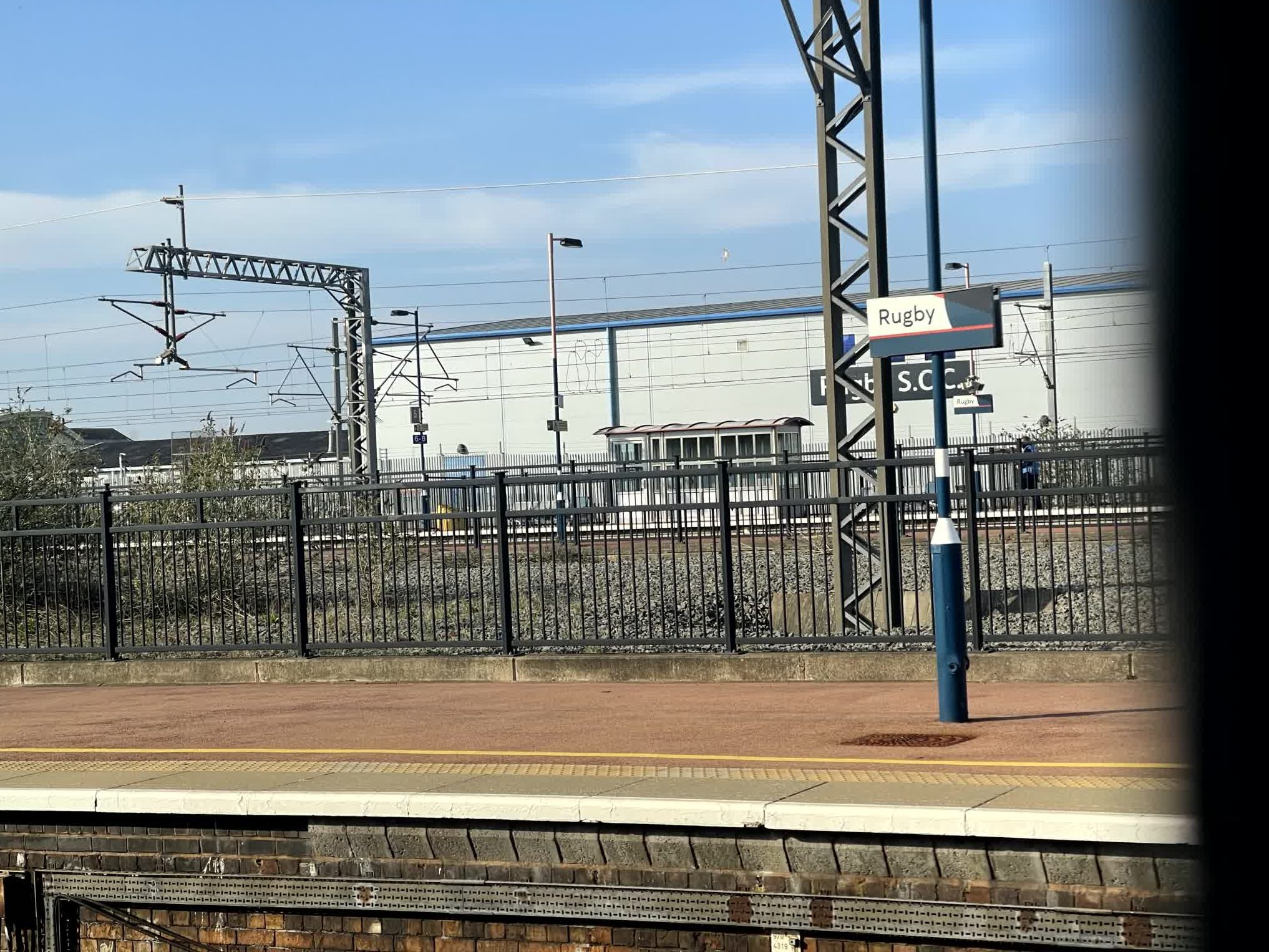
I couldn’t resist taking a photo of Rugby station.
My grandfather was born in Manchester and grew up grew up there. A manager at work once spoke with affection of the Manchester he grew up in. I wondered what it would be like.
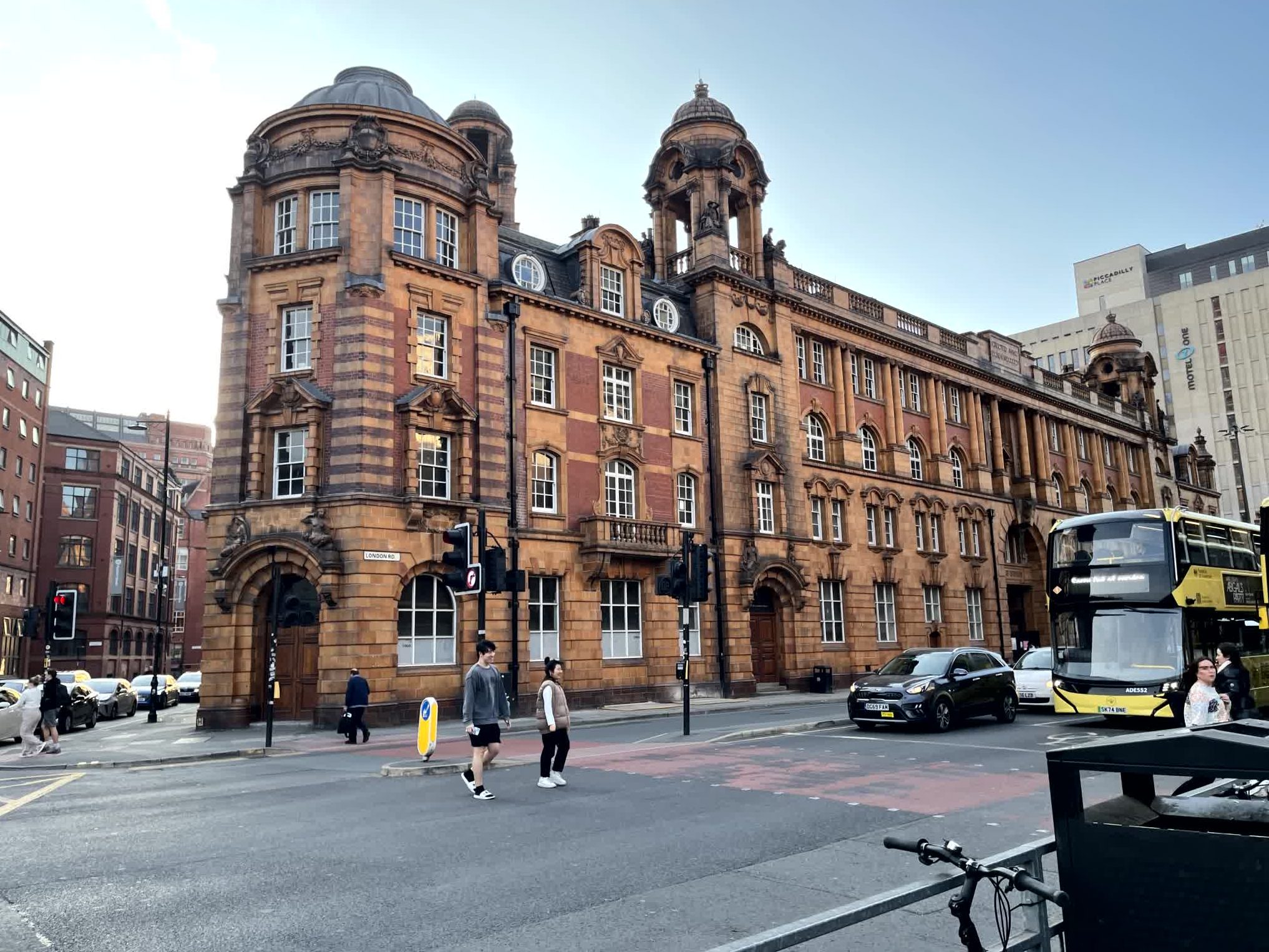
The buildings around Manchester Piccadilly Station look like they saw the Industrial Revolution.
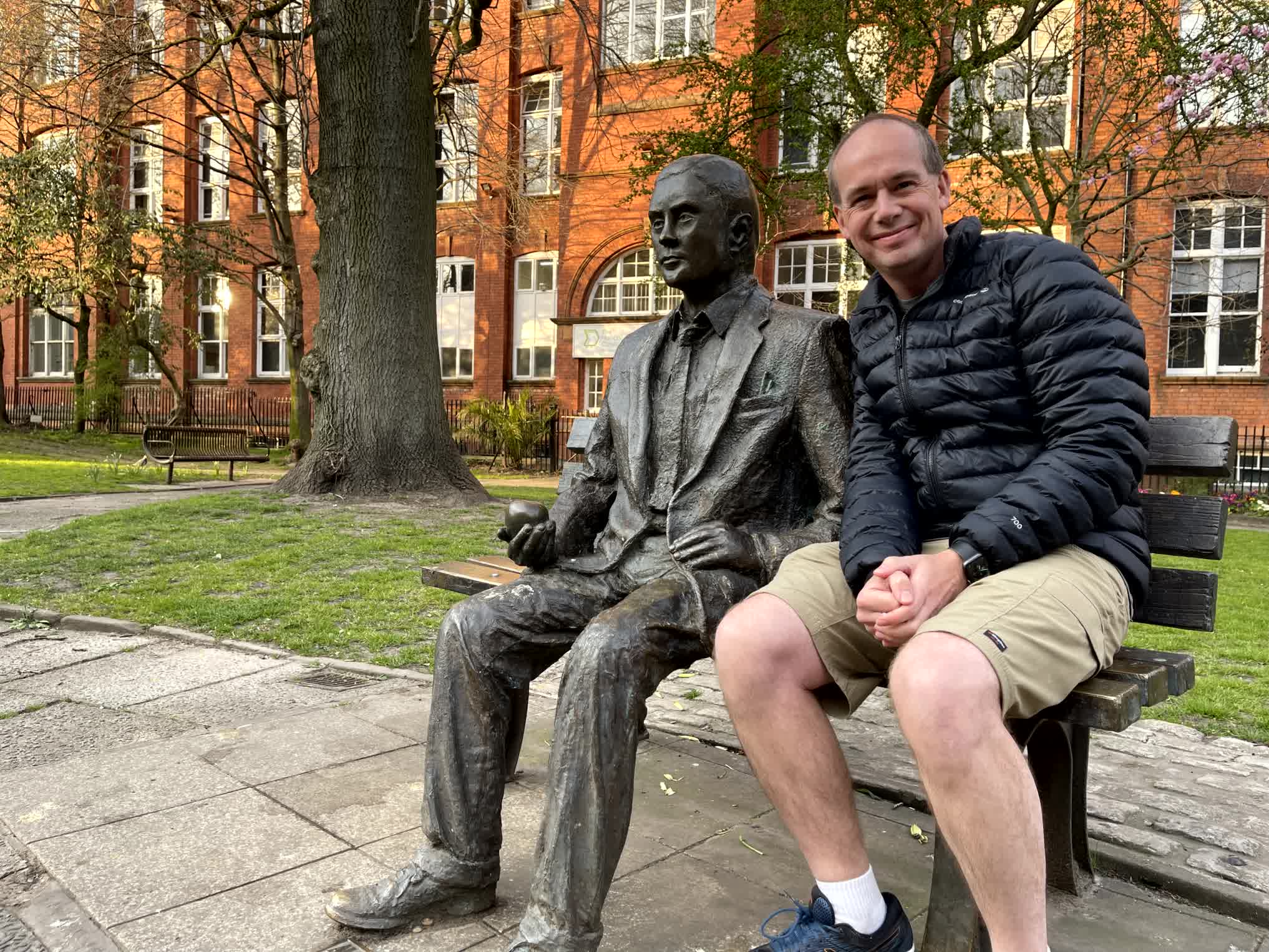
Whilst walking to my accomodation, I sat on a bench with Allan Turing. He told me my journey was nearly at an end.
Walking along the streets in the evening, people aren’t in a rush, many make eye contact and smile.
Walking through the streets on a Thursday evening big suites of tables from the pubs spread out into the streets, full of people talking.
At the Tesco buying dinner I asked a question and the attendant replied, “of course you can!” With a kind of sparky charm that hid the fact he’d been working on his feet for hours.
Manchester so far has come across as a compassionate, sparky and empathetic place. History tells me that not that long ago this is was a place of high unemployment. I imagine that in the post World War II childhood of my grandfather, this may have been a grim city.
Comments Off on Thur 3 April – National Computer Museum, Manchester