Category Archives: Uncategorized

Tuesday 6 October – Madrid – Lunchtime and walk

One of the things the designers of our apartment understood instinctively is that creative people don’t want to wake up with the sun. They want total darkness to be able to sleep long after a late night’s talking, reflecting, painting and writing. 

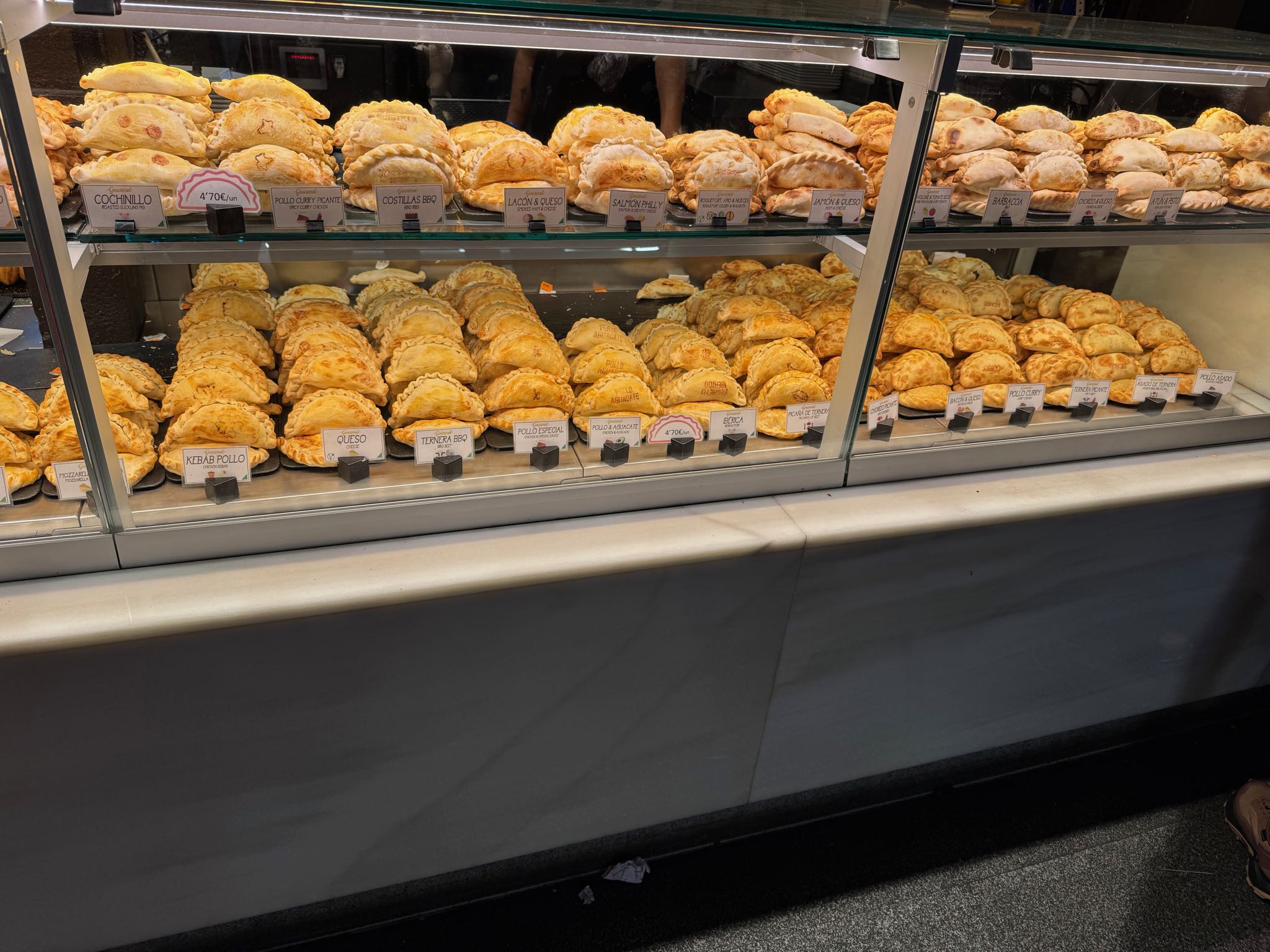
It is temping, as an Australian living in an engineering and finance sphere, (and occasional reader of the Economist) to lump Spain in a bucket of “indolent Mediterranean countries” and assume that the action happens elsewhere. Even in just half a day, Madrid does not radiate that sense, even in half a day. As you ponder your baguette choice and experience sparky, thoughtful service, the airport says “we are part of a dynamic pan-European identity.” As your taxi pulls away to the highway it says “we are a global city and we mean business.” In the city itself the message becomes “we have an artistic identity to rival Paris and Florence. As you walk past the Palace the message is “we can do military pageantry to Rival London and Berlin.”

One of the wonderful things about the rise of smartphone maps/AI driven travel (and the subsequent demise of Lonely Planet), is the fall of “checkbox-driven travel.” The vibe of “we must go to all these places because Lonely Planet tells us they are important.” This leads to the trope of people coming back from ABC European tours saying “Another Big Castle, Another Bloody Cathedral.”

What rubbish. Travel is a narrative we create as we connect our expectations based on our life experiences to the reality of these places. The problem with this approach is that you actually have to have life experiences and expectations of the world. I think this is impossible in your 20s – and so I think there is an argument to be made that early-lifetime travel is a waste. On the other hand, I think there is an argument to be made that Australia is a backwater in many dimensions. A practical example from the life of Ita Buttrose is that you travel and work to build your craft with the authority of updated techniques from overseas.

This move away from Lonely Planet, means that when you consider a city you are travelling to, you are compelled to ask “What does it mean for me? What is special about it that I spend this money travelling here? Will I simply wander the streets and consider the aesthetics of the buildings?” If you fail to answer this question then you need to go on a walking tour and let someone else create the narrative.  In some ways this is like the people becoming drones in a George Orwell book and just watching TV to tell them what to think. 

This also means that you have to be adaptable. Perhaps the city will not turn out as you pre-conceived.  Would you consider going into an Art Gallery? If you had asked me in Sydney, the answer would have been no. But when you hit Madrid, the artistic vibe hits you like a ton of bricks. “Madrid is a place of serious people, and one of the things they are serious about is art.”

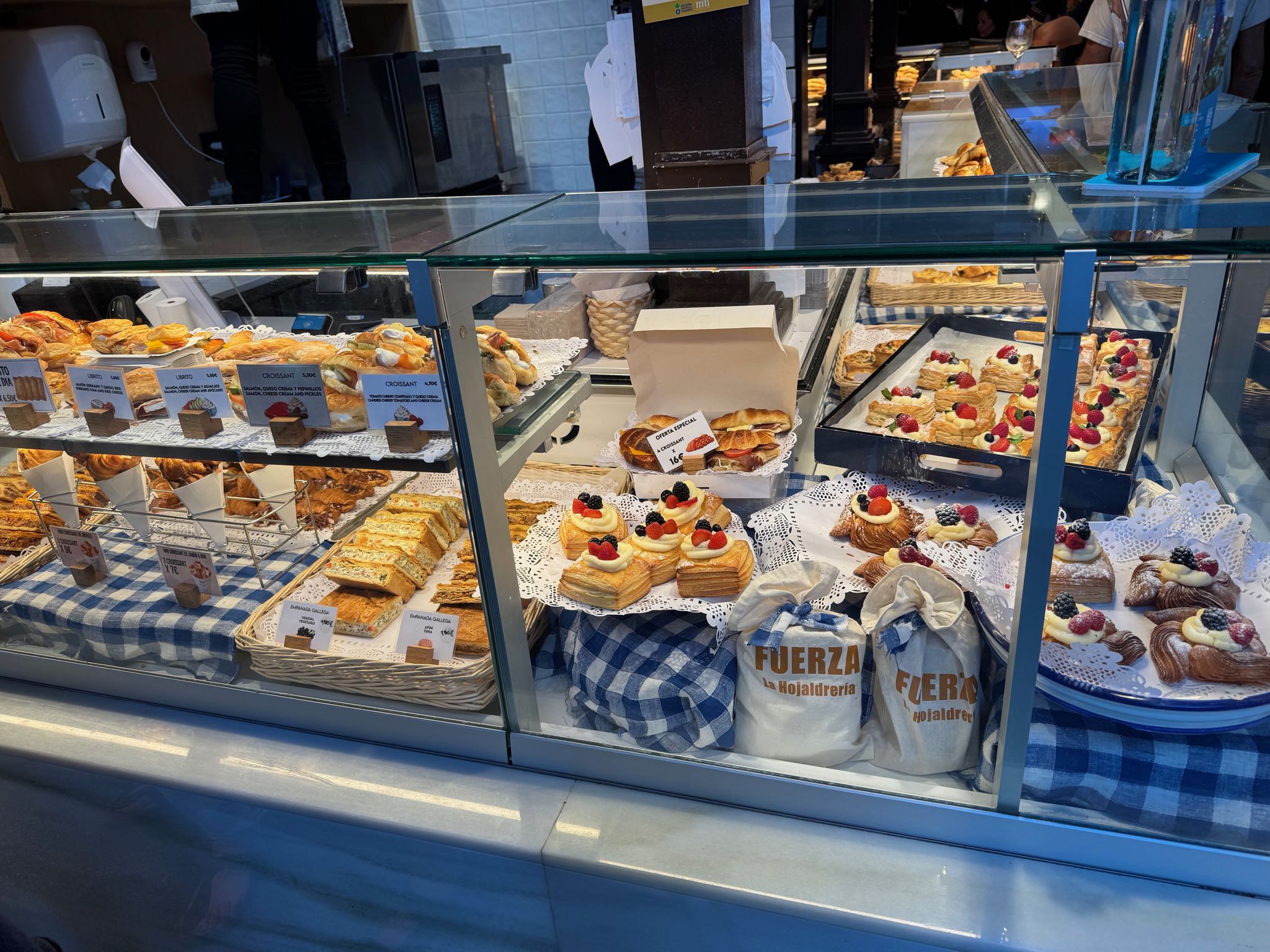
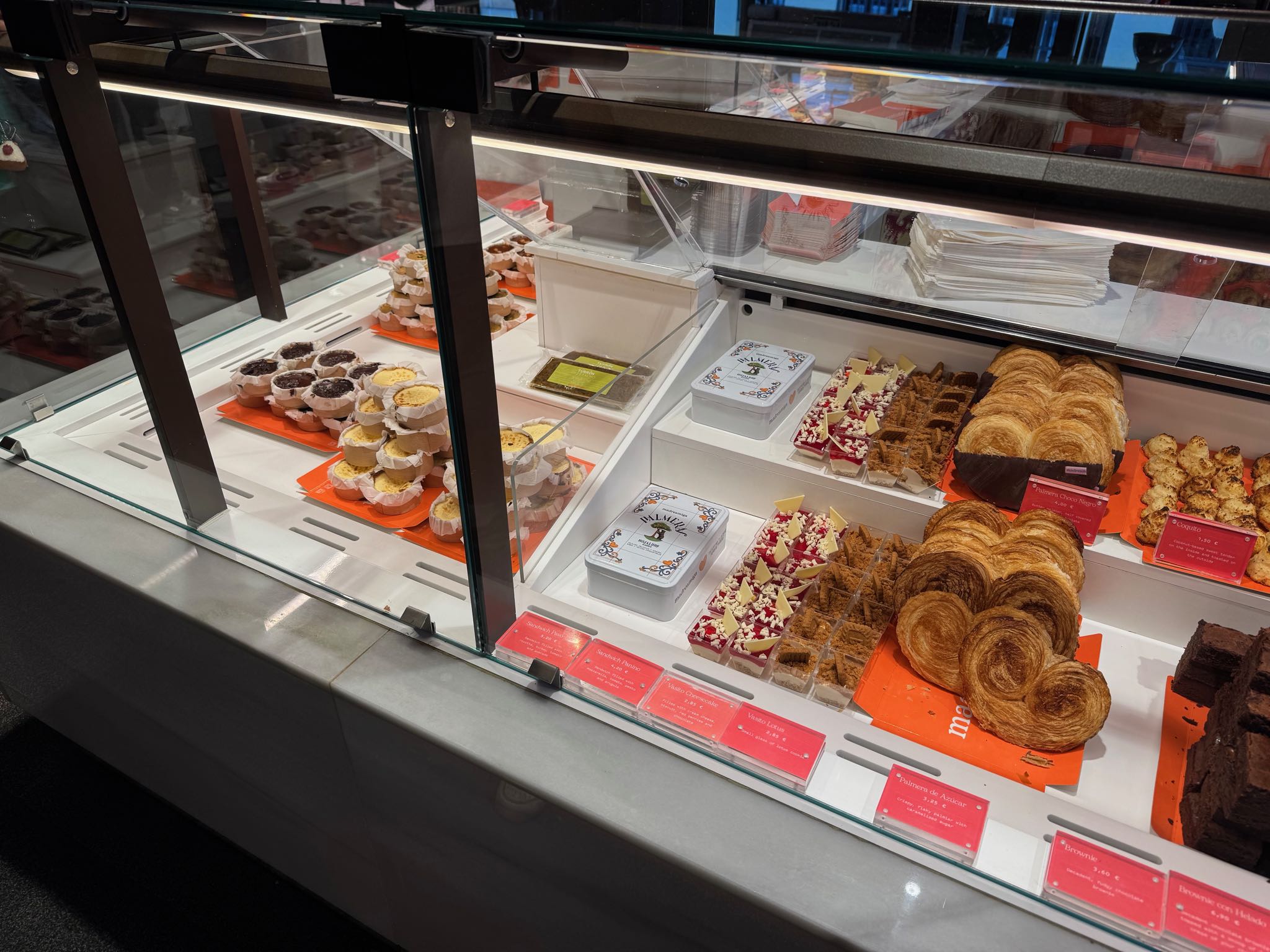
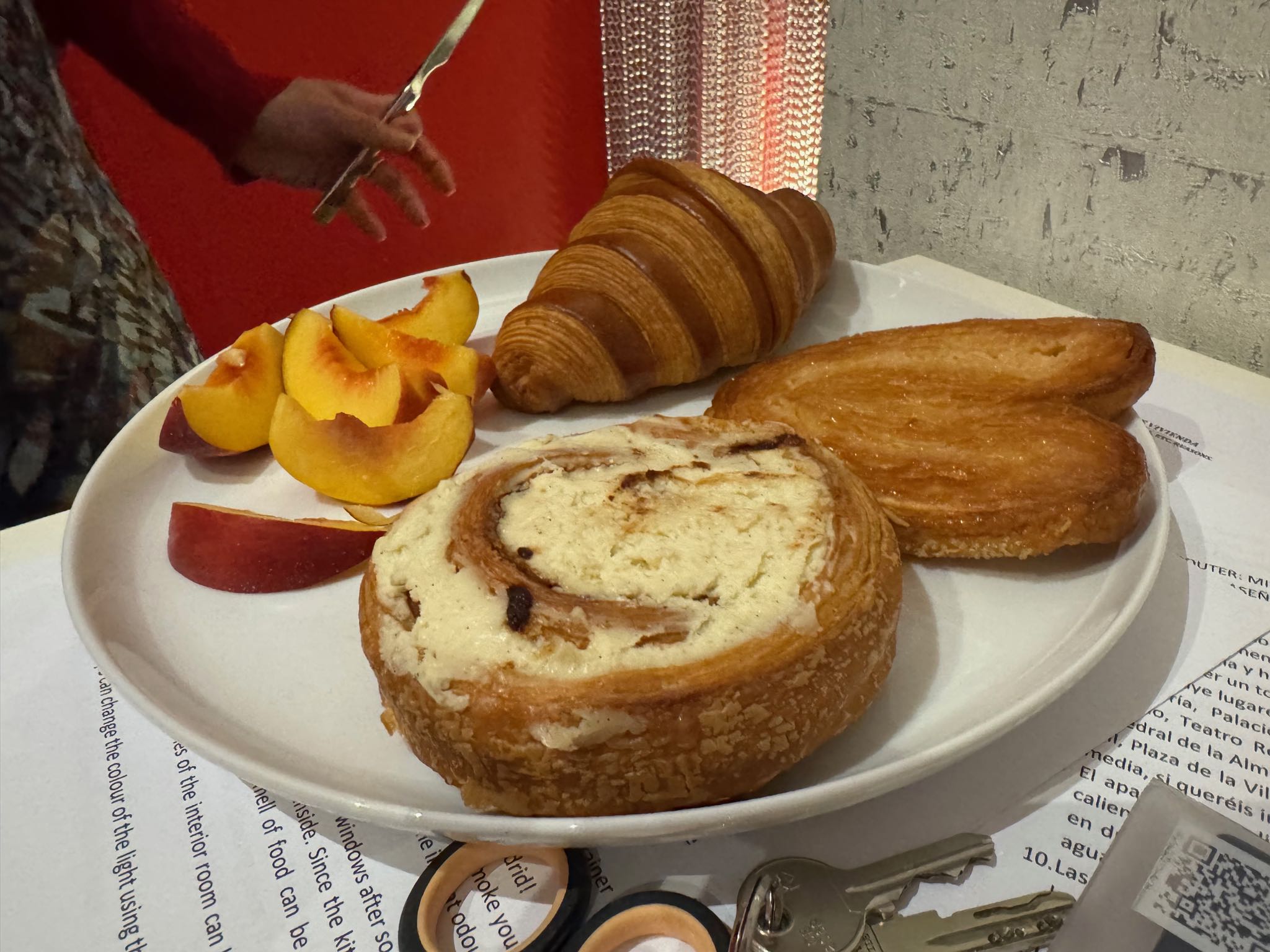
A quiet morning sleeping in and catching up on writing. Breakfast treats from a local Pattisserie. (Can I just say, I love that in this part of the world, you have to take a moment to think about whether you are walking into a Pattisserie or a Boulangerie.)
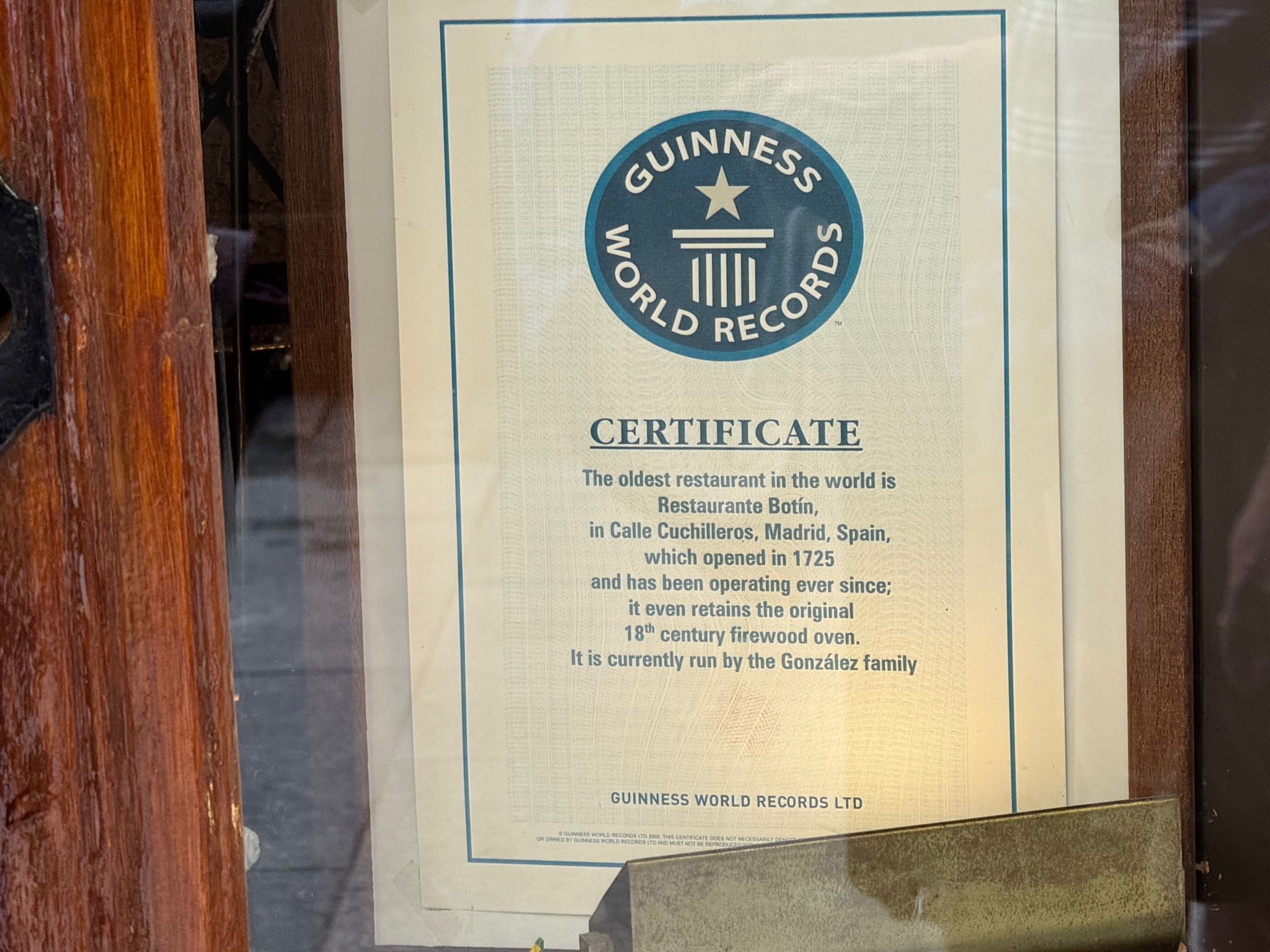
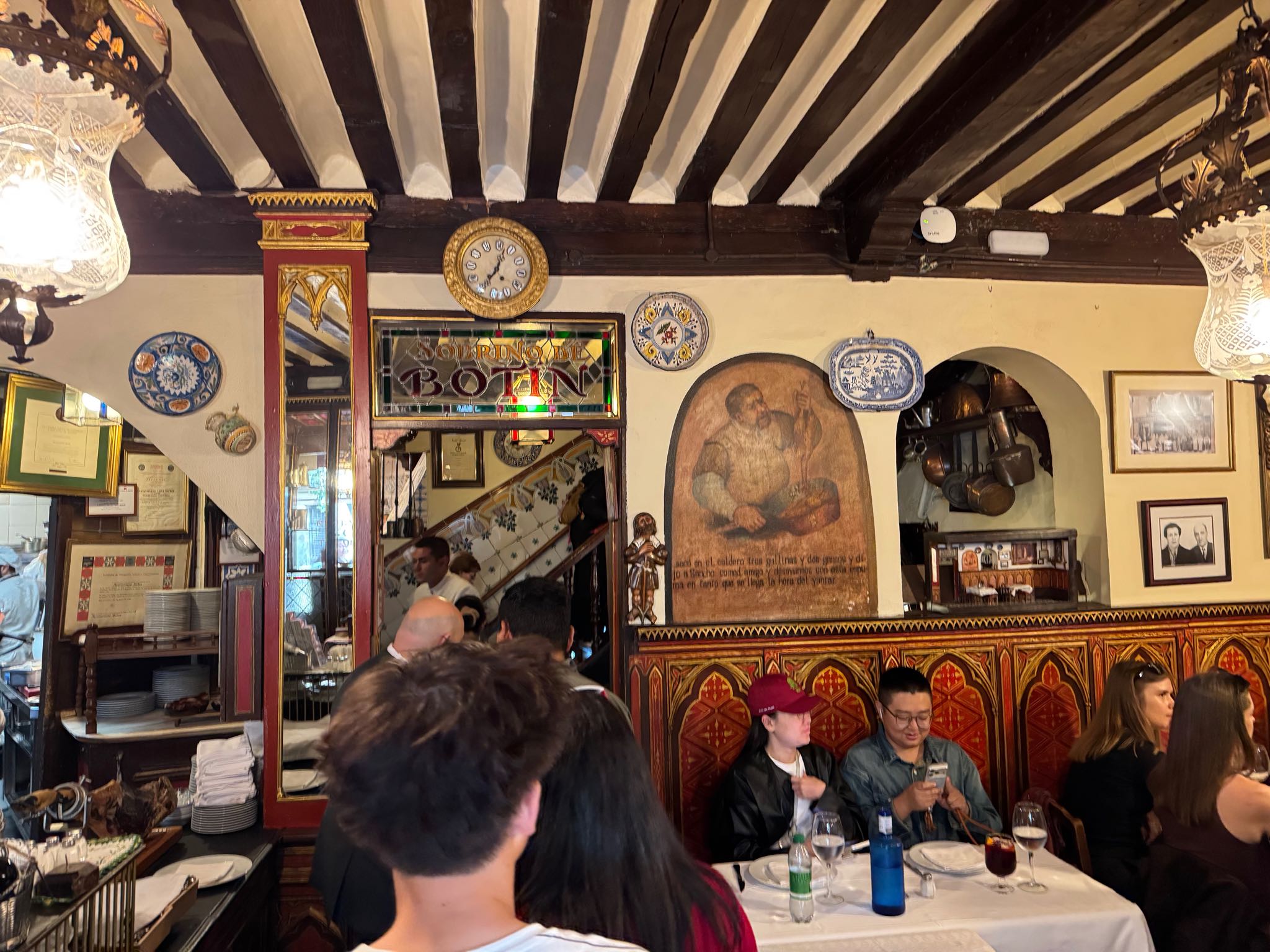
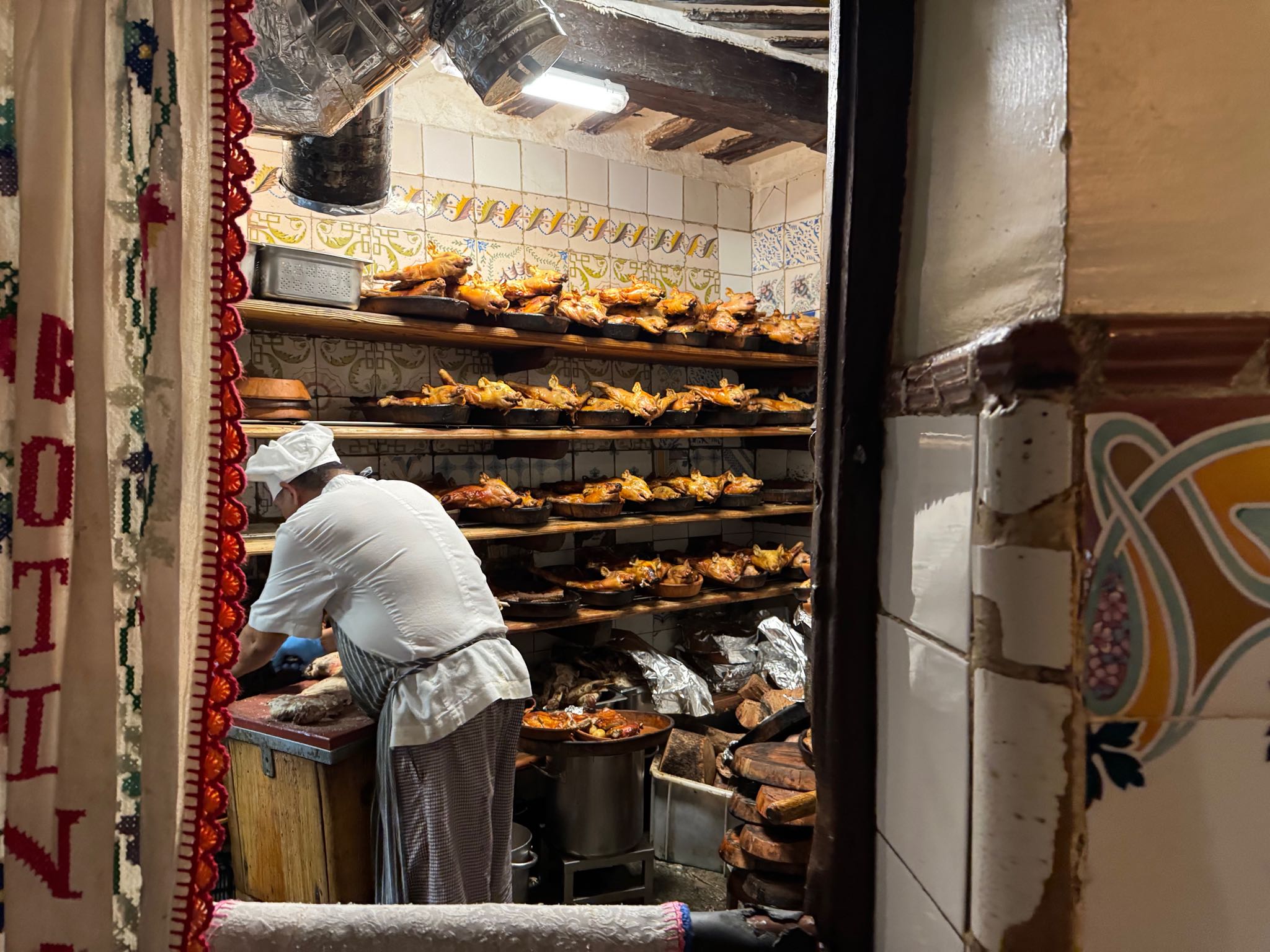
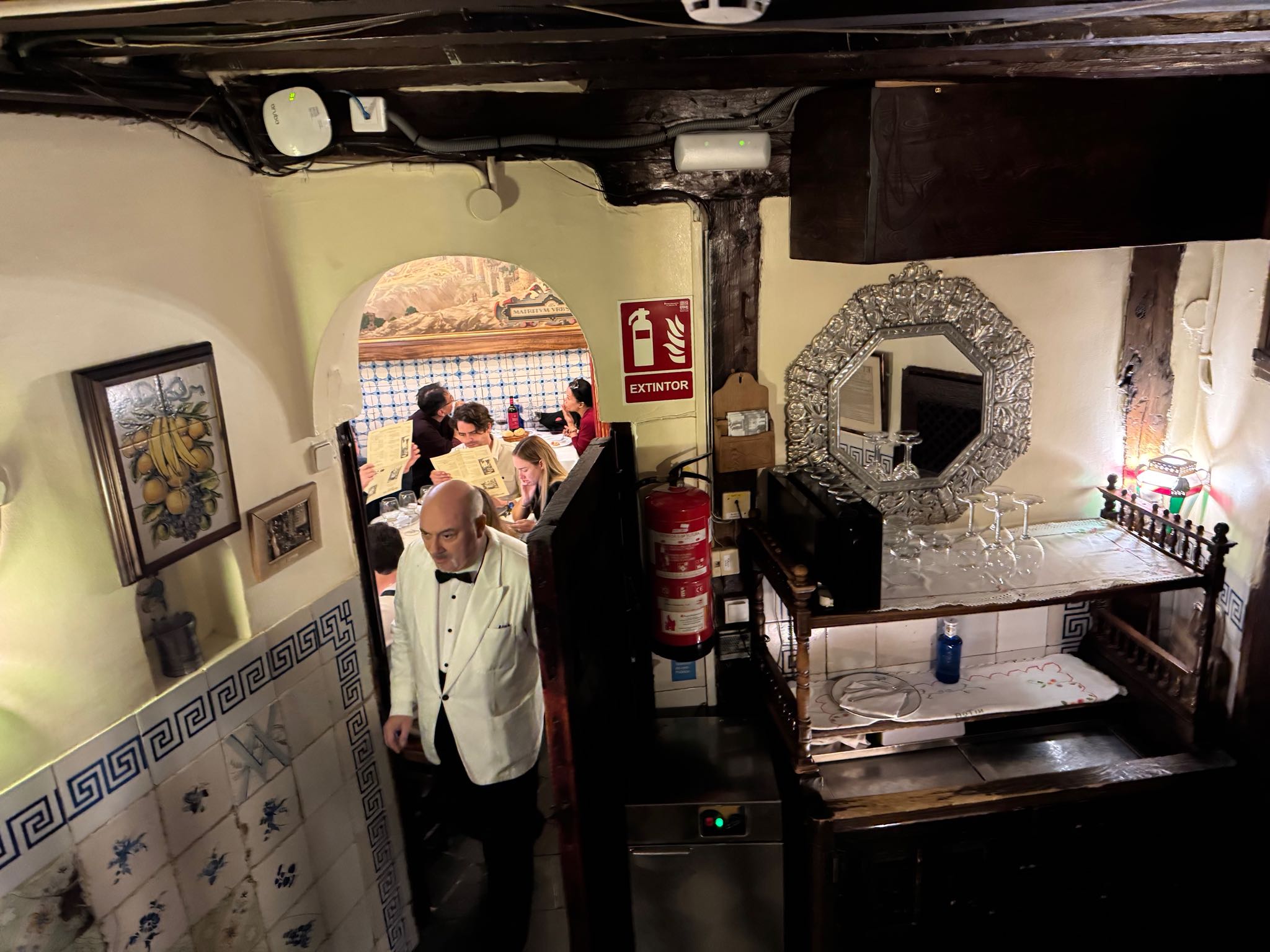
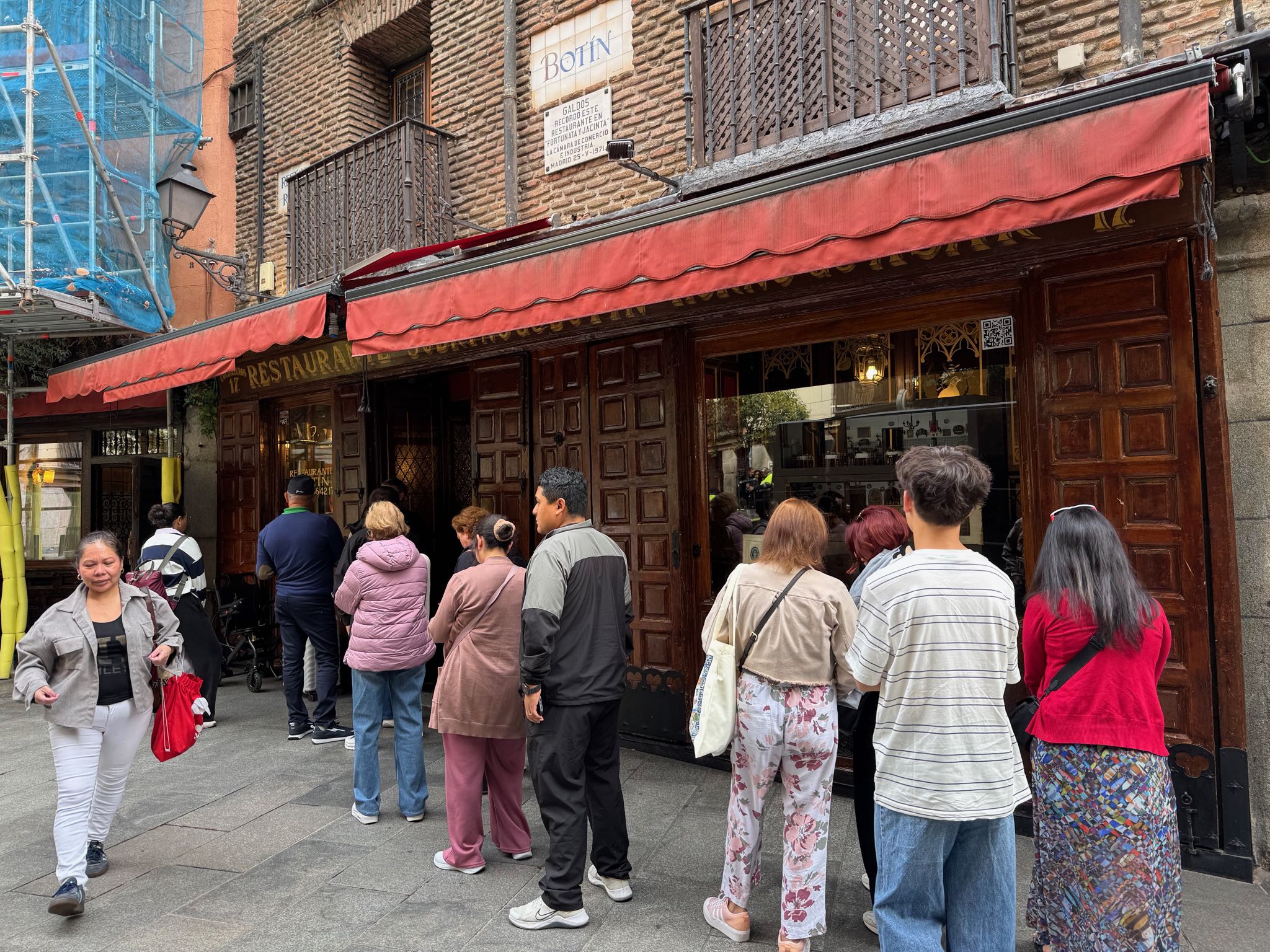
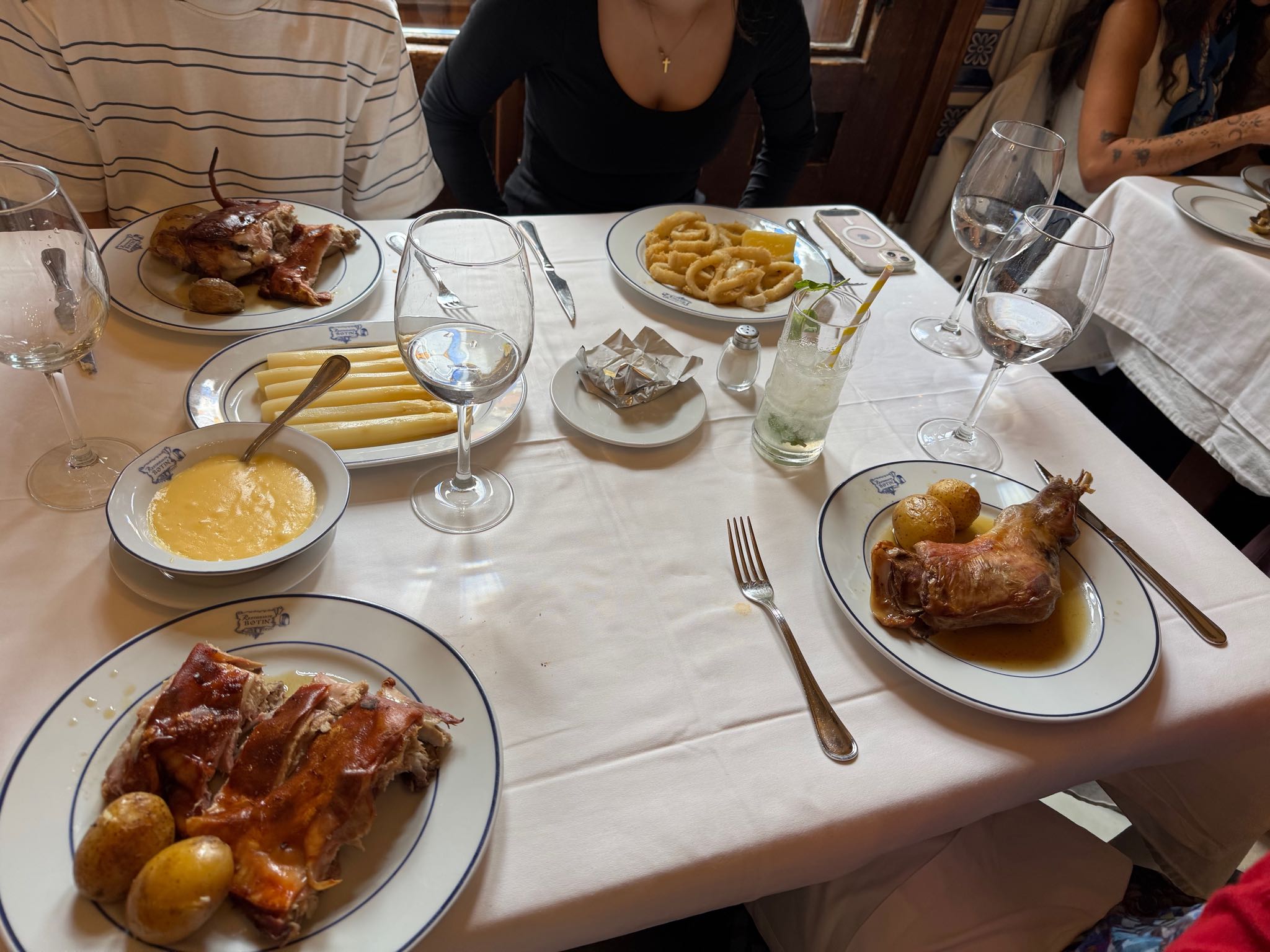
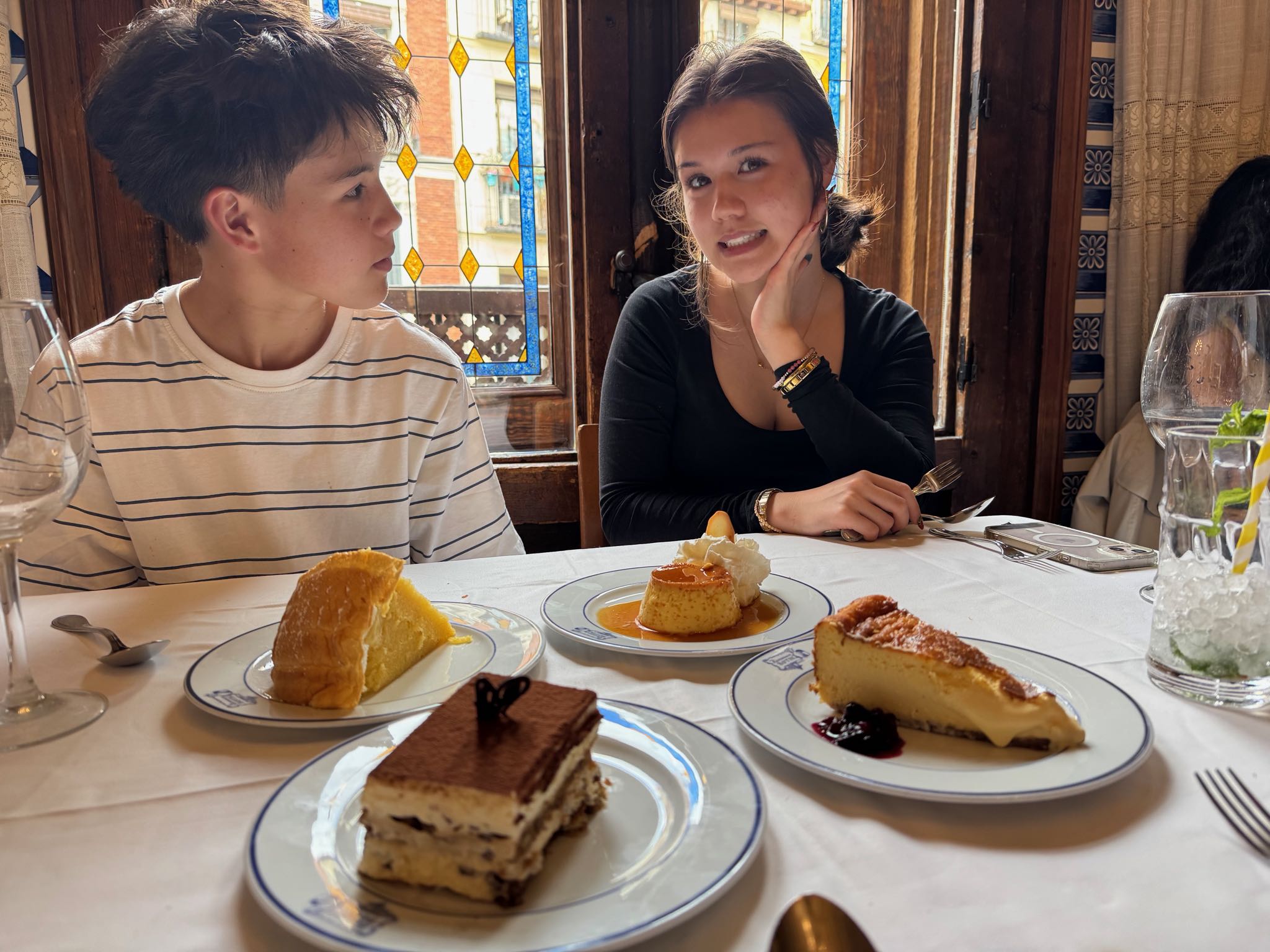
For lunch we go to a Guinness Book of Records certified oldest continuously running restaurant in the world.  Last year it celebrated 300 years running continuously. The specialty is roast pork. As we walk in we see a kitchen with racks and racks of pork ready to be served.  The restaurant in Sydney that approximates it best is Beppis, a place you have to try, but a little weighed down by its history. 
Hugh has a garlic and egg soup. It is strong. I tell the kids that when snails are served in French restaurants in Sydney, they come like that, drowned in overwhelming garlic. Trinity looks at me in disgust. 
I ponder for a moment my fictional heroes Jack Albury and Stephen Maturin. (A 20 book epic from Patrick O’Brien set during the Napoleonic wars.) Stephen would have gone to the churches in this city during his education, and perhaps came to this restaurant.

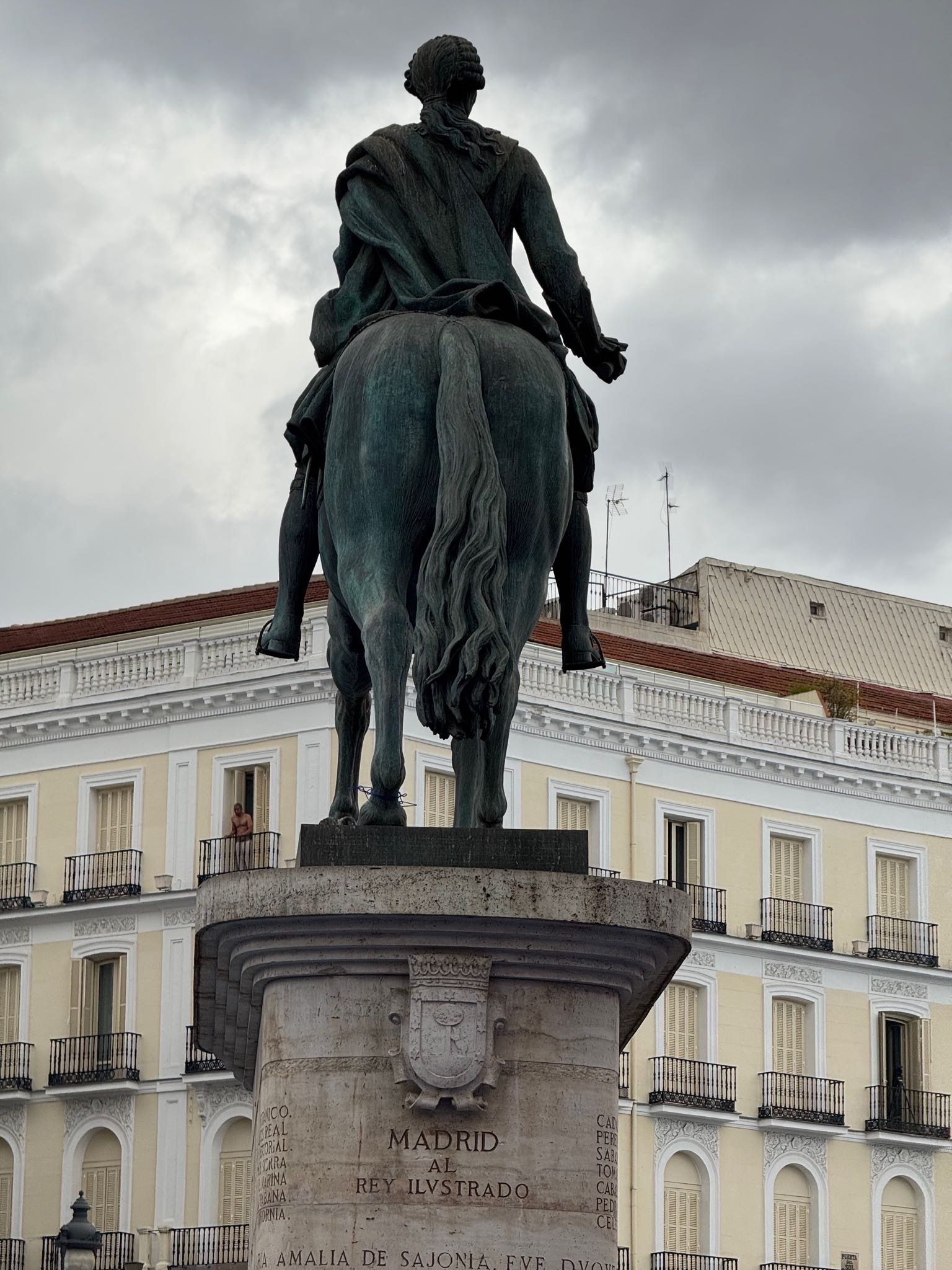
We see a statue of King Charles the III (1759–1788) – affectionately known as “the best Mayor of Madrid” for his efforts to modernise and beautify the city.
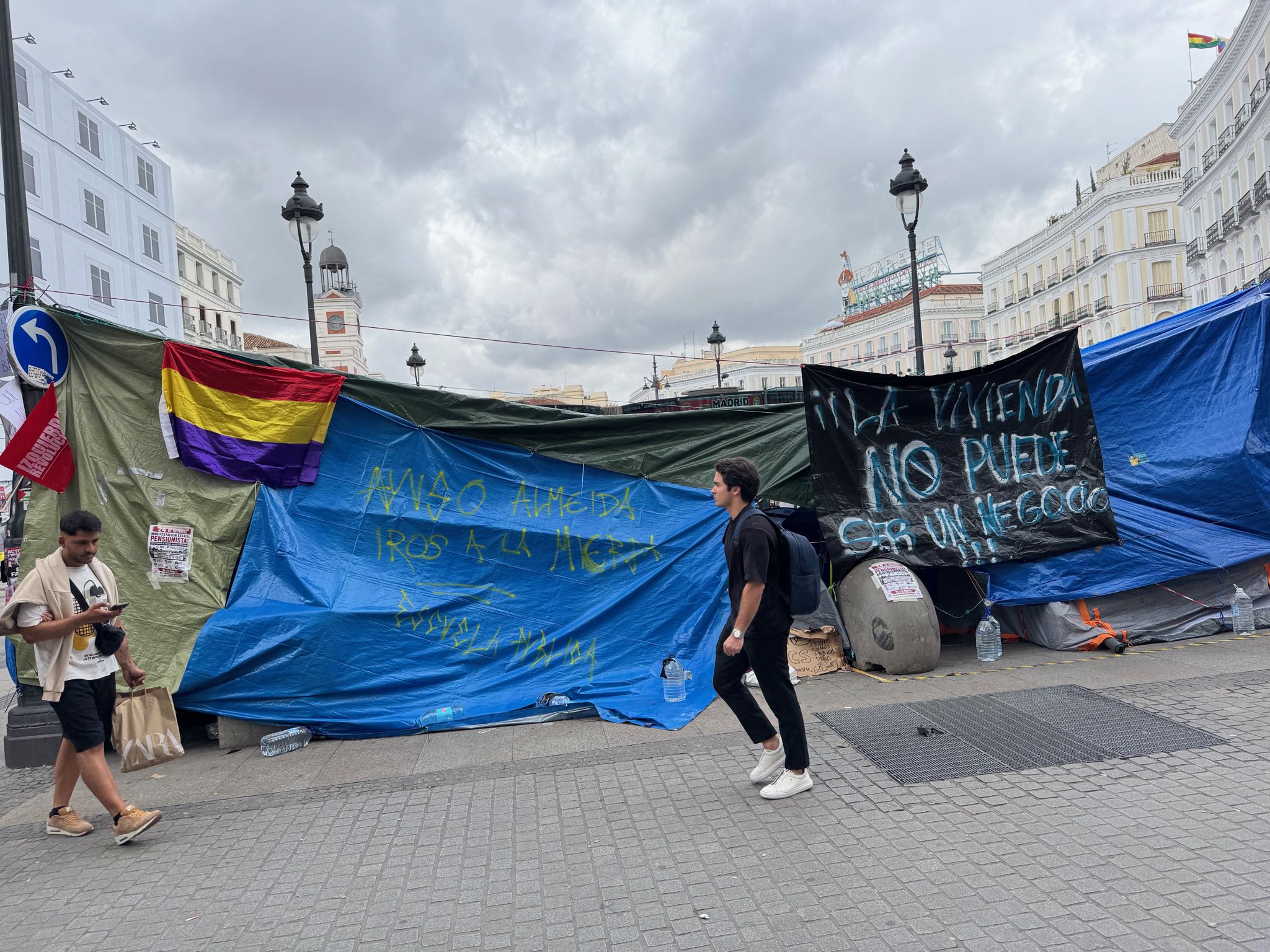
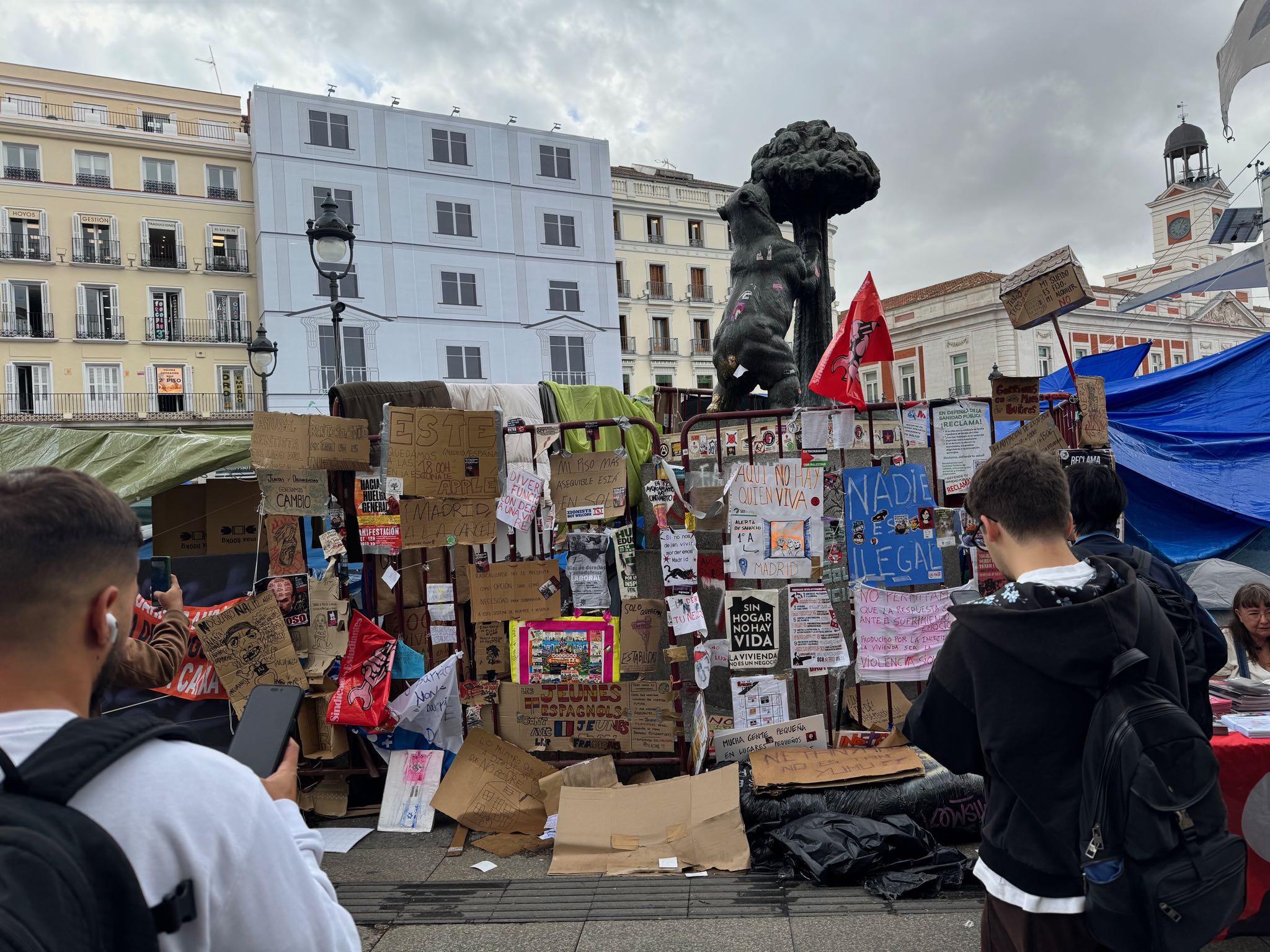
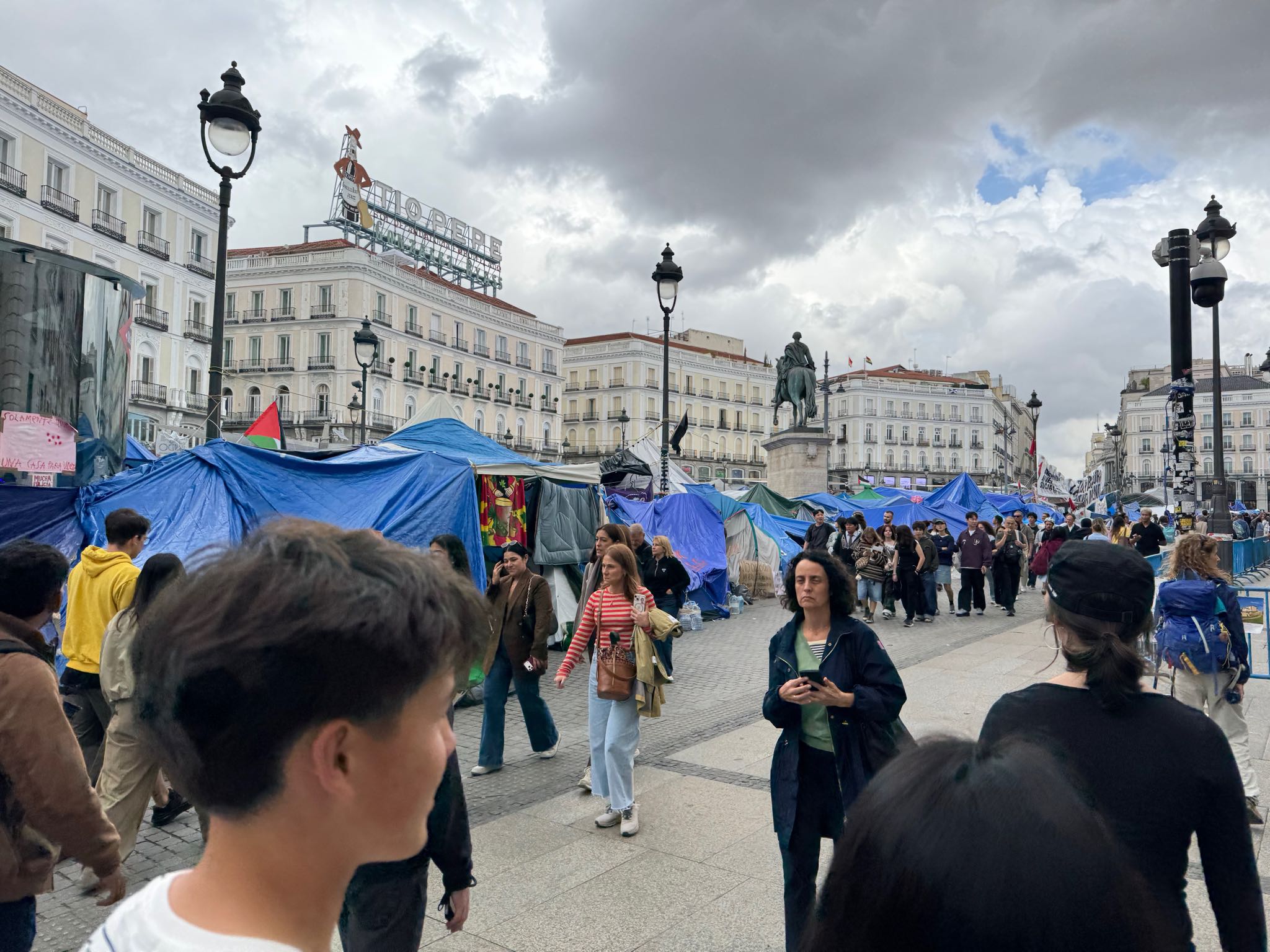
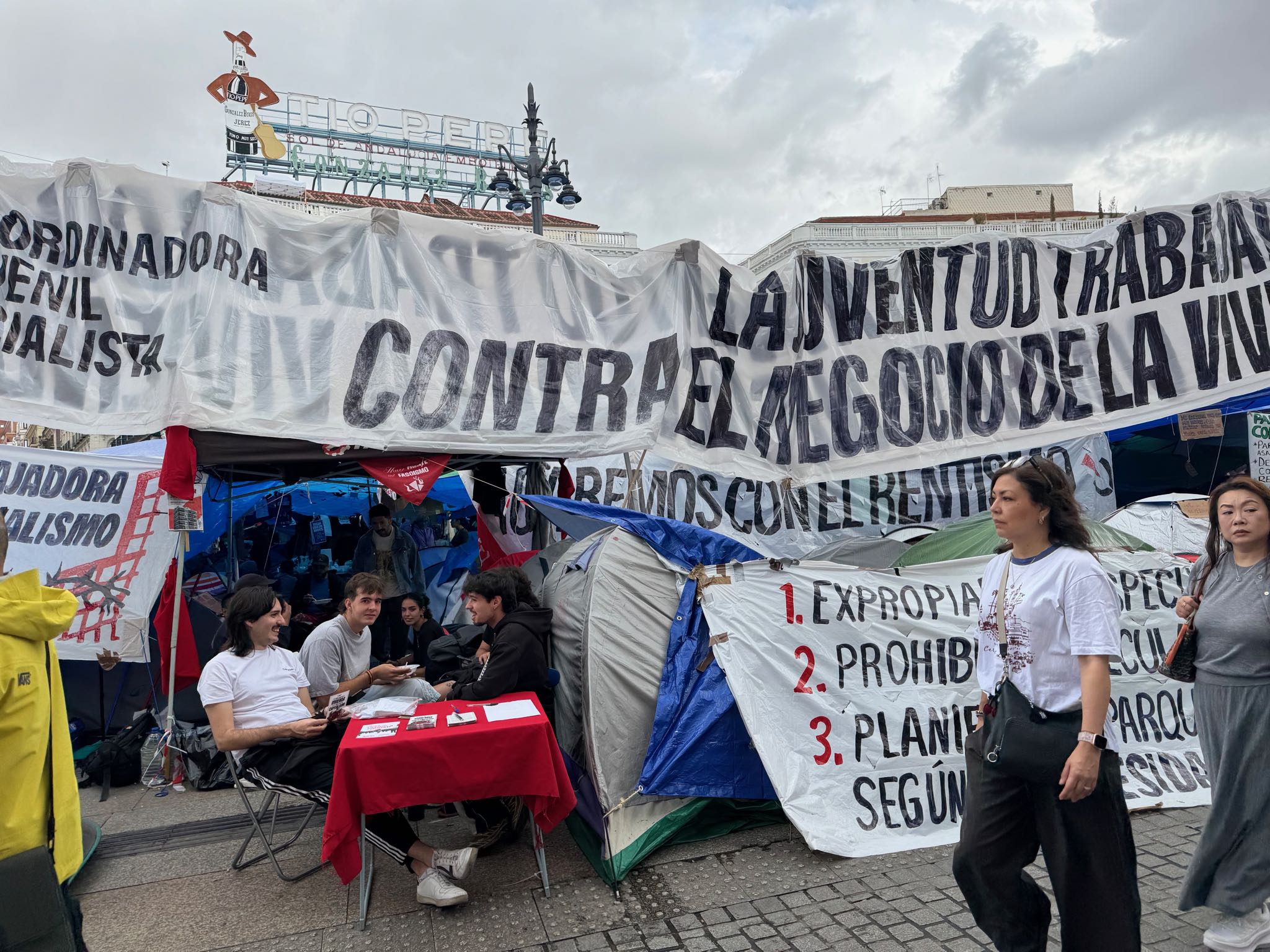
At a square there is a protest for better rights for rental tenants. I am genuinely split on this issue. Having been a rental Tenant for two decades I feel much sympathy for the quality of life of a rental tenant. On the other side I’ve been a Landlord for 10 years admittedly have not been the best. I hate to generalise that about the practicality of their demands.

I have to admire their dynamism and organisational skills. Reading between the lines I see all the stuff that Nelson Mandela was trying to teach about organisational systems for revolution in his book. This seems better organised than any revolutionary protest I’ve seen in Sydney.

I feel I have to take back my comments about Portugal exporting strong man revolutionary politics to South America. The engine of ideology is clearly here.
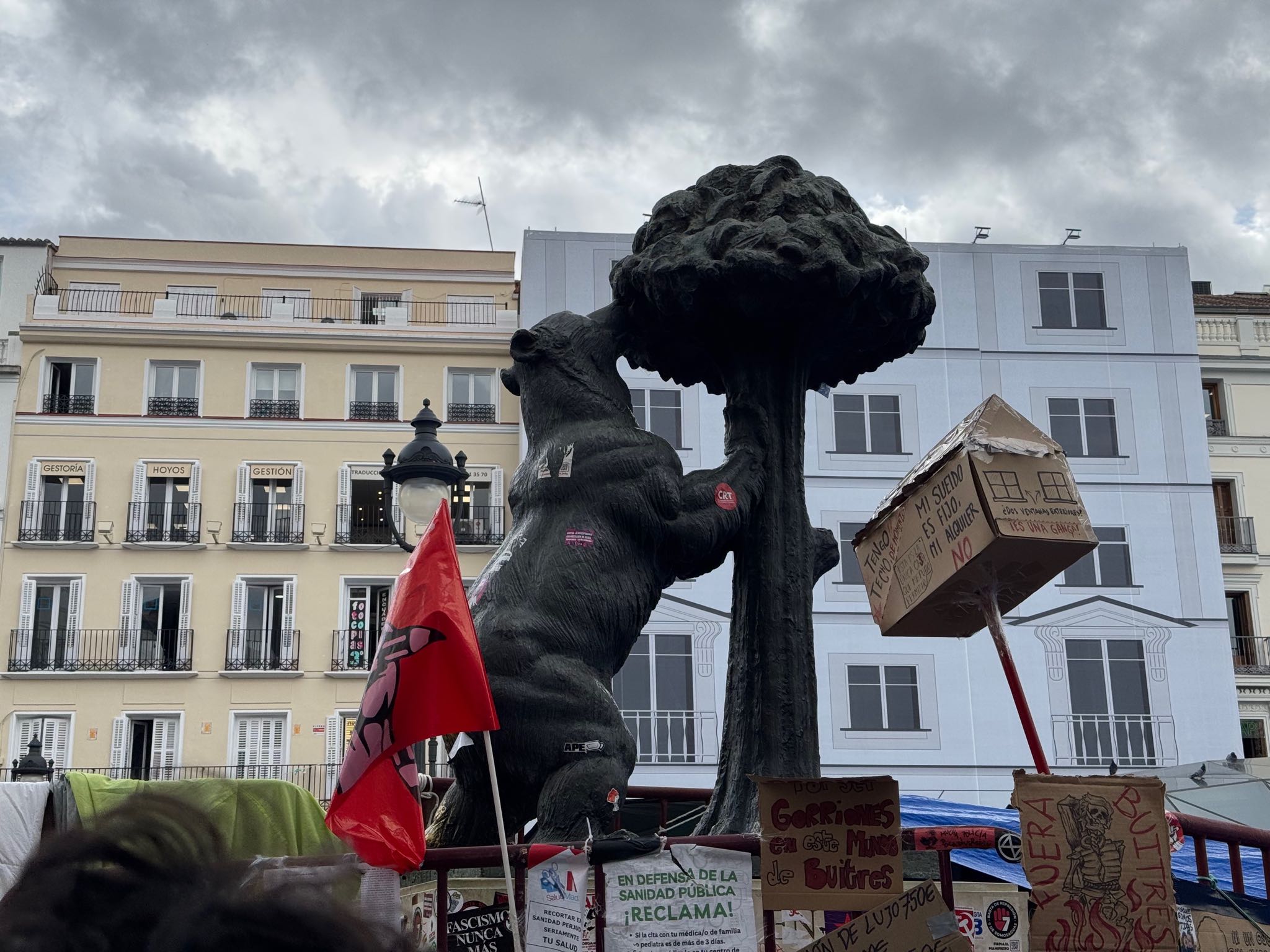
This statue of a bear leaning on a strawberry tree has been the heraldic symbol of Madrid since the 13th century. (The statue is from 1967).
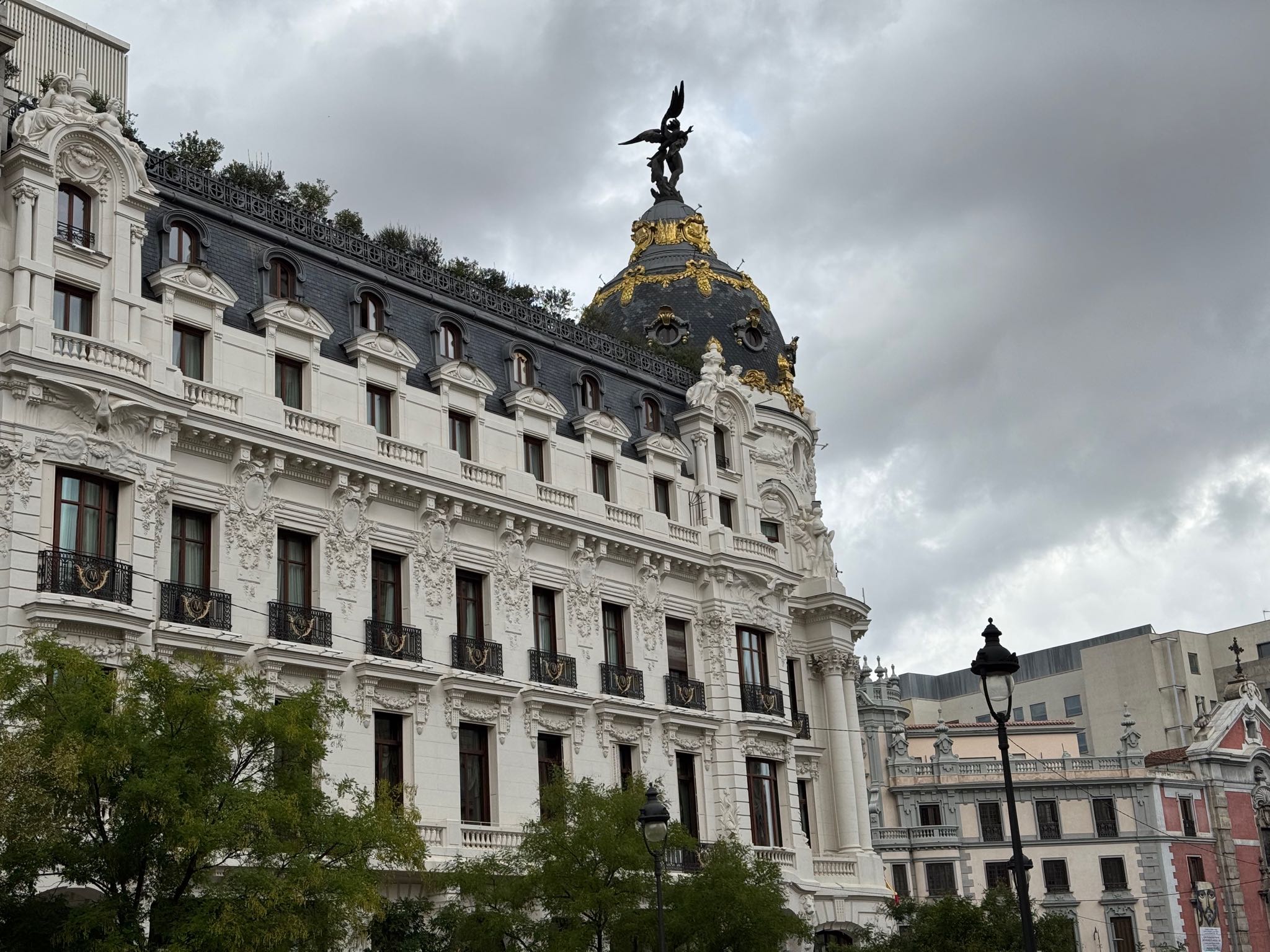
This is the Edificio Metrópolis (Metropolis Building), a commercial building built in 1911. The Winged Victory symbol on top is Nike, representing triumph, success, and prosperity and it was installed in 1975 by an insurance company. The architectural style is French Beaux-Arts / Neo-Baroque.
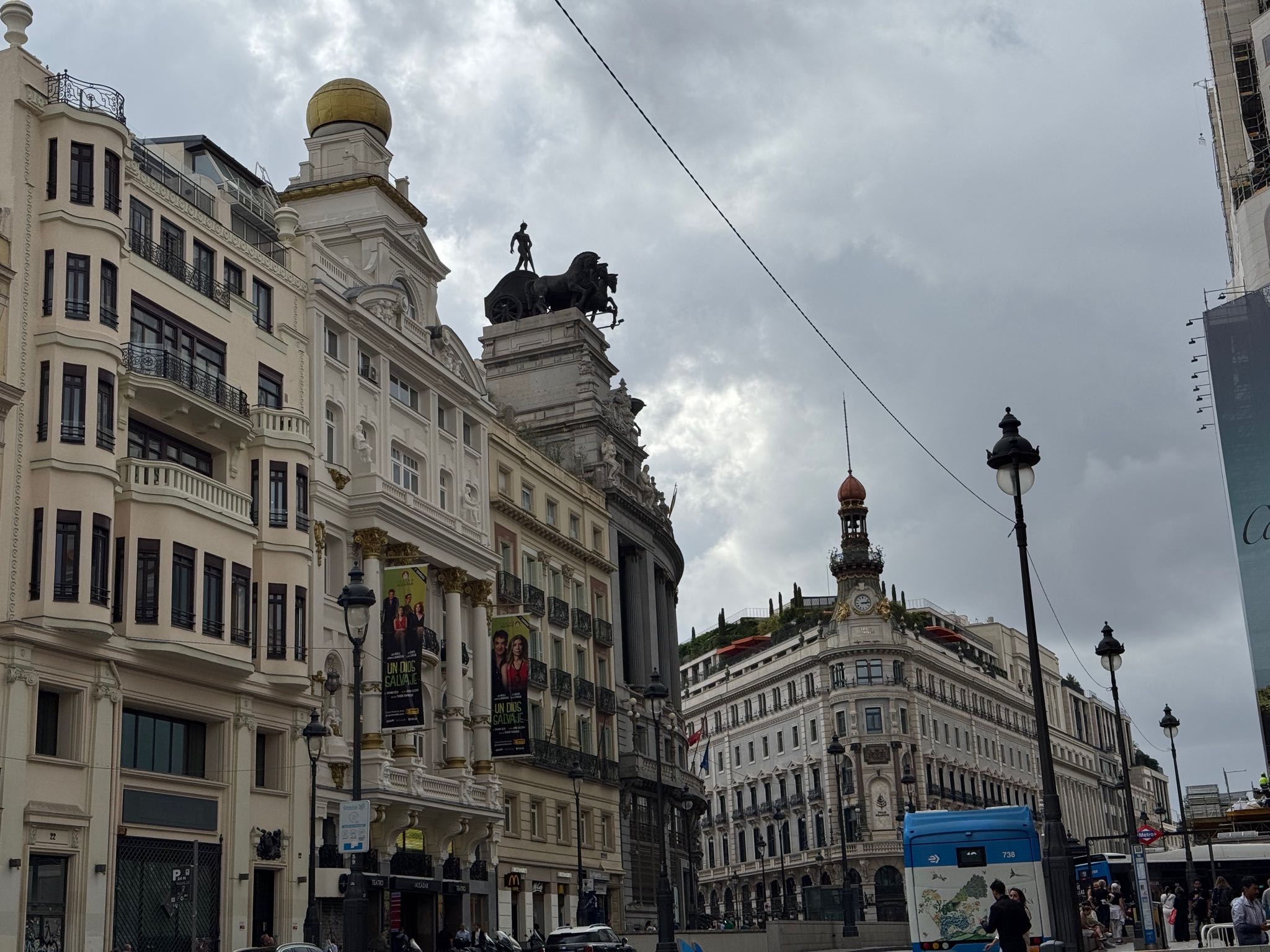
This building was a bank (the Banco de Bilbao building) and the four-horse chariot (one of a pair) was installed in 1922 to represent triumph, power, and forward progress.

More good advice from a local sign, how would you translate it?
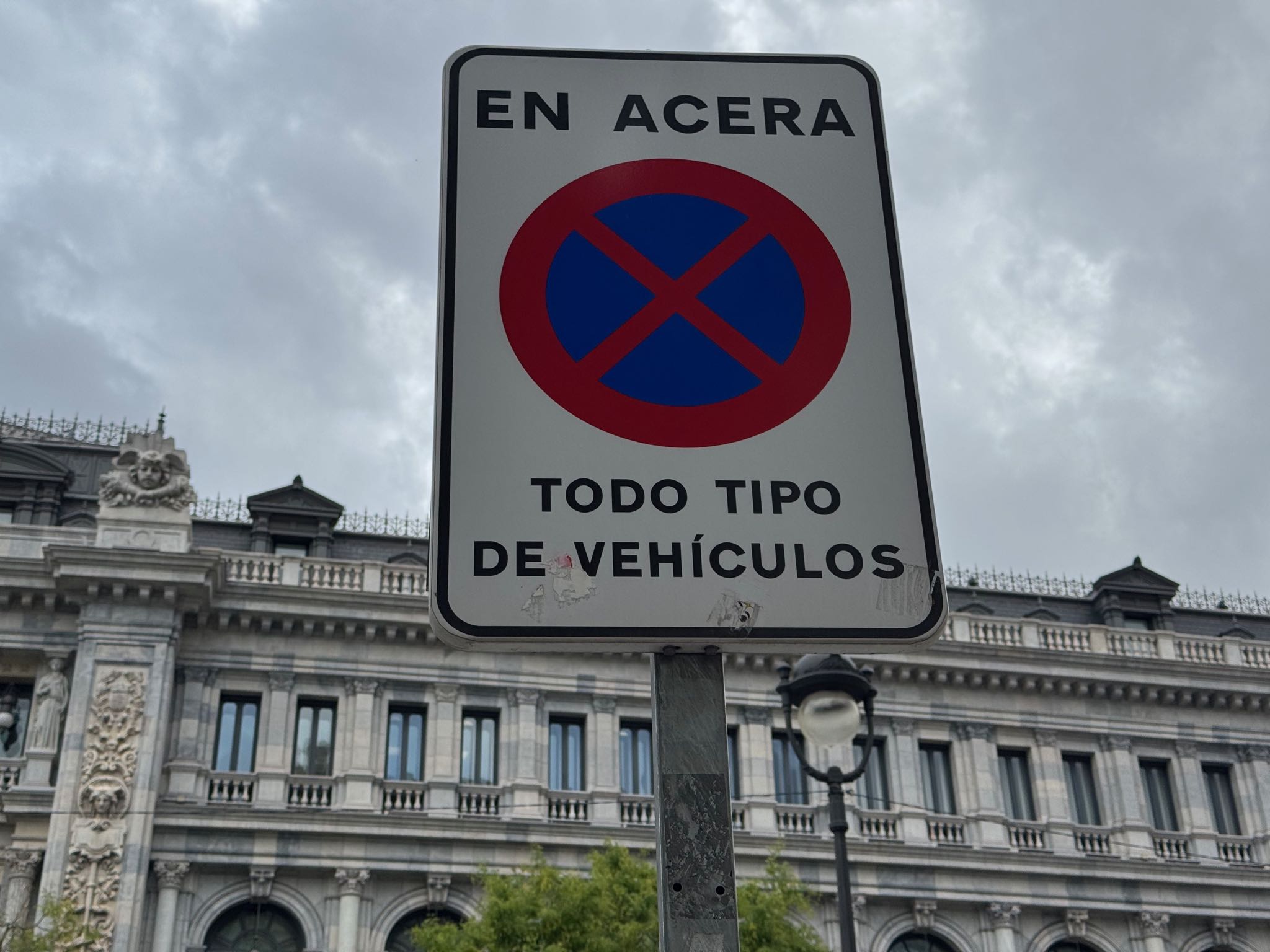
“It is illegal, to add to your todo list, tipping over a vehicle.“
Well having seen the way they do Mayday protests here, I suppose here you do need to spell that out. 
Monday 5 October – Walking Around Madrid

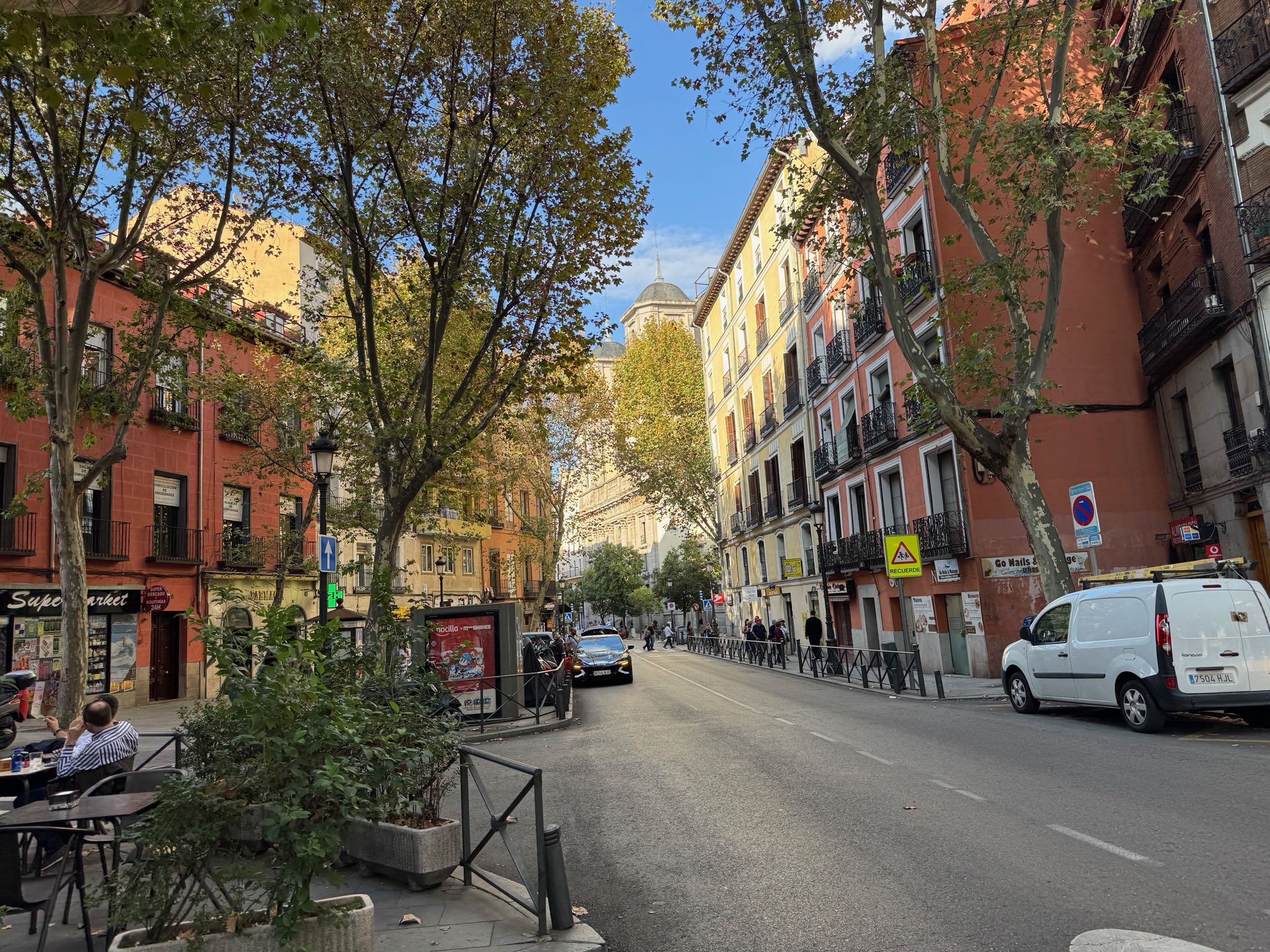
Walking in Madrid, we see the cars are parked in possibly close together.

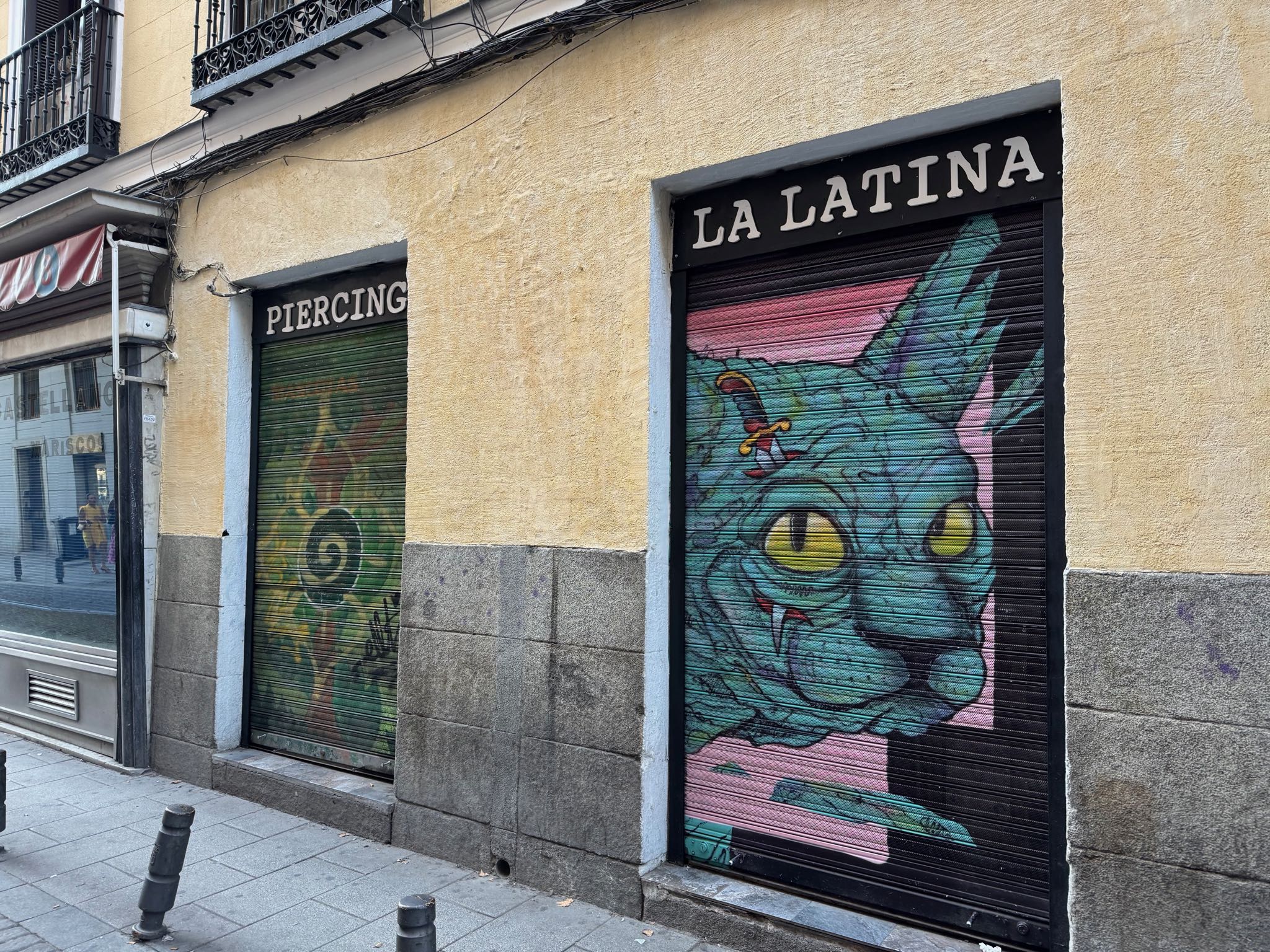
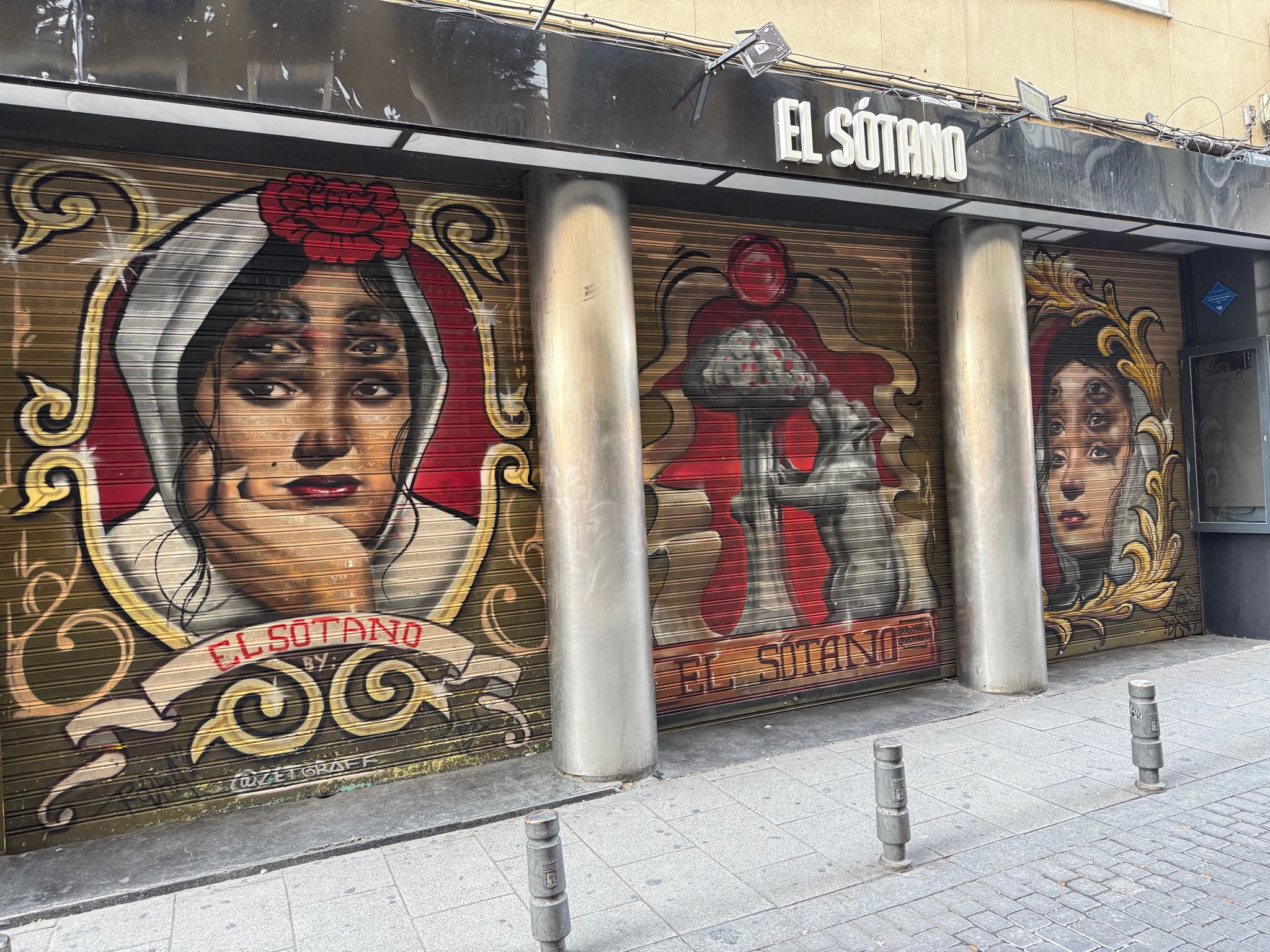
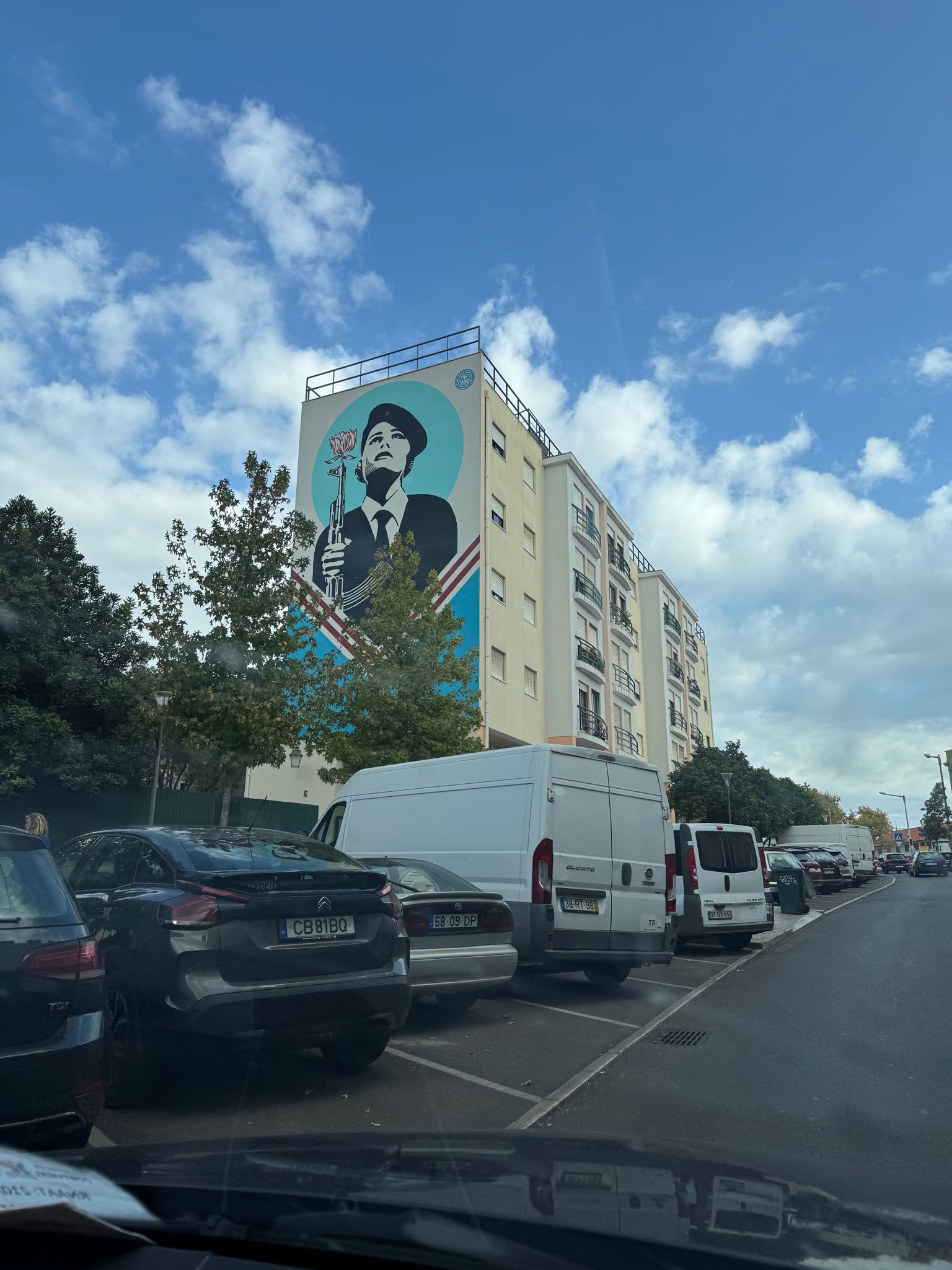
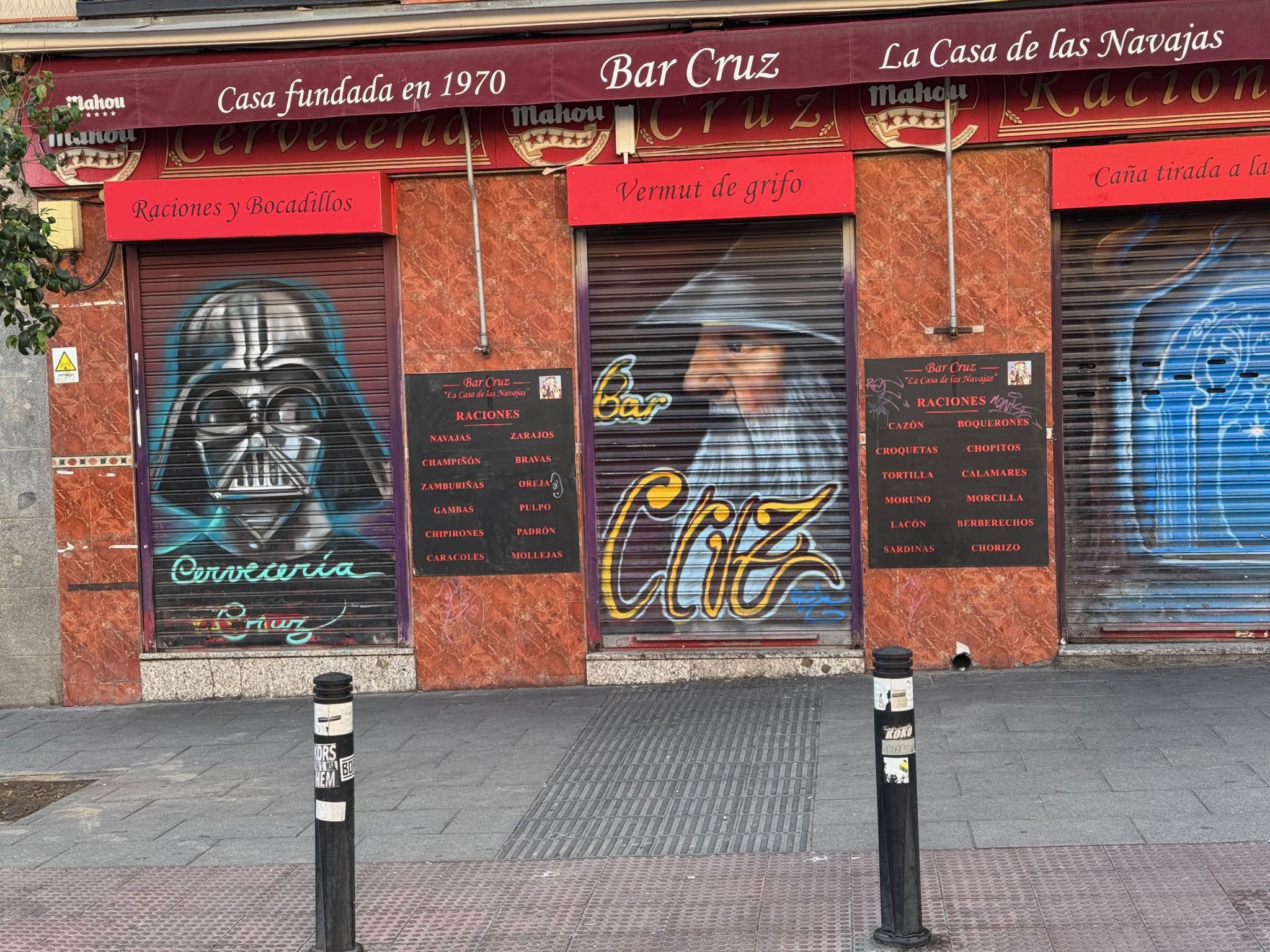
The street art is incredible, like a surplus of creative energy and skill drawn to this city.

The Maccas offers: McExtrene Pulled Pork Buffalo (also in double!) Hugh thinks this sounds alright . Hugh also likes the cheesy stars and the Magnum Gold McFlurry. Also the Mini McFlurry Phillipino. Packs of nuggets can also be augmented with Spicy Chicken Wings. Hugh thinks these are sensible choices. The fries also come in wedges. The ice cream comes in large. 

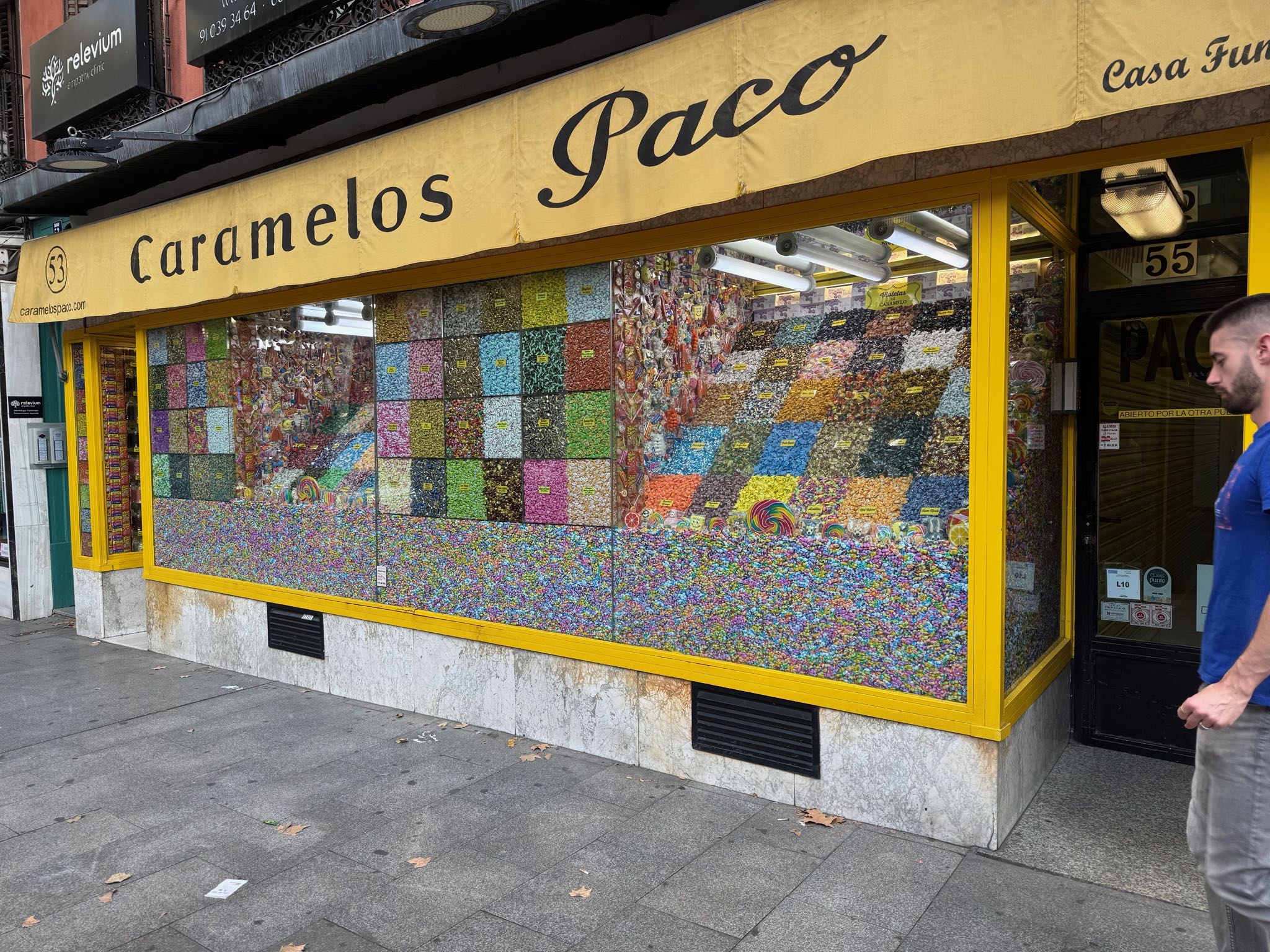
An old school lolly shop.

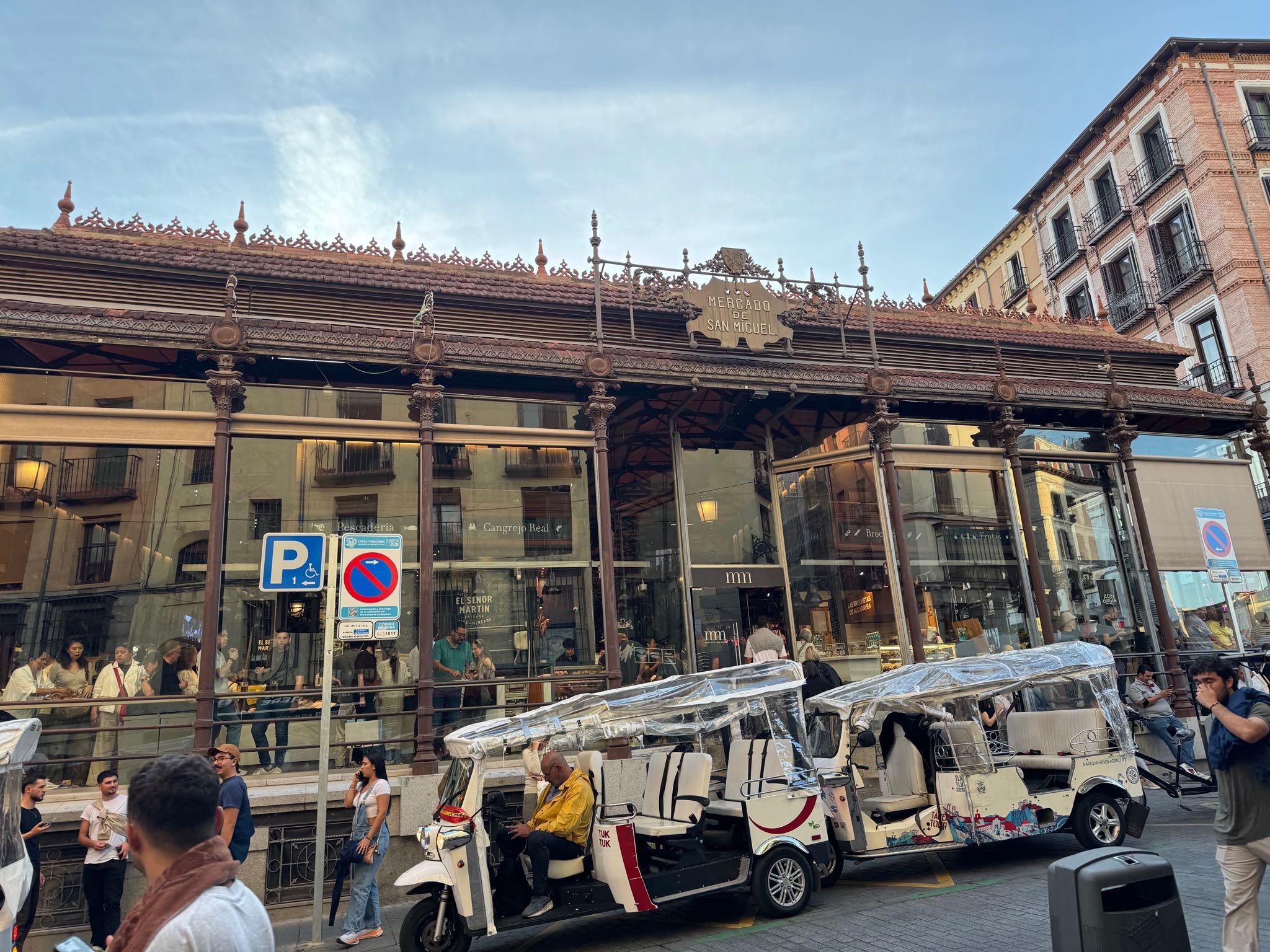
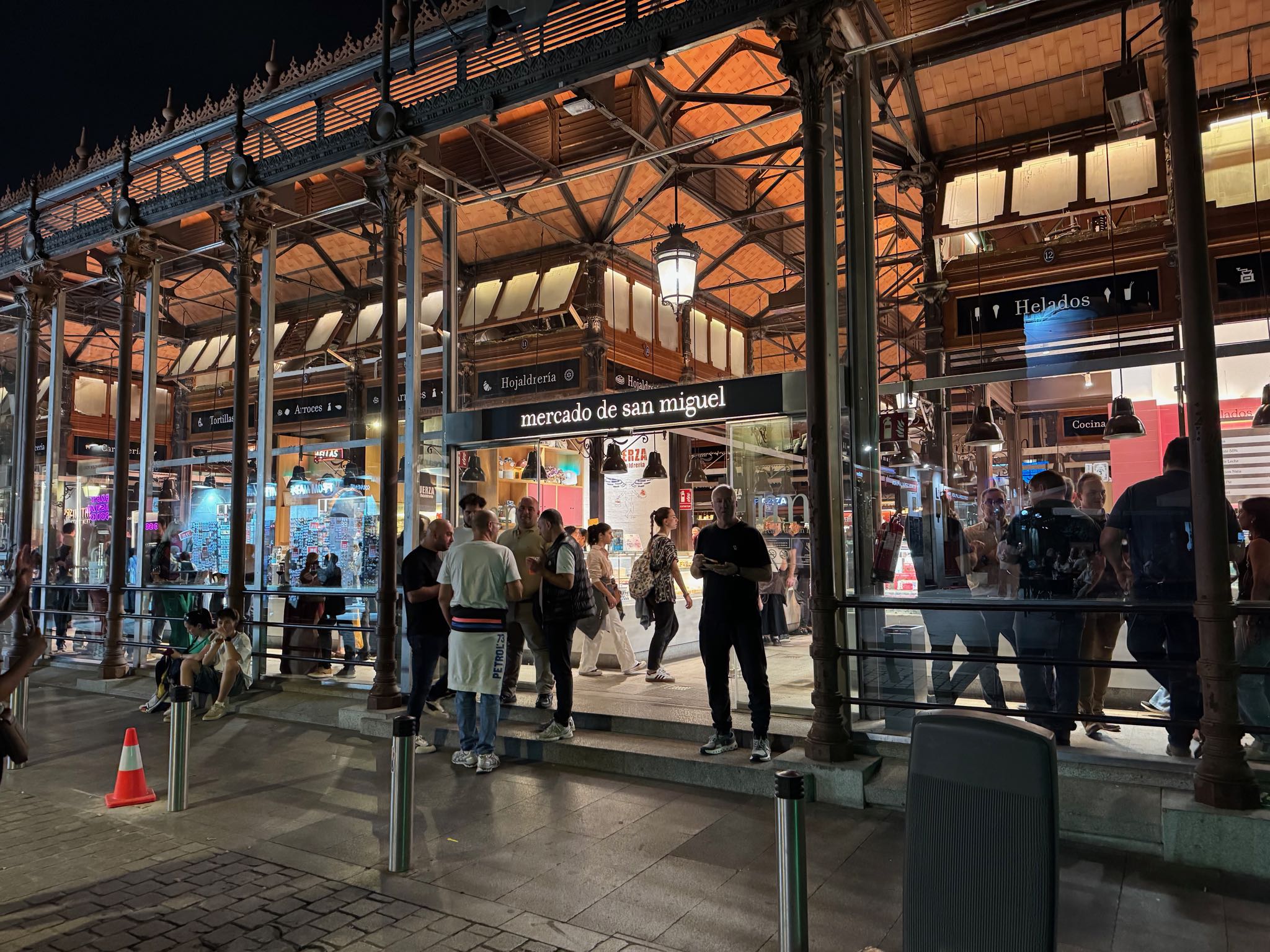
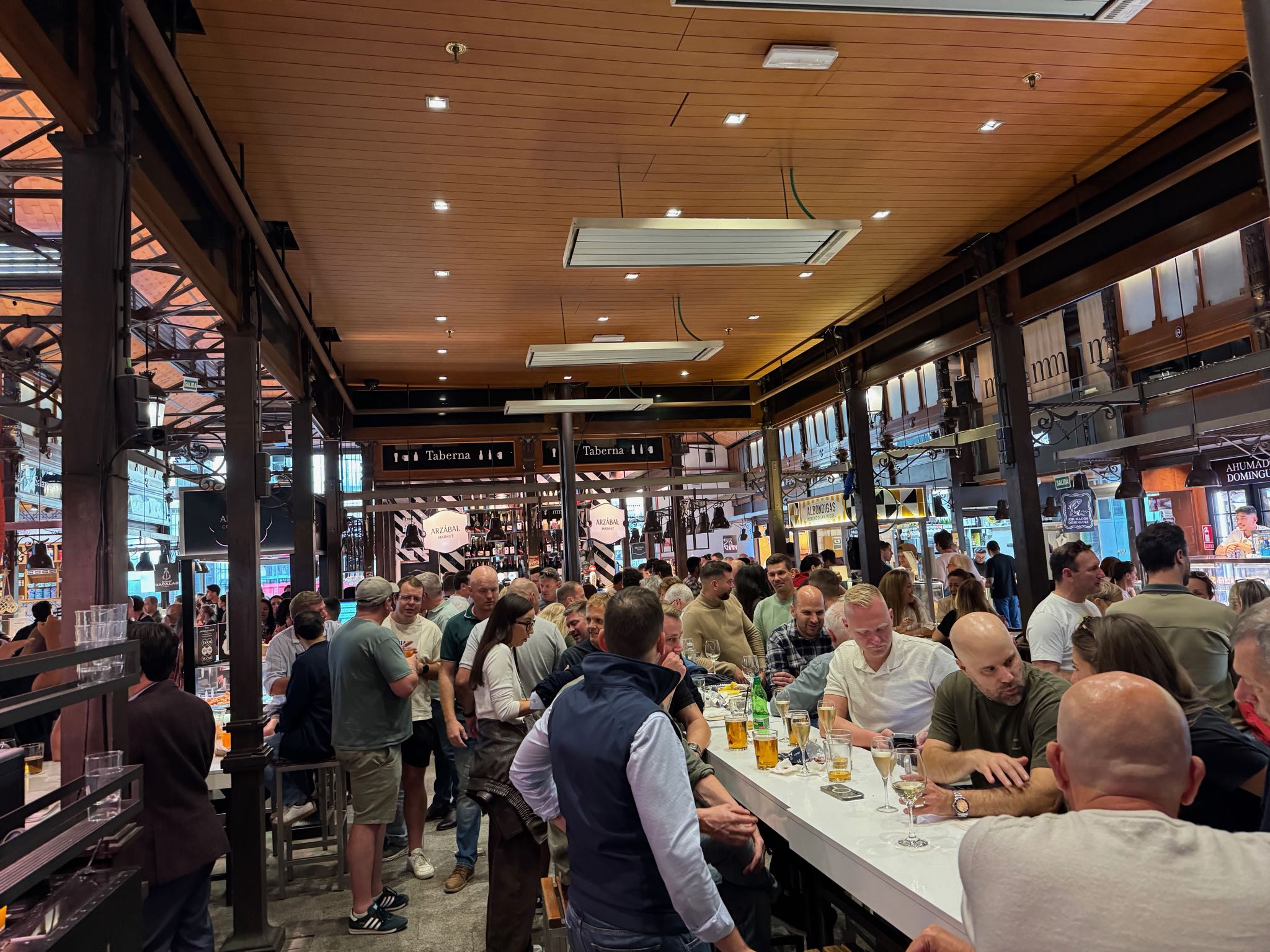
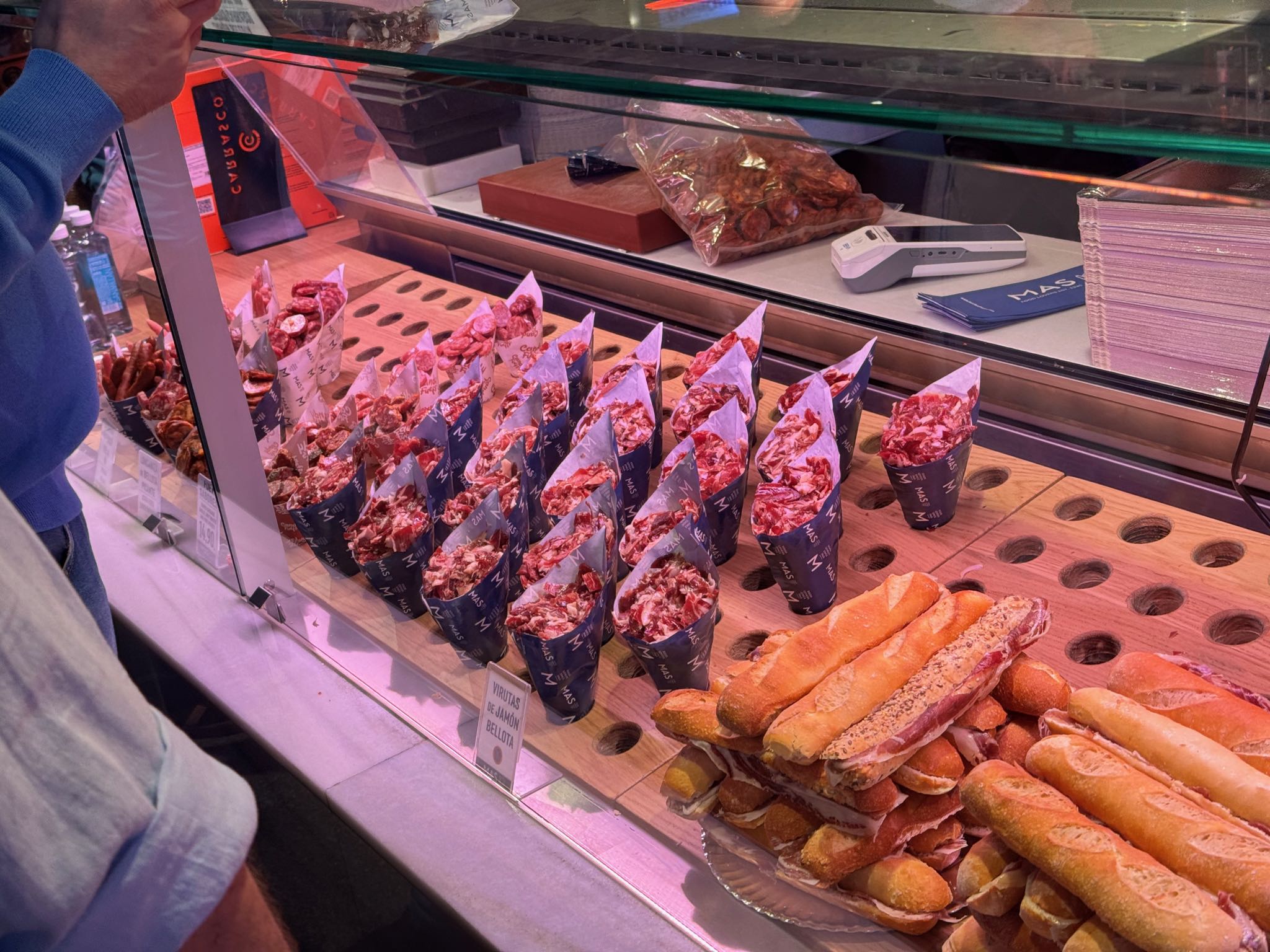
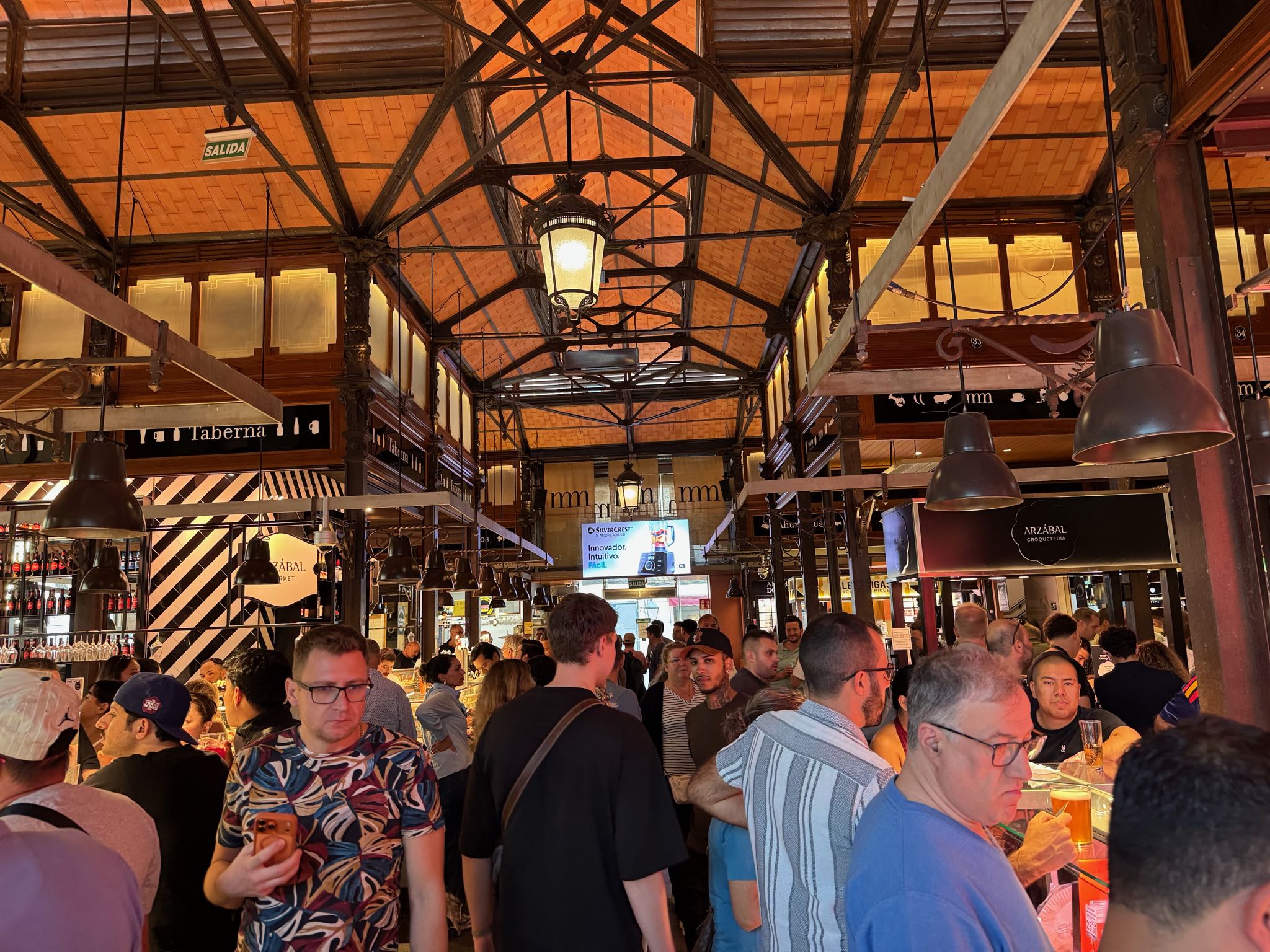
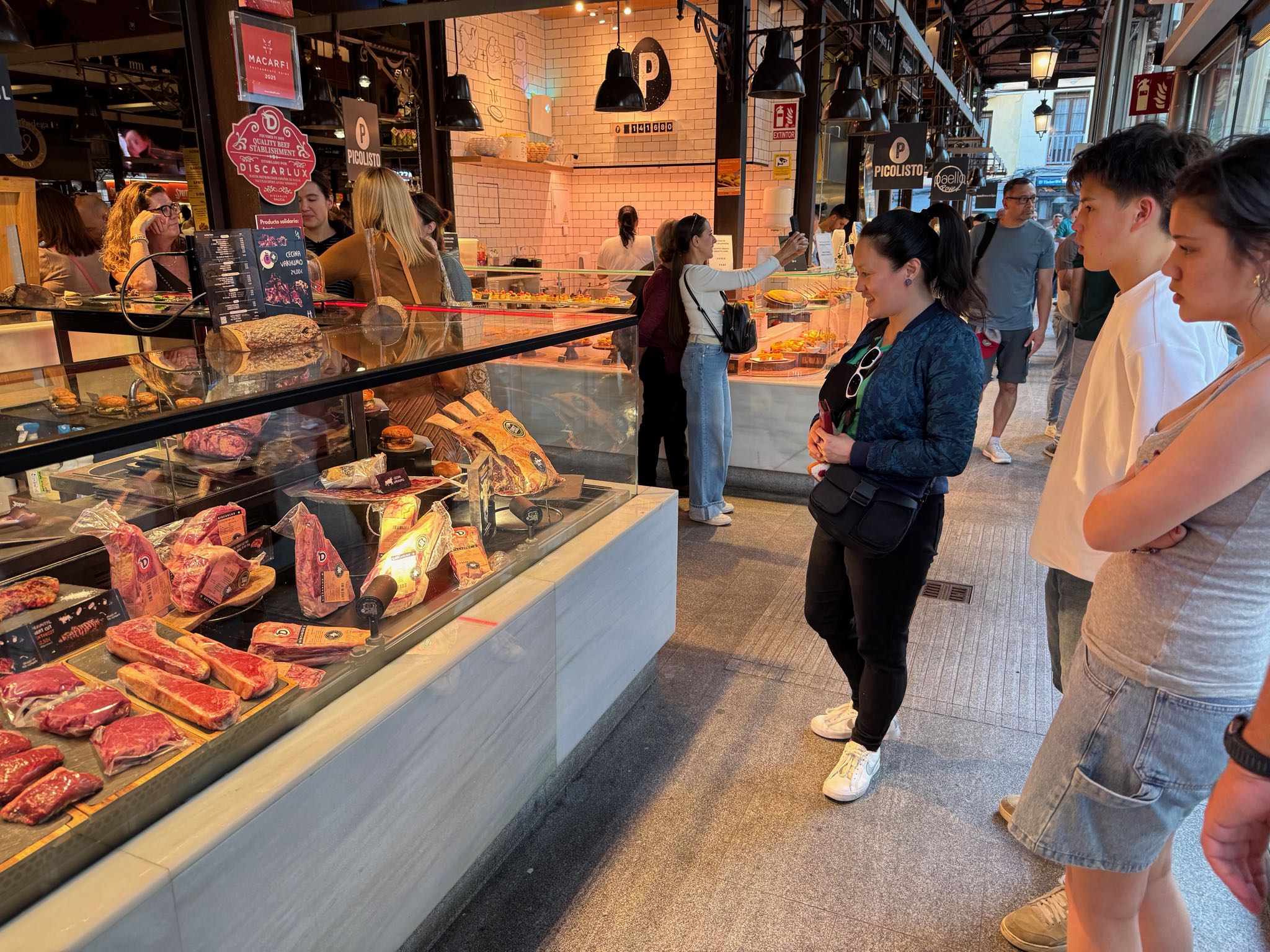
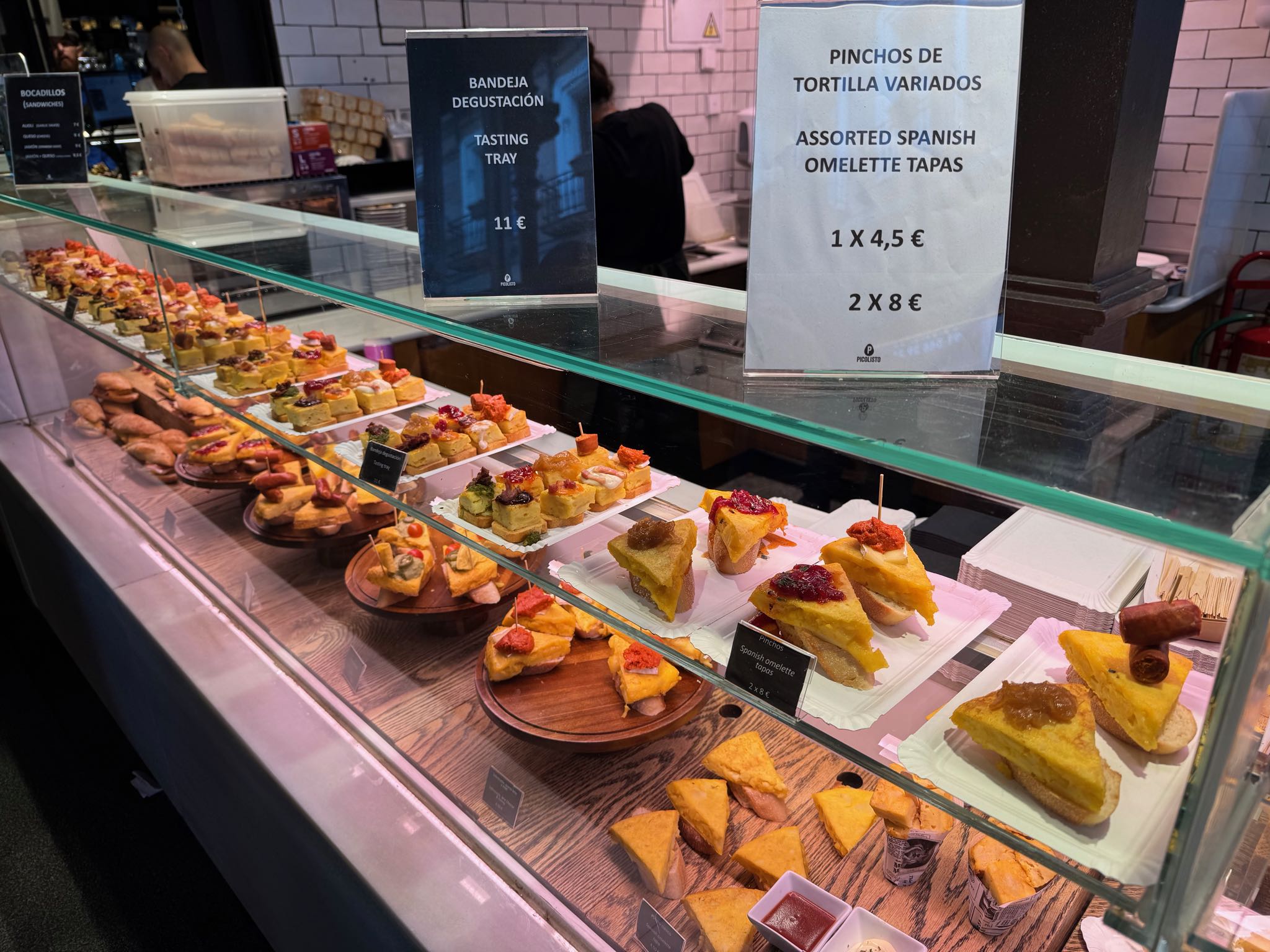
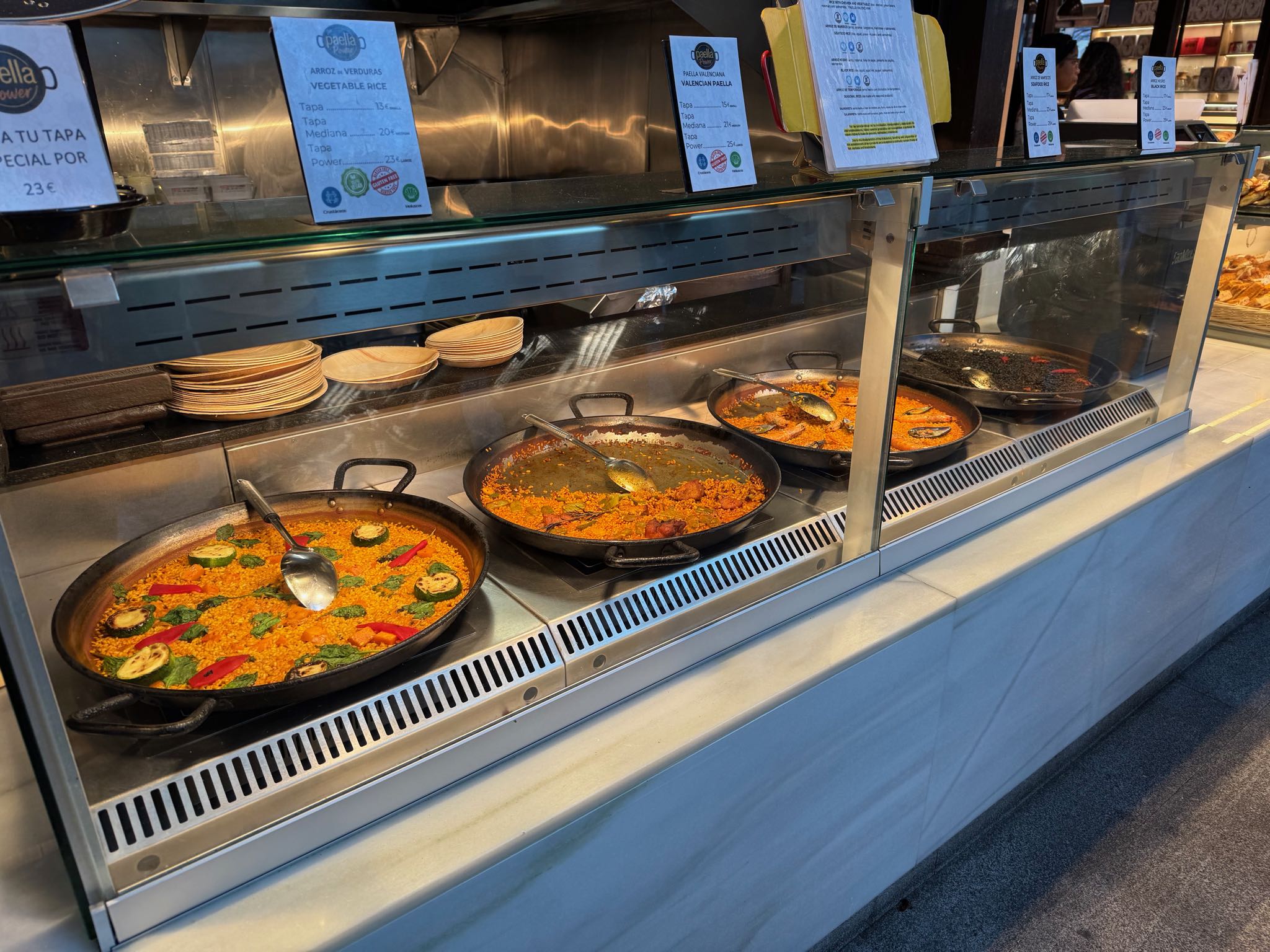
We have dinner at the markets – somewhere between the Melbourne markets and a crowded pub.

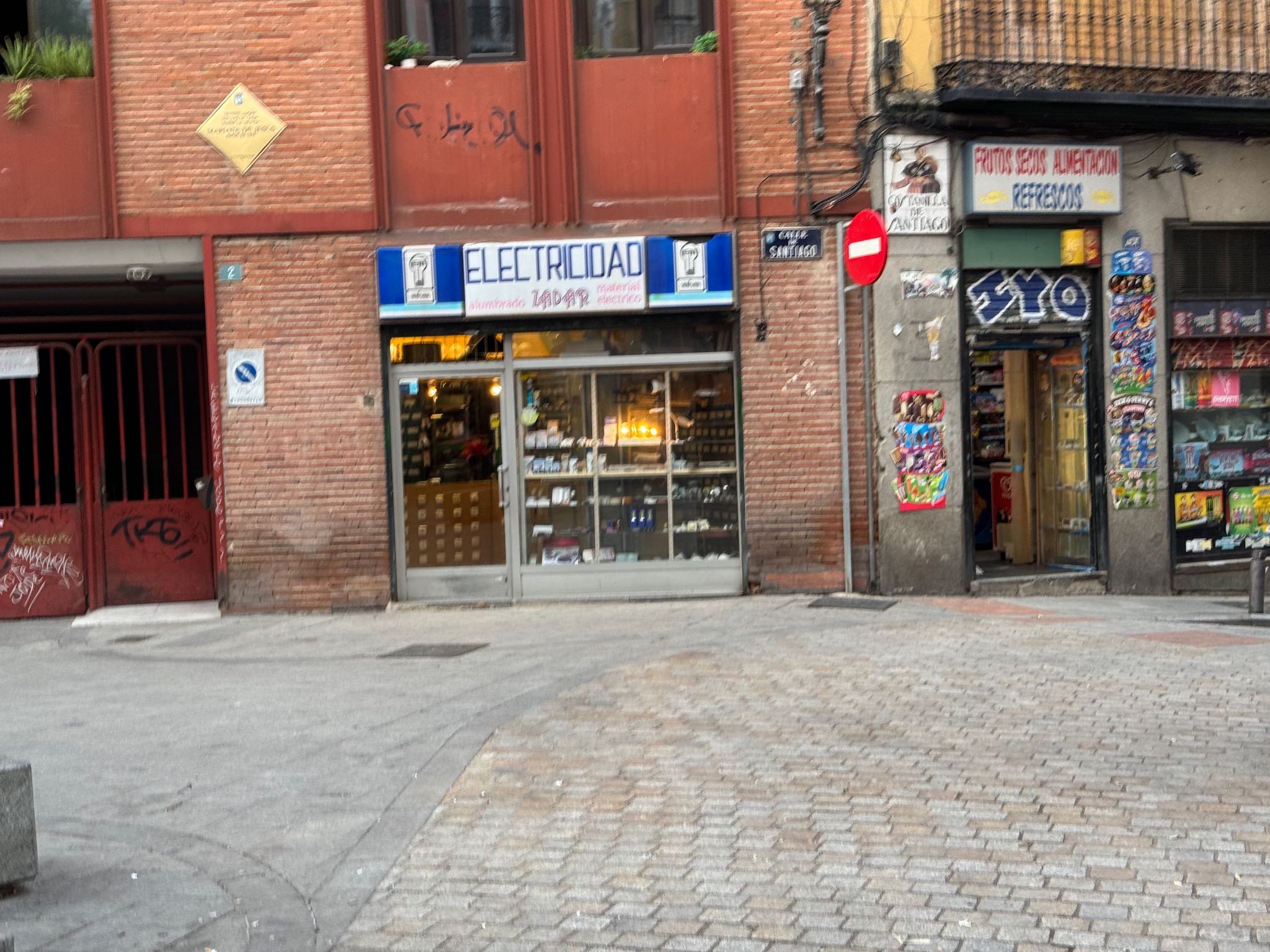
Another fun sign to translate:

“Oh – you have a problem with your electrical Doo-dad? Come and talk to Dad – he’ll sort it out.”

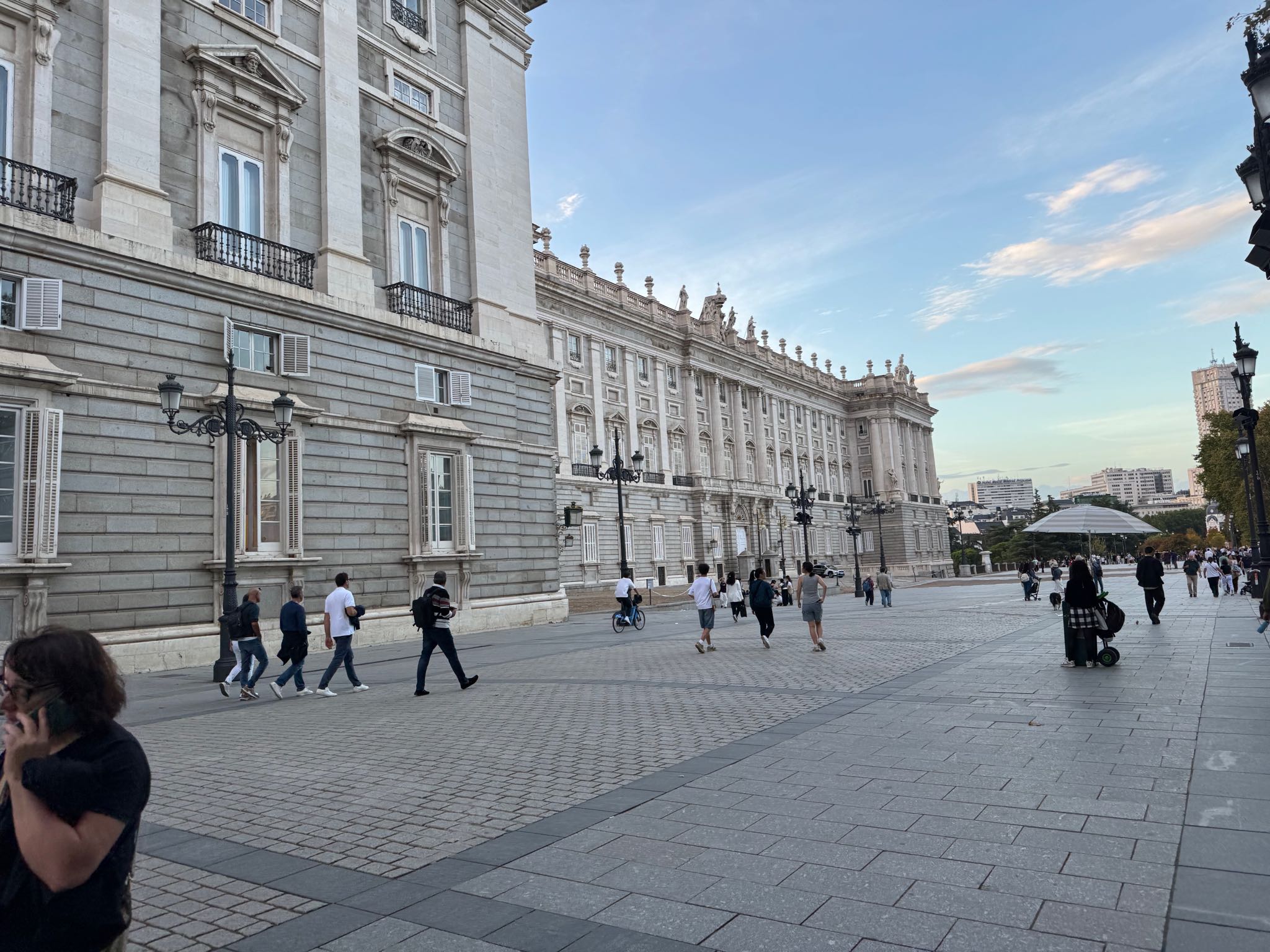
This is the Palace of Madrid. You can imagine military pagents parading here.

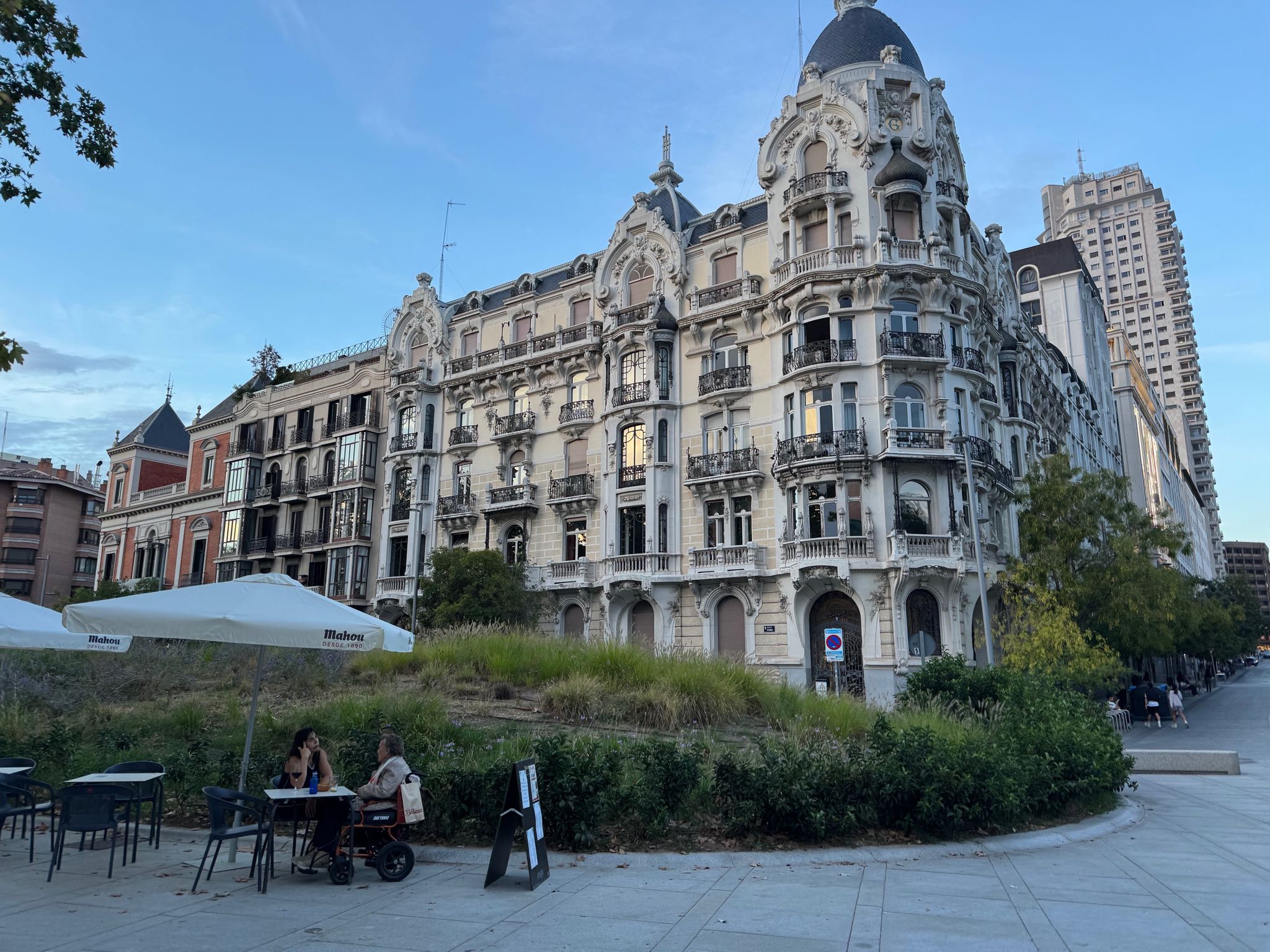
This is the Casa Gallardo – an example of Modernism/Art Nouveau architecture in Madrid – now protected for heritage, but apart from that doesn’t seem to have national significance.

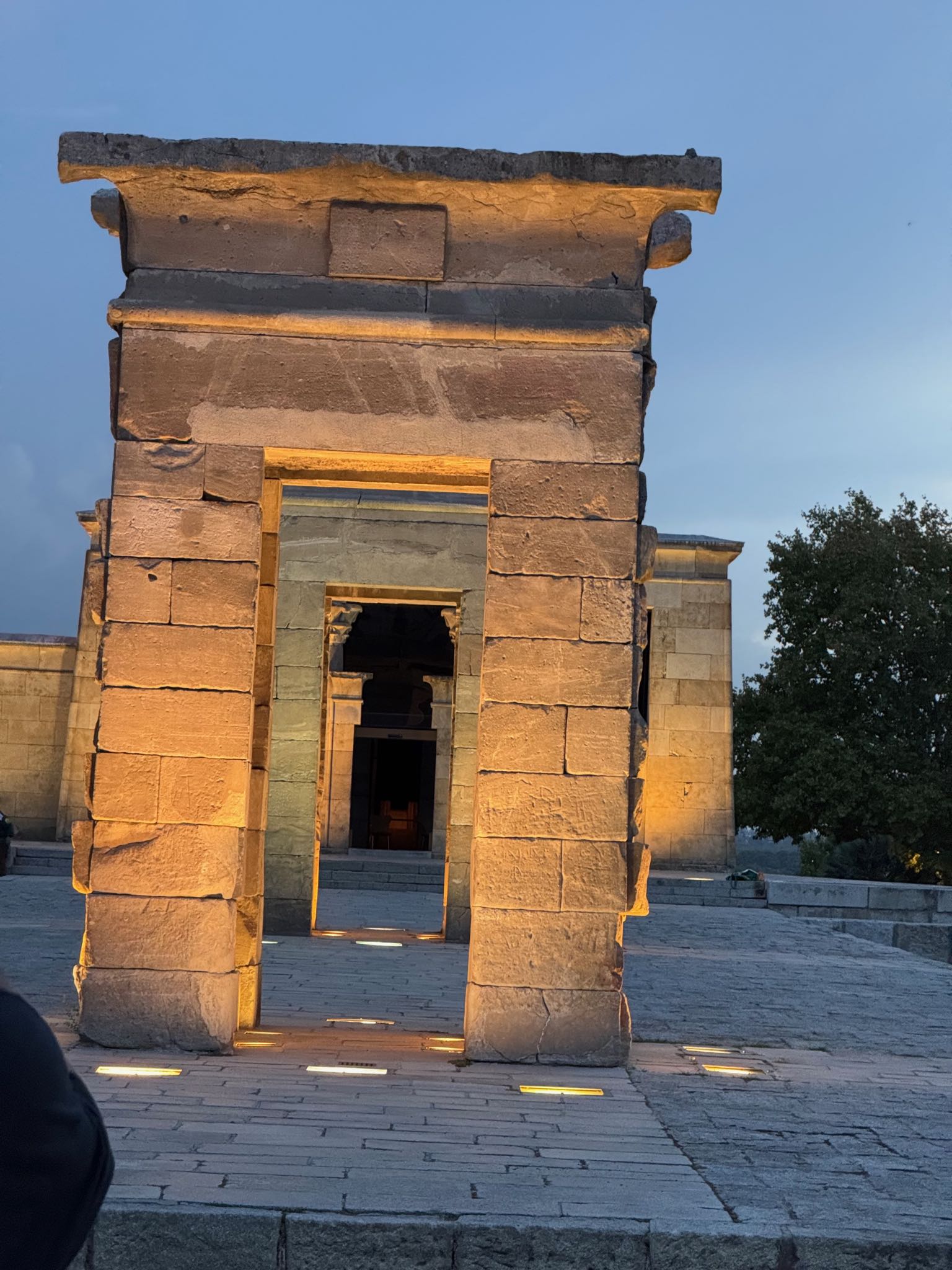
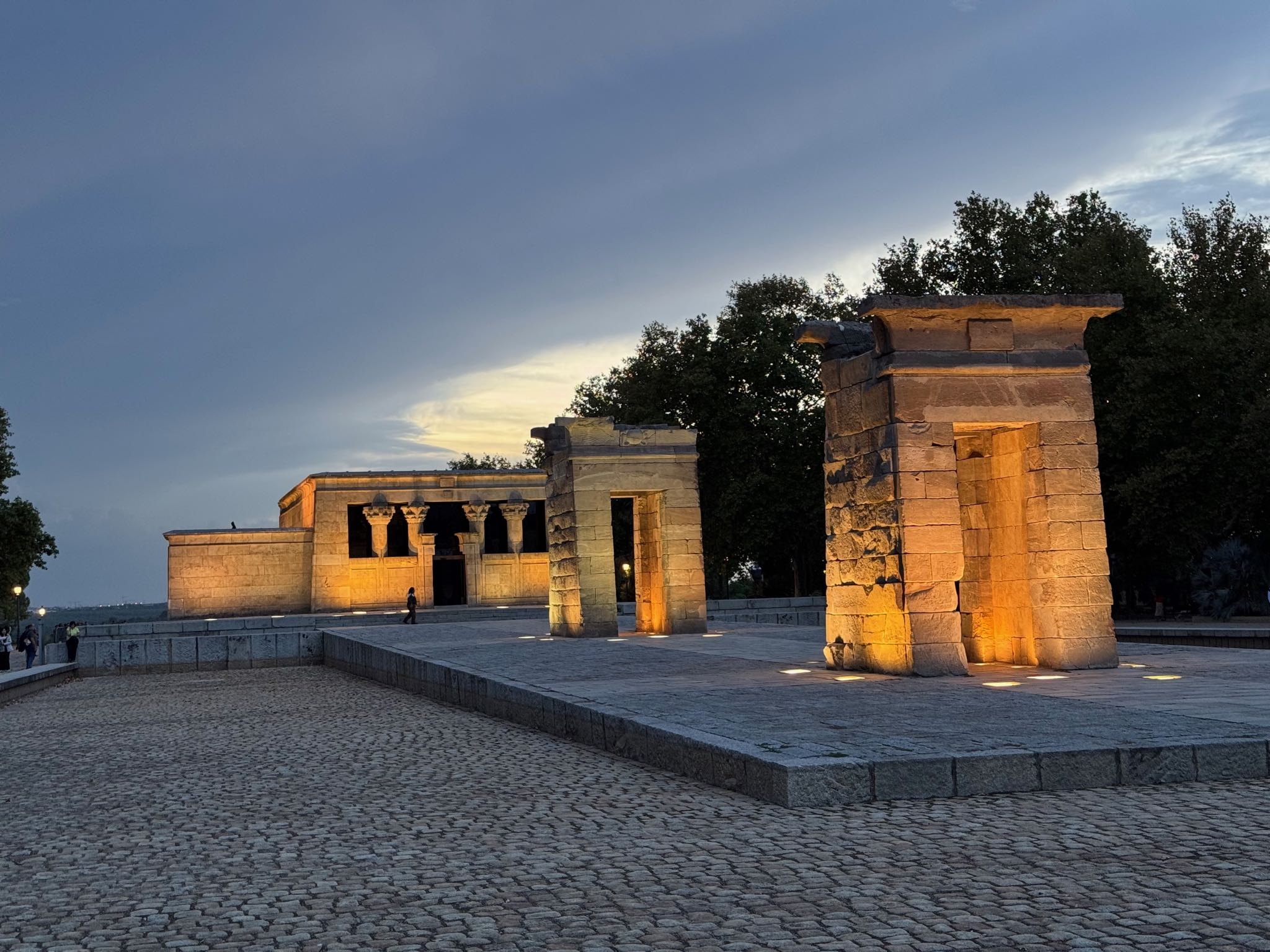
We went to an Egyptian building transported from a prospective dam site.

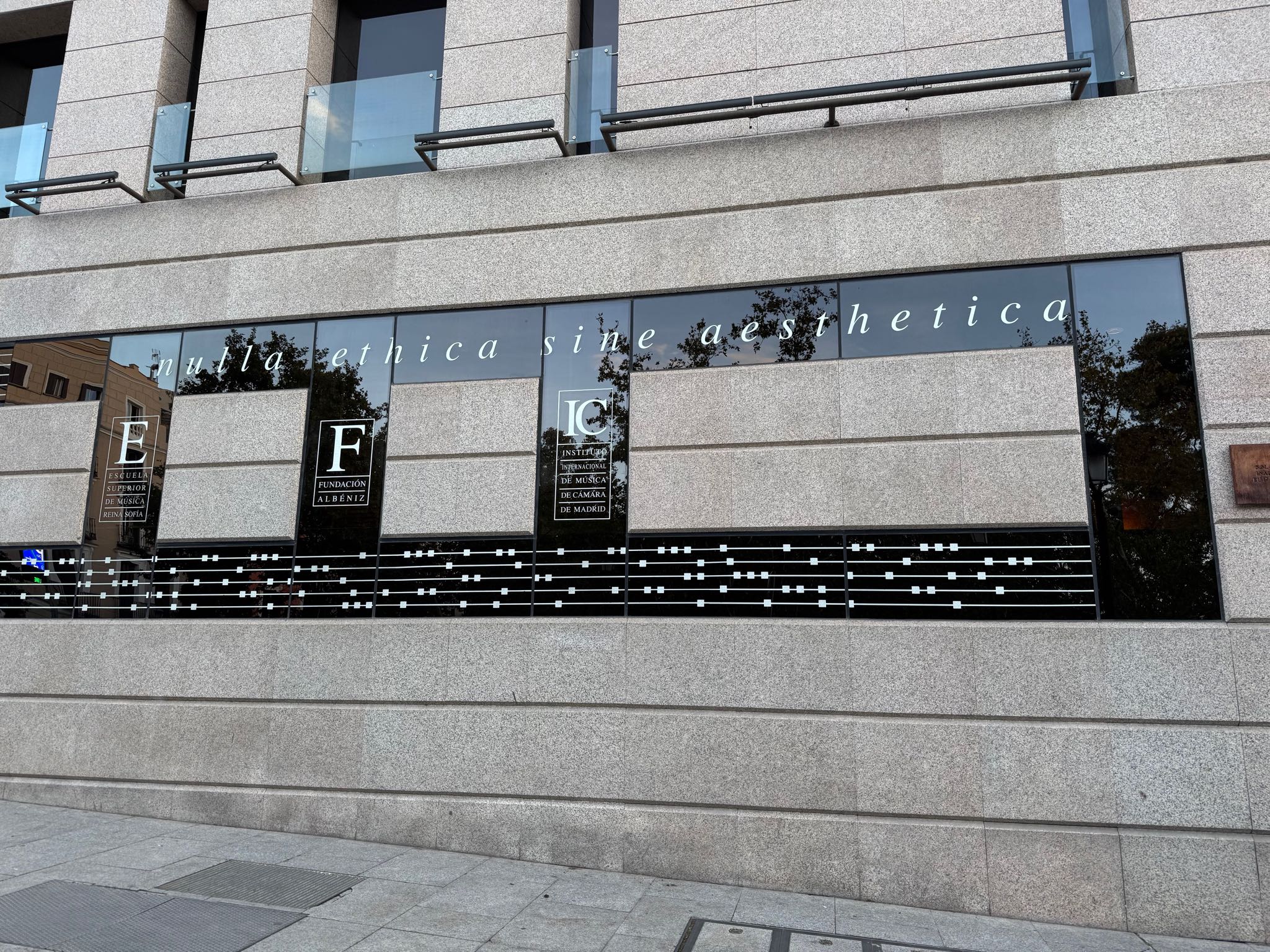
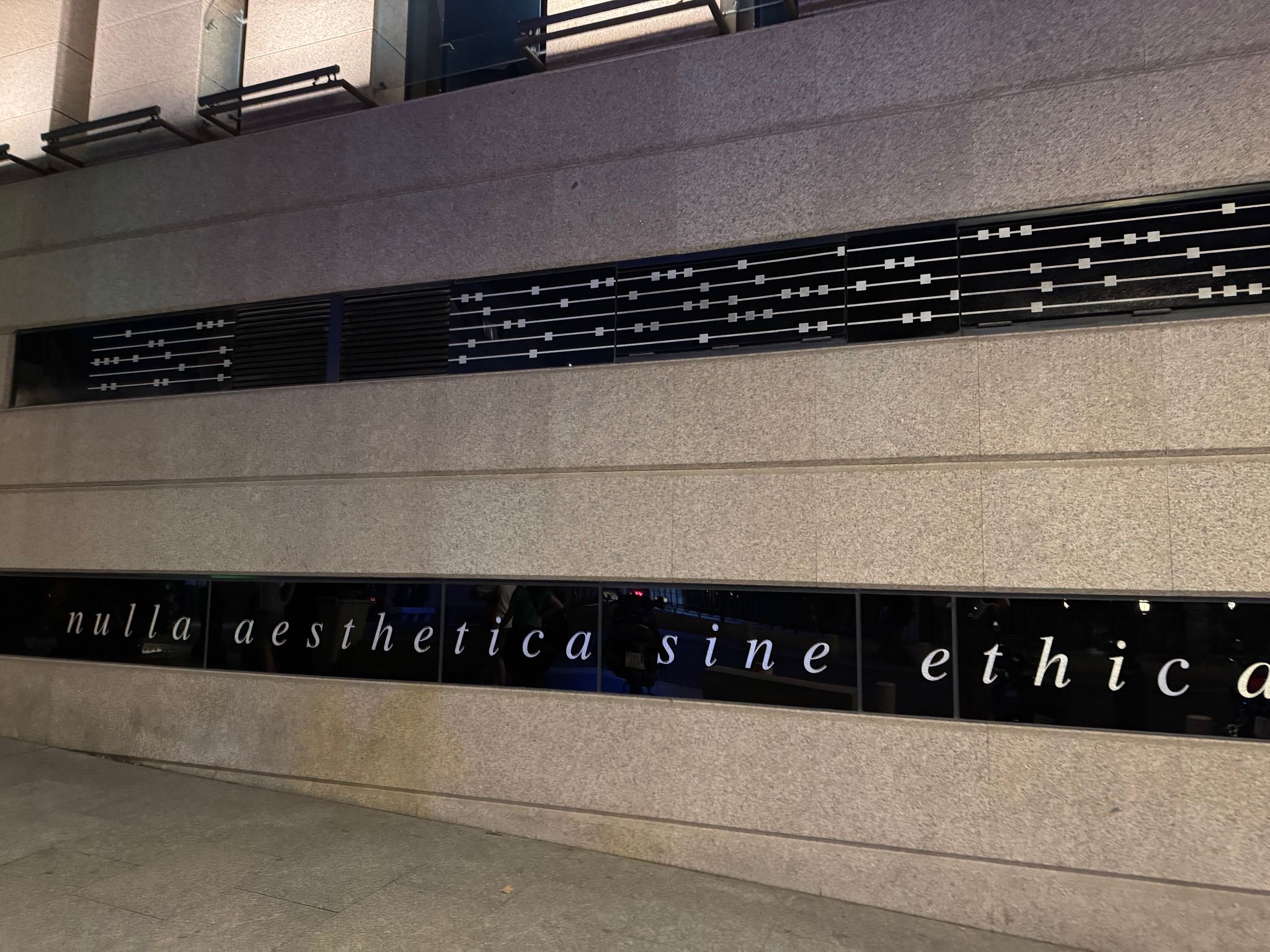
Walking back from the Egyptian artefact we come across their Conservatorium of music. On the side of the building we see a very clear motto, “No ethics without aesthetics. No aesthetics without ethics.” I love that they have to make their reason for being so pedagogically clear. So much of Europe, when staring at a statue is just “If you know, you know.” A kind of failure to teach and a construction of elitist in-groups, and a creation of a disenfranchised service class who are disconnected from it all. 

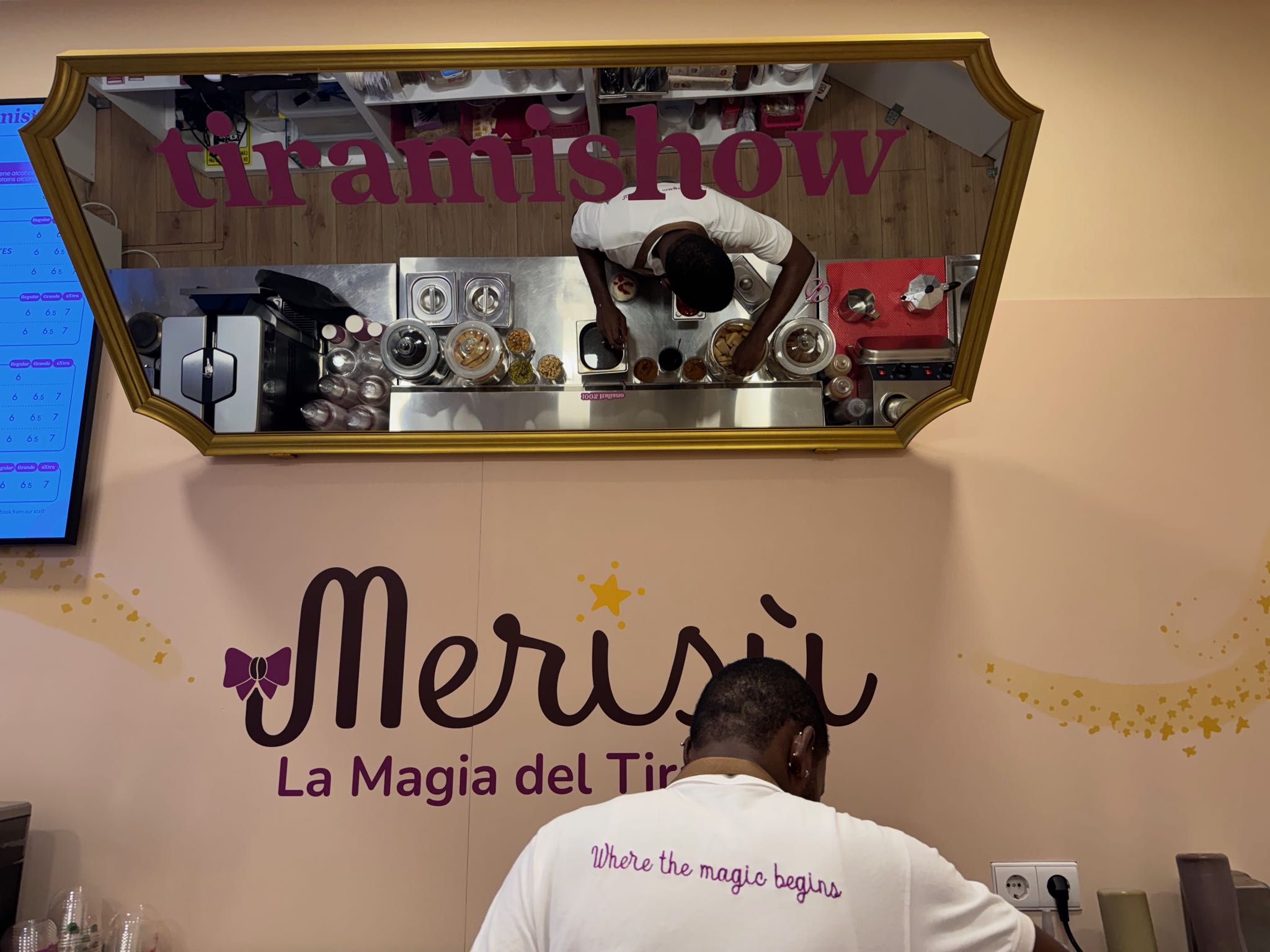
Walking back there was a man making Tiramisu’s from scratch, on demand. You could watch him make them through an angled mirror.

Monday 5 October – Arriving in Madrid

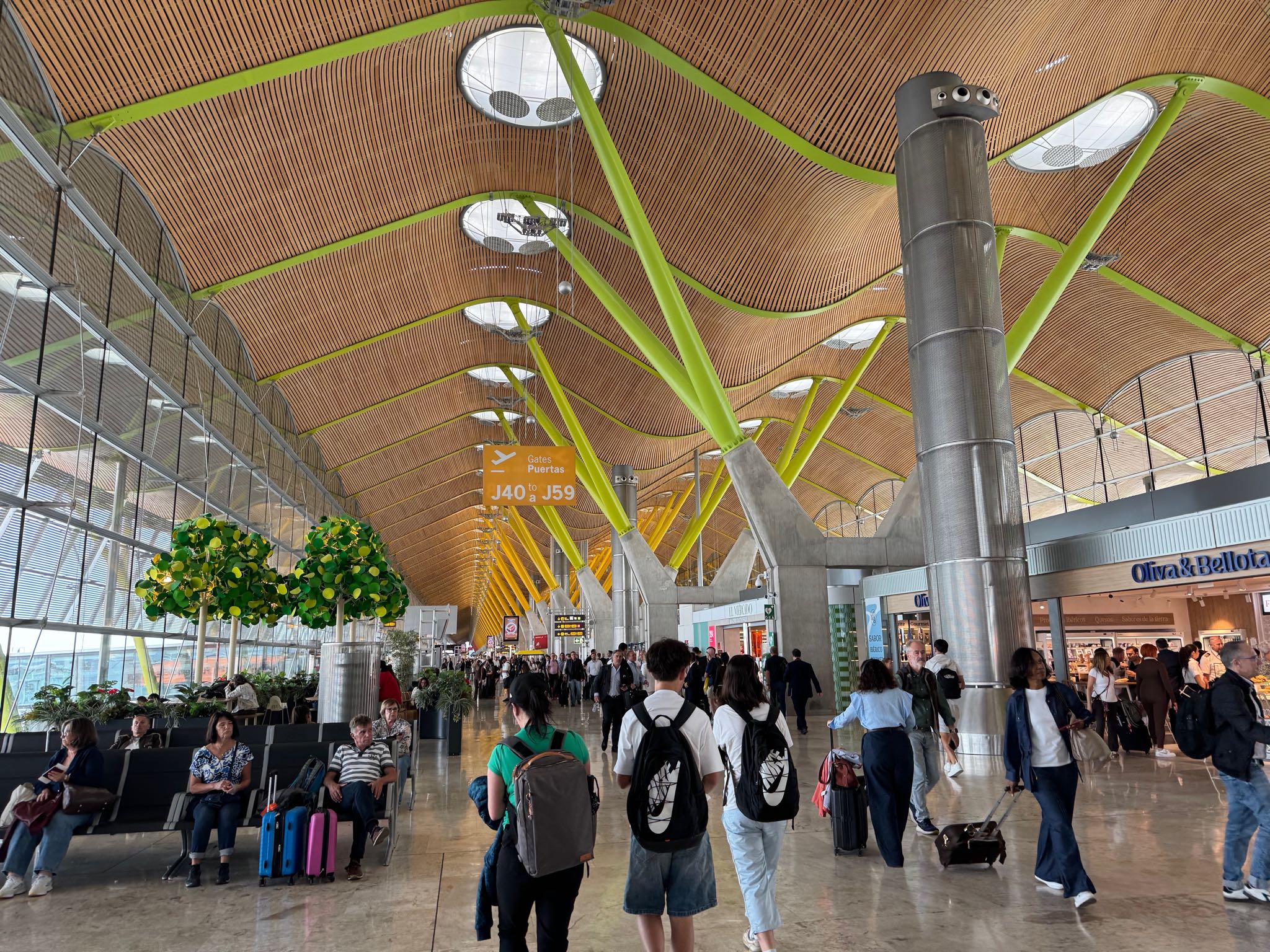
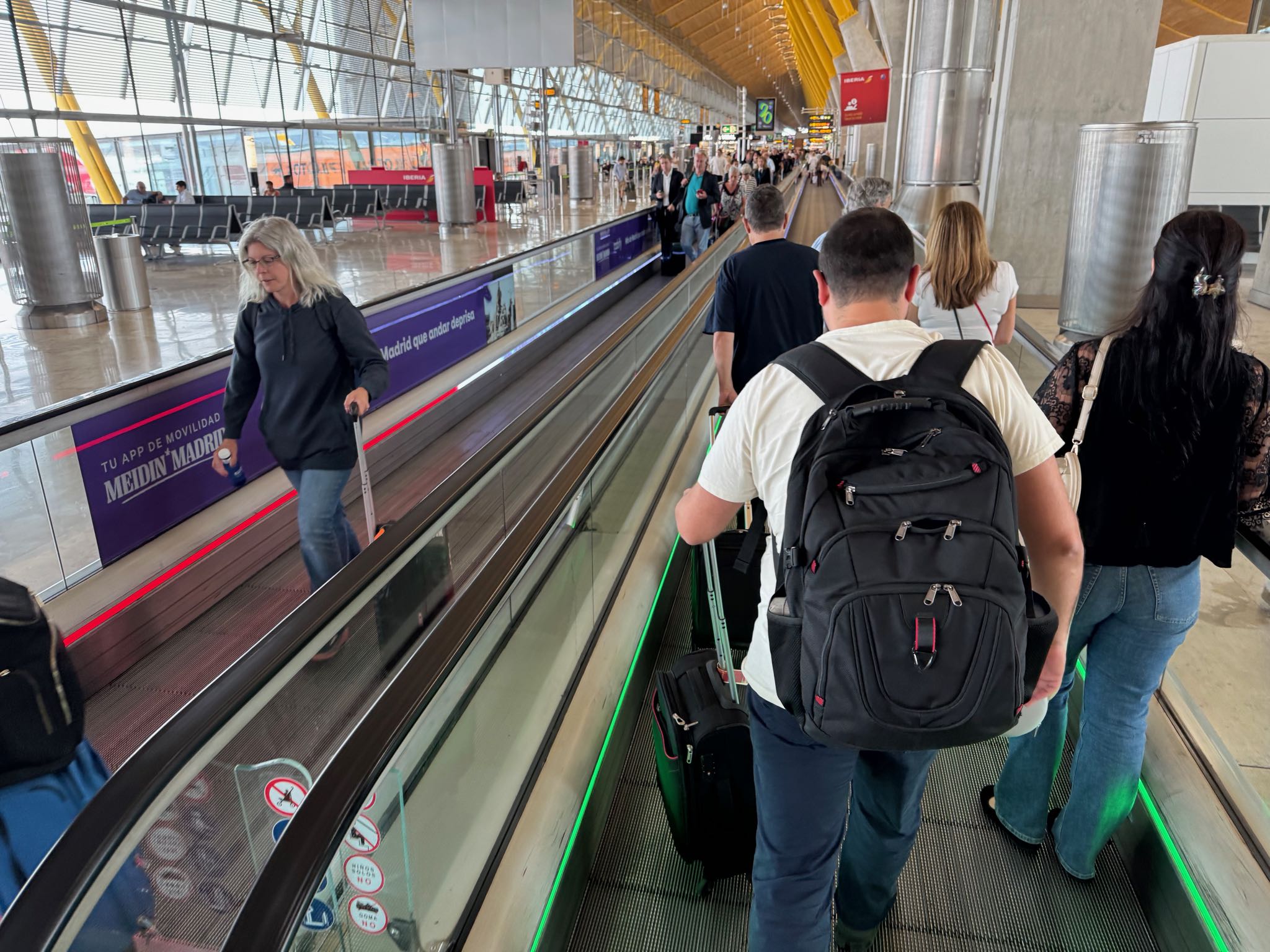
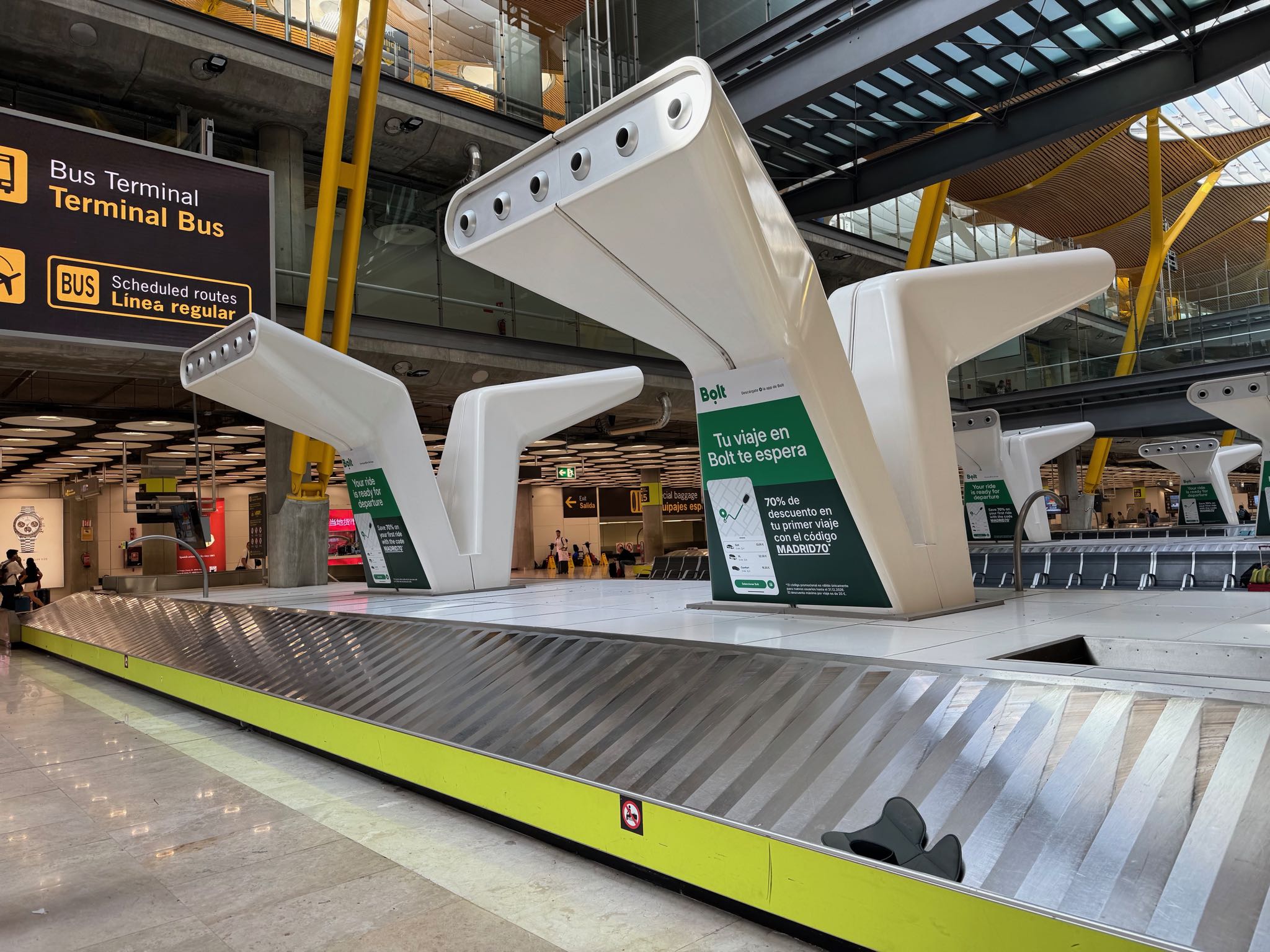
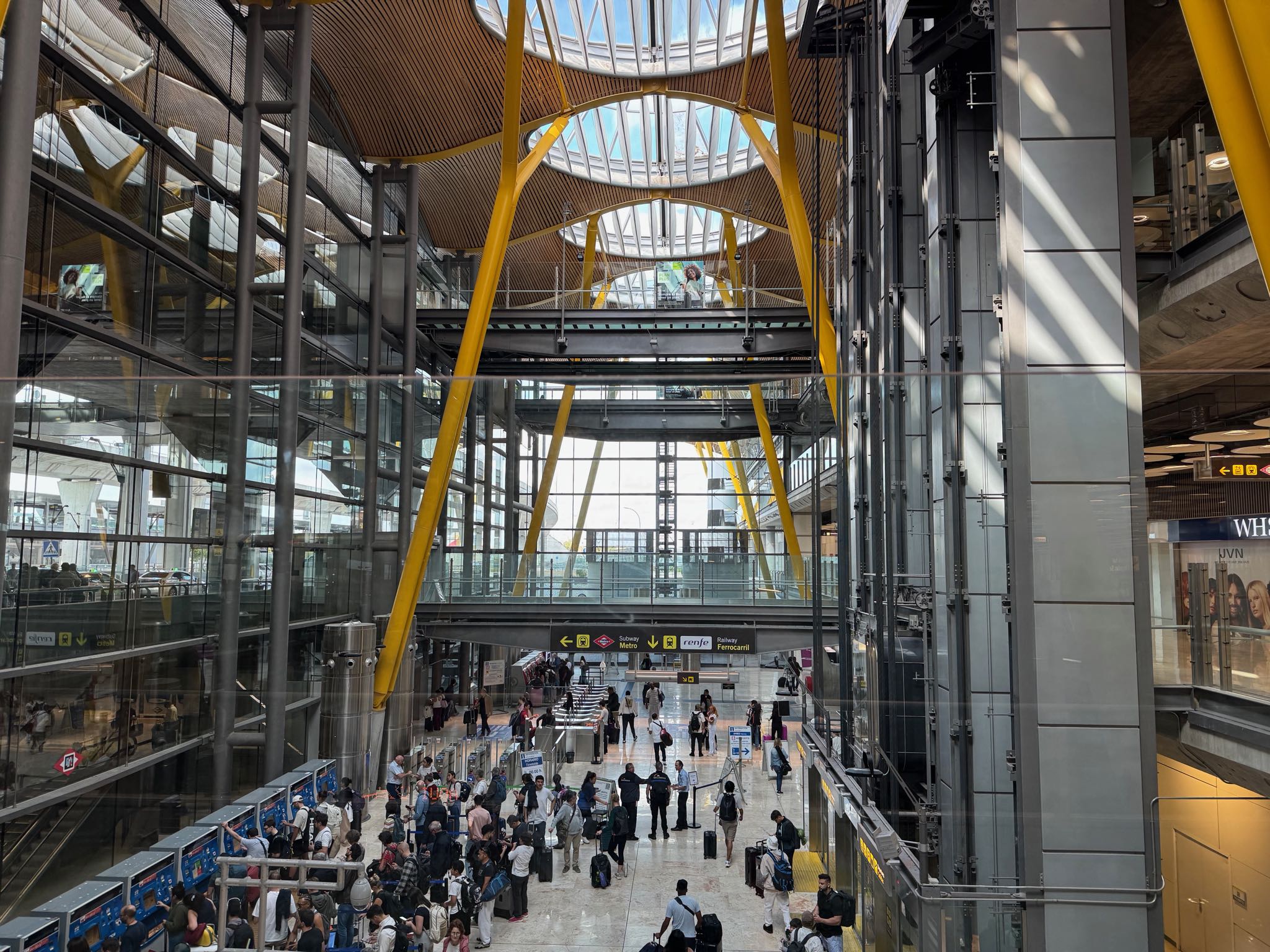
Madrid airport is large and modern and efficient. Hugh ponders various unfamiliar looking Mediterranean baguette sandwiches.


The people in the airport give off all kinds of vibes, like a big city. Some have a dash of firey New York Bronx mixed with Italian charm, others radiate Mexican hombre. 

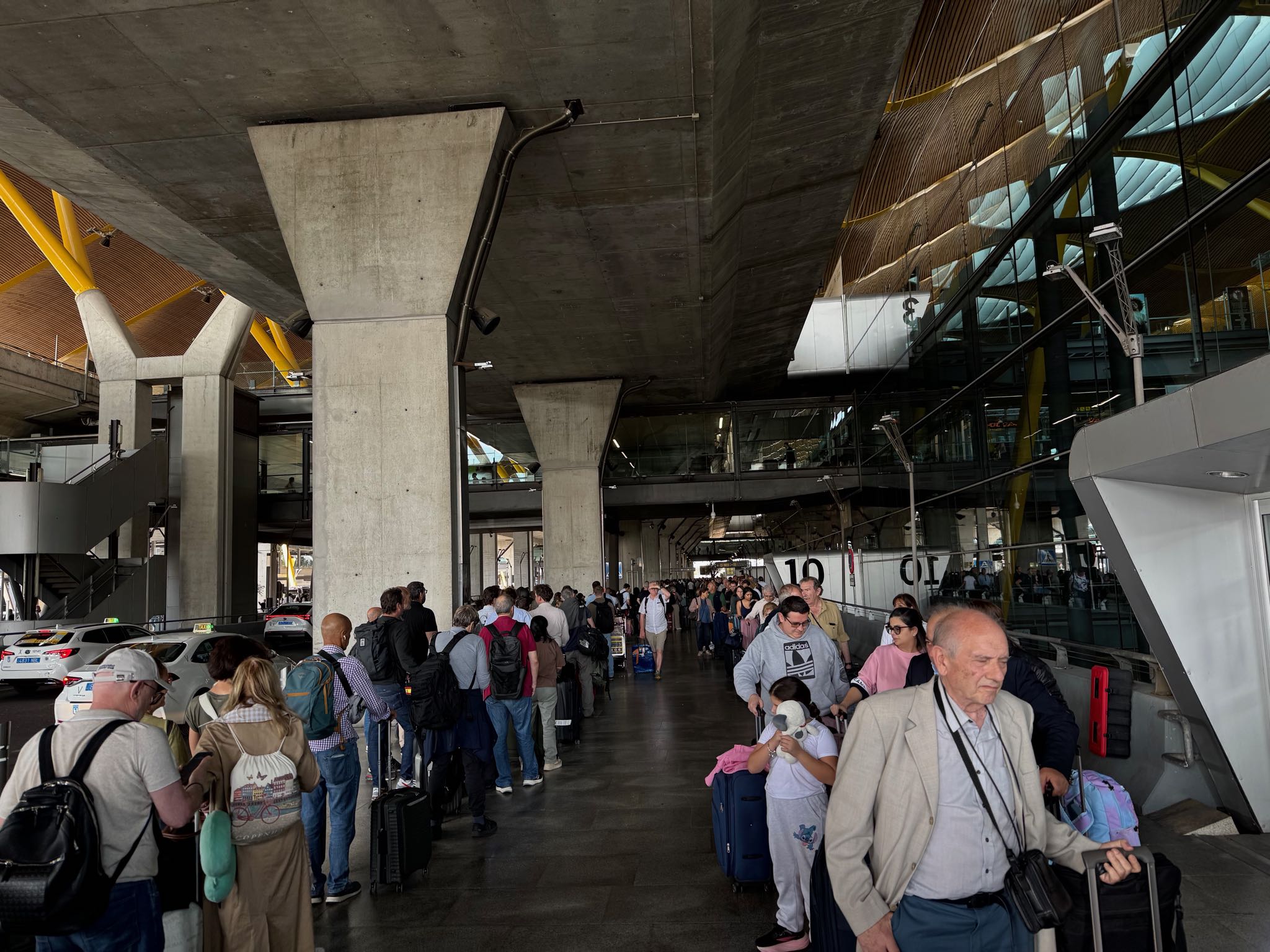
Outside we join a taxi queue, well ordered, but longer than I think I’ve been in in my life.


A couple of young Americans try to skip the queue and are successfully shouted off by locals.  The Transatlantic harmonious spirit is waning. 

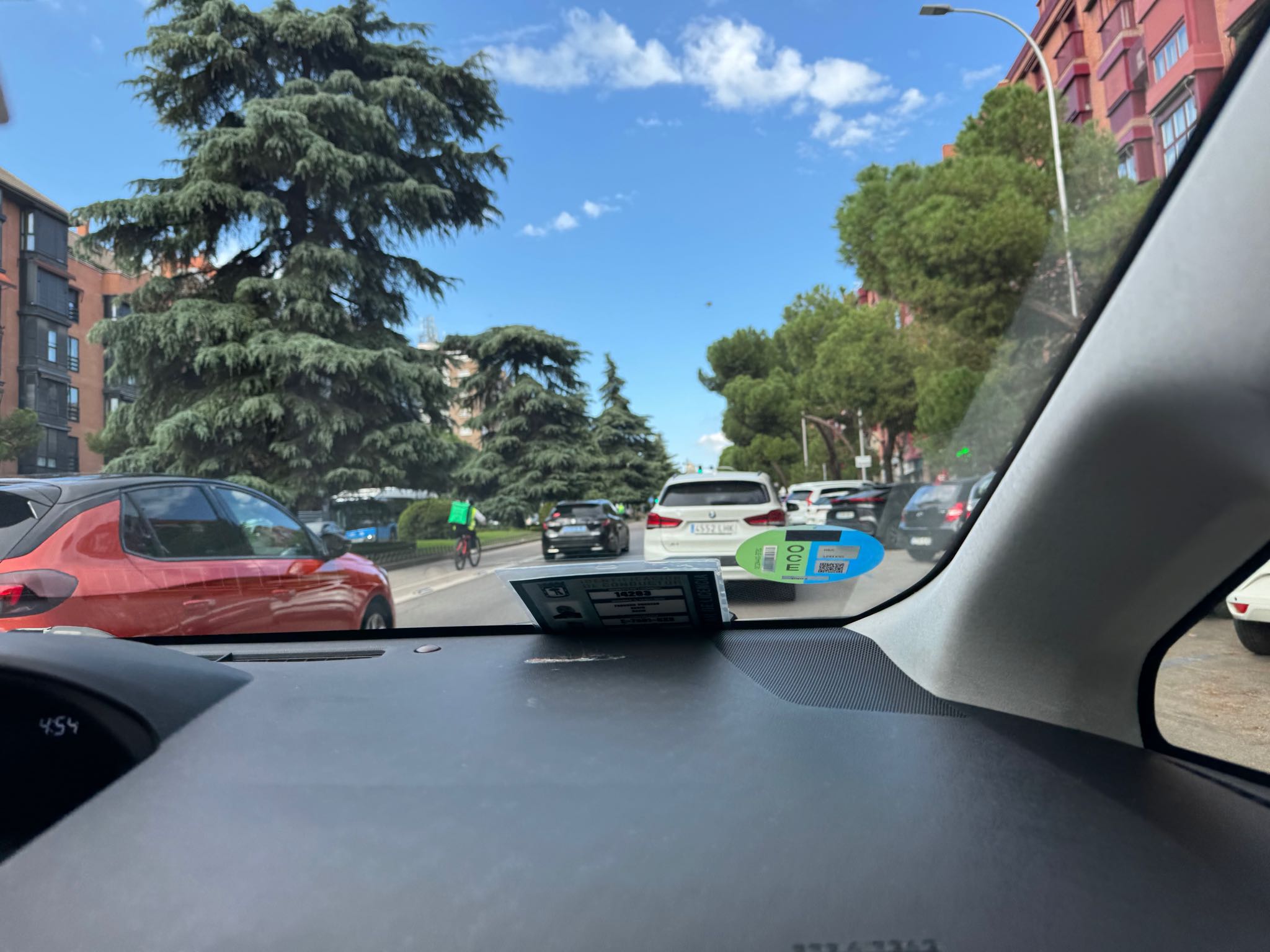
As you leave the airport you immediately join onto a highway, like Sydney, contributing to the big city vibe.

We drive along freeways and through tunnels, in a city with less strict planning controls on its buildings and more pragmatism. The brownstone towers give less of a sense of consistent aesthetic beauty in the buildings compared to Lisbon, but still a sense of group identity and compassion. 

As we leave the freeway we drive through streets of fir trees.

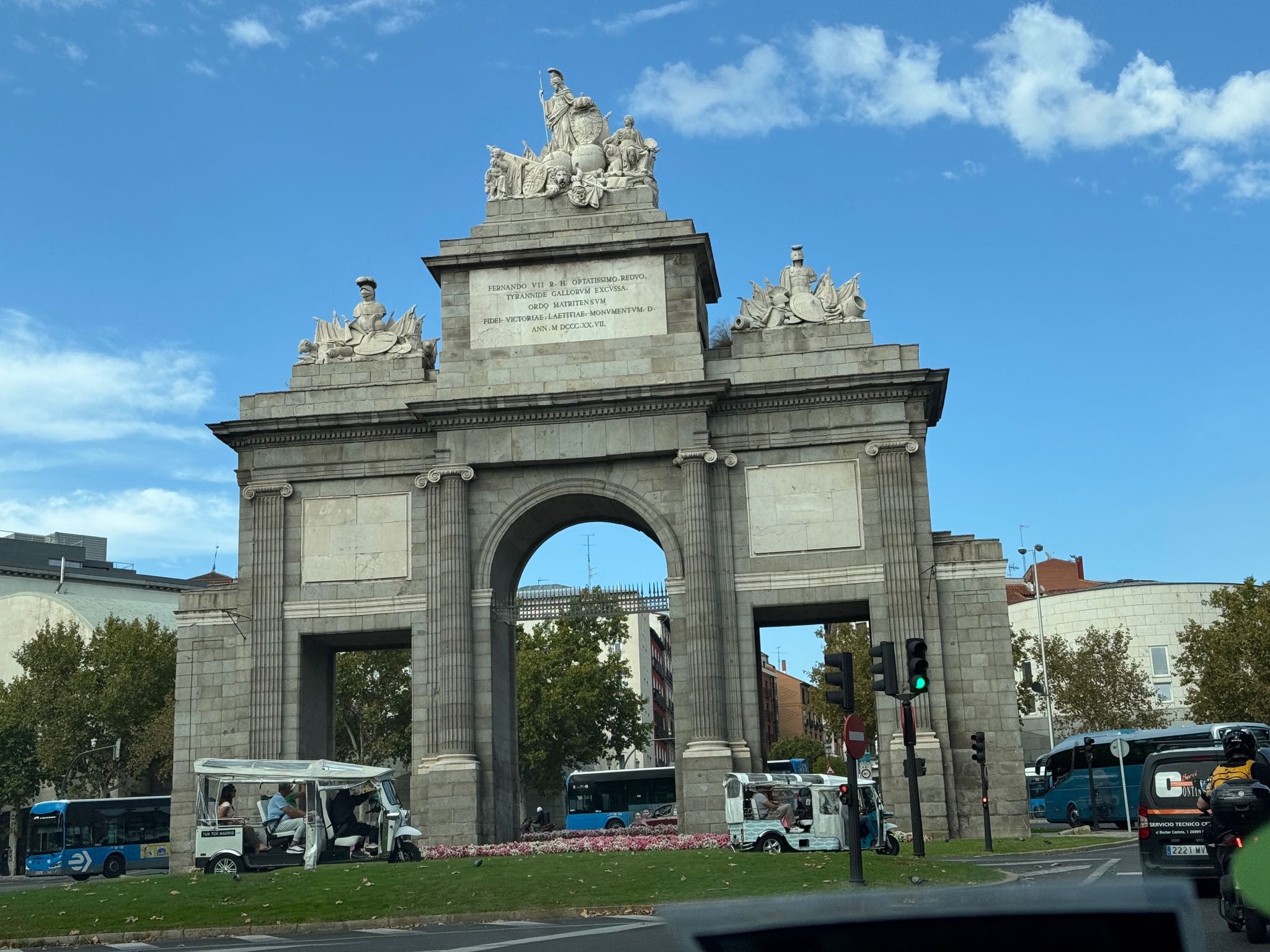
We drive past an arch in a roundabout near a university. From 1827 it celebrates the defeat of Napoleon and the return of a Spanish King to the throne – the end of Tyranny. (“TYRANNIDE GALLORUM EXCESSA”).

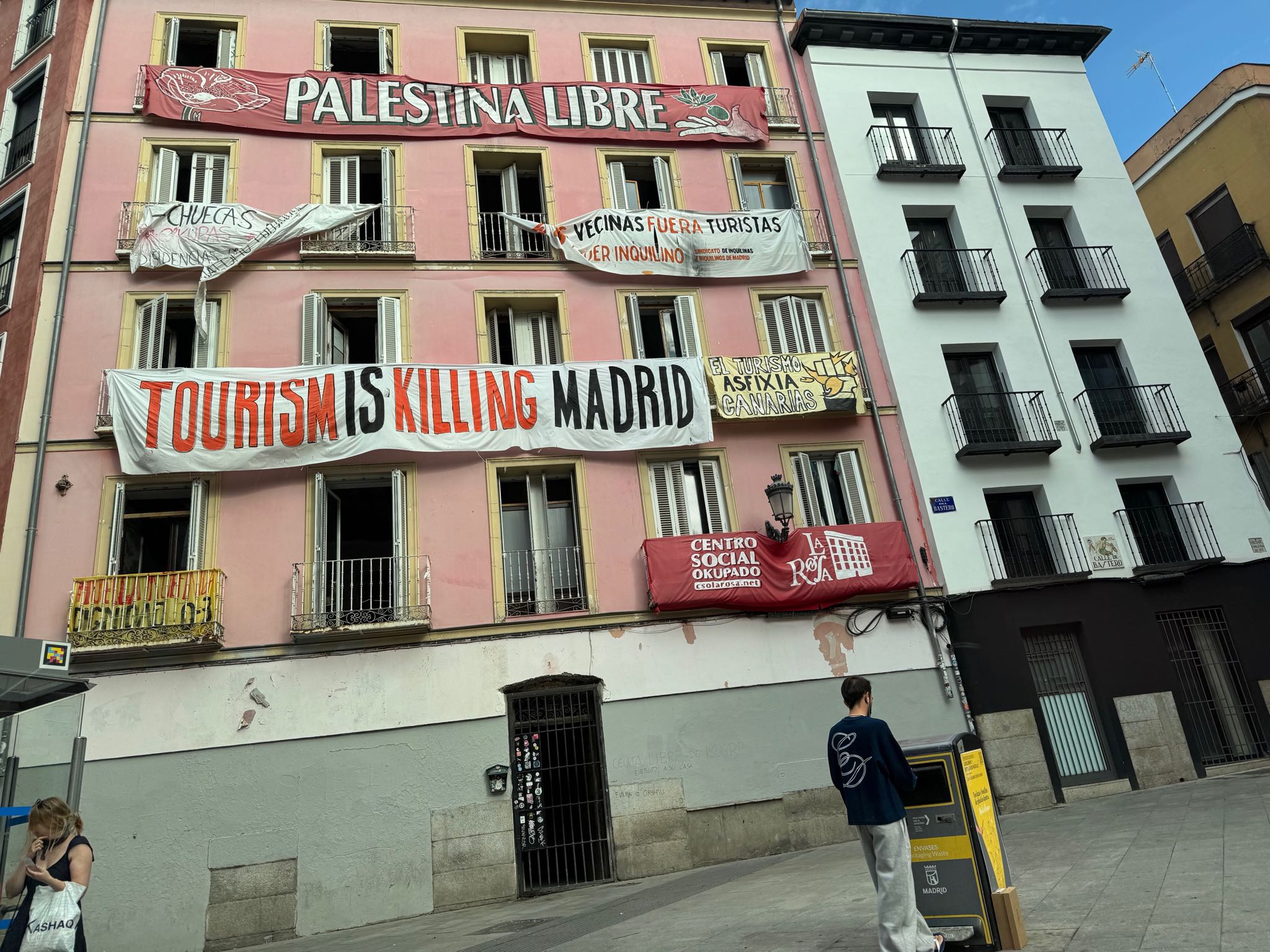
In Lisbon, the posters hanging from balconies talked of the hope of tourism creating opportunities. In Madrid the balcony posters said “Tourism is killing Madrid.”

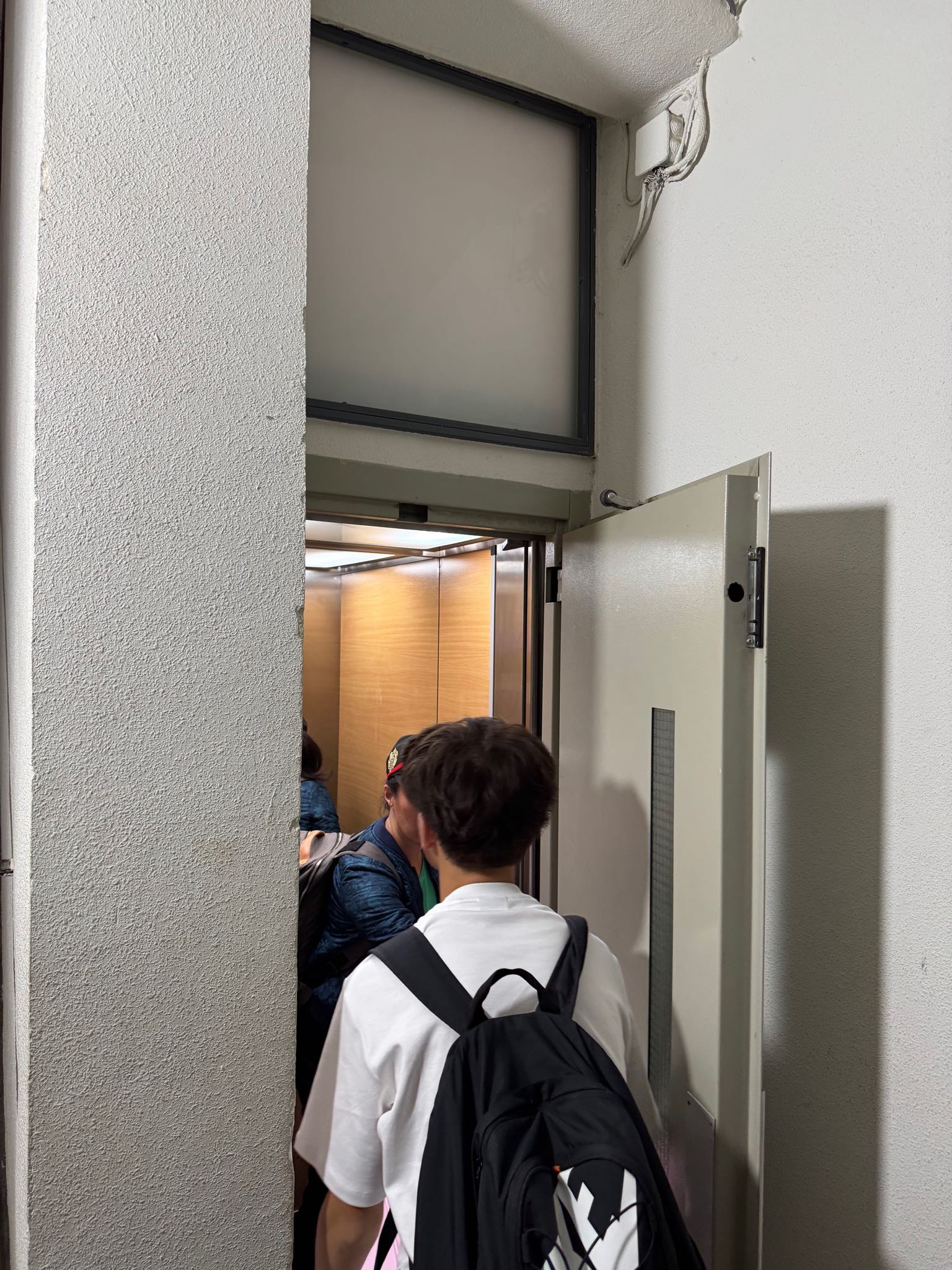
Our apartment lobby has fridge style lifts, which we leave the suitcases and take the stairs.

The front door opens with a phone, a promising sign.

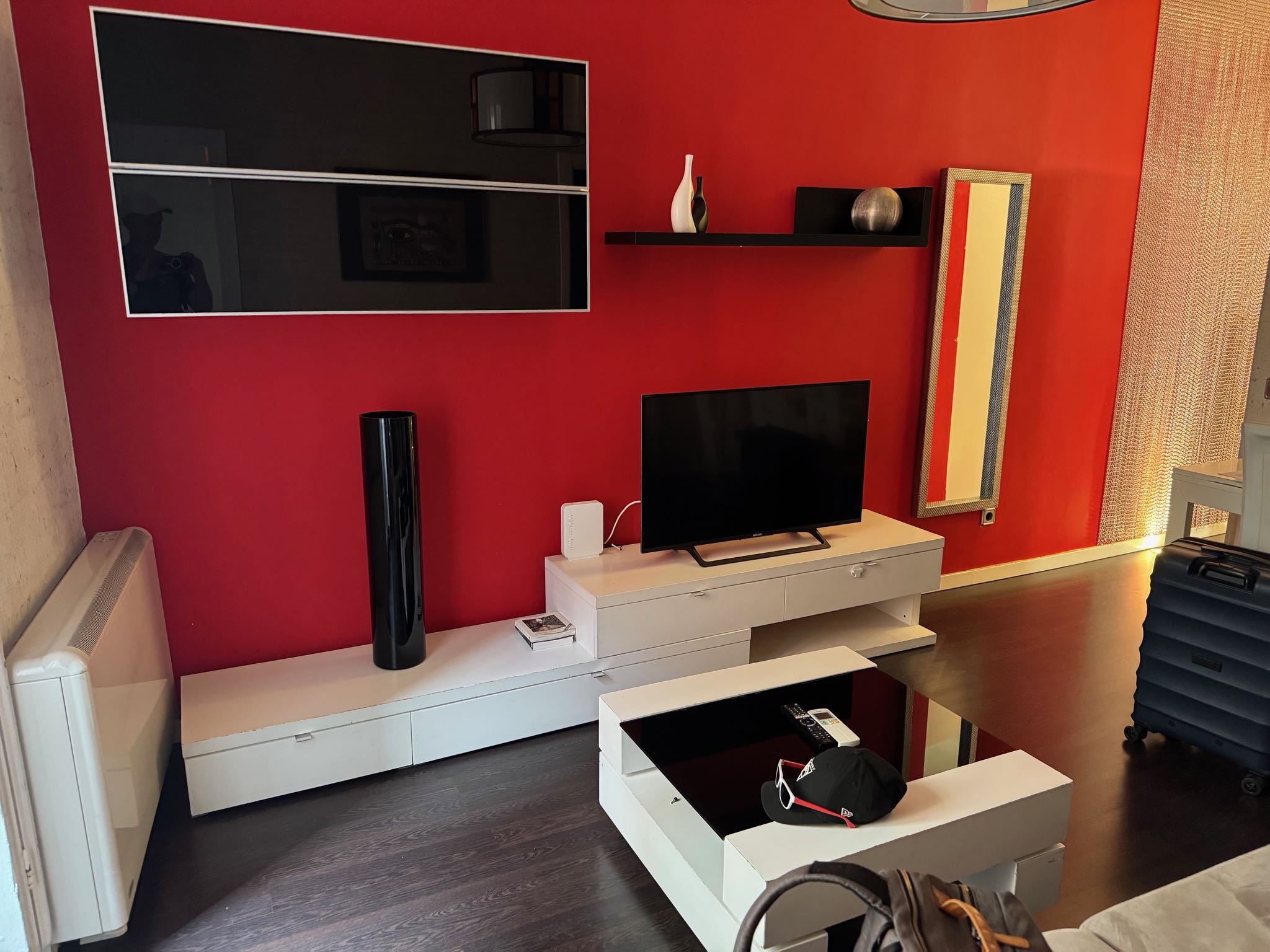
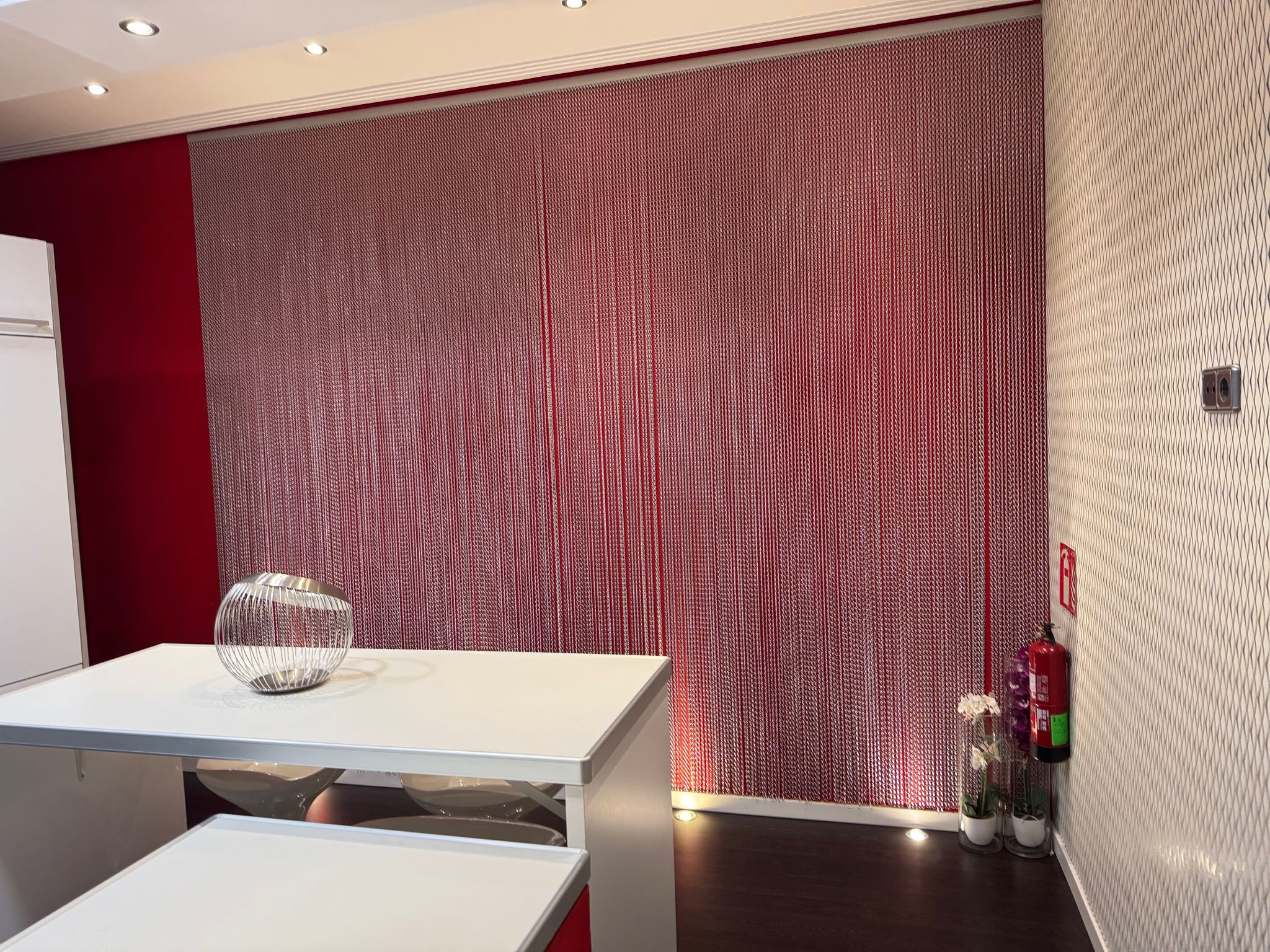
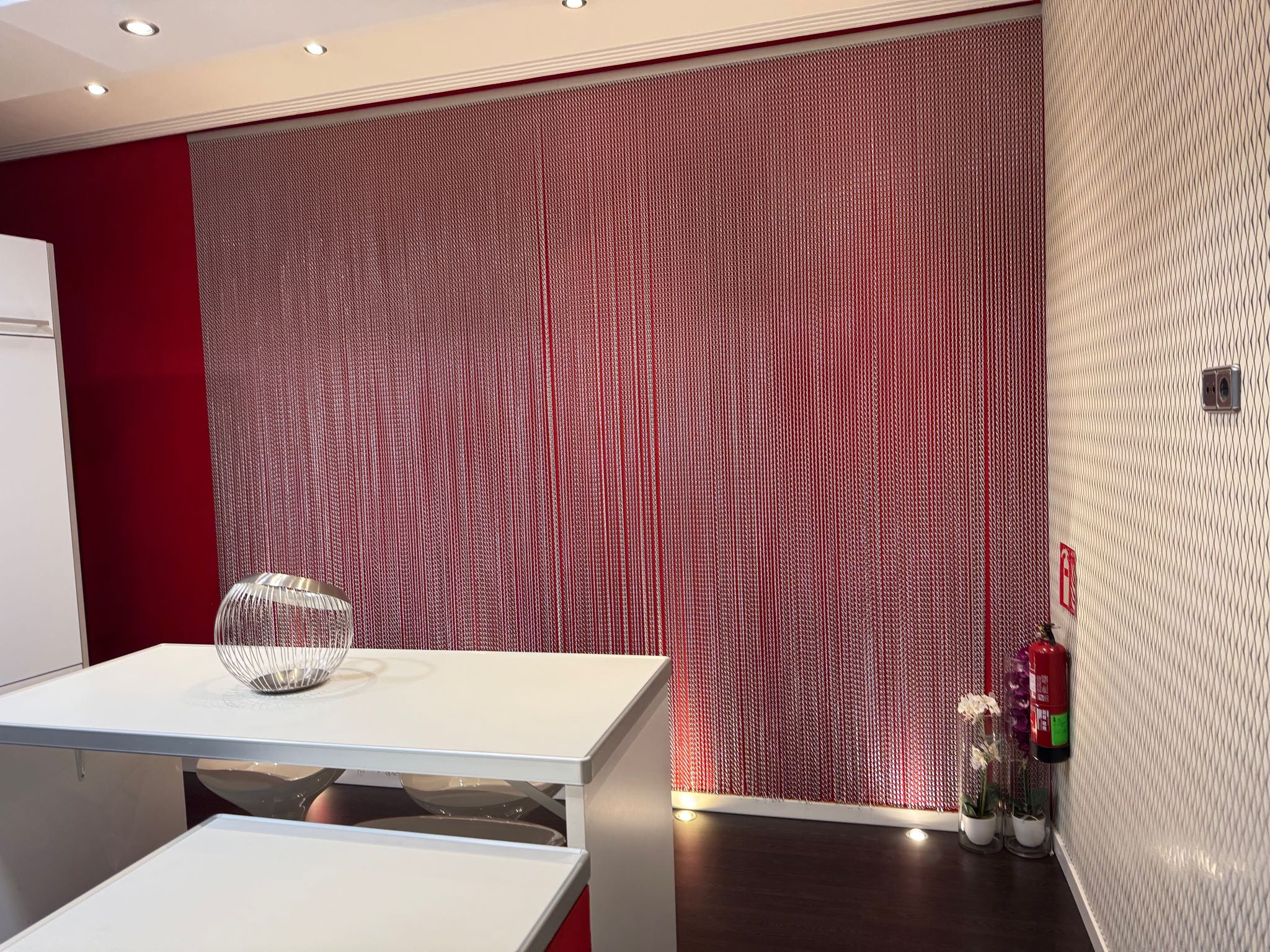
We open into a kitchen decked out like a Gucci store, a red feature wall with silver chain drape covering it. 

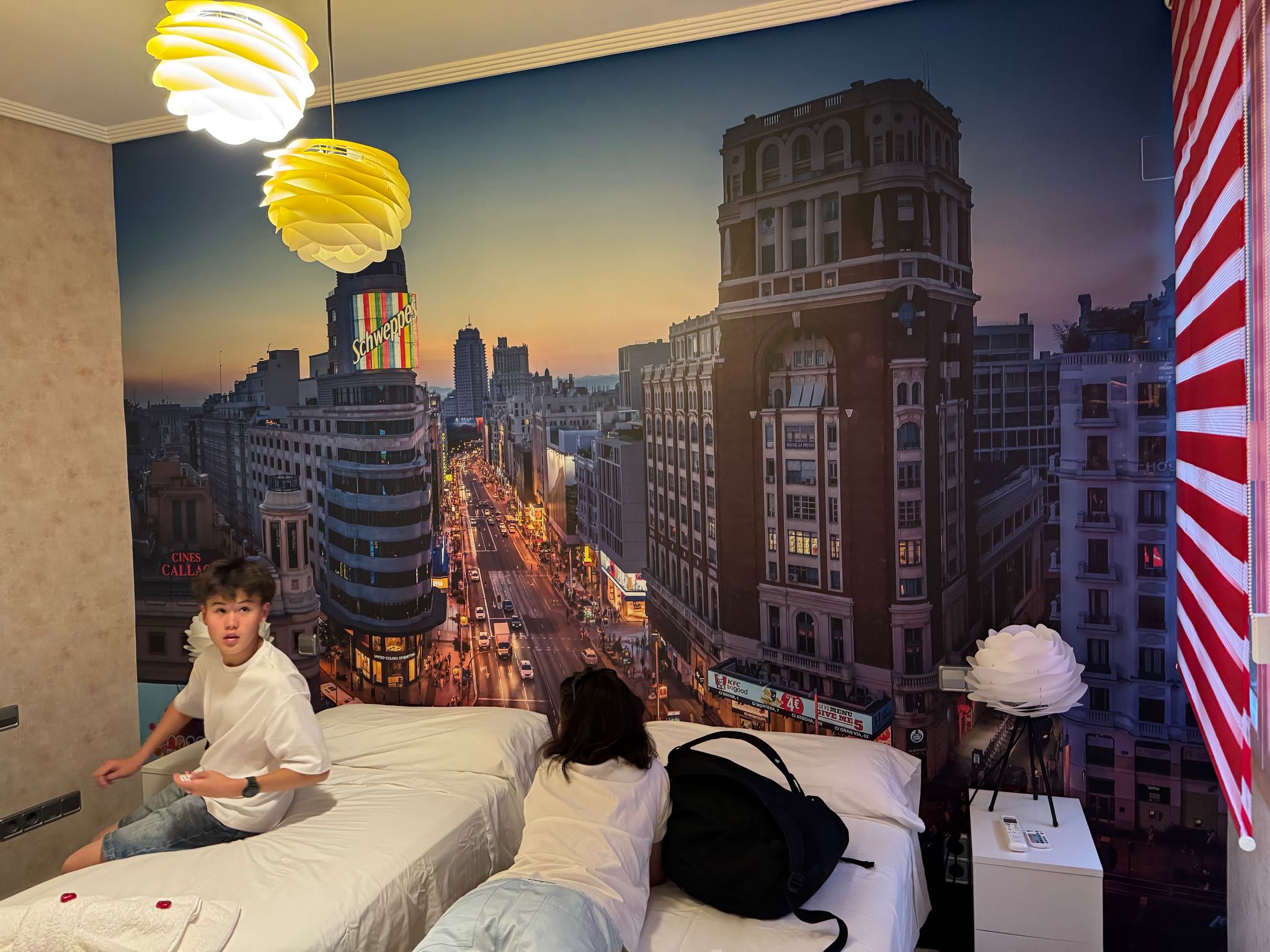
The kids room has a city fresco on one wall.

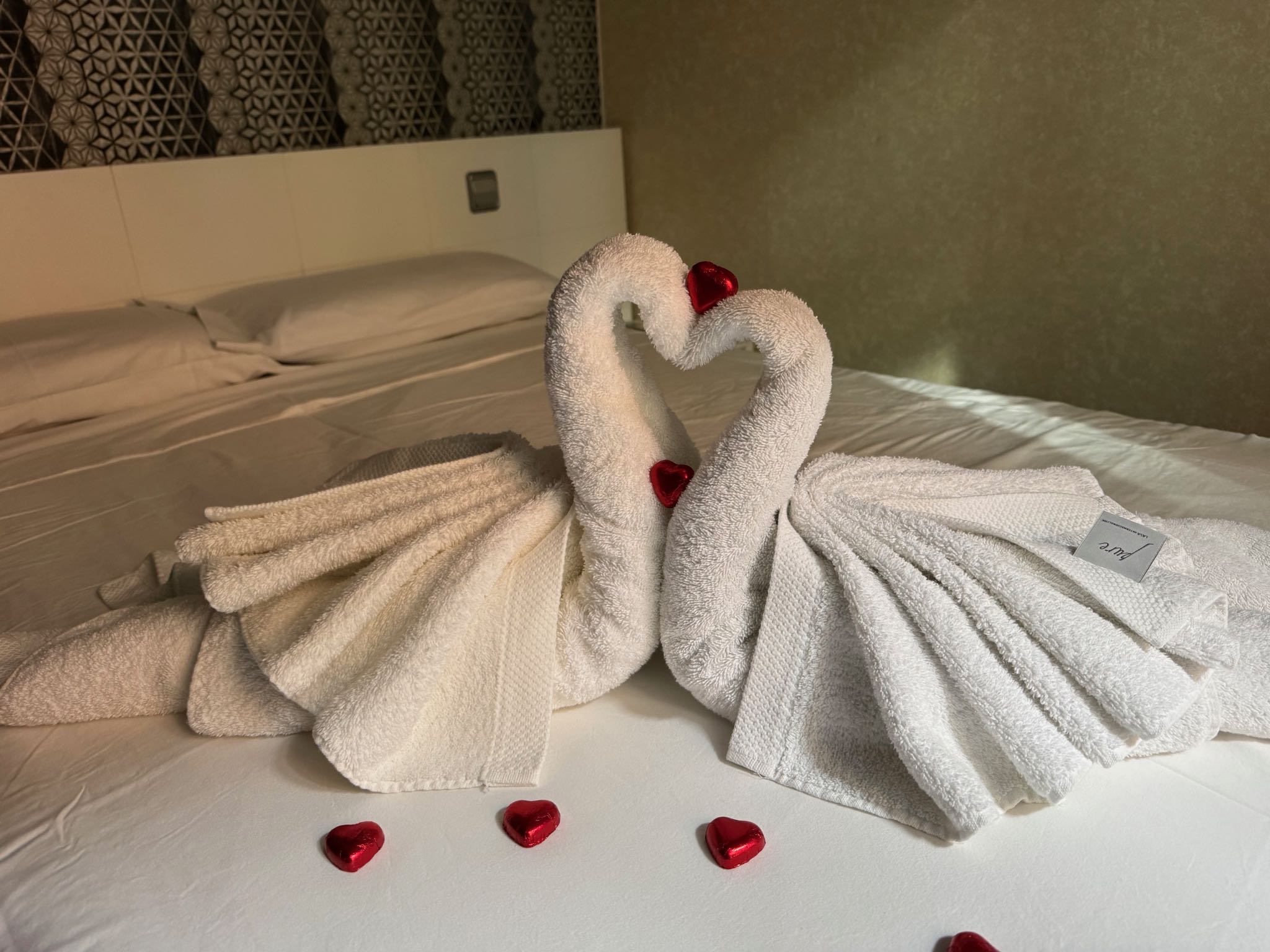
Our room has two towels shaped like swans kissing sprinkled with red chocolates.

Hugh discovers the wifi is doing serious business.  

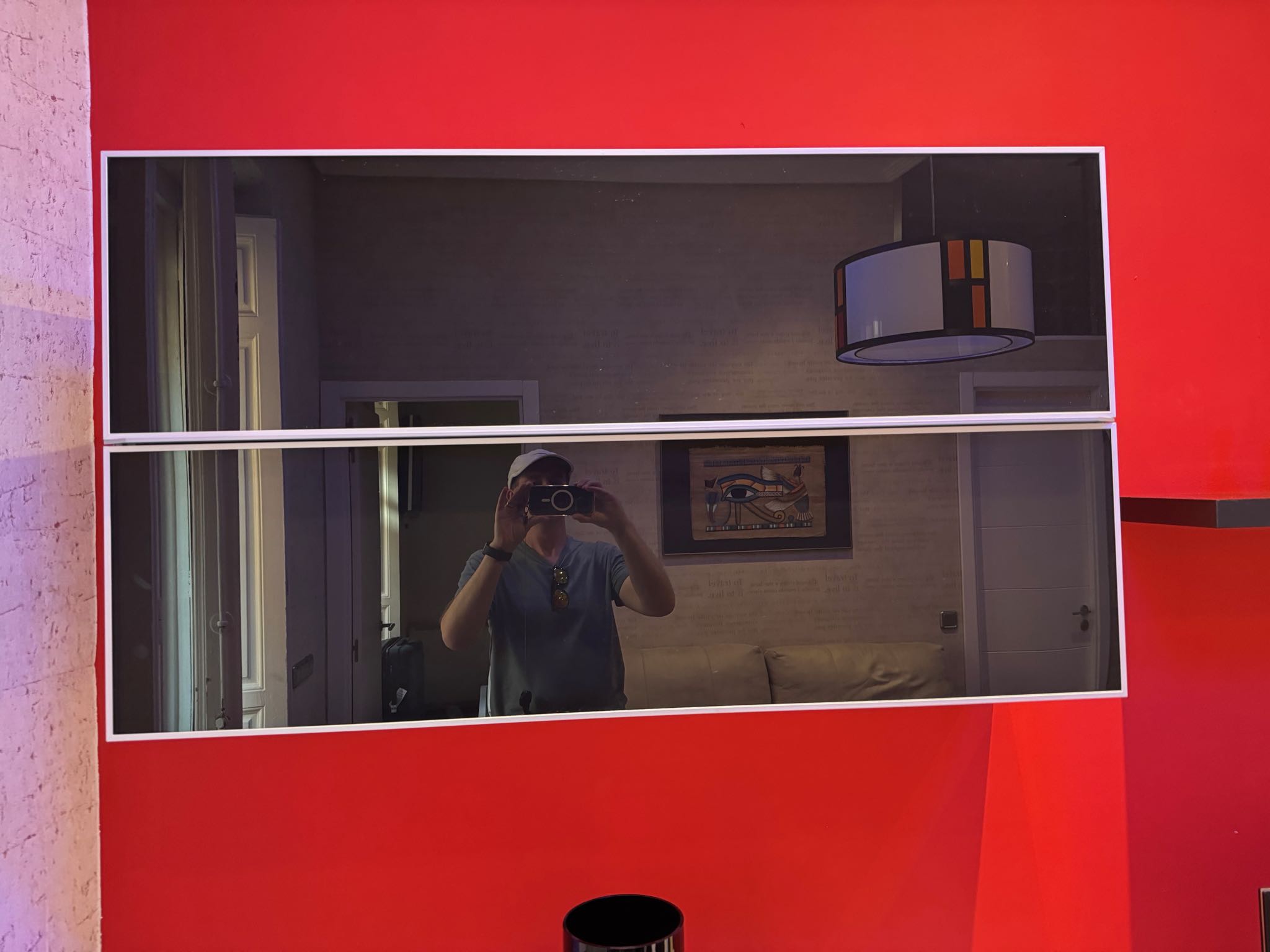
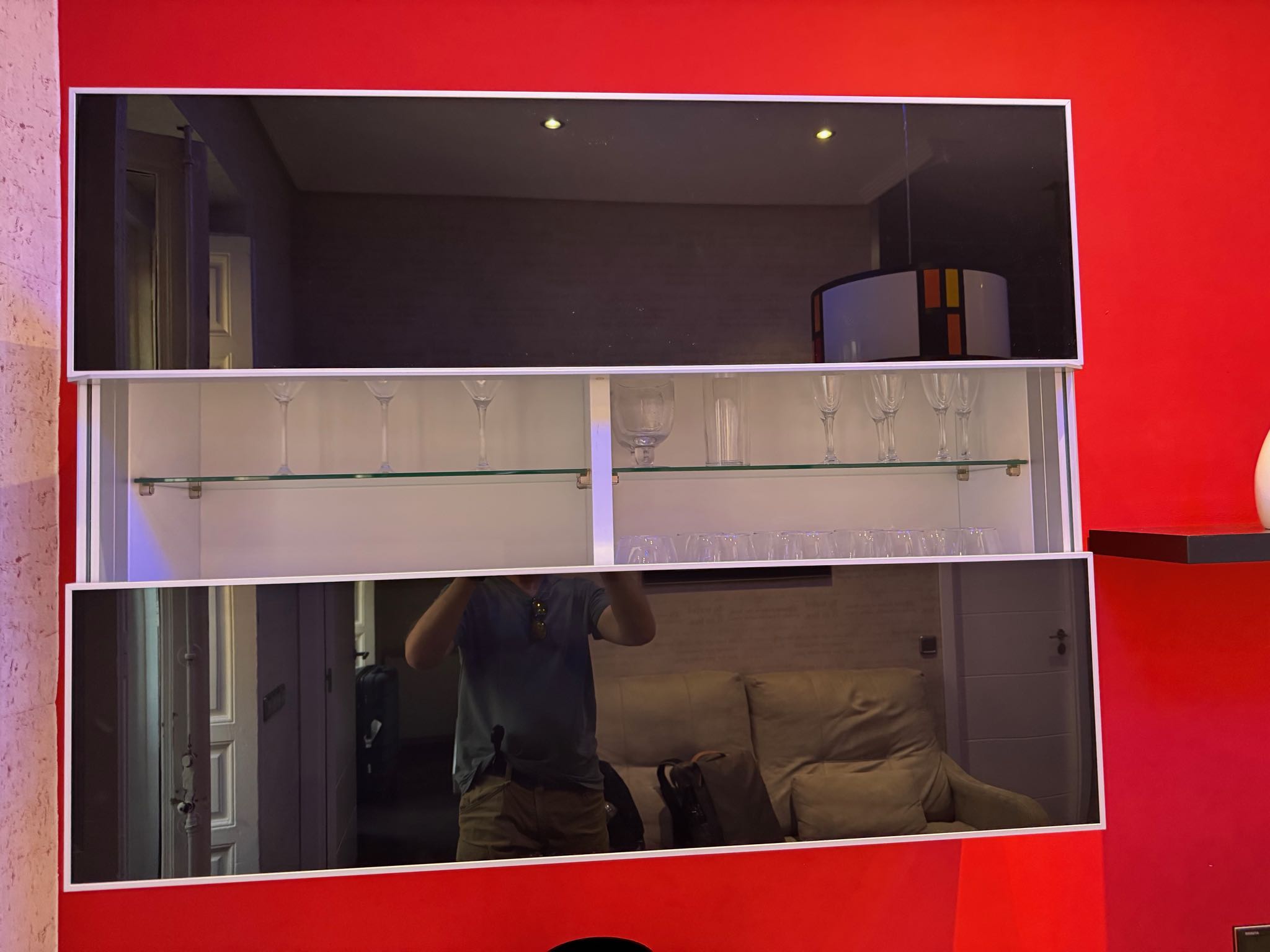
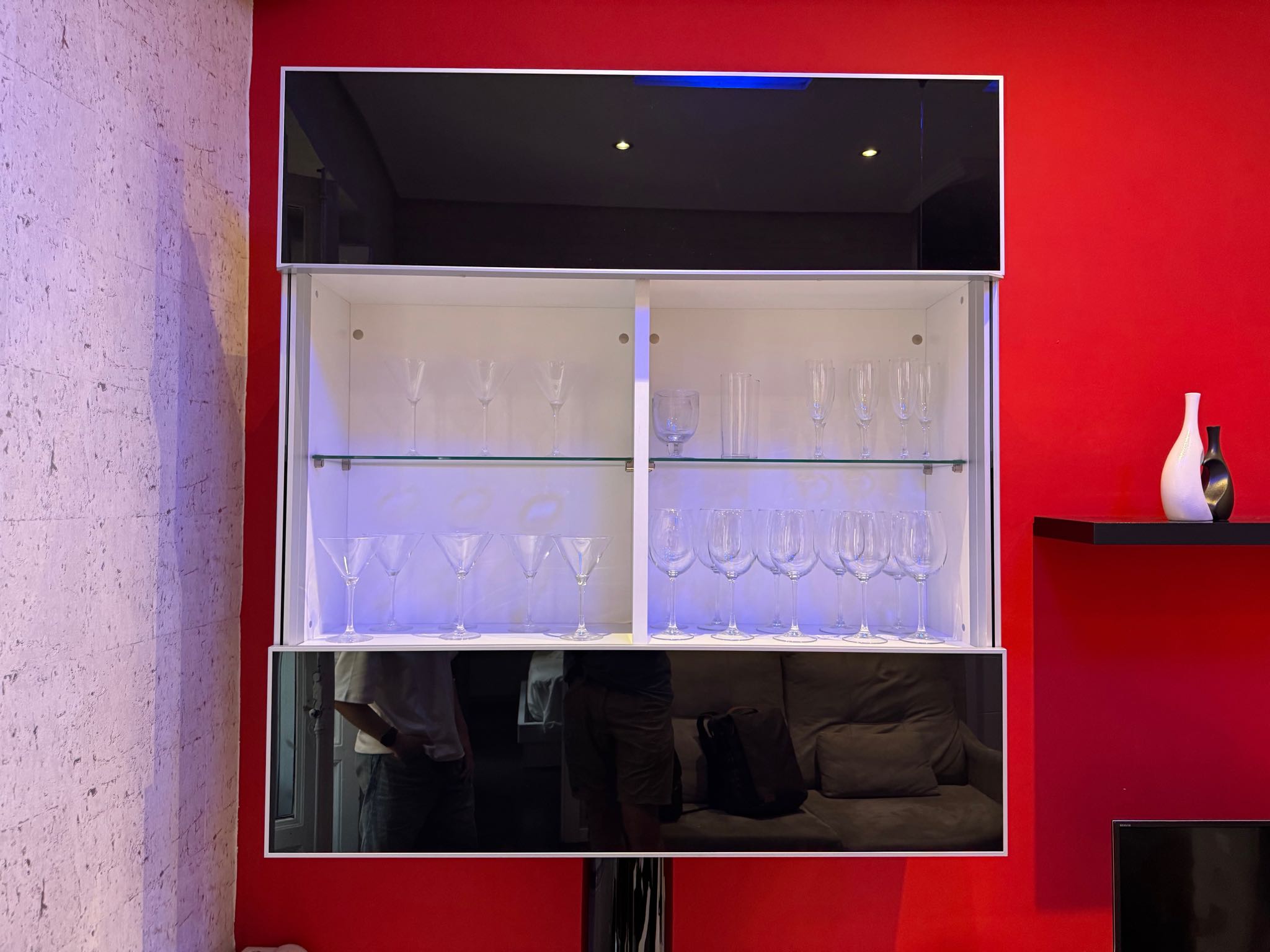
A cupboard on the wall opens synchronously upward and down maintaining the asthetic effect.


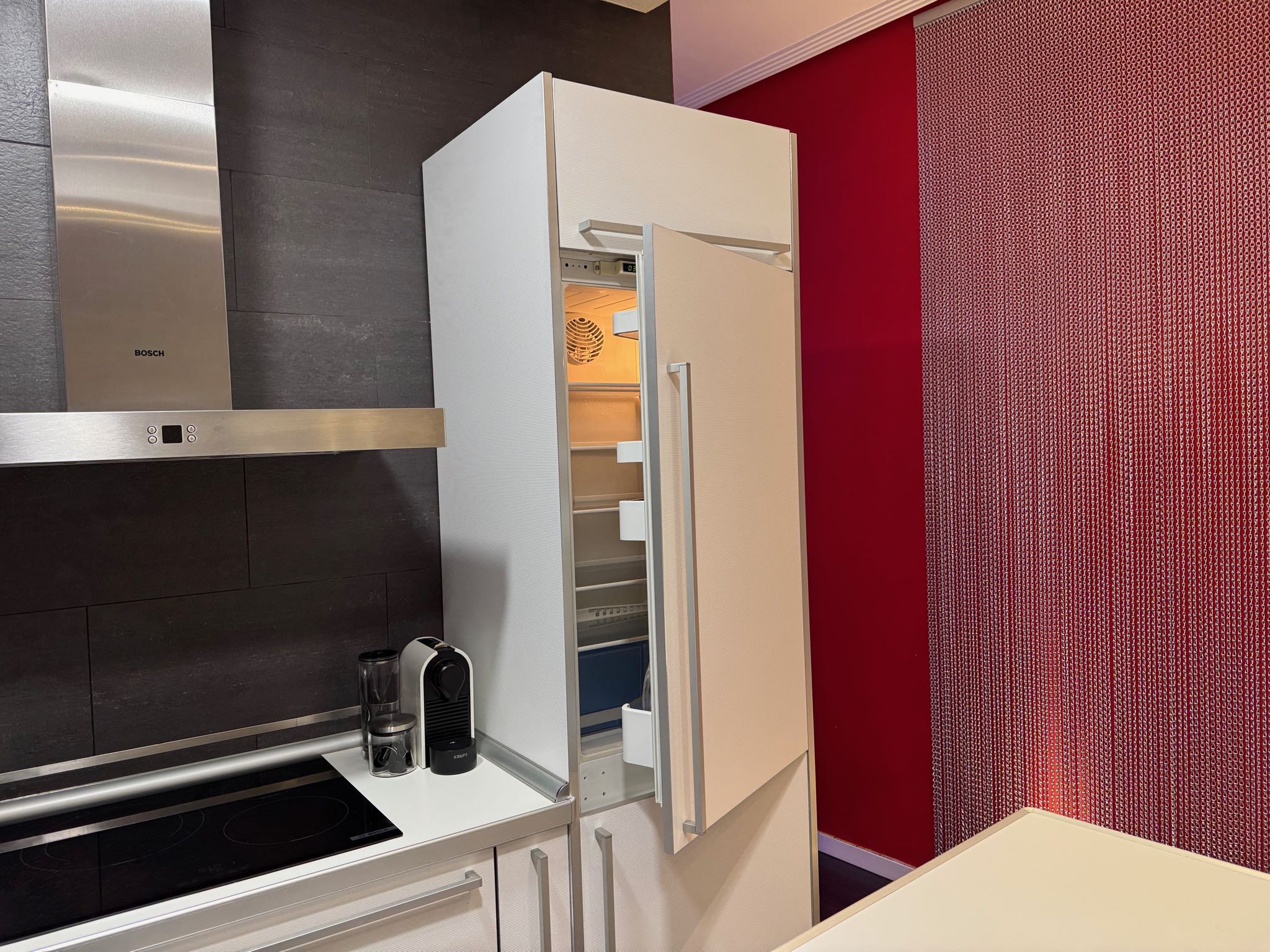
In the kitchen, a fridge integrated into the overall look says interior designer and not DIY.

October 5 – Leaving Lisbon

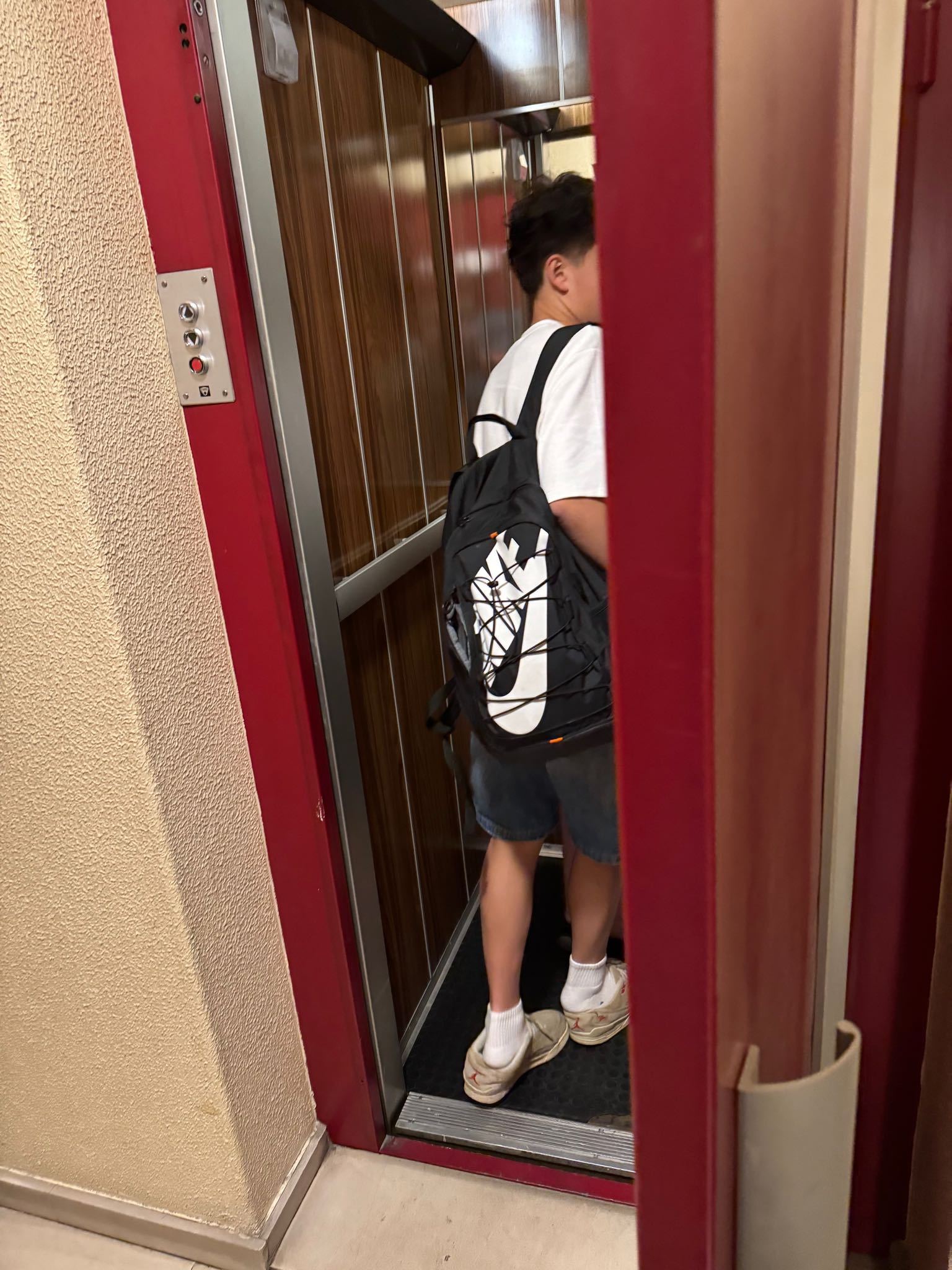
The lift in our apartment building allow you to experience what it is like to climb into a fridge. Simultaneous trepidation and relaxed calmness. 

When it come to lift floor numbering, Portugal has made the correct choice: ground floor in the zero and not 1. 

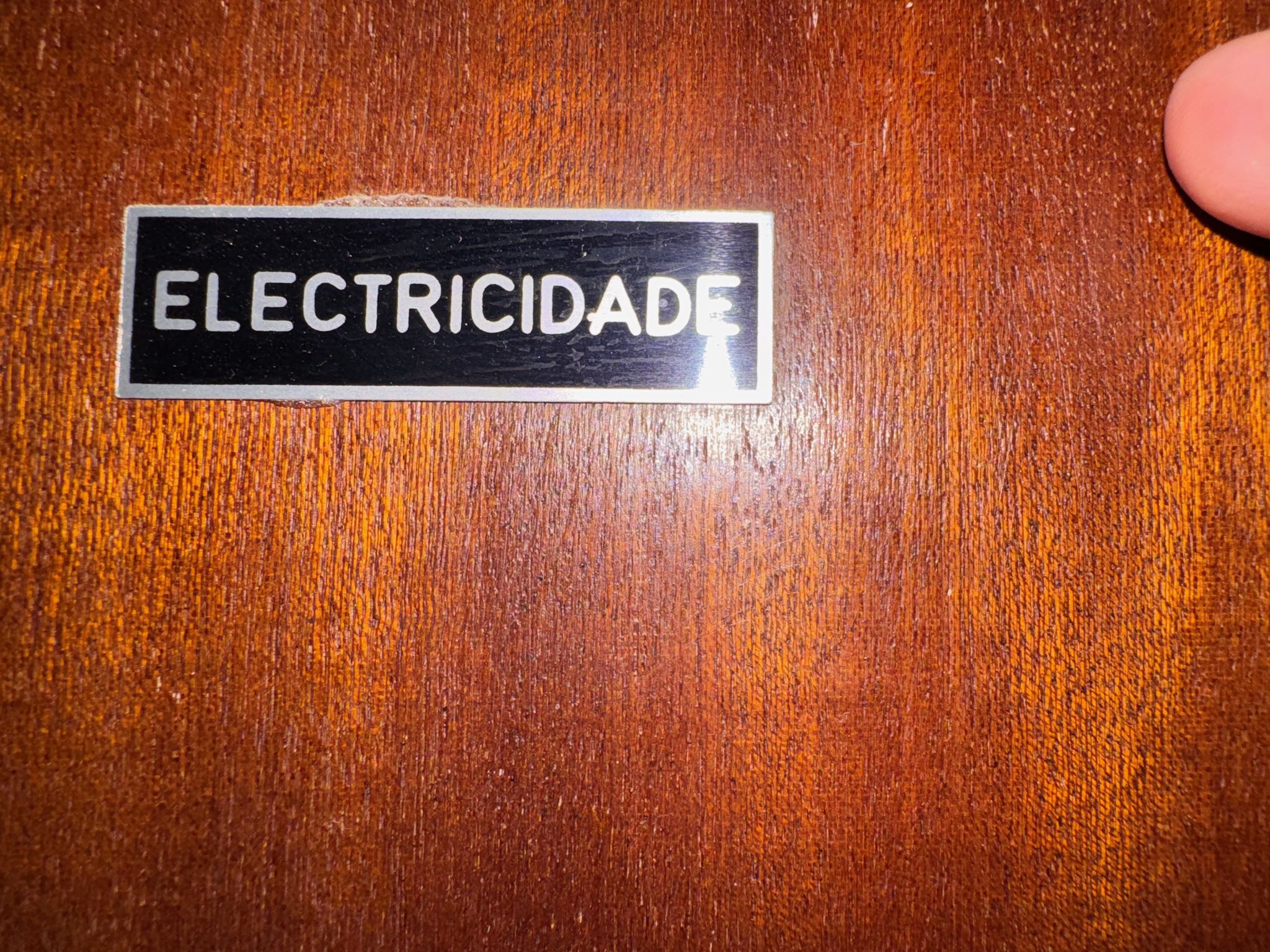
I see another utility sign in the apartment and attempt a translation: 

“Oh your lights aren’t working? We’ll go outside and have a lemonade.”

Lisbon is famous for the 1974 Carnation Revolution – a peaceful coup that overthrew five decades of authoritarian rule. The military officers marched into the main square of Lisbon with carnations in their guns. (It didn’t end their love of strongman politics).

At the airport, the queue for the Air Madrid bag check-in is long, and the attendant is unhurried. My reading is that there is a labour-union guild-style power struggle going on between young and old over tenure, that leads to the young all turning up late in protest.

Overall the experience in Lisbon airport was roughly 2 hours standing in various queues of varying shambolic states – like a window to the 1970s before customer-centric service was a thing.

I have mixed feelings about leaving Lisbon. On one hand it is a charming, beautiful, safe and cheap place for a holiday – with a deep connection to a wonderful past. On the other hand it has the Southern European curse of dolce far niente – “the sweetness of doing nothing.” Lisbon has looked inward for the last 150 years. Perhaps if you’re the European equivalent of Brisbane or Adeliade, it doesn’t matter that much. It does if you export strongman politics to South America.

Sunday 4 October – Church and walking around Lisbon

At 9.55 church bells can be heard across the city, inviting people to come to church. 

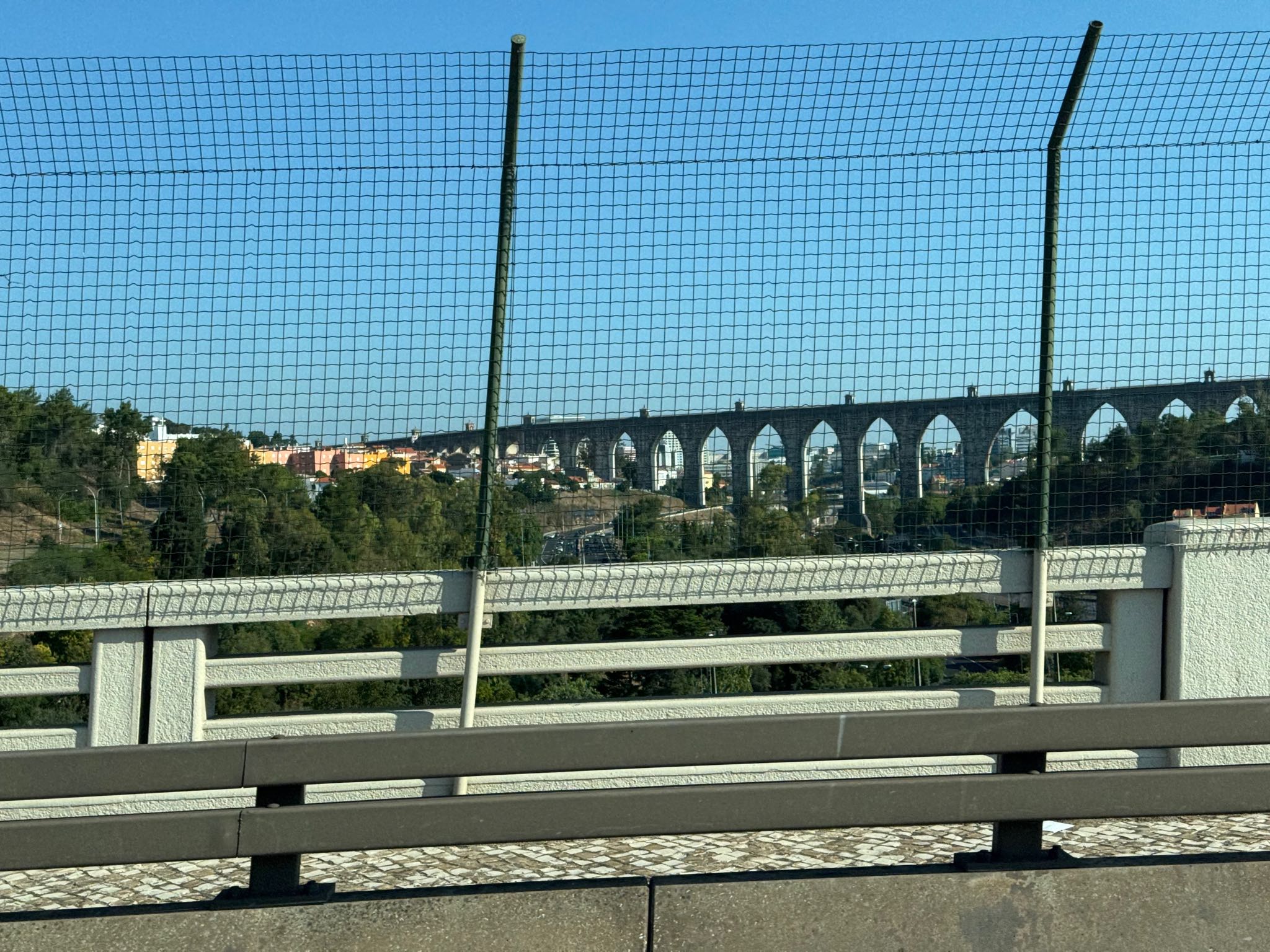
On the morning drive we see a restored Roman aqueduct.

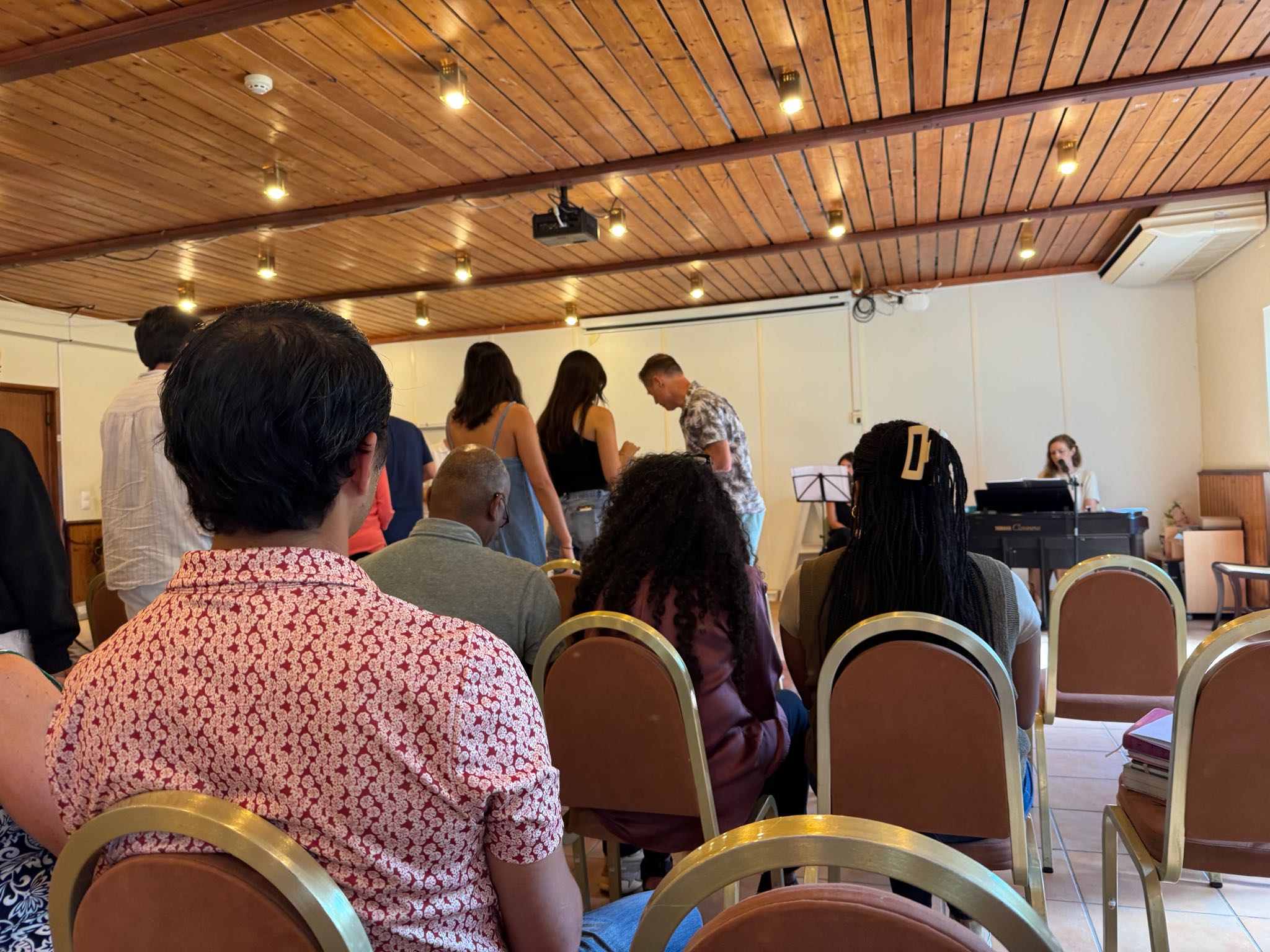
We spent the morning at 11am church with the Georges. The PCA are worth a second look.

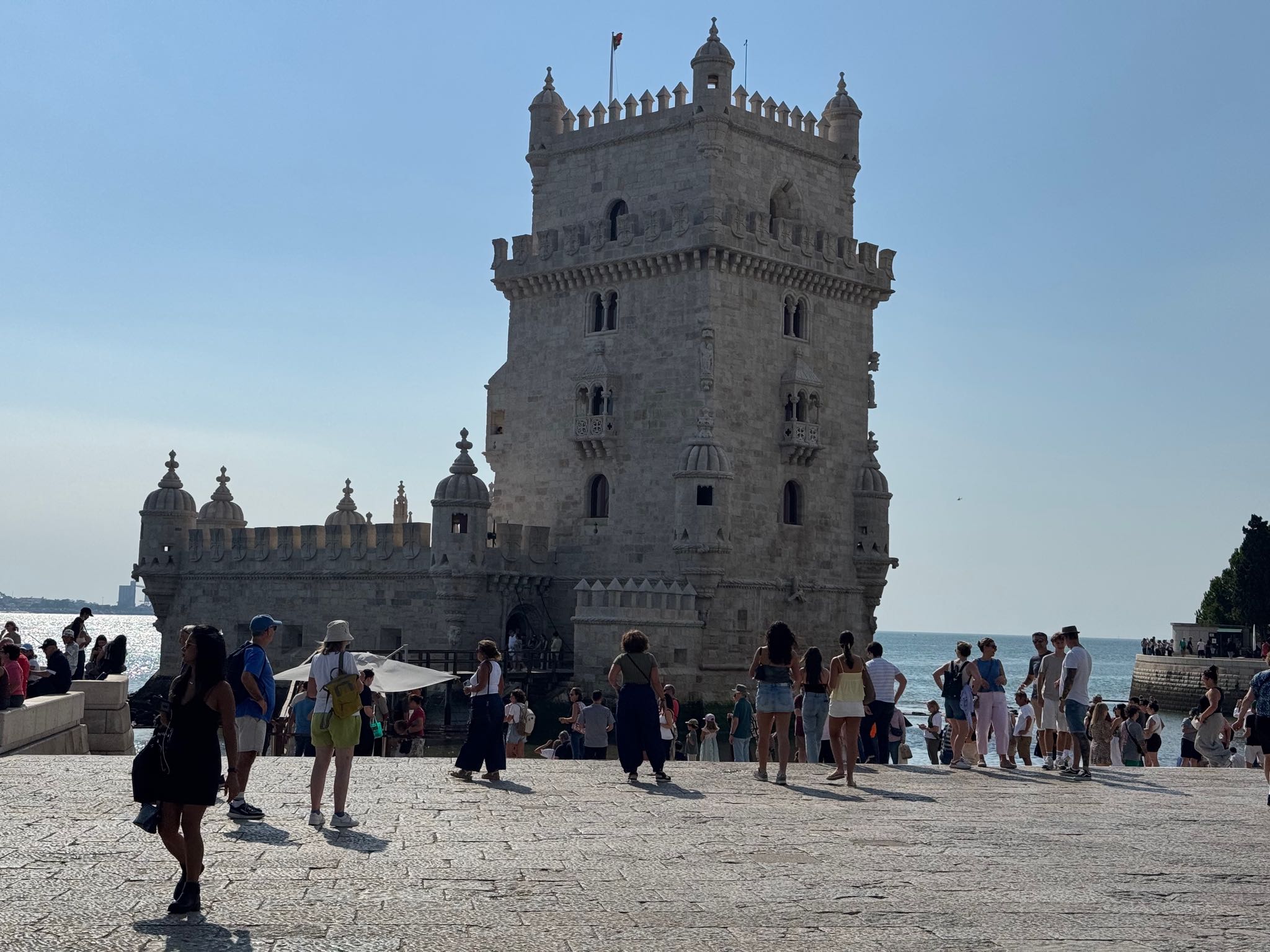
After church we travelled to Belem. (Pronounced in Portuguese with a kind of Aussie nasal slang – “Belang”).
Belem is significant for being the place where the significant parts of Lisbon history are situated. We arrived at a cafe half empty at 2.15 and it filled up at 2.30. Perhaps this is the Portuguese way.

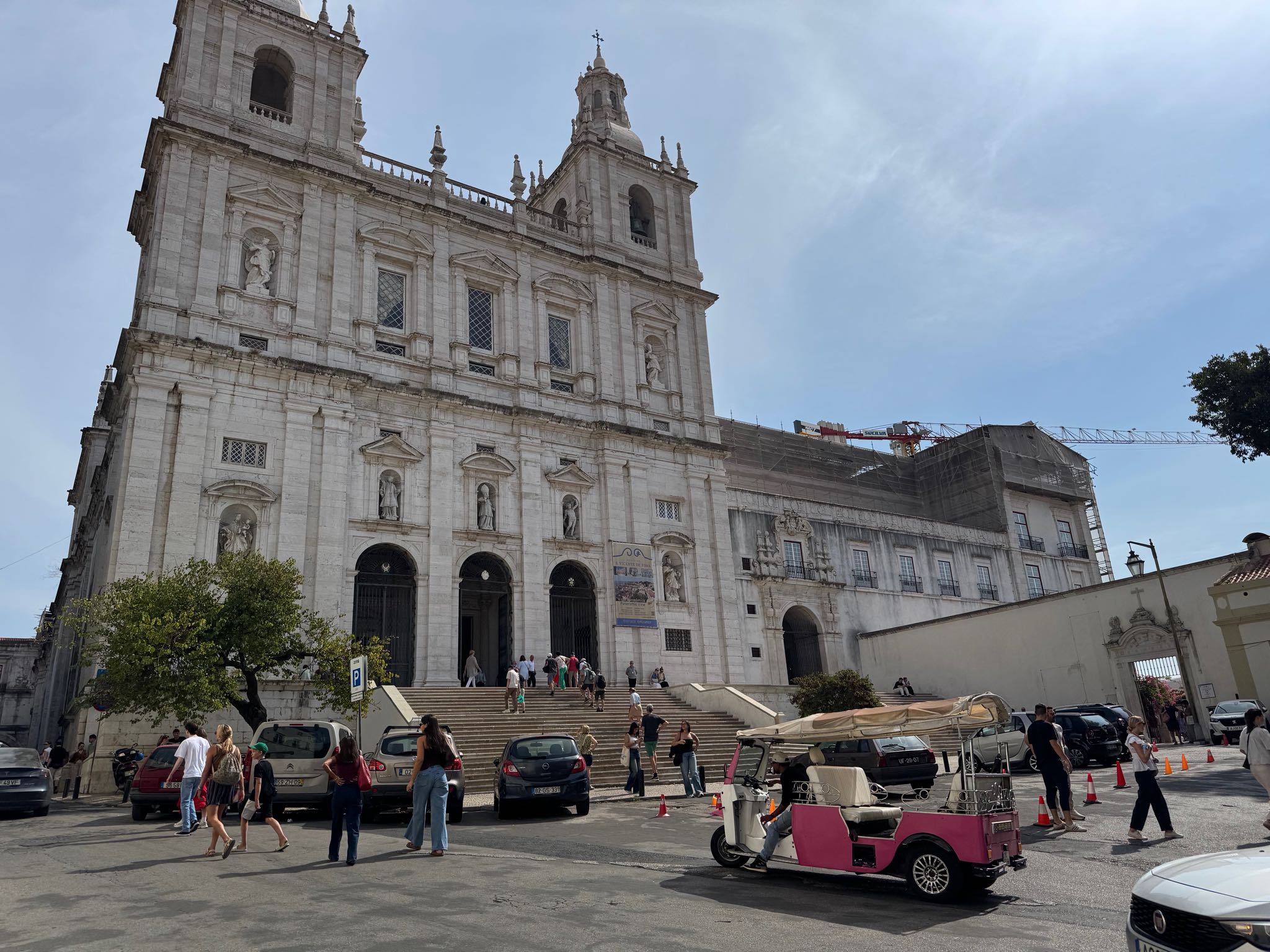
First stop – Dom Successo’s castle. Whilst this was in active use as a Fort during one war – since then it has become a symbol of highly-paid government official’s egos. Most recently it was the postmaster generals office. In a way it makes me disgusted. This is what Portugal has been spending money on instead of actually doing things.

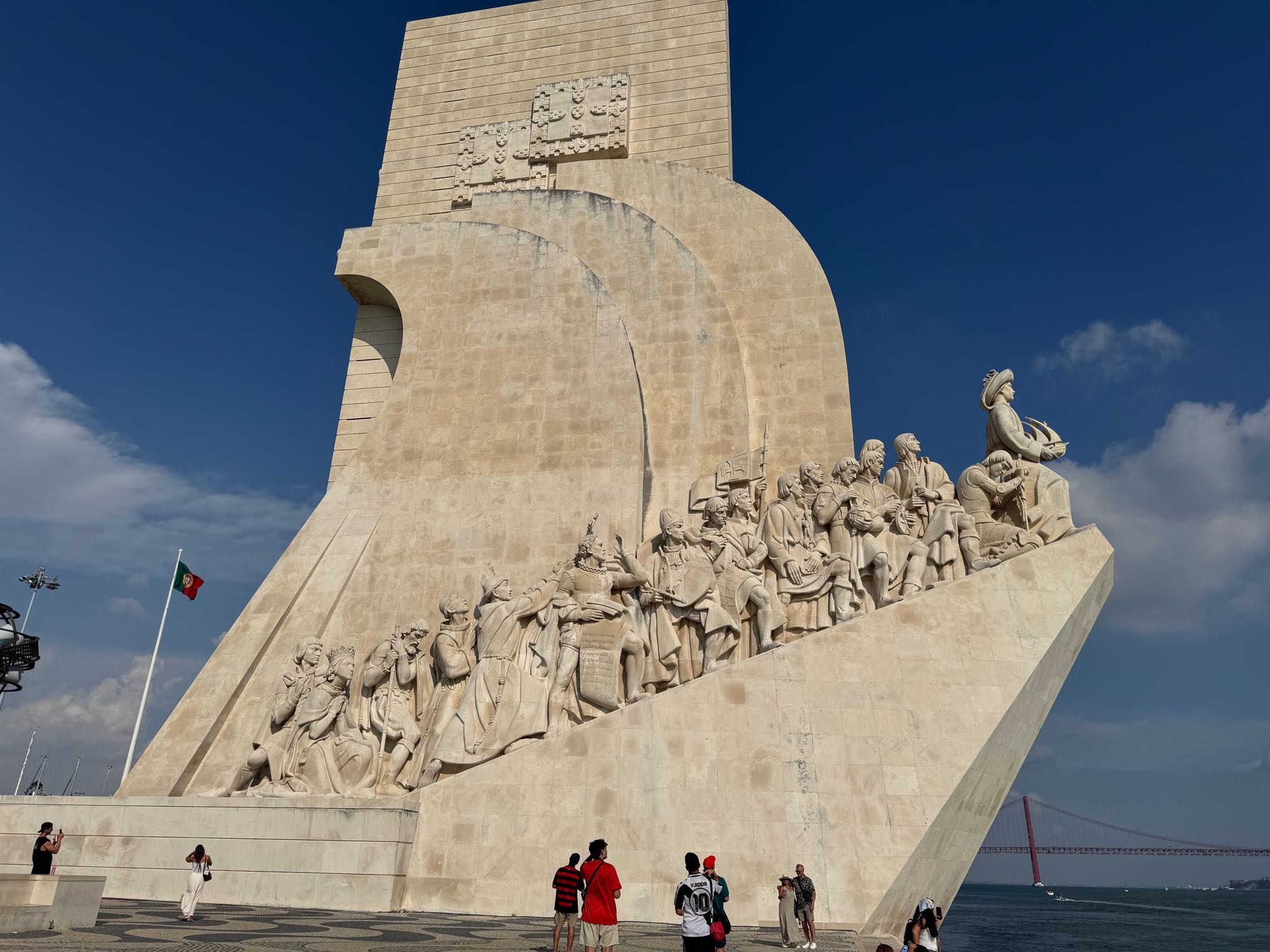
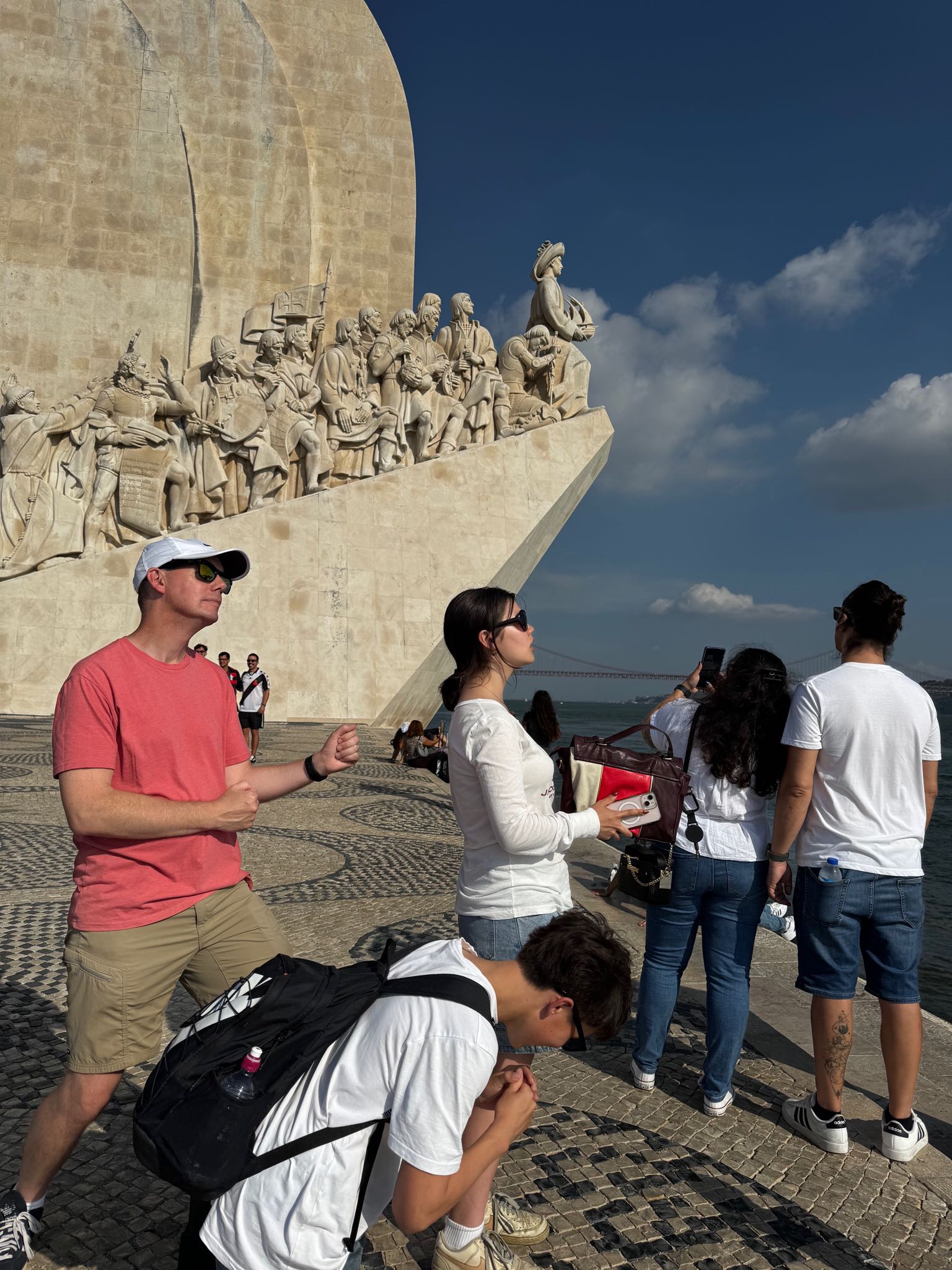
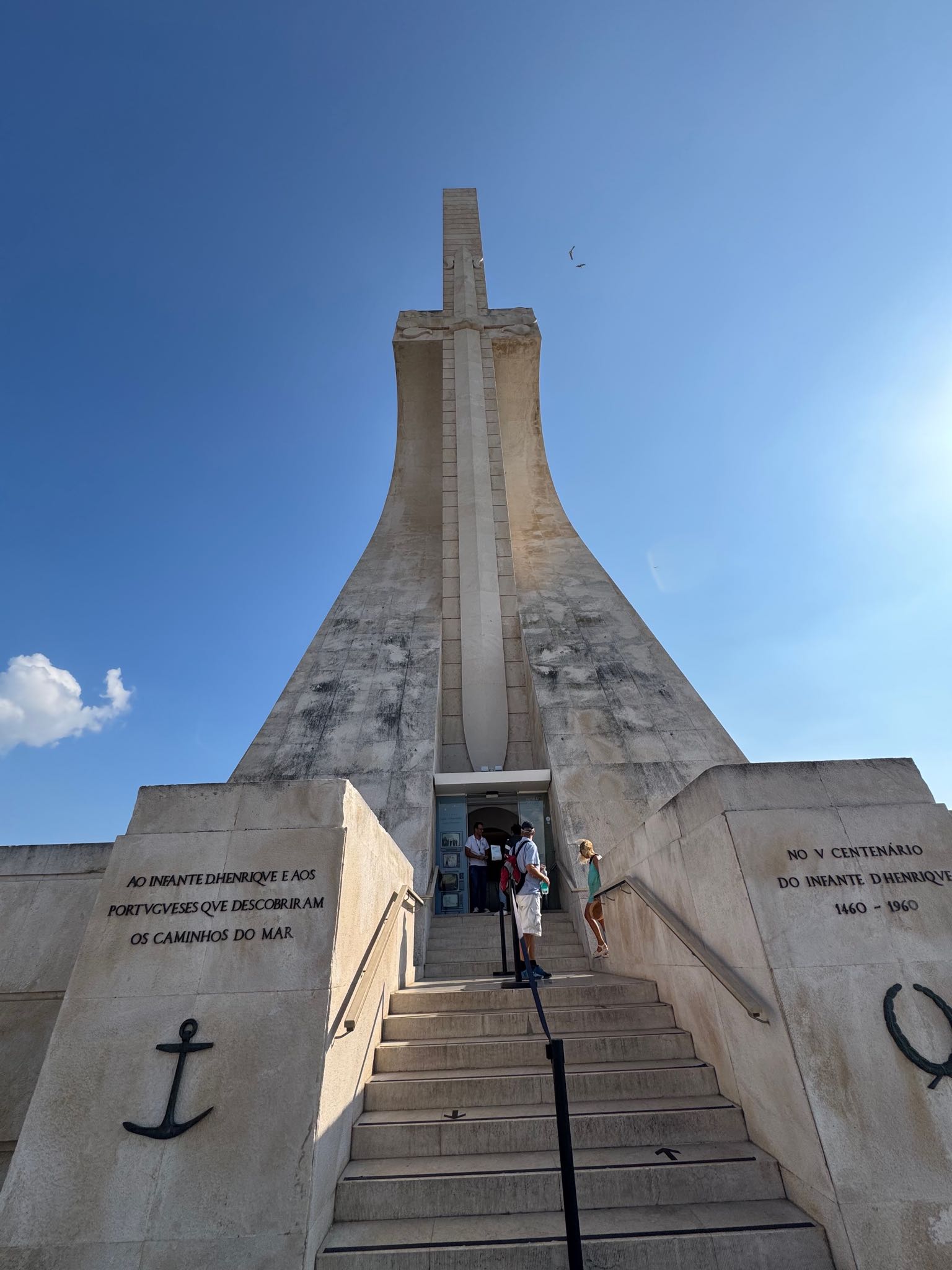
This is the Padrão dos Descobrimentos – the Monument to the Discoveries. This is where the ships left to explore the Orient and trade with India and Indonesia. The massive 54 metre structure is designed to look like a Portugese sailing ship from the 15th and 16th centuries. From here we see Prince Henry the Navigator (who instigated this theme.) There is also Dias who navigated the Cape of Good Hope, Vasco De Gama who found the trade route to India, Magellan who circumnavigated the earth, King Manuel I who funded the trips, and scientists, cartographers and warriors.

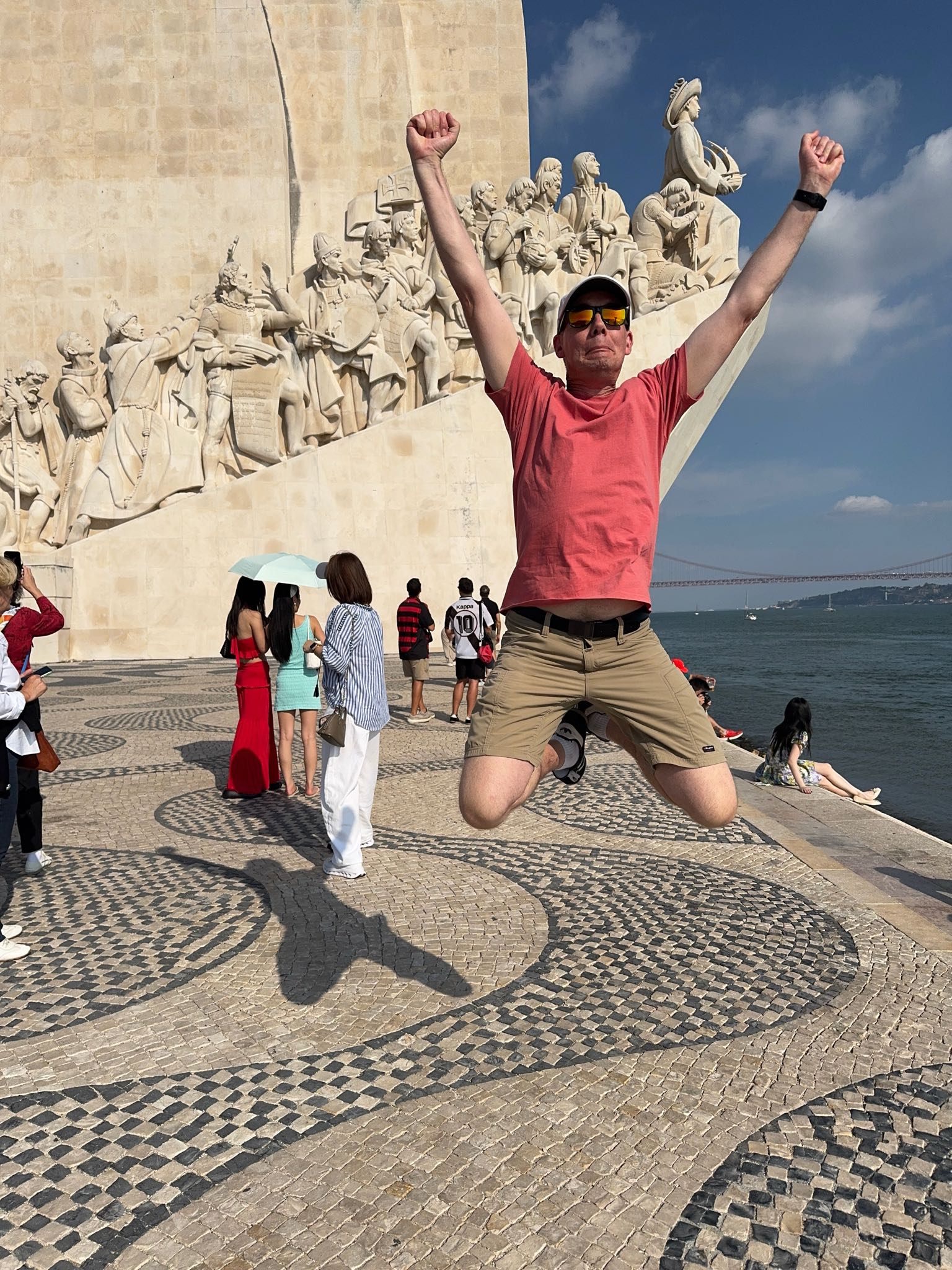
This is it! This is where all the magic happened! This is the bit where Portugal actually stood on the world stage and looked outward! I’m so excited I can shed my my middle-aged male pretention and jump for joy!

Even my family senses the drama in the moment.

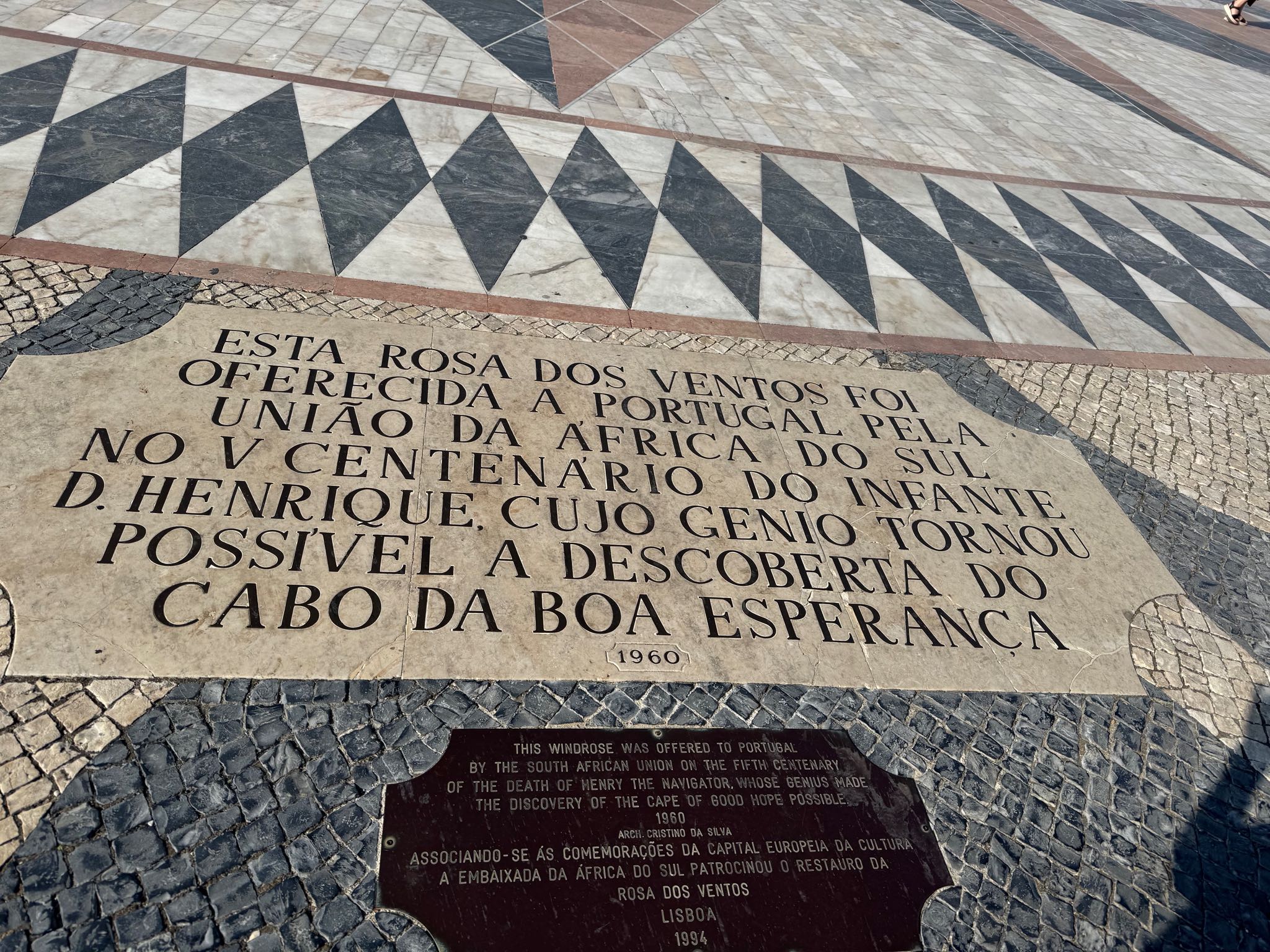
There is also a monument from South Africa in 1960, honoring Prince Henry the Navigator.

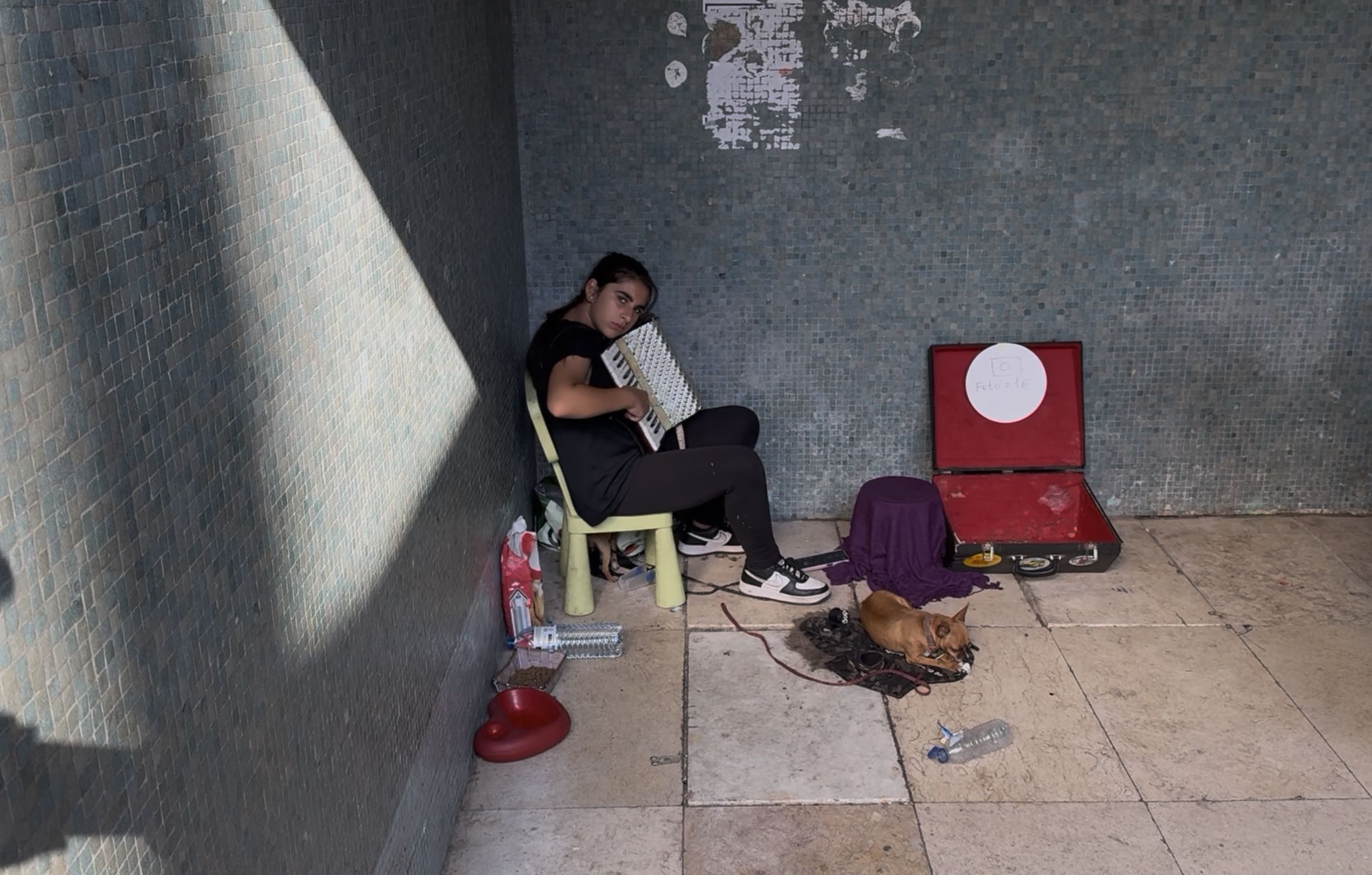
We cross the highway by walking under a tunnel. Sheltering from the heat is a girl busking, playing accordion. We are transporting us to images of Paris or Belgium, but reminded of pan-European identity.

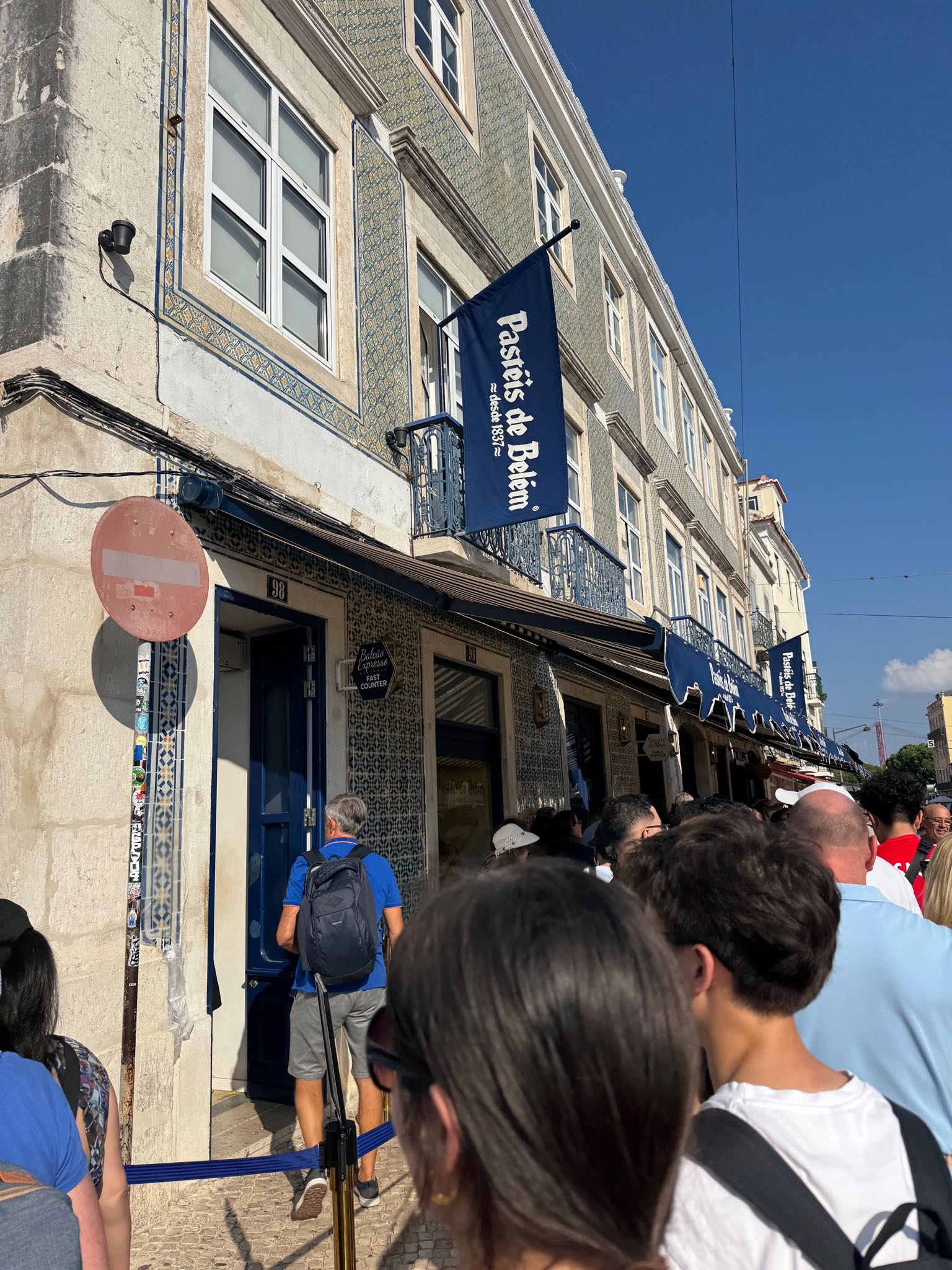
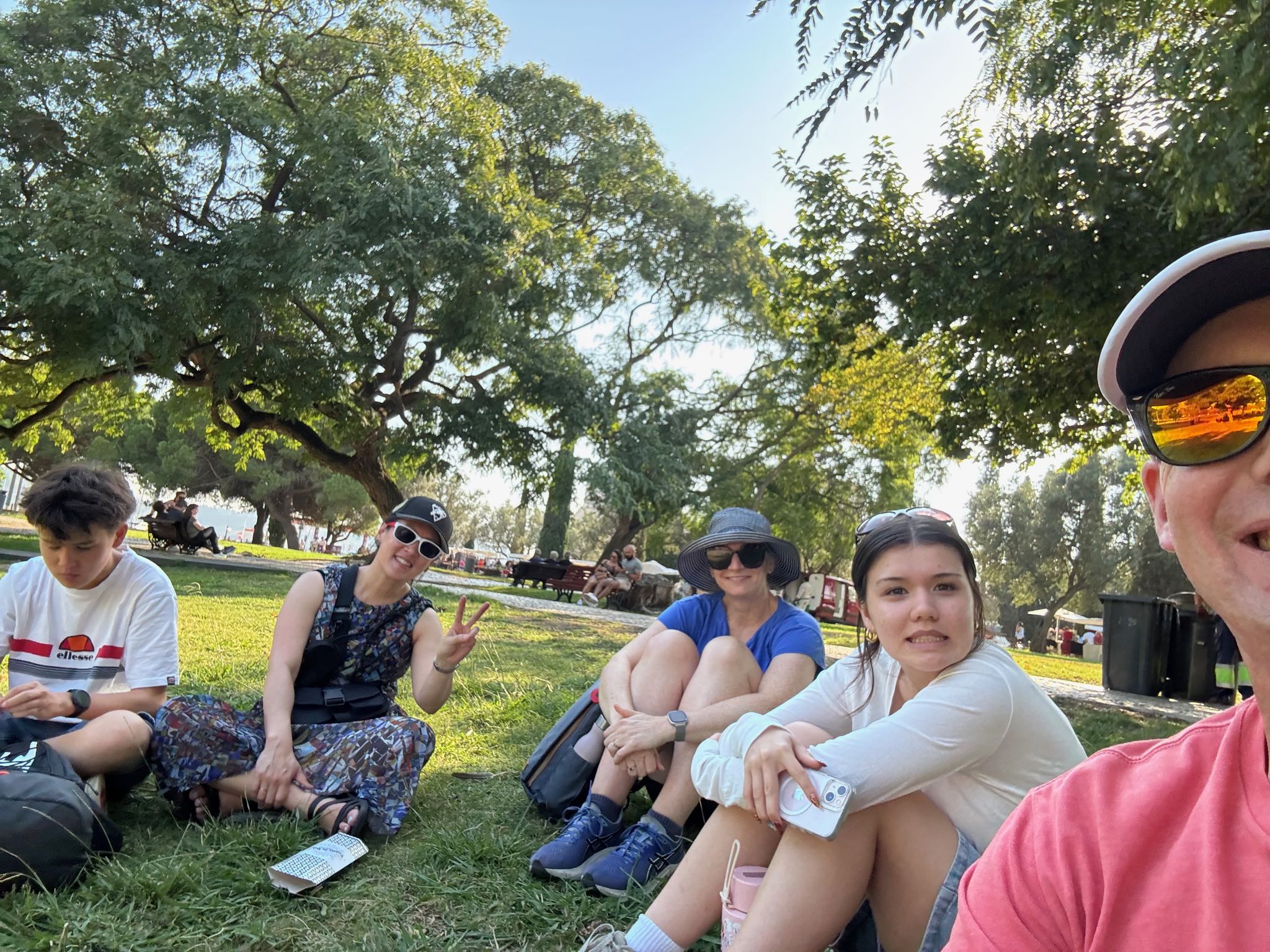
On the theme of global Portuguese influence – we go to the place where custard tarts apparently originate. (In Sydney we mostly see them from Hong Kong restaurants due to the Macau influence – but Portuguese bakeries are becoming a thing.) We take them to a park to eat.

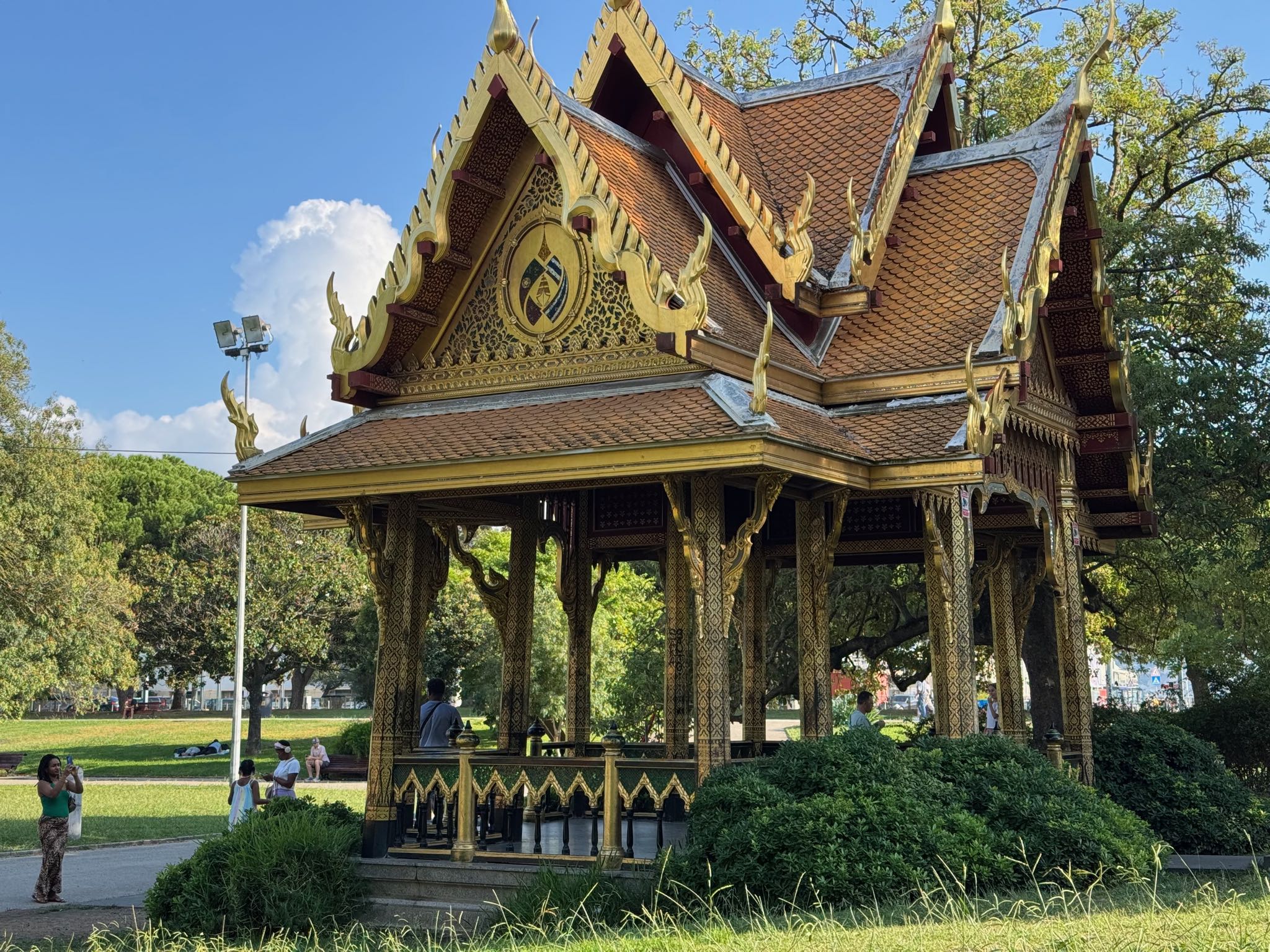
A nearby building from 2012 commemorates 500 years of friendship between Portugal and Thailand. (Portugal being the first European nation to open diplomatic relations.)

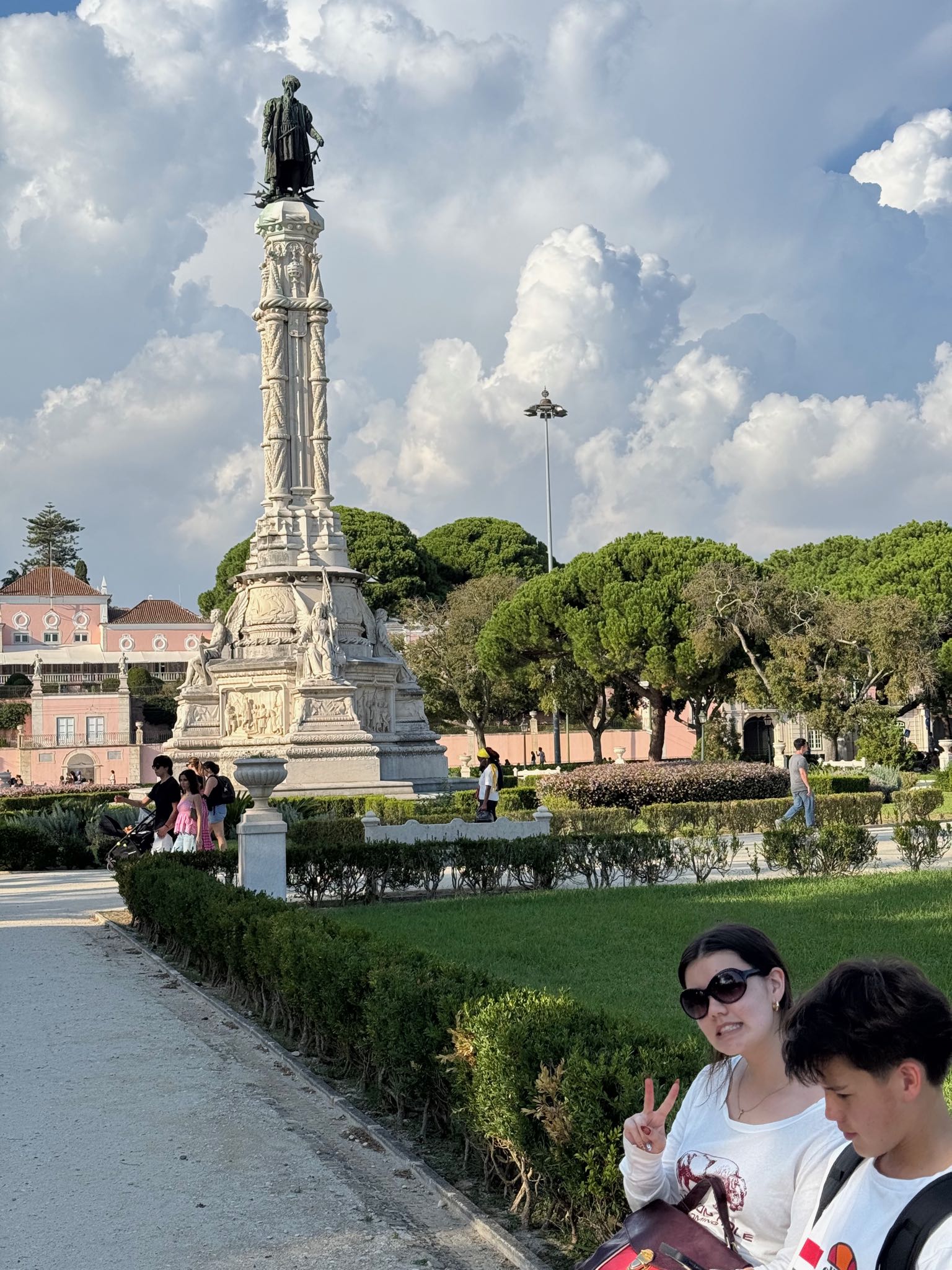
This is a statue of Alfonzo De Albuquerque. As a Naval Military commander, he “opened” the strait of Hormuz, Goa and Malaysia – to establish the Portuguese empire in Asia. (I will let you make your own comment on the present day geopolitical situation.)

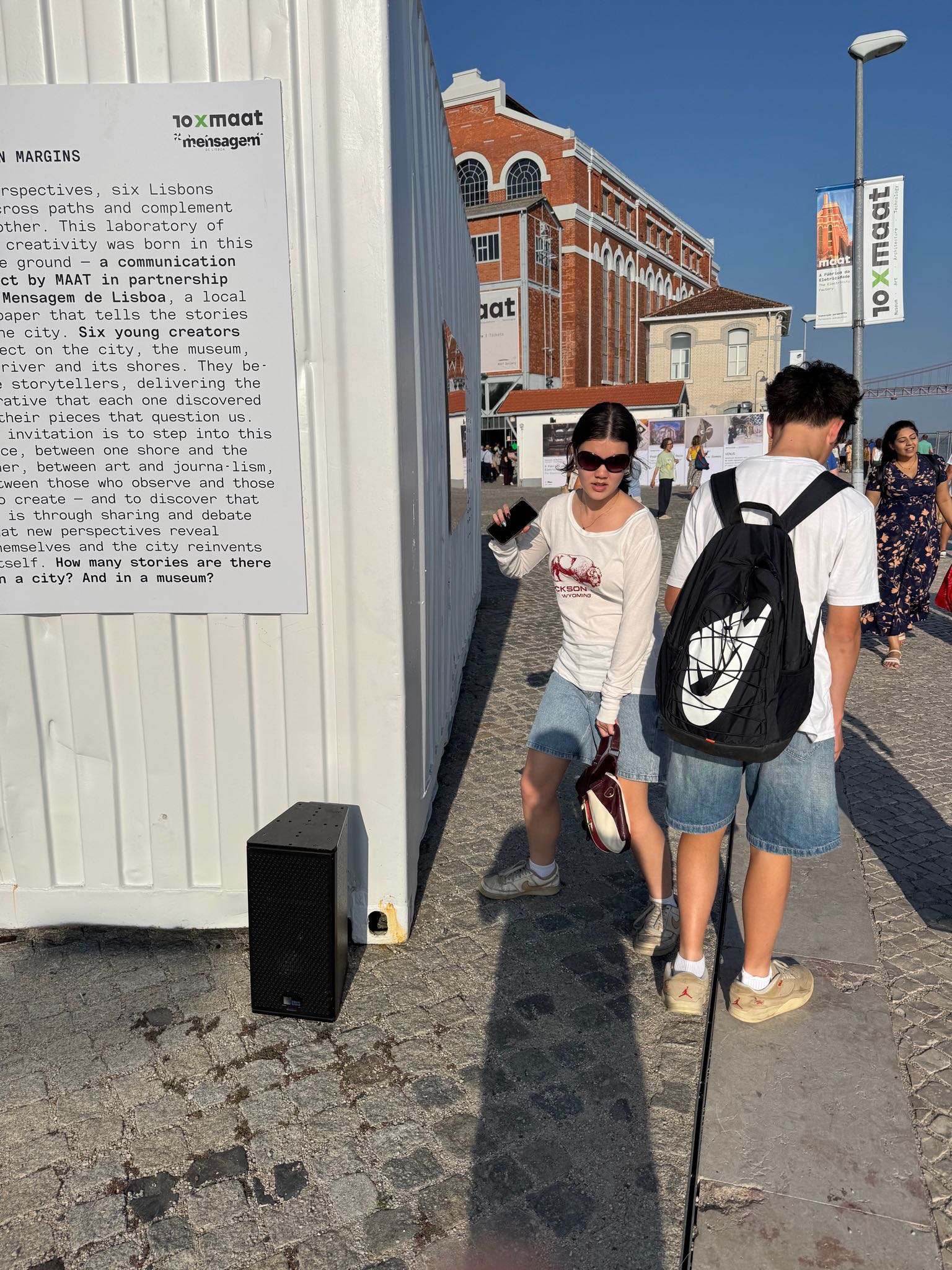
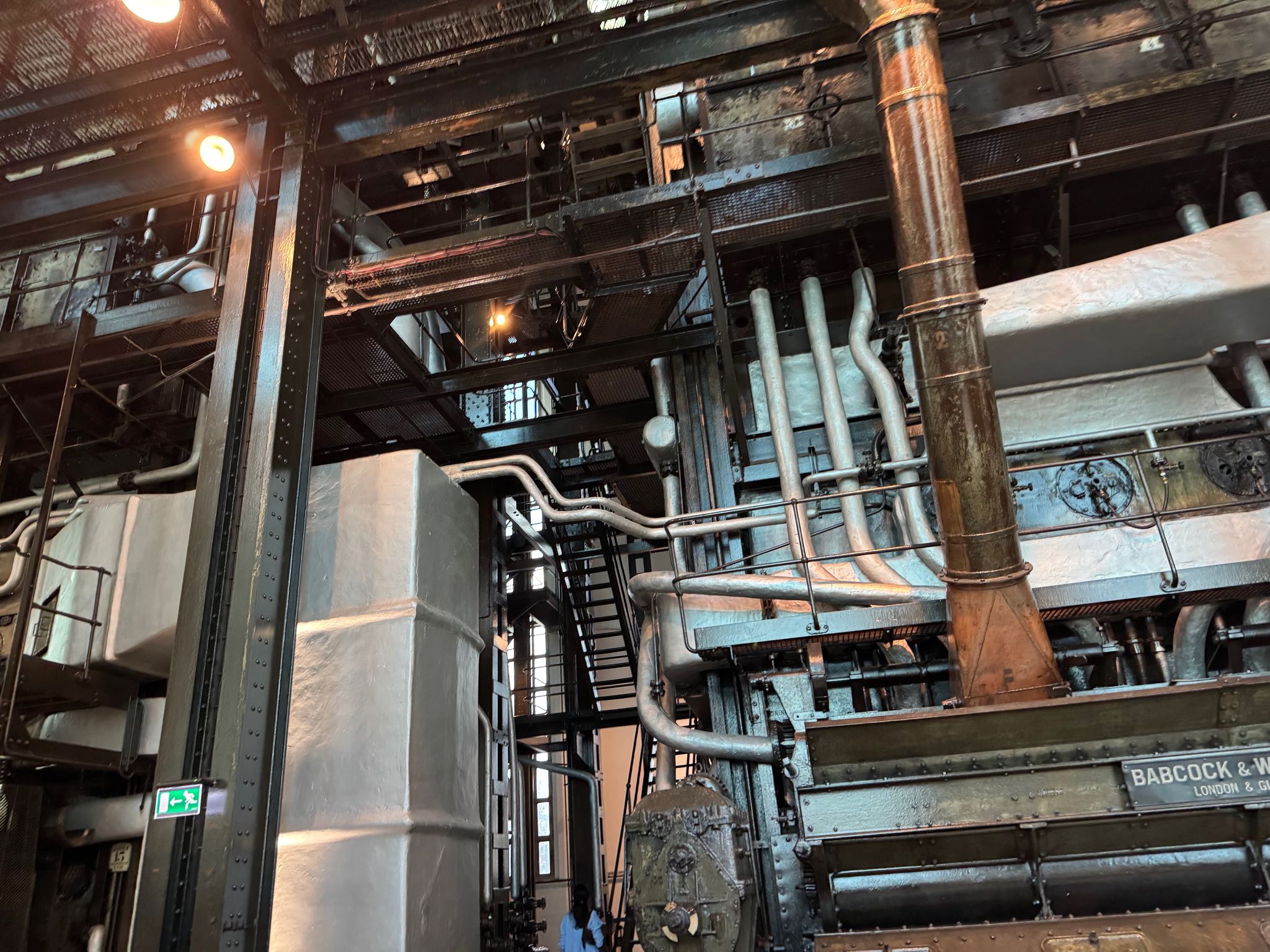
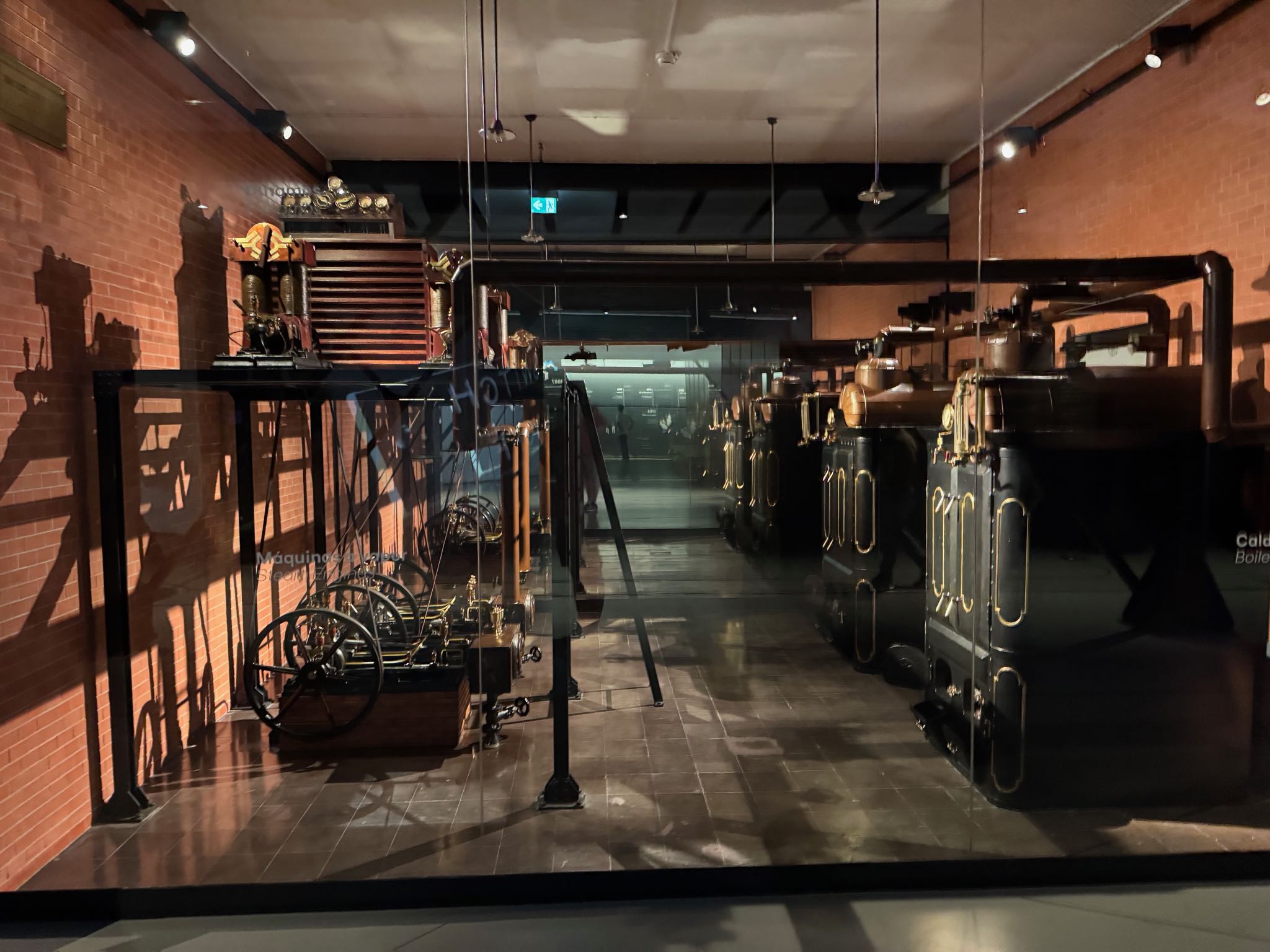
During primary school, and some of high school I was transported many times to the Powerhouse Museum in Ultimo. Over the many times I went there my affection for it dwindled but looking at it now I think they made one critically important decision. They took the power station out of the Powerhouse. The Sydney Powerhouse museum is not about power generation, not about furnaces or boilers or turbines or generators. In Portugal, in their Powerhouse museum, they forgot to do this.


Museum of Art and Science- a powerhouse museum they failed to have the good sense to remove take the power station from. 


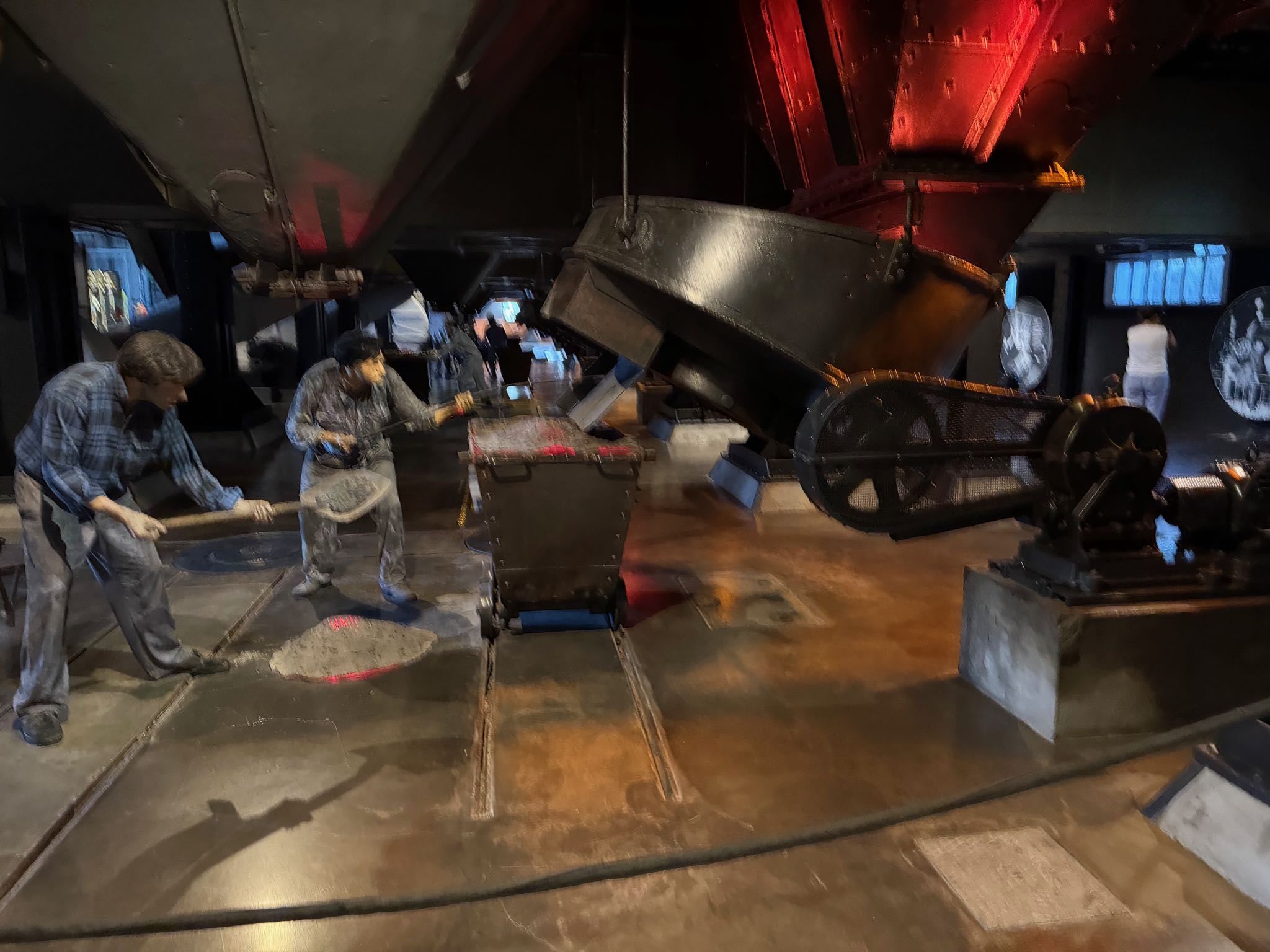
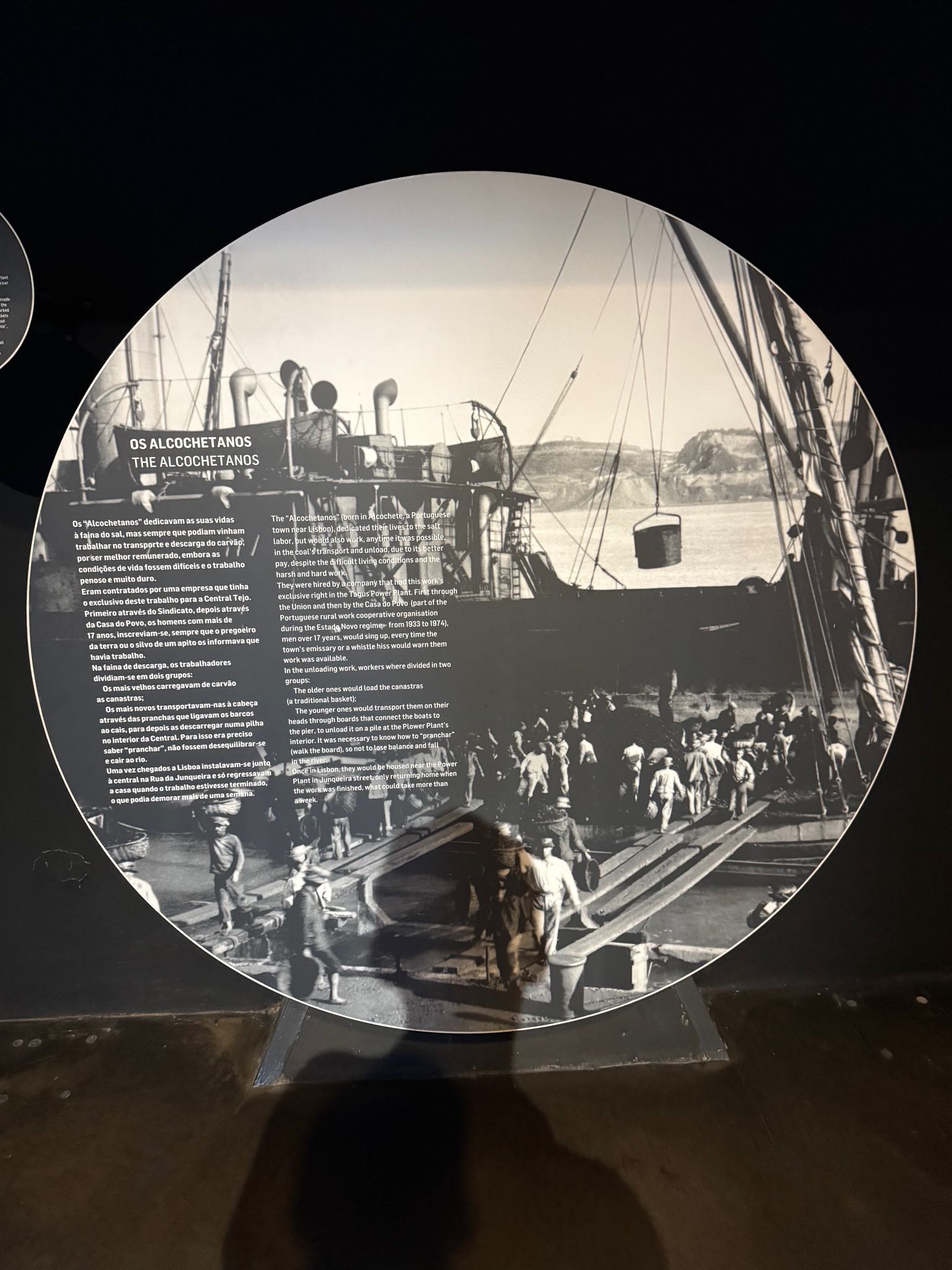
Technology museums should convey a techno-utopian vision that inspires another generation of kids to become engineers and make things better. This Lisbon technology museum is an exercise in heart-bleeding sympathy for the workers for who had to carry the coal and ash by hand because they took another 20 years to mechanise all those aspects after they installed it. (To be fair there are aspects of the museum that show a hope of solar and wind and other future power sources, but sneeze and you’ll miss it.)

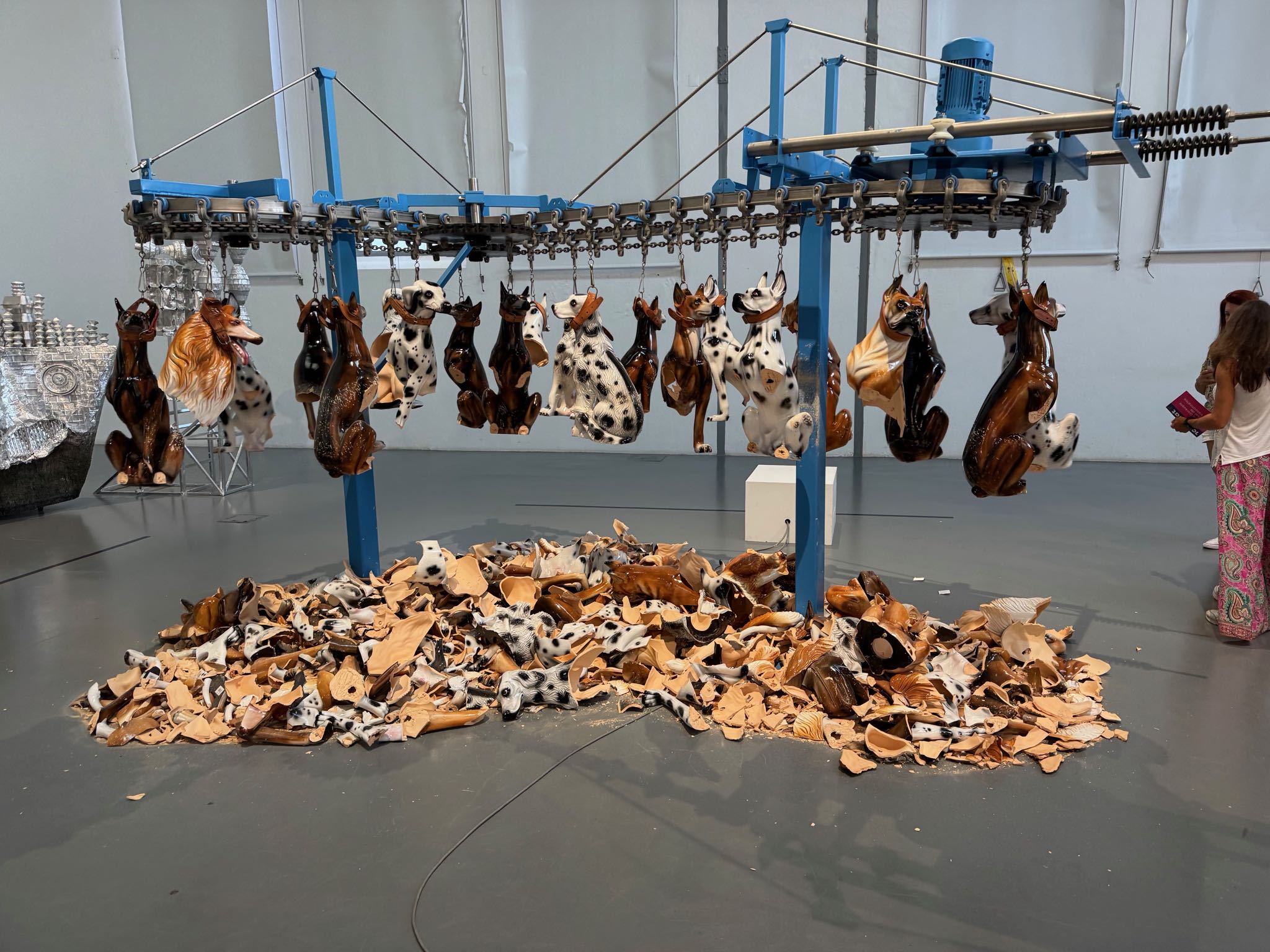
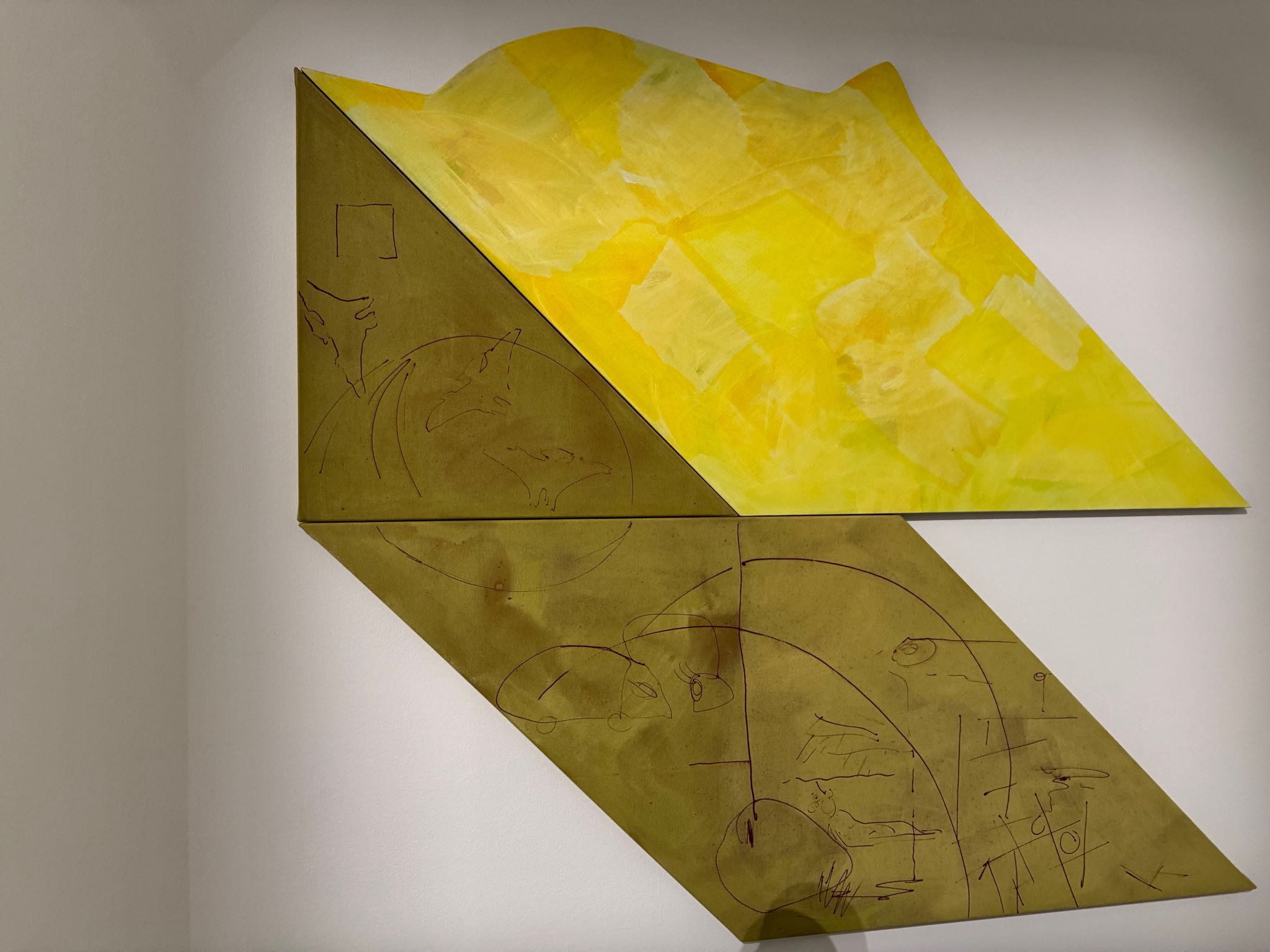
Connected to it is an modern art museum. I managed to connect with one or two of the narratives.

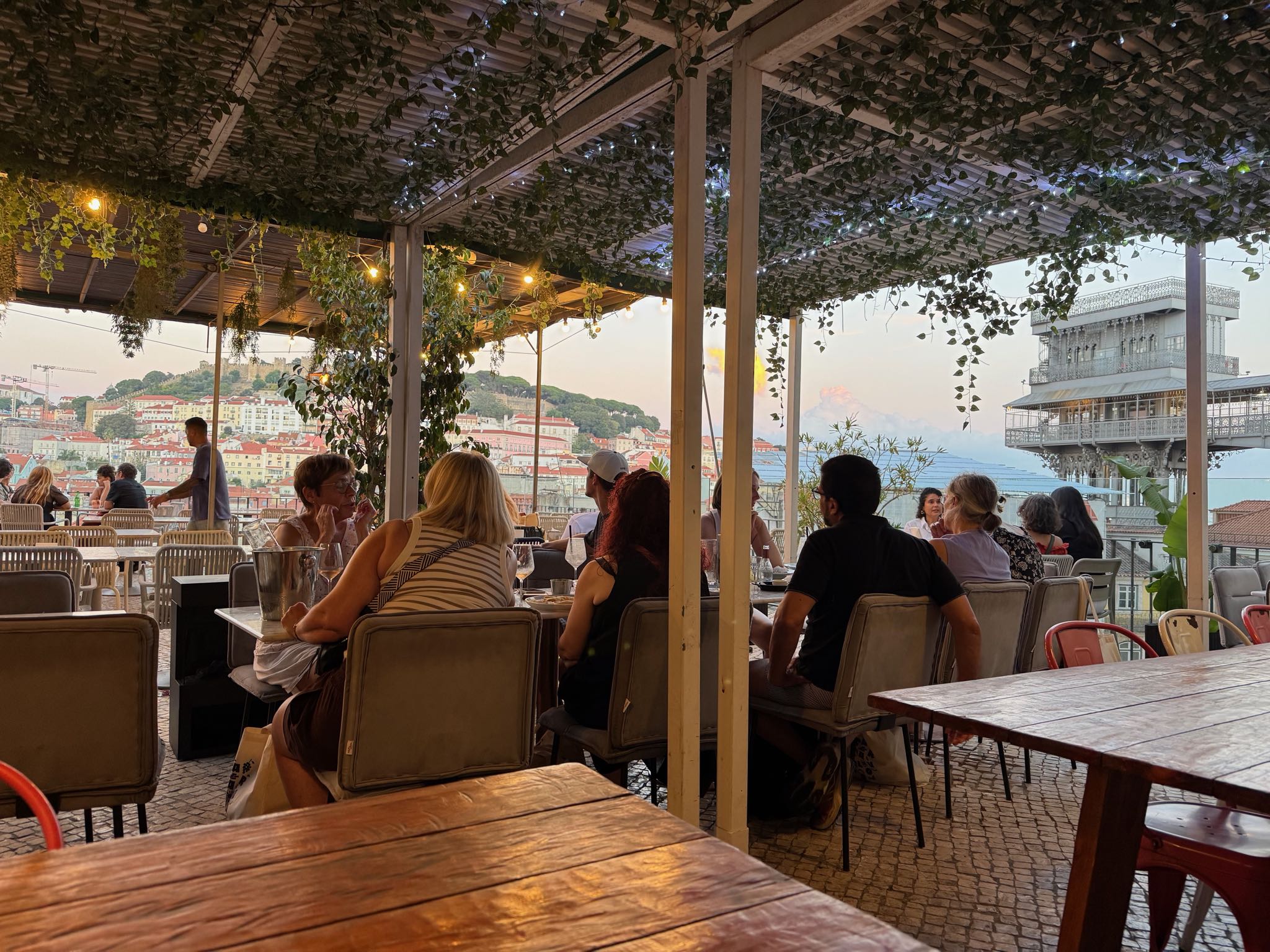
Dinner at a rooftop restaurant in Lisbon near the old elevator. 

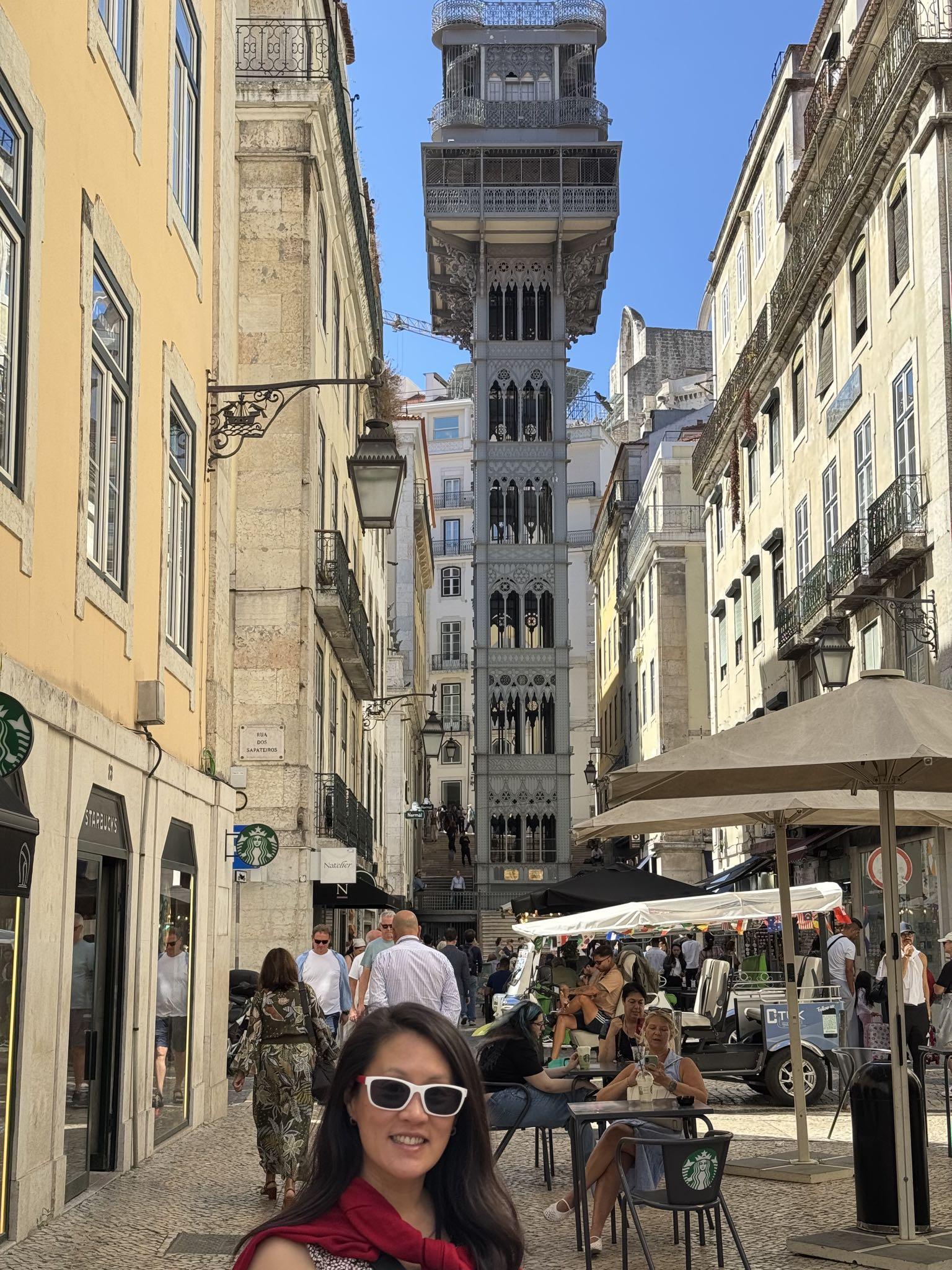
The elevator in Lisbon (Elevador de Santa Justa) is significant because when it was built in 1902 locals were exhausted of the hills between city districts and bought tickets to save themselves the climb. (You see escalators on the hills in Rio De Janiro). It was designed in wrought iron by a student of Eiffel, was originally built driven in steam. It switched to electricity in 1907 and remarkably still runs on those original electric motors. 

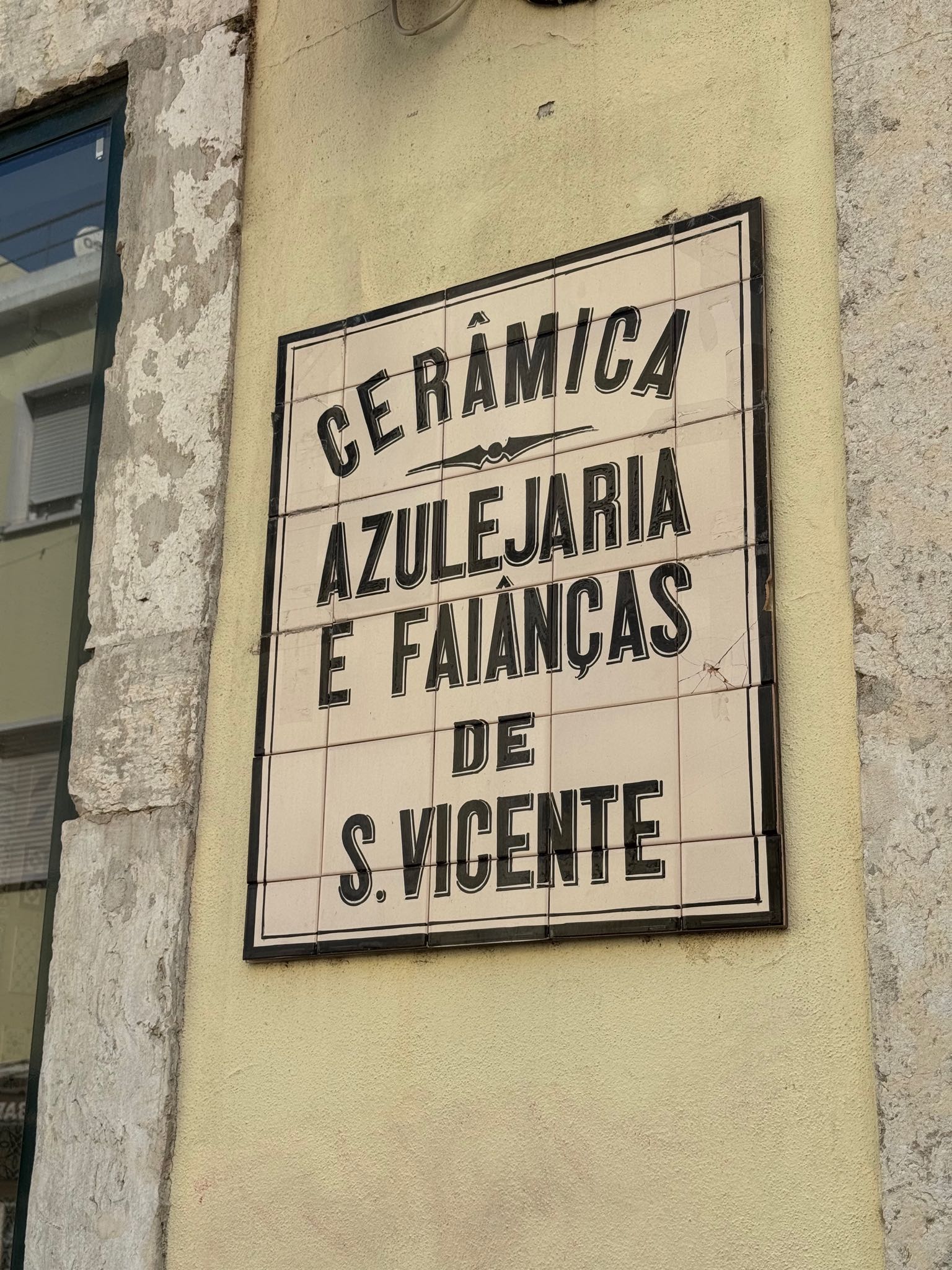
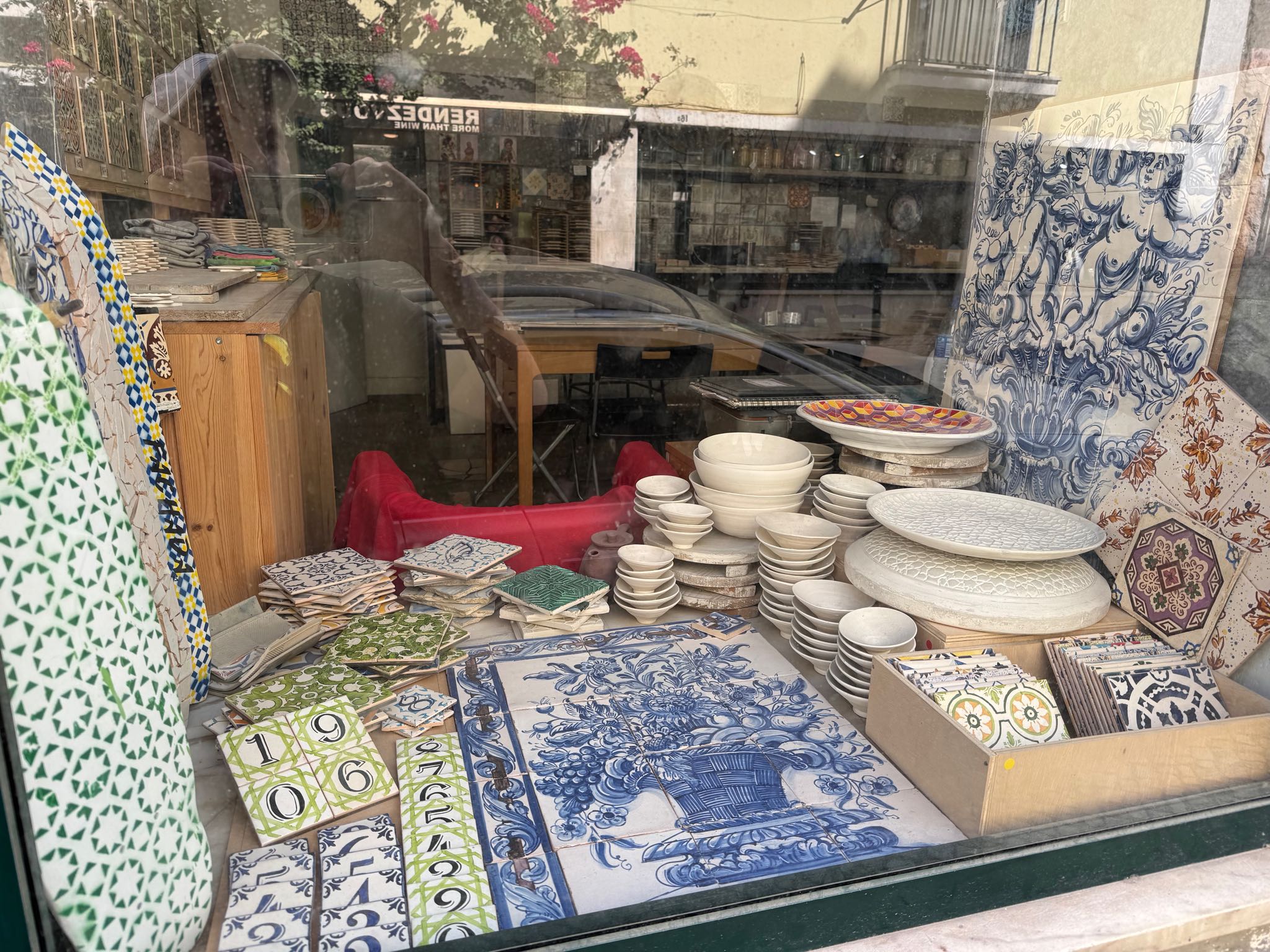
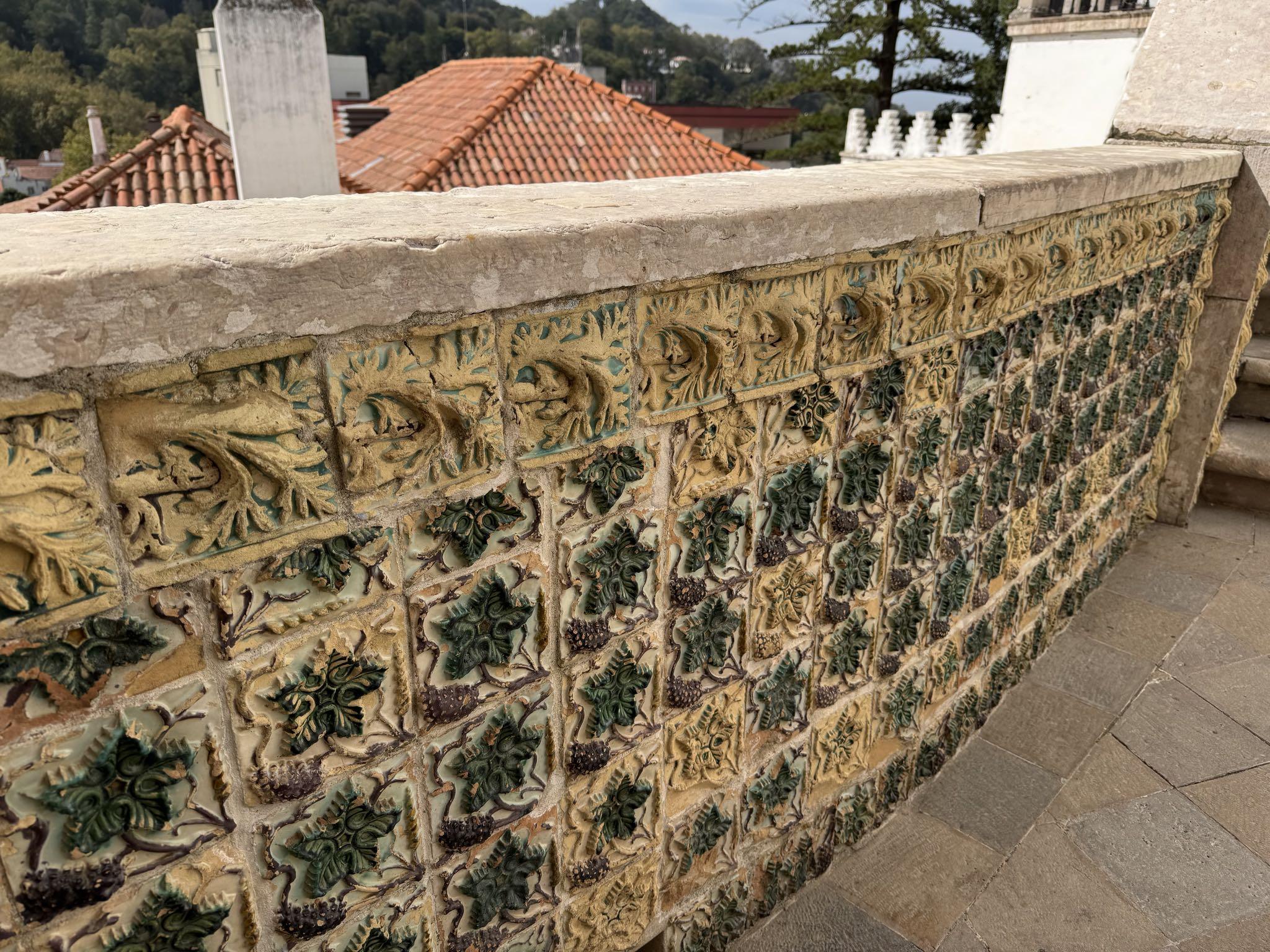
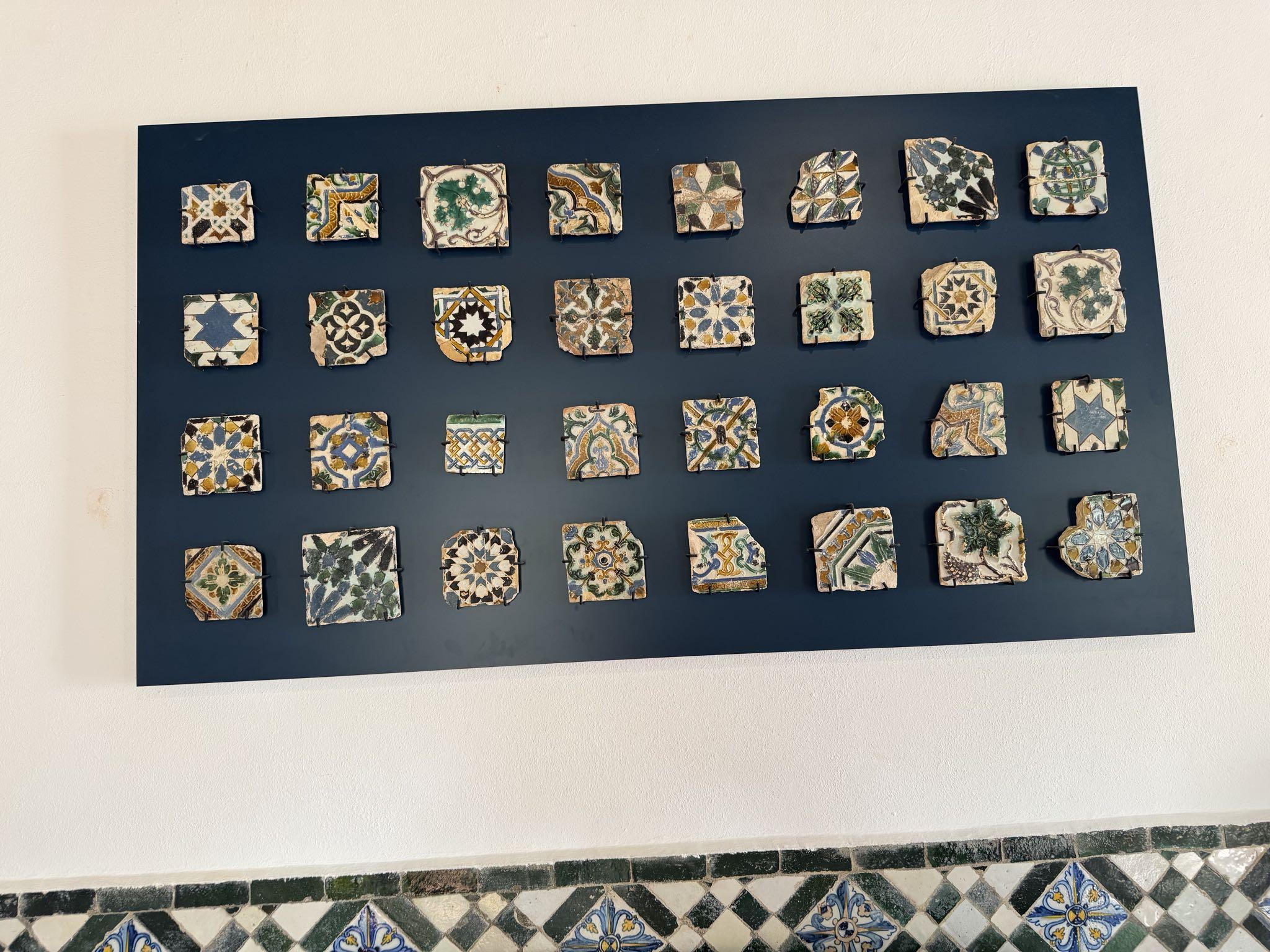
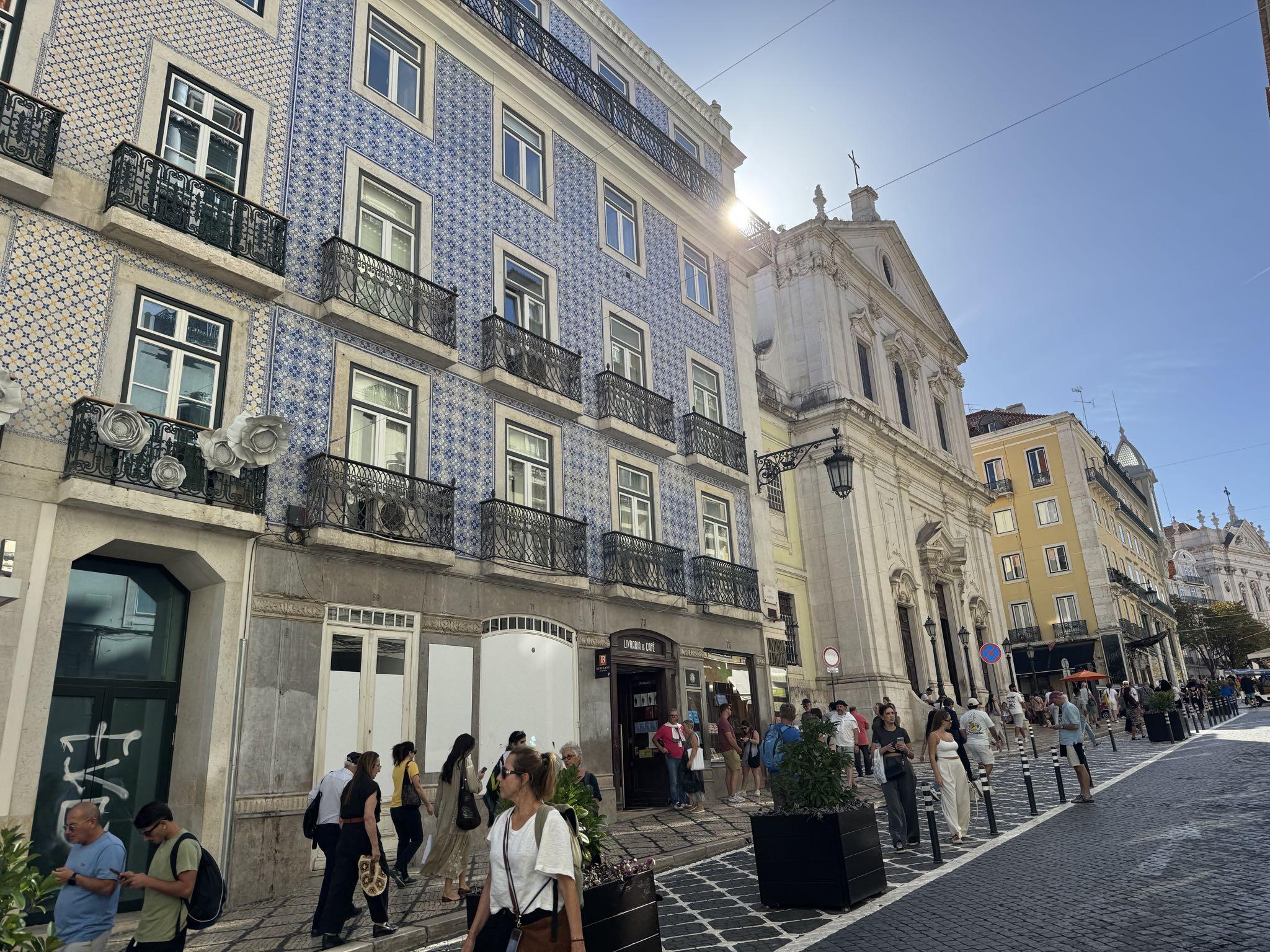
Reflections on Tiles

Come with me to Lisbon. The rain has just swept through, the clouds are parting, and the sun catches the glaze of a tiled façade until the whole street seems to shine.

Lift a tile a little and you find good sense. Portugal’s air is salt, heat and damp, and a glazed skin keeps out the rot and the mould.

Lift it further and you find industry: the factories of Lisbon and Porto, which turned a luxury of the elite into something any street could wear. Further still, disaster: after the earthquake of 1755, azulejos were the quick, cheap way to dress a city rebuilt in a hurry. Beneath that, trade: the blue comes from Chinese porcelain, carried home in Portuguese ships.

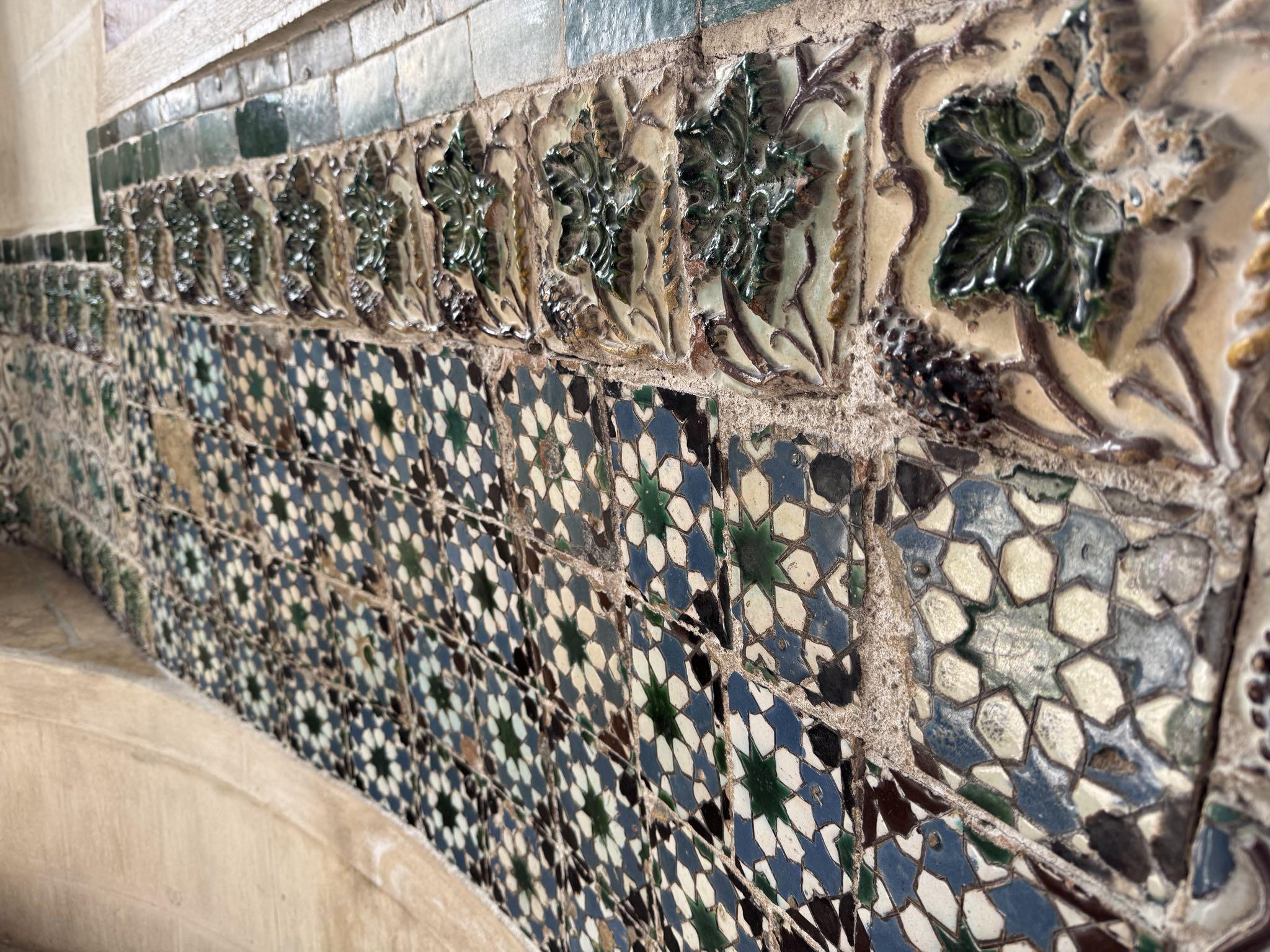
At the bottom lie the Moors. Denied the human face, they made infinity out of a square. Lisbon was taken from them in 1147, but Granada did not fall until 1492, and the end of that war freed the money that sent Columbus west. In the centuries between, knowledge crossed the peninsula like a tessellation, piece locking into piece: shipbuilding, medicine, mathematics, engineering, the craft of the siege.

So look again at the wet facade. Each square holds conquest, trade, disaster and industry, fitted together without a gap. The sun is only the latest thing it reflects.

Sat 3 October – Lisbon City and Dinner with Georges

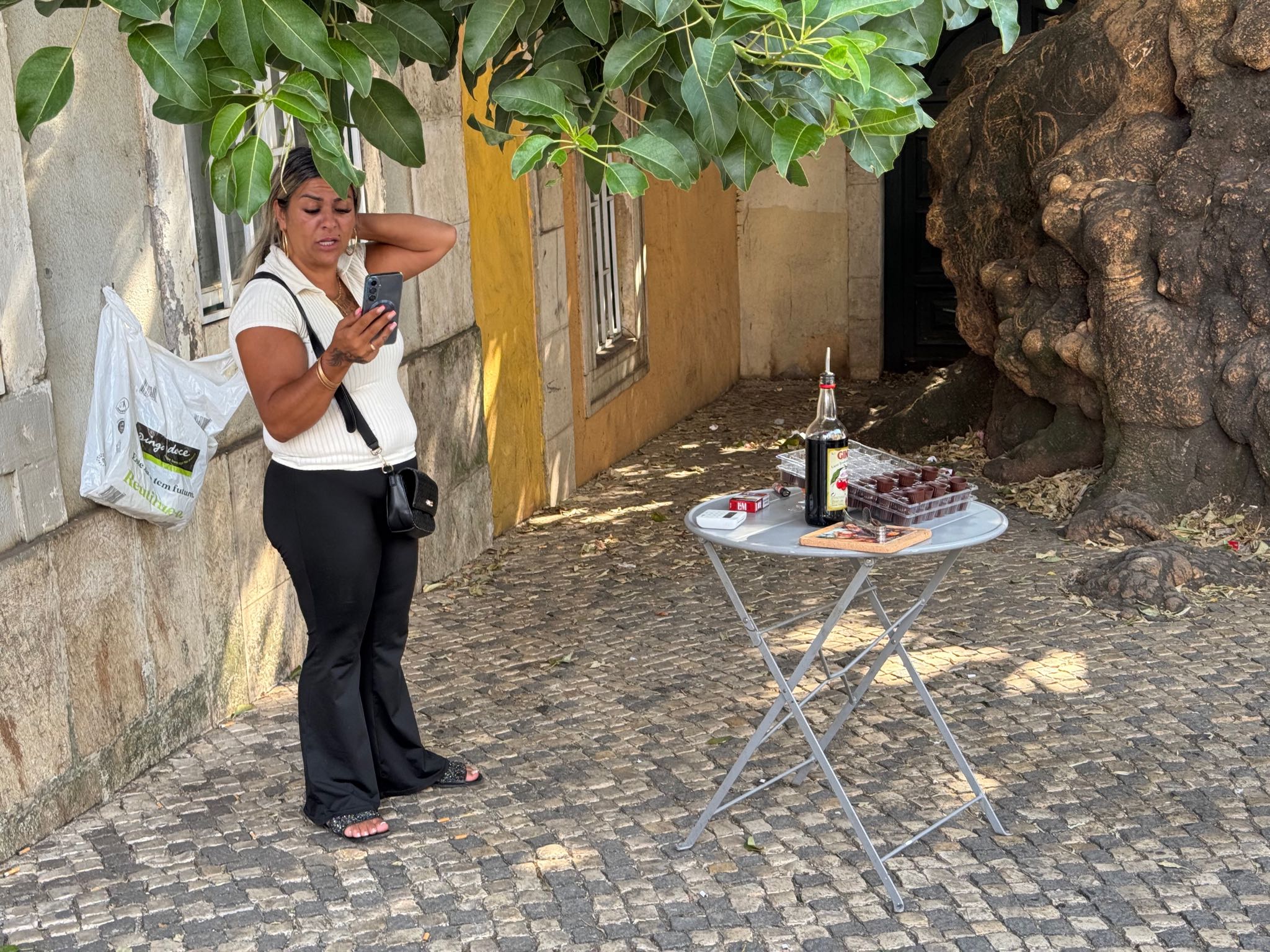
Lady on the side of the road with chocolate cups and a bottle of liquor.

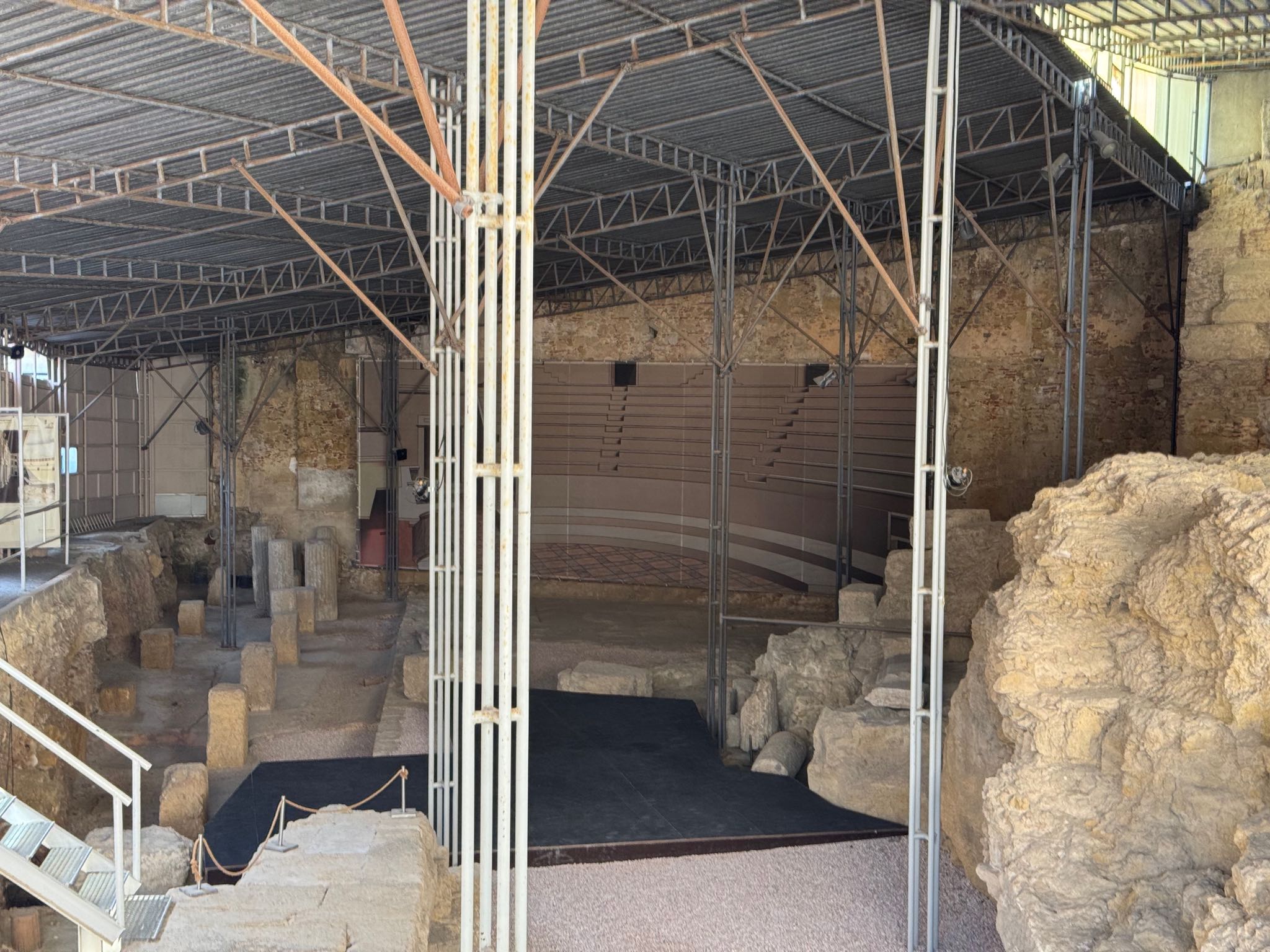
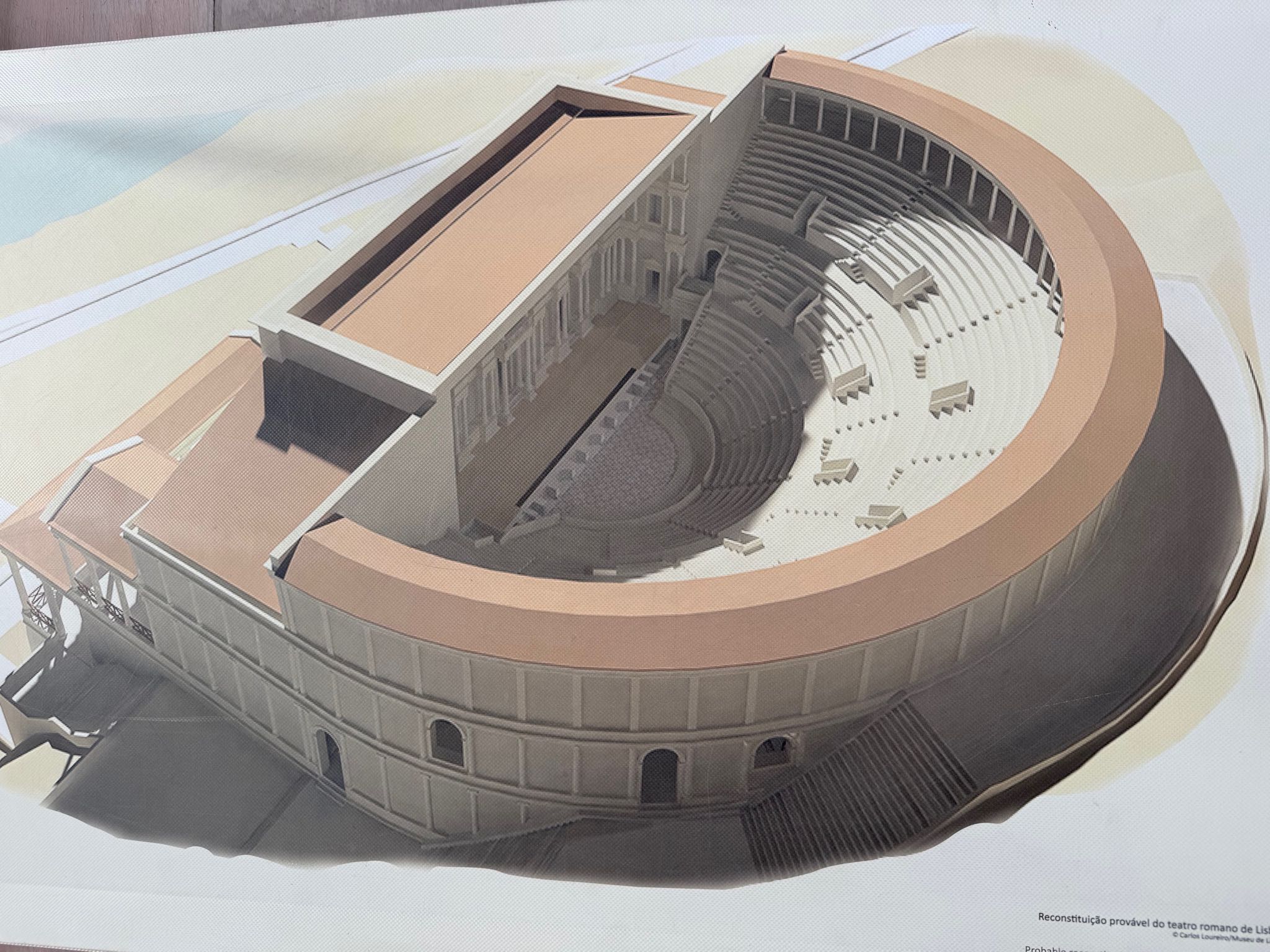
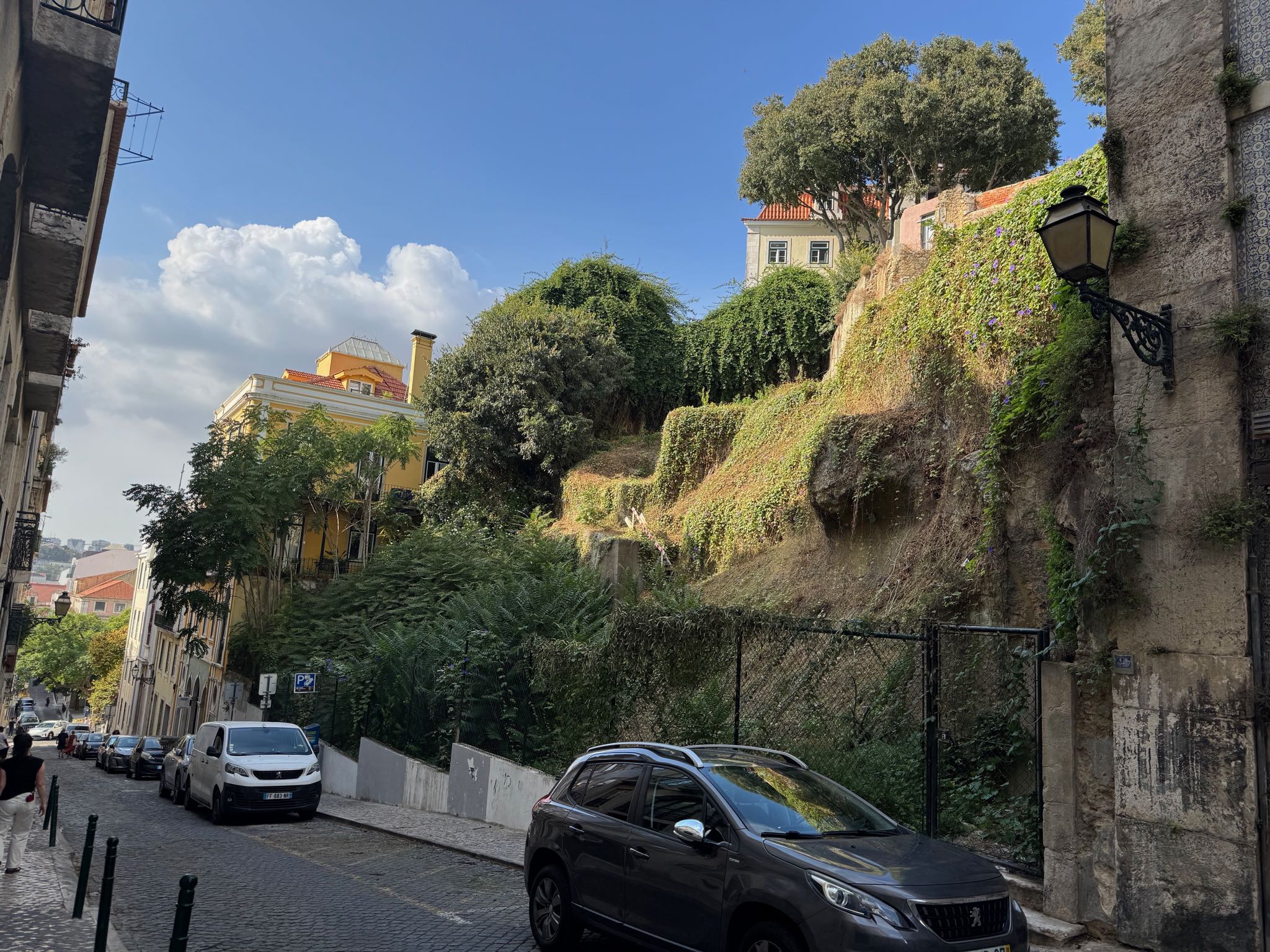
Evidence of a local Ancient Roman Amphitheatre (Cavea).


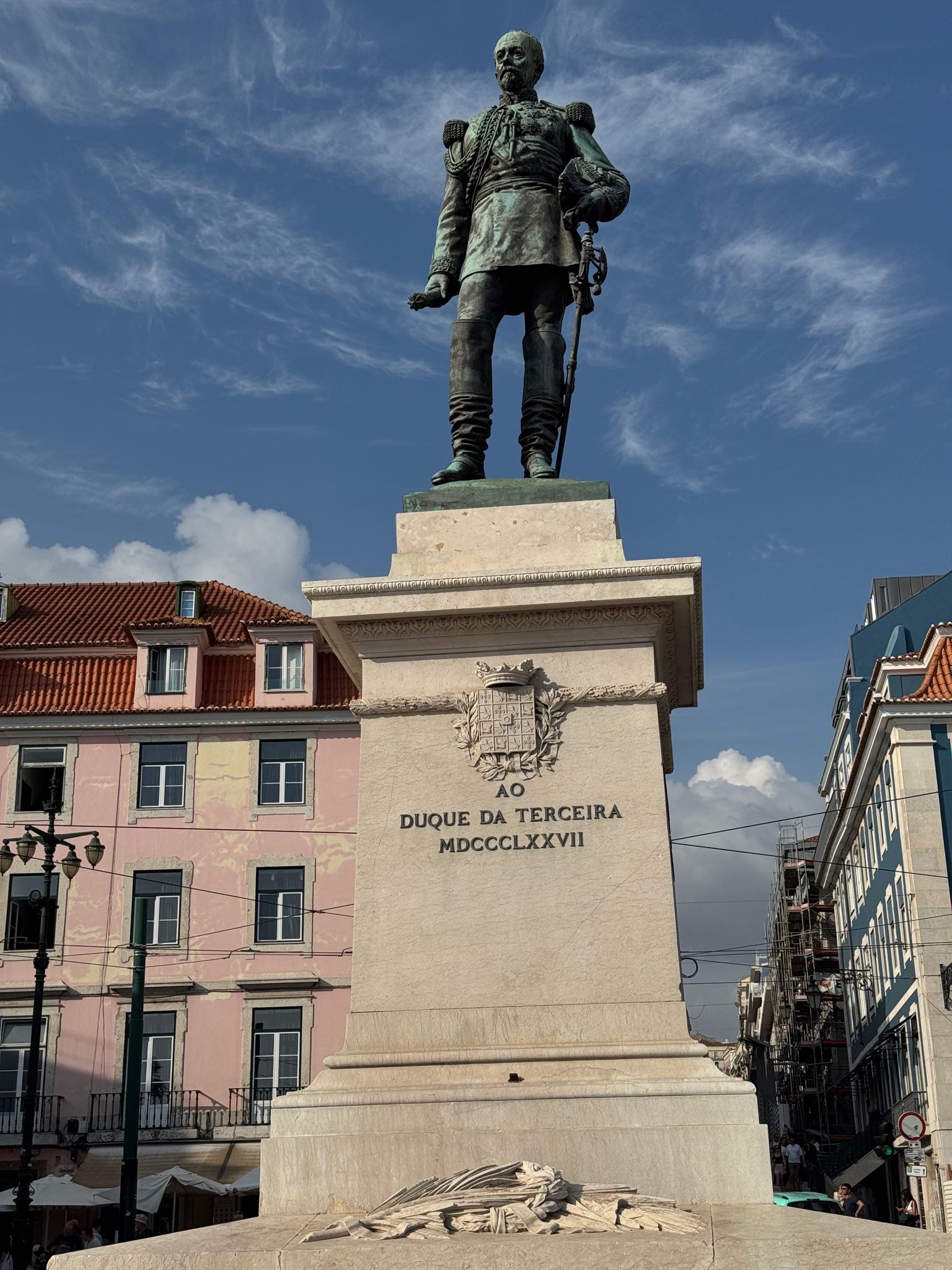
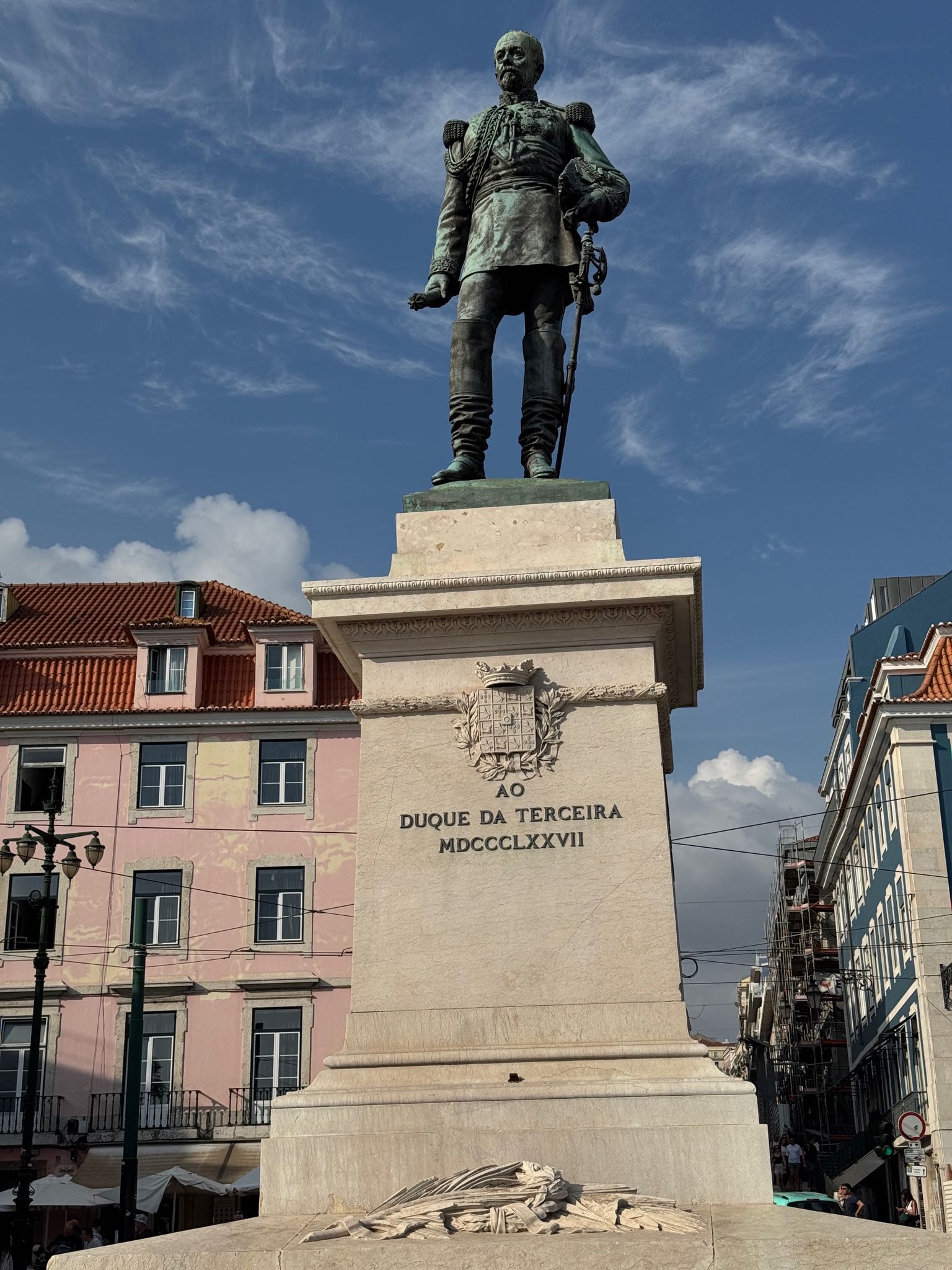
This is António José de Sousa Manoel de Menezes Severim de Noronha – who was the Duke who fought in the 1828-1834 to kick out the King who siezed absolute control and put his brother back in with a Constitutional Monarchy. He served as Prime Minister a couple of times.

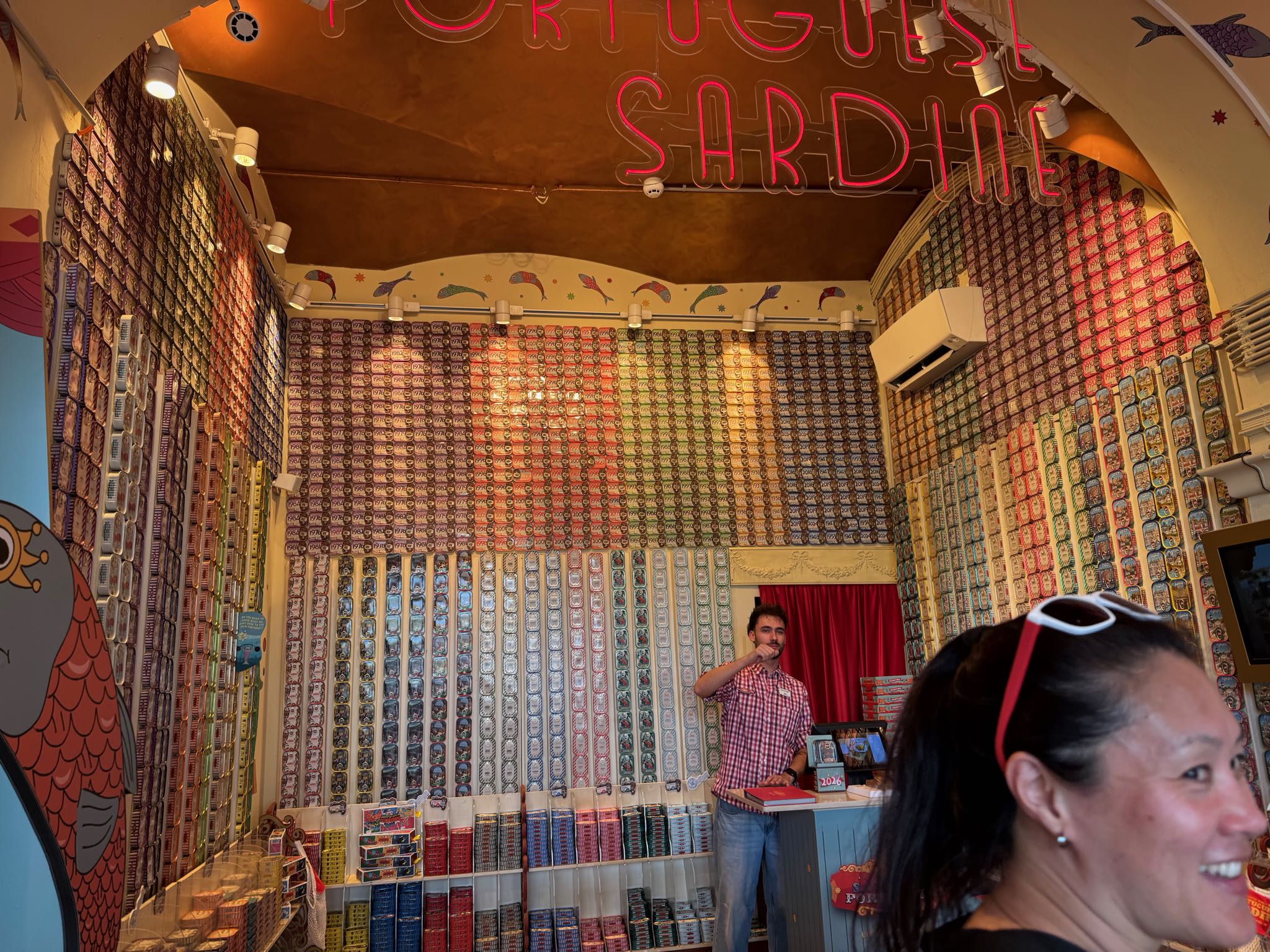
This is a Novelty shop that just sells Sardines. (The idea is that you buy a can with your birth year on it.) I like a good Sardine.

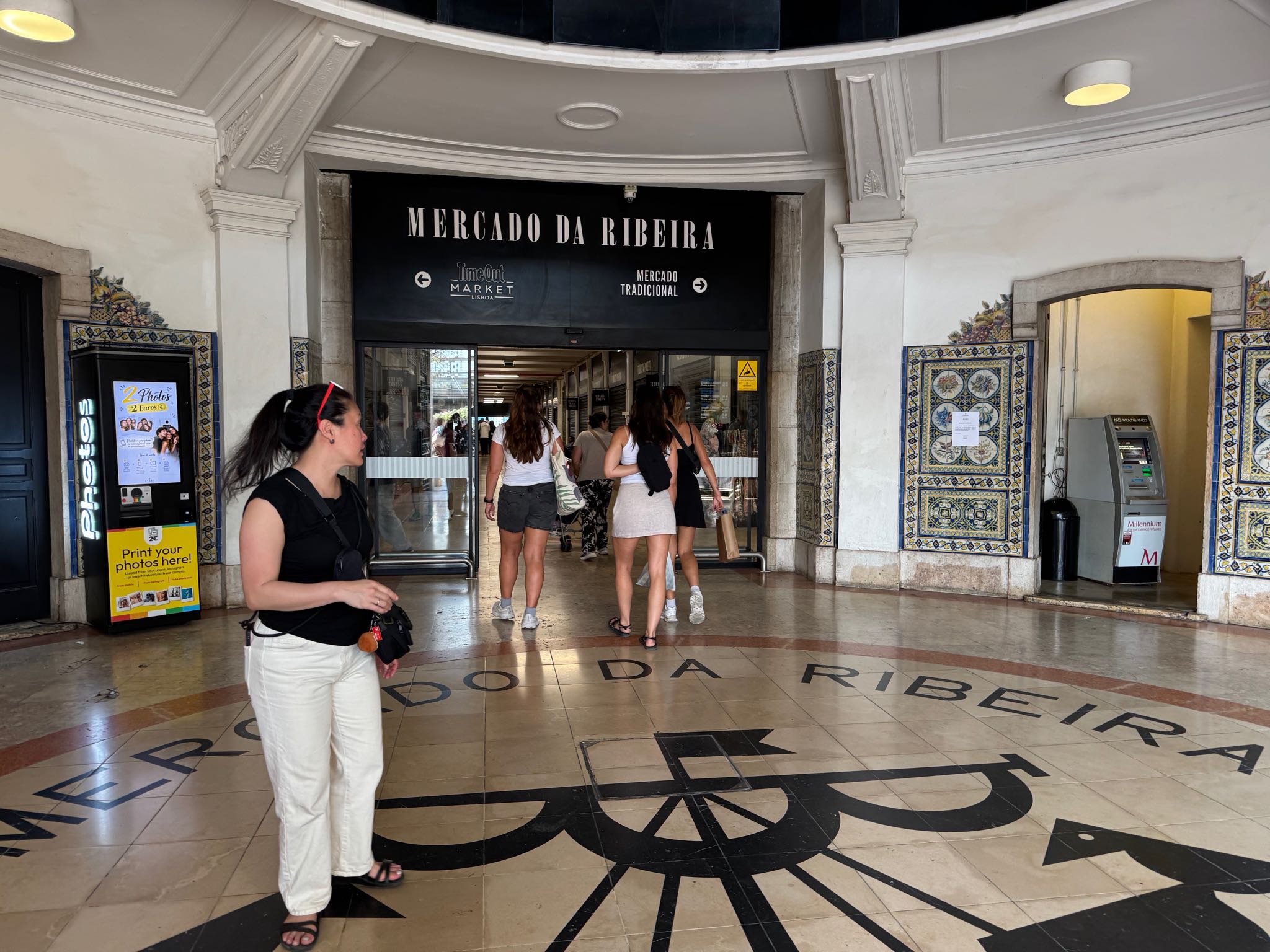
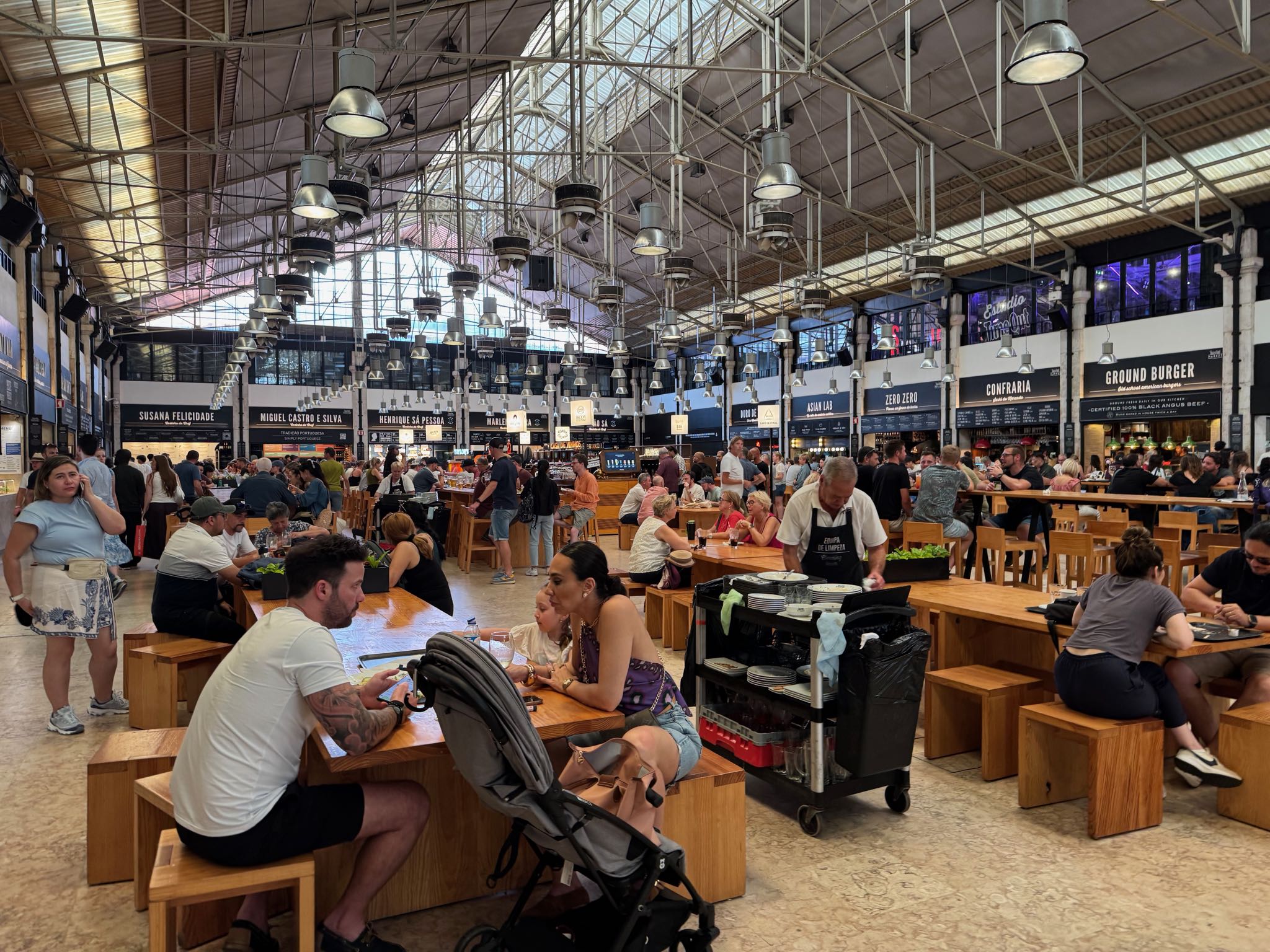
We stopped at a food market – the Mercado De Ribeira.

This is a statue of Bernardo de Sá Nogueira de Figueiredo a Prime Minister who served in the “Liberal Wars” (same as above). He was Prime Minster and abolished slavery in the Portuguese colonies – and lost his arm in the war. He pushed for educational expansions and Constitutional liberalism.

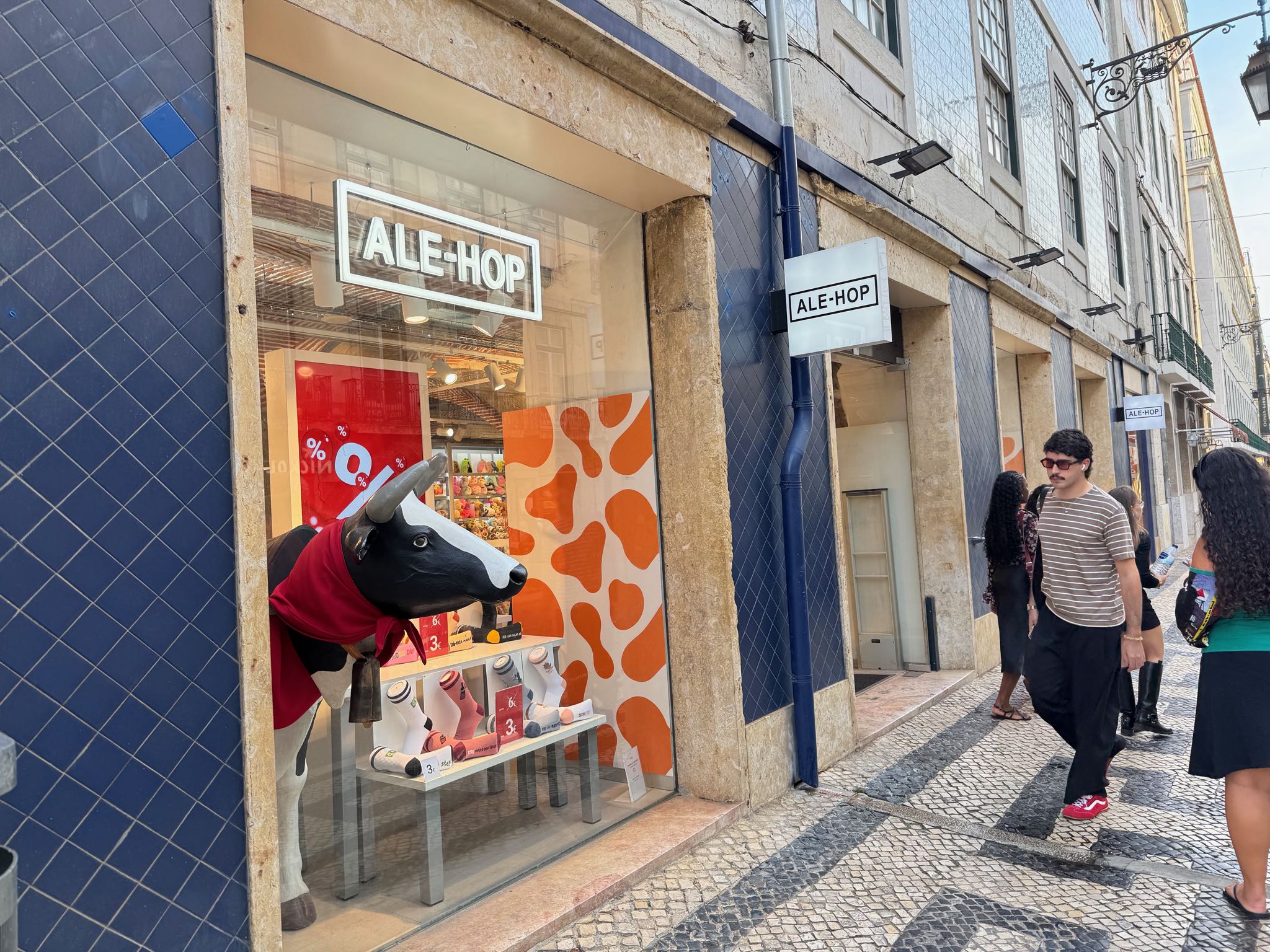
This is a franchise that is easy to mis-translate into English as a place a middle-aged man might talk his dog for a walk on a Saturday afternoon. In fact it is teenage girl knick-knacks and fashion “Ali-ooop”.

Dinner with Matt and Louise. 

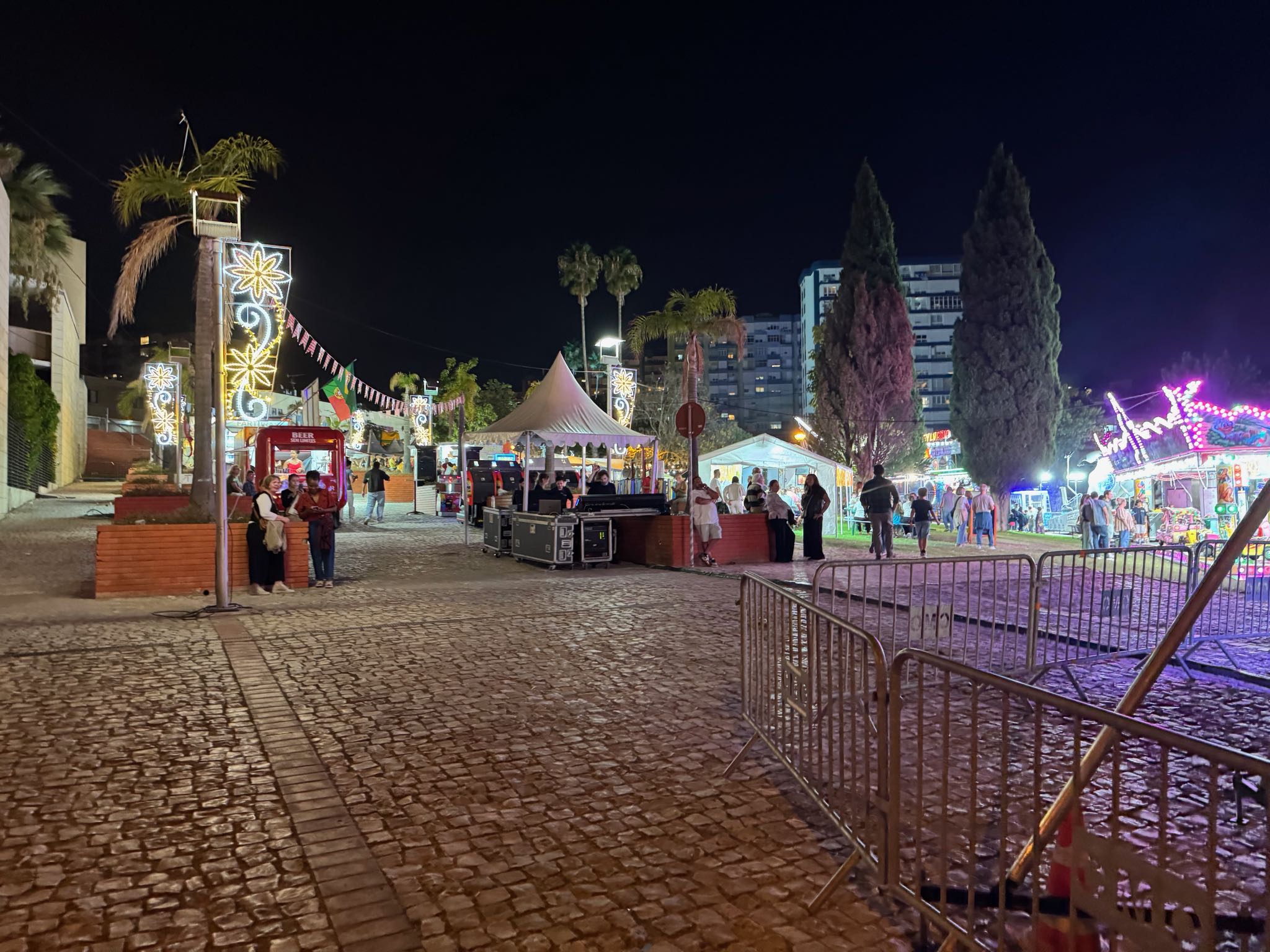
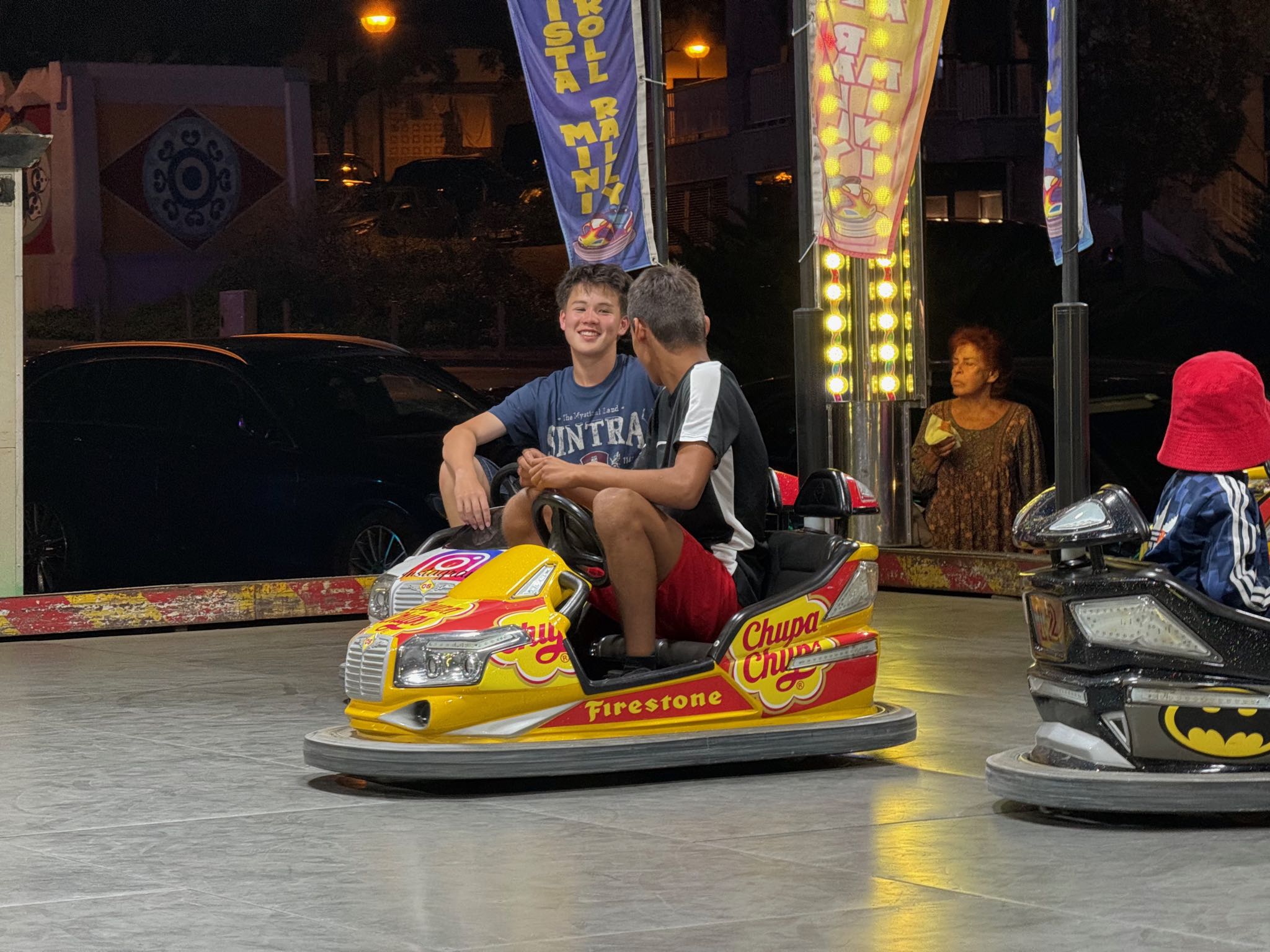
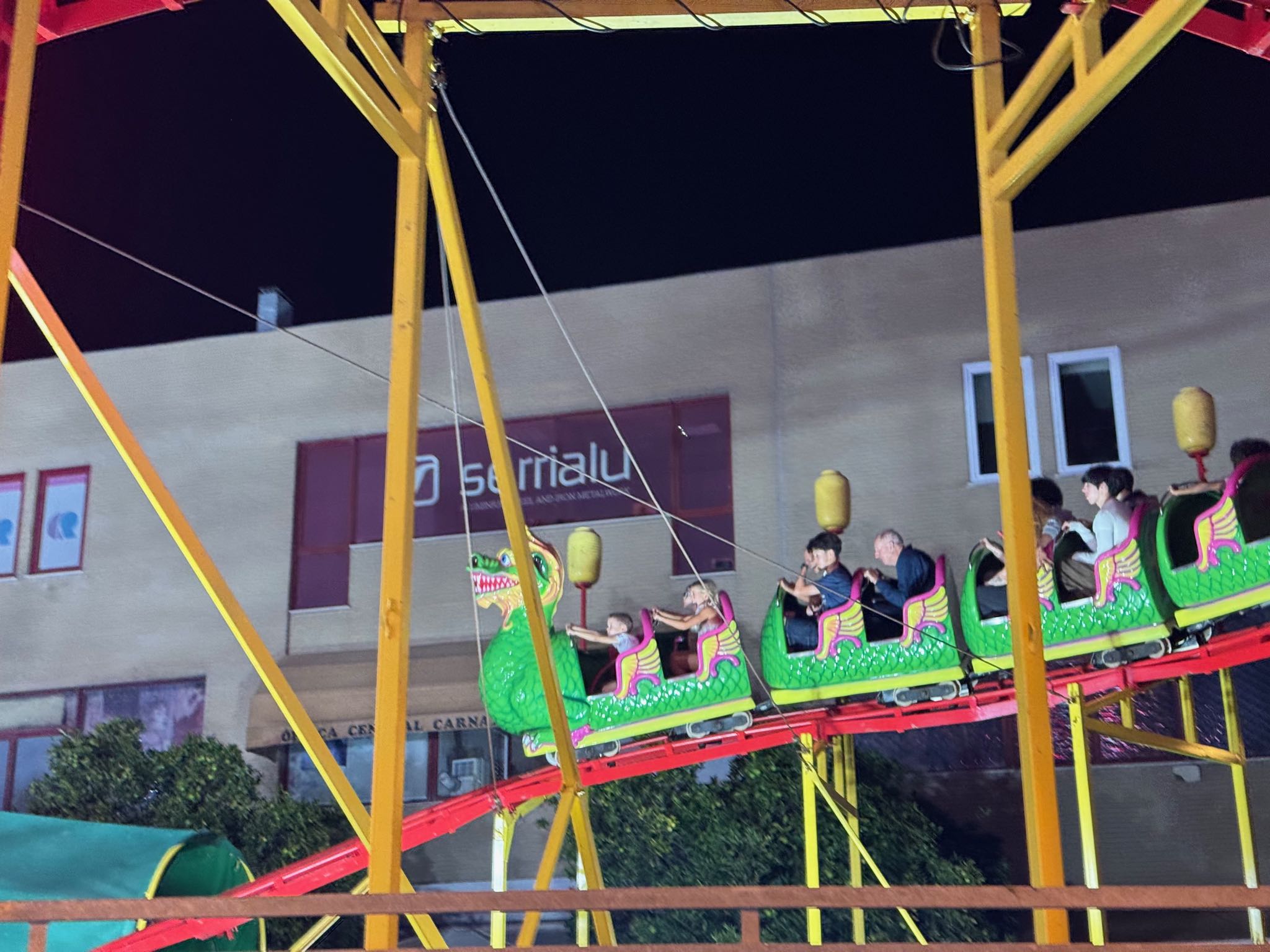
Walk to their local country fair with dodgem cars and show treats. 

Hugh went with Cal on the dodems and roller coaster. 

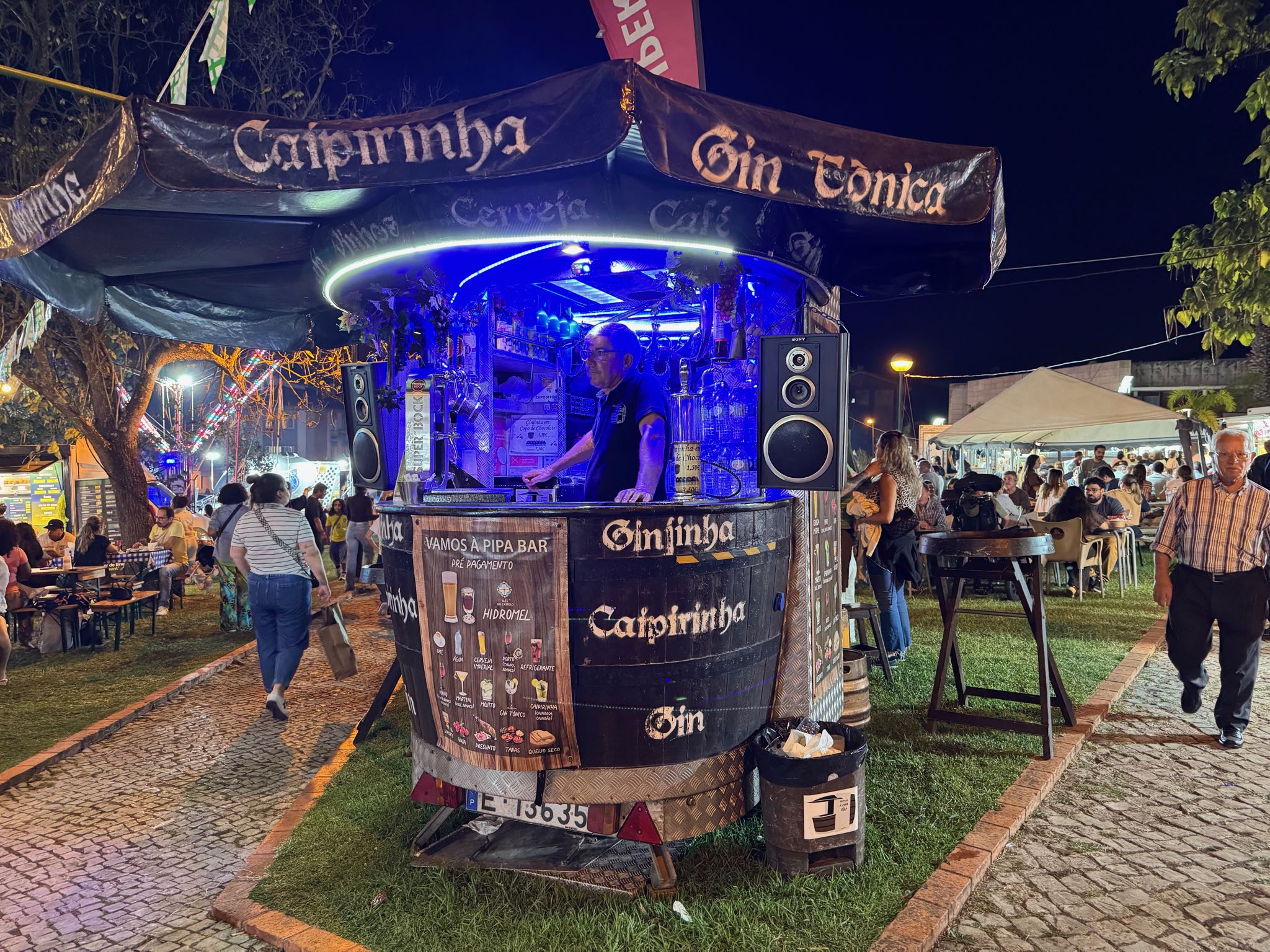
Portugal has a more relaxed approach to liquor licensing than Australia. 

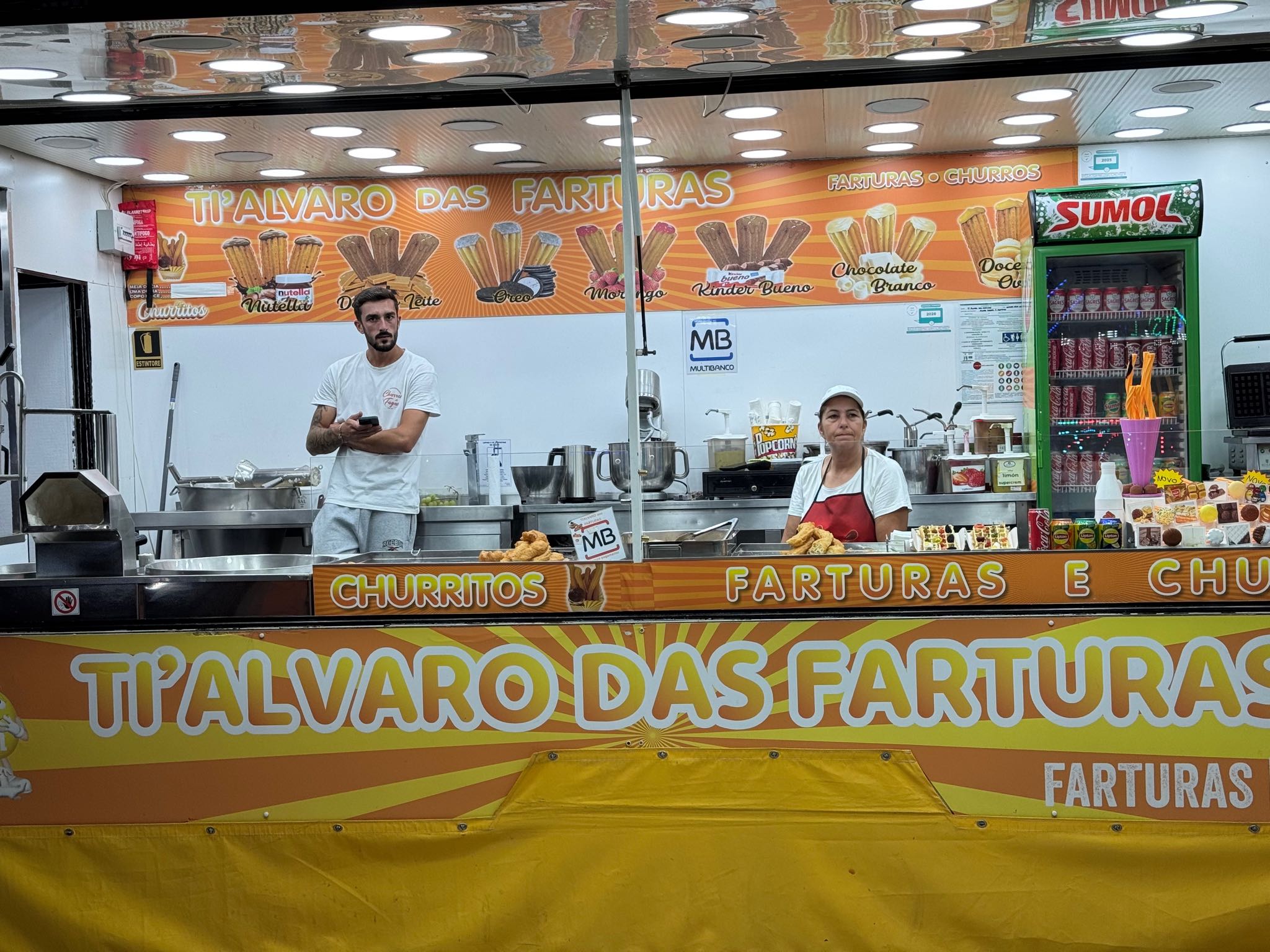
Looking at the flavours of the toppings you can get on Churros – one stood out – “Morango”. What is a Morango? I imagined it was a kind of blood-orange mango.

It turns out it is strawberry – a word that seems to be different in lots of different European languages. I imagine some words are just too precious to yield to empire linguistic standardisation. I imagine a Lusitani (pre-Roman Celtic occupants of Lisbon) having to cope with Roman rule and saying “We’ll take this woke latin language, but a Morango will always be a Morango!”

Sat 3 October – Lisbon – Lunch and Castle

Slow morning reflection and writing whilst the kids go to the markets. 

I walk to meet the family past a giant church. In my mind cogs turn at my experience of church building construction and stakeholder engagement. It’s too simple to interpret this in terms of power, but assume administration of hospitals, schools and social work. 

In the heat my daughter laments that Billionaires are destroying the planet. I ponder for a moment the benefits of our present regime including mobile phones, democratised global computing infrastructure, accelerated biotech and mRNA medicines , next gen clean energy and grid storage, commoditised space launches, and electric cars. I ponder further the equivalent benefits of the previous Gilded Age in the 1890s: cheap steel, transcontinental logistics, affordable energy, electrification and telecommunications, mass market retail and mail order distribution. “Don’t worry my dear, we’ve seen this before 100 years ago in the 1890s. History suggests your generation will vote in high taxation governments for your lifetime and they’ll wither away.”

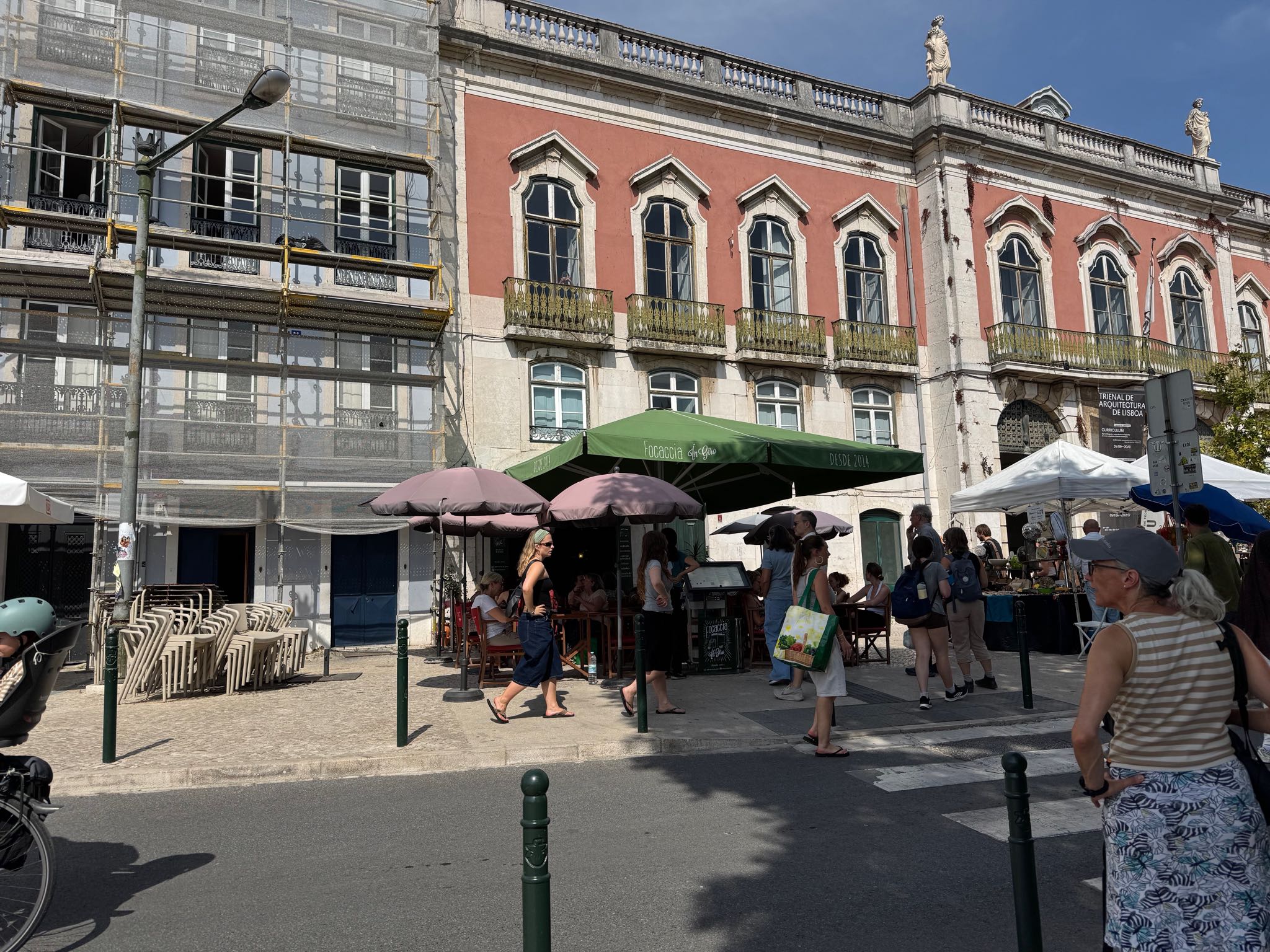
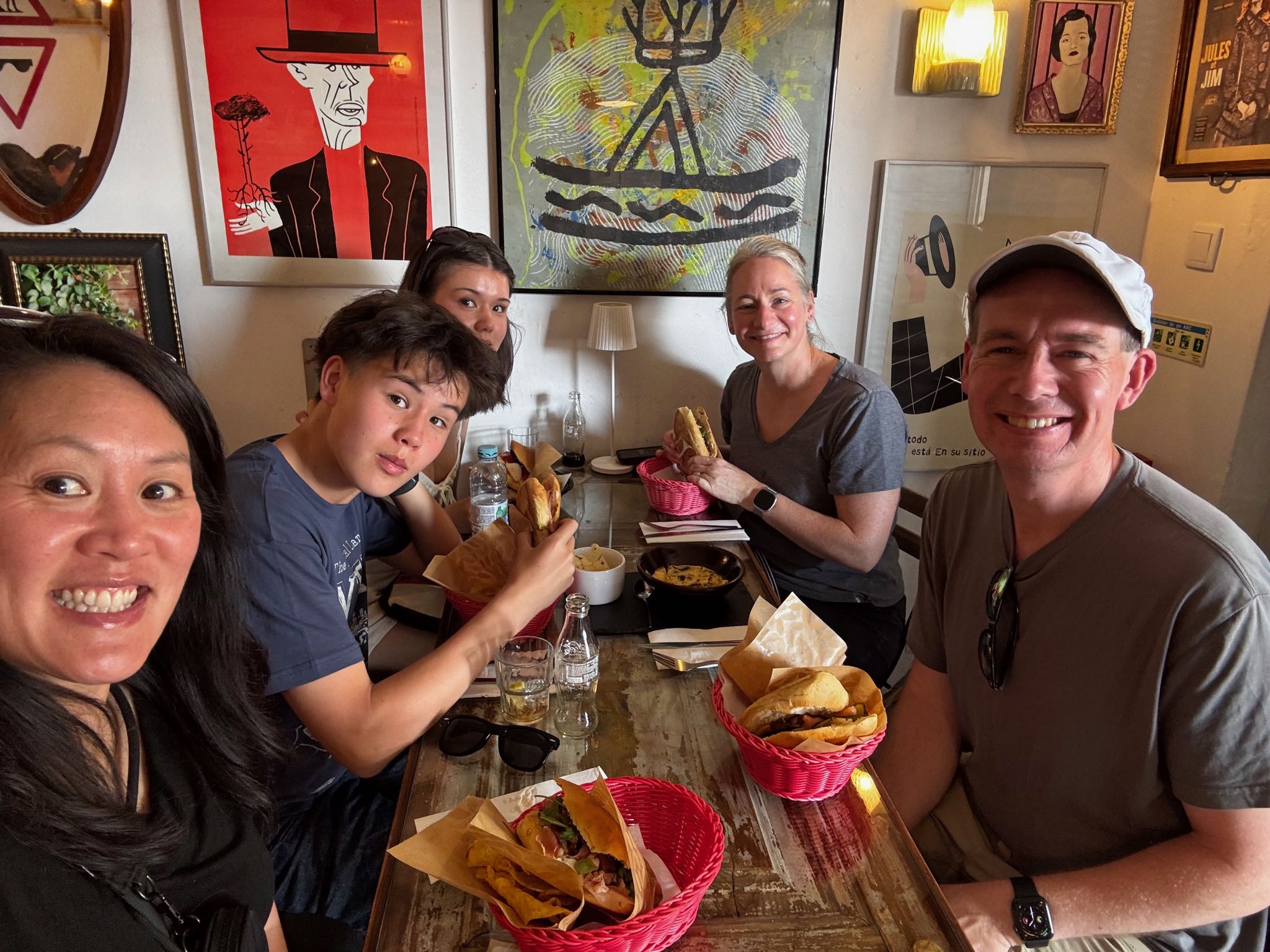
For lunch I’m having a focaccia Joao E Clemente – King Jono VI The Clement. During a period when the Lisbon nobility left for Brazil, instead of executing the organisers, he forgave them and got them to come back. Salmon, cucumber, silvers of orange. Very refreshing. 

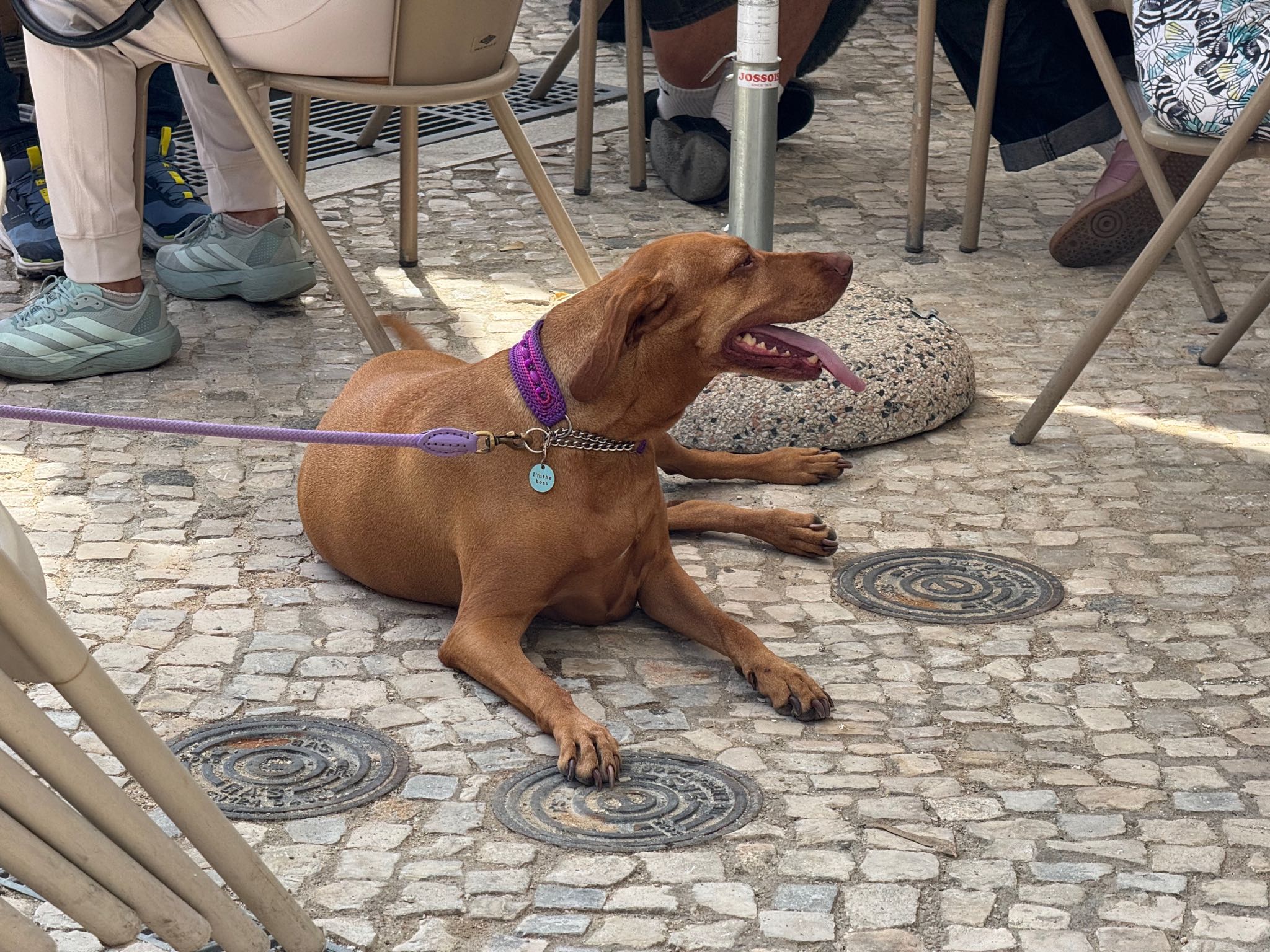
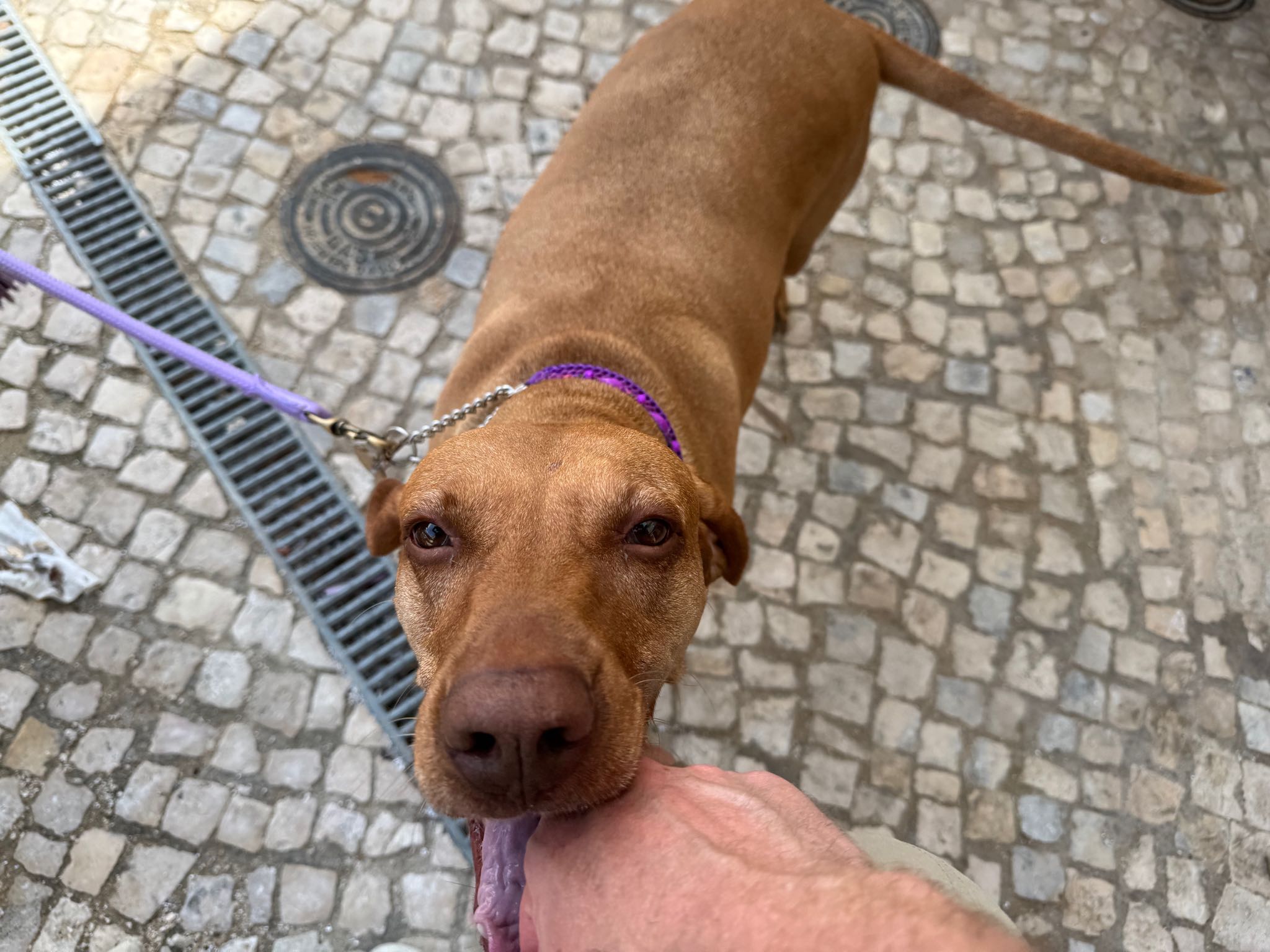
A joyous dog simply insisted I say hello. 

Walk to Castle, then to markets with Jo. 

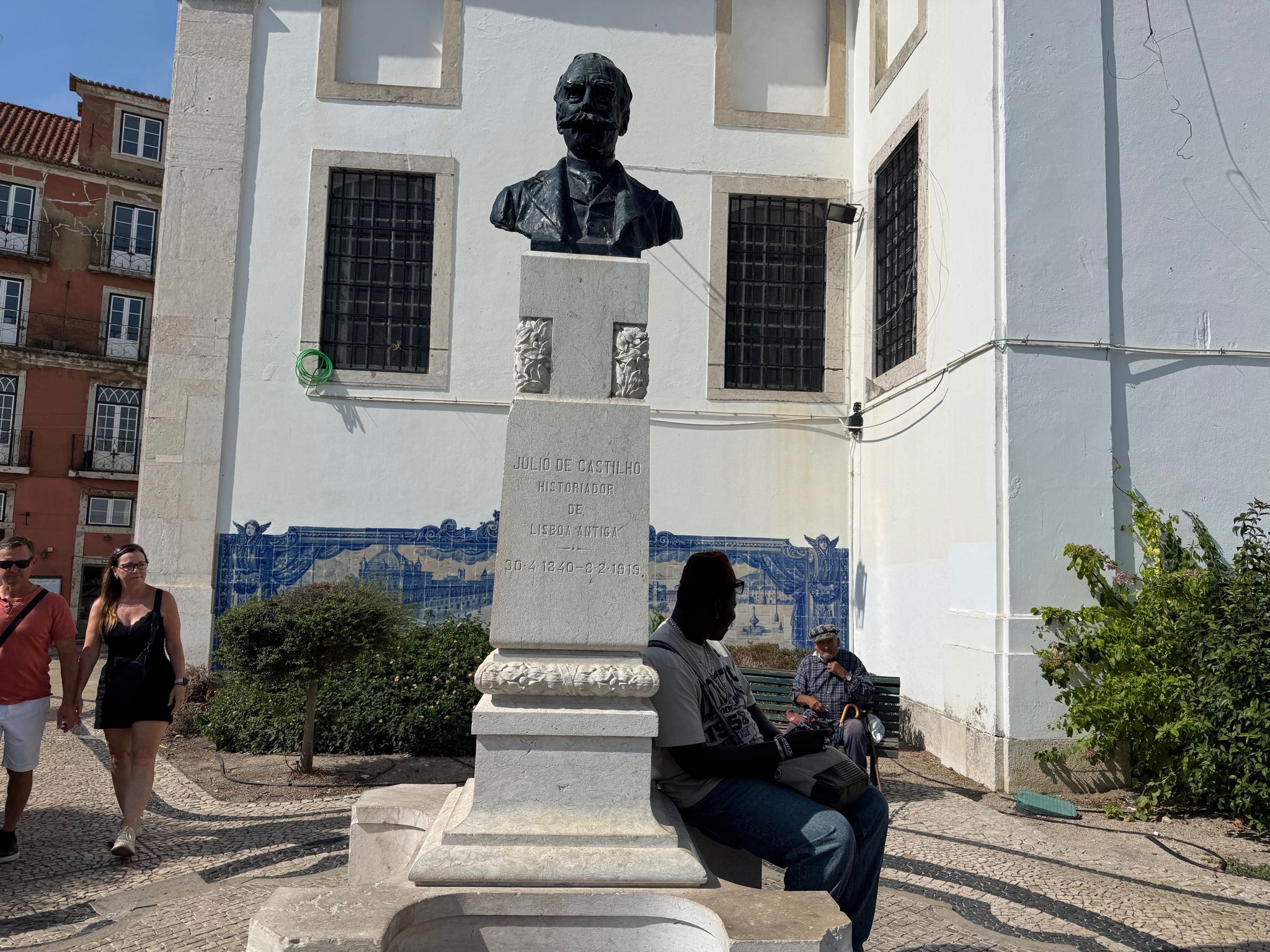
This is Júlio de Castilho (1840–1919) – a writer and historian who spent lots of time capturing the traditions and culture of “Old Lisbon”. I think he is part of the reason that “Old Lisbon” is so well preserved.

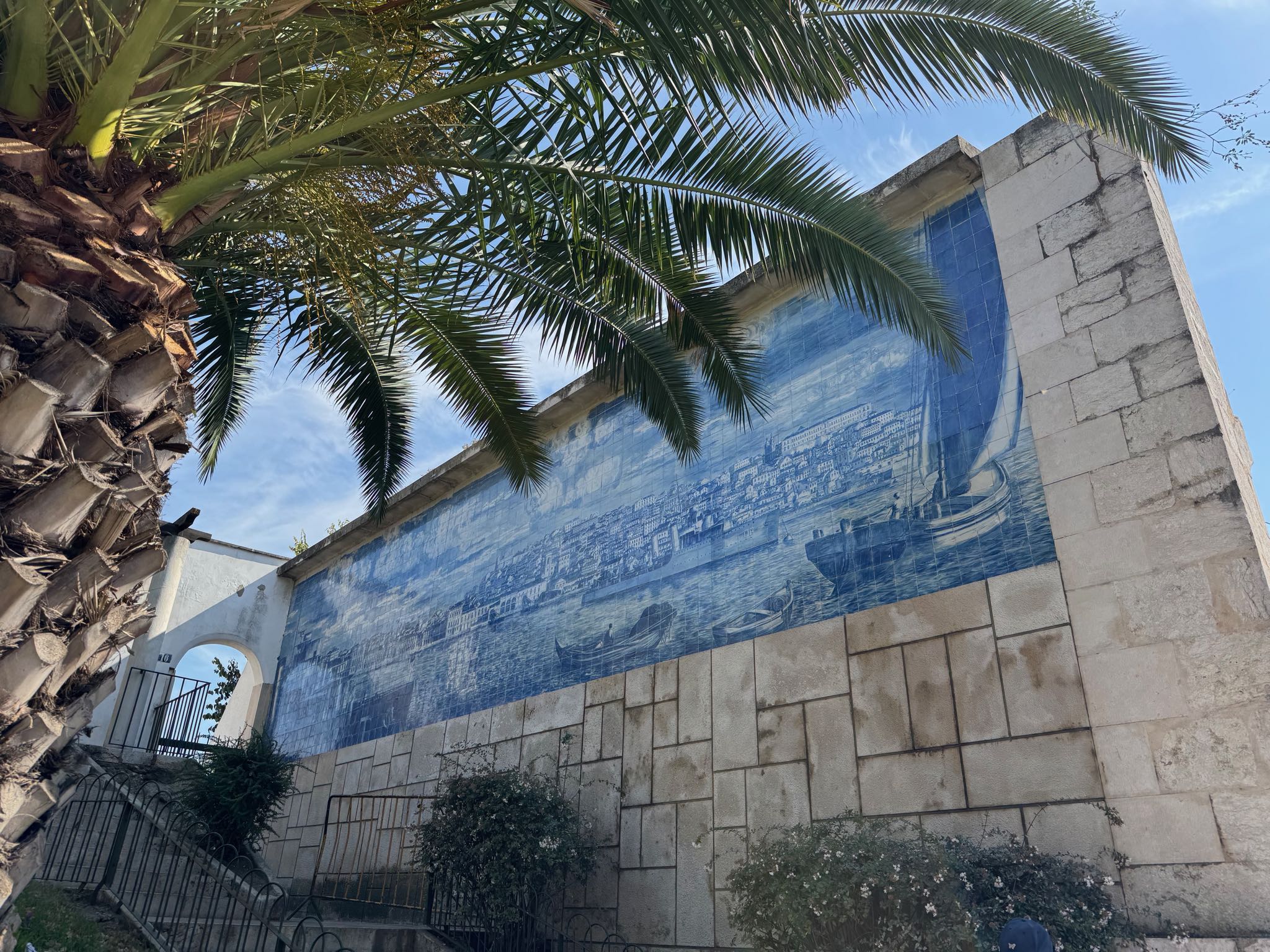
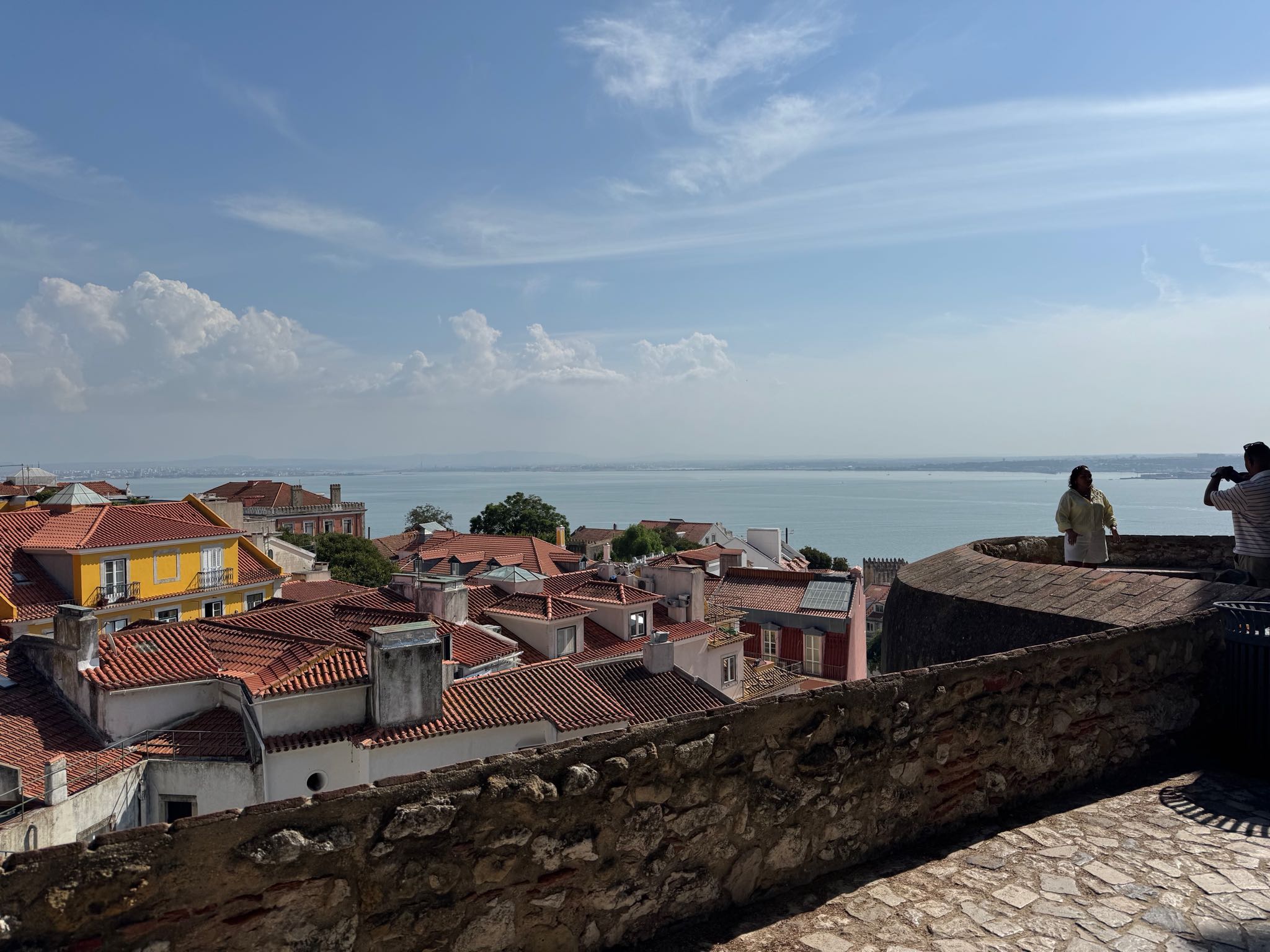
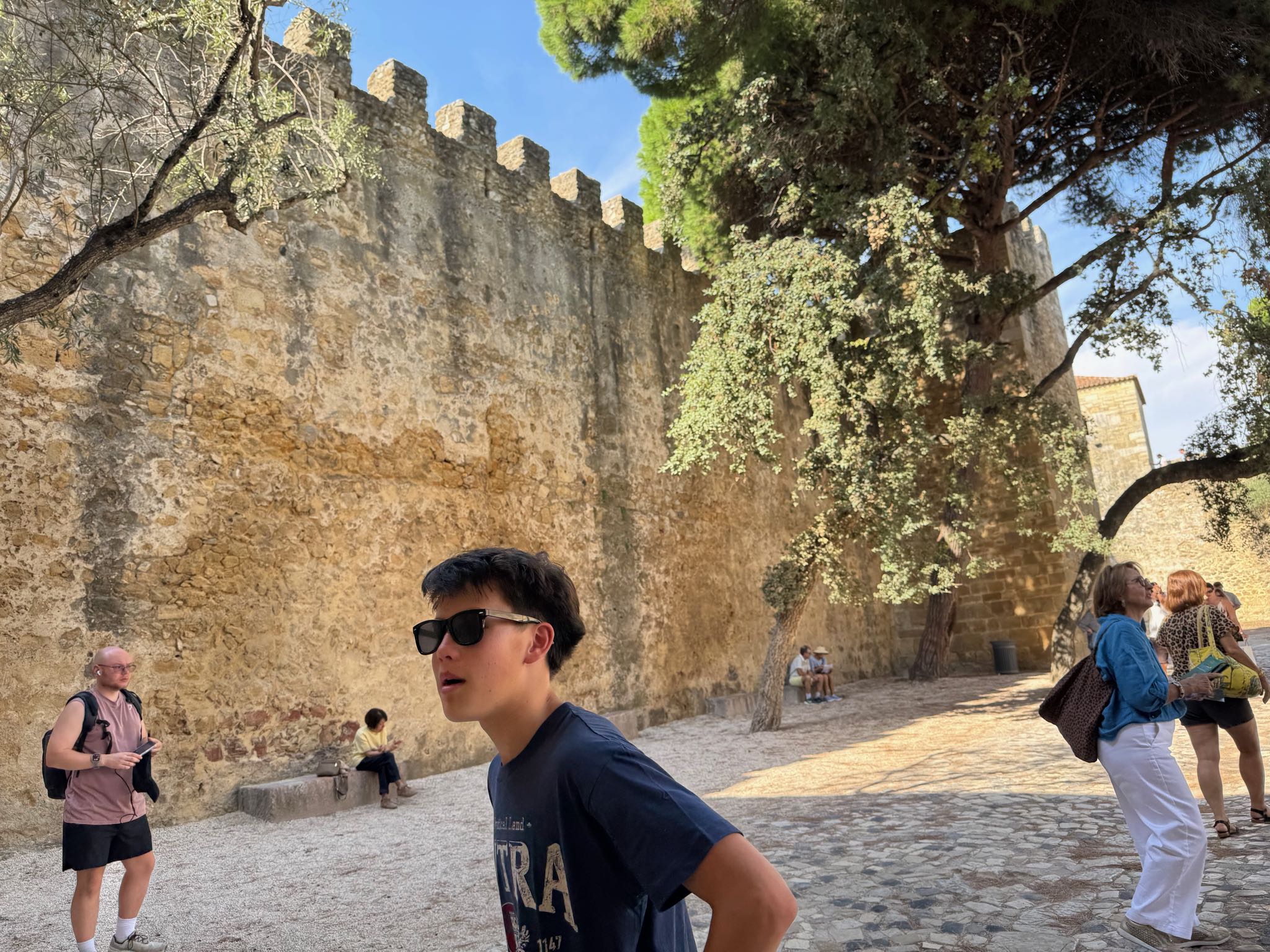
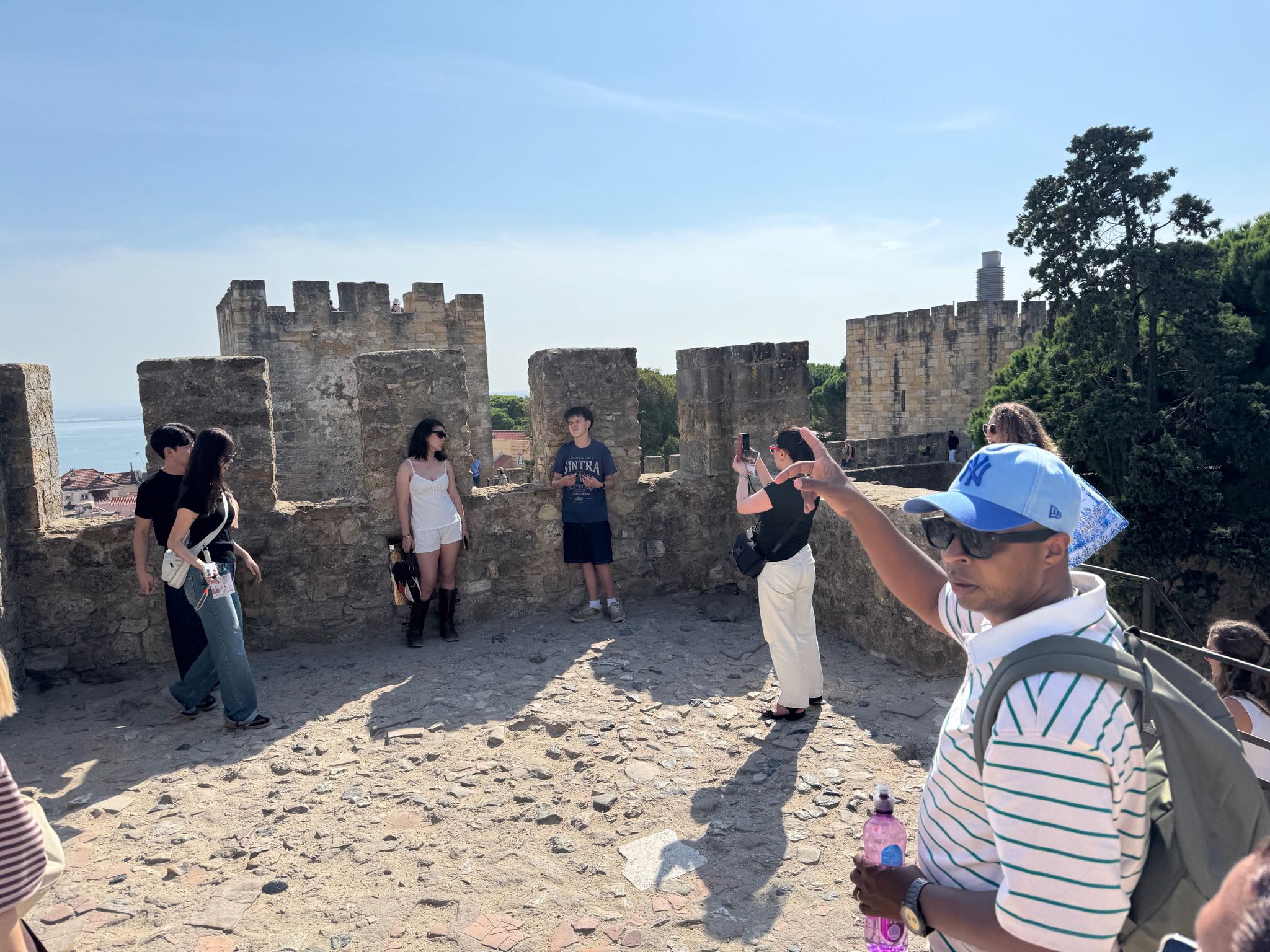
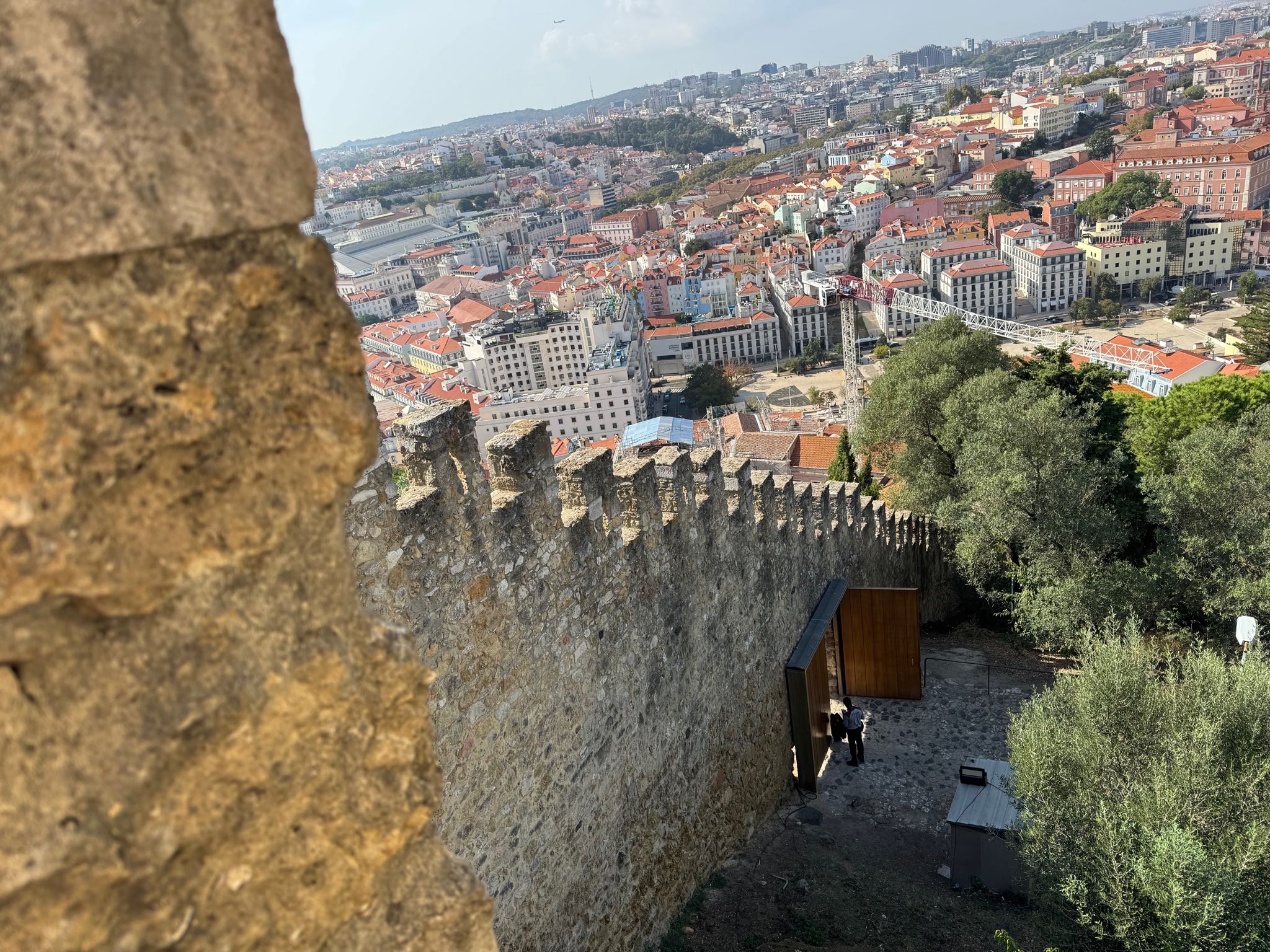
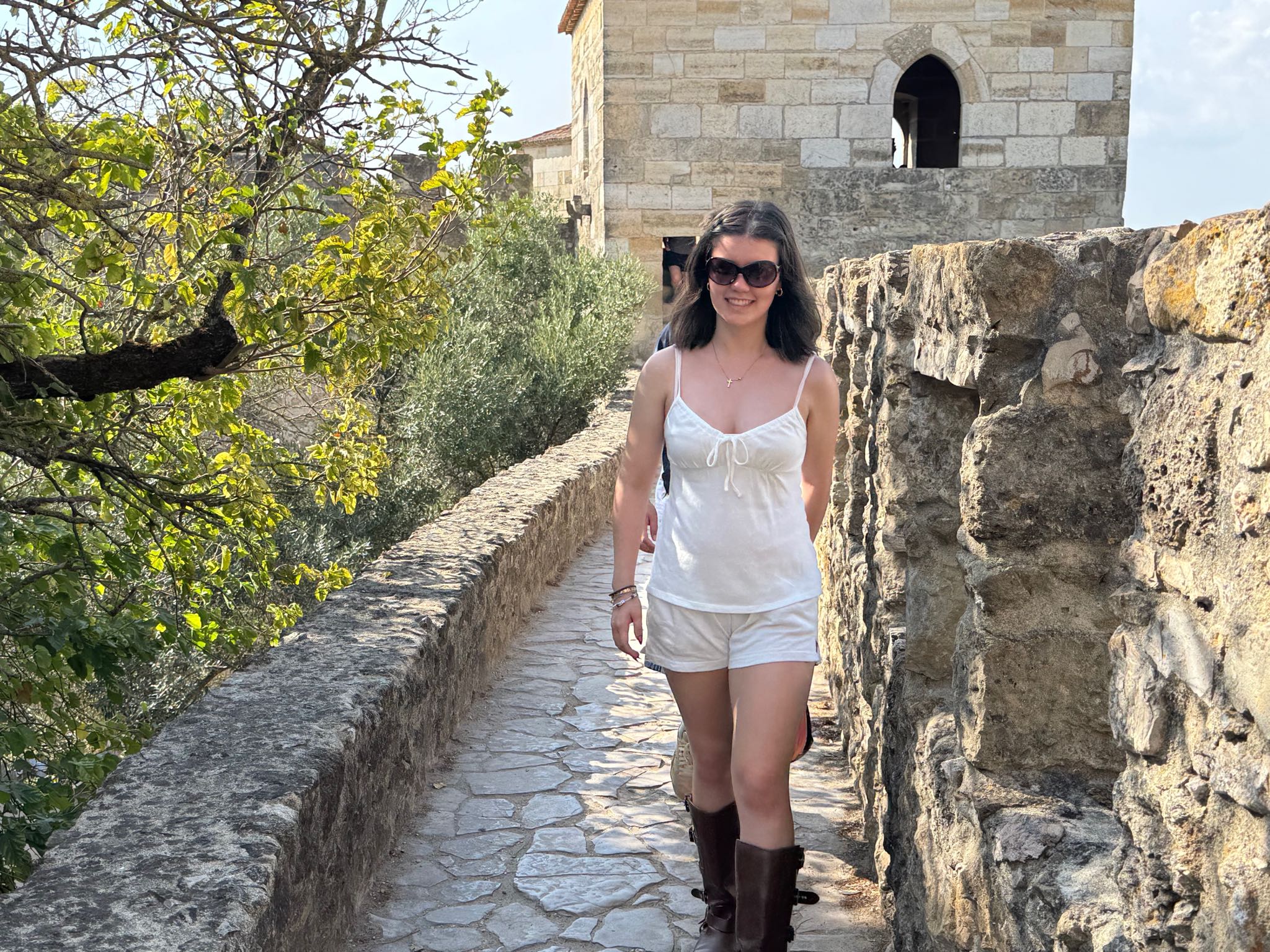
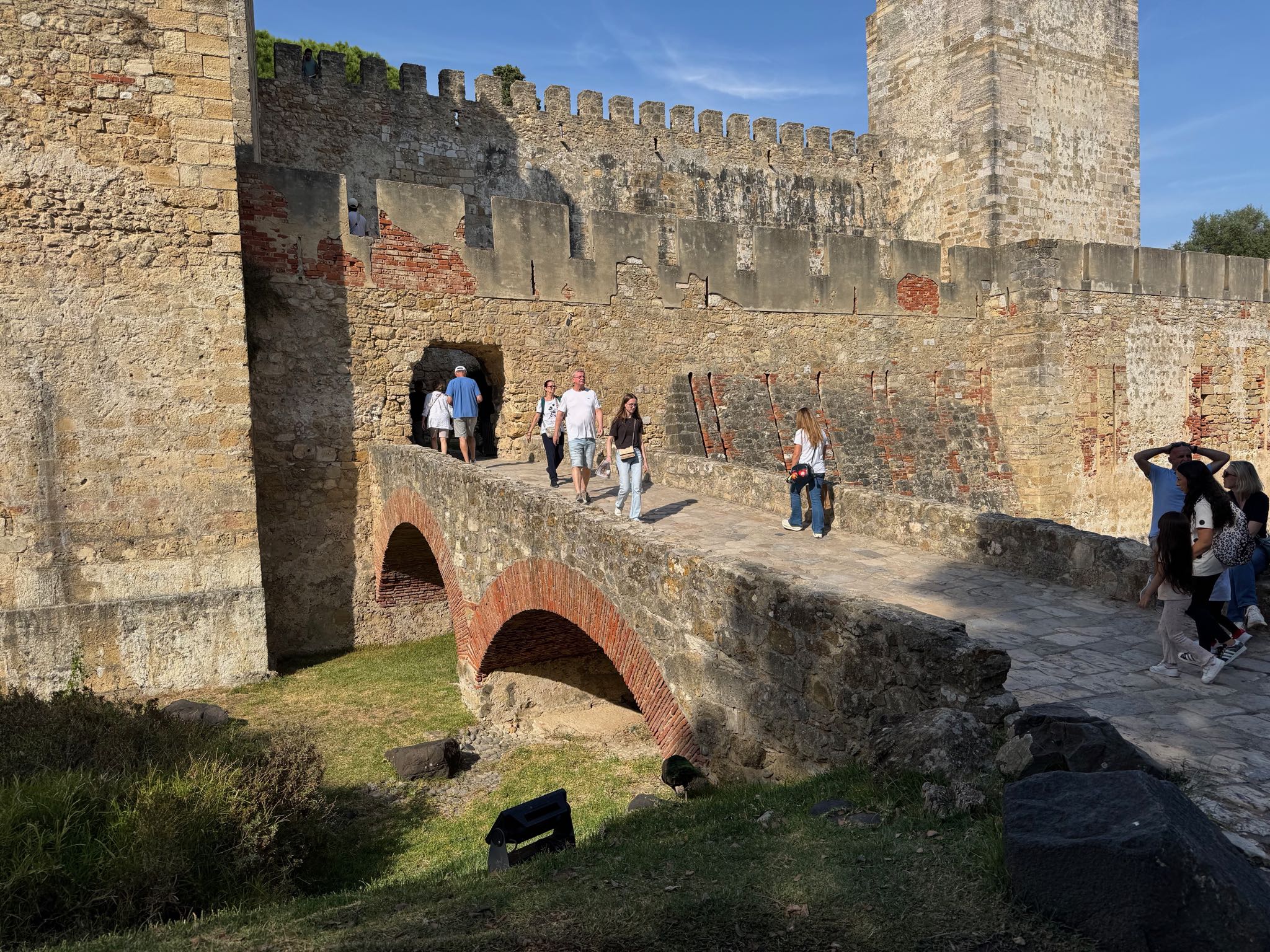
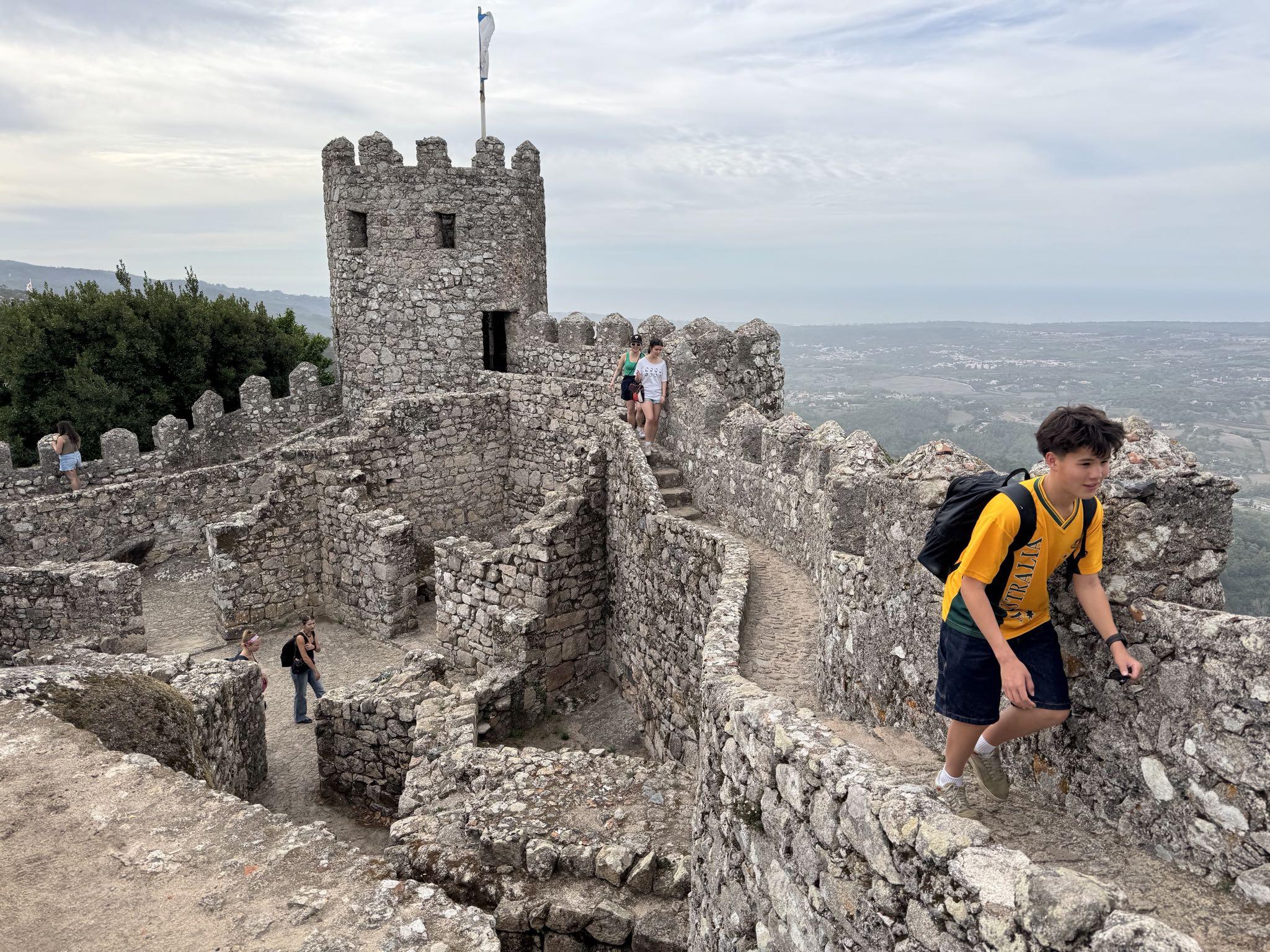
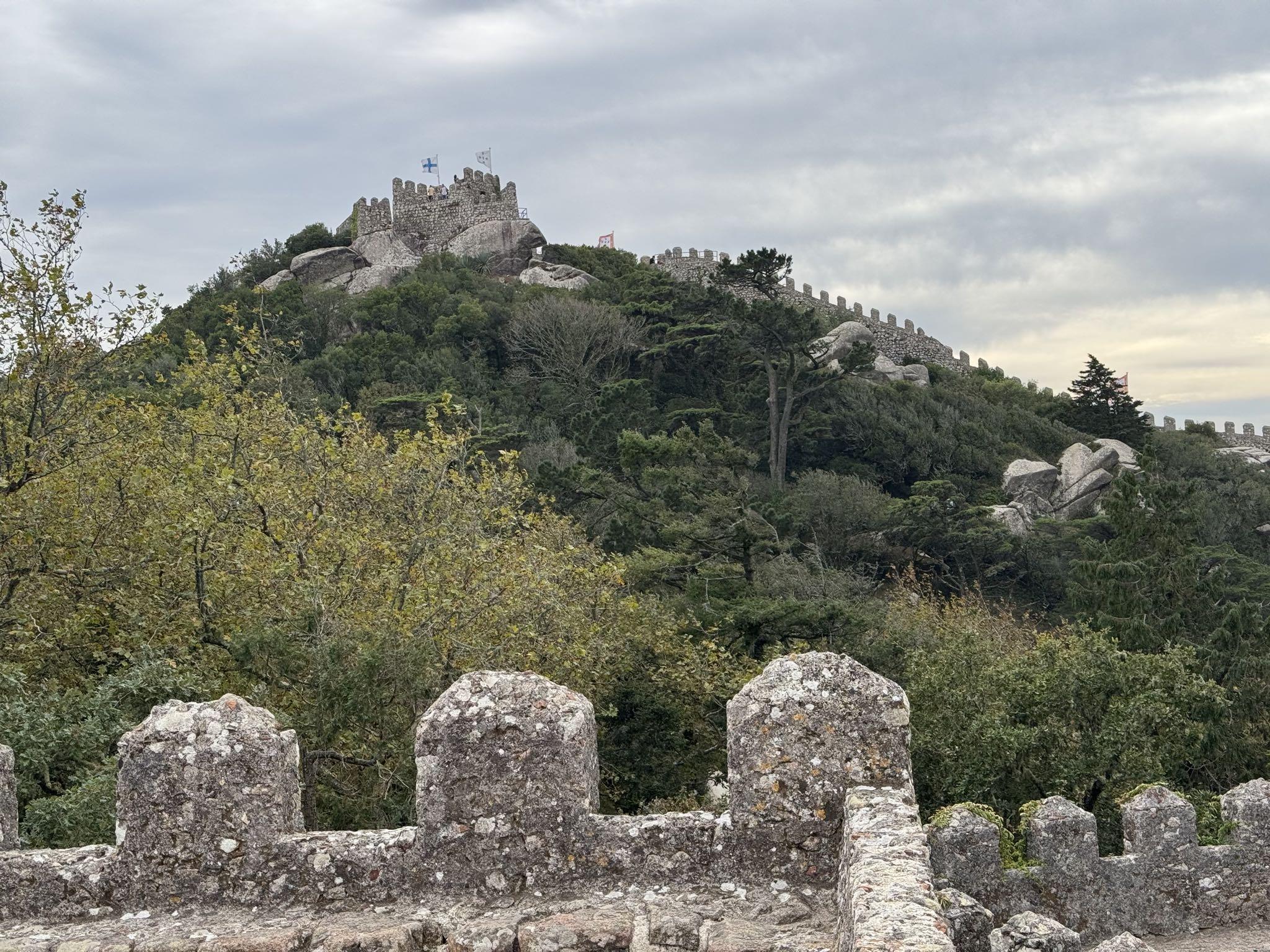
The Moorish Castle stands over Lisbon, partially a trophy in conquest over the high ground, but also a symbolic link to a past of craft and knowledge transfer between cultures. (More later.) I imagine siege works in 1147 starving out the Moorish remainers in the Castle, but an overall Moorish population not kicked out of the Iberan Penisula for another 250 years. The lesson I take from this is that even when times are tough or in conflict, you need to learn all you can.

Friday 2 October – Cintra

Lisbon has done an evolution of the traffic light “squeegee bandit” to the “juggling bandit.” A Barnum-esque Peregrination entertainment at red lights after which you are asked for a contribution. I wonder if this flavour of tradition lasts back to Ancient Greek and Roman times. 

Fabrico De Occolus signs are one of many that line the highway. They look like the TJ Eccleberg signs from Gatsby. (Imagine this on a big long billboard).

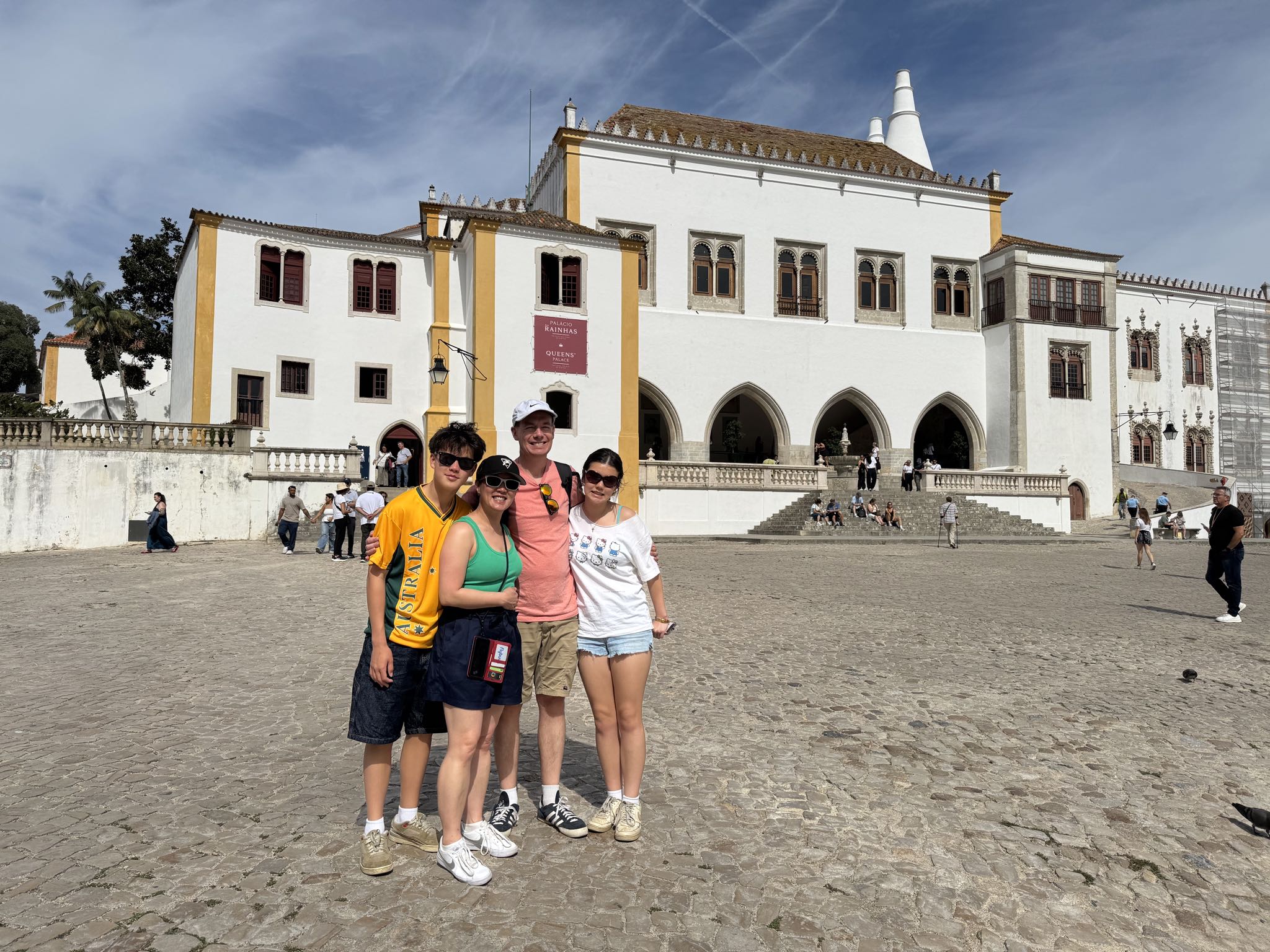
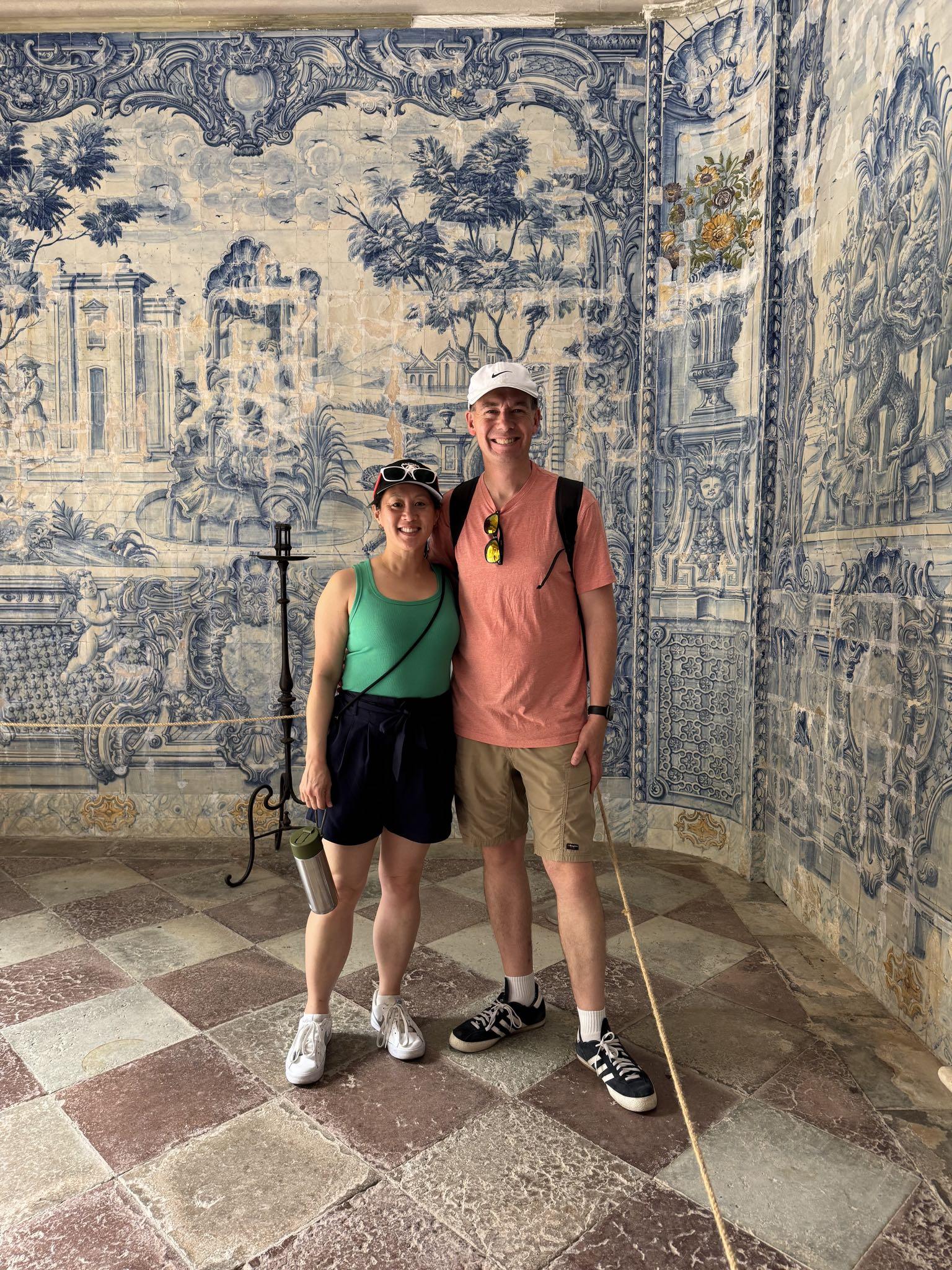
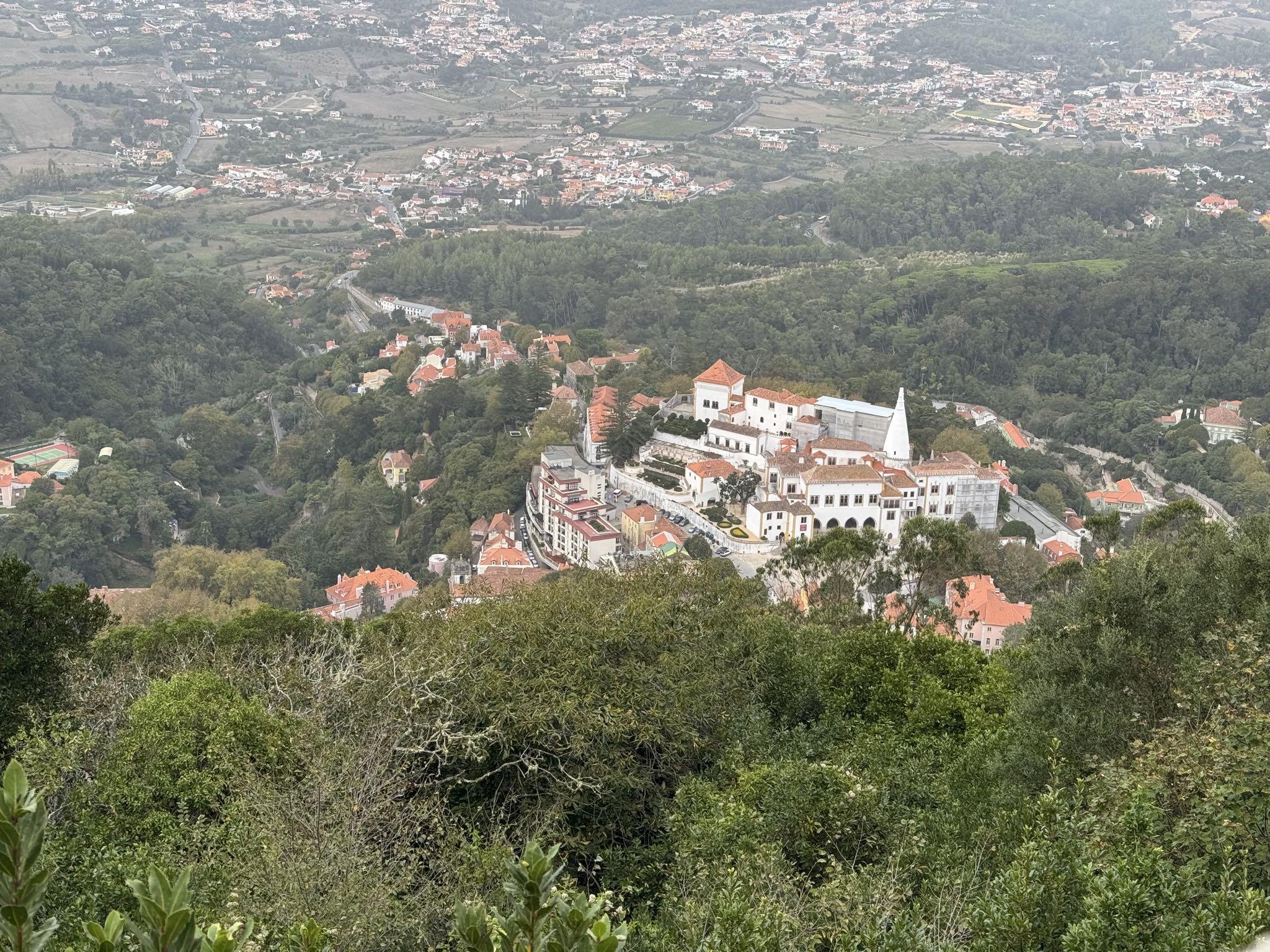
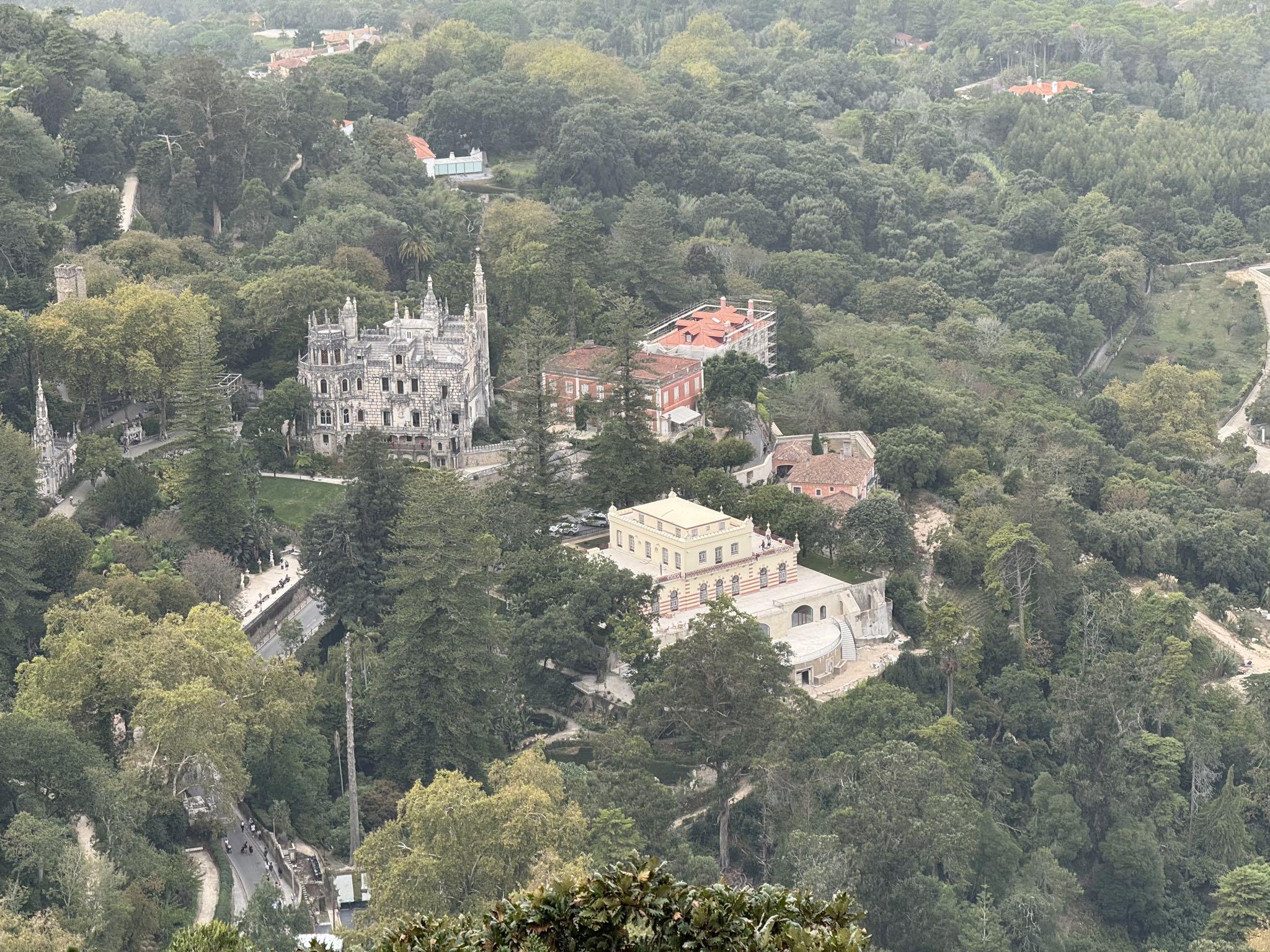
We arrived at Sintra, the Queen’s Palaces. The idea was that the Queens look after justice, internal affairs and work by influence. (They had six KPIs) The building is filled with subtle flourishes showing a woman’s sense of humour.

The castle building itself at Sintra is for official functions. Trinity and Hugh found this a bit strange, not wanting to live in a fancy home. I suggested it might be a bit hard to cool and heat, and you might like a nice cosy place next door. Trini felt this betrayed the ideal of needing to storm the council and being for defence. We agreed that it was a sort of Phantom Menace deception, when you think you have Natalie Portman you’ve actually got Keira Knightley.

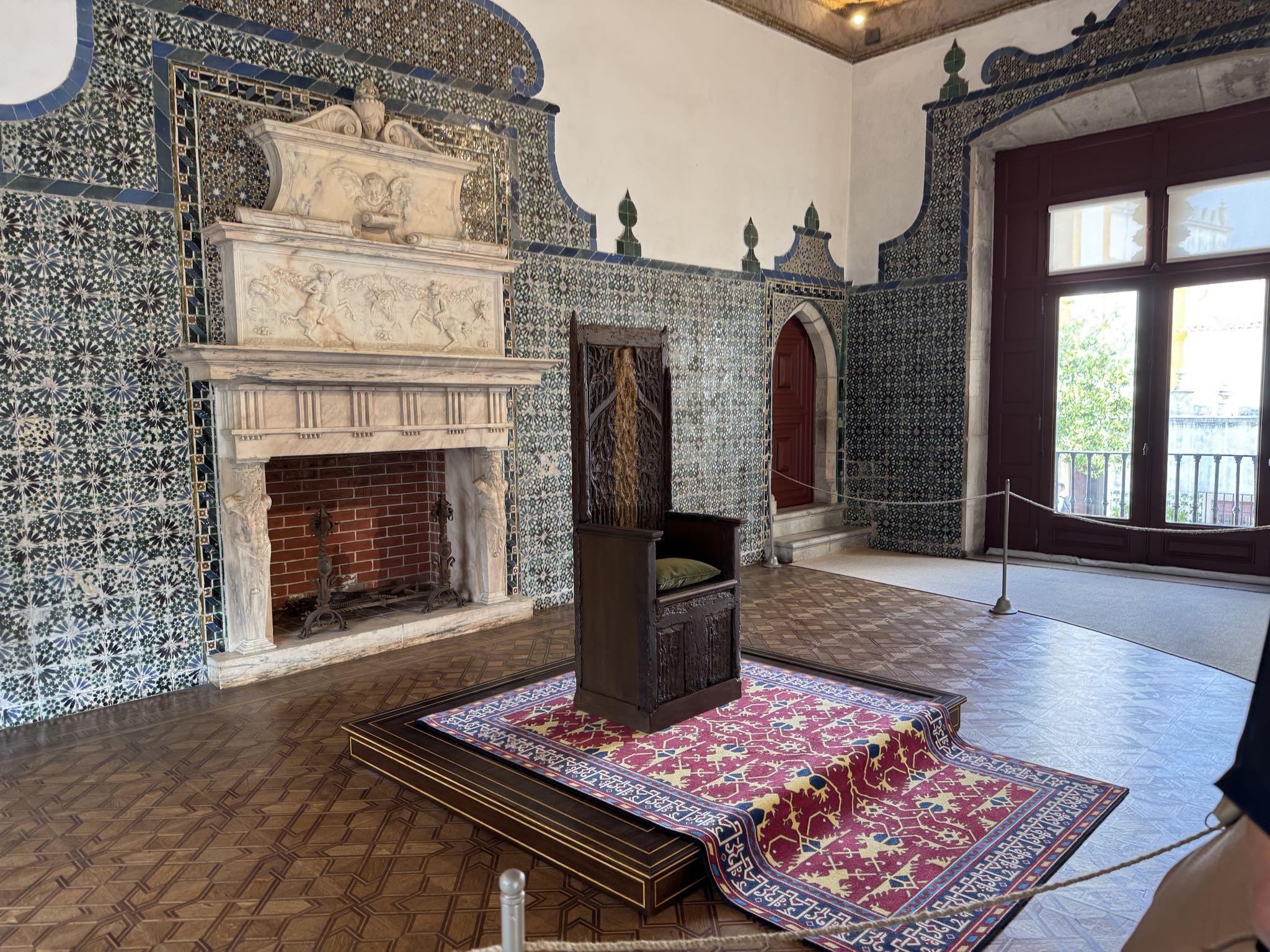
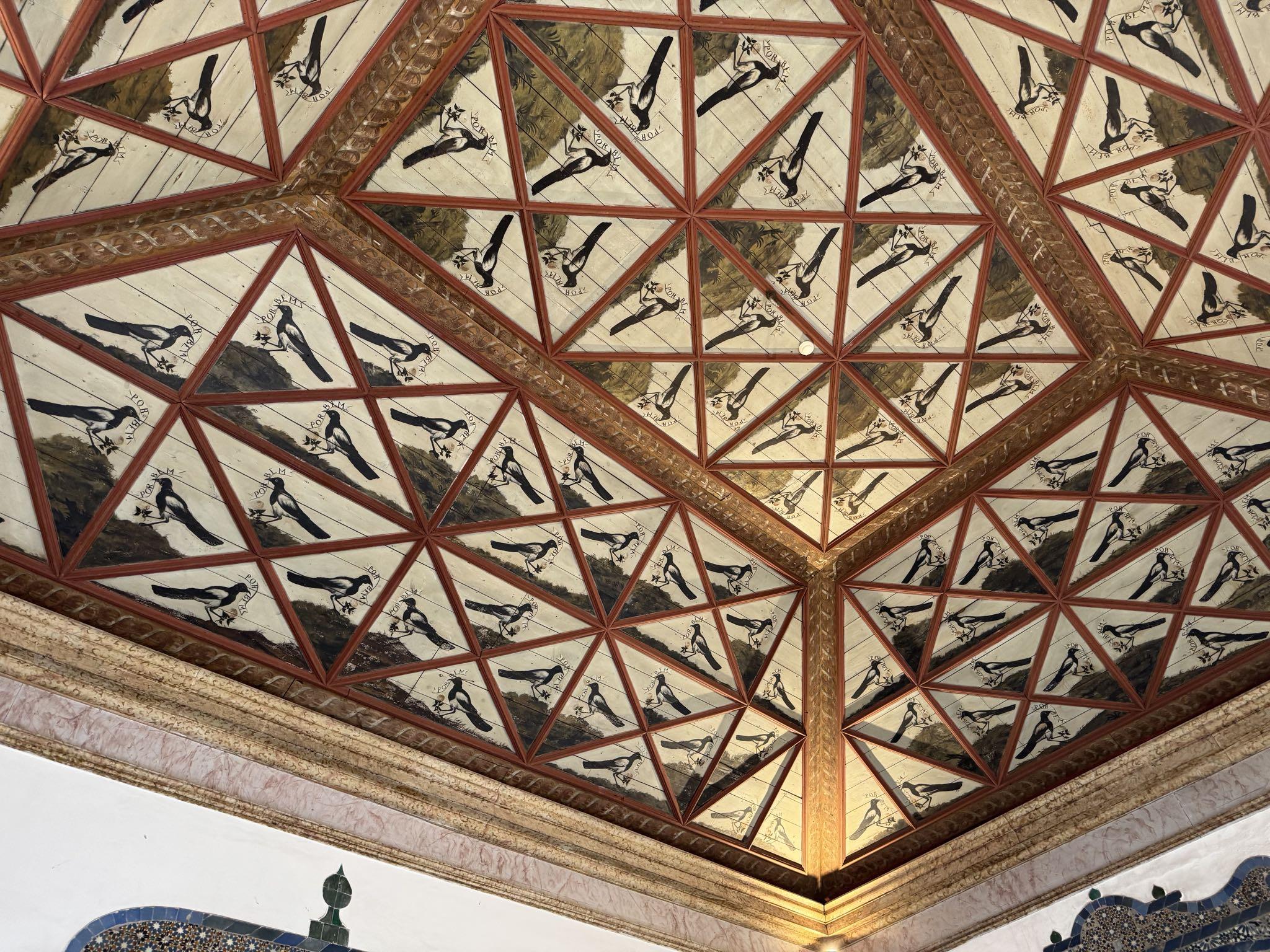
We entered the Magpie room, which is a King’s council room.  He sits (perched?) on his throne whilst his advisor stand. Seems like a good system to make a meeting run efficiently. The name of the room seems to have come from a building dominated by the Queens. (Later I discover this name is a Portugese convention.)

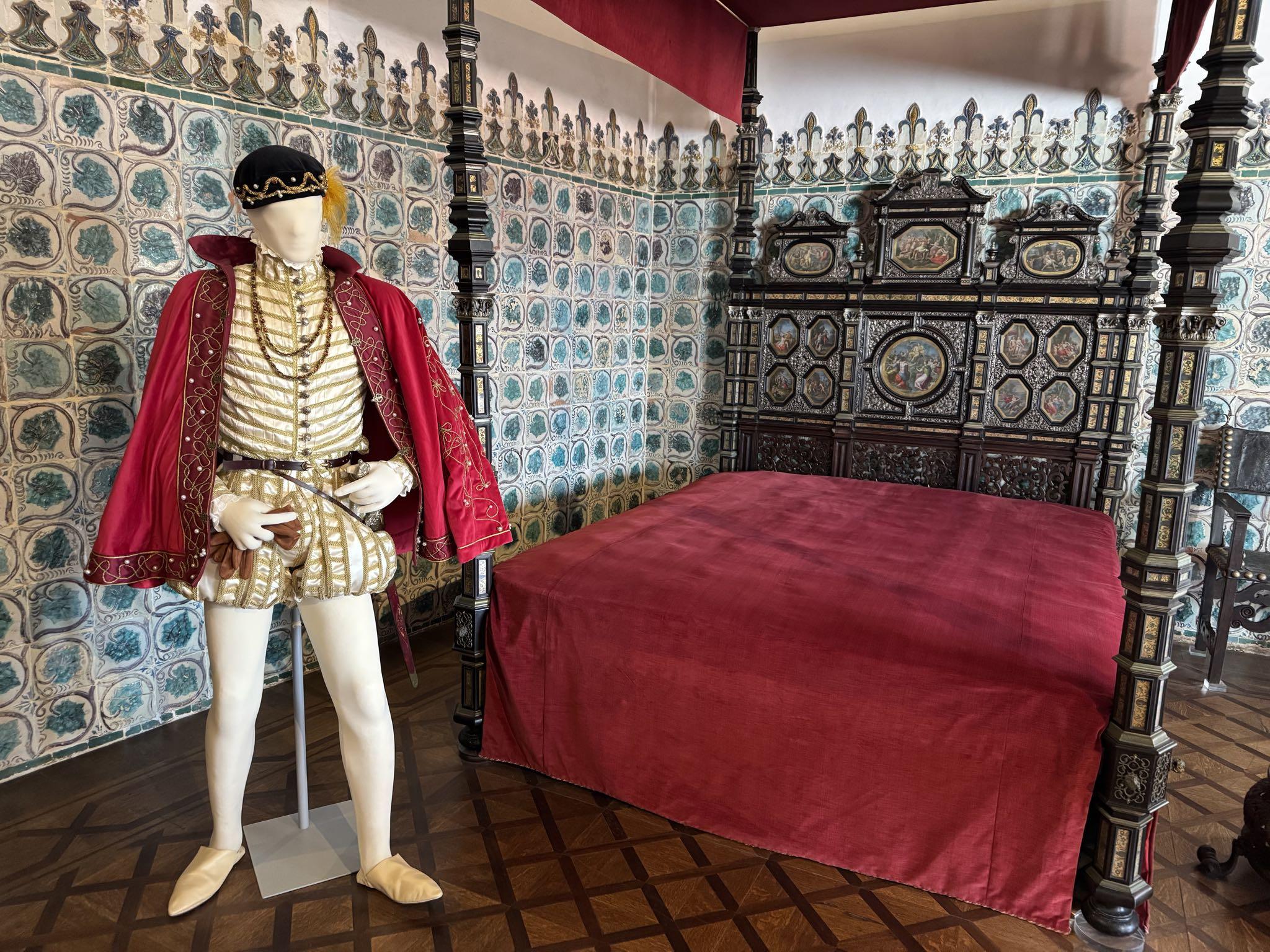
Princes wore short shorts, perhaps because of the heat. Hugh thinks they might be good for cross country running. 

Portugal “regained its independence” (Iberian Brexit) in 1640 with Prince and then King Joao (Jono) IV.

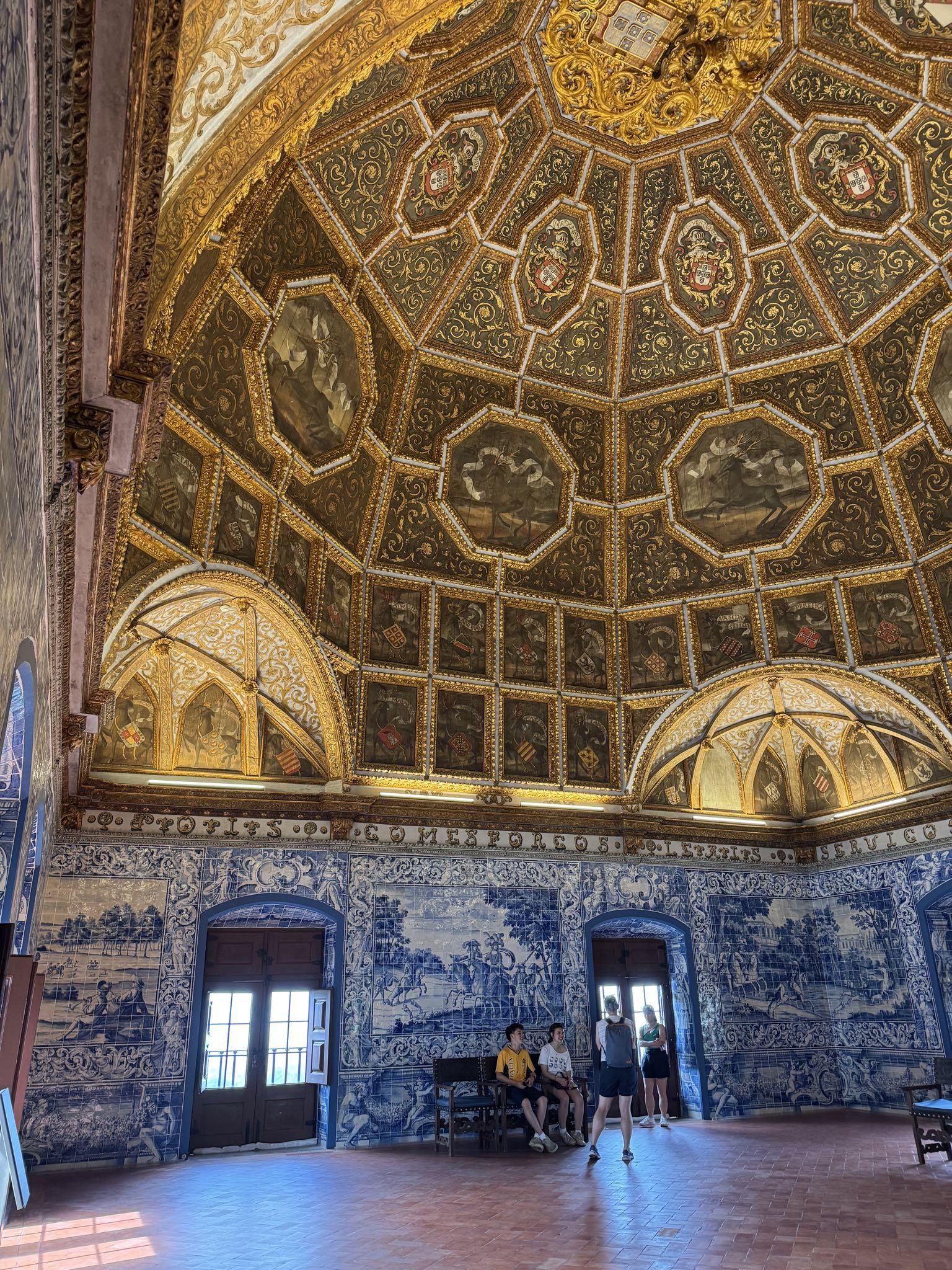
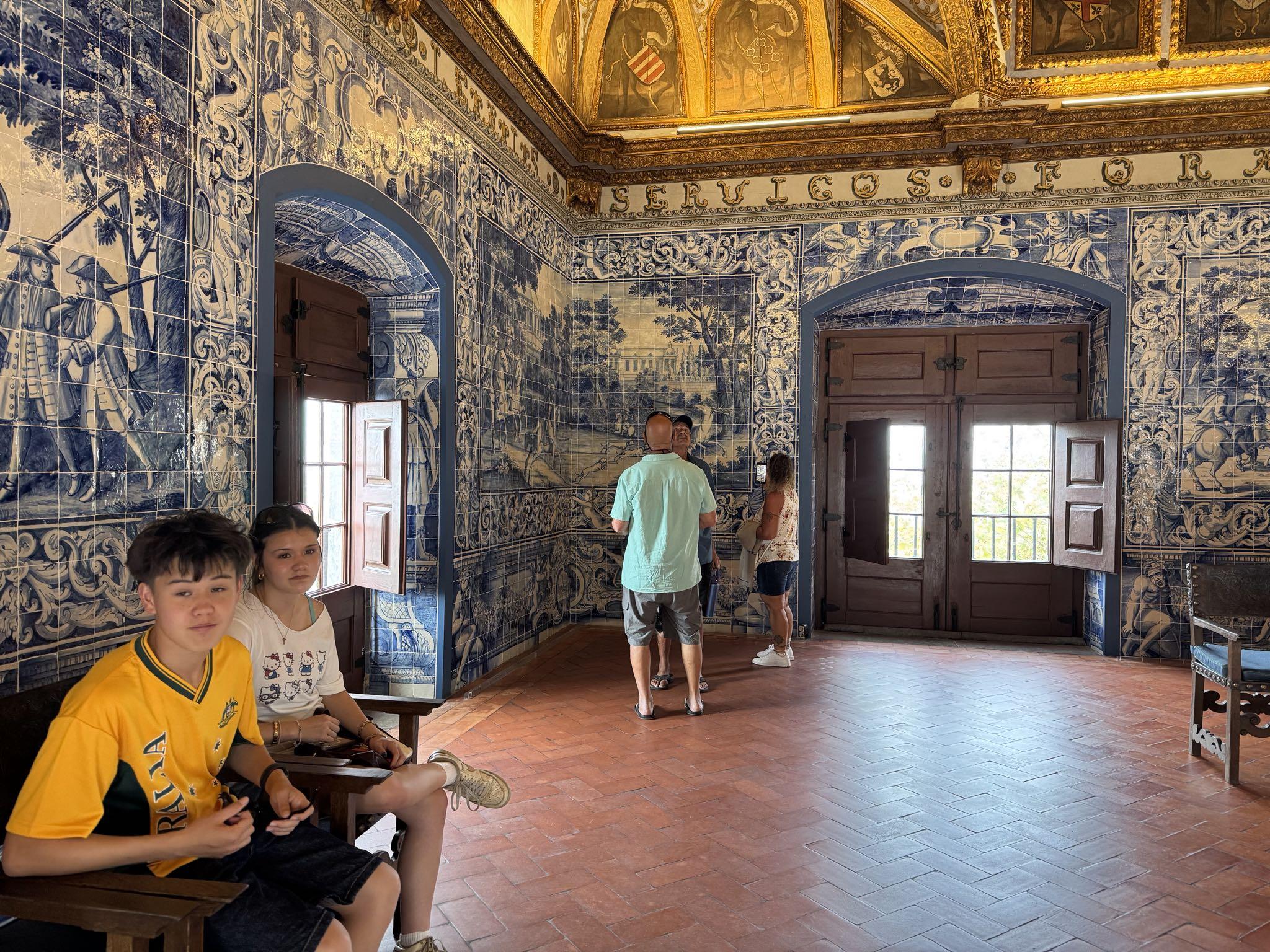
We reached the Heraldic Hall, a symbolic room showing the interdependence of the King and royal houses – ultimately celebrating their nobility. The room is a Qubba (square on the bottom, round on top) symbolic of the meeting of earthly and heavenly powers (from Islamic architecture.) obviously the nobles have placed themselves in the heavens. Trinity satirises the room by placing each of Hugh’s friends as the names of the noble houses. 

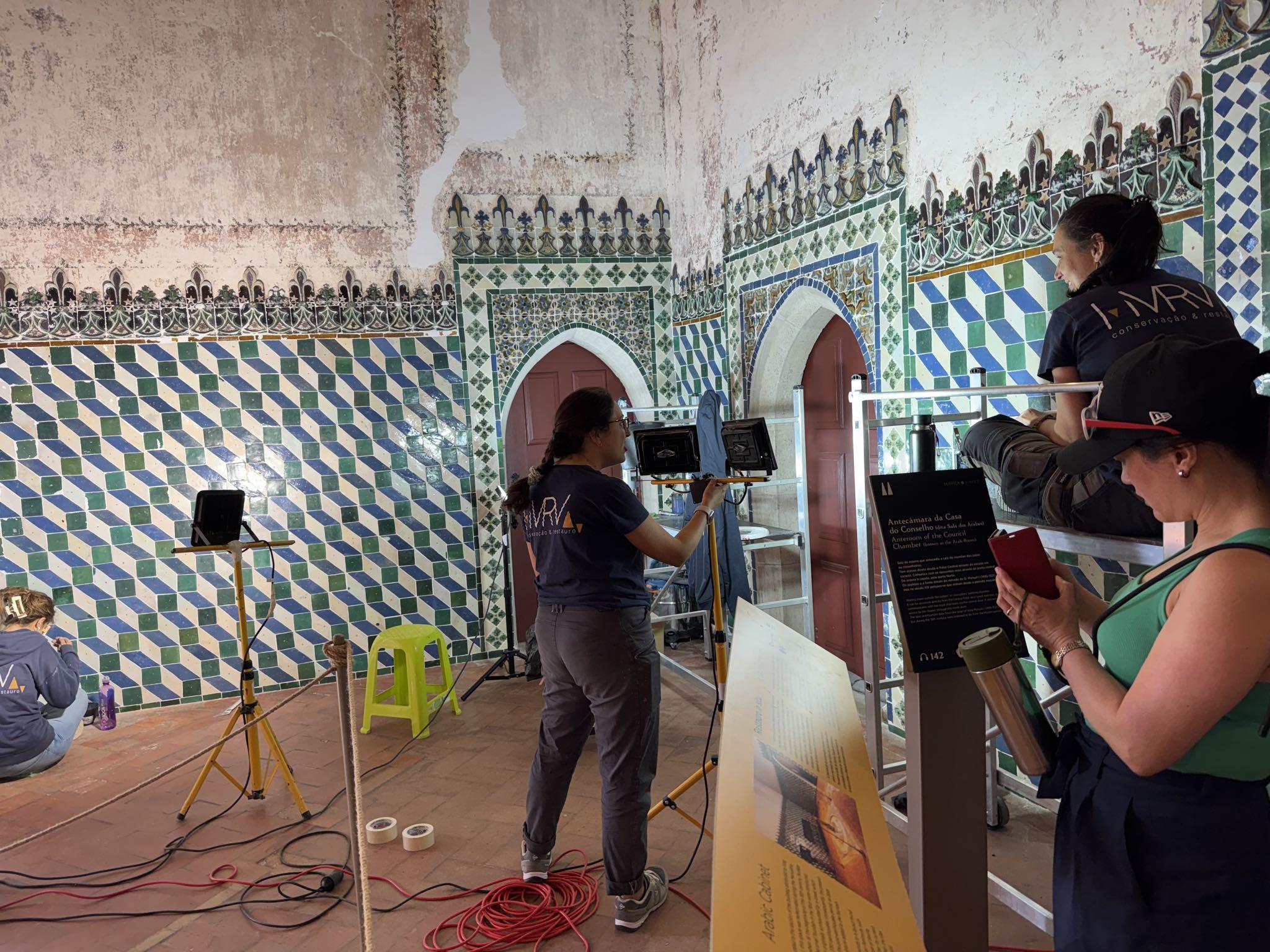
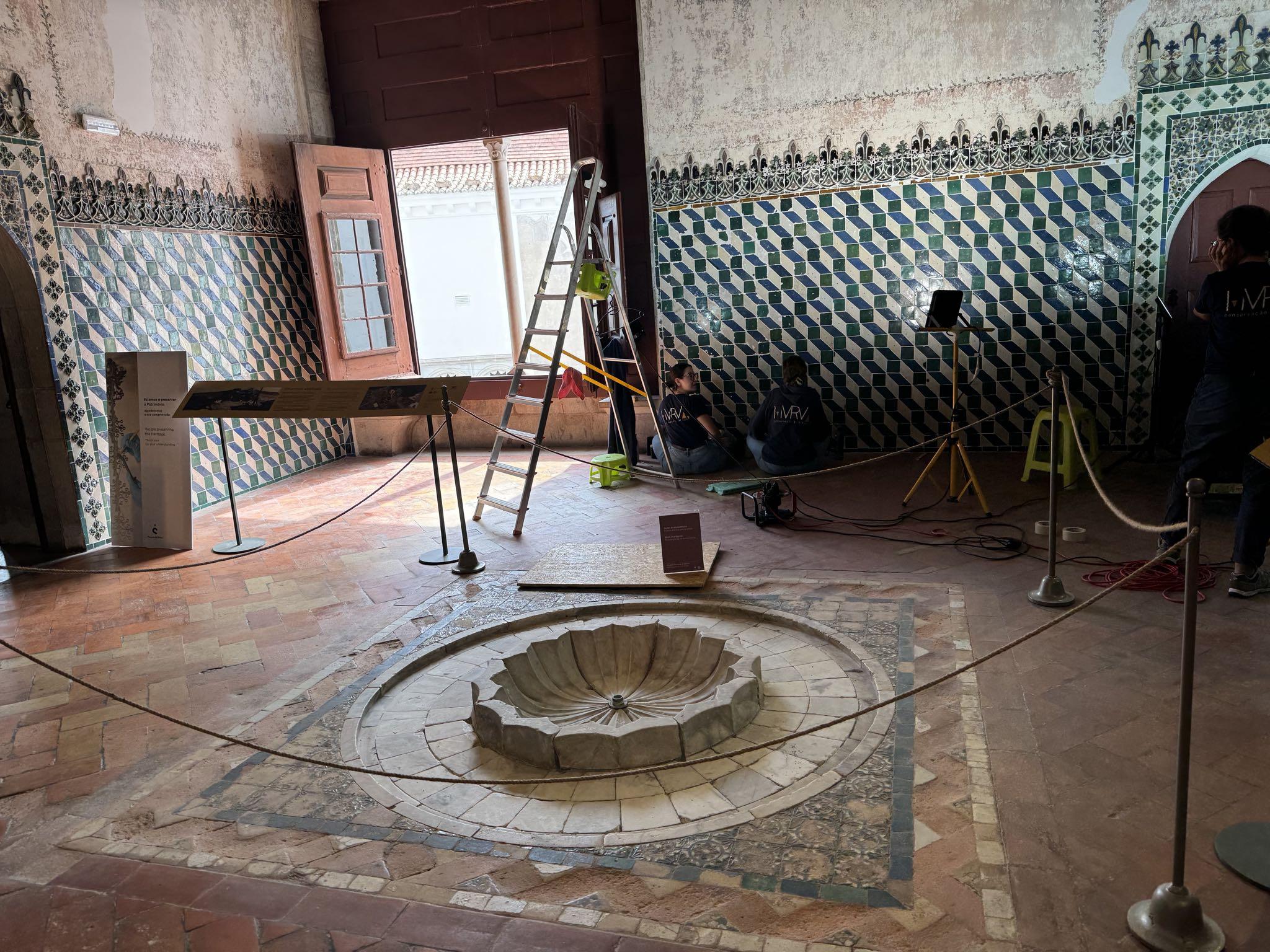
We enter a room being restored by giggling artists, the room symbolises development of ideas and scientific practices.

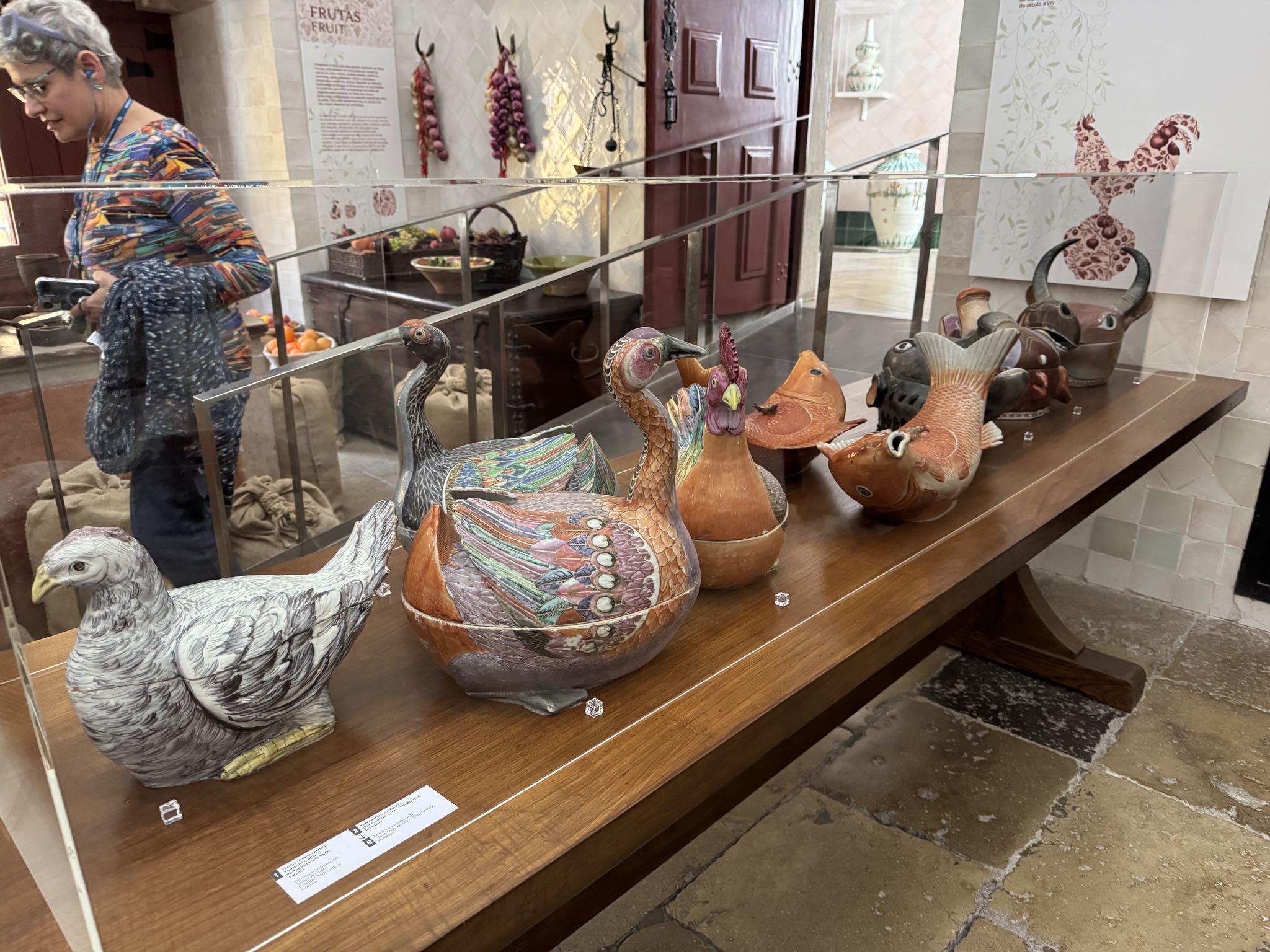
We enter a cozhina, a sixteenth century kitchen celebrating the spice trade, sugar production and a future confectionery enterprise. We also see 18C torueens shaped like animals, inspired by Chinese trade. 

We wander back through tourist shops at the bustling Friday lunch – a sign offers croissants with Nutella and gelato. That could work. 

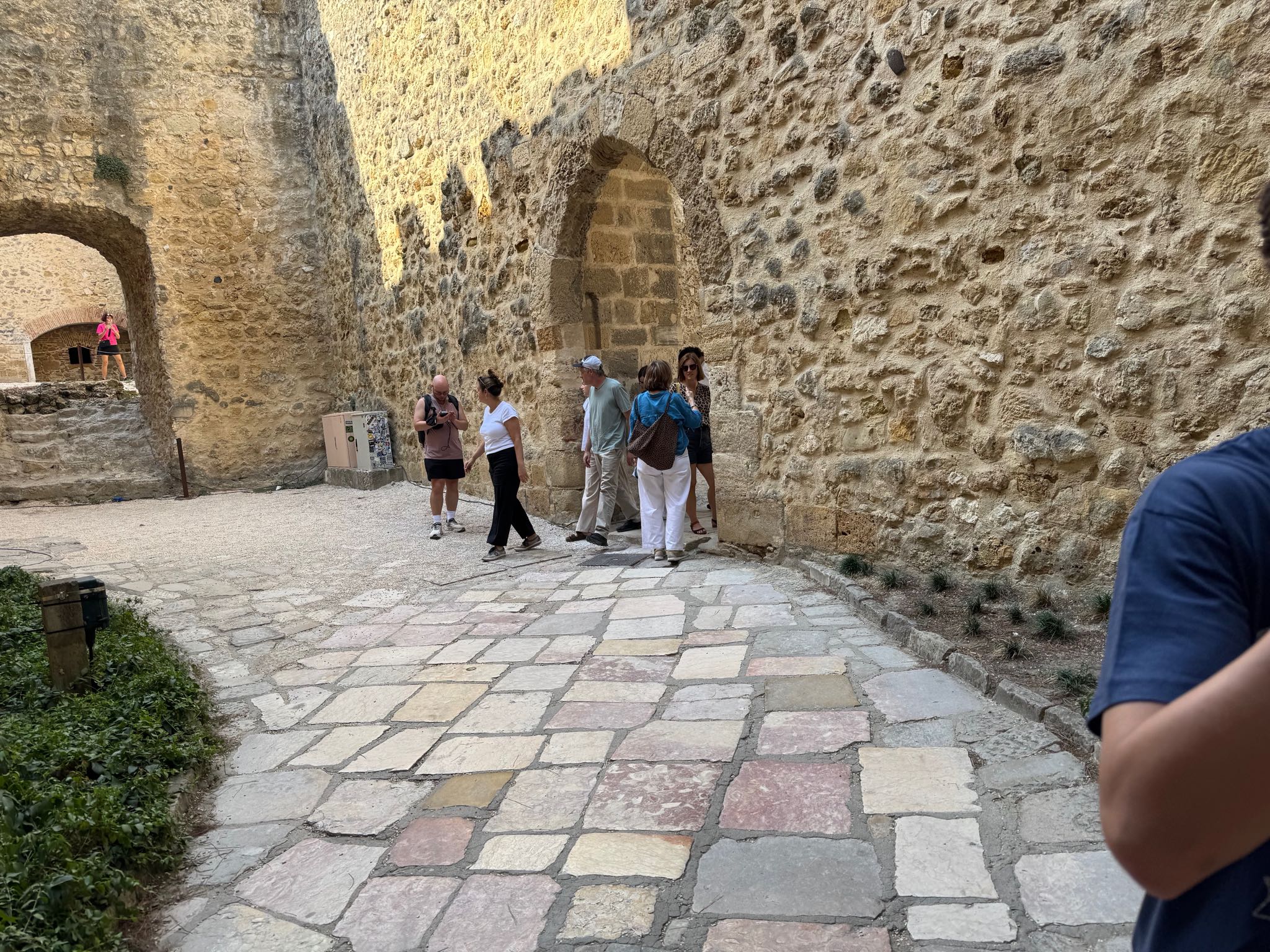
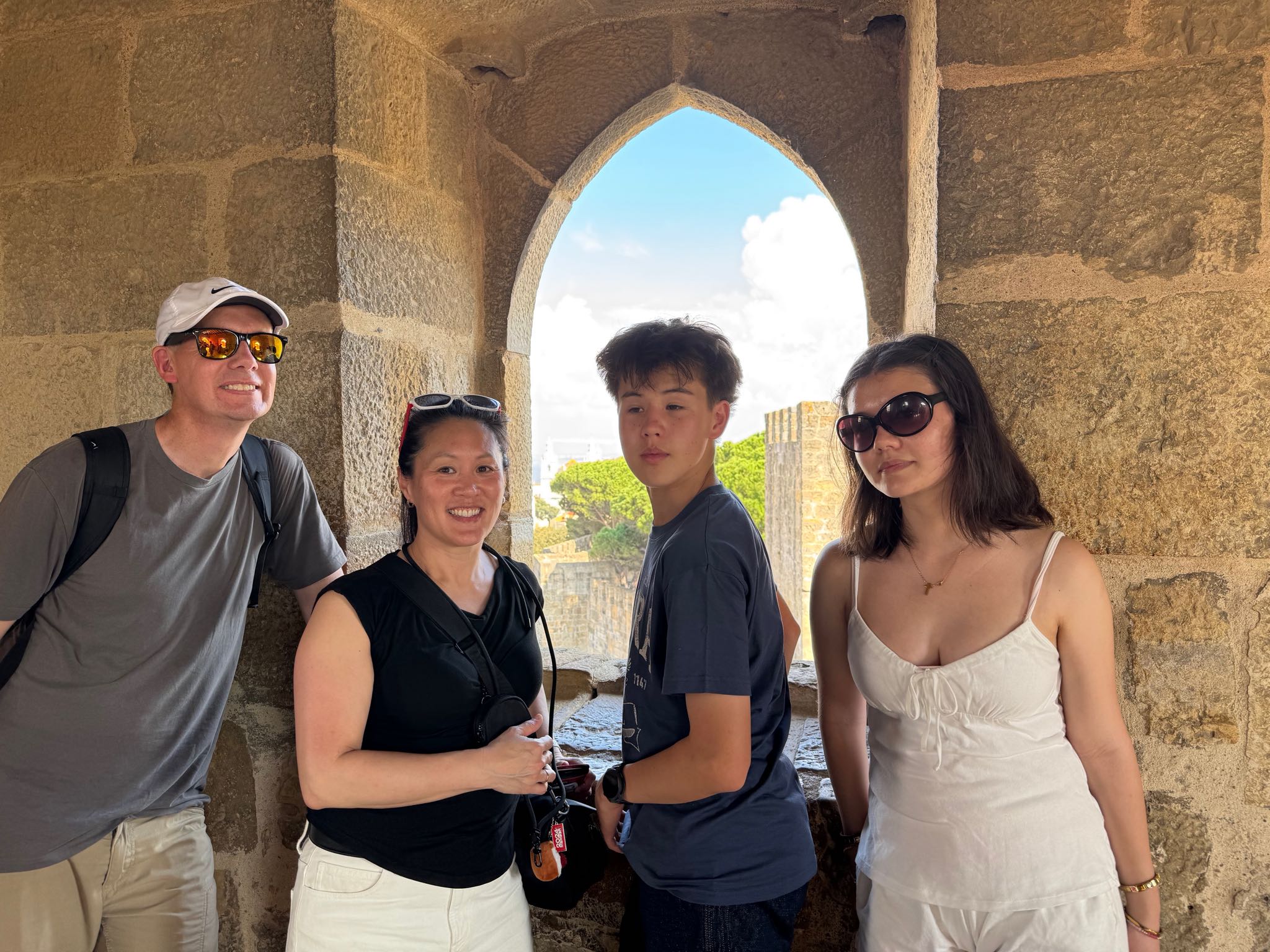
We walk up to the Moorish castle – (think mountainous trek). This was conquered from the Moors in 1147 by peaceful siege when Lisbon was conquered by crusaders from England and Scandinavia.

There are lots of other ‘mini-Castles’ here. It seems that if you are negotiating to marry a Portugese Prince, you need to negotiate them building a Castle according your specifications. And if you are a tough negotiator, you ask for powers to tax the local populace. (Looking at you Isabel of Aragon).

Driving back there is a sign saying Rompo de Injusticeria – which appears to be a protest march with Russell Crowe. 

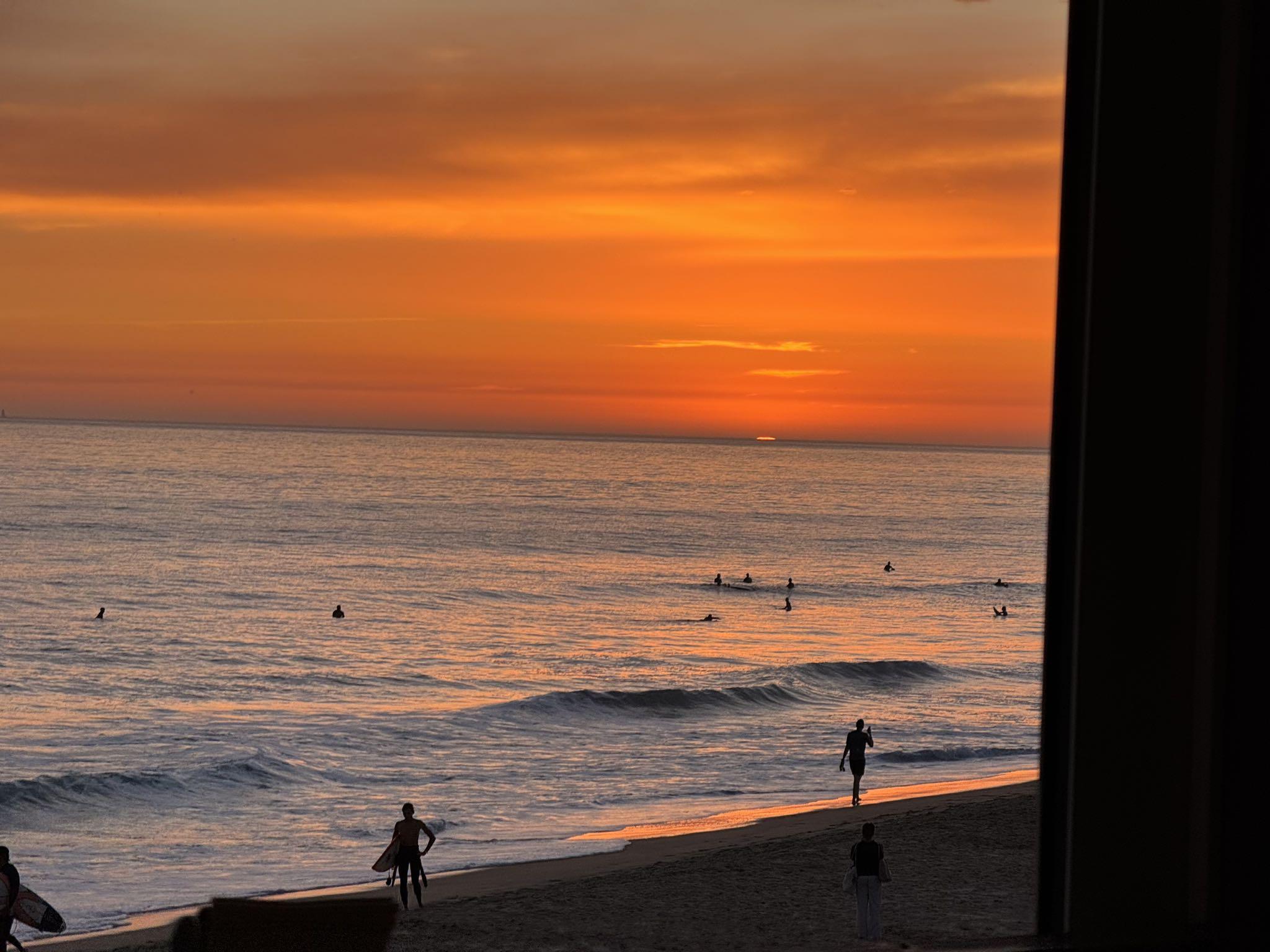
We have dinner on the beach with Matt and Louise with the sunset.

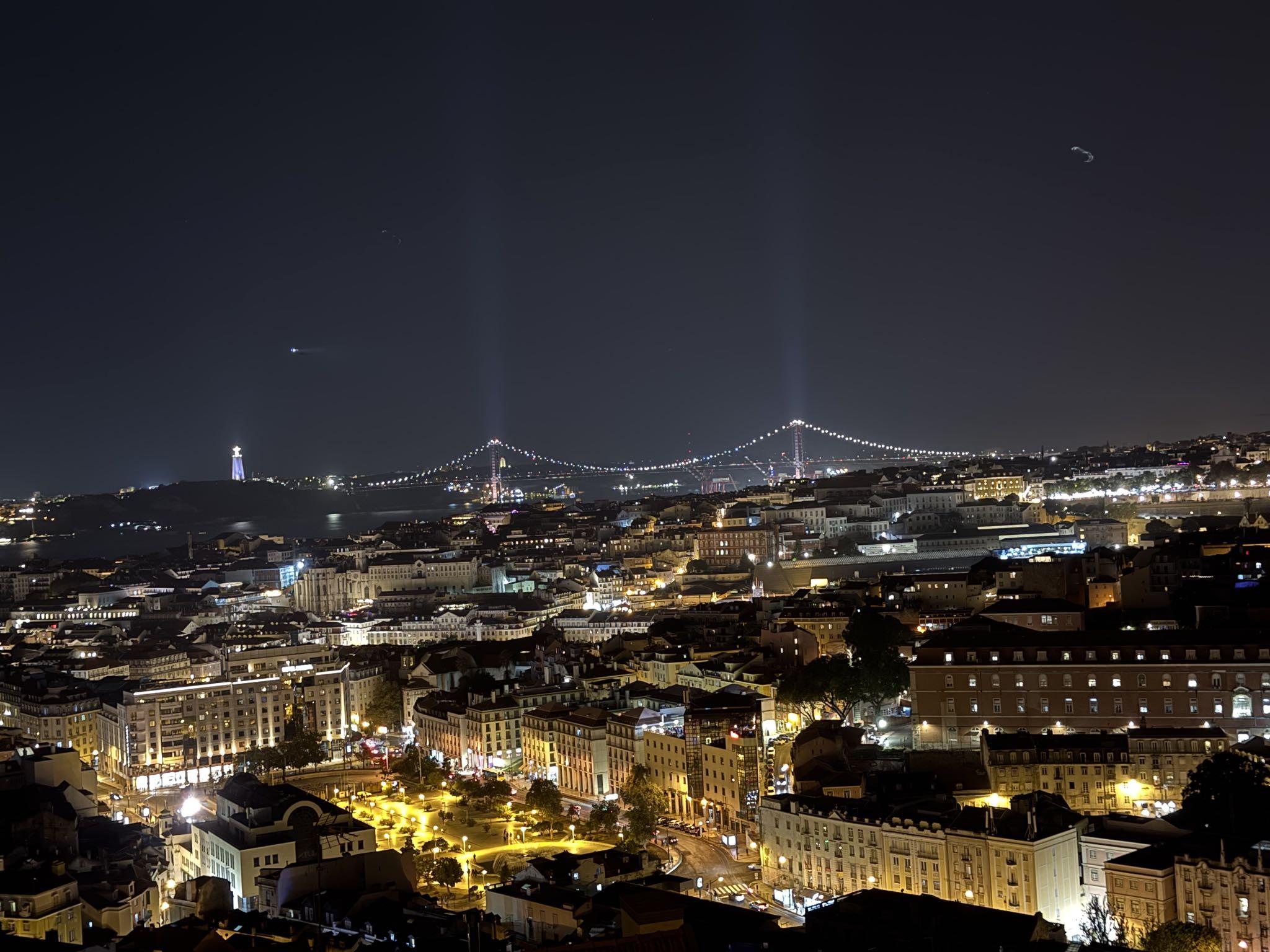
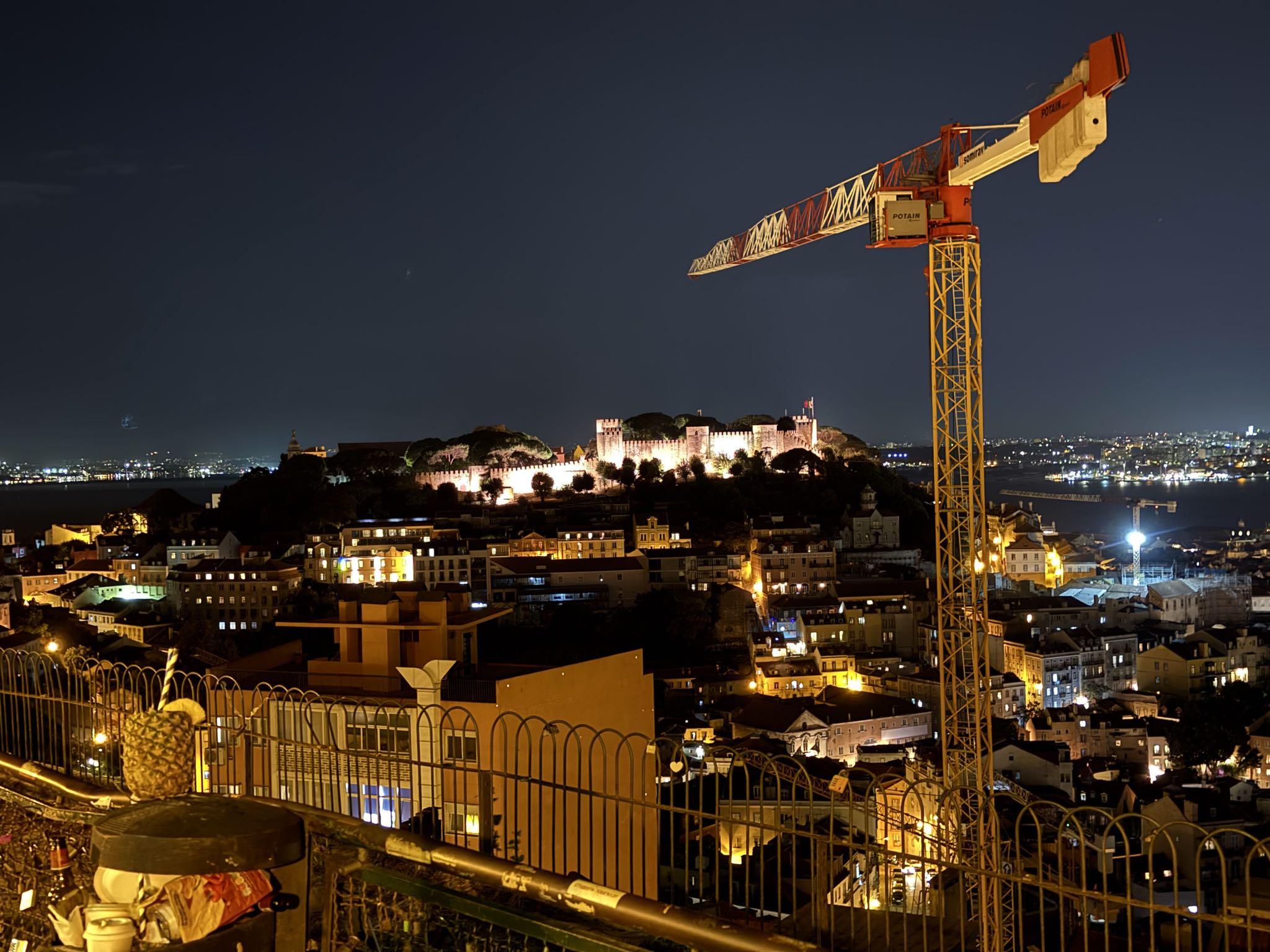
We pause for a minute to view the city from the lookout at the top at night.

Friday 2 October – Breakfast

In Paris they have one egg for breakfast, because one egg is an-euf.

Waking up and popping down the the local Supermarket yielded some interesting results.

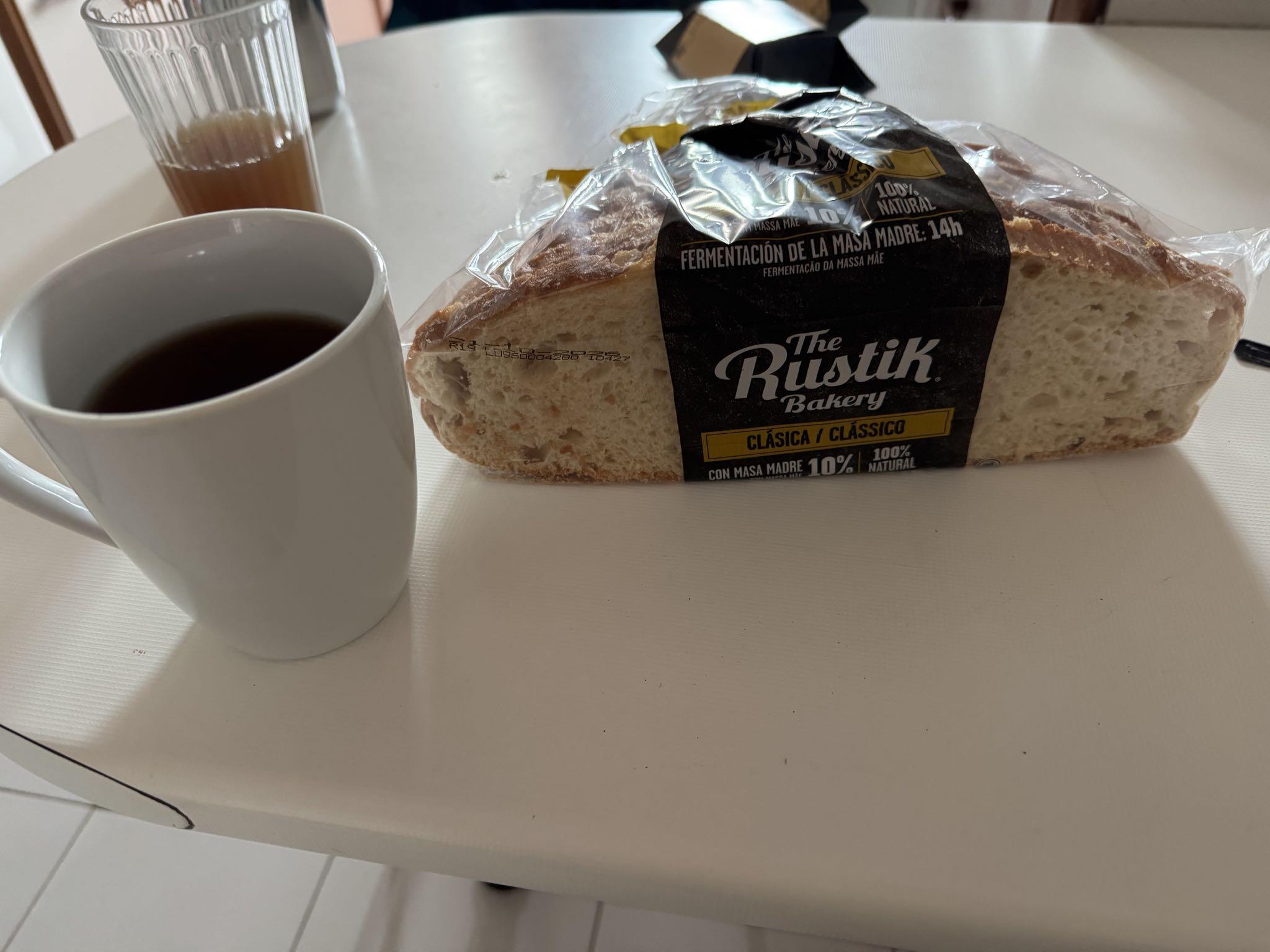
Toast was a lovely Miche loaf.

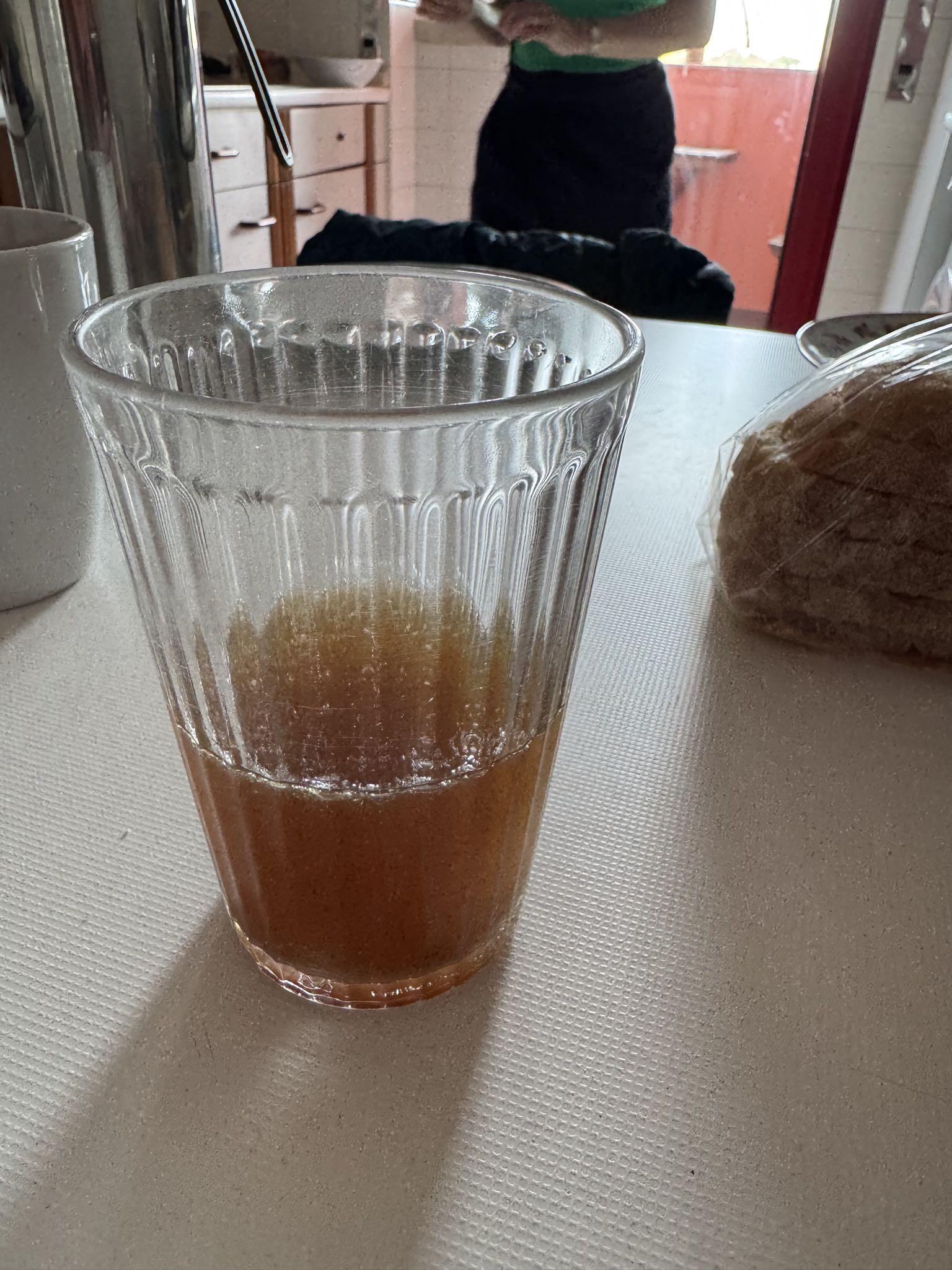
To accompany it we had “Papile” (like Papillion for butterfly in French). It is made from maidenhair fern sap, with added orange tree flowers. It looks like cough syrup and tastes somewhere between flat lemonade and cloudy apple juice.

The kids also got their favourite yoghurt from home (Yo-pro – no photo.) Global brands are much more of a thing than I remember. Back in the 90s Nike and Coco-cola and McDonalds were had a mix of delight and distrust in American capitalism about them. Now the kids buy the same yoghurt here and they do in Sydney.  In some ways this has been a theme for the last four hundred years. Columbus sought funding for his trip to the New World from the King of Portugal, who said he was fresh out. Columbus then went to Spain, which had “mergers” of a sort 23 years earlier, and was flush. A kind of proto-Capitalism. 
Shower taps are not a simple 45 or 90 degree turn for hot water. That would be if you wanted a temperature slightly above icicle but below lukewarm.… word. The require you to keep turning and turning until you hit at least 360 degrees. This is on both showers.

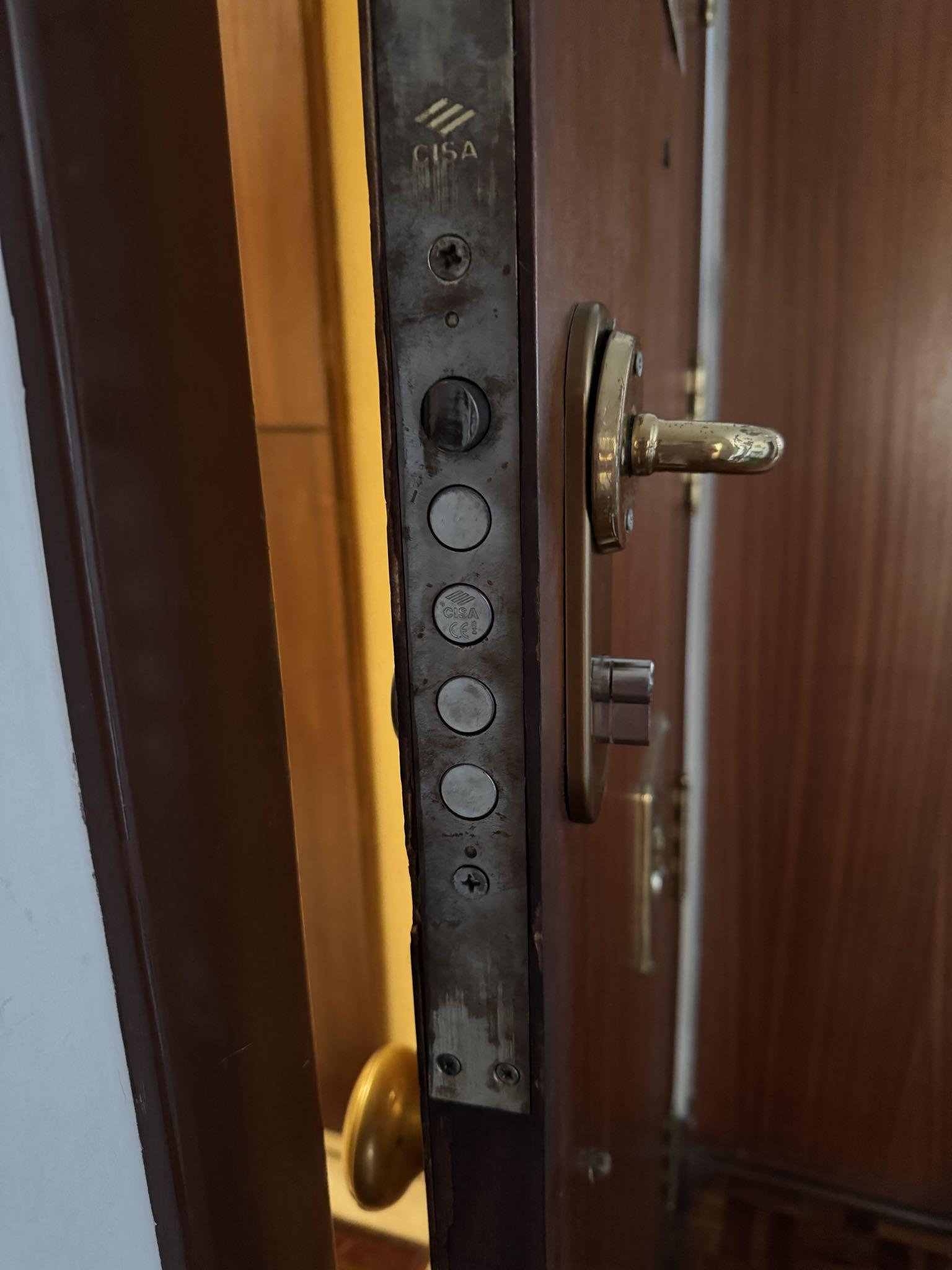
Speaking of 360 degrees, unlocking a door reminds me of descriptions of ancient Roman door locks. You may need to rotate the door key 360, 720, 1080 degrees. Depending on whether you have engaged the array of deadlocks or not. 
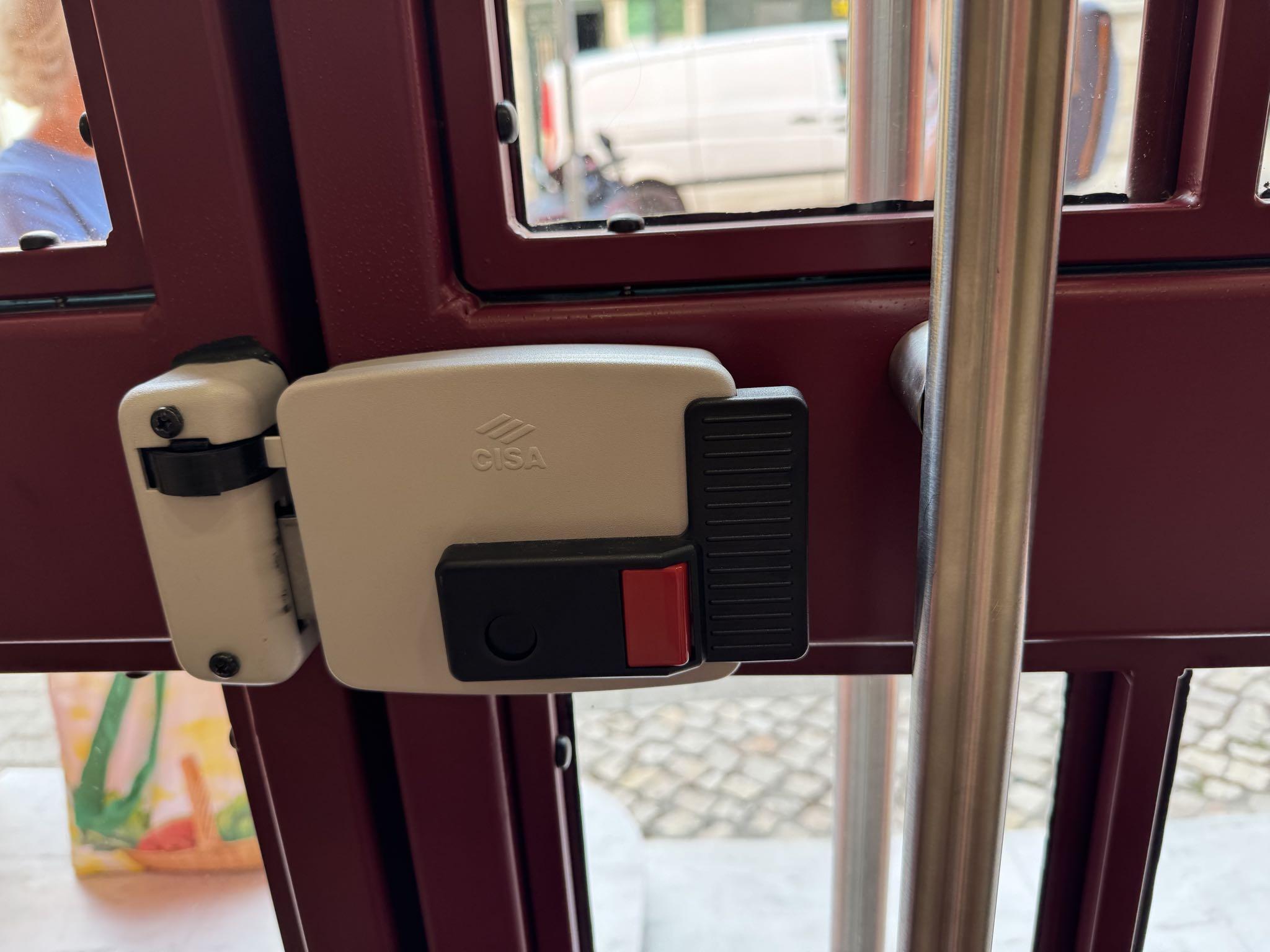
The front doors are also a red-push button variety I haven’t seen before.